
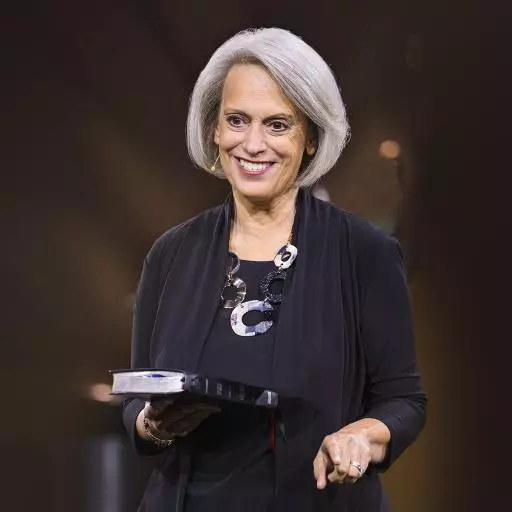
Ruth, Ep 11 of 17


What does a biblical woman look like? Well, pretty similar to Ruth! She’s a biblical example of what God designed womanhood to be—beautifully receptive to man’s initiative, diligent, self-controlled, and more. Nancy DeMoss Wolgemuth goes into detail on Revive Our Hearts.
Nancy DeMoss Wolgemuth: Are you ever frustrated with the men in your life for being passive in leadership? I believe it's in the heart of men of God to want to be manly. To want to be men. But we've got to let them be that.
Dana Gresh: This is the Revive Our Hearts podcast with Nancy DeMoss Wolgemuth, co-author of *You Can Trust God to Write Your Story*. For February 16, 2026, I'm Dana Gresh.
If you're reading through the Bible with us, we're on Numbers 27 to 29. Nancy's been teaching through the book of Ruth over the past couple of weeks. We've seen how Ruth was a Moabite woman, and yet she chose to come to Israel with her mother-in-law and serve the one true God. Ruth is a picture of all of us. We were once far from God, but then we left the world behind and we were saved into God's kingdom. Here's Nancy to pick the series back up.
Nancy DeMoss Wolgemuth: We're looking at the second chapter of the book of Ruth, and we're seeing a portrait of a godly woman, a portrait of a beautiful woman. We're looking at some of the fruit of the Spirit, the fruit of conversion that took place in this woman's life and asking God to make us beautiful women, women who will have the spirit of Ruth.
Verse 3 of Ruth chapter 2 tells us that she went out and began to glean in the fields behind the harvesters. Then we read this little phrase, "As it turned out, she found herself working in a field belonging to Boaz, who was from the clan of Elimelek."
Now, a couple comments here. First of all, we remember from the first verse of chapter 2 that Boaz was a wealthy landowner who was a relative of Naomi's, a relative of Naomi's deceased husband. Ruth and Naomi do not realize the significance of that fact at the moment. So from their standpoint, when Ruth lands on this field of Boaz, this is totally happenstance.
The phrase here is "as it turned out." I think some of your translations say she happened to come upon the field of Boaz. I love the quaint King James here where it says her "hap was to light on a part of the field that belonged to Boaz." That's an old-fashioned way of saying that from her perspective, this was chance.
Now we know as those who live under the sovereignty of God that there's no such thing as chance. There is no such thing as happening to come into this field or into a certain circumstance of life. We realize that God controls every circumstance of our lives and that there are no coincidences with Him, that even our apparently chance encounters are within His care.
I try to remember this in the course of my day as interruptions come and distractions. Now some of those I make myself, but some of those are calls or people I will run into or have a conversation with. I try to be sensitive to the fact that God is orchestrating the encounters of my life.
In fact, I can look back over my whole life and see things that decisions I made that I had no idea where they would lead, or people that I met that I had no idea what influence they would have on my life, decisions that were made for me or around me. I had no idea how God was orchestrating all those pieces to bring together what is still largely mystery to me because I'm not in His presence yet, but what I now really trust is not circumstance, not happenstance, but God controlling sovereignly the events of my life.
Verse 4 tells us, "Just then Boaz arrived from Bethlehem and greeted the harvesters, 'The Lord be with you!' 'The Lord bless you,' they called back." I like this greeting that Boaz gives to his workers. It gives us the first insight into his character. We've seen already that he was a wealthy man and that he was a relative of Elimelek, but we haven't really seen anything of his heart until this point.
We're going to see that he is a man of God. He's a man of wisdom, he's a man with a heart for God. I love the way that even in the course of just greeting his employees, greeting his workers, his harvesters, that he relates God to conversation, to relationships, and to everyday life.
This is really just an illustration of how natural conversation can include conversation about the Lord, about spiritual matters. It's amazing to me how many professing believers find it difficult to talk about the Lord. I have to confess I find that a little difficult to understand because when you have a relationship with Christ that is your life, not just a compartment of your life, then it seems that the overflow of that in all of life will be to bring God into the conversation.
Wouldn't it be wonderful if in our relationships even as believers, when we meet each other, when we encounter each other, if we were to bring the Lord into the conversation? I remember in one of the great revivals in the past that it was said that these revived people when they would meet each other on the street or the market or whatever, they would say, "Do I meet you praying?" In starting the conversation with things about the Lord. There's a wonderful verse in the Old Testament prophets that says that those who loved the Lord spoke often of Him to each other.
That's the way it ought to be in the family of God. Not that we have a compartment that on Sunday mornings we talk about God, but that in all of life we're relating God to our circumstances and our situation. It seems to me also that in Boaz greeting the harvesters this way, "The Lord be with you" and "The Lord bless you" they responded, that this landowner and his employees are reminding each other of their dependence upon God.
The harvest is not something they can take for granted. We prayed together before the session this morning and one of the people in our group prayed and said, "Lord, we don't take for granted Your blessing and Your provision and Your care and Your oversight of this session today. You were with us yesterday, You blessed us, but we're asking You again today. We're recognizing our dependence upon You in areas where we think that we know what we're doing and in areas where we know we have no idea what we're doing. We still acknowledge our dependence upon God even as these farmers and these harvesters did."
Now verse 5, Boaz asked the foreman of his harvesters, "Whose young woman is that?" For some reason this young woman caught his eye. She had not been there before. She was probably obviously a foreign woman and he noticed her and asked the foreman, "Who is she?"
The foreman replied in verse 6, "She is the Moabite who came back from Moab with Naomi. She said, 'Please let me glean and gather among the sheaves behind the harvesters.' She went into the field and has worked steadily from morning till now except for a short rest in the shelter."
Now let me stop there and just point out a couple more characteristics of this woman whose portrait is being painted for us. It seems to me that Ruth was a hard worker. She was a woman who was diligent. She was industrious. We read this about the virtuous woman in Proverbs 31. She's a woman who works hard.
Ruth went to the field early in the morning. She worked till late in the evening. Verse 17, let me ask you to skip down there. Ruth gleaned in the field until evening. Then she threshed the barley she had gathered and it amounted to about an ephah, which by the way is about, I'm told, thirty pounds in weight. So she got a good harvest that day just working with her hands. But she started early in the morning and worked till late in the evening with only brief breaks.
I've been convicted as I've been studying this passage over the last week of how important it is to be as a woman a hard worker. I find myself often in my work, in my study, being so distracted and sometimes taking more breaks than I'm doing work. The Lord has used this passage to show me just the need for greater diligence and hard work in my own life.
We want the harvest. We want the benefit, we want the blessing and the fruit of the harvest, but we don't always want to do the work that's required to get there. It may be in the cleaning of our homes. It may be in the raising of children, in the training of your children. Some of those just daily hard work matters that we can let things slip, but then we're not going to have the fruit and the blessing and the great harvest to take back with us if we've not been willing to do the work.
Let me put a parenthesis in at this point and say that there's another quality of Ruth that I think fits well with this one, and I find it down in verse 14. Not only was she disciplined in her work, but verse 14 tells us that she was disciplined in her eating habits. This is something else that has spoken to me in a very practical way in this passage. She's a woman who was self-controlled, which is, as you know, a fruit of the Spirit.
Verse 14 says, "At mealtime Boaz said to her, 'Come over here, have some bread and dip it in the wine vinegar,'" which sounds sour to us but it was really just a kind of sauce that would have been customary in the Oriental culture. "When she sat down with the harvesters, he offered her some roasted grain. She ate all she wanted and had some left over." Another translation there says she ate until she was satisfied and then she kept back what she had left.
Here's a woman who even in the very practical matters of life is disciplined. She's self-controlled. Now actually we could get a lot of insight about eating habits here. I notice that it's a high-carbohydrate diet and that she sits down to eat and she eats at mealtimes. I mean there are just some real practical things there.
I know we laugh but as I ask women to turn in prayer requests and prayer cards at our conferences all over the country, one of the most common issues that comes back as a prayer request that women share with me is actually one that I understand, and that's this whole area of a bondage to food. Women saying, "I feel so controlled by food." For some it's eating too much, for some it's not eating enough.
By the way, you can't look at someone's physical appearance and necessarily know if that's an area of bondage for them. There are some women who look like rails who have issues with eating and wanting to control our own lives and yet not to surrender to the control of the Holy Spirit. I don't know why this is such an issue for us particularly as women. I think it probably goes back to the garden, Genesis chapter 3, where food, overeating, was actually the first sin if you think about it.
But I see here a woman who, though she was young in her faith, was willing to surrender even her eating habits to the control of the Holy Spirit. I don't want to over-spiritualize the text here. I'm really just making some application. But it's amazing how practical the Word is in applying to our lives. I see a woman who ate until she'd had enough and then she stopped eating.
I found myself while I've been studying this passage at mealtimes asking myself, "Are you eating now because you haven't had enough or are you just eating because you like to eat?" If you've had enough, stop eating. That's an expression of control.
You say, "What's the big deal?" I have found in my own life that if I am not allowing the Spirit to control every area of my life, even in those little areas, those daily areas, those areas that aren't so visible to other people, that I am going to become more vulnerable to lack of control in other more significant areas.
Let me give you an illustration. I have a life vow before the Lord to be morally pure, to live a life that is pleasing to the Lord in the area of morals. But if I am not willing to let God control my life in the area of what I eat and how I use my time and how I do my work, if I'm not disciplined in those areas, disciplined by the Spirit of God, then what makes me think that under pressure I will be morally disciplined?
I realize because the Scripture says that any one of us can be vulnerable to the worst sort of sin and failure and falling. That's why I believe it's so important for us to make choices in the little everyday matters of life, even down to what we eat.
Now I have to tell you I really kind of hate talking about this because frequently the areas where I really challenge other women and do a lot of teaching are the areas where I find myself most tested. I'm not looking forward to tests in this area, but I need to say it because I need to live this way.
It's easy for me to be disciplined and for you to be disciplined when we're all sitting in this room and with each other and encouraged by each other. But it's another thing when we're home, we're alone, it's late at night, we're tired, we're lonely, we're sad. Someone has said when you're hungry, angry, lonely, or tired, halt.
That's when you're likely to be more vulnerable. Ruth certainly had reason to be vulnerable in terms of her own emotions and the circumstances of her life, but we find here a woman who is not under the control of her own ways of thinking and her own emotions, but under the control of the Spirit of God. Ultimately that makes a beautiful, attractive woman.
Father, thank You for how practical Your Word is in areas of everyday life. I pray that You would help me and help us to be Your women even in these very nitty-gritty issues of how we do our work, how we use our time, how we eat. Your Word says whether we eat or drink or whatever we do, we are to do everything to Your glory.
Lord, may we not just be hearers of the Word, but may we be doers as well. I pray that the things we've said would not put people under bondage of trying to perform, trying to keep the law, trying to live this out in our own strength. But may we just surrender ourselves to the control of Your Spirit and as we go from this place, to be sensitive to what You are saying to us and then to trust in You to give us the power to be women of God in these areas of discipline. I pray for Jesus' sake. Amen.
Dana Gresh: Nancy DeMoss Wolgemuth will be right back. She's been showing us what we can learn about self-control from Ruth. Maybe you're thinking, "Well, I've already blown it. I'm not like Ruth and I haven't shown self-control. I've overeaten again and again. I've lost it with my kids." Well, I want to give you hope.
Ruth wasn't perfect, but her descendant Jesus was. He died on the cross to take the punishment for all the times we failed to show self-control. Isn't that amazing? Thank You, Jesus. Today's teaching is part of the series *Ruth: The Transforming Power of Redeeming Love*.
That redeeming love God showed Ruth and Naomi is something we can embody as we love one another. That's what the Revive Our Hearts Ambassador team seeks to do as they serve local women's ministry leaders and pastors' wives all over the US. If you're a woman in ministry, our Ambassadors are eager to pray with you, encourage you, equip you, and support you as you press on in this vital work.
To connect with an Ambassador near you, visit reviveourhearts.com/ambassadors. You'll find all the information you need there. That's also where you should go if you're interested in becoming an Ambassador. We'd love to have you apply to join the team. Again, that's reviveourhearts.com/ambassadors.
If you'd like a resource to help you reflect on Ruth's story and make it practical in your own life, we'd love to send you our six-week study, *Ruth: Experiencing a Life Restored*. We'll send it for a donation of any amount. This book would be great to work through on your own or in community with other women. To give and request the study, visit reviveourhearts.com or call us at 1-800-569-5959.
So far today, we've seen how Ruth can teach us self-control. She also teaches us something important about femininity. Nancy's about to explore that because, as you probably noticed, a lot of people in our day want to blur the lines between men and women's roles. God made us to be beautifully different from one another, but that's not the mainstream view anymore.
If the cultural conversations on manhood and womanhood are unfamiliar to you and you'd like to learn more, visit reviveourhearts.com. You'll find lots of teaching there on how God created men and women equal in value, but with different roles at home and in church. You're about to hear Nancy touch on this topic. She's continuing in Ruth chapter 2. Let's listen.
Nancy DeMoss Wolgemuth: Verse 8. "So Boaz said to Ruth, 'My daughter, listen to me. Don't go and glean in another field and don't go away from here. Stay here with my servant girls.'" Just the first phrase of that verse, I think, gives us an insight into this woman's character. "Boaz said to Ruth." Who initiated this relationship? Boaz.
The man is the initiator. When Ruth speaks to Boaz, she is responding to his initiative. Now, my point here is not so much to be literal about who speaks the first word in the conversation, as to illustrate a point that I think Ruth's story illustrates. In fact, it comes again in verse 14, if you want to skip down in the passage there. "At mealtime Boaz said to her, 'Come over here, have some bread and dip it in the wine vinegar.' When she sat down with the harvesters, he offered her some roasted grain."
You see here the man being the initiator. Now, of course, at this moment the last thing in either of their minds is romance or marriage or courtship. That's not what they're thinking. We know the story, we know they're going to end up married, so we kind of read that into it. But I don't think there was we don't know, I don't think there was anything of a particular physical attraction here at this point certainly. Ruth is being faithful to God's calling in her life, and Boaz is being faithful to God's calling in his life.
God is bringing their lives together in a way they could not have planned or orchestrated themselves. But in the course of that exchange, forgetting courtship and dating and marriage, Ruth is discreet and she allows the man. He is the employer, he's the landowner, he's the man. She allows him to be the initiator. And he does initiate. And then when he does, she feels the freedom to respond graciously and discreetly to his initiative.
We live in a culture where we've had extreme role reversal for as long as most of us in this room can remember. Now that of course goes back to longer than any of us can remember, and that's back to Genesis chapter 3 in the Garden of Eden when the serpent came to the woman. Though the Scripture tells us her husband was there with her, he just ignored the man and spoke to the woman.
The woman struck up the conversation with the serpent, and in this whole exchange back in Genesis, we find the woman in the place of taking on a role of leadership and the man kind of left behind in the shadows. That is a picture of what has become very true in our culture. I think one of the most common things I hear from women, particularly married women but not just married women, is whining about men being so passive.
I say whining. I understand that this is a frustration. It's a frustration because it's true in our whole culture that we have twisted the roles and the responsibilities that God has given to men and to women. We both bear responsibility. I believe as women, there is a lot we have done by being so aggressive, by being such initiators. Let me say I know that this will get me in trouble with some people. I can see the letters now.
I realize this is not politically correct. I realize this way of thinking makes some people see red. But we've got to go back to God's way of thinking and see that we have really steered off course as women by being so aggressive, physically, verbally, in conversation, in our behavior, in our actions. We have in a sense emasculated men.
If we want to be women of God, one of the things we have to do is let men lead. Now the immediate response from many women will be, "They won't lead." My answer to that is partially the reason they won't lead is the result of the fall, but partially the reason is that we haven't let them lead.
I find myself wondering if we as women would really step back and give men an opportunity to express their hearts, to take leadership, if they might not just step up to the plate and be more manly. I believe it's in the heart of men of God to want to be manly, to want to be men. But we've got to let them do that.
In this exchange with Boaz, and as the whole relationship unfolds, we see a womanly discretion. we see a woman who's not throwing herself on men. Today this is so common that we hardly, I think, would recognize discretion if we saw it because it is so common. Again, I want to just speak to you young girls here, younger women, teenage girls, and say what you are seeing with your peers most likely is not discretion.
What you will see with young women today and some of you mothers who have younger children, daughters, teenage girls, this is something you need to teach your daughters, that it is not appropriate for us in conversation, in behavior, in physical gestures to throw ourselves onto men, to be the ones to initiate.
Does that mean we never talk? No. I have lots of warm relationships with godly men and I feel a lot of freedom to share in conversation, but it means that maybe I'm not as quick to speak as what I might want to be, as what I might feel comfortable being. It's true they say that women have I don't know how many thousands of words it is that we need to say every day, and men's number seems to be somewhat less than that.
The wise woman will not use up all of her words at the beginning of the conversation. Because if she does, particularly you married women, you will find that your husband is less likely to feel the freedom to jump in and speak if you're doing all the talking.
I hear women say, "My husband just doesn't communicate. He just doesn't express his heart." Well, Proverbs tells us that wisdom in the heart of a man is like deep waters and a person of understanding will draw it out. The wisdom that God has put in the heart of your husband is like a deep well. It doesn't just always bubble to the surface. Part of your role as a wife and as a woman is to draw him out, to ask questions, and then give him a chance to answer.
And then when he does answer, not to be like Ford that always has a better idea. Because you will find if you're always jumping in, always correcting, always improving on his answer, he's going to be less motivated to give a response or to be involved in the conversation.
So we see here a woman who is discreet, she's womanly, and she allows him to be a man. He's the one who offers her the bread to eat, who calls her to mealtime. Again, I would not encourage us to be legalistic about who calls for mealtime or who passes the food first. That's not the point. The point is that we look for ways to encourage men to be men by our willingness to step back and to allow them to take initiative in conversations and in relationships.
Let me just add a word of encouragement for those of you who are single and perhaps will in the next years be involved in a dating or courtship relationship and those of you who are mothers training your sons and daughters. If in the dating or courtship stage the woman is taking the initiative, if she's the one doing the calling, if she's the one asking out, if she's the one taking the leadership, then she should not be surprised when she gets married and finds out that it's expected that she will continue to take the leadership.
I think of a couple that I've served with in ministry. God has done a great work in their hearts, but there was a real role reversal in that couple. She was the one doing the leading and the spiritual influence. They came to see that was not as it should be. But as the story unfolded, they told us that this had been true ever since the time they first knew each other, that she was the one who had actually proposed to him.
This had become characteristic of their whole relationship, which now had children and there was a lot of confusion and havoc that came about as a result. One of the things this couple did with the man's leadership was to go back now with grown children and to actually he came and proposed to her again and gave her a ring. They did a little small ceremony of a kind of renewing of their vows with him taking the leadership.
It's not been an easy change. It's not taken place all of a sudden. They still have to work through some of these issues because there are a lot of habits there. But they have started on a new course and they really had to go back to those days even before they were married and say, "Let's try this again. Let's see," she said, "if I'm going to give this man an opportunity to be a man." She's had to be willing to wait.
At times his personality is much more laid back than hers, and there's nothing sinful in that, but that means it's taken more effort on her part to draw him out, to encourage him as a man and as a leader. But there's some rich depths in the heart of that man that are beginning to come out as she as a woman is willing to step back and let that man be the man.
I don't know where you are in relation to all of this. We have different ages represented here, different seasons of life. Some of you are mothering and are hearing things today that maybe are a good reminder to be teaching your daughters and your sons about what kinds of women to be careful about and your daughters about how to establish right relationships.
Some of you younger women are hearing this maybe for the first time because this isn't something you'll hear often in our culture. But wherever you are, ask God, "Is there in my life a womanliness, a discretion? Am I adequately giving to men the freedom to take initiative? Am I creating an environment that makes it easier for them to take initiative? Am I acting generally in the course of my life more as a responder to male initiative?"
There may be some adjustments that need to be made. I've had to make a lot of adjustments in my own style of relating to the men that I work with, men who are friends, but it's been good. There's a freedom that comes from taking that place and saying, "Lord, I want to live the kind of life that encourages men to be all that You made them to be."
The benefit to all of us in the long run of having godly male leadership in our ministries, in our homes, in our churches, restoring God's order, will be something that will bring great blessing and benefit not only to us but to our children and grandchildren for generations to come.
Father, I do pray that You'd give us understanding of Your ways even as I have shared some of these insights and principles. I know it raises a lot of questions about how to do this and what that means. I confess that in many cases I don't know exactly what it means and I don't always know how to live this out.
But I believe it's Your way and it's right. I pray that You would teach us. Teach us how to be womanly and discreet and to be responders in appropriate ways. Lord, while we're at it, we do pray for the men in our lives. Thank You for them. Thank You for the men in our homes, in our churches, in the ministries where we serve.
Thank You for their heart desire. I know that so many of them have to be men of God. We pray for them, Lord. We lift them up and pray that by Your Spirit You would do a work of grace in their hearts. Give them the freedom, the desire, and the enabling to do what doesn't come naturally perhaps for them, even as what we're talking about doesn't always come naturally for us, and that is to be men who have boldness and courage and faith and who are willing to take leadership under Your leadership. I pray for Jesus' sake. Amen.
Dana Gresh: That's Nancy DeMoss Wolgemuth. She'll be right back to pray. If you'd like to learn more about what it looks like to live as a woman of God in our day, visit reviveourhearts.com. Bible teachers like Nancy, Mary Kassian, Susan Hunt, and many others have spoken on this subject with biblical wisdom. You can dive into series like *The True Woman Manifesto* and *True Woman 101*, or explore John Piper's landmark True Woman message, "The Ultimate Meaning of True Womanhood." Again, all this teaching and more is at reviveourhearts.com. We'll add some links in the transcript of today's program.
We're continuing to see biblical womanhood displayed tomorrow as we see how Ruth exemplified the beauty of ordinary faithfulness. If you ever feel like your everyday labors go unnoticed, I think you'll be encouraged. Now here's Nancy to close us in prayer.
Nancy DeMoss Wolgemuth: Father, I do pray that You'd give us understanding of Your ways even as I have shared some of these insights and principles. I know it raises a lot of questions about how to do this and what that means. I confess that in many cases I don't know exactly what it means and I don't always know how to live this out. But I believe it's Your way and it's right.
I pray that You would teach us. Teach us how to be womanly and discreet and to be responders in appropriate ways. Lord, while we're at it, we do pray for the men in our lives. Thank You for them. Thank You for the men in our homes, in our churches, in the ministries where we serve. Thank You for their heart desire. I know that so many of them have to be men of God.
We pray for them, Lord. We lift them up and pray that by Your Spirit You would do a work of grace in their hearts. Give them the freedom, the desire, and the enabling to do what doesn't come naturally perhaps for them, even as what we're talking about doesn't always come naturally for us, and that is to be men who have boldness and courage and faith and who are willing to take leadership under Your leadership. I pray for Jesus' sake. Amen.
Dana Gresh: This program is a listener-supported production of Revive Our Hearts in Niles, Michigan, calling women to freedom, fullness, and fruitfulness in Christ.
Featured Offer

Featuring thoughtful reflections paired with stunning landscape photography captured by Revive Our Hearts staff members, this beautifully designed resource encourages women to slow down, reflect, and fix their hearts on what is true and lasting. With your donation of any amount.
Past Episodes
- 3 Doctrines that Fuel Endurance
- 3 Ingredients of a Revived Heart
- 3 Life-Changing Lessons for Young Women
- 3 Marks of an Unshakable Woman
- 3 Reasons to Join the 2026 Bible Reading Challenge
- 3 Ways to Love Your Friend When It’s Hard
- 3 Women Who Were Grateful for God’s Word
- A Cry for Revival: Isaiah 63-64
- A Great Awakening, with Kim and Katie Miller
- A Harvest of Joy
- A Heart Grounded in the Word of God, with Chris Brooks
- A Mighty Fortress Is Our God (Psalm 46)
- A Song for Weary Pilgrims (Psalm 137)
- A Woman Adorned and Adorning
- Advent for Exiles, with Caroline Cobb and Erin Davis
- Always Grateful: Ciara's Story
- Always Thankful (Psalm 66)
- An Unhurried Holiday Season
- And the Bride Wore White, with Dannah Gresh
- Anticipating Advent
- Applying the Gospel to Family Life, with Emily Jensen
- Be the Warmth: Cultivating Hospitable Character
- Becoming a Fruitful Woman
- Begin at My Sanctuary
- Behold the Big Story of the Bible, with Kevin DeYoung
- Behold the Daily Mercy of the Word, with Dannah Gresh
- Behold the Living Word, with Jackie Hill Perry
- Behold the Power of the Word to Save, with Kelly Needham
- Behold the Wonder of the Word
- Behold the Word Recovered by God’s People, with Mary Kassian
- Behold, Hearts on Fire with the Word
- Beholding the Wonder: True Woman '25
- Beyond Cliches: Real Encouragement for Single Sisters
- Blessed by a Godly Mother
- Blessing for the Year End & the New Year (2 Cor. 13:11-13)
- Building a Spiritual Legacy for Your Children! by Jani Ortlund
- Celebrating God’s Abundance
- Celebrating the Gift of Grandparents
- Choosing Servanthood Over Celebrity
- Choosing to Stay in a Difficult Marriage
- Come Adore: The Gospel in Carols
- Courage and Compassion: Two Words for Parents
- Crossing the Finish Line: Remembering Robert Wolgemuth
- Dear Single Woman, God Sees You
- Defying Discouragement
- Devotions Amid Diapers
- Dry Bones Can Live Again (Ezekiel 37)
- Faithful, Not Famous with Laura Gonzalez de Chávez
- Finding Freedom from Fear, with Judy Dunagan
- Finding My Father Father: How the Gospel Heals the Pain of Fatherlessness, with Blair Linne
- Finding Soul-Deep Satisfaction in Jesus
- Food Is Not the Enemy: Discover Freedom from Food Fixation, with Asheritah Ciuciu
- Free to Be Real
- Freedom in Christ
- From Death to Life: Hope After Abortion
- From Desperation to Deliverance: The Promise of Psalm 107
- Fruitful in Christ
- Fullness in Christ
- Gentle Parenting: Wisdom or Weakness with Tanner Kay Swanson
- God’s Grace for Weary Moms
- God's Power to Revive a Heart, with Andrea Griffith
- Grace for the Depressed
- Hallelujah! A Praise Celebration (Psalm 113)
- Helping Kids Think Biblically, with Elizabeth Urbanowicz
- Holy Week Heart Prep: The Wonderful Names of Jesus
- Hope in the Midst of the Hard
- How God’s Love for Women is Displayed in the Old Testament, with Dr. Katie McCoy
- How Less Scrolling Could Change Your Life, with Lara d’Entremont
- How Long, O Lord? Learning to Pray Through Pain
- How Remembering Eternity Transforms Today (Psalm 90)
- How to Build Your Home
- How to Have a Happy New Year (Psalm 1)
- How to Have a Marriage that Magnifies God
- How to Have a Quiet Heart
- How We Got Our English Bible
- Indispensable Ingredients for Life
- Instruments of Grace
- Intimacy with God
- It’s Possible! Learn to Control Your Mind and Emotions
- Leading Children to Love the Word
- Learning to Love the Old Testament, with Jennifer Smith
- Letting God Be God, with Andrea Griffith
- Living Out the Beauty of the Gospel
- Living Well, Finishing Well, with Mark DeMoss
- On Our Way Home
- One Thing (Psalm 27:4)
- Open Your Home, Open Your Bible, with Erin Davis
- Ordinary Women, Extraordinary God
- Parenting Teens with Hope, with Melissa Kruger
- Persecution, Perseverance, and the Key to Sustaining Faith, with Dr. Karen Ellis
- Persevering Love for the Local Church
- Pleading the Cause of the Unborn
- Practical Bible Study Tips
- Practicing Thankfulness, with Sam Crabtree
- Precepts, Parkinson’s, and the Truth That Sets Us Free, with Kay Arthur
- Psalm 23: Our Good Shepherd
- Putting God's Word First, with Gretchen Saffles and Janine Nelson
- Read Your Bible!
- Rediscovering Intimacy With God
- Relationship Refresh: Helping Your Community Thrive in Christ
- Remembering Voddie Baucham, Jr.
- Renewed and Restored (Psalm 23:2-3)
- Renewing Your Mind
- Revival Begins with You
- Revive Us Again (Psalm 85)
- Ruth: The Transforming Power of Redeeming Love
- Safely Home: Honoring Robert Wolgemuth
- Science, Scripture, and a Life Transformed, with Dr. James Tour
- See for Yourself: Get to Know Your Bible, with Kelly Needham
- Showing Kindness, with Kathy Branzell
- Sin, Suffering, and the God Who Restores
- Spiritual Disciplines We Forget About
- Spiritual Habits for Little Hearts
- Spiritual Strength for an Evil Day (Ephesians 6)
- Steadfast Faith
- Storm Shelter
- Supporting Your Suffering Friend, with Jani Ortlund
- Surrendering Your Independence
- The Beauty of Living Out the Gospel as a Woman
- The Four Emotions of Christmas
- The Glory of Face-to-Face Fellowship
- The Gospel Is Everything: 25 Years of Pointing Women to Christ
- The Humble Savior Who Came
- The Incomparable, Incarnate Christ
- The Joy of Bible Journaling
- The Joy of Embracing Biblical Womanhood, with Laura Perry Smalts
- The Legacies of Two Godly Fathers
- The Personal Devotional Life
- The Personal Devotional Life: Beyond Quiet Time, with Dr. Henry Blackaby
- The Truth Your Girl Desperately Needs
- The Well-Watered Woman, with Gretchen Saffles
- The Wonder App: Transforming Screen Time into Scripture
- Three Gifts Suffering Gives
- Three Mercies for Young Moms
- To The Woman Who Doesn’t Feel God’s Love
- Treasuring Christ in Our Traditions with Noel Piper
- True Woman '25 Panel Discussion: Behold the Word in Every Season
- True Womanhood for Today
- Truly Strong: Becoming Women Who Depend on the Lord
- Walking Through Life's Deserts
- What Freedom, Fullness, and Fruitfulness Really Mean, with Robert Wolgemuth
- What Is a Woman? with Mary Kassian
- What Makes You Beautiful? with Kristen Wetherell
- What Sisterhood Is (and Isn’t)
- What’s the Point of Praise? 3 Reasons Your Worship Matters
- When Busyness Threatens Intimacy with God
- When Prayer Sparks Revival, with Bob Bakke
- Why Study the Bible?
- Wonder of the Word Made Flesh
- Word Before World, with Gretchen Saffles

Featured Offer
Featuring thoughtful reflections paired with stunning landscape photography captured by Revive Our Hearts staff members, this beautifully designed resource encourages women to slow down, reflect, and fix their hearts on what is true and lasting. With your donation of any amount.
About Revive Our Hearts
Married, single, young or older, you'll want to join us every day for practical, biblical insights on becoming a fruitful woman of God. Best selling author and national radio host, Nancy DeMoss Wolgemuth makes the Scriptures come alive. You'll be touched by Nancy's messages and by the passion of her heart.
About Nancy DeMoss Wolgemuth
Nancy DeMoss Wolgemuth has touched the lives of millions of women through Revive Our Hearts and the True Woman movement, calling them to heart revival and biblical womanhood. Her love for Christ and His Word is infectious and permeates her online outreaches, conference messages, books, and two daily nationally syndicated radio programs—Revive Our Hearts and Seeking Him. Her books have sold more than four million copies and are reaching the hearts of women around the world. Nancy and her husband, Robert, live in Michigan.
Contact Revive Our Hearts with Nancy DeMoss Wolgemuth
Mailing Address
Revive Our Hearts
P.O. Box 2000
Niles, MI 49120
Telephone Numbers
1-800-569-5959 (toll-free)