
Looking to Jesus When Your Prayer Goes Unanswered


If you’re carrying an unanswered prayer like a weight in your chest, you’re not alone. Dannah Gresh, Nancy DeMoss Wolgemuth, and Dr. Katie McCoy remind you you’re in good company and encourage you toward steadfast trust on Revive Our Hearts Weekend.
Dannah Gresh: If you're carrying an unanswered prayer like a heavyweight in your chest, you're not alone. I have one. It's so complex, I'm not sure I can share it, but it breaks down to this. Six years ago, I felt God leading me to pursue a truly God-sized task. And when I told my husband Bob, he sensed it was from the Lord. We pursued it together and fell flat on our faces. But we still feel the calling. How can that be? I've asked the Lord either remove the desire or open the doors, and it seems I'm still in a holding cell.
Have you ever spent time there? Not only have I been there, but so has Dr. Katie McCoy. Katie holds a PhD in Systematic Theology from Southwestern Seminary, where she served on the faculty for five years. She loves the scripture, and she's a frequent speaker and writer on women's and gender issues. She's written a book called To Be a Woman. Not too long ago, I got to sit down with her and soak up her wisdom, and she has got a lot of it. She was super vulnerable about some unanswered prayer in her life on the Revive Our Hearts Daily podcast.
We'll link to that episode in today's transcript because it was so relatable and encouraging. She's also deeply studied the women of scripture, immersing herself in their stories, and she's found that so many of them were sitting with unanswered prayer as well. I'd love to share part of that conversation with you. Let's listen. There are five women in the Bible that come to mind when I think of unanswered prayer. And and they may not necessarily be lessons that we think where we would go to in scripture about unanswered prayer, but what they do is I think they counter some of the lies that we believe or even fears that we have that are very common to all of us and very normal to experience.
So, you want to just dive into the first one? Okay.
Dr. Katie McCoy: Let's dive in. You have me. I want to know what lies I might be believing. Oh.
Dannah Gresh: Okay. Hagar is the first one. Hagar counters or disproves that fear that we may have in our hearts that says God doesn't really see me.
Dr. Katie McCoy: Oh. Do tell.
Dannah Gresh: And you remember the story of Hagar. She's running away from Sarah. And at that time, maybe she's Sarai. I can't remember exactly in Genesis where where it occurs. But so the Lord has given that promise to Abraham that the the son of the promise would come through Sarah. And of course, Sarah tries to help God and give Abraham, her servant, Hagar to have a baby through Hagar. You know, one of the things that it's really easy to forget is how culturally common that was. But Hagar was a woman who was caught in the middle. She didn't have a choice.
Dr. Katie McCoy: Mm. It was still very very dysfunctional.
Dannah Gresh: Completely.
Dr. Katie McCoy: Culturally common things are often still very contrary to God's plan.
Dannah Gresh: Oh my, exactly. And whether it's that or or polygamy, it it never ends well, right? So, um Hagar was was caught in the middle of all of this. And she was trying to In a way, you can read that story and go she was trying to take back some control of her life.
Dr. Katie McCoy: Right. Right. Yeah.
Dannah Gresh: She was in this place that felt absolutely desperate. And she's running away with nowhere to go in the desert, in this arid climate in the Middle East. And she gets to this place of desperation, and the Lord meets her there. And she calls God the God who sees me. Now, what's also so spectacular about that, Hagar was not the wife of promise. She was not the wife through whom the son of promise would come. But the social status of Hagar was not the predictor of the care of the Lord. So, no matter where she was out in the middle of the desert, a slave woman that had run away And the Lord tells her to go back.
You can imagine the fear of that, too. What would she be in for in terms of punishment? And the faith that that would have taken as well. And so, Hagar reminds us that when we feel like God doesn't really see me, he is the God who sees us. He sees our pain. He sees what God has to where we are. He sees where we are. And then he sees what we need to do next. He tells us where to go. He tells us the next step. And that's a great comfort for us when we're wrestling with unanswered prayer.
Dr. Katie McCoy: It really is. Just as you were saying that, I got chills. And I began, as I was listening to you, interceding for the woman who's running from God.
Dannah Gresh: Oh.
Dr. Katie McCoy: For the woman who's running away to know.
Dannah Gresh: Yeah. Yeah. God sees you.
Dr. Katie McCoy: Mhm.
Dannah Gresh: And he has a plan.
Dr. Katie McCoy: Yes.
Dannah Gresh: Mm.
Dr. Katie McCoy: And he will meet you in that far away place you're in, too.
Dannah Gresh: Yeah.
Dr. Katie McCoy: And guide you back.
Dannah Gresh: Beautiful. Okay. Next woman, next lie. A favorite of ours, Hannah.
Dr. Katie McCoy: Oh, yes. Absolutely.
Dannah Gresh: She's a rock star.
Dr. Katie McCoy: She is.
Dannah Gresh: So, Hannah reminds us that it is not true that God doesn't really care because Hannah Oh, what a story she was. She teaches us how to pray with tears in our eyes. But when I'm afraid that God doesn't really care about this, I have to think of Hannah. And the reason Hannah's story is so powerful to us is Hannah was not in a place of desperation. She actually had everything she needed. In fact, when you see kind of the setup of the story, her husband loved her. Her husband still gave her a double portion even though she did not have the children.
That was a statement of honor. So, the fact that she was infertile did not have any bearing on how much her husband gave her affection and attention. And in fact, her husband says what probably many a woman has felt rather insensitive comments. And her husband says, Aren't I as good to you as 10 sons? Like why are you why are you crying? Like do you lack something that I haven't given you? You know.
Dr. Katie McCoy: Yeah.
Dannah Gresh: And what I love about that is it's okay that even Hannah's husband did not understand her pain, and she still went to God with it anyway. And so, Hannah was still wrestling with a desire. It wasn't a need. She had all the food, shelter, and clothing she needed. But there was this deep desire. And what we also see is that God was preparing Hannah for a Samuel. And that Samuel had a major role to play in the entire nation. And Hannah her prayer ends with not only her saying, okay, I'm going to get up and wash my face and not be sad after Eli the priest sort of blesses her and affirms her.
But hidden in that prayer, tucked away is her heart posture that says, Lord, if you give me a son, I will give him right back to your service. I have a hunch that Hannah did not start off praying like that.
Dr. Katie McCoy: Bingo.
Dannah Gresh: I think she got to that place in her pain. And this wasn't like a bargaining thing, like a negotiation. Like, Lord, if you'll give me this, I will give you that. No, it was surrender.
Dr. Katie McCoy: Yeah.
Dannah Gresh: It wasn't negotiation. It was total surrender. And And with that surrender, it was almost like she had resigned herself to the to the loss of her son anyway.
Dr. Katie McCoy: Yeah.
Dannah Gresh: Like she had lived with the pain of a loss of not having a child. And now, she was willing to lose him again for the Lord. And so, Hannah got her request. The Lord granted her request. Now, we can read that and go, okay, if I just find the right words, maybe God will grant my request. And that would miss the point of the story. The whole point of the story is Hannah got to this place where she was at peace with the answer before she even got the answer. And And that's what that surrender is.
Dr. Katie McCoy: Yeah. What meaningful advice from Dr. Katie McCoy to pray with God's big picture kingdom plan in mind. The more we fix our eyes on Jesus, the more we'll do this. We'll think, okay, I really really desire this seemingly good gift right now. But what if God wants to do something even more glorious with me? What if he intends to glorify Christ through me? What if he's going to display the gospel through my life in a way I can't see or imagine right now? Isn't this such a redemptive hope-filled way to pray? I I hope we'll learn to do this more and more.
Now, I know you just listened to that little portion of my conversation with Katie and probably thought, don't stop there. I've got to know what other women you talked about. Fret not my friend. We'll link to the full conversation in today's transcript. Head on over to reviveourhearts.com/weekend and click on today's episode. Nancy DeMoss Wolgemuth also has encouragement for you as you navigate unanswered prayer. She shared this message in her series on Habakkuk, which was all about moving from fear to faith. Let's listen.
Nancy DeMoss Wolgemuth: Had a conversation not too long ago with a couple who had been in pastoral ministry. He had been a pastor for many years, and then he had heart surgery. Had a near heart attack and had to have heart surgery. And as a result, ended up having to leave the ministry. Just physically could not get back into a place where he could handle the pressures and the strains of ministry. But they were a younger couple and found out he couldn't get a job. She couldn't get a job. They were telling me this story together sitting around the dinner table one night and tears welling up in her eyes as they described the depression that he had fallen into after years of serving the Lord.
And she I remember hearing her say, we felt so abandoned by God. We prayed. We cried out. We looked around. We couldn't find answers. We felt abandoned by God. And isn't that the way it is? Sometimes we cry out. There's no apparent answer. So, we assume God hasn't heard or isn't saving. And then we can end up disappointed with God. We feel he's let us down. And then sometimes, unfortunately, the next step is we start to accuse God. We put our fist in his face. We We remonstrate with God. We accuse him falsely. And here's where we come into the danger of falsely accusing God.
The danger of accusing God, charging God with wrongdoing just because he has not met our expectations and our demands. God, you will not hear, Habakkuk says. You will not save. You oddly look at wrong. Reminds me of the story in John chapter 11 when Mary and Martha had sent for Jesus because their brother Lazarus was sick. They knew Jesus could heal him. Jesus could do something about it. But Jesus for unfathomable reasons decided to stay where he was for an extra four days. And by the time he arrived in Bethany, their brother had died. And first Martha and then Mary say to Jesus, Lord, if you had been here, this wouldn't have happened.
Our brother would still be alive. The implication is why? Why didn't you do something? Why didn't you care? And there's this sense of perhaps accusing God with wrongdoing. By contrast, I think of Job chapter one. Remember when Job faced crisis after crisis after crisis in his life, one on top of the other. But the scripture says in all of this, Job did not sin or charge God with wrong. Now, that changed later on in the book of Job. But initially early on, Job never charged God with wrongdoing. He assumed there were things that God knew that he didn't know.
But so often we we don't have that picture. We just have our perspective on it. We say, Lord, don't you care? If you'd been here, why didn't you do something? And so, we have that challenge of long-term, ongoing, unrelenting pain and problems. Listen, anybody can trust God with one bad day. Short-term situations. But when you have long-haul suffering, when you have that elderly parent who's hanging on by a thread to life, but he's in such pain. The The The parent who's dying from cancer, who's weak and feeble, and you say, Lord, why don't you take her?
Why do you let her suffer on like this? It's the long haul. It's the ongoing. It's that son or daughter who's been away from God for years and years and has created such havoc and pain in your family. And you cry out, how long, Lord? I keep crying out to you, but still you don't do anything. It's that how long question. You will not hear. Habakkuk accuses God of not listening to him. But ultimately as we go through this book, we'll see that Habakkuk comes to realize that he has not been listening to God. God has been listening to him.
But Habakkuk needs to learn to listen to God. And that's what prayer really is. It's learning to listen to God. Yes, giving him our honest questions and then listening to what God has to say. Listening to God give us his perspective. And so, Habakkuk cries out persistently. He cries out long-term. There's no apparent answer. And ultimately God's going to answer. But God says, I 'm not necessarily going to answer immediately. And I'm not necessarily going to answer in the way that you would choose. As we read through the book of Habakkuk, you'll see that God never answers all Habakkuk's questions.
It's not that God doesn't know the answers, but God never gives Habakkuk all the answers. And the answers God does give raise even more questions as we'll see as we get into chapter one. And I want to tell you that God is not going to answer all of your questions. If you knew all the answers, you would be God and you wouldn't need God. God's not going to answer all your questions, but I'll tell you what he will do. As you ask honest questions and then as you listen to God, he will reveal himself to you.
God gives Habakkuk a broader eternal perspective that makes him willing to go on, able to go on without knowing all the answers. And God wants to give you a perspective that will enable you to face your situation, to face your circumstances without knowing all the whys. Habakkuk ultimately comes to a point of being able to worship without understanding everything that is going on. That takes faith. And that kind of faith that can worship when we don't know the answer is what pleases God. That's really what it comes down to, isn't it? It's this question. Is God worthy of my trust?
Can God be trusted? I want to tell you the answer is a resounding yes. He can be trusted. He is worthy of your trust. And as you ask your honest questions, not accusing God, but putting yourself in a position where God can reveal himself to you and can give you his perspective on your circumstances, you will find that God really can be trusted. And then your worrying will turn to worship. No longer why, but God, I worship you.
Dr. Katie McCoy: Mm.
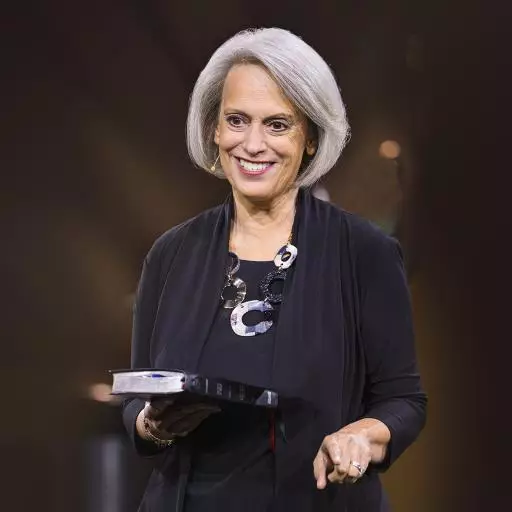
Dannah Gresh: Nancy DeMoss Wolgemuth, Unhandling Unanswered Prayer in a way that glorifies God and that leads from worry to worship. This is what we want, but we won't experience this kind of unshakable rest amid unfulfilled desires if we don't fix our eyes on Jesus. That's what my friend Judy Dunagan is going to remind us about as we close. Judy's a speaker and Bible teacher and serves on the board of Deeper Walk International. For several years, she was an acquisitions editor for Moody Publishers. She and her husband Rick live in Colorado. Here she is to share a piece of her own story and how looking to Jesus transformed it.
Nancy DeMoss Wolgemuth: My mom was a pastor's wife and saw that as her calling. She just served alongside my father. And she was a mentor, a godly woman. She wasn't perfect, but she was a precious gift to me. When she was only 70, she was diagnosed with Alzheimer's. It's a horrific disease, and she languished with that for 15 years. My father was able to care for her in their home in Phoenix for 14 of those years. Just the last year, we had to move her. My husband and I both work out of our home so we could often go to Phoenix and help.
Well, we got the call one day that um things were progressing pretty quickly. This was toward about four years before she passed away. And we didn't know if she was going to make it even through the week. So, my sister and I got on the plane and my husband. And we were there. And it's right when the first time she didn't know me, didn't know my name, didn't remember who I was. We had to bring a hospital bed into their home. But my sister and I were just kind of cleaning up some of the clutter in the home.
And there was a pile of newspapers in my parents' room. And only God did I notice this. There was a yellow sticky note on this pile of newspapers. And I pick it up and I'm kind of stunned cuz it's my mother's beautiful handwriting, which had been stolen by Alzheimer's about two or three years before. And it said, I'm fading away, but Jesus is keeping me every day. I'm fading away, but Jesus is keeping me every day. And under that, she wrote Hebrews 12 1 and 2, just the reference. Well, after she passed away in 2013, I asked Daddy if I could have her Bible.
And it's the one that had been in her assisted living. It's one he gave her as she was dealing with Alzheimer's. She had many Bibles with beautiful notes. And she loved to take notes. But this one was almost childlike. Her name she had written in the beginning of the Bible. She had whited out. I don't know if she spelled Anita wrong and rewrote it. And then I'd look through it. Philippians 4 was a favorite of hers. And she had written, praise the Lord, and didn't spell praise or Lord correctly. And so, she'll write amen. And I have this as a treasured gift.
Well, in the front of that Bible, she just wrote Hebrews 12 1 and 2 again. So, I decided I need to pay attention to these verses. And I call it my sticky note legacy, which is a pretty sweet legacy to have because of Alzheimer's in my mother's life. And so, I just want to quote these verses over you. And um they're from Hebrews 12 1 and 2. Therefore, since we are surrounded by such a great cloud of witnesses, let us throw off everything that hinders and the sin that so easily entangles. Let us run with perseverance the race marked out for us.
Let us fix our eyes on Jesus, the author and perfecter of our faith, who for the joy set before him endured the cross, scorning its shame, and sat down at the right hand of the throne of God. How about those verses for life verses? We're told to throw off everything that hinders. And women, let's just do that. Let's commit to do that together. Throw off the sin that so easily entangles, which includes that sin sometimes is being too busy serving him and not being with him. Let us run with perseverance together the race marked out for us.
Now, that doesn't mean being busy. I've learned that. Sometimes that running with perseverance means pausing and slowing down, getting some breath, spending time with him. And then finally, let us fix our eyes on Jesus. I love this version cuz he's the author and perfecter of the faith who for the joy set before him endured the cross, scorning its shame, and sat down at the right hand of the throne of God. Now, my heart for sharing today is not to put any guilt on any of you. This is not about, oh, I should have longer quiet times or I should get up at 5:00 a.m.
before my kids are up so I have time alone with them. Ask him how you can run to him, how to find margin. That's what I love about Cara time. My mentor said she was going to hold me accountable. So, I'd have a Cara day come away and rest a while day. And so, I would tell her the date and she'd pray for me. And what that day may look like, I know for some of you it's harder with little ones, but just put it on your calendar, Cara. And I what I did And I live in the mountains, which makes this easier for me, but I took my Bible journal, worship music in Cara and got into the mountains during that time when I was so burned out in ministry.
And the Lord just met me there in such a beautiful way through worship music and his word and reconfirming my calling. And so, I encourage you to try that maybe even with friends or loved ones or a spouse and need a Cara day. And will you pray for me? And I'll be praying for you as well. Let's pray together. Father God, I just thank you for your lavish love for us. Make us women desperate for you, women who run to you, who sit at your feet and listen to your teaching through your word, who fall at your feet in sorrow and lamenting, and who worship you in a lavish way.
We worship you now and we love you and your holy, magnificent and very personal name, I pray. Amen.
Dannah Gresh: Amen. We've been listening to Judy Dunagan share a very personal, very beautiful story about looking to Jesus. I mean, I'm just thinking about her precious mama fixing her eyes on him even as Alzheimer's settled in. What a testimony. Looking to Christ in the midst of suffering, it it is an natural impulse. It's one we're called to cultivate. Nancy's Advent devotional for this coming Christmas season is designed to help you do that. She's titled it Consider Jesus because at the end of a busy year in the chaos of Christmas time, isn't that what we need to do most?
She'll help us examine who he is and what he's done for undeserving sinners. We'd love to get this resource into your hands when you make a donation of any amount to support the ministry this month. We'll send you a copy as our thanks. To give and request yours, visit reviveourhearts.com or call us at 1-800-569-5959. Now, before you go, I want to remind you that next Saturday, October 31st is the last day to enjoy our super early pricing for True Woman 27. So, don't wait to sign up. And don't come alone. Tell your friends, tell your church, tell your neighbor next door.
We want all of you to join us in Indianapolis next fall. For more information, check out truewoman27.com. Also, next weekend we get to celebrate a special day. Hint, it's the day a man nailed a piece of paper with a lot of words on it to a door in Wittenberg, Germany. That man was Martin Luther. And the day in question is Reformation Day. We'll talk about the beautiful theology that compelled Martin Luther to do something so unusual when we're back together. Thanks for listening today. I'm Dannah Gresh. We'll see you next time for Revive Our Hearts Weekend.
This program is a listener-supported production of Revive Our Hearts in Niles, Michigan, calling women to freedom, fullness, and fruitfulness in Christ.
Featured Offer

This year, consider Jesus—the Architect and Designer of the season. In Consider Jesus, Nancy DeMoss Wolgemuth invites you to spend a month reflecting daily on the person and work of Christ, with one purpose: to keep your eyes fixed on Jesus.
With your donation of any amount.
Past Episodes
- 3 Ingredients of a Revived Heart
- 3 Life-Changing Lessons for Young Women
- 3 Marks of an Unshakable Woman
- 3 Ordinary Ways to Magnify the Lord
- 3 Reasons to Join the 2026 Bible Reading Challenge
- 3 Ways to Love Your Friend When It’s Hard
- 3 Women of the Bible Who Said "Yes, Lord!"
- 3 Women Who Were Grateful for God’s Word
- A Breath of New Life (2 Kings 4)
- A Cry for Revival: Isaiah 63-64
- A Great Awakening, with Kim and Katie Miller
- A Harvest of Joy
- A Heart Grounded in the Word of God, with Chris Brooks
- A Mighty Fortress Is Our God (Psalm 46)
- A Song for Weary Pilgrims (Psalm 137)
- A Woman Adorned and Adorning
- Advent for Exiles, with Caroline Cobb and Erin Davis
- Always Grateful: Ciara's Story
- Always Thankful (Psalm 66)
- An Unhurried Holiday Season
- And the Bride Wore White, with Dannah Gresh
- Anticipating Advent
- Applying the Gospel to Family Life, with Emily Jensen
- Be the Warmth: Cultivating Hospitable Character
- Becoming a Fruitful Woman
- Begin at My Sanctuary
- Behold the Big Story of the Bible, with Kevin DeYoung
- Behold the Daily Mercy of the Word, with Dannah Gresh
- Behold the Living Word, with Jackie Hill Perry
- Behold the Power of the Word to Save, with Kelly Needham
- Behold the Wonder of the Word
- Behold the Word Recovered by God’s People, with Mary Kassian
- Behold, Hearts on Fire with the Word
- Beyond Cliches: Real Encouragement for Single Sisters
- Blessed by a Godly Mother
- Blessing for the Year End & the New Year (2 Cor. 13:11-13)
- Building a Spiritual Legacy for Your Children! by Jani Ortlund
- Celebrating 25 Years of Saying “Yes, Lord!”
- Celebrating Forty Years of God's Goodness
- Celebrating God’s Abundance
- Celebrating God’s Goodness
- Choosing Servanthood Over Celebrity
- Choosing to Stay in a Difficult Marriage
- Come Adore: The Gospel in Carols
- Consider Jesus’ Chosen Humanity
- Consider Jesus’ Earthly Example
- Consider Jesus’ Eternal Deity
- Consider Jesus’ Matchless Supremacy
- Consider Jesus’ Saving Purpose
- Courage and Compassion: Two Words for Parents
- Crossing the Finish Line: Remembering Robert Wolgemuth
- Dear Single Woman, God Sees You
- Devotions Amid Diapers
- Don't Give Up on That Modeling Career, by Susan Hunt
- Dry Bones Can Live Again (Ezekiel 37)
- Ease Into the Bible, with Jean Wilund
- Embracing Singleness
- Encouragement from a Grieving Widow
- Exploring the True Woman Manifesto
- Faithful, Not Famous with Laura Gonzalez de Chávez
- Finding Soul-Deep Satisfaction in Jesus
- Food Is Not the Enemy: Discover Freedom from Food Fixation, with Asheritah Ciuciu
- Free to Be Real
- Freedom in Christ
- From Death to Life: Hope After Abortion
- From Desperation to Deliverance: The Promise of Psalm 107
- Fruitful in Christ
- Fullness in Christ
- Gentle Parenting: Wisdom or Weakness with Tanner Kay Swanson
- God’s Grace for Weary Moms
- God's Power to Revive a Heart, with Andrea Griffith
- Hallelujah! A Praise Celebration (Psalm 113)
- Holy Week Heart Prep: The Wonderful Names of Jesus
- Hope in the Midst of the Hard
- How God’s Love for Women is Displayed in the Old Testament, with Dr. Katie McCoy
- How Less Scrolling Could Change Your Life, with Lara d’Entremont
- How Long, O Lord? Learning to Pray Through Pain
- How Remembering Eternity Transforms Today (Psalm 90)
- How to Build Your Home
- How to Have a Happy New Year (Psalm 1)
- How to Have a Marriage that Magnifies God
- How to Have a Quiet Heart
- How We Got Our English Bible
- Indispensable Ingredients for Life
- Instruments of Grace
- It’s Possible! Learn to Control Your Mind and Emotions
- Leading Children to Love the Word
- Learning to Love the Old Testament, with Jennifer Smith
- Letting God Be God, with Andrea Griffith
- Living Out the Beauty of the Gospel
- Living Well, Finishing Well, with Mark DeMoss
- Looking to Jesus in the Midst of Change
- Looking to Jesus in the Midst of Shame
- Looking to Jesus in Your Exhaustion
- Looking to Jesus When Your Prayer Goes Unanswered
- Made to Tremble, with Blair Linne
- Magnifying Christ in the Midst of Anxiety
- Mary of Nazareth
- Mentoring Matters
- One Thing (Psalm 27:4)
- Open Your Home, Open Your Bible, with Erin Davis
- Ordinary Women, Extraordinary God
- Parenting Teens with Hope, with Melissa Kruger
- Passing a Biblical Worldview on to Your Children, with Jeff Keaton
- Pleading the Cause of the Unborn
- Practicing Thankfulness, with Sam Crabtree
- Putting God's Word First, with Gretchen Saffles and Janine Nelson
- Read Your Bible!
- Rediscovering Intimacy With God
- Relationship Refresh: Helping Your Community Thrive in Christ
- Renewed and Restored (Psalm 23:2-3)
- Renewing Your Mind
- Revival Begins with You
- Revive Us Again (Psalm 85)
- Ruth: The Transforming Power of Redeeming Love
- Safely Home: Honoring Robert Wolgemuth
- Sarah, Meet Mercy
- Science, Scripture, and a Life Transformed, with Dr. James Tour
- See for Yourself: Get to Know Your Bible, with Kelly Needham
- Showing Kindness, with Kathy Branzell
- Spiritual Disciplines We Forget About
- Spiritual Habits for Little Hearts
- Surrendering Your Independence
- Teaching the Gospel to Children, with Barbara Reaoch
- The Beauty of Living Out the Gospel as a Woman
- The Four Emotions of Christmas
- The Glory of Face-to-Face Fellowship
- The Gospel Is Everything: 25 Years of Pointing Women to Christ
- The Humble Savior Who Came
- The Incomparable, Incarnate Christ
- The Joy of Bible Journaling
- The Joy of Embracing Biblical Womanhood, with Laura Perry Smalts
- The Legacies of Two Godly Fathers
- The Truth Your Girl Desperately Needs
- The Well-Watered Woman, with Gretchen Saffles
- The Wonder App: Transforming Screen Time into Scripture
- Three Mercies for Young Moms
- To The Woman Who Doesn’t Feel God’s Love
- Treasuring Christ in Our Traditions with Noel Piper
- True Woman '25 Panel Discussion: Behold the Word in Every Season
- True Womanhood for Today
- Truly Strong: Becoming Women Who Depend on the Lord
- Walking Well in Every Season: For the Empty Nester, the Grandma, and the Widow
- What Freedom, Fullness, and Fruitfulness Really Mean, with Robert Wolgemuth
- What Is a Woman? with Mary Kassian
- What Makes You Beautiful? with Kristen Wetherell
- What Sisterhood Is (and Isn’t)
- What’s the Point of Praise? 3 Reasons Your Worship Matters
- When Prayer Sparks Revival, with Bob Bakke
- Why Study the Bible?
- Wonder of the Word Made Flesh
- Word Before World, with Gretchen Saffles
- Working for the Lord

Featured Offer
This year, consider Jesus—the Architect and Designer of the season. In Consider Jesus, Nancy DeMoss Wolgemuth invites you to spend a month reflecting daily on the person and work of Christ, with one purpose: to keep your eyes fixed on Jesus.
With your donation of any amount.
About Revive Our Hearts
Married, single, young or older, you'll want to join us every day for practical, biblical insights on becoming a fruitful woman of God. Best selling author and national radio host, Nancy DeMoss Wolgemuth makes the Scriptures come alive. You'll be touched by Nancy's messages and by the passion of her heart.
About Nancy DeMoss Wolgemuth
Nancy DeMoss Wolgemuth has touched the lives of millions of women through Revive Our Hearts and the True Woman movement, calling them to heart revival and biblical womanhood. Her love for Christ and His Word is infectious and permeates her online outreaches, conference messages, books, and two daily nationally syndicated radio programs—Revive Our Hearts and Seeking Him. Her books have sold more than four million copies and are reaching the hearts of women around the world. Nancy and her husband, Robert, live in Michigan.
Contact Revive Our Hearts with Nancy DeMoss Wolgemuth
Mailing Address
Revive Our Hearts
P.O. Box 2000
Niles, MI 49120
Telephone Numbers
1-800-569-5959 (toll-free)