
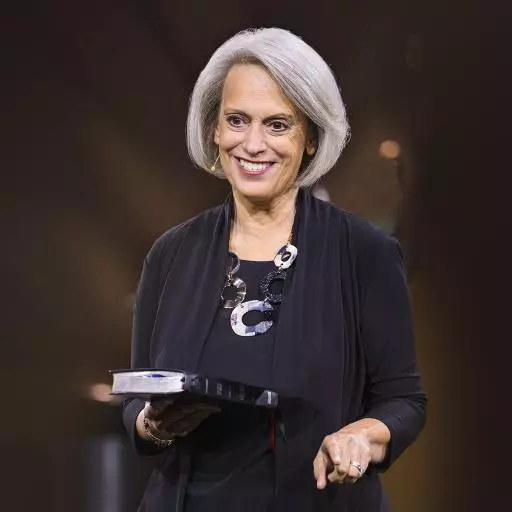
Leading Children to Love the Word, Ep 3 of 3


What tools are in the toolbox of a parent, grandparent, or anyone who works with children? Kevin DeYoung, Elizabeth Urbanowicz (er-BAN-uh-wits), and Sarah Jerez (her-EZZ) discuss music, catechisms, and more on Revive Our Hearts with Nancy DeMoss Wolgemuth.
Elizabeth Urbanowicz: Has a child, maybe your child, ever asked you a stumper? It’s okay not to always have an answer. You can say, "I am so grateful that you came to me with that question. That’s a really good question. Do you know I’ve never actually thought of that before? And here’s the truth: I don’t know the answer to that question. But there is an answer out there. Let’s find it together."
Dana Gresh: This is the Revive Our Hearts podcast with Nancy DeMoss Wolgemuth, author of *Adorned*, for April 24, 2026. I’m Dana Gresh. If you’re walking through the 2026 Bible reading plan with us, you know we’re reading from the book of Second Kings. In today’s passage, we read about King Hezekiah, who was a bright spot in the list of Judah’s kings. He received a scary, threatening letter from the Assyrian King Sennacherib, and well, I am not going to spoil it for you if you haven’t read it yet.
To sign up and read through the Bible with women from around the world, go to reviveourhearts.com/bible2026. You can opt in to daily emails to encourage you along the way. I get them myself. Again, it’s reviveourhearts.com/bible2026.
This week, we’re talking about renewing our minds. On Monday, Blair Lin shared how the Lord calmed her struggles with anxiety and panic attacks after she hit a deer with her car. On Tuesday, Nancy told us about the Greek word *sophron* and how God’s Word calls us to be sober-minded and self-controlled. A renewed mind will never happen apart from the Scriptures.
For the last couple of days, we’ve been talking about how to help children grow in their love for God’s Word. We’ll hear more from that panel discussion in a moment. Incidentally, if you missed any of these programs, they’re all available on the Revive Our Hearts app or at reviveourhearts.com. Here’s Nancy talking about the intentionality and the proactiveness needed when it comes to passing on God’s wisdom to future generations.
Nancy DeMoss Wolgemuth: Listen to these words in Proverbs chapter two. In fact, you may want to turn there. Proverbs chapter two, beginning in verse one. Listen to the way that this father, Solomon, says to his son that he needs to pursue wisdom. He needs to be intentional about it.
Proverbs 2, beginning in verse one: "My son, if you receive my words, and treasure up my commandments within you, making your ear attentive to wisdom, and inclining your heart to understanding; yes, if you call out for insight, and raise your voice for understanding, if you seek it like silver, and search for it as for hidden treasures."
Let’s just stop there before we move on. Do you hear the earnestness here? If you desire this, if you receive this, if you treasure this up, make your ear attentive. Tune your ear like you’re listening for the faintest sound. Incline your heart, set your heart in the direction to receive wisdom. And don’t stop there. Call out for it. Raise your voice for it. Seek it like silver. Search for it as for hidden treasures.
We’ve all had the experience of losing something in our home, or I can lose something in my purse and not find it for months. Now I carry a smaller purse so that won't happen. But you know what it’s like to just tear up your house looking for a check or a bill or something valuable that we’ve lost.
I know what it is to spend long periods of time trying to track down some obscure fact or quote on the internet, and I’ll search and search and search. I’m on a mission. I’ve got to find this. I need this quote. I need this stat. I need this check. I need to find this. We go on a mission, we get intentional about it, and we say, "Get out of my way, I’m going to find what I’m looking for."
That’s the picture here. I’m on a mission. I’m on a pursuit. There’s nothing casual about this pursuit. I’m looking for wisdom. And let me say you don’t have to be old to look for wisdom. Far better that you start when you’re young. The women in this room who are older would say without exception, "I wish I had been more earnest in searching for wisdom when I was younger."
I see a lot of heads nodding. I wish that I had been more diligent. I wish I had cried out for wisdom. I wish I hadn’t waited till I was married before I started searching for wisdom, before I raised my children and didn’t do it God’s way. I wish that I had searched for wisdom. Now, to do that requires intentionality. It requires earnestness. It requires pursuit.
Dana Gresh: That’s Nancy DeMoss Wolgemuth reminding us there’s significant effort involved in searching for wisdom and in passing it along to children and grandchildren. Thankfully, parents and grandparents have some wonderful tools they can use along the way. Tools to help kids develop an appetite for the things of God.
That’s where our panel’s headed today in part three of their discussion. You’re about to hear the voices of Bob Lepine, Sarah Jerez, Kevin DeYoung, and Elizabeth Urbanowicz, in that order. They’re authors and speakers, and collectively, they’ve invested thousands of hours in the lives of children. Recorded at a recent True Woman conference, here’s Revive Our Hearts board chairman, Bob Lepine.
Bob Lepine: You have thoughts about music and how we incorporate—I’m looking at Sarah, who is a musician. I’m just thinking how big music was in our home, how much Scripture our kids know because there was a melody attached to it. Thoughts on that?
Sarah Jerez: Yes, my husband and I love music, and I echo the words of Martin Luther. He said next to the Word of God, music is worth the highest praise. I really believe that to be true. I think God created music for His glory, for our joy, and it’s really one of the greatest instruments to absorb information. I think we sing about what we love, and we end up loving what we sing about.
It’s just such a powerful tool that was meant to stir our feelings for God, but obviously, the enemy, as with everything, has corrupted music as well. The truth is, music can make anything sound or feel true. So, I’d say, first of all, on the negative sense, you really need to think about the songs that your kids are listening to.
In our house, we do listen to secular music. We don’t have specific rules about that because we really love music in general, but we do have filters, and we do use that as an instrument to think, "Okay, what is this song saying? Is this true? Why or why not? What does God say about that?" Sometimes you might be doing a work at home trying to be in the Word, but they’re in their room twenty hours of the week listening to songs that completely contradict what you’re teaching them, and that is really going straight to the heart because music is powerful.
On a positive note, I’d say, at least in our home, it’s singing things that are true, having worship on, but also those memory songs. There’s some albums, I think Nancy has mentioned them on her podcast, the *Seeds Family Worship* and *Hidden in Your Heart* scripture lullabies. We have been listening to those since before Zoe was born in our house.
I remember the other night we were talking about, again, one of those organic moments, I was going to teach on Philippians, and I mentioned Philippians 4, and I just started talking about it, and my daughter just recited it in front of me. I was like, "Oh, when did you—I didn't teach you that!" I said, "Did you learn that at church?" And she’s like, "No, it’s in the scripture lullabies we hear at night. I know all the verses from all the songs." I thought, "Oh, great!" That’s an easy way to get the Word in your kids' hearts.
One of our theme verses in our house is Colossians 3:16, which says, "Let the word of Christ dwell in you richly, teaching and admonishing one another through psalms, hymns, and spiritual songs." So, I think not only is it that we should use songs to teach, songs teach. It’s just a fact.
Practically, you can one, have songs that you use when you’re memorizing verses, which I also suggest off of what Elizabeth was sharing, give context to the verses you’re memorizing. Don’t just memorize random verses, because I have talked to older women who will be in a Bible study like, "Oh, wow! I didn't know that that’s what that verse was about. I just memorized it when I was a kid." It would be great that if you’re going to memorize a verse, give context of who wrote this, who did he write it to, why, what were they talking about?
There are so many resources nowadays of Scripture songs, and even for really little kids, our kids still sing a song that we would sing when they were tiny, just a, "Where is God everywhere, where is God everywhere, God is everywhere," and they still sing it to this day. Melodies are just so important when you’re trying to memorize the Word.
Also, something you can do practically is pick a song that is really important to you or that they sing at church and make that your song for the month. Sing it before bed every night, and then discuss line by line, each week, or a verse each week, and kind of talk about what does this mean? Sometimes they might know all these songs from church, but they really don’t know what they mean.
That was our heart behind the book we wrote, too, of you might know this song well, okay, let’s understand the truth that’s in this song. I think that’s a great way of teaching the Word to kids as well—just getting a song, walking through each verse, one verse a week, and explaining it to them. And that way, as they’re singing it, now they really get what they’re singing about.
Bob Lepine: Kevin, Elizabeth mentioned the New City Catechism. I know you were involved in that project, and each of those questions and answers has a song attached to it, so it’s a great way for kids not just to memorize a catechism but learn it through the songs. Should parents be catechizing? Should we be looking for those questions and answers? "Who made you? God made me. What else did God make? God made me and all things."
Kevin DeYoung: In the history of the church, catechesis, catechism has been a predominant way that one generation has passed on to the next generation. In the whole history of the Western church, most catechisms consisted largely of three things: the Apostles' Creed, the Lord's Prayer, and the Ten Commandments. There’s lots of other things we can do. If you or your Christian school or your homeschool co-op or your church isn't doing something with those things, then we’re out of step with what the church has done for most of history.
At least some of what we’re doing in—so if you think, "I don't know, maybe I haven't used New City Catechism or some other catechism." Those three things—the Apostles' Creed (what are the core doctrines of the faith), the Ten Commandments (what does it look like to obey God, live a life pleasing to Him as His people), and then the Lord's Prayer—so those three things would be the core.
There are lots of good resources. So the New City Catechism, there are other new resources being written. I grew up in the Dutch Reformed tradition, and so we had to memorize large parts of the Heidelberg Catechism. I commend that to you. Presbyterians, now we—there’s a Westminster Shorter Catechism. There’s the Children's Catechism, which is an even shorter version of that.
Find something that’s good and necessarily theological and is going to fit your tradition. You should be Presbyterians, but some of you aren’t, I get it. But teaching them some of that. You’ll get some superstars who will memorize things, and then others, they won’t, but they’ll have more of it than you realize. People who study child psychology can explain this to you, but there are ages where it’s a lot easier.
As adults we’re saying, "Oh, this is so hard." It’s a lot easier for our kids to memorize things than it is for us. My kids now, they’ve all had to go through, I forget what grade it is, they have to one year they have to memorize the Gettysburg Address, then they have to memorize a big chunk of the Declaration of Independence. They’ve got to memorize FDR's speech. They’ve got to do these things for their American history class.
Wow, how are you—you’re eight and they’re just getting it. And they can get Scripture through songs, through catechism. So I’m so grateful I had to learn the Heidelberg Catechism, and a whole bunch of those just come back to me. "What is your only comfort in life and in death?" "What do we mean by God's providence? It is His almighty and everywhere present power by which He upholds as with His hand heaven and earth and so rules over all creatures," etc. If you get five of those in your head, it’s amazing how often you come back to those five.
Bob Lepine: Elizabeth, you’ve looked at the developmental stages of kids—four to twelve in particular. So help these moms who have got kids that age. What are they capable of? How do you focus in on those different developmental stages?
Elizabeth Urbanowicz: Yes, in general, those of you who are parents have probably seen our kids are capable of so much more than we give them credit for. But really, in that age range from around three to six or seven, just depending on where they are developmentally, that’s the age when they’re just like sponges. They can memorize so much.
That is the age when you want to start those memorization tools, whether it’s Scripture through song or longer passages of Scripture or catechism. That is how God has designed our kids' brains at that time. Then usually around the switch from seven to eight, that’s when our kids developmentally are able to consider a perspective outside of their own.
It happens at different ages for different kids—some start earlier around seven, some it goes a little bit later around the age of nine—but our kids are able to start thinking critically and considering how other people are thinking somewhere between that seven to nine age range.
So we want to encourage our kids to ask questions, whether it’s about Scripture or about other things in life, because they’re naturally curious during those early developmental stages, you know, when they’re young, but also in that seven to nine, even up to ten range. It’s really important because there’s so much information thrown our kids' way, and especially once they get to be about eleven or twelve and they care more about what their peers think.
We want to make sure that we have developed really good open lines of communication with them. If as you’ve been going through this session, and you’ve been thinking, "Oh my goodness, I have a lot to learn about Scripture, if I’m going to lead my kids in Scripture." That’s a good thought, because we can’t pass on to our children something that we don’t have ourselves, and so we ourselves need to be immersed in God’s Word.
But what I see is a lot of times parents get scared when kids start asking questions for one of two reasons. Either they think, "Oh my goodness, my child is questioning the faith. This is the beginning of the end." Or they think, "I have no idea how to answer that question." Well, when our kids ask questions, it is not a bad thing, because God is the God of the universe, and Christianity is actually true. And so we don’t need to be scared of questions.
When our kids ask us questions, even if your child comes to you and asks you a question about Scripture or about something in society that just shocks or horrifies you, it’s a good time to keep your poker face on, keep a smile and say, "I am so grateful that God has given you a mind that thinks so carefully. Thank you so much for coming to me with that question."
When we affirm our kids' questions, we let them know that we are a safe and loving place to bring those questions to. Who do we want them to bring their questions to? Do we want them to bring them to Google, to TikTok, to friends, to a teacher that probably doesn’t know Jesus? No, we want them to bring their questions to us.
Then if your child asks you something and you’re like, "I don't know, this is a Bible question and I should know the answer and I don't and I just feel completely stupid right now." Don’t freak out, because it is a huge gift when you do not know every single answer. Because if every time your child comes to you and asks you a question, you have the perfect answer or you fudge a perfect answer, what you’re training your child to do is you’re training them to blindly trust you.
If you train them to blindly trust you, that blind trust is one day going to be transferred to someone else. We don’t want our children to blindly trust any fallible human. So if your child comes to you with a question that you just don’t know the answer to, it’s not a bad thing. You can say, "Oh, I am so grateful that you came to me with that question. That’s a really good question. Do you know I’ve never actually thought of that before? And here’s the truth: I don’t know the answer to that question. But you know what? There is an answer out there. Let’s find it together."
Bob Lepine: And you might not have time. Your child might ask you this right before bed and it’s a stall tactic, and you’re like, "We do not have the next forty-five minutes to debrief this, you just have to go to sleep."
Elizabeth Urbanowicz: But you can say, "That’s a good question and you know what? Tomorrow after dinner or tomorrow when you get home from school or this weekend, whenever it is, we’re going to carve some time out and we’re going to find an answer to that question." And giving your kids skills to find solid answers is so much more valuable in the long run than just hoping that they’re going to blindly trust you.
Bob Lepine: If folks want more information about the stuff that you’ve developed—because it’s for homes, not just for schools—go to your website? Is there stuff in the resource center?
Elizabeth Urbanowicz: Yes, so if you go to foundationworldview.com you can find all of the information there. We also do have a booth in the resource center. So if you go to foundationworldview.com and then in the resource center we have a booth and you can get information on all that we have.
Bob Lepine: Kevin, if God loves everyone, does He love Satan? I just thought I’d throw one of those kid questions at him and see what he does with it.
Kevin DeYoung: No, would be my short answer if my kids asked that. I would say first of all, there’s no verse in the Bible that talks about God loving Satan. God loves in us what He sees of Himself and His own character. And what do we mean by love? We mean He wants what is best, holds out hope. The devil has already so hardened himself. There is no hope. His state cannot be changed.
Would God forgive anyone who came in repentance? Yes. But the devil is one creature who cannot and will not. If you want more layers, you can always say in one sense God loves all the things that He has made and the devil is His own creature. But I think that mainly leads our kids in a wrong direction.
I think that sort of question is one that adults don’t dare to ask because we think we should already know that one. Kids ask questions that are really hard sometimes because they’re so simple, they’re not simple. People have asked me this before: "So when Jesus—He’s God, right?" "Yep." Whenever that comes you’re like, "Oh this is going to get really confusing. So when He came down and was born as a baby?" "Yep." "So did He leave heaven in order to be born?"
The answer is actually no, He didn’t. You might think it is. You can Google Kevin DeYoung "Did the Son of God leave heaven?" You can get the answer. I usually just point my kids to a website and just tell them to read my blog. But here’s the point is if they’re especially younger kids, they probably will be content with a rather simple answer.
"So does God love the devil?" "Well, in a way God loves every creature He’s made in that He always wants what is best for those creatures. But you know, the Bible talks about how the devil is God's enemy and God will punish the devil because the devil has nothing but sin, and God has to be angry with sin."
Bob Lepine: Would you mind just giving us your number so that we can call you at 7:00 at night when they’re asking the question before bed? Ladies, thank you for the time. Thank these panelists for their answers. I want to close just by praying for you and for your kids.
Father, it is our kids are so much a burden in our heart. Your Word is true when it says we have no greater joy than to know that our children are walking in the truth, and there is no deeper pain than when our kids aren’t walking in the truth. And so, Lord, we pray first that You would do Your work in our kids' hearts—the work that we cannot do—that You would awaken them to Your glory, that they would delight in You, that they would repent of their sins and turn to You at an early age, and that they would love Your Word because You have put that love for Your Word in their heart and they would follow You and pursue You all of their days.
Lord, give us wisdom as parents to lead and guide and point our kids in the right direction. Protect them, we pray, from our own mistakes that we will make. And we pray that they would be mighty in their love for You throughout their days, and that You would guard their hearts and minds in You. Again, I pray for all of these moms that they would—what they’ve heard here today that has been beneficial—that they’d be able to take that home and implement it and begin some new pathways in their home. We ask all of this in Your name, Amen.
Dana Gresh: Amen. Bob Lepine has been praying for the moms and grandmoms that were in attendance at a workshop at a recent True Woman conference. But his prayer extends to you, me too. Even if you’re not a parent, you still influence children and young adults in such an important way. Kevin DeYoung, Elizabeth Urbanowicz, and Sarah Jerez all have some wonderful resources that can be a big help in your interactions with children. They mentioned the New City Catechism as well. You’ll find it all at a link within the transcript of this program at reviveourhearts.com.
While you’re there, don’t forget about our online assessment tool to help you reflect on whether or not you’re self-controlled and sober-minded. This would be a wonderful thing to walk through with a child too. It’s not complicated; it’s just two columns with a variety of characteristics and questions to ponder. Again, you’ll find a link to that evaluation in the transcript of this program.
Last but not least, to anyone suffering from anxiety, especially after a traumatic event, we’re commending the book *Made to Tremble* by Blair Lin. She shares helpful insights on how the Lord delivered her out of all of her fears. It’s our thank you to you for your donation to Revive Our Hearts. We’re listener-supported, so that means we depend on the prayers and financial gifts of friends like you. You can play a part in helping us call women to freedom and fullness and fruitfulness in Christ.
You can make a donation at reviveourhearts.com or when you call 1-800-569-5959, and be sure to request Blair Lin’s book *Made to Tremble* when you do. If you can make a donation at reviveourhearts.com, thank you so much.
Well, you wouldn’t normally head to a cemetery to have a church service with the residents there, would you? Whatever you said would fall on deaf ears and lifeless hearts. But on Monday, Nancy DeMoss Wolgemuth will tell us about a time when God told the prophet Ezekiel to do exactly that. Well, it wasn't a cemetery, but it was a whole valley of dry bones. Find out what it means and what it has to do with you and me on Monday.
Have a wonderful weekend. Keep renewing your mind, read your Bible, go to church, and worship with your family in Christ. You need them, and they need you. And then be back for Revive Our Hearts.
This program is a listener-supported production of Revive Our Hearts in Niles, Michigan, calling women to freedom, fullness, and fruitfulness in Christ.
Featured Offer

Experience true renewal in the presence of the Lord. With your donarion.
Past Episodes
- 3 Doctrines that Fuel Endurance
- 3 Ingredients of a Revived Heart
- 3 Life-Changing Lessons for Young Women
- 3 Reasons to Join the 2026 Bible Reading Challenge
- 3 Ways to Love Your Friend When It’s Hard
- 3 Women Who Were Grateful for God’s Word
- A Cry for Revival: Isaiah 63-64
- A Great Awakening, with Kim and Katie Miller
- A Harvest of Joy
- A Heart Grounded in the Word of God, with Chris Brooks
- A King’s Preparations, Plans, and Provision
- A Wife’s Submission: What it Is and Isn’t
- A Woman Adorned and Adorning
- Advent for Exiles, with Caroline Cobb and Erin Davis
- Always Grateful: Ciara's Story
- Always Thankful (Psalm 66)
- An Unhurried Holiday Season
- Anticipating Advent
- Be the Warmth: Cultivating Hospitable Character
- Begin at My Sanctuary
- Behold the Big Story of the Bible, with Kevin DeYoung
- Behold the Daily Mercy of the Word, with Dannah Gresh
- Behold the Living Word, with Jackie Hill Perry
- Behold the Power of the Word to Save, with Kelly Needham
- Behold the Wonder of the Word
- Behold the Word Recovered by God’s People, with Mary Kassian
- Behold, Hearts on Fire with the Word
- Beholding the Wonder: True Woman '25
- Beyond Cliches: Real Encouragement for Single Sisters
- Blessing for the Year End & the New Year (2 Cor. 13:11-13)
- Blessings and Curses: A Look at the Life of Balaam
- Brokenness: The Heart God Revives
- Celebrating God’s Abundance
- Celebrating the Gift of Grandparents
- Choosing Grace over Gossip
- Choosing Servanthood Over Celebrity
- Come Adore: The Gospel in Carols
- Control Girl, with Shannon Popkin
- Corporate Revival
- Crossing the Finish Line: Remembering Robert Wolgemuth
- Ease Into the Bible, with Jean Wilund
- El Shaddai: The All-Sufficient One
- Embracing God as Father
- Enlarging Your Heart for Eternity, with Colleen Chao
- Faithful, Not Famous with Laura Gonzalez de Chávez
- Finding Freedom from Fear, with Judy Dunagan
- Finding My Father Father: How the Gospel Heals the Pain of Fatherlessness, with Blair Linne
- From Death to Life: Hope After Abortion
- God’s River Flows in Spain and Brazil
- God’s Word and Our Emotions
- God's Power to Revive a Heart, with Andrea Griffith
- Gospel Mom, with Laura Wifler and Emily Jensen
- Grace for the Depressed
- Grateful, then Graceful, with Mari Glick
- Helping Kids Think Biblically, with Elizabeth Urbanowicz
- His Healing Touch
- Holy Week Heart Prep: The Wonderful Names of Jesus
- How God’s Love for Women is Displayed in the Old Testament, with Dr. Katie McCoy
- How Less Scrolling Could Change Your Life, with Lara d’Entremont
- How to Have a Happy New Year (Psalm 1)
- How to Have a Marriage that Magnifies God
- How to Have a Quiet Heart
- How We Got Our English Bible
- Humility, Not Pride
- Leading Children to Love the Word
- Learning to Love the Old Testament, with Jennifer Smith
- Lessons from Levites
- Living Out the Beauty of the Gospel
- Living Water
- Living Well, Finishing Well, with Mark DeMoss
- Loving and Living God’s Word, with Kelly Needham
- Persecution, Perseverance, and the Key to Sustaining Faith, with Dr. Karen Ellis
- Persevering Love for the Local Church
- Pleading the Cause of the Unborn
- Practical Bible Study Tips
- Practicing Thankfulness, with Sam Crabtree
- Precepts, Parkinson’s, and the Truth That Sets Us Free, with Kay Arthur
- Psalm 23: Our Good Shepherd
- Putting God's Word First, with Gretchen Saffles and Janine Nelson
- Read Your Bible!
- Rediscovering Intimacy With God
- Relationship Refresh: Helping Your Community Thrive in Christ
- Remembering Voddie Baucham, Jr.
- Renewed and Restored (Psalm 23:2-3)
- Renewing Your Mind
- Revival Begins with You
- Revive Me According to Your Word
- Revive My Heart, Lord!
- Revive Us Again (Psalm 85)
- Ruth: The Transforming Power of Redeeming Love
- Safely Home: Honoring Robert Wolgemuth
- Saying, “Yes, Lord!”
- Science, Scripture, and a Life Transformed, with Dr. James Tour
- See for Yourself: Get to Know Your Bible, with Kelly Needham
- Showing Kindness, with Kathy Branzell
- Sin, Suffering, and the God Who Restores
- Sorrowful, Yet Always Rejoicing
- Spiritual Disciplines We Forget About
- Spiritual Habits for Little Hearts
- Spiritual Mothering
- Spiritual Strength for an Evil Day (Ephesians 6)
- Steadfast Faith
- Storm Shelter
- Supporting Your Suffering Friend, with Jani Ortlund
- Tell Yourself What’s True
- Telling the Greatest Story
- Tender Counsel for the Fearful and Grieving, with Paul Tautges
- The Beautiful Process of Repentance
- The Beauty of Living Out the Gospel as a Woman
- The Book of Books
- The Four Emotions of Christmas
- The Glory of Face-to-Face Fellowship
- The Grace of Remembrance
- The Humble Savior Who Came
- The Incomparable, Incarnate Christ
- The Joy of Bible Journaling
- The King Still Has Another Move
- The Personal Devotional Life
- The Personal Devotional Life: Beyond Quiet Time, with Dr. Henry Blackaby
- The Power of Words
- The Ultimate Meaning of True Womanhood
- The Well-Watered Woman, with Gretchen Saffles
- The Wonder App: Transforming Screen Time into Scripture
- Three Gifts Suffering Gives
- To The Woman Who Doesn’t Feel God’s Love
- Treasuring Christ in Our Traditions with Noel Piper
- True Woman '25 Panel Discussion: Behold the Word in Every Season
- Truth Talk for Hurting Hearts, with Dawn Wilson
- Walking Through Life's Deserts
- What Do We Do with Unfulfilled Longings?
- What Sisterhood Is (and Isn’t)
- What's in a Dad?
- When Busyness Threatens Intimacy with God
- When Prayer Sparks Revival, with Bob Bakke
- Where the River Flows: The Life-Giving Work of the Spirit
- Why Study the Bible?
- Wonder of the Word Made Flesh
- Word Before World, with Gretchen Saffles
- You Can Trust God to Write Your Story
- You Have a Living Hope
- Your Will Be Done: Rebecca Ellerman’s Story
- You've Come a Long Way, Baby! (Mary Kassian)

Featured Offer
Experience true renewal in the presence of the Lord. With your donarion.
About Revive Our Hearts
About Nancy DeMoss Wolgemuth
Nancy DeMoss Wolgemuth has touched the lives of millions of women through Revive Our Hearts and the True Woman movement, calling them to heart revival and biblical womanhood. Her love for Christ and His Word is infectious and permeates her online outreaches, conference messages, books, and two daily nationally syndicated radio programs—Revive Our Hearts and Seeking Him. Her books have sold more than four million copies and are reaching the hearts of women around the world. Nancy and her husband, Robert, live in Michigan.
Contact Revive Our Hearts with Nancy DeMoss Wolgemuth
Revive Our Hearts
P.O. Box 2000
Niles, MI 49120
1-800-569-5959 (toll-free)