
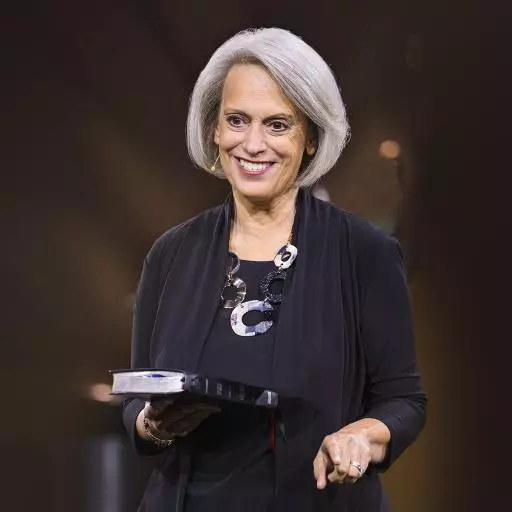
Indispensable Ingredients for Life, Ep 3 of 5


What role should the public reading of Scripture have in churches? Nancy DeMoss Wolgemuth has observed something about the teachers who have most impacted her life. They put the Word of God ahead of their own thoughts. From Joshua’s story, see the importance of keeping God’s Word central to our worship on Revive Our Hearts.
Dana Gresh: Today on Revive Our Hearts, Nancy DeMoss Wolgemuth will talk about keeping God's word at the center of your life. Nancy, that is such an important topic.
Nancy DeMoss Wolgemuth: It's right, Dana. Let me just share one example with you. A woman wrote to us and said, "The Lord brought Revive Our Hearts into my life when I was young in my faith. At that time, I was struggling to discern what was true from the many lies that are out there."
She goes on, "The Lord in his faithfulness has been using the sound teaching on Revive Our Hearts to mold my life as a woman of God. I'm convinced the Lord has used this ministry to shape me in ways I've yet to see or know."
Well, I'm so thankful for how God has used Revive Our Hearts in this woman's life to get her grounded in the truth of God's word because it's the truth that sets us free. And that's how we come to know God is through the truth of his word.
Dana Gresh: Amen, friend. And I think it's so incredible that Revive Our Hearts has gotten to share that same truth for almost 25 years now. Now if God's used this ministry to shape you, would you prayerfully consider making a donation this month?
We're wrapping up our fiscal year and asking the Lord to meet some pretty significant needs in order to step confidently into a new season of ministry. Our goal is to raise $1.4 million by May 31st. Your donation of any amount keeps us moving forward and just means so much to us.
And when you give, we'd love to send you "Called to Thrive," a booklet that really captures the heart of this ministry. It's designed to call you afresh into the freedom, fullness, and fruitfulness Christ offers. To give and request your copy, visit reviveourhearts.com or call us at 1-800-569-5959.
This is the Revive Our Hearts podcast with Nancy DeMoss Wolgemuth, author of "A Place of Quiet Rest." For May 20th, 2026, I'm Dana Gresh.
Guest (Male): What role should the public reading of the Bible have in a church service? To answer that question, there's no better place to look than the Bible itself. That's what Nancy will do as she continues teaching about the life of Joshua.
Dana Gresh: As you listen, be thinking about how God's word might be a key ingredient to experiencing fullness in Christ.
Nancy DeMoss Wolgemuth: Well, we've been kind of parked in Joshua chapter 1, the first nine verses, and we've seen the changing of the guard as Joshua has become the leader of the people, replacing Moses, who is now dead. In those first nine verses, God gives some wonderful words of encouragement to Joshua as he faces this impossible task that lies ahead of him.
I've spent the last several months meditating on the first nine verses of Joshua chapter 1. It's been so rich to me, and I would encourage you to get into that passage yourself for whatever season of life you may be in and to find words of encouragement and exhortation that will help you in this season of life.
Now we saw that Joshua has been commissioned. God has told him what his task is, what his responsibility is. Verse six of Joshua 1: "You shall cause this people to inherit the land that I swore to their fathers to give them." You're going to take the children of Israel into the promised land.
And the natural question is, humanly speaking, how can this happen? How can this be? This is impossible. There's no way to get those one to two million Jews across the Jordan River. And once we do get there, there are these walled cities and there are these giants. How are we going to do this?
Now Joshua doesn't say that because over the years, Joshua has been learning to walk by faith. He has demonstrated that over and over again, that he believes that God is bigger than the giants. But I want to tell you, no matter how spiritual you are, no matter how long or how much you've believed God, there are moments when you still get terrified.
And I can't speak for anybody else, but I can speak for myself. And I know some people must hear me teach and must think, don't you ever doubt that these things are true? Don't you ever doubt that God's presence is with you? And I go, yes. Sometimes I just lapse into serious unbelief and dark times at moments of just doubting and how, Lord, am I going to do this?
And this seems so impossible. And then I get flustered. And God comes back to me with the same things he said to Joshua. And I guess that's why I love this passage. God said, first of all, "I will go with you. You're not going to be on your own. You will have my presence." And we've looked at that over the last couple of sessions.
And then, as God charges Joshua to be strong and courageous, he gives him another resource that will help protect him from fear, and that is the word of God. Not just the presence of God, but the word of God. In this passage, Joshua 1, it's often called the book of the law, which is all they had in those days, the books of Moses, the Pentateuch: Genesis, Exodus, Leviticus, Numbers, and Deuteronomy.
They didn't have the whole Bible as we do, but what they had was God-inspired. It was precious and it was what they needed to enable them to fulfill God's calling. So let me pick up in verse 7 of Joshua chapter 1, and you'll see this theme: "Only be strong and very courageous, being careful to do according to all the law that Moses my servant commanded you."
"Do not turn from it to the right hand or to the left, that you may have good success wherever you go. This book of the law shall not depart from your mouth, but you shall meditate on it day and night, so that you may be careful to do according to all that is written in it. For then you will make your way prosperous, and then you will have good success."
One of the most important keys to Joshua's success over a lifetime of faithfulness was his respect and his love for the law of God, the word of God. From the time he was a younger man, now as he's becoming an older man to the end of his life, he had a huge respect for God's word.
And he had learned this from his mentor, who was Moses, his predecessor, Moses the servant of the Lord. So let's back up to Deuteronomy chapter 31, and I want you to see Moses' heart for the word of God and how he realized the importance of the word of God. Deuteronomy 31, as Moses is preparing to die, he appoints Joshua as his successor.
And then he reminds the people that their dependence is not to be on a human leader, but they are to depend on God himself. And he reminds them that God will go with them to encourage them, to protect them, and to strengthen them for whatever lies ahead.
And so in Deuteronomy 31, Moses says to the people, "Be strong and courageous. Do not be terrified or afraid. The Lord himself goes before you and will be with you. He will never leave you nor forsake you. Do not be afraid. Do not be discouraged." And you see that theme throughout that chapter.
And then when we come to verse 9 of Deuteronomy 31, Moses emphasizes to the people the importance of keeping the law of God before them. Verse 9: "Then Moses wrote this law and gave it to the priests, the sons of Levi, who carried the ark of the covenant of the Lord, and to all the elders of Israel."
"And Moses commanded them, 'At the end of every seven years, at the set time in the year of release, at the feast of booths, when all Israel comes to appear before the Lord your God at the place that he will choose, you shall read this law before all Israel in their hearing.'"
Verse 12: "Assemble the people—men, women, and little ones, and the sojourner, the strangers, the guests within your towns—that they may hear and learn to fear the Lord your God, and be careful to do all the words of this law, and that their children who have not known it may hear and learn to fear the Lord your God, as long as you live in the land that you are going over the Jordan to possess."
Now skip down to verse 24, again continuing in Deuteronomy 31, verse 24: "When Moses had finished writing the words of this law in a book to the very end, Moses commanded the Levites who carried the ark of the covenant of the Lord, 'Take this book of the law and put it by the side of the ark of the covenant of the Lord your God, that it may be there for a witness against you.'"
Now you see here the huge esteem and role and place that Moses gave to the law of the Lord, to the book of the law, the word of God in the life of the nation. The word of God, and as we said, all they had was the first portion, what we call our first five books of the Bible today. What did they do with the word of God?
Number one, they recorded it. It was written out. Now they didn't have printing presses and copies the way we do, so God gave his word, inspired it, and gave it to Moses to record. It was written out. And this reminds us what an incredible privilege it is for us today to have our very own copies of God's word.
Something we should never take lightly or for granted. Something that the children of Israel never dreamed of having in this day. So the word of God was recorded and thankfully it has been passed down to us from one generation to the next.
And then the word of God was respected. You see that it was given a prominent, visible place. Moses said, "Take this book of the law, put it next to the ark of the covenant of the Lord." That was the central core place in the whole nation of Israel.
That was the place where the glory of God dwelt. And Moses said, "Take this copy of God's law and put it in the most visible, prominent place." It was respected. It was not just put up on a shelf or stuck in somebody's tent or buried in the ground or somebody just hauling it around with all their other belongings. There was huge respect and visibility given to the word of God.
And then the word was read. It was read. It was read regularly. It was read aloud. And it was read corporately. Every seven years, on a regular basis, the people, all the people, all ages, were to assemble together to hear the word read to them.
And when it was read, it was read in its entirety, from start to finish. Now some of us would think today that eternity had come if we were to read Genesis through Deuteronomy in one of our church services. But this was such a precious, beloved, cherished possession to the children of Israel that God would have spoken to them.
That it was no hardship or duty to come together every seven years, men, women, and children, a congregation together, and to have the priests read aloud the book of the law to them. And I think it's important to notice that the children were included, even those too young to really understand everything they were hearing.
They would hear the word of God, and in time, as they grew up, they would learn to fear the Lord. Their parents would hear and learn to fear the Lord, and the children would learn to hear and fear the Lord. You know, our corporate worship is so vital for many reasons, but not the least of which is that as the word of God is read and preached in our church services, we have an opportunity not only to learn the word of God for ourselves, but also to teach the ways of God to the next generation.
And it's one thing to do it in our families—that's very important—but there's something important too about families coming together to hear the word of God read and preached so that your children know it's not just our family that values this, but it's other families, that they are being raised in a community of faith that honors and exalts the word of God.
And this has to mold and shape their lives. Let me say just as a parenthesis here, by the way, in my opinion, the single most important reason for education is to be able to read and comprehend the word of God, so that we can know God through his word, so we can respond obediently to him.
The purpose of education is not just to make us smarter. I believe the single most important reason for getting your children well-educated is so they can handle this book, and not just so they can become scholars of this book, but so they can know God and can walk obediently with him.
Well, what would happen when the word was read aloud to this corporate gathering of God's people? They were to do three things. First of all, they were to listen, hear the word of God. And you know you can be listening with your physical ears, but not listening at all with your heart.
And I'm ashamed to say how many times in church I have stood with our congregation for the reading of God's word and had my mind be in so many different places even as God's word was being read. God said, listen. When the word of God is being read, hear it. Hear it not just with your ears but with your heart. Hear it. Take it in.
They were to listen, and then they were to learn to fear God as they heard the word of God read. They were to have a respect and a reverence for God and his word. There was nothing casual about this gathering, this corporate time of coming together to hear the word of God read.
Now I'm sure there were little children who must have gotten fidgety. I can remember in our family devotions when we were little, we had quite a span of children, different ages, and there were always younger ones and sometimes older ones who didn't have so much attention span.
I've been with families as they're trying to have family devotions, and sometimes it can be an effort, and some don't maybe have the capacity early on to hang in there for any length of time. But it's important for your children to know that this is a serious, important, and valuable time that your family, your church family respects and reveres the word of God.
So they were to learn to fear God. And then number three, they were to do it. Do it. To obey the word of God. Not just some of it, but all of it. All of the word of God. Listen to it, learn to fear God, have respect and reverence for him, and then do the word that you have heard.
Why? Why was this so important? Why is it so important for us? Well, God's word tells us that it's important because our life depends on it, as do your children's lives. We read this passage earlier in this series, but let me repeat it from Deuteronomy chapter 32, picking up at verse 45: "When Moses had finished speaking all these words to all Israel, he said to them, 'Take to heart all the words by which I am warning you today, that you may command them to your children, that they may be careful to do all the words of this law, for it is no empty word for you, but your very life, and by this word you shall live long in the land that you are going over the Jordan to possess.'"
This is your lifeline. This is your hope. This is the hope of your family. This is the hope of the community of faith of which you are a part in your local church. The word of God is our very life. We are to listen to it, to respect it, to fear the Lord as we hear him lifted up in his word, and then to do what God says in his word.
We'll see that throughout Joshua's life and ministry, he continued to elevate the law of God as his predecessor Moses had. And he continued to point the people to public application and obedience to the word of God. For example, in Joshua chapter 8, we read an account where, in obedience to instructions he had received years earlier from Moses, when the children of Israel got over the Jordan River and into the promised land, they erected an altar on Mount Ebal.
And there Joshua made copies of the law of God written on stone. And he read that law aloud in its entirety, word for word, to all the people. And as the people of God heard the word of God read, there was a sense of corporate accountability to obey the word of God.
That's something that happens in our churches as we read the word of God together. There's a sense together that we are accountable to obey God. And then Joshua 8 tells us, "Afterward he read all the words of the law, the blessing and the curse, according to all that is written in the book of the law. There was not a word of all that Moses commanded that Joshua did not read before all the assembly of Israel, and the women, and the little ones, and the sojourners who lived among them."
And so we see in the life of the children of Israel in the times of Moses and the times of Joshua, the prominent place that was given to the law of God in their corporate gatherings. And I want to take a few moments here just to talk about the importance of the word of God being given a prominent place in our corporate worship services, in our gatherings.
Whether they're large or small, we have staff meetings periodically with our staff, and I think it's so important that the word of God be central when the people of God come together. There are several verses in the New Testament that point this out.
For example, Colossians chapter 4, Paul says, "When this letter has been read among you, have it also read in the church of the Laodiceans, and see that you also read the letter from Laodicea." Now the letter from Laodicea was generally thought to be Paul's letter to the Ephesians.
So Paul said to the Colossians, "After you read the letter I've written you, send it to the Ephesians, and then after the Ephesians read their letter, you get that one and read it aloud." The point was, the congregation, the people of God, read the word of God together.
1 Thessalonians 5, Paul says, "I put you under oath before the Lord to have this letter read to all the brothers." Coming together for the reading of God's word. 1 Timothy chapter 4, Paul says, "Until I come, Timothy, devote yourself to the public reading of scripture, to exhortation, and to teaching."
Now it's important to have exhortation and teaching, but if you haven't had the word read, what are you exhorting and what are you teaching? That's what biblical preaching is. It's opening the word of God, reading it to the people, and then shedding light on it. This is what it means, making it clear to the understanding of the people.
And Paul says, give yourself, devote yourself to the public reading of scripture. Revelation chapter 1: "Blessed is the one who reads aloud the words of this prophecy, and blessed are those who hear," which suggests that you're not just reading this privately, though that's not a bad thing to do, but there's a coming together to read aloud the words of this prophecy. You're blessed if you're the one who's reading it aloud, and you're blessed if you're the one who is hearing it read aloud. And then blessed are those who keep what is written in it, for the time is near.
It distresses me to see how many church services and Christian gatherings today give a small place to the word of God, if at all. I remember attending a women's conference some years ago, a lot of women there, a lot of interesting speakers, a lot of spellbinding stories and things that made you cry, things that made you laugh.
But what struck me at the end of the day was that you could have gone through that whole conference and never needed your Bible. And this was a Christian conference. The power is in the word of God. Otherwise it's just my story. It's just my thoughts.
The power is in the word of God. The word should be the centerpiece of our public life, of our community of faith. Now it's okay to use other resources, to reference other commentaries, to use illustrations, to use quotes. But I find today that many of our preaching resources that are available to preachers center in on pop culture.
How many of them use movies to illustrate truths? And I'm not saying there's anything wrong with doing that occasionally if it's something that's worthy of praise, but where is the central place given to the word of God? There's no substitute for the word of God.
You can bring illustrations all day long out of modern-day culture and modern-day readings and writings and illustrations, but the scripture cannot be an add-on. It cannot be eclipsed in our services by music, by drama, by speaking about the word of God.
We need to be making the word of God central. And in that, I love the practice of some of the older churches and still in some churches today of having the pulpit where the word is preached actually be at a higher place than where the rest of the service takes place.
And the symbolism there is that the word of God is exalted. I love it in our church that we stand for the reading of the scripture. There's something that symbolizes in that for the old and young alike: the word is central to our experience as a community of faith.
And let me say that if you are in a church that does not honor the word of God, where the word of God is not being proclaimed, then you need to seriously consider getting into a church that does. Because church isn't doing church as God ordained it should be if we're not feeding people with the word of God.
As we read and listen to the word of God in our churches and our corporate gatherings, we want to make sure that we're showing respect for God's word. That we don't just toss our Bibles around as if they were an extra piece of luggage. That we show respect for the word of God.
And then let me just give you this word of encouragement as we talk about the corporate use of God's word: don't neglect the corporate reading of God's word in your own home. Look for ways and opportunities to teach the word of God to your children, even if your husband may not be a believer or this may not be his thing to do.
You're not trying to make him look foolish or like you are spiritually superior to him, but look for opportunities to teach your children the word of God. Now only the spirit of God can make it come alive in them, but you can surely salt the oats and create an environment where your children are seeing we love God's word.
We exalt it. We reverence it. We respect it. When God's word speaks, God speaks. It's a great privilege to have God's word and it's a responsibility corporately as a church and as a family for us to elevate the word of God. And then God says, "You will have good success in whatever you do."
Dana Gresh: Success. It's an electrifying word and everyone wants to achieve it. Nancy DeMoss Wolgemuth took us to scripture to show us a simple recipe for success: read the word of God, period. This is such an important habit. We cannot be women who enjoy the fullness of Christ unless we immerse ourselves in his story, in his book.
If you missed any of today's episode, you can find the audio and transcript at reviveourhearts.com. In fact, you can listen to hundreds of past episodes. Research our website to find practical help for all kinds of common spiritual challenges and questions. Again, this wealth of resources can be found at reviveourhearts.com.
The word meditation has several connotations and some of them are viewed with a lot of suspicion within the church. Yet we're told to meditate on God's word. Find out what that means tomorrow on Revive Our Hearts. This program is a listener-supported production of Revive Our Hearts in Niles, Michigan, calling women to freedom, fullness, and fruitfulness in Christ.
Featured Offer

Find Freedom, Fullness, and Fruitfulness
Past Episodes
- 3 Doctrines that Fuel Endurance
- 3 Ingredients of a Revived Heart
- 3 Life-Changing Lessons for Young Women
- 3 Reasons to Join the 2026 Bible Reading Challenge
- 3 Ways to Love Your Friend When It’s Hard
- 3 Women Who Were Grateful for God’s Word
- A Cry for Revival: Isaiah 63-64
- A Great Awakening, with Kim and Katie Miller
- A Harvest of Joy
- A Heart Grounded in the Word of God, with Chris Brooks
- A Woman Adorned and Adorning
- Advent for Exiles, with Caroline Cobb and Erin Davis
- Always Grateful: Ciara's Story
- Always Thankful (Psalm 66)
- An Unhurried Holiday Season
- And the Bride Wore White, with Dannah Gresh
- Anticipating Advent
- Be the Warmth: Cultivating Hospitable Character
- Begin at My Sanctuary
- Behold the Big Story of the Bible, with Kevin DeYoung
- Behold the Daily Mercy of the Word, with Dannah Gresh
- Behold the Living Word, with Jackie Hill Perry
- Behold the Power of the Word to Save, with Kelly Needham
- Behold the Wonder of the Word
- Behold the Word Recovered by God’s People, with Mary Kassian
- Behold, Hearts on Fire with the Word
- Beholding the Wonder: True Woman '25
- Beyond Cliches: Real Encouragement for Single Sisters
- Blessed by a Godly Mother
- Blessing for the Year End & the New Year (2 Cor. 13:11-13)
- Blessings and Curses: A Look at the Life of Balaam
- Brokenness: The Heart God Revives
- Celebrating God’s Abundance
- Celebrating the Gift of Grandparents
- Choosing Grace over Gossip
- Choosing Servanthood Over Celebrity
- Come Adore: The Gospel in Carols
- Corporate Revival
- Crossing the Finish Line: Remembering Robert Wolgemuth
- Ease Into the Bible, with Jean Wilund
- El Shaddai: The All-Sufficient One
- Embracing God as Father
- Enlarging Your Heart for Eternity, with Colleen Chao
- Faithful, Not Famous with Laura Gonzalez de Chávez
- Finding Freedom from Fear, with Judy Dunagan
- Finding My Father Father: How the Gospel Heals the Pain of Fatherlessness, with Blair Linne
- Food Is Not the Enemy: Discover Freedom from Food Fixation, with Asheritah Ciuciu
- Free to Be Real
- Freedom in Christ
- From Death to Life: Hope After Abortion
- From Desperation to Deliverance: The Promise of Psalm 107
- Fullness in Christ
- God’s Grace for Weary Moms
- God’s Word and Our Emotions
- God's Power to Revive a Heart, with Andrea Griffith
- Grace for the Depressed
- Grateful, then Graceful, with Mari Glick
- Helping Kids Think Biblically, with Elizabeth Urbanowicz
- His Healing Touch
- Holy Week Heart Prep: The Wonderful Names of Jesus
- Hope in the Midst of the Hard
- How God’s Love for Women is Displayed in the Old Testament, with Dr. Katie McCoy
- How Less Scrolling Could Change Your Life, with Lara d’Entremont
- How to Have a Happy New Year (Psalm 1)
- How to Have a Marriage that Magnifies God
- How to Have a Quiet Heart
- How We Got Our English Bible
- Humility, Not Pride
- Indispensable Ingredients for Life
- Instruments of Grace
- Intimacy with God
- It’s Possible! Learn to Control Your Mind and Emotions
- Leading Children to Love the Word
- Learning to Love the Old Testament, with Jennifer Smith
- Lessons from Levites
- Living Out the Beauty of the Gospel
- Living Water
- Living Well, Finishing Well, with Mark DeMoss
- Loving and Living God’s Word, with Kelly Needham
- Persecution, Perseverance, and the Key to Sustaining Faith, with Dr. Karen Ellis
- Persevering Love for the Local Church
- Pleading the Cause of the Unborn
- Practical Bible Study Tips
- Practicing Thankfulness, with Sam Crabtree
- Precepts, Parkinson’s, and the Truth That Sets Us Free, with Kay Arthur
- Psalm 23: Our Good Shepherd
- Putting God's Word First, with Gretchen Saffles and Janine Nelson
- Read Your Bible!
- Rediscovering Intimacy With God
- Relationship Refresh: Helping Your Community Thrive in Christ
- Remembering Voddie Baucham, Jr.
- Renewed and Restored (Psalm 23:2-3)
- Renewing Your Mind
- Revival Begins with You
- Revive Me According to Your Word
- Revive My Heart, Lord!
- Revive Us Again (Psalm 85)
- Ruth: The Transforming Power of Redeeming Love
- Safely Home: Honoring Robert Wolgemuth
- Science, Scripture, and a Life Transformed, with Dr. James Tour
- See for Yourself: Get to Know Your Bible, with Kelly Needham
- Showing Kindness, with Kathy Branzell
- Sin, Suffering, and the God Who Restores
- Sorrowful, Yet Always Rejoicing
- Spiritual Disciplines We Forget About
- Spiritual Habits for Little Hearts
- Spiritual Strength for an Evil Day (Ephesians 6)
- Steadfast Faith
- Storm Shelter
- Supporting Your Suffering Friend, with Jani Ortlund
- Tell Yourself What’s True
- Telling the Greatest Story
- Tender Counsel for the Fearful and Grieving, with Paul Tautges
- The Beautiful Process of Repentance
- The Beauty of Living Out the Gospel as a Woman
- The Book of Books
- The Four Emotions of Christmas
- The Glory of Face-to-Face Fellowship
- The Gospel Is Everything: 25 Years of Pointing Women to Christ
- The Grace of Remembrance
- The Humble Savior Who Came
- The Incomparable, Incarnate Christ
- The Joy of Bible Journaling
- The King Still Has Another Move
- The Personal Devotional Life
- The Personal Devotional Life: Beyond Quiet Time, with Dr. Henry Blackaby
- The Power of Words
- The Ultimate Meaning of True Womanhood
- The Well-Watered Woman, with Gretchen Saffles
- The Wonder App: Transforming Screen Time into Scripture
- Three Gifts Suffering Gives
- To The Woman Who Doesn’t Feel God’s Love
- Treasuring Christ in Our Traditions with Noel Piper
- True Woman '25 Panel Discussion: Behold the Word in Every Season
- Truth Talk for Hurting Hearts, with Dawn Wilson
- Walking Through Life's Deserts
- What Do We Do with Unfulfilled Longings?
- What Freedom, Fullness, and Fruitfulness Really Mean, with Robert Wolgemuth
- What Sisterhood Is (and Isn’t)
- What's in a Dad?
- When Busyness Threatens Intimacy with God
- When Prayer Sparks Revival, with Bob Bakke
- Why Study the Bible?
- Wonder of the Word Made Flesh
- Word Before World, with Gretchen Saffles
- You Can Trust God to Write Your Story
- You Have a Living Hope
- You've Come a Long Way, Baby! (Mary Kassian)

Featured Offer
Find Freedom, Fullness, and Fruitfulness
About Revive Our Hearts
About Nancy DeMoss Wolgemuth
Nancy DeMoss Wolgemuth has touched the lives of millions of women through Revive Our Hearts and the True Woman movement, calling them to heart revival and biblical womanhood. Her love for Christ and His Word is infectious and permeates her online outreaches, conference messages, books, and two daily nationally syndicated radio programs—Revive Our Hearts and Seeking Him. Her books have sold more than four million copies and are reaching the hearts of women around the world. Nancy and her husband, Robert, live in Michigan.
Contact Revive Our Hearts with Nancy DeMoss Wolgemuth
Revive Our Hearts
P.O. Box 2000
Niles, MI 49120
1-800-569-5959 (toll-free)