
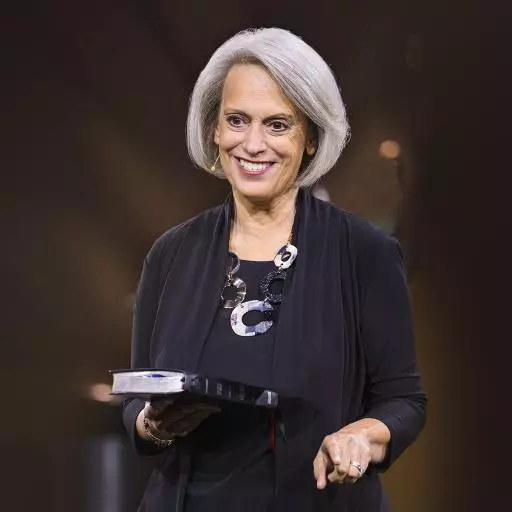
How We Got Our English Bible, Ep 3 of 4


In the 1500s, a brilliant scholar named William Tyndale was condemned to death. His crime? Translating the Bible from Greek and Hebrew into English. His final words were a prayer—one that was answered just a few years after his death. Find out more on Revive Our Hearts with Nancy DeMoss Wolgemuth.
Dana Gresh: Imagine never being able to read the Bible in your own heart language. What kind of joy would you feel when receiving the translation for the first time? While I was preparing for this series, someone sent me a link to a video that captures the intense joy of the Kimyal people when the long-awaited shipment of New Testaments finally arrived. I found myself in tears as I watched their celebration.
This is the Revive Our Hearts podcast with Nancy DeMoss Wolgemuth, author of *Choosing Gratitude*, for January 27, 2026. I'm Dana Gresh. We are praising God for the fact that this September we'll be celebrating the completion of 25 years of ministry. Be sure to contact us, let us know how God's used Revive Our Hearts in your life. Here's Nancy continuing to tell us how we got our English Bible.
Nancy DeMoss Wolgemuth: We're talking in this series not just about the King James Bible but more broadly about the gift of God's Word and the incredible gift of not only having God's Word but having it in our own language. For most of us, our mother tongue is English, and to have the English Bible is a privilege we have today that people did not have for centuries in the past.
So we're looking at some of the history of the English Bible and I hope you don't get bogged down. Some of you say, "I'm not into all this history, all these names, all these dates." Look, you don't have to remember the names or the dates, but I want you to get a fresh sense of wonder and awe of what it took for us to get these many copies. I've got two sitting right here on my stand, copies of the Bible in English. I've got scores more in my study at home, but there was a heavy price paid for us to have the Bible in English, and I want us to grow in our appreciation of that.
One of the books that I've been using as a reference for this series is a book by a man named Donald Brake that's called *A Visual History of the English Bible*. I love that it's visual because it has pictures of some of these old, early English translations in it. But the subtitle of this book on the history of the English Bible I thought was particularly intriguing. The subtitle is *The Tumultuous Tale of the World's Best-selling Book*.
The tumultuous tale—and it is a tumultuous story because of the political and religious leaders who in the Dark Ages often were one and the same, who were threatened by the idea of people being able to read the Bible for themselves and who did everything possible to keep it from happening. And so we have juxtaposed against that the courage of men like John Wycliffe, who we talked about in our last session, who were determined to get the Bible into the hands of the people against the opposition of the organized church and the political system of the day.
Because these men like Wycliffe knew that if the people could hear and read the Bible for themselves, it would set them free from spiritual darkness and tyranny. And that's what we read in the Scripture. Jesus said, "You will know the truth and the truth will set you free." Psalm 119, verse 45, we read that Psalm earlier this morning together before we started this recording session. It says, "I will walk at liberty, for I seek your precepts."
And then the verse we've been looking at or referencing throughout this series, Psalm 119, verse 130, "The entrance of your words gives light; it gives understanding to the simple." So John Wycliffe was one of the first of those reformers who was intent on getting the Bible into the language of the people. And then we come to another one of those great men, those heroes of our faith when it comes to how we got our English Bible.
His name was William Tyndale. Another man raised up by God, Tyndale in the first part of the 1500s. Tyndale was a brilliant scholar. He was equally fluent, they say, in eight languages. And he studied the Scriptures in Greek and Hebrew at Oxford. And remember for years and years, hundreds of years, those languages had not been studied, they had not been available, there were no Greek and Hebrew texts available. Well, by this time those texts had come to light, and so Tyndale studied the Greek and Hebrew texts of the Scripture.
And Tyndale was committed to evaluate every teaching of the established church in the light of Scripture. Not just what does tradition say, not what do respected scholars think, what are their opinions, but what does the Scripture say? And as he read and studied the Scripture, this fire began to burn in his heart and he developed this lifelong mission to translate the Bible from the original languages—the Greek and the Hebrew—into English.
It had never been done before. Remember, Wycliffe's Bible was translated from Latin into English. But now Tyndale set out to translate the Bible from the original Greek and Hebrew into English. Well, as you might imagine, as we've been saying over the last couple of days, there was enormous opposition in the Church in England to putting the Bible into the hands of laypeople.
Tyndale was known to have had an argument at one point. I understand it was rather heated with a clergyman who supported the official church position that only clergy were qualified to read and interpret the Scripture. And Tyndale got rather incensed—he was angry over this—and he said what became a famous quote. He said, "If God spares my life, ere many years I will cause a boy that driveth a plow to know more of the Scriptures than thou dost."
Well, when word got out about Tyndale's English New Testament project, many set out to arrest him and to stop him from completing the work. So in 1524, he was forced to flee to Germany. And even there he faced physical threats. He had to flee from one city to another, taking his work with him. It was a year or so after Tyndale escaped to Germany that the Tyndale New Testament was first released.
This was significant because it was the first printed edition of the Scripture in the English language. Remember, copies previously had been handwritten. Now it was the first printed edition of the Scripture in the English language, and it was the first English New Testament translated directly from the Greek rather than the Latin. Well, over the next five years, 15,000 copies of Tyndale's New Testament were smuggled from Germany to England in bales of cotton and sacks of flour.
They were smuggled into England because remember it was illegal to read the Bible in English in any language other than Latin. The Bishop of London was terrified of Tyndale's translation. The church was concerned that if the people could ever read the Bible for themselves, it would spell their downfall, the downfall of the established church. That people's eyes would be opened to the truth and to the corruption of the church.
They were concerned that the church would lose its power, it would lose control and, maybe most importantly, it would lose income from the sale of indulgences that were supposed to buy people's way out of this purgatory or earn them the favor of God. So church authorities in England banned and confiscated Tyndale's New Testaments wherever they were found. There were public burnings of the books. But the copies kept getting in.
And it seemed that the more fiercely the King and the bishop opposed the Bibles, the more interested the laypeople became and the greater the demand, and Tyndale's New Testament became a bestseller. Now Tyndale stayed in Germany and set out to begin translating the Old Testament and making revisions on his New Testament. Shortly after finishing his final revision on the New Testament, Tyndale was betrayed to the authorities by a man who had pretended to befriend him, but intended to turn him in.
So Tyndale was arrested. He was imprisoned for 15 months near Brussels. He was finally tried and condemned to death, and he was strangled and burned at the stake on October the 6th, 1536. His final words were a prayer. He prayed, "Lord, open the King of England's eyes." And that prayer was answered three years later, when King Henry VIII finally approved and funded the printing of an English Bible.
How much we owe to faithful, brave men like Tyndale, men who labored, sacrificed, suffered, and in some cases gave their lives so that we could have the Holy Scripture available in our own language. Well, there's no way to overstate Tyndale's influence. By the end of his life, the Bible was no longer just available to priests and clergy, but to the common man, including the boy behind the plow in the field.
His translation heavily influenced the King James Bible, which was published some 85 years later. It's estimated that 90% of the 1611 King James Version is essentially Tyndale's translation. Within a short period of time after Tyndale's New Testament, three other translations had been released. Now keep in mind that the language was changing, and so translations were becoming more clear, and these three other translations were all derivatives of Tyndale's translation.
I don't expect you to remember what these are called or the details about them, but let me just give you for the next few minutes a snapshot and overview of those three other translations that followed Tyndale's. It's an interesting progression, all of which was a trail leading up to the King James Bible. Miles Coverdale was a man who, like Tyndale, believed that everyone should be able to study the Bible in their own language.
And he finished the work that Tyndale had begun before his death of translating the Old Testament. So in 1535, the Coverdale Bible was released. This was the first complete Bible printed in English. Tyndale had printed the New Testament in English, he had translated parts of the Old Testament, but this was the first complete Bible printed in English. The Coverdale Bible was printed with permission of King Henry VIII, who so hated Tyndale.
And most of this was Tyndale's translation—an answer to Tyndale's prayer, "Lord, open the King of England's eyes." And then another man named John Rogers, who was another associate of Tyndale. Because Tyndale was so reviled, Rogers published under a pen name, Thomas Matthew. Rogers revised Tyndale's New Testament and combined it with the work that Tyndale had done on the Old Testament before his death and the books of the Bible that Coverdale had translated, and added some of his own editorial notes and published in 1537 what became known as Matthew's Bible.
That was the pen name for John Rogers. Matthew's Bible included thousands of study notes. Now imagine how beneficial those would have been to people who had never been able to read or hear the Bible for themselves for all of their lives. But many of those notes were controversial to the established church because they exposed the corruption in the church, the false teaching that the church had propagated on the people for generations.
John Rogers, nearly 20 years later, was burned at the stake under the reign of Bloody Mary, Queen Mary, for what she considered seditious preaching. Well, by the time this Matthew's Bible came out in the 1530s, the religious and political climate in England had changed. King Henry VIII had broken ties with the Roman Church—and I'm just giving you the highlights of this, there's so much more to this we could look at, but I think this will be enough to keep us aware of what was going on.
King Henry VIII had broken ties with the Roman Church because the Pope refused to give him permission to divorce his wife and marry his mistress. Henry proceeded to marry his mistress anyway and broke off ties with the Roman Catholic Church and declared himself not only the head of state but also the head of the church in England. Thus starting what became known as the Church of England or the Anglican Church.
And despite the authority of Rome, Henry funded the printing of the first legal English Bible. The King ordered that every church should have a copy of Scripture on hand and quote, "Ye shall discourage no man from the reading or hearing of the Bible, but shall expressly provoke, stir, and exhort every person to read the same as that which is the very living Word of God."
Well, people followed this order so enthusiastically that disturbances were actually created in churches by laypeople reading the Bible aloud to one another while the preacher was trying to give his sermon. You can imagine the bedlam. Now there were many church leaders who found the notes in the Matthew Bible offensive, and King Henry VIII wanted a Bible that the clergy would find more acceptable.
So he commissioned Miles Coverdale, who had already published the Coverdale Bible, to publish a new Bible without the notes from Matthew's Bible. Coverdale relied heavily on earlier translations, including Tyndale's and Matthew's, and in 1539, the Great Bible, so called, was published. This was the first English Bible authorized for public use. And it was called Great because it was so big and heavy.
It was placed in every church in England and chained to the pulpit so that no one would steal the Bible. The churches had readers, so people who couldn't read could hear the Bible read in English. And it's really moving to see how the people responded when they first heard the Scripture read in their own language in their churches after so many years of being deprived of that freedom. For all of their lives, they had only heard the Bible read in Latin, which they could not understand.
It was meaningless. It would be like one of our sisters from Malawi here today standing and reading the Bible in her mother tongue, but none of us being able to understand it. What's the point? And of course, that's the way the church wanted to keep it, so the church could say, "Here's what you're supposed to believe." Never mind that that's not really in the Bible. But the people were so liberated by hearing the Scripture read in their own language in the churches that they had a hard time maintaining order.
In St. Paul's Cathedral in London, which is a huge edifice, there was a sign placed in front of each of the six pulpits, and at the top of that sign it said, "Admonitions." And listed then were rules for how the Bible was to be used. It was to be read quietly; you were not to disturb others during the service. One writer put it this way: "The Bible in the English vernacular, now approved to be read by official edict of the King, created a lasting thirst for Englishmen of all classes.
Everyone was caught up in this new delight. They either read it themselves or had it read to them. Many began the process of learning to read just for the enjoyment of reading the Bible. It is impossible to imagine the first reading of the Scriptures and the impression it made upon their hearts." And that quote brings to mind this quote from the Holy Scripture where the prophet Jeremiah says in chapter 15 of the book of Jeremiah: "Your words were found and I ate them, and your words became to me a joy and the delight of my heart, for I am called by your name, O Lord, God of hosts."
As we've been talking about over these last few days, how we got our English Bible and the treasure that is for us, my heart has had an increased burden for millions of people on the planet today who still have no Bible in their language, in their mother tongue. And while I was preparing for this series, someone sent me a link to a video that captures the intense joy of the Kimyal tribe of Papua, Indonesia, of having the New Testament in their own language for the very first time.
A missionary named Rosa Kidd and her national helpers had spent 15 years on the translation. I found myself in tears as I watched their celebration. We've posted a link to that 10-minute video on reviveourhearts.com, and I hope you'll go there and watch the whole thing. But for today, our team has prepared a condensed audio version to give you a sense of what that historic day was like for the Kimyal people.
Guest (Male): The Kimyal tribe of West Papua, Indonesia, sang "Jesus Loves Me" in their native tongue as they waited for a bush plane that was flying over head. That plane was delivering a valuable package. They'd been waiting for this package for many years: the very first copies of the Bible in their own language.
Simeia: In the past only part of God's Word was translated into our language. This is Simeia, a pastor from the Kimyal tribe. But now we're going to have it from Matthew to Revelation. Our hearts are no longer heavy; they're light.
Rosa Kidd: It says in the Gospel of John that in the beginning was the Word and the Word was with God and the Word was God. This is Rosa Kidd, one of the Bible translators. And Jesus is that Word, and Jesus is coming, and we need to be there to meet Him. Just blew me out of the water. I thought, "Lord, this is how we know that it's You doing something here."
Guest (Male): Once the Bibles were taken off the bush plane, one of the Kimyal pastors began to pray in a loud voice before all the people gathered around the makeshift landing strip.
Guest (Male): We're getting ready to pray. Everybody close your eyes. O God, O God, the plan which You had from the beginning regarding Your Kimyals, which already existed in Your spirit, the month that You had set, the day that You had set, has come to pass today. O my Father, my Father, the promise that You gave Simeon that he would see Jesus Christ and hold Him in his arms before he died. I also have been waiting under that same promise, O God.
You looked at all the different languages and chose which ones will be put into Your Word. You thought that we should see Your Word in our language. Today, the day You had chosen for this to be fulfilled has come to pass. O God, today You have placed Your Word into my hands, just like You promised. You have placed it here in our land, and for all this, O God, I give You praise!
Rosa Kidd: When they finished praying, translator Rosa Kidd says the older believers spontaneously handed the Bibles to the younger believers gathered there. And one of the older women said: "We have taken God's Word, we've accepted it, we've put it into our hearts, and now we're going to give it to you young people who need to also take it and accept it and walk with God as He teaches in this Bible."
So they handed it off to the younger believers and the crying and the sobbing that took place there was just something totally unexpected to me because I knew they would be happy. But the emotion that came out was just so overwhelming to me. I thought, "We have no idea." We have had the Word of God for so long. We have taken it for granted. We have resources, we have translations, we have all these different things, and we don't cherish it. We don't realize what a precious gift we have and hold in our hands. And these guys were realizing that and saying, "God, You've come to us through the Word."
Wellegka: Today we've received our reward for that which we have worked. This is Wellegka, one of the men who translated the Bible in the Kimyal language. Psalm 126 says, "Those who sow in tears shall reap with joyful shouting." Today I'm reaping the fruit of the burden that I carried over this work. And I'm rejoicing and all the people with me!
Rosa Kidd: The Kimyals always had a love for the Word. They know the Word, they can quote the Word, they're very good at memorizing. I mean, we've had one lady that has memorized whole books and she'll sit there and as she talks with you, she'll quote three or four or five verses at a time. And so they love the Word of God and just to see them with it.
Sisier: For years, Sisier, one of the pastors in the tribe, had to use Bible translations from four different languages to teach the people. Now that he has the entire Bible in the Kimyal language, you can hear the joy in his voice. Before when I taught God's Word, I used the Indonesian Scriptures, I used the Dani Scriptures, and I used the Yali Scriptures. I used the Ngalca Bible to teach the Word. I've been doing that how many years?
On March 16th, when God's Word came to Korupun in the Kimyal language, it fell down to us into our hands. So that was like a weapon in my hand. I don't have to translate; it's ready to use. I don't have to look at the other books and translate. That just made me so happy that I can just straightaway teach.
Guest (Male): As the tribe carried these precious first copies of the Bible back to their village, they all joined in chorus singing, "To Him who sits on the throne and to the Lamb be blessing and honor and glory and dominion forever and ever."
Simeia: And Pastor Simeia summed up what many in the tribe were feeling on this momentous occasion. It has come to us Kimyals and we have received it, held it in our hands, and placed it in our hearts. Because of this, our hearts are very happy.
Dana Gresh: Oh, I hope you'll watch the video of the Kimyals receiving God's Word. You can do that by visiting our website, reviveourhearts.com. And after hearing those joyful voices, I will be a lot less likely to take for granted the next time I pick up the Bible in my own language. This entire series has been like this, just giving us a fresh appreciation for what it means to have copies of the Bible that we can read for ourselves.
If you appreciate hearing the Word of God valued and explained on Revive Our Hearts, would you consider partnering with us? When you make a donation of any amount, we'd like to send you the *In His Presence* scripture card set and a printed copy of our 2026 Bible reading plan. And for a gift of $50 or more, we'll send you a floral Bible reading journal and a Bible journaling toolkit as well.
We hope these resources will encourage you to delight in your Bible even more. Make a donation and request your gift at reviveourhearts.com or call us at 1-800-569-5959. Also, a quick shout-out to our Revive Partners. These are friends of the ministry who faithfully donate a specific amount each month. Series like the one you're listening to this week are made possible in part by these generous givers.
So, if you're a Revive Partner, thank you. And if you're interested in becoming one, visit reviveourhearts.com/partner to learn more. What English translation of the Bible was the first to be brought to America? It wasn't the King James Bible. Nancy will let you know tomorrow. Please be back for Revive Our Hearts.
This program is a listener-supported production of Revive Our Hearts in Niles, Michigan, calling women to freedom, fullness, and fruitfulness in Christ.
Featured Offer

Featuring thoughtful reflections paired with stunning landscape photography captured by Revive Our Hearts staff members, this beautifully designed resource encourages women to slow down, reflect, and fix their hearts on what is true and lasting. With your donation of any amount.
Past Episodes
- 3 Doctrines that Fuel Endurance
- 3 Ingredients of a Revived Heart
- 3 Life-Changing Lessons for Young Women
- 3 Marks of an Unshakable Woman
- 3 Reasons to Join the 2026 Bible Reading Challenge
- 3 Ways to Love Your Friend When It’s Hard
- 3 Women Who Were Grateful for God’s Word
- A Cry for Revival: Isaiah 63-64
- A Great Awakening, with Kim and Katie Miller
- A Harvest of Joy
- A Heart Grounded in the Word of God, with Chris Brooks
- A Mighty Fortress Is Our God (Psalm 46)
- A Song for Weary Pilgrims (Psalm 137)
- A Woman Adorned and Adorning
- Advent for Exiles, with Caroline Cobb and Erin Davis
- Always Grateful: Ciara's Story
- Always Thankful (Psalm 66)
- An Unhurried Holiday Season
- And the Bride Wore White, with Dannah Gresh
- Anticipating Advent
- Applying the Gospel to Family Life, with Emily Jensen
- Be the Warmth: Cultivating Hospitable Character
- Becoming a Fruitful Woman
- Begin at My Sanctuary
- Behold the Big Story of the Bible, with Kevin DeYoung
- Behold the Daily Mercy of the Word, with Dannah Gresh
- Behold the Living Word, with Jackie Hill Perry
- Behold the Power of the Word to Save, with Kelly Needham
- Behold the Wonder of the Word
- Behold the Word Recovered by God’s People, with Mary Kassian
- Behold, Hearts on Fire with the Word
- Beholding the Wonder: True Woman '25
- Beyond Cliches: Real Encouragement for Single Sisters
- Blessed by a Godly Mother
- Blessing for the Year End & the New Year (2 Cor. 13:11-13)
- Building a Spiritual Legacy for Your Children! by Jani Ortlund
- Celebrating God’s Abundance
- Celebrating the Gift of Grandparents
- Choosing Servanthood Over Celebrity
- Choosing to Stay in a Difficult Marriage
- Come Adore: The Gospel in Carols
- Courage and Compassion: Two Words for Parents
- Crossing the Finish Line: Remembering Robert Wolgemuth
- Dear Single Woman, God Sees You
- Defying Discouragement
- Devotions Amid Diapers
- Dry Bones Can Live Again (Ezekiel 37)
- Faithful, Not Famous with Laura Gonzalez de Chávez
- Finding Freedom from Fear, with Judy Dunagan
- Finding My Father Father: How the Gospel Heals the Pain of Fatherlessness, with Blair Linne
- Finding Soul-Deep Satisfaction in Jesus
- Food Is Not the Enemy: Discover Freedom from Food Fixation, with Asheritah Ciuciu
- Free to Be Real
- Freedom in Christ
- From Death to Life: Hope After Abortion
- From Desperation to Deliverance: The Promise of Psalm 107
- Fruitful in Christ
- Fullness in Christ
- Gentle Parenting: Wisdom or Weakness with Tanner Kay Swanson
- God’s Grace for Weary Moms
- God's Power to Revive a Heart, with Andrea Griffith
- Grace for the Depressed
- Hallelujah! A Praise Celebration (Psalm 113)
- Helping Kids Think Biblically, with Elizabeth Urbanowicz
- Holy Week Heart Prep: The Wonderful Names of Jesus
- Hope in the Midst of the Hard
- How God’s Love for Women is Displayed in the Old Testament, with Dr. Katie McCoy
- How Less Scrolling Could Change Your Life, with Lara d’Entremont
- How Long, O Lord? Learning to Pray Through Pain
- How Remembering Eternity Transforms Today (Psalm 90)
- How to Build Your Home
- How to Have a Happy New Year (Psalm 1)
- How to Have a Marriage that Magnifies God
- How to Have a Quiet Heart
- How We Got Our English Bible
- Indispensable Ingredients for Life
- Instruments of Grace
- Intimacy with God
- It’s Possible! Learn to Control Your Mind and Emotions
- Leading Children to Love the Word
- Learning to Love the Old Testament, with Jennifer Smith
- Letting God Be God, with Andrea Griffith
- Living Out the Beauty of the Gospel
- Living Well, Finishing Well, with Mark DeMoss
- On Our Way Home
- One Thing (Psalm 27:4)
- Open Your Home, Open Your Bible, with Erin Davis
- Ordinary Women, Extraordinary God
- Parenting Teens with Hope, with Melissa Kruger
- Persecution, Perseverance, and the Key to Sustaining Faith, with Dr. Karen Ellis
- Persevering Love for the Local Church
- Pleading the Cause of the Unborn
- Practical Bible Study Tips
- Practicing Thankfulness, with Sam Crabtree
- Precepts, Parkinson’s, and the Truth That Sets Us Free, with Kay Arthur
- Psalm 23: Our Good Shepherd
- Putting God's Word First, with Gretchen Saffles and Janine Nelson
- Read Your Bible!
- Rediscovering Intimacy With God
- Relationship Refresh: Helping Your Community Thrive in Christ
- Remembering Voddie Baucham, Jr.
- Renewed and Restored (Psalm 23:2-3)
- Renewing Your Mind
- Revival Begins with You
- Revive Us Again (Psalm 85)
- Ruth: The Transforming Power of Redeeming Love
- Safely Home: Honoring Robert Wolgemuth
- Science, Scripture, and a Life Transformed, with Dr. James Tour
- See for Yourself: Get to Know Your Bible, with Kelly Needham
- Showing Kindness, with Kathy Branzell
- Sin, Suffering, and the God Who Restores
- Spiritual Disciplines We Forget About
- Spiritual Habits for Little Hearts
- Spiritual Strength for an Evil Day (Ephesians 6)
- Steadfast Faith
- Storm Shelter
- Supporting Your Suffering Friend, with Jani Ortlund
- Surrendering Your Independence
- The Beauty of Living Out the Gospel as a Woman
- The Four Emotions of Christmas
- The Glory of Face-to-Face Fellowship
- The Gospel Is Everything: 25 Years of Pointing Women to Christ
- The Humble Savior Who Came
- The Incomparable, Incarnate Christ
- The Joy of Bible Journaling
- The Joy of Embracing Biblical Womanhood, with Laura Perry Smalts
- The Legacies of Two Godly Fathers
- The Personal Devotional Life
- The Personal Devotional Life: Beyond Quiet Time, with Dr. Henry Blackaby
- The Truth Your Girl Desperately Needs
- The Well-Watered Woman, with Gretchen Saffles
- The Wonder App: Transforming Screen Time into Scripture
- Three Gifts Suffering Gives
- Three Mercies for Young Moms
- To The Woman Who Doesn’t Feel God’s Love
- Treasuring Christ in Our Traditions with Noel Piper
- True Woman '25 Panel Discussion: Behold the Word in Every Season
- True Womanhood for Today
- Truly Strong: Becoming Women Who Depend on the Lord
- Walking Through Life's Deserts
- What Freedom, Fullness, and Fruitfulness Really Mean, with Robert Wolgemuth
- What Is a Woman? with Mary Kassian
- What Makes You Beautiful? with Kristen Wetherell
- What Sisterhood Is (and Isn’t)
- What’s the Point of Praise? 3 Reasons Your Worship Matters
- When Busyness Threatens Intimacy with God
- When Prayer Sparks Revival, with Bob Bakke
- Why Study the Bible?
- Wonder of the Word Made Flesh
- Word Before World, with Gretchen Saffles

Featured Offer
Featuring thoughtful reflections paired with stunning landscape photography captured by Revive Our Hearts staff members, this beautifully designed resource encourages women to slow down, reflect, and fix their hearts on what is true and lasting. With your donation of any amount.
About Revive Our Hearts
Married, single, young or older, you'll want to join us every day for practical, biblical insights on becoming a fruitful woman of God. Best selling author and national radio host, Nancy DeMoss Wolgemuth makes the Scriptures come alive. You'll be touched by Nancy's messages and by the passion of her heart.
About Nancy DeMoss Wolgemuth
Nancy DeMoss Wolgemuth has touched the lives of millions of women through Revive Our Hearts and the True Woman movement, calling them to heart revival and biblical womanhood. Her love for Christ and His Word is infectious and permeates her online outreaches, conference messages, books, and two daily nationally syndicated radio programs—Revive Our Hearts and Seeking Him. Her books have sold more than four million copies and are reaching the hearts of women around the world. Nancy and her husband, Robert, live in Michigan.
Contact Revive Our Hearts with Nancy DeMoss Wolgemuth
Mailing Address
Revive Our Hearts
P.O. Box 2000
Niles, MI 49120
Telephone Numbers
1-800-569-5959 (toll-free)