
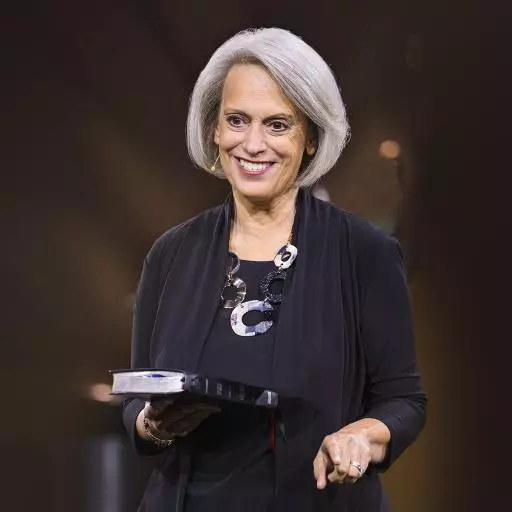
Fruitful in Christ


How do we become fruitful women? A lot like plants, we need a good Gardener, faithful pruning, and an eagerness to grow. We’re learning how God tends our hearts on Revive Our Hearts Weekend, with Dannah Gresh and Nancy DeMoss Wolgemuth.
Nancy DeMoss Wolgemuth: God is pleased when we are exceedingly fruitful.
Gretchen Saffles: He says that every branch that does bear fruit, he prunes.
Janet Lynn Solomon: And so my life was pruned by God so that there could be more blossoms and something more beautiful than had been there before.
Dana Gresh: Every gardener has a good set of sharp shears because they know that's what it takes to be fruitful, which is exactly what we're going to talk about today.
Guest (Male): Never forget, we have sweetly tasted fruitfulness. Regardless of our circumstances, persecutions, difficulties, or imprisonments, we can still bear pleasant fruit despite our trying situations.
Dana Gresh: Welcome to Revive Our Hearts Weekend. I'm Dana Gresh, and I'm so glad you're here with me today. I just love these opportunities to spend a little time together on the weekend. We've been talking through Revive Our Hearts' mission this month: calling women to freedom, fullness, and fruitfulness in Christ. Today we're going to talk about being fruitful and how God cultivates fruitfulness in our lives.
Now, when I'm not hanging out with you here on Revive Our Hearts Weekend, you might just find me working on our new Wonder App. We designed it to help teen girls turn screen time into scripture time, and every day they can see a new video devo and read the whole Bible right there in the app. They're rewarded for returning by earning digital devo streaks and Bible badges when they finish a whole book of the Bible.
Now, we've invested hundreds of thousands of dollars into this. Why? Because we're passionate about this message of fruitfulness extending to our teen girls. Now we're up to 5,000 Wonder users since launching just a few months ago. To increase that and to encourage daily use, we're inviting teen girls to join the Wonder Summer Bible Reading Challenge.
Can I invite you to ask a group of teen girls or just one to join you in taking on this challenge? Here's how to jump in: Download the new Wonder App. Invite maybe three teen friends to join you. Grow your devo streak and read the Bible every day this summer. Unlock book badges as you finish books of the Bible. This summer, we want teen girls to swap mindless scrolling for meaningful truth and to turn screen time into scripture time with Wonder.
Several years ago, Nancy DeMoss Wolgemuth taught on one of the names of God, El Shaddai: the all-sufficient one. Nancy says one of the implications of this name of God is that our fruitfulness has little to do with us and a whole lot to do with him.
Nancy DeMoss Wolgemuth: The one who enables us to be fruitful is El Shaddai. Let me point you to a few verses in the Old Testament that make this connection. We've read the verse over these last few days from Genesis chapter 17, verse one, where God says to Abraham, "I am El Shaddai, the almighty God, the all-sufficient one." He goes on in verse two to say, "I will multiply you exceedingly. I will make you exceedingly fruitful."
It's El Shaddai who makes us fruitful and who multiplies our lives. Abram went from being Abram, the exalted father, to being Abraham, the father of a multitude. God is pleased when we are exceedingly fruitful. He wants us to be exceedingly fruitful.
In Genesis chapter 28, Abraham's son Isaac says to his son, "May God Almighty bless you. May El Shaddai bless you and make you fruitful." El Shaddai is the one who makes us fruitful. In Genesis chapter 35, God says to Jacob, "I am El Shaddai. Be fruitful and multiply." El Shaddai is the one who is the giver of fruitfulness.
Now we learn in John chapter 15, Jesus told his disciples that our Father in heaven is glorified when we, as his disciples, bear much fruit. He wants us to be exceedingly fruitful. Our purpose in life is to bring glory to God. How do we bring glory to God? By being fruitful, by bearing much fruit.
What kind of fruit does he want our lives to produce? We need to know what the fruit is so that we can look to El Shaddai, our all-sufficient one, to produce that fruit in and through us. Well, God wants to produce in us the fruit of righteousness, of holy living. God wants to produce in us the fruit of his spirit: love, joy, peace, patience, gentleness. I don't have that in me. Left to myself, I will never have the fruit of gentleness.
That's why I need to draw upon his sufficiency. He is the giver of fruitfulness. He is the one who produces the fruit of the spirit in our lives. The fruit he wants to produce in us is the fruit of Christ living in us and being expressed through us: the fruit of the character of Christ being formed in us, the fruit of our being a blessing to others because of the life of Christ within us.
The fruit of children: natural children. God is pleased, mothers, when you have children. But you not only want to have physical children born to you, you want those children to have a heart for God. You want them to be spiritually fruitful. Who is the giver of fruitfulness? It's God, El Shaddai. Who will enable you to lead your children and train them in a way that will lead them in paths of righteousness? It's El Shaddai in you who will be your sufficiency as you disciple those little children.
Now some of you may be single, as I am, and you don't have physical children. But I'll tell you what, I have spiritual children in different places all around this country. Couple of them are sitting in this room today: women who have not only influenced my life, but God has allowed me to be fruitful in their lives to encourage them in their walk with the Lord.
What enables us to produce fruit in the lives of others? It's El Shaddai. He is my sufficiency. He is the one who produces that fruit in us. You see, God did not intend that you and I as his children, as his daughters, should just exist on this planet, or that we should just survive, that we should just cope with everyday life. God wants to make us exceedingly fruitful.
I just want to believe God for that in my own life. I want to have the kind of faith that Abraham had at age 99, when there was no sign of God's promise being fulfilled that he would be the father of a multitude. Yet the scripture says he believed God. He believed El Shaddai, the all-sufficient one. I love God. I want to glorify him with my life. I want to bear much fruit for his glory.
But I don't have the capacity to bear fruit on my own. You don't either. We just have these natural, barren selves apart from God. That's why Jesus said it's crucial that you abide in me and that I abide in you, that you stay connected to that vine. That nursing infant is never going to get milk from that mother unless the infant draws close and is connected to the mother. There's a union. There's a oneness that enables that mother to pour herself out into that infant. As we abide in Christ and his word abides in us, God pours his sufficiency into us so we can not just exist here, but actually be fruitful.
Dana Gresh: I love that word picture that Nancy just shared: the nursing infant and the mother. The infant has to come close and connect, and that's how we are to be with Christ. Abide in him, my friend. To hear more from Nancy on El Shaddai, the all-sufficient one, and to grow in your understanding of a God that is sufficient enough to meet all your needs, go to our website, reviveourhearts.com/weekend.
You know, there is something that God uses to bring forth fruit in our lives, and it's something that isn't easy. I want to share with you a passage of God's word that talks about bearing fruit. It's from the New Testament, John 15:1-4.
"I am the true vine, and my Father is the vinedresser. Every branch in me that does not bear fruit he takes away, and every branch that does bear fruit he prunes, that it may bear more fruit. Already you are clean because of the word that I have spoken to you. Abide in me, and I in you."
Gretchen Saffles is an author and blogger, and she shared with Nancy and myself how it is that God causes his children to grow fruit. It's pruning. Gretchen says that abiding in Christ actually begins with accepting God's pruning.
Gretchen Saffles: And this is what Jesus opens up the passage with, the very second verse. He says that every branch that does bear fruit, he prunes. Why? So that it will bear more fruit. Now, the more I've gardened, the more I've realized pruning is essential for a plant to grow. We have a rose bush outside of our house that if it is not pruned, it will not grow.
Every year during winter, we prune it back. We cut it way far down to the point where I think, is this plant really going to survive? Is it really going to thrive? But come springtime, it grows and the amount of flowers that it produces is amazing. But the first year that we moved into our house, we didn't know we were supposed to prune it. That year, it barely produced any roses. It was kind of scraggly looking. I really thought maybe this plant is not healthy and we need to just take it away. But a wise gardener came in and told me, it's because you never pruned the plant. And the more we prune it, the more flowers it produces.
Nancy DeMoss Wolgemuth: Nancy, I don't think the Lord has a pair of pruning shears up there for Dana Gresh, so what does that look like in our Christian walk? What does pruning look like? Well, I'm thinking about that as Gretchen is sharing what is that in our lives and it can be God taking away things that we think are important to us or that we think make us beautiful or make us attractive. That whole pruning process actually makes something look kind of run down and ugly and weak, but it may be pain, it may be suffering, it may be a year of health issues.
What do you do when the things you think you do so well you find that you're weak or you don't have the same kind of strength or the same kinds of abilities or they're just not good enough? What about when God shows us sins or material values or temporal values? It could be anything that keeps us from being more fruitful. God prunes us and he prunes our ministry, he prunes our family, he prunes us for greater growth, not because he's mad at us, but because he wants us to be even more fruitful.
Dana Gresh: My husband calls it a pruning obedience training. He says it almost always when the Lord takes something, He's training us. And that's really what you do when you prune a plant. You're training it how you want it to act, behave, look. You're expecting it to do something. I just cut back my lilac bush. It's not going to look good for a good year or so and then it's going to be prolific, refreshed, fragrant blooms.
As Nancy said, pruning can leave you looking ugly and weak. It may involve pain, suffering. It could be your health, your job, your ministry, things you didn't think you could live without. Part of this pruning process takes surrender on our part to say, "Yes, Lord, you do what you must do to make me fruitful for you."
There's a former champion figure skater that went through the metamorphosis of the pruning process. God used Janet Lynn Solomon's talent and profession in her pruning process. Here's Janet sharing with Nancy how God brought forth fruitfulness in her life.
Janet Lynn Solomon: I retired from the Ice Follies prematurely because I developed exercise-induced asthma, got married, and had three small children, and then went back to my career because my husband thought that it had been taken away from me prematurely. Diet and exercise and allergy discovery helped my asthma to clear up. So I did go back to skating. I think our sons were probably four and two-and-a-half, and the twins were two-and-a-half. So I had three children within less than two years.
Nancy DeMoss Wolgemuth: Three boys within less than two years. My mother has four girls and three boys, and she says there's no comparison in the energy level required with boys. So you had these three young boys, one set of twins, and with your husband's encouragement, you went back into it.
Janet Lynn Solomon: I went back. My career revived. It took a lot of hard work, but my career revived and I was very successful in going back and really had wonderful opportunities. But in the process of all of that, I had a marriage and children and I thought that I was balancing everything just fine. That's really what I thought and that my priorities were very clear: that my family came first.
As a matter of fact, there was an interview that I did for PM Magazine, and in that interview I said, "If I have ever have to give up my skating for my family, I will." But when I said that, I had no idea that God would make me put my money where my mouth was. That he was actually going to ask you to do that. Just situations that came up that he brought into my life would place a decision before me. At that time in my heart, I felt like it was a choice between the way of life and the way of death. By his grace, I chose the way of life.
Nancy DeMoss Wolgemuth: Now tell us a little about this choice that you faced at that time.
Janet Lynn Solomon: My husband had a wonderful opportunity for him to do something that he had always wanted to do, and he would have to go away for three-and-a-half months away from our family to be able to pursue this opportunity. Well, the choice was: was I going to continue the opportunities that I had and leave my children at home with no parent there, with some sort of babysitter, or was I going to be supportive of my husband and the talents and gifts that God had given to him?
Because the opportunities you had were taking you in travel around the world as you were skating. I was traveling around the world. One year I was out of the country 11 times. I had just wonderful opportunities coming up, things that I had only dreamed about in my life: skating at the Metropolitan Opera and the Kennedy Center, which were once-in-a-lifetime opportunities. Those I had to choose, or I didn't have to choose, but I chose by God's grace, rather ungracefully on my part, that it was not the right way to go.
Nancy DeMoss Wolgemuth: We're going to talk more about that choice and some of the struggles that you had as God brought you back into your home full-time and then gave you more of a heart for your home than you'd ever had previously and a heart you probably didn't even at the time realize needed to be further developed.
You know, Janet, one of the things that has struck me in just the little bit of time I've had to get to know you is that you made that choice to come back to your home and to leave a lucrative career and some incredible opportunities not because your emotions necessarily were telling you that was the right thing to do, but out of obedience to God. You felt this is what God wanted you to do. You've shared with me that it wasn't easy then, it's not always been easy since, but that you are so thankful that you have followed God's will and God's direction in your life.
You said something to me a little while ago just before we came into the studio. You said, "I have such a sense that I'm in the center of God's will." And there's a joy and a sweetness and a freedom that I see in your face, see in your eyes, and sense in your spirit because of making what is sometimes a tough choice to really obey the Lord. Janet, I've read some of the things you've written about this journey, and you said that while you were having this career and had these children at home, that at times you felt fractured. That's a word I've seen you use. What do you mean by that?
Janet Lynn Solomon: Well, as I said in an interview at my comeback performance, actually I said, "When I am skating, I feel like I should be at home, and when I am at home, I feel like I should be skating." I felt like there was pressures on me. Someone else owned part of my time when I was working and I didn't have the full attention that my children really needed.
As a matter of fact, I don't even know that I knew my children all that well when I was skating. So that fractured feeling of I want to be here but I want to be there and I want to do it all well and I think I'm doing it all well, well, I found out that I really wasn't doing it all that well. You said something: "My life at home was shallow, but I didn't know it." It was very shallow, and no, I didn't know how shallow it had become.
When I got married and had children, my life had not been geared to the home. I had since two-and-a-half, I had skated since age two-and-a-half and I had traveled all over the world. My life was literally and figuratively out of the home. It was somewhere else. The only thing I knew how to do was make German chocolate cake and skate.
And so I had to start from the beginning. I realized in having children I'd never babysat, I'd never been around small children at all. So I had to start from the very beginning. But you know what I realized? That God is in those little things and he can take us from wherever we are and he can help us to grow in the area of making a home. Even if you're working or you have to work or you're at a place right now that I would like to get there but I'm not there yet, God can start moving us in that direction.
The other thing is I would just like to say for women who find that they absolutely have to work, that your children, I think, know whether what you're doing outside of your home is for their benefit or if it's for your benefit. I think that message comes loud and clear.
Nancy DeMoss Wolgemuth: And it was as you came back into your home to be a full-time wife and mom that God really gave you a heart for your home.
Janet Lynn Solomon: My heart definitely came home after I came home. My heart was not at home at first. But as I came home and my heart came home, I found that our family started growing in new and wonderful ways.
Nancy DeMoss Wolgemuth: Did some of your friends think you were nuts when you made this decision?
Janet Lynn Solomon: I didn't ask them. I just kind of disappeared from the skating world.
Nancy DeMoss Wolgemuth: You just knew this was what you were supposed to do.
Janet Lynn Solomon: I knew that I had to do this in my heart. I knew like I said it was the way of life that I had chosen. It was something that was going to work and I knew that God wouldn't have asked me to do it if he wasn't going to provide a way to do it.
Nancy DeMoss Wolgemuth: Now that was a huge change in lifestyle for you. Obviously financially it was a change in lifestyle. You'd had this lucrative career. You mentioned that for this position your husband was taking, he was also taking a pay cut at the same time.
Janet Lynn Solomon: Very large pay cut, yes.
Nancy DeMoss Wolgemuth: So financially it was a lifestyle change. Time-wise, priorities. It was a lifestyle change. What was that transition like?
Janet Lynn Solomon: Well, it was painful, but I want to relate it to pruning of a rose. I did a speech a number of years ago, and as I was preparing for it, everywhere I went I started seeing roses as I was praying about it. And so I looked up a rose in a gardening book. I went to get a gardening book, and it talked about the pruning of a rose and how when you cut down the rose bush to almost nothing, the roses will come up more beautiful than they've ever been before.
And so my life was pruned by God so that there could be more blossoms and something more beautiful than had been there before. And that pruning can be painful. It can be painful, but the good thing about that kind of pain is you know that it's done in love so that something else good is going to come from it.
Dana Gresh: Maybe today's a good day to meditate on Galatians 5:22 and 23. "But the fruit of the spirit is love, joy, peace, patience, kindness, goodness, faithfulness, gentleness, self-control." That is the something else Janet Lynn was talking about, that something good is going to come from the pruning. That was Janet Lynn Solomon talking with Nancy DeMoss Wolgemuth. Janet's a decorated Olympian who was a figure skater in the late 1960s.
If God's going to do something in your life right now, allow him. His pruning may be painful, but the end result is a rose that will bloom for him. We've been telling you all month that you're called to thrive. Nancy's booklet by that same name, Called to Thrive, is still available this weekend for a donation of any amount.
Would you consider giving to help us wrap up our ministry year strong? We've been asking God to help us meet a goal. You can see our progress on the homepage at reviveourhearts.com. When you give, we'll make sure you get a copy of Called to Thrive. If you're in the US or Canada, check your mailboxes, and if you're one of our international listeners, you'll be able to download a digital copy.
To all who have given and to all who plan to give today, please know that your partnership is what allows us to call women around the world to freedom, fullness, and fruitfulness in Christ. And we can't thank you enough.
Friend, if you're hurting, next weekend is for you. We're going to explore together how we can express our pain to God in a way that's both honest and honoring to him. I hope this episode will help you to infuse those hurts with hope from God's word in practical ways. Thanks for listening today. I'm Dana Gresh, we'll see you next time for Revive Our Hearts Weekend.
This program is a listener-supported production of Revive Our Hearts in Niles, Michigan, calling women to freedom, fullness, and fruitfulness in Christ.
Featured Offer

Featuring thoughtful reflections paired with stunning landscape photography captured by Revive Our Hearts staff members, this beautifully designed resource encourages women to slow down, reflect, and fix their hearts on what is true and lasting. With your donation of any amount.
Past Episodes
- 3 Doctrines that Fuel Endurance
- 3 Ingredients of a Revived Heart
- 3 Life-Changing Lessons for Young Women
- 3 Marks of an Unshakable Woman
- 3 Reasons to Join the 2026 Bible Reading Challenge
- 3 Ways to Love Your Friend When It’s Hard
- 3 Women Who Were Grateful for God’s Word
- A Cry for Revival: Isaiah 63-64
- A Great Awakening, with Kim and Katie Miller
- A Harvest of Joy
- A Heart Grounded in the Word of God, with Chris Brooks
- A Mighty Fortress Is Our God (Psalm 46)
- A Song for Weary Pilgrims (Psalm 137)
- A Woman Adorned and Adorning
- Advent for Exiles, with Caroline Cobb and Erin Davis
- Always Grateful: Ciara's Story
- Always Thankful (Psalm 66)
- An Unhurried Holiday Season
- And the Bride Wore White, with Dannah Gresh
- Anticipating Advent
- Applying the Gospel to Family Life, with Emily Jensen
- Be the Warmth: Cultivating Hospitable Character
- Becoming a Fruitful Woman
- Begin at My Sanctuary
- Behold the Big Story of the Bible, with Kevin DeYoung
- Behold the Daily Mercy of the Word, with Dannah Gresh
- Behold the Living Word, with Jackie Hill Perry
- Behold the Power of the Word to Save, with Kelly Needham
- Behold the Wonder of the Word
- Behold the Word Recovered by God’s People, with Mary Kassian
- Behold, Hearts on Fire with the Word
- Beholding the Wonder: True Woman '25
- Beyond Cliches: Real Encouragement for Single Sisters
- Blessed by a Godly Mother
- Blessing for the Year End & the New Year (2 Cor. 13:11-13)
- Building a Spiritual Legacy for Your Children! by Jani Ortlund
- Celebrating God’s Abundance
- Celebrating the Gift of Grandparents
- Choosing Servanthood Over Celebrity
- Choosing to Stay in a Difficult Marriage
- Come Adore: The Gospel in Carols
- Courage and Compassion: Two Words for Parents
- Crossing the Finish Line: Remembering Robert Wolgemuth
- Dear Single Woman, God Sees You
- Defying Discouragement
- Devotions Amid Diapers
- Dry Bones Can Live Again (Ezekiel 37)
- Faithful, Not Famous with Laura Gonzalez de Chávez
- Finding Freedom from Fear, with Judy Dunagan
- Finding My Father Father: How the Gospel Heals the Pain of Fatherlessness, with Blair Linne
- Finding Soul-Deep Satisfaction in Jesus
- Food Is Not the Enemy: Discover Freedom from Food Fixation, with Asheritah Ciuciu
- Free to Be Real
- Freedom in Christ
- From Death to Life: Hope After Abortion
- From Desperation to Deliverance: The Promise of Psalm 107
- Fruitful in Christ
- Fullness in Christ
- Gentle Parenting: Wisdom or Weakness with Tanner Kay Swanson
- God’s Grace for Weary Moms
- God's Power to Revive a Heart, with Andrea Griffith
- Grace for the Depressed
- Hallelujah! A Praise Celebration (Psalm 113)
- Helping Kids Think Biblically, with Elizabeth Urbanowicz
- Holy Week Heart Prep: The Wonderful Names of Jesus
- Hope in the Midst of the Hard
- How God’s Love for Women is Displayed in the Old Testament, with Dr. Katie McCoy
- How Less Scrolling Could Change Your Life, with Lara d’Entremont
- How Long, O Lord? Learning to Pray Through Pain
- How Remembering Eternity Transforms Today (Psalm 90)
- How to Build Your Home
- How to Have a Happy New Year (Psalm 1)
- How to Have a Marriage that Magnifies God
- How to Have a Quiet Heart
- How We Got Our English Bible
- Indispensable Ingredients for Life
- Instruments of Grace
- Intimacy with God
- It’s Possible! Learn to Control Your Mind and Emotions
- Leading Children to Love the Word
- Learning to Love the Old Testament, with Jennifer Smith
- Letting God Be God, with Andrea Griffith
- Living Out the Beauty of the Gospel
- Living Well, Finishing Well, with Mark DeMoss
- On Our Way Home
- One Thing (Psalm 27:4)
- Open Your Home, Open Your Bible, with Erin Davis
- Ordinary Women, Extraordinary God
- Parenting Teens with Hope, with Melissa Kruger
- Persecution, Perseverance, and the Key to Sustaining Faith, with Dr. Karen Ellis
- Persevering Love for the Local Church
- Pleading the Cause of the Unborn
- Practical Bible Study Tips
- Practicing Thankfulness, with Sam Crabtree
- Precepts, Parkinson’s, and the Truth That Sets Us Free, with Kay Arthur
- Psalm 23: Our Good Shepherd
- Putting God's Word First, with Gretchen Saffles and Janine Nelson
- Read Your Bible!
- Rediscovering Intimacy With God
- Relationship Refresh: Helping Your Community Thrive in Christ
- Remembering Voddie Baucham, Jr.
- Renewed and Restored (Psalm 23:2-3)
- Renewing Your Mind
- Revival Begins with You
- Revive Us Again (Psalm 85)
- Ruth: The Transforming Power of Redeeming Love
- Safely Home: Honoring Robert Wolgemuth
- Science, Scripture, and a Life Transformed, with Dr. James Tour
- See for Yourself: Get to Know Your Bible, with Kelly Needham
- Showing Kindness, with Kathy Branzell
- Sin, Suffering, and the God Who Restores
- Spiritual Disciplines We Forget About
- Spiritual Habits for Little Hearts
- Spiritual Strength for an Evil Day (Ephesians 6)
- Steadfast Faith
- Storm Shelter
- Supporting Your Suffering Friend, with Jani Ortlund
- Surrendering Your Independence
- The Beauty of Living Out the Gospel as a Woman
- The Four Emotions of Christmas
- The Glory of Face-to-Face Fellowship
- The Gospel Is Everything: 25 Years of Pointing Women to Christ
- The Humble Savior Who Came
- The Incomparable, Incarnate Christ
- The Joy of Bible Journaling
- The Joy of Embracing Biblical Womanhood, with Laura Perry Smalts
- The Legacies of Two Godly Fathers
- The Personal Devotional Life
- The Personal Devotional Life: Beyond Quiet Time, with Dr. Henry Blackaby
- The Truth Your Girl Desperately Needs
- The Well-Watered Woman, with Gretchen Saffles
- The Wonder App: Transforming Screen Time into Scripture
- Three Gifts Suffering Gives
- Three Mercies for Young Moms
- To The Woman Who Doesn’t Feel God’s Love
- Treasuring Christ in Our Traditions with Noel Piper
- True Woman '25 Panel Discussion: Behold the Word in Every Season
- True Womanhood for Today
- Truly Strong: Becoming Women Who Depend on the Lord
- Walking Through Life's Deserts
- What Freedom, Fullness, and Fruitfulness Really Mean, with Robert Wolgemuth
- What Is a Woman? with Mary Kassian
- What Makes You Beautiful? with Kristen Wetherell
- What Sisterhood Is (and Isn’t)
- What’s the Point of Praise? 3 Reasons Your Worship Matters
- When Busyness Threatens Intimacy with God
- When Prayer Sparks Revival, with Bob Bakke
- Why Study the Bible?
- Wonder of the Word Made Flesh
- Word Before World, with Gretchen Saffles

Featured Offer
Featuring thoughtful reflections paired with stunning landscape photography captured by Revive Our Hearts staff members, this beautifully designed resource encourages women to slow down, reflect, and fix their hearts on what is true and lasting. With your donation of any amount.
About Revive Our Hearts
Married, single, young or older, you'll want to join us every day for practical, biblical insights on becoming a fruitful woman of God. Best selling author and national radio host, Nancy DeMoss Wolgemuth makes the Scriptures come alive. You'll be touched by Nancy's messages and by the passion of her heart.
About Nancy DeMoss Wolgemuth
Nancy DeMoss Wolgemuth has touched the lives of millions of women through Revive Our Hearts and the True Woman movement, calling them to heart revival and biblical womanhood. Her love for Christ and His Word is infectious and permeates her online outreaches, conference messages, books, and two daily nationally syndicated radio programs—Revive Our Hearts and Seeking Him. Her books have sold more than four million copies and are reaching the hearts of women around the world. Nancy and her husband, Robert, live in Michigan.
Contact Revive Our Hearts with Nancy DeMoss Wolgemuth
Mailing Address
Revive Our Hearts
P.O. Box 2000
Niles, MI 49120
Telephone Numbers
1-800-569-5959 (toll-free)