
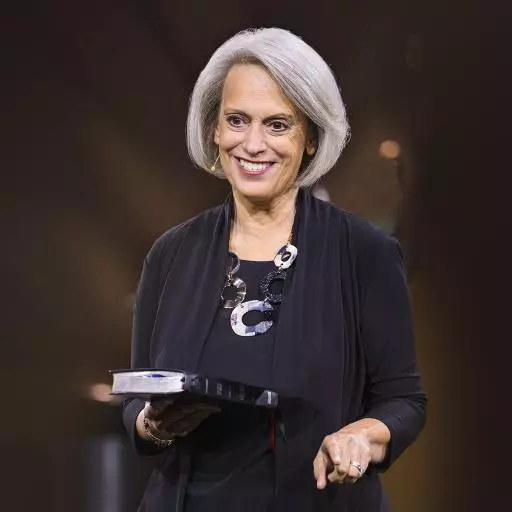
Faithful, Not Famous


Follower counts, platform growth, and metrics—oh my! In a world obsessed with influence, what would it look like to seek the Lord’s fame first? To use your ministry, not to be seen, but to help others see Him? Laura Gonzales helps you answer these questions and more on Revive Our Hearts with Nancy DeMoss Wolgemuth.
Dannah Gresh: Follower counts, platform growth, and metrics, oh my! Is the Lord primarily concerned with the reach of our ministries, or does He have a different measure of success? Here's Laura Gonzalez.
Laura Gonzalez: In a culture, in an evangelical culture even, that chases success, we are called to pursue faithfulness. The only success that truly counts is the one that results in a well done, good and faithful servant.
Dannah Gresh: This is the Revive Our Hearts podcast with Nancy DeMoss Wolgemuth, author of Lies Women Believe and the Truth That Sets Them Free. For March 10, 2026, I'm Dannah Gresh.
Today's program is a little different than usual. We're pulling back the curtain and taking you behind the scenes at Revive Our Hearts. So, just sit back, imagine you're at our ministry center in Niles, Michigan. Now, it's a Tuesday morning, and you're hanging with our staff in chapel.
Not too long ago, Laura Gonzalez shared a message there all about one of our core commitments: a standard based on Scripture that shapes the way we do ministry. Laura is the director of our Spanish branch, Aviva Nuestros Corazones, or ANC. And in this message, she challenges all of us at Revive Our Hearts to focus not on ministry metrics, but on faithfulness.
To focus on the depth of our teaching and let God expand our reach as He chooses. And you know what? I don't think this was a message just for ministry organizations like Revive Our Hearts. It's a word that's powerful for our personal ministries as well. Now, you might be thinking, "I don't work in ministry." Well, according to 1 Peter 4, you do. It reads, "Just as each one has received a gift, use it to serve others as good stewards of the varied grace of God."
If you're a believer, you have a gift to use for God's glory, and that's your ministry. The question we're asking today is this: Will we focus on being seen by people in that ministry, or will we focus on hearing "well done" from the Lord? Here's Laura.
Laura Gonzalez: Today, we are going to be sharing about our core commitment number four. It says, "God has not called us to be successful as the world measures success, but to be faithful. It is not our responsibility to promote ourselves or the outward, visible growth of our ministry. If we will take care of the depth of our lives, God will take care of the breadth of our ministry."
And this is a ministry commitment, but I think that before these commitments can truly be ministry commitments, they have to be true in each one of us—and not only this one, but all the ones that we're going to be looking at. So as I share, I encourage us to apply those principles in our own individual lives, in our individual callings and roles, as well as the ministry as a whole.
While I was thinking about this, when these core commitments were developed many years ago, I don't think we had the opportunities and the tools we have today to promote ourselves. Of course, I know this temptation is deeply rooted in our hearts. It's very prevalent. But today, self-promotion is legitimized through so many means and tools that make it not only acceptable but, I think, it's even considered normal. It is even recommended in order to pursue growth. So this is a real challenge in today's ministry culture.
In today's digital and social media landscape, there's a challenge, too—a constant pressure to self-promote. It is easy to strategize, to pursue growth actively. Even, I know of ministries that purchase followers to increase their breadth or their reach, and this is even considered desirable. I mean, you want more people to be exposed to your content, so what could be wrong with that?
So the temptation to yield to the spirit of the age is very real and ever-present. Individually and as a ministry, we need to constantly evaluate ourselves to make sure that we are not trying to help the ministry grow by taking control, by taking things into our own hands, rather than trusting God to bring the results. We are to guard our hearts so they do not become prideful and impressed by our reach, by our fruit and our numbers, rather than captured by Christ. And this is important because our culture tends to measure success by reach and visible impact, but God's measure is totally different.
So let's look at the two verses from 1 Corinthians that support this core commitment. These verses challenge our obsession with outward success and numbers and influence and recognition, rather than genuine faithfulness. The first one is 1 Corinthians 3:12-14: "Now if anyone builds on the foundation with gold, silver, precious stones, wood, hay, straw—each one's work will become manifest, for the Day will disclose it, because it will be revealed by fire, and the fire will test what sort of work each one has done. If the work that anyone has built on the foundation survives, he will receive a reward."
And then 1 Corinthians 4:1 and 2: "This is how one should regard us, as servants of Christ and stewards of the mysteries of God. Moreover, it is required of stewards that they be found faithful." And in this letter, Paul is addressing divisions in the church, many of those divisions that were rooted in arrogance and pride. He reminds them that their work will be tested by fire and that they are servants of Christ. They are stewards, not masters, of His work and His mysteries.
This church had become worldly, elevating human wisdom and relying on gifts, on talents, eloquence, intellectualism. And Paul is emphasizing that the foundation is Christ and warns that the work built on anything else or anyone else will not last. It will not survive. Only work built on Christ's foundation would endure. So as God's stewards, we must ensure that we stand on the right foundation, which is Christ and His Word, and that we are building with imperishable materials, always keeping in mind that our work will be tested by fire.
Neglecting or substituting the foundation and substituting God's Word for man's wisdom, man's ingenuity, man's work, means building with perishable materials that will burn up at the judgment seat of Christ. God's work accomplished in the power of the flesh will not have lasting spiritual, eternal repercussions. Ministries based on self-promotion or human wisdom will not endure.
We want to build with unperishable materials, and we will do this as long as we are convinced that we are merely collaborators in God's work and that all our abilities and opportunities come from Him. Paul states earlier in 1 Corinthians 3:6 and 7, "I planted, Apollos watered, but God gave the growth. So neither he who plants nor he who waters is anything, but only God who gives the growth." Neither the planter nor the waterer should be credited for the growth. It is solely God's work. There is no room for self-promotion, no room for boasting. It is God's work alone.
Boasting in ourselves is sinful because it robs God of the glory that is only due to Him. We are stewards and, as such, we are called to be servants, not masters. We should only seek God's commendation as only He is the rightful judge, and He will reward perfectly. So faithfulness, not success, is the goal. Success fades, but faithfulness endures and will be rewarded.
And this is something that has always stood out for me in ROH. Ever since we came to know the ministry, ROH has been a model of faithfulness for us. We came from a place where we jump into opportunities, we came from a more pragmatic approach to ministry. Success was perceived as growth, breadth more than depth. So this is something that we have come to appreciate, to value, and to learn along the way. I really think—no, I'm convinced—that this faithfulness is why the Lord has blessed the ministry.
We all have seen how the ministry has grown internationally. We just heard these wonderful testimonies, and most of it has had nothing to do with an active pursuit on ROH's part, but rather a prayerful response to opportunities that the Lord has brought—a harvest of the fruit that He has sown. And by the grace of God, this is something that is replicated even in our followers. I always mention that I marvel at the way the women who connect with ANC grow deep in their relationship with God first. They are revived, and that is what motivates them to share the message with others. If we take care of the depth, God will take care of the breadth.
So if faithfulness is key, what are some of the ways our hearts can slowly drift from faithfulness? First of all, we start neglecting time with God. When we stop immersing ourselves in His Word, we become susceptible to worldly mindsets and methods in ministry that stray from God's guidance. And when we are tempted to prioritize visibility, recognition, and self-promotion over God's Word and plan, we will drift.
We start relying on our own strength. We start depending on our own wisdom and gifts, forgetting that apart from Christ, we can do nothing. Proverbs 3:5 and 6 cautions us not to lean on our own understanding, but to trust God. And another thing that will make us drift is when we start valuing men's opinion over God's. We start expecting a reward from men. We start to fear men or seek approval rather than their approval, rather than God's. We compromise biblical convictions and our commitments to gain acceptance. But a faithful servant seeks God's approval, not men's.
And all these temptations can slowly influence how we practice ministry. Probably all of us have seen ministries that have been seduced in this way and have started to build with wood, hay, and straw. And how does this look? They start watering down the message. They dilute the truth to appeal to a wider audience, trying to go wide instead of deep. They avoid controversial topics. But true faithfulness requires teaching all of God's counsel, regardless of the opposition.
Another thing they do is that they rely on human strategies. When we set our minds in self-promotion, we start shifting from God's leading to implement human plans. We use our own fleshly efforts instead of trusting God's power. We might be tempted to walk ahead of God, taking things into our own hands—things that only He can do. We might start relying on men rather than remaining focused on the mission and the ministry that God has entrusted to us, rather than relying on prayer and trusting the power of God to do the work that only He can do.
As an example of this, I was remembering after Mujer Verdadera '17 in Querétaro, that was our first conference in Mexico. A publishing company that was growing their presence into the Spanish market offered to us the opportunity to take on our conferences. "Why do them every two or three years?" they said. They offered to produce the conferences every year. At the time, to me, at the moment, it really felt as giving up our birthright for a bowl of stew. But at the same time, it was tempting. This could really accelerate our growth. We would start having conferences every year, and somebody else would do the work.
But I am so thankful for our leaders. I remember Mike—his counsel back then. He advised us not to do it, but instead encouraged us to continue with our marching orders, continue to till the soil faithfully. We were reminded to stay faithful to God's mission and His timing, and I am so grateful for that. And then another way a ministry can start building with wood, hay, and straw is by losing focus on the mission and calling and making it about us.
Ministry is not about personal preference, but about following God's specific plans and purposes individually and as a ministry. The only fruit that will survive and the only fruit that God will reward is the ministry done by the Spirit, not the ministry done in our flesh. Like David, who was not called to build the temple, we must accept the role God gives us and serve faithfully. We are stewards, we are servants; the ministry does not serve us, we serve the ministry that God has entrusted to us.
I would go further: when we start believing that it is about us, a sense of pride and a sense of entitlement starts to set in—we are on our own. Whatever fruit is produced will be burned, it will not have eternal consequence. So we are called to be faithful to whatever role, position, God calls us to be in, and hold it with open hands. I pray that this is the attitude that characterizes all of us.
And finally, these ministries that drift from faithfulness, they tend to overemphasize metrics. They prioritize numbers, engagement trends, and branding over genuine ministry. And of course, metrics are useful, they're important—we are an internet-based ministry, so metrics are important. But God knows our motivations. I think of David, just this morning reading the Bible in our Bible plan with ANC—I was thinking of David when he conducted the census in Israel. He was interested in numbers, and God judged this action.
So when metrics drive us to pride and vainglory, when we start relying on chariots and horses, any visible fruit will be burned. Faithfulness, not success, in the calling is what endures. And this means focusing on the heart of the ministry, teaching Scripture, having our message in mind, calling women to repentance, pointing them to their local church, regardless of the viral success or numbers, because trends are not our driving force.
So, having seen all this, how do we cultivate faithfulness? First of all, we need to be faithful to God above all. We need to grow in communion with God through Scripture, letting it transform our thinking and the way we do ministry. Without Scripture, we risk being led by worldly influences. And these influences are very strong currents, which can only be withstood by being very rooted in Scripture. To resist the spirit of the age, we must submit to Christ and His Word.
Number two, we are to be faithful to the gospel and the message entrusted to us. We must guard and proclaim the unaltered truth of God's Word and the message He has entrusted to us. Faithfulness implies an unwavering obedience to Scripture, regardless of cultural and—I dare say—mainstream evangelical trends. Number three, we should rely on spiritual weapons, use spiritual methods. Our battle is against spiritual forces, not flesh and blood. We must rely on the armor of God, not human wisdom, to accomplish God's work. Supernatural work can only be accomplished with supernatural power, not human wisdom. The battle is the Lord's, and we fight with His weapons.
Number four, we must guard against worldly approaches. We must resist the temptation to rely on strategies or worldly success. We must focus on truth and eternal impact, not fleeting trends. And number five, I think we need to persevere through discouragement. Ministry can be discouraging. We all grow weary. It is a marathon. I'm sure Nancy can attest to this. And on top of that, there will be times when we will not see much fruit.
I think about some of our smaller outreaches. They might see these outreaches growing, and they might hear all these testimonies, and they might get discouraged and throw in the towel, or might try to accelerate the growth, taking things into their own hands. But God calls us to neither of these things. When we are weary and discouraged, we must trust in God's strength and continue in faithfulness, confident that He gives growth when and how He decides.
And when we don't see God's purposes unfolding visibly, we must remember that underground, the seeds are sprouting. We need to trust that God is working even when we cannot perceive it. In times of discouragement, He invites us to keep sowing, to keep plodding faithfully. And we've seen Nancy's example over the years. She has been plodding all these years, recording so many podcasts year in, year out, and now plodding her way through the Bible, faithful to the calling. We are weak, but He is strong, like she always reminds us.
So ministry must flow from a personal devotion to Christ, not from mere effort or strategy. And it is cultivated remaining rooted in Scripture, committed to the gospel, using spiritual methods, resisting worldly influences, and persevering through discouragement.
And as we close, going back to Paul, he was a man who knew something about faithfulness. In his farewell speech to the church of Ephesus in Acts 20, we read something I'd like to share. It has all the elements regarding faithfulness we have been talking about today, beginning on verse 18 through verse 24. And it says: "You yourselves know how I lived among you the whole time from the first day I set foot in Asia, serving the Lord with all humility and with tears and with trials that happened to me through the plots of the Jews." I love that, because it's like a testimony, a life message.
"How I did not shrink from declaring to you anything that was profitable and teaching you in public and from house to house, testifying both to Jews and to Greeks of repentance towards God and of faith in our Lord Jesus Christ. And now, behold, I am going to Jerusalem, constrained by the Spirit, not knowing what will happen to me there, except that the Holy Spirit testifies to me in every city that imprisonment and afflictions await me. But I do not account my life of any value nor as precious to myself, if only I may finish my course and the ministry that I received from the Lord Jesus, to testify to the gospel of the grace of God."
And I love that his life message had nothing to do with worldly success. It highlights a surrendered life, humble service, not self-promotion, remaining faithful and persevering in difficult circumstances, always tethered to the authority of the Word of God, led by the Spirit even to his detriment—afflictions awaited him—characterized by self-forgetfulness, not counting his life as precious, that only he might finish the ministry entrusted to him, faithful to the calling.
And in his letter to the Colossians, in his final greetings to the church, Paul encouraged one of the brothers: "See that you fulfill the ministry that you have received in the Lord." And he gives us today the same encouragement. Again, we are stewards, we are not masters, and we pursue faithfulness. Is this your heart? Is this my heart? Is this our heart collectively? I pray that each one of these principles mark our individual lives and ministry.
So before I pray, I want to end with a few questions to make it more personal. As we seek to be faithful, let's ask ourselves: Am I building my life on Christ, on His truth, His wisdom? Am I building with gold, silver, precious stones, or am I building it with the wood, hay, and straw of human wisdom, strategies, compromise, and self-promotion?
Whose approval do I seek? Men's or God's? Would I be content if only the Lord recognized my faithfulness, even if it appears unimpressive to those around me? Do I persevere when I don't see outward fruit? Do I remain faithful regardless of the visible results? And finally, am I faithful to the ministry, the mission, that God has entrusted to me, or do I want to do my own thing?
Faithfulness is not about what we can achieve. It is an unwavering commitment to God's calling, grounded in obedience to His Word, persevering through discouragement, and motivated by genuine love for those that we serve. It is measured not by external success, but by steadfast devotion to biblical truth and a heart surrendered to Christ. In a culture, in an evangelical culture even, that chases success, we are called to pursue faithfulness. The only success that truly counts is the one that results in a well done, good and faithful servant. And it might very well look like this image I wanted to share. So let's pray.
Lord, we pray for the grace and strength to remain humble and faithful, committed to depth more than breadth, confident that ultimately You are the one who produces growth. As we serve, help us to trust, delight, rest, and wait on You. You have called us to be faithful, not famous, not successful. You have called us to serve, not to seek status. You have called us to plant and water, trusting that only You give the growth.
Remind us through Your Spirit that success in Your kingdom is not found in striving, but in steadfast trust. Forgive us when we are tempted to take things into our own hands to produce results. Strengthen us, Lord, to labor faithfully with joy. Help us to be faithful in the unseen, in the small, in the quiet acts of love and service. Let our deepest desire be to hear You say, "well done, good and faithful servant." Use us individually and as a ministry, as You will, for as long as You will, for Your glory and Your fame alone. And it is in Your name we pray. Amen.
Dannah Gresh: Yes, for Your glory and Your fame alone, Lord. So good. I hope you'll take these principles Laura Gonzalez shared and apply them to your own life. In a world of social media and influencers, what would it look like to seek the Lord's fame first? To use your gifts not to be seen, but to help others see Him?
You know, so often a life of ministry looks simpler than we expect it to. It's more about faithfulness in small things than it is about platform. To help equip you in this kind of ordinary faithfulness, we'd love to send you a booklet by Nancy DeMoss Wolgemuth called A Deeper Kind of Kindness. It's all about displaying the gospel in our everyday relationships, in the way we love the people God has surrounded us with.
You can make a donation and request this resource by visiting ReviveOurHearts.com, or you can give us a call at 1-800-569-5959. Now, before we go, I want to give you a challenge. Here it is: I challenge you to speak zero unkind words for an entire month! And hopefully longer with God's help.
If you're up for the challenge, we've got a great YouTube video playlist to encourage you and spur you on. You'll open your Bible each day with teachers like Erin Davis and many others that you love. You can find more information at a link in today's transcript or just head over to Revive Our Hearts' YouTube channel. I hope you'll take up this challenge and just see how it transforms your personal ministry over the course of the next month.
Well, tomorrow goes right along with this challenge because we're talking about words of wisdom and kindness. How do we become women who speak that way? Nancy will tell you more in tomorrow's episode. Please be back for Revive Our Hearts.
This program is a listener-supported production of Revive Our Hearts in Niles, Michigan, calling women to freedom, fullness, and fruitfulness in Christ.
Featured Offer

Featuring thoughtful reflections paired with stunning landscape photography captured by Revive Our Hearts staff members, this beautifully designed resource encourages women to slow down, reflect, and fix their hearts on what is true and lasting. With your donation of any amount.
Past Episodes
- 3 Doctrines that Fuel Endurance
- 3 Ingredients of a Revived Heart
- 3 Life-Changing Lessons for Young Women
- 3 Marks of an Unshakable Woman
- 3 Reasons to Join the 2026 Bible Reading Challenge
- 3 Ways to Love Your Friend When It’s Hard
- 3 Women Who Were Grateful for God’s Word
- A Cry for Revival: Isaiah 63-64
- A Great Awakening, with Kim and Katie Miller
- A Harvest of Joy
- A Heart Grounded in the Word of God, with Chris Brooks
- A Mighty Fortress Is Our God (Psalm 46)
- A Song for Weary Pilgrims (Psalm 137)
- A Woman Adorned and Adorning
- Advent for Exiles, with Caroline Cobb and Erin Davis
- Always Grateful: Ciara's Story
- Always Thankful (Psalm 66)
- An Unhurried Holiday Season
- And the Bride Wore White, with Dannah Gresh
- Anticipating Advent
- Applying the Gospel to Family Life, with Emily Jensen
- Be the Warmth: Cultivating Hospitable Character
- Becoming a Fruitful Woman
- Begin at My Sanctuary
- Behold the Big Story of the Bible, with Kevin DeYoung
- Behold the Daily Mercy of the Word, with Dannah Gresh
- Behold the Living Word, with Jackie Hill Perry
- Behold the Power of the Word to Save, with Kelly Needham
- Behold the Wonder of the Word
- Behold the Word Recovered by God’s People, with Mary Kassian
- Behold, Hearts on Fire with the Word
- Beholding the Wonder: True Woman '25
- Beyond Cliches: Real Encouragement for Single Sisters
- Blessed by a Godly Mother
- Blessing for the Year End & the New Year (2 Cor. 13:11-13)
- Building a Spiritual Legacy for Your Children! by Jani Ortlund
- Celebrating God’s Abundance
- Celebrating the Gift of Grandparents
- Choosing Servanthood Over Celebrity
- Choosing to Stay in a Difficult Marriage
- Come Adore: The Gospel in Carols
- Courage and Compassion: Two Words for Parents
- Crossing the Finish Line: Remembering Robert Wolgemuth
- Dear Single Woman, God Sees You
- Defying Discouragement
- Devotions Amid Diapers
- Dry Bones Can Live Again (Ezekiel 37)
- Faithful, Not Famous with Laura Gonzalez de Chávez
- Finding Freedom from Fear, with Judy Dunagan
- Finding My Father Father: How the Gospel Heals the Pain of Fatherlessness, with Blair Linne
- Finding Soul-Deep Satisfaction in Jesus
- Food Is Not the Enemy: Discover Freedom from Food Fixation, with Asheritah Ciuciu
- Free to Be Real
- Freedom in Christ
- From Death to Life: Hope After Abortion
- From Desperation to Deliverance: The Promise of Psalm 107
- Fruitful in Christ
- Fullness in Christ
- Gentle Parenting: Wisdom or Weakness with Tanner Kay Swanson
- God’s Grace for Weary Moms
- God's Power to Revive a Heart, with Andrea Griffith
- Grace for the Depressed
- Hallelujah! A Praise Celebration (Psalm 113)
- Helping Kids Think Biblically, with Elizabeth Urbanowicz
- Holy Week Heart Prep: The Wonderful Names of Jesus
- Hope in the Midst of the Hard
- How God’s Love for Women is Displayed in the Old Testament, with Dr. Katie McCoy
- How Less Scrolling Could Change Your Life, with Lara d’Entremont
- How Long, O Lord? Learning to Pray Through Pain
- How Remembering Eternity Transforms Today (Psalm 90)
- How to Build Your Home
- How to Have a Happy New Year (Psalm 1)
- How to Have a Marriage that Magnifies God
- How to Have a Quiet Heart
- How We Got Our English Bible
- Indispensable Ingredients for Life
- Instruments of Grace
- Intimacy with God
- It’s Possible! Learn to Control Your Mind and Emotions
- Leading Children to Love the Word
- Learning to Love the Old Testament, with Jennifer Smith
- Letting God Be God, with Andrea Griffith
- Living Out the Beauty of the Gospel
- Living Well, Finishing Well, with Mark DeMoss
- On Our Way Home
- One Thing (Psalm 27:4)
- Open Your Home, Open Your Bible, with Erin Davis
- Ordinary Women, Extraordinary God
- Parenting Teens with Hope, with Melissa Kruger
- Persecution, Perseverance, and the Key to Sustaining Faith, with Dr. Karen Ellis
- Persevering Love for the Local Church
- Pleading the Cause of the Unborn
- Practical Bible Study Tips
- Practicing Thankfulness, with Sam Crabtree
- Precepts, Parkinson’s, and the Truth That Sets Us Free, with Kay Arthur
- Psalm 23: Our Good Shepherd
- Putting God's Word First, with Gretchen Saffles and Janine Nelson
- Read Your Bible!
- Rediscovering Intimacy With God
- Relationship Refresh: Helping Your Community Thrive in Christ
- Remembering Voddie Baucham, Jr.
- Renewed and Restored (Psalm 23:2-3)
- Renewing Your Mind
- Revival Begins with You
- Revive Us Again (Psalm 85)
- Ruth: The Transforming Power of Redeeming Love
- Safely Home: Honoring Robert Wolgemuth
- Science, Scripture, and a Life Transformed, with Dr. James Tour
- See for Yourself: Get to Know Your Bible, with Kelly Needham
- Showing Kindness, with Kathy Branzell
- Sin, Suffering, and the God Who Restores
- Spiritual Disciplines We Forget About
- Spiritual Habits for Little Hearts
- Spiritual Strength for an Evil Day (Ephesians 6)
- Steadfast Faith
- Storm Shelter
- Supporting Your Suffering Friend, with Jani Ortlund
- Surrendering Your Independence
- The Beauty of Living Out the Gospel as a Woman
- The Four Emotions of Christmas
- The Glory of Face-to-Face Fellowship
- The Gospel Is Everything: 25 Years of Pointing Women to Christ
- The Humble Savior Who Came
- The Incomparable, Incarnate Christ
- The Joy of Bible Journaling
- The Joy of Embracing Biblical Womanhood, with Laura Perry Smalts
- The Legacies of Two Godly Fathers
- The Personal Devotional Life
- The Personal Devotional Life: Beyond Quiet Time, with Dr. Henry Blackaby
- The Truth Your Girl Desperately Needs
- The Well-Watered Woman, with Gretchen Saffles
- The Wonder App: Transforming Screen Time into Scripture
- Three Gifts Suffering Gives
- Three Mercies for Young Moms
- To The Woman Who Doesn’t Feel God’s Love
- Treasuring Christ in Our Traditions with Noel Piper
- True Woman '25 Panel Discussion: Behold the Word in Every Season
- True Womanhood for Today
- Truly Strong: Becoming Women Who Depend on the Lord
- Walking Through Life's Deserts
- What Freedom, Fullness, and Fruitfulness Really Mean, with Robert Wolgemuth
- What Is a Woman? with Mary Kassian
- What Makes You Beautiful? with Kristen Wetherell
- What Sisterhood Is (and Isn’t)
- What’s the Point of Praise? 3 Reasons Your Worship Matters
- When Busyness Threatens Intimacy with God
- When Prayer Sparks Revival, with Bob Bakke
- Why Study the Bible?
- Wonder of the Word Made Flesh
- Word Before World, with Gretchen Saffles

Featured Offer
Featuring thoughtful reflections paired with stunning landscape photography captured by Revive Our Hearts staff members, this beautifully designed resource encourages women to slow down, reflect, and fix their hearts on what is true and lasting. With your donation of any amount.
About Revive Our Hearts
Married, single, young or older, you'll want to join us every day for practical, biblical insights on becoming a fruitful woman of God. Best selling author and national radio host, Nancy DeMoss Wolgemuth makes the Scriptures come alive. You'll be touched by Nancy's messages and by the passion of her heart.
About Nancy DeMoss Wolgemuth
Nancy DeMoss Wolgemuth has touched the lives of millions of women through Revive Our Hearts and the True Woman movement, calling them to heart revival and biblical womanhood. Her love for Christ and His Word is infectious and permeates her online outreaches, conference messages, books, and two daily nationally syndicated radio programs—Revive Our Hearts and Seeking Him. Her books have sold more than four million copies and are reaching the hearts of women around the world. Nancy and her husband, Robert, live in Michigan.
Contact Revive Our Hearts with Nancy DeMoss Wolgemuth
Mailing Address
Revive Our Hearts
P.O. Box 2000
Niles, MI 49120
Telephone Numbers
1-800-569-5959 (toll-free)