
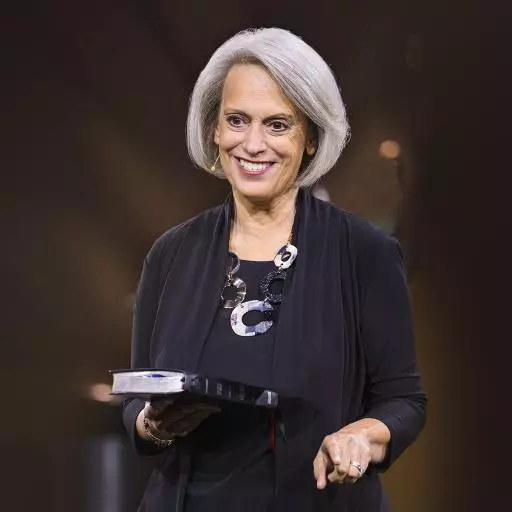
Exploring the True Woman Manifesto, Ep 11 of 15


The church has fallen on hard times in the evangelical world. It’s easy to find people who love Jesus but avoid the weekly gathering. Nancy DeMoss Wolgemuth looks to Scripture to explain why your local body of believers matters—imperfect as it’s sure to be. Gain valuable perspective on Revive Our Hearts.
Guest (Male): Is it okay to love Jesus but not like the church? Here's Nancy DeMoss Wolgemuth.
Nancy DeMoss Wolgemuth: The church has its flaws and its issues, to be sure. Every church does because it's made up of people like you and me. But it is still the bride, the body of Christ, and we can't love the head and reject the body.
Dana Gresh: This is the Revive Our Hearts podcast with Nancy DeMoss Wolgemuth, author of Adorned. For July 24, 2026, I'm Dana Gresh.
It's common to develop a consumer mindset when it comes to Sunday worship. Do you find yourself shopping around, looking for a church that provides the best mix of products and services? All month long, we've been revisiting the True Woman Manifesto, and this document has something to say about the local church. Let's listen as Nancy offers an important perspective on this.
Nancy DeMoss Wolgemuth: So we come today to another one of the "we will" statements. These are things we purpose to do in our lives. Let me read the statement, and then we'll talk about it. It says, "We will be faithfully engaged in our local church, submitting ourselves to our spiritual leaders, growing in the context of the community of faith, and using the gifts He has given us to serve others, to build up the body of Christ, and to fulfill His redemptive purposes in the world."
Now, this whole statement on the local church is really counter-cultural, as are many of the other statements in the True Woman Manifesto. The church, whether you realize it or not, has fallen on hard times in the evangelical world. It's become fashionable today to critique the church, and there's been a spate of books in recent years—books like, So You Don't Want to Go to Church Anymore, another one called Quitting Church, another one called Life After Church. We've become a generation of church consumers, church hoppers, church bashers, and sadly, in many cases, church leavers.
It reminds me of a story I heard about a man who was stranded on an island in the Pacific for many years. Finally, one day a boat came sailing into view and the man frantically waved and he got the skipper's attention. So the boat landed on the beach and the skipper got out to greet the stranded man. After a while, the rescuing sailor asked the castaway, "What are those three huts you've built over there?" The stranded man replied, "Well, that first hut, that's my house." The sailor said, "And what's the next hut?" The stranded man said, "That's my church." So the sailor said, "What about the third hut?" And the castaway responded, "Oh, that's where I used to go to church."
Well, that's kind of a picture of the way some people function today. Kevin DeYoung and Ted Kluck have written a terrific book I read recently called Why We Love the Church. In that book, they give several reasons why Christians say that they are fed up with the church. Some people say they think church is boring. Others are tired of the outdated Christian subculture. Many people say they hate the mega-church and some of the things that go with that. Then there are those who feel like the church is abusive or say they've been hurt by the church.
I received an email yesterday from a friend who said, "Our church fired our senior pastor last week. They read a letter from the elders which simply said they had a difference of vision—very sad and odd. The church is shocked and angry at how this was done." I could tell you many, many similar stories. I don't know who's right or who's wrong, but different sides, people feeling like they got hurt by the church. Another reason that these authors gave as to why people say they don't like the church anymore: they say the church seems inauthentic; people are just going through the motions.
You'll hear a lot of people today talk about loving Jesus but not liking the church, and many who don't feel that it's a big deal to miss church. They feel as long as they spend time with Jesus, they're really getting more out of that than out of being at church. There are those who say they want God, maybe they even want to be in community with other believers, but they have had it with the organized church. There are some today who are even challenging what really is a church, and you'll hear people say it's really just any two or more believers who get together to talk about God. They can do it at Starbucks, they can do it out in their boat, they can do it on a golf course—just two or more believers who get together to talk about God or worship Jesus, that's a church, some will say.
Well, if we want to know what a church really is and how God views the church, we need to look at God's Word. God tells us what the church is and how we are to view it. In the book of Ephesians, we find four metaphors for understanding the church. Now, I'm not going to read all these passages, but the references will be on the transcript on our website, reviveourhearts.com, and you can go and study these out more carefully as you read through the book of Ephesians.
But we read first of all in Ephesians chapter one, and again in chapter four, that the church is a body. It's a body, and like every other body, this body has a head. Who is our head? Christ is the head, and we as believers are members of His body. We are united with Christ. We are inseparably connected to Christ, who is our head, and by being connected to our head, we are also connected inseparably to other members of that body, to other believers. You can't be close to Christ and keep your distance from the rest of His body. In fact, we learn in scripture that the way you treat the body is the way you treat Christ Himself. The way you view other members of the body ultimately speaks to how you view Christ Himself. So, the church is a body.
Then we read in Ephesians chapter two, beginning about verse 19, that the church is also a building. It's a building, it's a temple. Not just any building, but a special kind of building. You read also about this in the book of First Peter, that the church is the dwelling place for God's glory. It's where God lives. In this building, in this temple, Christ again figures prominently; He is the foundation. He is the cornerstone. And what's our part in that temple? What's our part in that building? Well, we are stones, living stones that make up that temple. It's being fashioned as a dwelling place for God. So, the church is a body, it's a building, a temple.
Then we read in chapter two, verse 19 of Ephesians, that the church is a family. We have been adopted into God's family. So, what relationship does that give us to each other? It makes us brothers and sisters in this family. We're connected to each other, we're linked to each other inseparably as part of the family of God.
And then a fourth metaphor, and you read about this in Ephesians chapter five: we are a bride. The church is a bride, the bride of Christ, married to Christ. That means we have a covenant relationship with Christ and with each other. So we have these metaphors: a body, a building, a family, and a bride. Each of those is a picture of how we are organically related to Christ. It is a reminder that therefore, to be in relationship with Christ is also to be in relationship with others who are related to Christ. We are members of His body, we are living stones in the temple that He is building, of which He is the chief stone, the cornerstone, He is the foundation, and we are brothers and sisters in the family of God.
Bodies, buildings, families, marriages—beautiful pictures, but could I also point out that all those things also have issues? They have problems. Sometimes they are majorly dysfunctional. But you don't abandon them just because they have problems. In fact, all through the scripture, we see that Christ loves His church, flawed and messed up as she is at times, so much so that He gave His life for her.
I love that hymn stanza that says, "The church's one foundation is Jesus Christ her Lord. She is His new creation by water and the word. From heaven He came and sought her to be His holy bride. With His own blood He bought her, and for her life He died." You think Jesus doesn't know how messed up His church is? And yet He loves her, and He engages with her, and He gives Himself to her. He stays engaged even when we blow it. He doesn't abandon His bride. He doesn't abandon His body, His temple, His family.
Now, the local church, of which we have many represented in this room today, is the local visible expression of the body, the temple, the building, the family, the bride. The local church is both an organism and an organization. Some want one without the other; both are important. Our local churches consist of baptized followers of Christ who are banded together around their oneness in Christ for mutual growth and mission.
It's not just a group of people who have all the same likes and dislikes, who are homogeneous, they're all the same demographic. You see churches today that are built around all the same demographic: we're going to reach 20-somethings, or we're going to reach this generation or that generation. No, that's not what God intended. God intended that the church should be a picture, a reflection of the entire body. We need multiple generations. We need people from different backgrounds. We need people from different callings and seasons of life, and people who reflect what the body of Christ reflects—that's our differences. But we come together because we have a common Lord, a common Savior, a common calling: to make Christ known and to further His kingdom in this world.
I've had the privilege, and I consider it that, of being in the church since about nine months before I was born and ever since. My parents had us in church, they were there with us, they were faithful. Church was not an option in our family. I don't remember ever even discussing or arguing about it. It wasn't a discussion; it was the way it was. But I am so grateful for that. I've been thinking back over these last days as I've been preparing for this series about the way that the church has been a blessing in my life.
I was baptized at the First Baptist Church of Newtown Square, Pennsylvania, by Pastor Earl Connors, who is now with the Lord. I was five years old. I had to stand on an egg crate because I wasn't tall enough to be in the water, but baptized there at that church. Attending Sunday school, VBS, Pioneer Girls, singing hymns—all stanzas—hearing pastoral prayers that were so long I thought eternity had come. As a little girl, listening to preaching, participating in the Lord's Supper. I'm talking, as many of you can remember this, back in the days when there was no air conditioning. We would fan ourselves with those fans from funeral homes—remember that?—and you'd be trying to just get a little bit of air there. No children's church, no PowerPoint presentations, no video clips. The preaching, as I look back, was not always dynamic by modern standards, but we grew up under the ministry of the Word, knowing that we were part of something bigger than ourselves and that it mattered. We grew up worshipping, being taught, being challenged, being convicted, being encouraged, and learning to serve, to give to the body of Christ.
Over the past 40 years, I was reflecting on this. If I include my teen years, I have lived in five different places and belonged to five different churches, ranging in size from 400-ish to more than 4,000. Each of those churches has had different strengths and different weaknesses. There are some things about each of those churches that I have really loved and appreciated. There are some things that I would have preferred be different in each of those churches. I have loved the music in some of those churches and I have tolerated the music in some others. There have been different styles of preaching, some more my preference than others. There have been seasons when I have been deeply ministered to through my church experience, and there have been other seasons when it was mostly giving out. I have experienced some major heartaches and disappointments as it relates to church at some seasons.
But when I take the long view, I realize how much there is in each of those churches and in my church experience for which to be grateful. The last few Sundays, I've just looked around my church as I was preparing for this series and I've just been thinking about what I appreciate there. There are a number of young adults in our church—and I'm in a smallish church now—but a number of young adults who've grown up in the church and I've known them since they were very little. Many of them are now starting their own families and they're serving the Lord. They're singing in the choir, leading worship, involved in Bible quizzing, helping to lead the teens. One of those young men is now a deacon in our church. That's a beautiful thing to see: the family, those families growing up and their kids growing up to love and serve the Lord.
I looked around a few weeks ago during our worship time and there was a young teenage man whose mother died suddenly a few years ago. With his eyes closed, both hands lifted up to the Lord on the front row, oblivious to anybody else apparently, singing that chorus, "You are God alone, from before time began You were on Your throne. You are God alone and right now in the good times and bad, You are on Your throne." Such a precious sight to see that teenage boy worshipping the Lord. He's been through some bad times, he knows about that, but he's saying, "You are God alone, You're on Your throne."
I had the privilege last Sunday of praying with a 90-year-old woman that I sat next to, Jean Murphy. She's prayed for me for years. She loves the Lord, she has mentored women, she's been an encourager to me. We have a 106-year-old man in our church. These people who have been examples of faithfulness and of God's faithfulness, I'm thankful for them. I'm thankful for the faithful teaching of the Word.
A few weeks ago, our youth pastor preached a message and he said, "Life is not about you, and many of you think that it is. I know because I read your Facebook accounts." He said, "You need to reorient your life to His Word." He was just so direct, so pointed. I'm thankful for that youth pastor. I'm thankful for one of the musicians on our praise team. I look up there and this is a man who several years ago had a dramatic conversion. His life has been hugely transformed, and we've been praying for the salvation of his wife. He's up there, smile as big as the world, praising the Lord. When I see him, I'm just thankful for what God has done and burdened to see his wife come to faith—that's part of our church.
I turned around several months ago and introduced myself to a woman who was sitting behind me, met her after the service. I didn't know she was a missionary, the wife of a missionary couple home on furlough, and she just started telling me some of her story, what God had been taking her through, some very deep waters. As she talked, she didn't know anything about what I was going through, but her story so paralleled some waters I was walking through, but she was a little ahead of me in her journey. God had recently met with her and poured grace into her life. I got tears in my eyes and I said to her, "You do not know how much I needed to hear your story and what you shared today. You had no way of knowing that I've been in a very low, deep, hard time in my life recently, and God used you to minister grace to me." I needed that; that's part of the church. I look around—we have younger, older people, we have professional people, we have blue-collar people, tradesmen, different denominational backgrounds, but the same purpose, mission, and Lord.
The church has its flaws and its issues to be sure, and every church does because it's made up of people like you and me. But it is still the bride, the body of Christ. We can't love the head and reject the body. In his book, The Living Church, John Stott says, "I trust that none of my readers is that grotesque anomaly: an unchurched Christian. The New Testament knows nothing of such a person, for the church lies at the very center of the eternal purposes of God."
That's a good word in an era when we tend to be so individualistic, so independent-spirited, so consumer-minded. "What is this doing for me? Do I like this?" That's how we evaluate things. That's the wrong way to think about church. You need the local church. You need it for support, for encouragement, for accountability, for discipline. It is dangerous to be at a place in your life where you are not plugged into the life of a local church. When we talk about being engaged, I don't mean just going and parking your body in a pew for one hour on Sunday morning and then high-tailing it out of there and not having any other connection to the body. You need to be plugged in, you need to be connected.
And your local church needs you. They need your gifts, your prayers, your encouragement, and your support. We need not only to be engaged but to be submitting to our spiritual leaders. What does that look like? It means when we hear the Word, we put ourselves under the authority of the preached Word. We don't come home and roast the preacher or critique the message; we say, "God, I'm listening. I may or may not love the style of this preaching, it may or may not have been something that I found incredibly meaningful, but if you will ask God to speak to you through the preaching of His Word, He will do it." And we say, "Yes, Lord, I agree with what you have had to say to my heart today." It means being supportive wherever possible of leadership decisions unless they are contrary to the Word of God—not putting ourselves in the position of second-guessing, critiquing. It means encouraging others to be supportive, or if they disagree, to go to the people involved, to the leadership, and ask the questions there. It means being unified, being loyal and supportive.
It means sometimes seeking counsel from those in positions of spiritual leadership. One of the gals on our staff was sharing with me recently that she's in the process of making an important decision in her life, and she so wisely—she's a single woman—she went to each of the elders in her church, shared with them what she was dealing with, and asked for their counsel. She's listening, she's taking counsel.
Our goal as we engage in our churches is to grow personally, but then together to represent Christ and to further His kingdom in our world. It is not an option if you want to be a growing child of God, a true woman of God who is accomplishing His purposes for your life. Being a part of a local church body is not an option.
I think back to that hymn written by Timothy Dwight around 1800, and he said these words: "I love Thy church, O Lord, the house of Thine abode, the church our blessed Redeemer saved with His own precious blood. For her my tears shall fall, for her my prayers ascend; to her my cares and toils be given, till toils and cares shall end."
Dana Gresh: Nancy DeMoss Wolgemuth has just been telling us about a hymn, "I Love Thy Kingdom, Lord." In just a moment, Nancy's going to pray us out, but before then, I just want to take a moment to remember the global church we're a part of. The True Woman Manifesto calls you and me to use the gifts God has given us to serve others and to build up the body of Christ, to fulfill His redemptive purposes in the world. And may we never forget that Christ's church is expansive, crossing oceans and spanning continents.
Maybe God is asking you to pray for persecuted brothers and sisters in countries that forbid the preaching of the gospel, or maybe He's stirring in your heart to go to the nations to share Jesus, or maybe He's inviting you to love the global church in some other way. Here at Revive Our Hearts, we translate our resources into dozens of languages, equipping the global church with biblical content for women.
If you'd like to join us in this work, you can do that in a few ways. First, you can visit reviveourhearts.com/global to see which languages we're reaching. Pray for women around the world who are hungry for the message of freedom, fullness, and fruitfulness in Christ. Pray that they'd find our resources. Ask God to reach them with the truth of His Word. And then second, you can offer financial support. This ministry only has an intentional impact because listeners like you are so generous. To donate toward this work, you can visit reviveourhearts.com or call us at 1-800-569-5959. When you do, we'd love to send you the book we've been offering all month long: Mary Kassian's latest release, What Is a Woman? This resource unpacks a biblical definition of womanhood in a world that blurs gender lines and devalues the beauty of God's design for us. You can request Mary's book when you make a donation of any amount.
If you've been with us this month, you know we've been walking through a series with Mary Kassian. It's called "What Is a Woman?" On Monday, we'll listen to that last episode. It's a powerful closing message commissioning you to live out the breathtaking beauty of God's design for you, and not just for your own good but for the good of a watching world. Your womanhood helps tell the gospel story. More on that Monday. Now, let's pray with Nancy.
Nancy DeMoss Wolgemuth: And oh Lord, how I thank You for Christ, who is the head of our body and is the chief cornerstone, the foundation, our heavenly husband. And how I thank You for His church—for Your church, oh Lord. It is Your church, it is Your body. We are the bride of Christ. We are the temple that You are building to house Your glory.
I pray, oh Lord, that You would show us how to faithfully engage in our local churches, to submit ourselves to our spiritual leaders, to grow in the context of the community of faith, to use the gifts that You have given us to serve others, to build up the body of Christ, and to fulfill Your redemptive purposes in our world. I pray it in Jesus' holy name. Amen.
Dana Gresh: This program is a listener-supported production of Revive Our Hearts in Niles, Michigan, calling women to freedom, fullness, and fruitfulness in Christ.
Featured Offer

New book from Mary Kassian. With your donation of any amount.
Past Episodes
- 3 Doctrines that Fuel Endurance
- 3 Ingredients of a Revived Heart
- 3 Life-Changing Lessons for Young Women
- 3 Marks of an Unshakable Woman
- 3 Reasons to Join the 2026 Bible Reading Challenge
- 3 Ways to Love Your Friend When It’s Hard
- 3 Women Who Were Grateful for God’s Word
- A Cry for Revival: Isaiah 63-64
- A Great Awakening, with Kim and Katie Miller
- A Harvest of Joy
- A Heart Grounded in the Word of God, with Chris Brooks
- A Mighty Fortress Is Our God (Psalm 46)
- A Song for Weary Pilgrims (Psalm 137)
- A Woman Adorned and Adorning
- Advent for Exiles, with Caroline Cobb and Erin Davis
- Always Grateful: Ciara's Story
- Always Thankful (Psalm 66)
- An Unhurried Holiday Season
- And the Bride Wore White, with Dannah Gresh
- Anticipating Advent
- Be the Warmth: Cultivating Hospitable Character
- Becoming a Fruitful Woman
- Begin at My Sanctuary
- Behold the Big Story of the Bible, with Kevin DeYoung
- Behold the Daily Mercy of the Word, with Dannah Gresh
- Behold the Living Word, with Jackie Hill Perry
- Behold the Power of the Word to Save, with Kelly Needham
- Behold the Wonder of the Word
- Behold the Word Recovered by God’s People, with Mary Kassian
- Behold, Hearts on Fire with the Word
- Beholding the Wonder: True Woman '25
- Beyond Cliches: Real Encouragement for Single Sisters
- Blessed by a Godly Mother
- Blessing for the Year End & the New Year (2 Cor. 13:11-13)
- Blessings and Curses: A Look at the Life of Balaam
- Celebrating God’s Abundance
- Celebrating the Gift of Grandparents
- Choosing Servanthood Over Celebrity
- Choosing to Stay in a Difficult Marriage
- Come Adore: The Gospel in Carols
- Crossing the Finish Line: Remembering Robert Wolgemuth
- Ease Into the Bible, with Jean Wilund
- Enlarging Your Heart for Eternity, with Colleen Chao
- Exploring the True Woman Manifesto
- Faithful, Not Famous with Laura Gonzalez de Chávez
- Finding Freedom from Fear, with Judy Dunagan
- Finding My Father Father: How the Gospel Heals the Pain of Fatherlessness, with Blair Linne
- Finding Soul-Deep Satisfaction in Jesus
- Food Is Not the Enemy: Discover Freedom from Food Fixation, with Asheritah Ciuciu
- Free to Be Real
- Freedom in Christ
- From Death to Life: Hope After Abortion
- From Desperation to Deliverance: The Promise of Psalm 107
- Fruitful in Christ
- Fullness in Christ
- God’s Grace for Weary Moms
- God's Power to Revive a Heart, with Andrea Griffith
- Grace for the Depressed
- Hallelujah! A Praise Celebration (Psalm 113)
- Helping Kids Think Biblically, with Elizabeth Urbanowicz
- His Healing Touch
- Holy Week Heart Prep: The Wonderful Names of Jesus
- Hope in the Midst of the Hard
- How God’s Love for Women is Displayed in the Old Testament, with Dr. Katie McCoy
- How Less Scrolling Could Change Your Life, with Lara d’Entremont
- How Long, O Lord? Learning to Pray Through Pain
- How Remembering Eternity Transforms Today (Psalm 90)
- How to Have a Happy New Year (Psalm 1)
- How to Have a Marriage that Magnifies God
- How to Have a Quiet Heart
- How We Got Our English Bible
- Indispensable Ingredients for Life
- Instruments of Grace
- Intimacy with God
- It’s Possible! Learn to Control Your Mind and Emotions
- Leading Children to Love the Word
- Learning to Love the Old Testament, with Jennifer Smith
- Living Out the Beauty of the Gospel
- Living Well, Finishing Well, with Mark DeMoss
- Loving and Living God’s Word, with Kelly Needham
- On Our Way Home
- One Thing (Psalm 27:4)
- Open Your Home, Open Your Bible, with Erin Davis
- Ordinary Women, Extraordinary God
- Persecution, Perseverance, and the Key to Sustaining Faith, with Dr. Karen Ellis
- Persevering Love for the Local Church
- Pleading the Cause of the Unborn
- Practical Bible Study Tips
- Practicing Thankfulness, with Sam Crabtree
- Precepts, Parkinson’s, and the Truth That Sets Us Free, with Kay Arthur
- Psalm 23: Our Good Shepherd
- Putting God's Word First, with Gretchen Saffles and Janine Nelson
- Read Your Bible!
- Rediscovering Intimacy With God
- Relationship Refresh: Helping Your Community Thrive in Christ
- Remembering Voddie Baucham, Jr.
- Renewed and Restored (Psalm 23:2-3)
- Renewing Your Mind
- Revival Begins with You
- Revive Us Again (Psalm 85)
- Ruth: The Transforming Power of Redeeming Love
- Safely Home: Honoring Robert Wolgemuth
- Science, Scripture, and a Life Transformed, with Dr. James Tour
- See for Yourself: Get to Know Your Bible, with Kelly Needham
- Showing Kindness, with Kathy Branzell
- Sin, Suffering, and the God Who Restores
- Sorrowful, Yet Always Rejoicing
- Spiritual Disciplines We Forget About
- Spiritual Habits for Little Hearts
- Spiritual Strength for an Evil Day (Ephesians 6)
- Steadfast Faith
- Storm Shelter
- Supporting Your Suffering Friend, with Jani Ortlund
- Surrendering Your Independence
- Tell Yourself What’s True
- Telling the Greatest Story
- Tender Counsel for the Fearful and Grieving, with Paul Tautges
- The Beauty of Living Out the Gospel as a Woman
- The Four Emotions of Christmas
- The Glory of Face-to-Face Fellowship
- The Gospel Is Everything: 25 Years of Pointing Women to Christ
- The Humble Savior Who Came
- The Incomparable, Incarnate Christ
- The Joy of Bible Journaling
- The Joy of Embracing Biblical Womanhood, with Laura Perry Smalts
- The Legacies of Two Godly Fathers
- The Personal Devotional Life
- The Personal Devotional Life: Beyond Quiet Time, with Dr. Henry Blackaby
- The Power of Words
- The Well-Watered Woman, with Gretchen Saffles
- The Wonder App: Transforming Screen Time into Scripture
- Three Gifts Suffering Gives
- To The Woman Who Doesn’t Feel God’s Love
- Treasuring Christ in Our Traditions with Noel Piper
- True Woman '25 Panel Discussion: Behold the Word in Every Season
- True Womanhood for Today
- Truly Strong: Becoming Women Who Depend on the Lord
- Truth Talk for Hurting Hearts, with Dawn Wilson
- Walking Through Life's Deserts
- What Do We Do with Unfulfilled Longings?
- What Freedom, Fullness, and Fruitfulness Really Mean, with Robert Wolgemuth
- What Is a Woman? with Mary Kassian
- What Sisterhood Is (and Isn’t)
- What’s the Point of Praise? 3 Reasons Your Worship Matters
- When Busyness Threatens Intimacy with God
- When Prayer Sparks Revival, with Bob Bakke
- Why Study the Bible?
- Wonder of the Word Made Flesh
- Word Before World, with Gretchen Saffles

Featured Offer
New book from Mary Kassian. With your donation of any amount.
About Revive Our Hearts
Married, single, young or older, you'll want to join us every day for practical, biblical insights on becoming a fruitful woman of God. Best selling author and national radio host, Nancy DeMoss Wolgemuth makes the Scriptures come alive. You'll be touched by Nancy's messages and by the passion of her heart.
About Nancy DeMoss Wolgemuth
Nancy DeMoss Wolgemuth has touched the lives of millions of women through Revive Our Hearts and the True Woman movement, calling them to heart revival and biblical womanhood. Her love for Christ and His Word is infectious and permeates her online outreaches, conference messages, books, and two daily nationally syndicated radio programs—Revive Our Hearts and Seeking Him. Her books have sold more than four million copies and are reaching the hearts of women around the world. Nancy and her husband, Robert, live in Michigan.
Contact Revive Our Hearts with Nancy DeMoss Wolgemuth
Mailing Address
Revive Our Hearts
P.O. Box 2000
Niles, MI 49120
Telephone Numbers
1-800-569-5959 (toll-free)