
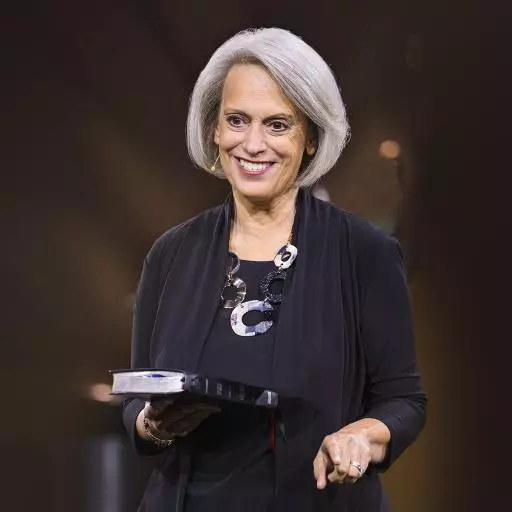
Applying the Gospel to Family Life, Ep 1 of 2


It’s back-to-school season, and we want to send off our kids equipped with gospel truth. Emily Jensen is here to help us do just that! We’re talking mean girls, identity, compassion, and so much more on Revive Our Hearts with Nancy DeMoss Wolgemuth.
Emily Jensen: Their identity does not come from who they say they are. It doesn't come from who someone else says they are. It comes from who God says that they are. Because of that, they don't have to receive, and they shouldn't receive, everything that everyone says to them or about them.
Dannah Gresh: This is the Revive Our Hearts podcast with Nancy DeMoss Wolgemuth, author of Choosing Gratitude, for August 17, 2026. I'm Dannah Gresh. This month on Revive Our Hearts, we're looking at all the different seasons of a woman's life. This week, we're zeroing in on those parenting years for what you might call big kids. It's for the moms who've weathered the little years and they're entering new seas: the elementary years, the tween years, the teen years. Yes, we need wisdom for all of it.
A big part of those years is school. Are you curious how the Gospel applies to the back-to-school season? Then you've come to the right place. We've got Emily Jensen with us today, and she's thought deeply about this topic. She's mom to five, which means she's packed a lot of lunches in her day. On top of this, she's co-author of the books Risen Motherhood and Gospel Mom. She loves applying the Gospel to motherhood and family life.
Hello, Emily Jensen, and welcome back to Revive Our Hearts.
Emily Jensen: Wow, thanks for having me. It's always so fun to be here.
Dannah Gresh: It is always fun to have you. As we wind down the summer, tell me what two emotional words come to mind as a mom?
Emily Jensen: I would say relief. I should say I always anticipate and enjoy a transitional season. I look forward to summer at the end of spring, but I'm always looking forward to fall at the end of summer because it brings a whole new group of fun things that we get to do as a family. It also lets us leave behind some of the things that maybe we were getting a little fatigued and tired about.
The second word is just a little bit of bittersweet sadness because every summer that goes by, my kids get a little bit older. It feels like the years are going faster and faster and the summers are going faster and faster. I just see that counting down, so there is that little bittersweet pang in my heart as I see another summer behind us.
Dannah Gresh: How old is your oldest?
Emily Jensen: My oldest is going into eighth grade. I have twins going into seventh grade, a fifth grader, and a fourth grader.
Dannah Gresh: Wow, I didn't know you had twins!
Emily Jensen: Yes, twin boys. They are 12.
Dannah Gresh: I have seven-year-old twin granddaughters, so we have walked the twin road and it is a blast, but a blur at the beginning of it. Let's talk about how the Gospel intersects with being a mom in those crazy busy mom years and those seasons of stops and starts. Let's start with this. First of all, the Gospel is all about Jesus. Tell me why you love Him so much.
Emily Jensen: I love Jesus so much because of the new life that He's given me. Sometimes we think about the things that we get to leave behind whenever we come to Christ, but I also love thinking about the things that I've been invited into. Not only is that for this life, but there's so much that now I'm invited into eternally.
Even day in and day out, just the peace that I get to experience because of Jesus in my heart. No matter what I face, no matter how hard my day is, no matter how frustrated I am with parenting, no matter what happened, I can say it is well with my soul. I can do that in part because I know that someday every tear is going to be wiped away. All of that work is going to be worth it. I'm going to be with Him forever and see the tremendous fruit of what He was doing in and through His church. I just love being a part of that.
Dannah Gresh: As you look back at understanding the eternity of salvation and all of that, do you have a time you remember when you really understood it and locked into it and surrendered your heart to Him? Take us to that day.
Emily Jensen: This would have been after my sophomore year of college. I was 20 years old. Even though I had grown up calling myself a Christian, going to church with my family, and going to youth group, I was not actually following the Lord. I had not really surrendered my life to Him. I had not really truly understood the Gospel of Jesus Christ. As a result of that, I was living in pretty intense disobedience. I was just doing whatever I wanted. I was doing the typical college girl thing.
God kept taking stuff away from me, which I'm so thankful for. He just kept showing me that every road I went down that wasn't His was just ending in disappointment and destruction. After the end of a relationship that I'd put a lot of my hope in, I was at a rock bottom emotionally. For the first time ever, I really cried out to God for help. Not just "help, God, because I've made a mess of this situation and I want you to clean it up and make it right for me," but help because I have no hope in my life without You. This isn't a life without You.
I didn't even have fancy words to pray. I literally think I prayed, "Help me, God." He did. He helped me. That week I was in a Barnes & Noble. I had never been in the Christian book section before, but for some reason, I went there. A book jumped out at me off the shelf. I grabbed it, went to my local coffee shop, and started reading it. The Gospel was in that book. The Lord just for the very first time allowed me to understand it, receive it, and put my hope and trust in Christ. That was 20 years ago. It was just night and day. The Word of God came alive to me, the joy of walking with God came alive to me, and the purpose of a life found in Christ.
Dannah Gresh: I was in a bookstore, a little tiny hole-in-the-wall bookstore, in my 20s when I was a believer. I was surrendered, but I was dry and I needed revival. I walked into a bookstore, saw a book on prayer, picked it up, went to the Lions Club park next door, and it totally revolutionized my life to start praying. It wasn't like I wasn't praying before; it's just it was different. Maybe the moral of our stories is to get a good Christian book and dive in. It might be a game changer for you.
You saw the Gospel for the first time in this book. You understood it for the first time as you read. The word "Gospel," I do think we overuse it sometimes. What would you say when I say that we can overuse that term?
Emily Jensen: I think you're right. That's the trouble with good terms; they gain traction and we start to use them, but then we start using them so much that they lose their meaning. Within the church, I see the Gospel used in two primary ways. One is to describe the immediate good news of salvation: that Jesus came, He's fully God and fully man, He lived a perfect life on our behalf, He died on the cross for sinners, and then if we put our hope and trust in Him and we turn from our sin, we are saved. We get eternal life with Him in heaven. That is the Gospel.
There's another way that we can use the word Gospel, the good news that encompasses the whole story of Scripture from Genesis to Revelation. This is the big story that God is writing for His people. That word is a lot of times what I'm thinking about now when I'm going, "How does the Gospel change my life?" Absolutely the life, death, and resurrection of Jesus changes my life, but I'm fitting that within this even bigger story that is good news for those who would put their hope and faith in Christ. Those are the two different ways I think about it. I do have to try to be more precise sometimes when I'm saying I have hope in the Gospel. We have to stop and think about it.
Dannah Gresh: Stop and think about it and never forget to personalize it. I think that's my beef. I love the Gospel. I think the Word gives us language like redemption and sanctification and all that, but also we have to remember to a lost world, that word doesn't have a lot of meaning. It's just a theological term. We have to introduce them to the person of Jesus and the life change that He can bring. That's why I love what you just said as you described the two components of that.
How do we live that out on the hot pavement of life as a mom? Fast forward, you're not that 20-years-ago girl who was just trying to figure this out. You are a mom of many. What does going back to school look like because of the Gospel?
Emily Jensen: I think that there are four words that help me anchor my thinking about the Gospel and then apply it to my life. It's Creation, Fall, Redemption, and Consummation. I tend to think in those categories whenever I'm trying to process something in my life through the lens of the Gospel.
When I think of my kids going back to school, one of the things that always comes to mind is the fact that they are made in His image. God created them, they belong to Him, and I want them to grow in wisdom and in knowledge. That's part of God's good design for our lives as people, that we would gain knowledge about all kinds of things: about how the world that God made works, about social situations, how do we live out in good friendships, how do we respect teachers? That is a good thing fundamentally.
Then I think about the Fall and the fact that nothing is quite as it should be. In fact, things are often deeply challenging and deeply broken. There's no perfect system, no perfect solution. Everything has challenges. Even as we look ahead to the school year, I do start sometimes thinking about the challenges, whether that's financial struggles that someone might be facing or worried about as the school supply lists and the sign-up fees come in. Or there may be a teacher that you're not really excited that they got, or there's a friend in the class that they're interacting with regularly that you're not excited about. Those things are real. We need to acknowledge that's part of life.
Then that Redemption piece is thinking about how the hope that I have in Christ intersects this challenge and this good thing He's given me and transforms it or changes the way I live in the midst of it. Because any situation that we find ourselves in, we want to be approaching that like a Christian, with Christ-like qualities and the fruit of the Spirit. Whatever the challenge is about school, I want to do that with love, joy, patience, and peace. I want to do it in a way that is trying to be a witness.
In all of that, no matter how things turn out, there are going to be good days and bad days. I'm thinking this isn't forever. This is the season that God has me in right now. I can be faithful in it, but it doesn't have to all get perfectly resolved this side of heaven if I'm putting my hope and trust in Him. That sounds very existential, but I do think about situations and transitions in life through that lens of all of those different pieces and trying to hold them together.
Dannah Gresh: Well, I think you described the four big themes or the meta-narratives of Scripture. If we can understand those things, then it is going to help us on the hot pavement of life. It's not just eternity and heaven, but it's the here and now, the abundant life.
I'm thinking of the second and the third. You talked about the Fall, the sinfulness of this world we live in, and then Redemption. I feel like for us to experience the redemption in something, we have to see the fallenness of something. Let's apply that to a few things that we're going to face in the back-to-school month.
Let's start with frenemies. At my True Girl ministry, one of the big emails and DMs I get from moms in August and September is "mean girl moments." This girl that has been a bully to my daughter is in her class. Let's look at that in terms of the Fall and Redemption. What would you say to a mom who writes to you and says, "My daughter has a frenemy. What do I do?"
Emily Jensen: That is so hard. Why are girls like this? It is because of the Fall. I think obviously it depends a lot on the situation involved, but assuming this is the other girl who is doing the majority of the bullying and the provoking, one thing is just explaining to kids where that comes from. One of the things we learn in the book of James is that a lot of times quarrels, fights, and bullying arise from the selfish ambition that is inside of us. It arises from the wounds in our hearts, the insecurity in our hearts, it arises from a prideful, selfish place. Helping your own child see that this honestly isn't even about you; it's about her brokenness, it's about her desire to be loved, it's about her selfish ambition and wanting to find a way to feel good and safe and happy with her life. I think that can help to depersonalize it a little bit.
Then I think also just recognizing and helping your child understand what you can control and what you can't control and what Jesus says about loving and walking alongside our enemies. He actually says to pray for our enemies. He actually says that we should not put ourselves over and over again in horrible situations; certainly we can have boundaries, but there is to be a spirit of forbearance and kindness and prayer towards them.
I would really encourage that. Let's pray for her. Let's pray for her because if she is this mean and this bullying and she's really lashing out at you, she's probably hurting and she needs Jesus. We ought to pray for her. I think that helps to change a heart posture.
Then the third thing that came to mind is just really instilling in our own kids their identity in Christ. Their identity does not come from who they say they are, it doesn't come from who someone else says they are, it comes from who God says that they are. Because of that, they don't have to receive, and they shouldn't receive, everything that everyone says to them or about them. In fact, there's a lot of things that are not true about you that you just need to tune out and turn away from because that's not what God says about you in His Word. You need to build your thoughts about yourself and your worth and your purpose in what the Bible says about you.
Honestly, surround yourself with people who are pointing you to that as well. That's, of course, where parents come in and need to say there are times where our children are not able to fully protect themselves, fully advocate for themselves, and they need us in positions of authority and care in their lives to step in sometimes and to help navigate things or help them gravitate towards healthier friendships or actually talk through scripts of what would you say when she says this? How can you respond in this situation if she comes and sits at your lunch table? Sometimes you have to get that granular. That's one of the things I've learned as I've gotten older is that even overcoming my sin and saying I want to grow in this situation, it is actually really granular and tangible. I have to do really particular, specific, all kinds of different things. It's not just I'm going to pray and it'll go away. There's actual practical strategies that we need to try, and our kids need those practical strategies to live in a sinful world. We as parents have to come alongside them and try to equip them with that.
Dannah Gresh: I love that you said start early. Identity is a really important term. That takes us back to that first meta-theme of Creation. We were created, Genesis 1 says, as image bearers of God—female image bearers and male image bearers of God. He did not make a mistake when He made us male or female. There was intention and precision in that design. But the identity issue is one that all of our kids are going to face, no matter their school type. They're going to hear it in the world, they're going to hear it in the news, they're going to see it in their neighborhood. What challenges have your children faced in the area of having questions about identity or gender, and how have you responded to them?
Emily Jensen: I'm grateful that we started young with just giving them a theology of gender, giving them a theology of identity early on. I can even remember taking them to the public library, knowing what month it was or what kind of books were going to be out, and kind of being prepared and provoking a little bit of that. I want them to ask this question because I want to get a chance to answer it. I want to get a chance to point these things out.
For us, it's been a lot of small conversations over and over again in a lot of different contexts over a long period of time. Interestingly, I think for us, what we've seen is that our kids have a pretty strongly formed view of being an image bearer and being a boy or a girl. We've had to actually teach them compassion and a sense of heartbrokenness and kindness towards people who don't have that worldview because kids can be very black and white.
You recognize just as fast as you've taught them, "God's design for the world is the way it should be and it's so good and we have to stand firm in it." Now sometimes when they see someone who's different or struggling, the first word out of their mouth is something that's just a little bit like "ugh." We're really working on, "Wait a second, this is also an image bearer." They are struggling, they're apart from the Lord. Can we pray for them? That's something that we're really working through as we're forming identity. What types of things shape people's identity and their view of themselves? You guys have grown up in a family who's tried to give you a strong identity in Christ, but some people are coming from very hurt backgrounds, very lonely backgrounds. They don't have—no one has told them that God made them. No one has told them that God loves them. We're trying to work through some of those things, especially in a middle school context.
Dannah Gresh: I love that you said start early. We're talking to you about how we pour the Gospel on our kids, but I'd love it if you'd come back tomorrow and talk about how we pour it or receive it into our own hearts when we're overwhelmed. When our kids forget their lunchbox for the 500th time this week, when we are like, "Okay, everybody's getting whatever's at school and they're all coming home with it," and my plans for Bible study and a quiet week alone with girlfriends is coming to an end. How do we pour the Gospel into our own hearts alive as moms? Will you come back tomorrow and talk about that?
Emily Jensen: Oh yeah, let's get into it.
Dannah Gresh: Wonderful, I can't wait. In the meantime, I want to point you to some super helpful resources for your kids as they navigate life in a fallen world. First, Lies Girls Believe, a book written by me. In a world that lies about identity, friendship, boys, and so much more, this resource teaches your girl to look for truth in God's Word. It's ideal for girls ages 8 to 12. This study will give you the tools you need to start important conversations at an age-appropriate pace.
We've also got Lies Boys Believe, written by Aaron and Jason Davis. Let me tell you, there's no couple better equipped to write that book. They've got a whole crew of boys in their house, and Aaron and Jason have been raising them well. In the book, they cover lies like "loving God is for girls," "God is mad at me," "no one needs to know about my sin," or "it doesn't matter what I watch." It's a very helpful resource.
Last but not least, Lies Young Women Believe. I co-wrote this one with my dear friend Nancy DeMoss Wolgemuth. It's for the young women in your family, those nearing adulthood and navigating some heavier questions. Maybe you need one, maybe you need two, maybe you need all three of these books. Whatever the case, you'll find these titles at links in the transcript of today's program at ReviveOurHearts.com. I hope you'll take advantage of these Bible-saturated resources as you shepherd your kids this school year.
As seasons change, we want to meet you with unchanging hope. Finding Beauty in Every Season is a book designed to help you see goodness right where you are. You'll explore beautiful photography from our team along with daily quotes from Nancy's teaching. This new resource is yours when you make a donation of any amount to Revive Our Hearts this month. To give and request your copy, visit ReviveOurHearts.com or call us at 1-800-569-5959.
Well, as you just heard, we are back with Emily Jensen tomorrow to talk about how moms live in light of the Gospel. What do you do when your day flies off the rails? How do you share the Gospel with your kids? What does it look like to maintain a healthy marriage as parents? We're exploring all this and more. Please be back for Revive Our Hearts.
This program is a listener-supported production of Revive Our Hearts in Niles, Michigan, calling women to freedom, fullness, and fruitfulness in Christ.
Featured Offer

Over six weeks study: Mary, the mother of Jesus; the Samaritan woman at the well; Sarah; Hannah; the Shunammite woman; and Anna. Each week highlights a different woman, helping you see how God works in seasons of waiting, longing, loss, and joy. This study includes daily Scripture readings, rich teaching, and meaningful reflection questions. With your donation of any amount.
Past Episodes
- 3 Doctrines that Fuel Endurance
- 3 Ingredients of a Revived Heart
- 3 Life-Changing Lessons for Young Women
- 3 Marks of an Unshakable Woman
- 3 Ordinary Ways to Magnify the Lord
- 3 Reasons to Join the 2026 Bible Reading Challenge
- 3 Ways to Love Your Friend When It’s Hard
- 3 Women Who Were Grateful for God’s Word
- A Breath of New Life (2 Kings 4)
- A Cry for Revival: Isaiah 63-64
- A Great Awakening, with Kim and Katie Miller
- A Harvest of Joy
- A Heart Grounded in the Word of God, with Chris Brooks
- A Mighty Fortress Is Our God (Psalm 46)
- A Song for Weary Pilgrims (Psalm 137)
- A Woman Adorned and Adorning
- Advent for Exiles, with Caroline Cobb and Erin Davis
- Always Grateful: Ciara's Story
- Always Thankful (Psalm 66)
- An Unhurried Holiday Season
- And the Bride Wore White, with Dannah Gresh
- Anticipating Advent
- Applying the Gospel to Family Life, with Emily Jensen
- Be the Warmth: Cultivating Hospitable Character
- Becoming a Fruitful Woman
- Begin at My Sanctuary
- Behold the Big Story of the Bible, with Kevin DeYoung
- Behold the Daily Mercy of the Word, with Dannah Gresh
- Behold the Living Word, with Jackie Hill Perry
- Behold the Power of the Word to Save, with Kelly Needham
- Behold the Wonder of the Word
- Behold the Word Recovered by God’s People, with Mary Kassian
- Behold, Hearts on Fire with the Word
- Beholding the Wonder: True Woman '25
- Beyond Cliches: Real Encouragement for Single Sisters
- Blessed by a Godly Mother
- Blessing for the Year End & the New Year (2 Cor. 13:11-13)
- Building a Spiritual Legacy for Your Children! by Jani Ortlund
- Celebrating 25 Years of Saying “Yes, Lord!”
- Celebrating Forty Years of God's Goodness
- Celebrating God’s Abundance
- Celebrating God’s Goodness
- Choosing Servanthood Over Celebrity
- Choosing to Stay in a Difficult Marriage
- Come Adore: The Gospel in Carols
- Courage and Compassion: Two Words for Parents
- Crossing the Finish Line: Remembering Robert Wolgemuth
- Dear Single Woman, God Sees You
- Devotions Amid Diapers
- Don't Give Up on That Modeling Career, by Susan Hunt
- Dry Bones Can Live Again (Ezekiel 37)
- Ease Into the Bible, with Jean Wilund
- Embracing Singleness
- Encouragement from a Grieving Widow
- Exploring the True Woman Manifesto
- Faithful, Not Famous with Laura Gonzalez de Chávez
- Finding Soul-Deep Satisfaction in Jesus
- Food Is Not the Enemy: Discover Freedom from Food Fixation, with Asheritah Ciuciu
- Free to Be Real
- Freedom in Christ
- From Death to Life: Hope After Abortion
- From Desperation to Deliverance: The Promise of Psalm 107
- Fruitful in Christ
- Fullness in Christ
- Gentle Parenting: Wisdom or Weakness with Tanner Kay Swanson
- God’s Grace for Weary Moms
- God's Power to Revive a Heart, with Andrea Griffith
- Hallelujah! A Praise Celebration (Psalm 113)
- Helping Kids Think Biblically, with Elizabeth Urbanowicz
- Holy Week Heart Prep: The Wonderful Names of Jesus
- Hope in the Midst of the Hard
- How God’s Love for Women is Displayed in the Old Testament, with Dr. Katie McCoy
- How Less Scrolling Could Change Your Life, with Lara d’Entremont
- How Long, O Lord? Learning to Pray Through Pain
- How Remembering Eternity Transforms Today (Psalm 90)
- How to Build Your Home
- How to Have a Happy New Year (Psalm 1)
- How to Have a Marriage that Magnifies God
- How to Have a Quiet Heart
- How We Got Our English Bible
- Indispensable Ingredients for Life
- Instruments of Grace
- Intimacy with God
- It’s Possible! Learn to Control Your Mind and Emotions
- Leading Children to Love the Word
- Learning to Love the Old Testament, with Jennifer Smith
- Letting God Be God, with Andrea Griffith
- Living Out the Beauty of the Gospel
- Living Well, Finishing Well, with Mark DeMoss
- Made to Tremble, with Blair Linne
- Magnifying Christ in the Midst of Anxiety
- Mary of Nazareth
- Mentoring Matters
- On Our Way Home
- One Thing (Psalm 27:4)
- Open Your Home, Open Your Bible, with Erin Davis
- Ordinary Women, Extraordinary God
- Parenting Teens with Hope, with Melissa Kruger
- Persecution, Perseverance, and the Key to Sustaining Faith, with Dr. Karen Ellis
- Persevering Love for the Local Church
- Pleading the Cause of the Unborn
- Practical Bible Study Tips
- Practicing Thankfulness, with Sam Crabtree
- Precepts, Parkinson’s, and the Truth That Sets Us Free, with Kay Arthur
- Psalm 23: Our Good Shepherd
- Putting God's Word First, with Gretchen Saffles and Janine Nelson
- Read Your Bible!
- Rediscovering Intimacy With God
- Relationship Refresh: Helping Your Community Thrive in Christ
- Remembering Voddie Baucham, Jr.
- Renewed and Restored (Psalm 23:2-3)
- Renewing Your Mind
- Revival Begins with You
- Revive Us Again (Psalm 85)
- Ruth: The Transforming Power of Redeeming Love
- Safely Home: Honoring Robert Wolgemuth
- Sarah, Meet Mercy
- Science, Scripture, and a Life Transformed, with Dr. James Tour
- See for Yourself: Get to Know Your Bible, with Kelly Needham
- Showing Kindness, with Kathy Branzell
- Spiritual Disciplines We Forget About
- Spiritual Habits for Little Hearts
- Spiritual Strength for an Evil Day (Ephesians 6)
- Steadfast Faith
- Storm Shelter
- Surrendering Your Independence
- The Beauty of Living Out the Gospel as a Woman
- The Four Emotions of Christmas
- The Glory of Face-to-Face Fellowship
- The Gospel Is Everything: 25 Years of Pointing Women to Christ
- The Humble Savior Who Came
- The Incomparable, Incarnate Christ
- The Joy of Bible Journaling
- The Joy of Embracing Biblical Womanhood, with Laura Perry Smalts
- The Legacies of Two Godly Fathers
- The Personal Devotional Life
- The Personal Devotional Life: Beyond Quiet Time, with Dr. Henry Blackaby
- The Truth Your Girl Desperately Needs
- The Well-Watered Woman, with Gretchen Saffles
- The Wonder App: Transforming Screen Time into Scripture
- Three Mercies for Young Moms
- To The Woman Who Doesn’t Feel God’s Love
- Treasuring Christ in Our Traditions with Noel Piper
- True Woman '25 Panel Discussion: Behold the Word in Every Season
- True Womanhood for Today
- Truly Strong: Becoming Women Who Depend on the Lord
- Walking Well in Every Season: For the Empty Nester, the Grandma, and the Widow
- What Freedom, Fullness, and Fruitfulness Really Mean, with Robert Wolgemuth
- What Is a Woman? with Mary Kassian
- What Makes You Beautiful? with Kristen Wetherell
- What Sisterhood Is (and Isn’t)
- What’s the Point of Praise? 3 Reasons Your Worship Matters
- When Busyness Threatens Intimacy with God
- When Prayer Sparks Revival, with Bob Bakke
- Why Study the Bible?
- Wonder of the Word Made Flesh
- Word Before World, with Gretchen Saffles
- Working for the Lord

Featured Offer
Over six weeks study: Mary, the mother of Jesus; the Samaritan woman at the well; Sarah; Hannah; the Shunammite woman; and Anna. Each week highlights a different woman, helping you see how God works in seasons of waiting, longing, loss, and joy. This study includes daily Scripture readings, rich teaching, and meaningful reflection questions. With your donation of any amount.
About Revive Our Hearts
Married, single, young or older, you'll want to join us every day for practical, biblical insights on becoming a fruitful woman of God. Best selling author and national radio host, Nancy DeMoss Wolgemuth makes the Scriptures come alive. You'll be touched by Nancy's messages and by the passion of her heart.
About Nancy DeMoss Wolgemuth
Nancy DeMoss Wolgemuth has touched the lives of millions of women through Revive Our Hearts and the True Woman movement, calling them to heart revival and biblical womanhood. Her love for Christ and His Word is infectious and permeates her online outreaches, conference messages, books, and two daily nationally syndicated radio programs—Revive Our Hearts and Seeking Him. Her books have sold more than four million copies and are reaching the hearts of women around the world. Nancy and her husband, Robert, live in Michigan.
Contact Revive Our Hearts with Nancy DeMoss Wolgemuth
Mailing Address
Revive Our Hearts
P.O. Box 2000
Niles, MI 49120
Telephone Numbers
1-800-569-5959 (toll-free)