
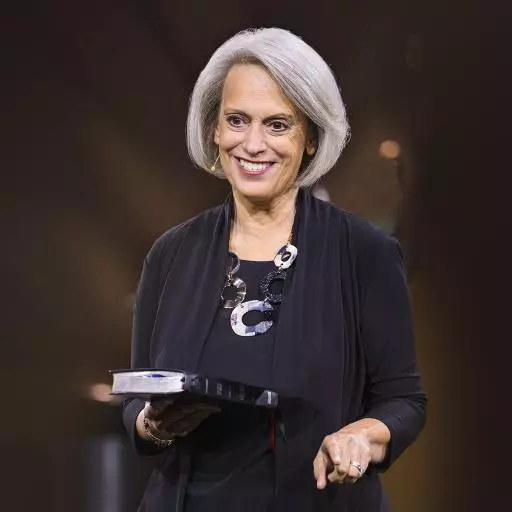
A Breath of New Life, Ep 5 of 6


Where do you turn with your deepest needs? To friends? Counselors? Books or conferences? Nancy DeMoss Wolgemuth says these things won’t ultimately solve our problems. Discover where to find true help on Revive Our Hearts.
Nancy DeMoss Wolgemuth: Nancy DeMoss Wolgemuth asks, "When a crisis interrupts your peace, where do you turn?" There is no book, there is no conference, there is no anything. There is no person who can meet the crisis needs of your life or mine. That's where we need divine intervention.
Guest (Female): This is the Revive Our Hearts podcast with Nancy DeMoss Wolgemuth, author of Heaven Rules. For September 25th, 2026, I'm Dana Grash.
Nancy DeMoss Wolgemuth: All week, we've been in a series called A Breath of New Life. Yesterday we looked at 2 Kings chapter 4 and heard the story of a mom. We're calling her the Shunammite woman.
When her only son died, she was able to say, "All is well." That's not a natural human response, is it? Nancy will continue this series in a minute, but first we'll hear from a listener who was moved by the peace this mom displayed.
Guest (Female): I was amazed as I stood back and watched this woman on the pages of Scripture how she knew that life was about glorifying God. I think we sometimes forget when we go through trials and hardships that there is often a bigger picture behind that.
I was struck by the fact that she said all is well a few times, and I did what you shared. I looked up what the word well was, and I saw in Hebrew it meant peace. I was thinking she knew the prince of peace. She knew God. And that enabled her to trust and say, "Okay, you're sovereign."
"I don't know why I'm going through this, but I'm going to trust you." Years later, someone like me could read that story and see God's glory displayed. She was able, she was willing to make herself available to be used for God's glory.
Nancy DeMoss Wolgemuth: Rebecca, what you just shared sums up what this next section in this woman's life is all about. So, it is about glorifying God and the story that He's writing in our lives as we're going to see.
Now, if you've just joined us for this series, we've talked about the hospitality, the generous heart of this Shunammite woman. She's a woman who was from the town of Shunem, and how she added on a room to her house for the prophet Elisha.
We've seen how through a miraculous act of God, she was given a son, and then several years later, the child that she loved so dearly became ill and died. And that's what we saw in the last session. She knew that there was no way that this child could be restored to life apart from a miraculous act of God.
The same kind of miracle that had given that child to her, it was going to take another miraculous act of God in order for her to get that child back. And based on the supernatural way that God had provided this child, I think maybe it just didn't make sense to this woman that God intended to take this child now.
This child was so clearly a gift of God, and it maybe just didn't seem consistent with God that He intended for things to end up this way. Now, in saying that, I realize sometimes they do in the short term end up this way. But we're only seeing in the short term and not the big picture, and that's what I want us to see in this next section on the Shunammite woman in 2 Kings chapter 4.
Now, as the Shunammite woman is talking to Elisha, she's going to pour out her heart to him. She's gone the 15 or 20 or so miles to see him. She's thinking and undoubtedly she had heard Elisha, the prophet, tell the story of another son who had died in the days of Elisha's predecessor, Elijah.
That story is told in 1 Kings chapter 17. You may remember there the widow of Zarephath, how she and her son were down to their last little bit of food. They were about to die, and how God miraculously intervened and provided flour and oil for them to survive the famine. And then when that woman's son became sick and died, the distraught mother pled with Elijah, and God used Elijah to bring that child back to life.
Now, surely this Shunammite woman had heard that story. Those things don't just happen every day, and I'm sure word had traveled. She knew Elisha who knew all about that story. She had heard that story and she knew the power of God to give life, because she had experienced that herself, and she knew about the power of God to overcome death.
She also knew that the spirit of Elijah had been given to Elisha. And so, as a result of all this, as she was making that trek to Mount Carmel, on that donkey, she was not going to give up hope for her son, whose lifeless body was lying on the bed of the prophet in the prophet's chamber in her house.
Matthew Henry, the commentator, says, "In this faith she makes no preparation for the burial of her dead child, but for its resurrection." She doesn't know what God's going to do, but she's setting the way, so to speak, that God can, if He chooses, bring about a resurrection. So, leaving the child in the house, she saddles up the donkey. She hurries all those miles to find the prophet.
And then verse 27 of chapter 4 tells us, "When she came to the mountain to the man of God, she caught hold of his feet." So, she prostrates herself. She throws herself down at the prophet's feet. She's perhaps out of breath. This has been a long journey. She's gone as fast as they can, and she just throws herself down at the prophet's feet, and I think it's a picture of desperation.
Something is critically wrong, and you need help, but it's also a picture of respect, of humility. She just takes her place at the feet of God. Now Elisha's not God, but he's a man of God. He speaks for God. So remember as we said in the last session, she is seeking after God with all her heart.
And then we see just a different picture in the next part of that verse in Gehazi, Elisha's servant, came to push her away. He didn't have Elisha's heart. He didn't have God's heart for this woman. This woman is an intruder. What's she doing? She's bothering our day. She's interrupting. She's a distraction. I don't know what he was thinking, but he just kind of pushes her off. Women weren't all that respected. And here's an emotional woman, a high-maintenance woman as we sometimes say around here. What was he thinking? I don't know, but he tries to push this woman away.
But the man of God said, "Leave her alone, for she is in bitter distress, and the Lord has hidden it from me and has not told me." You see such a contrast between these two men. Elisha was a true servant of the Lord. When you're a servant of the Lord, you love the Lord's people.
You have the Lord's heart of compassion for them. And Gehazi did not have those same core values that Elisha did, as you see in the next chapter as well, in another incident in his life. Which makes me ask, when people in distress come my way, are they going to find me to be more like Gehazi or like Elisha?
When your children are in distress, when they have a need, when they're upset about something in their little world, or your husband's in distress, or someone in your church is in distress, or there's that high-maintenance woman at your church, who wants a few minutes of your time, but you know it's not going to be a few minutes. You know it's going to be a long, hard discussion. Are you more like Gehazi where you push people away?
I can't tell you how many times I've done that, not literally, but in my mind, in my heart, pushing people away, not really listening, not really caring. People have a sense of that. Or are you more like Elisha, who says, "Here's a person in need. I'm not sure exactly what the need is. God hasn't shown it to me yet, but I care. And I want to be there and I want to be God's representative in this woman's life." He has tender compassion on this woman.
So she says to him in verse 28, "Did I ask my Lord for a son?" Whose idea was this? You're the one who brought this up. I was content, and then you had this idea of God giving me a child. Did I not say, "Do not deceive me"? Don't get my hopes up if they're just going to be dashed. That's what she had begged the prophet when he told her about this child that was going to be born.
So at this point, Elisha realizes, though she hasn't told him yet exactly what's happened, that there is something wrong with her son, that something has gone wrong, that there's some kind of crisis there. So he says in verse 29 to Gehazi, his servant, "Gird up your garment, take my staff in your hand, and go. If you meet anyone, do not greet him, and if anyone greets you, do not reply." In other words, hurry.
Presumably, Gehazi was a younger man and Elisha knew he could, the servant could outrun him. So he says, "You go and lay my staff on the face of the child." So, the woman has raced to get to Elisha. Now Elisha sends Gehazi back the same way. He says, "Don't get distracted. Don't get delayed." He takes this situation seriously.
Again, it's not clear why Elisha sent his servant for this clearly critical situation, but perhaps he was thinking this is the fastest way to get to this woman, to the child, and to take care of the situation. Maybe thinking that the staff, his staff, Elisha's staff would represent his own presence and God's power, and that there would be power that would come through that staff.
Well, verse 39, "The mother of the child said, 'As the Lord lives, and as you yourself live, I will not leave you.'" So, she's not going back with Gehazi. She is sticking with the man of God, because she really believes that he's the one, God's the one, who can help her in this situation, and she just does not perhaps seen the spirit of God, the same sort of God's presence in the life of this servant.
So, here's a persistent woman. She is not going to settle for less than God's power, God's presence, the man of God. So he rose and followed her. Verse 31, "Gehazi went on ahead and laid the staff on the face of the child, but there was no sound or sign of life. Therefore, he returned to meet him and told him, 'The child has not awakened.'" The child, in other words, is dead. There is no life.
This staff in and of itself was useless. It was just a piece of wood. It was not going to accomplish anything miraculous unless it had the power of God and the power of the man of God behind it. And to me, what a picture this is of the futility of human effort, human plans, human programs, apart from the presence and power of God.
In that desperate situation in your life, there is no program, there is no counselor, there is no book, there is no conference, there is no anything. There is no person who can meet the crisis needs of your life or mine. That's where we need divine intervention. We need the power of God. We need the presence of God.
It's true of this little boy who's lost his life, but it's also true spiritually, of prodigals, of children that you have a heart for, children and grandchildren that maybe you cry yourself to sleep at night longing, "God, please restore." You do what you do, what you can. You homeschool them. You take them to a conference. You send them to this school or this program or this counselor. Or you get this person involved in their life, and you see no change.
Because those things have no power unless God chooses to intervene supernaturally. If you want to see the heart of your loved one, your friend, that person restored, you've got to get the presence and the power of God involved. And that's what happens when Elisha gets to the house, verse 32.
"When Elisha came into the house, he saw the child lying dead on his bed. So he went in and shut the door behind the two of them and prayed to the Lord." That word for pray there means to intercede. He puts himself between that child and God and grabs hold of the throne of grace. Says, "God, we need you. Would you come and do what is needed in the life of this child?" That's what an intercessor does, comes between human need and divine capacity. "God, we need you."
Elisha knew that he had no power of his own to give life, and nor do you, nor do I. I don't have power through this radio minister to give life to anybody. We see lots and lots of women's lives and homes being transformed through this ministry. We see marriages getting restored, people coming to faith in Christ, but I have no power to do that. And that's why before I came here this morning, I was on my knees in my study saying, "Lord, could you come and speak to us today? Would you anoint these words with your presence, with your power, with your Holy Spirit? Nothing will happen in women's lives as a result of what is taught today if you don't do it."
We're just a lifeless staff. We're just a Gehazi. We're just an Elisha. It's no good without the power of God. So he prays and recognizes that "apart from me," Jesus says, "you can do nothing." And he does it alone. He's alone there with the child. He shuts the door. There's no spectacle. Just private, earnest prayer.
I wonder how many of you moms, grandmoms, are taking time to shut the door and go into your closet and plead with God to intervene in the life of your child, or your mate, or your loved one. He prayed. Then verse 34, "He went up and lay on the child, putting his mouth on his mouth, his eyes on his eyes, and his hands on his hands."
Obviously Elisha was bigger than the child, so I don't suppose he put his whole body at one time on the child, but just part to part, hand to hand, face to face, putting himself on that child. It seems a little strange until you see that God uses, as he stretched himself upon him, the flesh of the child became warm.
Now this child was dead. This child was not in a coma. This child was not just sick. This child was not sleeping. This child was dead. There was no life, and it wasn't Elisha's body that brought life to this child. It was the Holy Spirit working through the prophet of God, the man of God, to infuse new life and breath into the child's lifeless body.
It's a picture of how God wants to use us life to life, laying ourselves on those that we love. It makes me think of Paul saying in 1 Thessalonians that when we minister to you, "We were pleased to give to you not only the Gospel, but our very lives as well." You don't bring new life to your kids or your friends or people who are needy in your neighborhood by just telling them the truth. We got to do that.
But you do it also by giving your life, by pouring your life, by investing your time, your resources, laying yourself, yourself, on that person so that God can work through you by the power of His spirit to breathe new life into the one you care about.
Well, this was a process involved here. Restoration wasn't immediate. Verse 35 says, "Elisha got up again and walked once back and forth in the house and went up and stretched himself upon him. The child sneezed seven times, and the child opened his eyes." It was a process here. There was perseverance. Elisha didn't give up when the child didn't come back fully to life the first time.
And finally the child does come back to life. It's a miracle. Then verse 36, "He summoned Gehazi and said, 'Call the Shunammite.' So he called her. And when she came to him, he said, 'Pick up your son.'" She came and fell at his feet, bowing to the ground. Then she picked up her son and went out.
I love her first order of business. You'd think the first thing she would have done was go and hug the child, right? But no, she goes and back to the prophet's feet. She started at the prophet's feet, pleading with him to come, and now God has intervened. So she falls back at his feet, bows to the ground. Gratitude, worship. The first time she was at his feet in desperation, now she's at his feet in elation and exhilaration and celebration. She returns to give thanks before she picks up her child.
Now the Shunammite's story, amazing as it is, points us to a larger, grander story, as Rebecca mentioned a few moments ago. The town of Shunem, Shunem was actually a village at the base of the southern slopes of a hill called Moreh. It's sometimes called Mount Moreh, but it's only about 1,300 feet high, so it's more of a hill. And this Shunem is at the base, the southern slope of that hill.
So this miracle takes place in the village of Shunem. Now fast forward about 900 years. About two miles away from Shunem, on the opposite slope of that same hill of Moreh, the northern slope, is another town called Nain. Does that ring a bell? Luke chapter 7. "Soon afterward, Jesus went to a town called Nain, and His disciples and a great crowd went with Him. As He drew near to the gate of the town, behold, a man who had died was being carried out, the only son of his mother, and she was a widow. And a considerable crowd from the town was with her. And when the Lord saw her, He had compassion on her and said to her, 'Do not weep.' Then He came up and touched the bier, or the casket, and the bearers stood still. And He said, 'Young man, I say to you, arise.' And the dead man stood up and began to speak, and Jesus gave him to his mother."
Now you can't miss the parallels between the miracle that took place with the son of the Shunammite woman in 2 Kings 4, and the miracle that took place 900 years later in a village two miles away, the village of Nain. Both took place at the base of the same hill. Both involved a dead child who was the only beloved son of his mother. And in both cases, that son was that mother's hope for future provision and survival. Both of those instances involved a man of God who was a prophet.
And in both cases, the child was miraculously restored to life. In 2 Kings 4, Elisha says to the mother, "Pick up your son." In Luke 7, it says, "Jesus gave him to his mother." There are so many parallels between this passage. As the crowd in Jesus' day saw this miracle take place, they couldn't have helped but make the connection between what they had just seen and the miracle that had been performed on that same hill nearly 900 years earlier by the prophet Elisha that they so revered.
Elisha's miracle working ministry was actually a preview of the greater miracle working ministry of Jesus. And so after Jesus brings back to life this son in the widow in the village of Nain, it says, "Fear seized them all, and they glorified God saying, 'A great prophet has risen among us and God has visited His people.' And this report about Him spread through the whole of Judea and all the surrounding country."
Now keep in mind Jesus was the promised Messiah, the Messiah that the Jews had clung to this hope for centuries, the one Moses called "the prophet." And the purpose of Jesus' miracles was to validate His claims to be the Son of God, the promised Messiah. But people had a hard time believing that. And so in the village of Shunem, and then 900 years later in the village of Nain, two miles away, the response to a dead son being raised to life was one of worship, and joy, and amazement.
As the people in Jesus' day realized, "This is that prophet that Moses talked about!" As Elisha raised that son, they made the connection. They connected the dots. This isn't just some ordinary man. This is a man of God. It was part of the revelation of their realizing who Jesus was as they connected the story to what had happened 900 years earlier. And they realized that God was a powerful, redeeming God, who had come to deliver His people from the ravages of sin and death.
The Shunammite woman, who was so deeply grieved for the loss of her son, had no way of knowing that she was part of a bigger story, and that God was orchestrating events in her life that were intended to point people to Jesus 900 years later, and thousands of years later to us as we read and talk about this story today.
So we need to remember that our lives are not just about what we can see and experience here and now. They're part of a continuum, a great drama of redemption that God is unfolding over the ages to bring glory to His Son and to destroy the works of the devil, as we read in 1 John chapter 3.
So in this story of the Shunammite son being raised back to life, we see a powerful foreshadowing of the whole theme of resurrection, the promise of the resurrection. Death is a powerful foe that is humanly irreversible. But this miracle there in the village of Shunem demonstrated that God has the power to bring the dead back to life. That He is the God of resurrection.
In fact, if you follow the story of this woman of Shunem, you see that there's the miraculous birth, there's the death, an unexpected death, and then the miraculous coming back to life. And who does that remind you of? Another son who had a miraculous birth, God's own Son, who died a violent death that He didn't deserve for crimes that He did not commit, and was miraculously raised back to life by the power of God.
And that same God still has the power to bring the dead to life. In fact, if you are a child of God, according to the scripture, you have already experienced a resurrection, because Ephesians tells us that we were dead in trespasses and sins. But God, who is rich in mercy, when we were dead in our trespasses, made us alive together with Christ, and raised us up with Him, and seated us with Him in the heavenly places in Christ Jesus.
But this story also encourages those of you who are moms, have friends that you love who are not walking God's way, to lay hold of God, to cling to Him for the spiritual life, the eternal life, to redeem the lives of your children, your grandchildren, your family members, and others that you love. And to remember that God is able to do the impossible.
That's what we read in Hebrews chapter 11, where it says, "Through faith, women received back their dead by resurrection." But remember, not all of them got their child back in the here and now. Because that verse goes on to say, "But some were tortured, refusing to accept release, so that they might rise again to a better life." You got to have the big picture in mind. See that God is a redeeming God who will raise to life those who have died in Christ. That resurrection may not be here and now, but there's another resurrection coming.
The resurrection of those who are dead in Christ. The Lord Himself will descend from heaven with a cry of command, with the voice of an archangel, and with the sound of the trumpet of God, and the dead in Christ will rise. The Shunammite son died again at some point, as did Lazarus after he had been raised from the dead.
But this story reminds us that death is not final. There is a resurrection. Those who die in faith, He will raise back to life. And so Paul says, after he talks about the dead in Christ rising, he says, "Therefore, encourage one another with these words."
Guest (Female): What sweet comfort today from Nancy DeMoss Wolgemuth. Because of Jesus, death is never the end for the Christian. These biblical stories of resurrection are all signposts pointing to our promised resurrection when He returns. Today's teaching is part of a series, A Breath of New Life. If you missed any of this week's episodes, and you'd like to catch those, you'll find them all at ReviveOurHearts.com.
Now, I want to remind you that you can hear teaching like this in person next fall at our True Woman 27 conference. One woman who attended last year wrote to tell us what an impact this experience had on her. She says, "Hi, I attended the True Woman 25 conference in Indianapolis and I just wanted to say thank you. During my time there, the Lord truly broke through a stronghold in my life. For the first time in a long time, I'm hungry for God's word. The Revive Our Hearts team created space for women to connect to scripture in a way that is uniquely meaningful, and I'm so grateful."
Thank you for writing to share that. You know, I leave every True Woman conference hungrier for the word of God. We'd love for you to experience this same refreshment in the word next year at True Woman 27. Registration is open, and you've got just a few more weeks to take advantage of our super early pricing. It truly is a great discount, so go check that out. To get all the details and to register, visit TrueWoman27.com.
In the meantime, I hope you'll continue to enjoy Revive Our Hearts resources. They're all intentionally crafted to help you soak in scripture. This month's feature study, Devoted, invites you deeper into the life of the Shunammite woman we've been hearing about all week. You'll also explore the stories of Hannah, Anna, Mary, Sarah, and the woman at the well. We'll send you this study as our thanks when you give a gift of any amount before the end of this month. To donate and request your copy of Devoted, visit ReviveOurHearts.com or call us at 1-800-569-5959.
On Monday, Nancy wraps up this series and answers this question, "Is there such a thing as a chance occurrence?" Please be back for Revive Our Hearts. This program is a listener supported production of Revive Our Hearts in Niles, Michigan, calling women to freedom, fullness, and fruitfulness in Christ.
Featured Offer

Over six weeks study: Mary, the mother of Jesus; the Samaritan woman at the well; Sarah; Hannah; the Shunammite woman; and Anna. Each week highlights a different woman, helping you see how God works in seasons of waiting, longing, loss, and joy. This study includes daily Scripture readings, rich teaching, and meaningful reflection questions. With your donation of any amount.
Past Episodes
- 3 Doctrines that Fuel Endurance
- 3 Ingredients of a Revived Heart
- 3 Life-Changing Lessons for Young Women
- 3 Marks of an Unshakable Woman
- 3 Ordinary Ways to Magnify the Lord
- 3 Reasons to Join the 2026 Bible Reading Challenge
- 3 Ways to Love Your Friend When It’s Hard
- 3 Women Who Were Grateful for God’s Word
- A Breath of New Life (2 Kings 4)
- A Cry for Revival: Isaiah 63-64
- A Great Awakening, with Kim and Katie Miller
- A Harvest of Joy
- A Heart Grounded in the Word of God, with Chris Brooks
- A Mighty Fortress Is Our God (Psalm 46)
- A Song for Weary Pilgrims (Psalm 137)
- A Woman Adorned and Adorning
- Advent for Exiles, with Caroline Cobb and Erin Davis
- Always Grateful: Ciara's Story
- Always Thankful (Psalm 66)
- An Unhurried Holiday Season
- And the Bride Wore White, with Dannah Gresh
- Anticipating Advent
- Applying the Gospel to Family Life, with Emily Jensen
- Be the Warmth: Cultivating Hospitable Character
- Becoming a Fruitful Woman
- Begin at My Sanctuary
- Behold the Big Story of the Bible, with Kevin DeYoung
- Behold the Daily Mercy of the Word, with Dannah Gresh
- Behold the Living Word, with Jackie Hill Perry
- Behold the Power of the Word to Save, with Kelly Needham
- Behold the Wonder of the Word
- Behold the Word Recovered by God’s People, with Mary Kassian
- Behold, Hearts on Fire with the Word
- Beholding the Wonder: True Woman '25
- Beyond Cliches: Real Encouragement for Single Sisters
- Blessed by a Godly Mother
- Blessing for the Year End & the New Year (2 Cor. 13:11-13)
- Building a Spiritual Legacy for Your Children! by Jani Ortlund
- Celebrating 25 Years of Saying “Yes, Lord!”
- Celebrating Forty Years of God's Goodness
- Celebrating God’s Abundance
- Celebrating God’s Goodness
- Choosing Servanthood Over Celebrity
- Choosing to Stay in a Difficult Marriage
- Come Adore: The Gospel in Carols
- Courage and Compassion: Two Words for Parents
- Crossing the Finish Line: Remembering Robert Wolgemuth
- Dear Single Woman, God Sees You
- Devotions Amid Diapers
- Don't Give Up on That Modeling Career, by Susan Hunt
- Dry Bones Can Live Again (Ezekiel 37)
- Ease Into the Bible, with Jean Wilund
- Embracing Singleness
- Encouragement from a Grieving Widow
- Exploring the True Woman Manifesto
- Faithful, Not Famous with Laura Gonzalez de Chávez
- Finding Soul-Deep Satisfaction in Jesus
- Food Is Not the Enemy: Discover Freedom from Food Fixation, with Asheritah Ciuciu
- Free to Be Real
- Freedom in Christ
- From Death to Life: Hope After Abortion
- From Desperation to Deliverance: The Promise of Psalm 107
- Fruitful in Christ
- Fullness in Christ
- Gentle Parenting: Wisdom or Weakness with Tanner Kay Swanson
- God’s Grace for Weary Moms
- God's Power to Revive a Heart, with Andrea Griffith
- Hallelujah! A Praise Celebration (Psalm 113)
- Helping Kids Think Biblically, with Elizabeth Urbanowicz
- Holy Week Heart Prep: The Wonderful Names of Jesus
- Hope in the Midst of the Hard
- How God’s Love for Women is Displayed in the Old Testament, with Dr. Katie McCoy
- How Less Scrolling Could Change Your Life, with Lara d’Entremont
- How Long, O Lord? Learning to Pray Through Pain
- How Remembering Eternity Transforms Today (Psalm 90)
- How to Build Your Home
- How to Have a Happy New Year (Psalm 1)
- How to Have a Marriage that Magnifies God
- How to Have a Quiet Heart
- How We Got Our English Bible
- Indispensable Ingredients for Life
- Instruments of Grace
- Intimacy with God
- It’s Possible! Learn to Control Your Mind and Emotions
- Leading Children to Love the Word
- Learning to Love the Old Testament, with Jennifer Smith
- Letting God Be God, with Andrea Griffith
- Living Out the Beauty of the Gospel
- Living Well, Finishing Well, with Mark DeMoss
- Made to Tremble, with Blair Linne
- Magnifying Christ in the Midst of Anxiety
- Mary of Nazareth
- Mentoring Matters
- On Our Way Home
- One Thing (Psalm 27:4)
- Open Your Home, Open Your Bible, with Erin Davis
- Ordinary Women, Extraordinary God
- Parenting Teens with Hope, with Melissa Kruger
- Pleading the Cause of the Unborn
- Practical Bible Study Tips
- Practicing Thankfulness, with Sam Crabtree
- Precepts, Parkinson’s, and the Truth That Sets Us Free, with Kay Arthur
- Psalm 23: Our Good Shepherd
- Putting God's Word First, with Gretchen Saffles and Janine Nelson
- Read Your Bible!
- Rediscovering Intimacy With God
- Relationship Refresh: Helping Your Community Thrive in Christ
- Remembering Voddie Baucham, Jr.
- Renewed and Restored (Psalm 23:2-3)
- Renewing Your Mind
- Revival Begins with You
- Revive Us Again (Psalm 85)
- Ruth: The Transforming Power of Redeeming Love
- Safely Home: Honoring Robert Wolgemuth
- Sarah, Meet Mercy
- Science, Scripture, and a Life Transformed, with Dr. James Tour
- See for Yourself: Get to Know Your Bible, with Kelly Needham
- Showing Kindness, with Kathy Branzell
- Spiritual Disciplines We Forget About
- Spiritual Habits for Little Hearts
- Spiritual Strength for an Evil Day (Ephesians 6)
- Steadfast Faith
- Storm Shelter
- Surrendering Your Independence
- The Beauty of Living Out the Gospel as a Woman
- The Four Emotions of Christmas
- The Glory of Face-to-Face Fellowship
- The Gospel Is Everything: 25 Years of Pointing Women to Christ
- The Humble Savior Who Came
- The Incomparable, Incarnate Christ
- The Joy of Bible Journaling
- The Joy of Embracing Biblical Womanhood, with Laura Perry Smalts
- The Legacies of Two Godly Fathers
- The Personal Devotional Life
- The Personal Devotional Life: Beyond Quiet Time, with Dr. Henry Blackaby
- The Truth Your Girl Desperately Needs
- The Well-Watered Woman, with Gretchen Saffles
- The Wonder App: Transforming Screen Time into Scripture
- Three Mercies for Young Moms
- To The Woman Who Doesn’t Feel God’s Love
- Treasuring Christ in Our Traditions with Noel Piper
- True Woman '25 Panel Discussion: Behold the Word in Every Season
- True Womanhood for Today
- Truly Strong: Becoming Women Who Depend on the Lord
- Walking Well in Every Season: For the Empty Nester, the Grandma, and the Widow
- What Freedom, Fullness, and Fruitfulness Really Mean, with Robert Wolgemuth
- What Is a Woman? with Mary Kassian
- What Makes You Beautiful? with Kristen Wetherell
- What Sisterhood Is (and Isn’t)
- What’s the Point of Praise? 3 Reasons Your Worship Matters
- When Busyness Threatens Intimacy with God
- When Prayer Sparks Revival, with Bob Bakke
- Why Study the Bible?
- Wonder of the Word Made Flesh
- Word Before World, with Gretchen Saffles
- Working for the Lord

Featured Offer
Over six weeks study: Mary, the mother of Jesus; the Samaritan woman at the well; Sarah; Hannah; the Shunammite woman; and Anna. Each week highlights a different woman, helping you see how God works in seasons of waiting, longing, loss, and joy. This study includes daily Scripture readings, rich teaching, and meaningful reflection questions. With your donation of any amount.
About Revive Our Hearts
Married, single, young or older, you'll want to join us every day for practical, biblical insights on becoming a fruitful woman of God. Best selling author and national radio host, Nancy DeMoss Wolgemuth makes the Scriptures come alive. You'll be touched by Nancy's messages and by the passion of her heart.
About Nancy DeMoss Wolgemuth
Nancy DeMoss Wolgemuth has touched the lives of millions of women through Revive Our Hearts and the True Woman movement, calling them to heart revival and biblical womanhood. Her love for Christ and His Word is infectious and permeates her online outreaches, conference messages, books, and two daily nationally syndicated radio programs—Revive Our Hearts and Seeking Him. Her books have sold more than four million copies and are reaching the hearts of women around the world. Nancy and her husband, Robert, live in Michigan.
Contact Revive Our Hearts with Nancy DeMoss Wolgemuth
Mailing Address
Revive Our Hearts
P.O. Box 2000
Niles, MI 49120
Telephone Numbers
1-800-569-5959 (toll-free)