

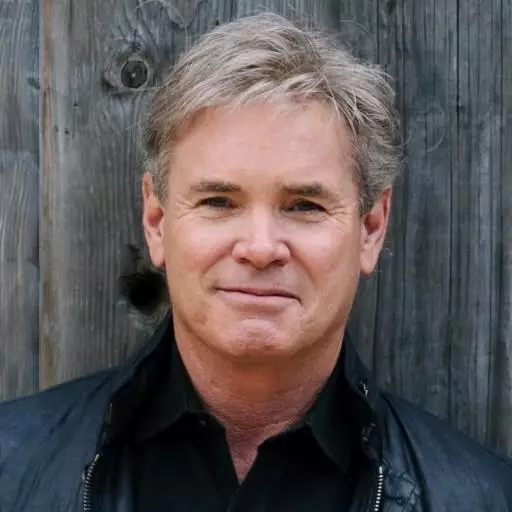
What Happens When We Fight Our Own Battles - B


Today, Pastor Jack teaches that King Saul could never see what God had for him. He never asked God for wisdom. He never consulted God on how to move forward, and failed to see the importance of the people in his life.
Jack Hibbs: Let's stop being afraid. Go for it! Lord, what do you want me to do? Don't wait around for someone else to do it. God wants to bless you in that thing.
David J: Welcome to Real Life Radio with Pastor Jack Hibbs. I'm David J, thanking you for joining us today as we listen, learn, and are challenged by God's word, the Bible.
US strikes, Israel on alert, Iran escalating. Does anyone else feel like today's headlines sound straight out of Bible prophecy? Jesus told us these days would come, not so we'd panic, but so we'd be prepared. That's why we created the Prophecy Pack: Understanding God's Plan for the Future, a practical guide to help you live ready. Don't just watch the news; understand it through God's word. Get your Prophecy Pack now for a gift of any amount at jackhibbs.com.
On today's edition of Real Life Radio, Pastor Jack continues his series called First Samuel in a message titled "What Happens When We Fight Our Own Battles." Samuel of the Old Testament was the last judge of Israel and the first of her prophets. So here in chapter 31, we'll consider how Saul fought his own battles and ends up defeated and destroyed.
See, King Saul relied upon himself, so God had to let him go in his own strength and resources, and he lost everything. Saul's repeated disobedience led to devastating results, including his life and the life of his son, Jonathan. So today, Pastor Jack teaches us that King Saul could never see what God had for him. He never asked God for wisdom. He never consulted God on how to move forward and failed to see the importance of the people in his life. Now, with his message called "What Happens When We Fight Our Own Battles," here's pastor and Bible teacher, Jack Hibbs.
David J: Pastor Jack, can we talk about this great relationship that comes up in the book of Samuel between David and Jonathan? They seem to me to be best friends.
Jack Hibbs: No doubt about it. In fact, it's a great read just to see how these men came to be bonded together, bonded over the fact that, for example, Saul was very dysfunctional many times. Jonathan was level-headed; David saw that. And then Jonathan would see David's courage in the midst of Saul, his father's weakness.
So there's this remarkable writing—almost like a movie or a screenplay—and the two of these legendary best friends recorded in the Bible were very much knit together at the heart. God did that. They were very precious and very pristine, for sure.
David J: How common do you think friends like that are?
Jack Hibbs: I think God would love to have that to be something common in our lives. I don't know if we as humans are often open enough or vulnerable enough to have that happen. But one thing we know for sure is that level of friendship—you don't need two or three of them.
It is a relationship that is made. Look at it: it was made in battle, it was made in hardship, it was made in joy. It was made with all of these things that make us people. Think about all of us right now; things have been poured into our lives, good, bad, or ugly. How we process those things really makes us who we are.
So you look at these two men who won battles together. We're all familiar with the Band of Brothers, that classic war movie. That's very much the case with Jonathan and David. But I would say you only need one of those relationships. The sad thing is, in our day and age, you don't see many of them at all.
All right, let's get into this. Israel has faltered because they've been led into disarray. They've been led into weakness because the administration of Saul's government was so terrible that now the Philistines are chasing the Israelites. This is an unbelievable event. The Israelites fell slain on Mount Gilboa. Then the Philistines followed after Saul and his sons and killed his three boys.
Israel was under attack and the Philistines were fighting. There's no sign, there's no word, and there's no leading from God here. The silence is deafening. It's pathetic. These are God's people, but they're on their own. It shouldn't be happening. There's no consultation as we saw in chapter 30.
Remember when David began to seek the Lord? What did he call for? He called for the ephod. He called for a priest. He consulted God. He looked to the word of God. He wanted to hear, "God, what do you want me to do?" In this moment of crisis, "What do you want me to do? These people want to kill me. God, what would you have me to do?" He consulted God. There's none of that here.
The tragic end of Saul's life: he's engaged in a battle, they're losing, and he doesn't call for a priest as David did. There's no prophet to speak to, there's no ephod—that is, there's no discerning of God and His prophets and His priests before the people. None of that. It's tragic.
In Hosea chapter 4 verse 6, it says, "My people are destroyed for a lack of knowledge. Because you have rejected my knowledge, so I also will reject you." We need to mark that verse down. Hosea 4:6. For a lack of knowledge, my people are perishing. And because you do not pursue my knowledge, God says, "I will reject you."
The Bible says he who is often rebuked—that means a person who is stubborn and will not follow God, resists God, and pushes God away—he who is often rebuked will harden his heart, and the Bible says he will be taken away by God, and that without remedy. Rebellion and stubbornness: that's exactly who Saul was. We know that's his nature.
We see here in verse one that it says the men of Israel fled from before the Philistines and fell slain on Mount Gilboa. Mount Gilboa is beautiful to behold. It arises out of the Jezreel Plain about 1,696 feet high. Now you say, "Jack, that's a joke. 1,600 feet? Chino Hills State Park has got some hills that are kind of near that."
Well, in Israel, it's very mountainous, but you've got to remember something. Israel goes very much below sea level as well. Keep that in mind. Mount Gilboa is a beautiful place, and this is where the battle is taking place. You can visit that place and those spots today on any one of our tours.
Anyway, it's located in the Jezreel Valley. It's spectacularly beautiful and fruitful. It's north and west of Jerusalem, and it's something to behold. This is where the battle is taking place. By the way, not far from there at all is a little intersection. It literally has a stop sign and it's in the middle of nowhere. It's a roadway going east and west and a roadway going north and south.
We always want to stop there or make comment when we go by there that when you stop the bus, or if we get out at that point and stand at that intersection, we are standing at literally, according to human history, an intersection that has seen more war than any other place on planet Earth.
It is the place where the battle of Armageddon will be held. It's an intersection where all the nations in world wars, in crusades and campaigns—in the Egyptian, the Assyrian, the Babylonian, the Medo-Persian, and the Roman Empires—had to cross to conquer any of the regions of the Middle East.
It's absolutely spectacular, and it's just an intersection in the Valley of Megiddo Plain. You would never know that it's such a historic point. You would never know that the Bible says in the last days that the blood of the warriors in the battle of Armageddon will flow at the height of a horse's bridle and bit. That's about five feet or so high. It is the most fought-over piece of land on the planet.
Mount Gilboa is not far from that at all. The tragic thing that we see right here is that Israel is void in leadership, and leadership leads to death. All because Saul would never make time to be alone with God. People, listen, do you remember how David consulted the Lord recently? Do you ever see that?
Have you ever seen it in our study where Saul would go and seek God? No. What do we see him doing? Seeking a witch at Endor. He's done everything wrong. Let us learn from him. He's void of leadership. A man foolish. James says in James 1 verse 5, "If any of you lack wisdom"—and who does not lack wisdom?—"let him ask of God, who gives to all liberally and without reproach."
You know what that means? That means that God will give the same amount to every person who asks. Just ask. God will give the same amount of wisdom to you that He will for Billy Graham, or for that little widow who needs to make her life work, or to that big corporate wheeler and dealer.
If they love the Lord, God says, "I'll give you the same amount of wisdom. I won't just drip out little droplets; I'll pour it out upon you. I'll give it liberally if you just ask." And when He says He will give it to you without reproach, it means He's not going to give wisdom and say, "Here's wisdom; wise up." Or, "Here's wisdom; get your act together." He gives wisdom to us if we ask.
Now, you know what I love about that? Wisdom has nothing to do with your education. Did you know that? Education is what you were taught; wisdom is what God gives. There are many people who are not so smart in the eyes of the world, but they've got a whole ton of wisdom.
I knew a guy—you don't know who he is, but he might listen to this later. He was a real smart guy. He was really great at electronics stuff. That guy was so funny because, growing up, I used to watch him. He would be thinking about something, and he had race cars and things. He was a very innovative guy.
He would be really smart about what was in the book and then turn around and stick his finger right into something and cut it all up, or get electrocuted by putting his finger into a toaster. The guy was brilliant with engineering and stuff but did the stupidest things. He would take a fork and put it into a toaster and wonder why the end of his finger was black. He would look at it like, "What happened?"
Yet, the guy gets straight A's in everything in physics and all that stuff. It's like, what are you thinking? He had a lot of head-smarts, but he was not too wise about doing things. Wisdom is the proper placement or use of knowledge. That's what wisdom is. What we have in our head, God says, "This is how we apply it."
God is the one who gives wisdom. God says, "I will give wisdom to the man who asks." Saul never asked. He says, "But let him ask in faith, with no doubts. For he who doubts is like a wave of the sea driven and tossed by the wind. For let not that man suppose that he should receive anything from the Lord. He is a double-minded man, unstable in all his ways."
We all know people who are unstable in all their ways, but they don't have to be if they would consult the Lord. The tragic thing about this conclusion of this book is that Saul didn't have to be this way. Nobody made him not consult God. This was the witness of Saul and the legacy that he was leaving behind. Wherever he went, he left it. It was the story of a man unable to trust in God because he was a man unable to see clearly.
Will you jot down a few things that might help you in this area? If you and I are experiencing this weakness in trusting God, or feeling unclear or uncertain, keep a few things in mind. Number one, let's not be like Saul because he never saw his purpose. He had Samuel to talk to. He had God to talk to. He had prophets to talk to. He could consult the word of God.
The tragic thing about Saul is that he never saw his purpose. Christian, do you know what your purpose is? Is it to get up, go to work, feed the family, and go to bed? I've got news for you: it's bigger than that. That's important, but it's bigger than that. God's got something so right for you and so right for me that when we first hear of it, it is petrifying.
Have you ever been there? You think, "What? I can't do that." That's a good start. That's right, you can't. You might wonder how it is ever going to come to pass. Well, you won't know until you're standing in it. Who's going to help? God will bring them to you. Saul never saw his purpose in God.
David had a vision. David had a heart to do God's will. He over and over again wrote in the Psalms that he lived to do the will of God. In fact, his greatest passion—David's greatest passion—was that he would dwell in the house of the Lord all the days of his life. That was David's greatest passion.
What was Saul's greatest passion? We don't know because we cannot pin a purpose on Saul. He wasn't living for anything. You might say he was certainly living for himself, but that's what I mean: he wasn't living for anything. When you live for yourself, you come up empty every time. You know this is true.
You know the old story: you hold onto something so tight it slips out of your hands. Why? Because you don't get any air in there. When you've got something clenched in your fist, it begins to sweat. On a day like this—did we somehow wind up in Florida today or what? It's so muggy. You could be holding onto a penny and it will slip out of your hands.
You hang onto something like that and you lose it. You hang onto your life like Saul and you'll lose it. He's a perfect example of what not to do. Jesus says, "Give your life up to God, and He'll give you a life." Saul said, "No, let me manage my own life," and in the end, he loses it. Be spent for God, Christian.
Don't be afraid. Let's stop being afraid. Go for it! "Lord, what do you want me to do?" Don't wait around for someone else to do it. God wants to bless you in that thing. Just try it. If God doesn't bless you—I'm so confident. If God doesn't bless you, then just sit down. But watch what happens. He's waiting for you to get lost in His purpose. It's wonderful.
Saul never saw his purpose; he lived for himself. Number two, jot this down if you would: he never could see what God had for him. He was never seen praying or consulting God. Remember, David would say, "Lord, do you want me to advance or do you want me to retreat? Do you want me to attack or do you want me to wait? Lord, do you want me to go left or do you want me to go right? Lord, do we stand up or do we sit down?"
That was David's heart, not Saul's. He never could see what God had for him on a day-to-day basis. Every day of your life, there's an opportunity. Number three: he wouldn't trust God to be in the lives of other people. He failed to see the use of others. He could not trust God to be in the lives of other people.
In other words, he micromanaged everything. There's a big difference, people. Listen: you bring somebody in and you tell them the vision. That's certainly true in ministry. This is what we are to do. But then back up and let them do it with their seasoning, their spin, their flavor, and their gifting. It's a beautiful thing. Pass on the vision, but then step back and see what happens. Saul could never step back. We want to make sure that we are a people who can pass on what God has done in our lives and give it to others.
Number four: he had to be in control rather than extending the vision or the kingdom of God. He would not delegate. These characteristics are gained by being with the Lord. David was a man exactly the opposite. Through thick and thin, through joy and sorrow, and through poverty and wealth, you learn these things.
By the way, there's no character building in our lives when it's easy days. Do you know what I mean by that? Living is easy when it's easy living. You and I do not run to our Bibles and consult the scripture when all is going really well. In fact, have you noticed how crummy your Bible reading and your prayer time gets on vacation? Mine is horrible.
When I get on vacation, my routine is totally goofed up. Don't get me wrong, I have a wonderful time with God on my vacation, but the thing is my normal routine is shattered because I'm on vacation. The alarm doesn't go off because I didn't bring one. I eat whatever I want because I say, "Lord, I'm on vacation."
We just have a great time, but I don't have to be anywhere. There are no problems on vacation—I mean, there are always some problems, but not the normal problems. We have a tendency in our vacation state to let down and relax. The character that God wants to build in us only happens when things are tough. Think about it.
If you say you want to grow strong in the grace and knowledge of God, okay, great. There are going to be difficulties. You might say you're not going to pray that prayer then. Too bad; difficulties are coming anyway. You either do better through the difficulties or you're going to get bitter through the difficulties, but the difficulties are coming. So there's a big difference.
The Bible tells us in Acts 14:22 that Paul the Apostle went to Lystra and Iconium and Antioch. Verse 22 says they strengthened the souls of the disciples, they exhorted them to continue in the faith, saying, "We must go through many tribulations before we enter the kingdom of God." He didn't say the tribulation, thank God. He said many tribulations—difficulties in life.
Philippians 3:10 says, "All I want to do is to know Christ and to experience the power of His resurrection and the fellowship of His sufferings." Our actions will betray our confessions. He leaves us to our own resources, and when that happens, our actions will betray our confessions. What do we mean by that? It says in verses 3 and 4 that the battle became fierce against Saul.
You hear how alone he is? The battle became fierce against Saul. The archers hit him, and he was mortally wounded. Then Saul said to his armorbearer, "Draw your sword and thrust me through." In other words, "Kill me." "Lest these uncircumcised men come and thrust me through and abuse me." But his armorbearer would not, for he was greatly afraid.
The armorbearer is schooled and trained to defend the king's life, not take it. Therefore, Saul took up his own sword and fell on it—that is, he set it up in the ground in such a way and committed suicide. He threw himself on it and killed himself. When God leaves us to our own resources, our actions will betray our confession.
If we can find a verse—which we can't—where Saul says, "I trust God," the truth is he didn't. We can't even find a verse where he says that. If we could find a verse where Saul declares, "I love the Lord," we can't find that verse either. But he's the king. He's to be the example. His actions betray the very faith that he was to be spreading through the kingdom as the king of Israel.
We may say—it is easy to say—"I thank God, I love the Lord, I'm a believer." But as I thought about the life of Saul, listen carefully. We can say, "I thank God," when things go my way. Is that in my heart? Is that in your heart? "Oh, thank the Lord!" But are we so shallow that we can only thank Him when things go our way? Are we fair-weather followers of Jesus?
I'll say I love the Lord when I'm happy and content. We'll say things like, "Isn't the Lord good?" When we say that, why do we say it? When do we say it? When good things are happening. But do we ever stop to realize He's just as good in the midst of the difficulty and the tribulation as He is when we're abounding in some beautiful moment?
He's just as good. He's the same yesterday, today, and forever, says the scripture. We might say, "I'm a believer in God when life is good." You might say you're not an unbeliever when your life goes bad. I know, but oftentimes our actions betray our confession. "Lord, I love You. Just make sure everything turns out my way." "Lord, I believe in You. Don't let me down." There's a caveat in that that ought not to be.
David J: Pastor and Bible teacher Jack Hibbs here on Real Life Radio and his message called "What Happens When We Fight Our Own Battles." Thanks for being here today with us. You know, this message is part of Pastor Jack's series called First Samuel.
It's a series that highlights the prophet Samuel who was called by God during one of Israel's darkest times to bring the people back to a heart of true worship. And we'll continue on the next edition of Real Life Radio.
US strikes, Israel on alert, Iran escalating. Does anyone else feel like today's headlines sound straight out of Bible prophecy? Jesus told us these days would come, not so we'd panic, but so we'd be prepared. That's why we created the Prophecy Pack: Understanding God's Plan for the Future, a practical guide to help you live ready. Don't just watch the news; understand it through God's word. Get your Prophecy Pack now for a gift of any amount at jackhibbs.com.
Hey, thank you again so much for listening. If you'd like to hear or see more of what we do here, you can always go to jackhibbs.com for all the latest on what's going on with this ministry. Please, if you're ever in the Southern California area, come see us at Calvary Chapel Chino Hills. We'd love to see you there in person.
It has been so good to be with you today, and I pray you find yourself in the grace and mercy of our Lord Jesus Christ. See you on the next episode. This program is made possible by the generous contributions of you, our listeners. Visit us at jackhibbs.com. Until next time, Pastor Jack Hibbs and all of us here at Real Life Radio wish for you solid and steady growth in Christ and in His word. We'll see you next time here on Real Life Radio.
Featured Offer

Bold Stand is a back-to-school faith guide designed to equip kids to stand for Jesus with courage, kindness and confidence wherever the school year takes them. Rooted in Scripture, it helps children understand their identity in Christ and prepares them to live out their faith even when they’re standing against the crowd.
Past Episodes

Video from Jack Hibbs
Featured Offer
Bold Stand is a back-to-school faith guide designed to equip kids to stand for Jesus with courage, kindness and confidence wherever the school year takes them. Rooted in Scripture, it helps children understand their identity in Christ and prepares them to live out their faith even when they’re standing against the crowd.
About Real Life Radio
Real Life with Jack Hibbs is dedicated to proclaiming truth. Standing boldly in opposition to false doctrines designed to distort the Word of God and the character of Christ, Jack’s voice challenges today’s generation to both understand and practice what it means to have a biblical worldview. His bold preaching will encourage and embolden you to walk with Jesus. Unwilling to cower to the culture’s demands or to tickle listening ears with a watered-down gospel, Jack addresses key topics that will challenge you to deepen your relationship with Christ and make an effective impact on the world around you.
About Jack Hibbs
Jack Hibbs is the founder and senior pastor of Calvary Chapel Chino Hills in Southern California. He started the church with his wife, Lisa, as a home Bible study fellowship and church plant from Calvary Chapel Costa Mesa in 1990.
Under his leadership, Calvary Chapel Chino Hills has grown to minister to more than 14,000 people on campus and reaches millions worldwide through Real Life television and radio broadcasts. The Real Life broadcasts can be heard on more than 800 stations in the US, including SiriusXM satellite radio, and is also heard internationally in regions like South and Central America, Europe, the Middle East, Africa, and Australia.
Jack Hibbs also hosts weekly "The Jack Hibbs Podcast," and a radio version called "The Jack Hibbs Show" geared for secular radio markets, where he challenges today's generation to understand and practice an authentic Christian Biblical worldview. On the show, he explores timely topics such as Israel, Jesus, sin, abortion, and heaven with Jack's Biblical insights and faith-based perspective.
Jack Hibbs is also the founder and president of The Real Life Network (RLN), a video-streaming platform that provides truth-based, quality content in a wide variety of categories, including films and documentaries, faith and culture, children’s programming, Bible prophecy, legacy teaching, podcasts, and live events. He also is actively involved in various national executive committees and boards, including the Family Research Council in Washington, D.C.
Committed to promoting and defending Biblical values and principles, Jack and Lisa Hibbs have been married for more than 40 years and reside in Southern California, where they continue to serve the church and impact lives with their ministry.
Contact Real Life Radio with Jack Hibbs
mail@jackhibbs.com
https://jackhibbs.com/
Real Life Radio
P. O. Box 1273
Chino Hills, CA 91709
877.777.2346