

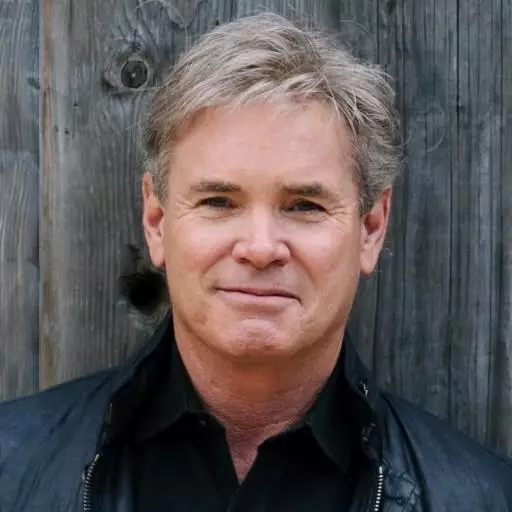
Making A Comeback - A


Today, Pastor Jack teaches that David could have easily given up. But he finds that God is still there, even in his poor choices and failures. And, like David, a true comeback begins when we put God first through our faith and obedience.
Jack Hibbs: But when God gives us something in the Bible, you say, "Oh, man, that's a great verse, I just read this today, isn't it wonderful?" Have you ever done that? You boasted in the Lord about how great this verse is, you read it, you share it with a friend, and lo and behold, by the end of the week, God has you living that verse out.
David J.: Welcome to Real Life Radio with Pastor Jack Hibbs. I'm David J., thanking you for joining us today as we listen, learn, and are challenged by God's Word, the Bible.
Hey everybody, have you ever thought about what's after life? Do you know that the Bible teaches life is after life? If you know the Lord Jesus Christ, my good friend Philip De Courcy has written a great book, and that's the title: Life After Life: Exploring the Bible's Wonderful Promises About Heaven and Eternity. Published by Harvest House Publishers, get a copy for yourself.
Life After Life by Philip De Courcy: Exploring the Bible's Promises About Heaven and Eternity. It's available for a gift of any amount at JackHibbs.com. That's JackHibbs.com.
On today's edition of Real Life Radio, Pastor Jack continues his series now called First Samuel and a message titled Making a Comeback. Now, Samuel of the Old Testament was the last judge of Israel and the first of her prophets. So here as we continue in chapter 30, we'll consider how David reacted when everything he had was gone.
You see, while David and his men are away, the enemy burns everything to the ground, and their wives and children are taken as prisoners. When David returns, he quickly sees that he has lost everything, including his family, his position, and the support of his closest followers.
Today, Pastor Jack teaches us that David could easily just have given up, but he finds that God is still there even in his poor choices and failures. And like David, a true comeback begins when we put God first through our faith and obedience. Now with his message called Making a Comeback, here is pastor and Bible teacher Jack Hibbs.
Jack Hibbs: Looking back in review, look with me at verse one. It says there, 1 Samuel 30, "Now it happened when David and his men had come to Ziklag on the third day, that the Amalekites had invaded the South of Ziklag, attacked Ziklag and burned it with fire, and had taken captive the women and those who were there, from small to great; they did not kill anyone, but carried them away and went on their way."
So David and his men came to the city, and there it was, burned with fire; and their wives, their sons, and their daughters had been taken captive. Then David, verse four, and the people who were with him lifted up their voices and wept until they had no more power to weep. And David’s two wives, Ahinoam the Jezreelitess, and Abigail the widow of Nabal the Carmelite, had been taken captive.
Then David was greatly distressed, for the people spoke—this is his own people, his men—they spoke of stoning him, because the soul of the people were grieved, every man for his sons and his daughters. But, mark it in your Bible, David strengthened himself in the Lord his God. Let's pray.
Father, we ask, Lord, that as we look through this chapter, tremendous things out of it, we pray, Lord God, that you would anoint us to be receiving all that you would have us to receive out of it tonight. And Lord, may it not just be for tonight. May we not spend the next few moments together just looking at the Bible open and hearing the message and maybe thinking a few thoughts.
But Lord, in fact, may our lives be changed as a result of us being here together tonight as we seek your Spirit through the Word of God. In Jesus' name, and all God's people said, amen. If you're taking notes tonight, jot it down if you would, the title of the message this evening is Making a Comeback in the Walk of Faith.
Making a comeback, that's what we see David do, and boy is it refreshing to see him make a comeback. Because if you remember in our last few times together, David had become radically discouraged. He had now been a fugitive nearly ten years from Saul. He had been on the run spending most of his days, most of his years in the Negev down in Southern Israel on the western side of the Dead Sea, a very barren area, and it's difficult.
And so David had been there. And just when you would think that perhaps the promise of God is going to come through and David's going to ride it out and he's going to receive the kingdom, David, if you remember, had it within his heart and he counseled within himself, he feared, and he said, "It's just a matter of time before I fall under the hands of Saul and I perish."
The Bible told us in these preceding chapters, chapters 26 on to chapter 29, that David began to seek shelter and comfort among those of the Philistines. He went and sought comfort among the flesh, as the Philistine, as that nation, as that tribal group of people represents the flesh. David, in his lack of faith, struggling now, goes and in fact becomes in an alliance with the enemy.
Where the Philistines now are making plans to attack Israel, do you remember that David was going to go to war with them, him and his men? And Achish was all excited about it. "Oh, we've got David on our side, a giant killer. We've got David on our side, a man who is invincible at war, a man who was with King Saul but has since defected; now we've got him, and we are going to really, really get the score back and even regarding the loss of our giant so many years ago. We've got David."
Imagine what they must have been thinking. Achish was all excited about it. But when he gave word to his other leaders in the Philistia region, they said, "No way are we going to go to battle with David among our ranks because what if it's a ploy? Or what if he gets into battle with us and he turns on us? We don't want to take that chance."
Listen, church, David was walking in the camp of the enemy. He had fallen out of fellowship with God, so to speak, by virtue of caving into fear, and now he's in a panic. And he even says, "I'll go to war with you guys against my own people, Israel." But now even the Philistines don't want him because perhaps he's a man of compromise now.
They see something maybe weak in him. He's not altogether trusted. And it's interesting to note before we get into this, how when we begin to compromise as Christians, how we begin to blur the lines, we don't find happiness in the camp or any camp that we might seek shelter in. And so David, if you remember last time, was actually being asked by Achish in a very polite way, "Can you sit this one out? The guys don't want you to go to war with us."
David in a sense has no battle to go to at all. But a great thing is going to happen. He's going to make a comeback in the faith. In the midst of all of David's difficulties and pressures in life... and by the way, you know where this book heads. If you go into Second Samuel or some of the other records, you all know, and you read the book of Psalms, you all know where David's heading.
There's going to come a time when he is king. There's going to come a time when the kingdom is so powerful and everything is so prosperous that the Bible says that when springtime came and it was time for men to go to war—isn't that funny? They had seasons. "Hey, look, the rains are over, it's time to go to war. See ya, honey, pack me a lunch, I've got to go to war now."
It says there in scripture that when spring came and it was time for men to go to war, David stayed home while his men went to battle. And it's while he was staying home, and the scholars estimate David to be somewhere around 50 years of age, that he encountered the Bathsheba blunder. Where he gets up late in the day—he's sleeping in, not the protocol of a king, by the way.
He sleeps in, that means he went to bed late, gets up late. He's walking around on the roof because he's got nothing to do. He looks over and peers onto the rooftop of Bathsheba, and she's taking a bath, and you know the rest of the story. He gets in trouble. You would think after a blunder like that, God would absolutely remove his Spirit from David, that God would no longer use David, that God would no longer want David.
Maybe you're thinking in this portion of scripture as we shall see that David having sided with the Philistines, that God would not want him back anymore. Maybe this evening you have given your heart to Christ but you've walked a different path. Maybe you've sought shelter like Peter did in the camp of the unbeliever as Jesus had been arrested and he was being prepared for crucifixion.
Where's Peter? The Bible says that he was following Jesus at a distance. That's always a dangerous thing to follow Christ afar off. And then the Bible says that he went among the non-believers and they began to question him. "We know who you are, you're one of his followers." And there he goes into his denial of Christ.
The Bible says there that he sat by a fire and he warmed himself in the enemy's camp. Would God have given up on Peter? God did not give up on Peter, God did not give up on David, and God is not going to give up on you. If you are a Christian tonight and you've walked away from God, maybe you've come in here tonight and God is calling you back to walk with him again and to experience his goodness again.
Maybe your faith tonight is being stretched. David's faith is in the stretch. Maybe it's physical challenges, maybe it's financial squeeze that's on you, or maybe it's a relationship that's wayward and you're finding yourself in a stretch when it comes to your faith. Or perhaps you're in a spiritual lesson. I don't know about you, but spiritual lessons stretch us.
You know they're supposed to do that. I don't like that part of my Christian faith. But when God gives us something in the Bible, you say, "Oh, man, that's a great verse, I just read this today, isn't it wonderful?" Have you ever done that? You boasted in the Lord about how great this verse is, you read it, you share it with a friend, and lo and behold, by the end of the week, God has you living that verse out.
That's the way it is. He's not interested in us getting a PhD, piled higher and deeper in knowledge, but what it means is to actually be doing what we do know. And I became convinced a long time ago, whenever you and I watched an NFL football game, I don't think that guy's allowed into stadiums anymore, but remember when he was?
They would kick a field goal or there'd be a touchdown and right behind the field goal bars there would be John 3:16. Remember that? For 10, 15 years that guy was there. And then they began to outlaw that guy and try to take away his banner and they began to check people's backpacks because the John 3:16 man might be there. And so he'd put his sign up, John 3:16.
I'm convinced that if we just did Bible studies on John 3:16 until the Lord came back, we would be doing great. Because of one verse out of the Bible, take one verse out of scripture and apply it to our lives, and how much more do we cover just in one week's time that we fail to put into practice. If we decide and if we determine to put into practice what we hear, what we read, what we learn about God, we too will make a comeback in our faith.
Tonight we are either on our way to a funeral or we're on our way to a revival. We will either grow as a church in depth, not in breadth, not in size. God's not impressed with size, but in depth. And are we nurturing and are we growing as the Bible put it in the knowledge of God? This is God's intent for us to experience this stretching, and maybe you're in that place of being stretched.
David was in that place of being stretched. Before we dive into the remainder of this chapter, verses seven down through the end, again verse six, it says, "Now David was greatly distressed, extremely discouraged." He's at the end. For the people spoke of stoning him. Those are his closest allies. Because the soul of all the people were grieved, every man for his son and for his daughter.
But, and here it is, mark it, "but David strengthened himself in the Lord his God." And that word strengthened, maybe some of your Bibles say encouraged, jot it down if you would, this is such a precious word in the Hebrew. It means to fasten yourself or to place yourself upon someone's strength that's greater than yourself.
It means to glue or to bind yourself to someone who's like a pillar. It means to fortify yourself in the power of another. I'm going to say that one again: to fortify yourself in the power of another, to behave valiantly because of the presence of another. When I read that, I immediately thought how we were when we were kids.
We might have been scared to step up to the plate, maybe that pitcher was really fast when we were little. Or maybe that football team... remember when we were like nine years old and we played either Junior All-American or Pop Warner football? And the other team was getting ready, and we were out there, and maybe you guys played, and you had helmets that were two times the size of your head.
You could spin that helmet on the top of your head. Your pads were too big and you just looked like a little flea carrying around a bunch of plastic. It was hilarious. And we would look across the field and at that time, those guys looked like they had hair coming out of their socks back in those days. And "Coach, I think the guy's got hair on his legs. He's only supposed to be nine years old."
They always looked so big and so gigantic. And you were scared to death, petrified. And then you would hear from the sideline your mom or your dad: "Go get them, Jack!" And you know what? Just for pride's sake, you've got to go get them. But there was some sort of an encouragement there.
I was fortified, I became valiant because I knew my parents were watching. And if my parents were there, then my brother was there. And if my brother was there, then maybe my sister was there and there would be people there and I've got to go out there. And so you'd run out there and you'd clank out there in your plastic armor and you'd get on the gridiron to do battle.
Valiant, why? Because of the presence of another. David strengthened himself, listen, not in his friends—he didn't have any anymore. He didn't strengthen himself in his wealth—he had none. He didn't strengthen himself in Saul's army—they were against him. He didn't have the Philistines, he didn't have the Israelis, he didn't have his own men; he had nobody.
David had no one. And here's where the dividing rod snaps between the person who plays spirituality and the real believer. It says that David strengthened himself in the Lord. He built up a fortification of hope because he turned to God. You may not think much of it, but that last sentence of verse six is David's turning point in his life and things will never be the same from that moment on.
David strengthened himself in the Lord, everything changes from here on out. So making a comeback, verses seven through ten of chapter 30, we consider this: it all changes for you and I when we call out to the Lord. It all changes for you and I when we make a call out unto the Lord. Look at verse seven with me. It says, "Then David said."
Then David said, based upon what? Based upon verse six. Not only verse six, but the end of verse six. "But David strengthened himself in the Lord his God." Then David said to Abiathar the priest, Ahimelech’s son: "Please bring the ephod here to me." Remember, we don't need to go back to belabor it, the ephod was what was used to communicate to God.
You might say, "Well, I wish I had an ephod. Where do you get those things?" You know what? There's one sitting on your lap. We have the Bible now. It's better than any ephod the priest ever wore. Yeah, but pastor, I read somewhere they would put the stones in there, the Urim and Thummim, and God would speak and then they would kind of light up and you could bring it out, you could get a yes or a no out of the Urim and Thummim. Yeah, that's true, you got it yes or a no.
And in that religious economy in the Old Testament period, in God's working with men, that's all you needed was a yes or a no. In fact, as we shall see, you had to know how to ask God in such a way to get the yes or the no. I'm wondering if we could even handle that today because we're so used to the Lord.
We pray, we talk to the Lord, sometimes we pray and it's like he's got to scratch his head and say, "What is he asking? What does he mean by that?" Aren't you glad that God knows what's in our heart before we ask? I don't know how you are about putting words together. I find myself as I'm getting older, I wind up saying the thing that I want to say last, that's the thing up front.
And the thing that I want to say first is the actual thing that winds up at the end of the sentence and it's like why did it come out that way? What's wrong? I begin to check my pulse, or am I having a stroke? God knows what's in our heart before we say it very clearly. David is going to ask certain questions, God will give specific answers.
Why? Because he knew how to talk to God. For you and I today, how much more wealthy are we in the faith when we can talk to God and we have the Bible to consult, much more than what the priest had. So David says: "Please bring the ephod here to me." And Abiathar brought the ephod to David, verse eight.
So David inquired of the Lord, asking or saying this: number one, "Shall I pursue this troop?" That's a yes or no question. You and I get to say, "Lord, what do you want to say to me?" Isn't that fun? "Lord, what do you want to say to me today?" Then you open up the Bible and read it, and God speaks whatever he wants to speak to you.
"Shall I pursue this troop?" Number two question: "Shall I overtake them?" That's a good question. "Shall I pursue this troop and am I going to be a success at it?" I don't know what he would have said if God would have said, "Pursue the troop and no you're not going to be a success at it." Then can we go back to question number one?
I'd like to talk to you about that for a little bit, kind of find out more about this. No, God says to him, look, the Lord answers and says: number one, "Pursue, for you shall surely overtake them." And number two, "Without fail recover all." The moment you and I determine to make a comeback, that is to return back to the Lord in our faith, Christian, listen: God will restore all that was taken and he'll even bless you more.
And I don't know about you, let me speak for me personally. When I get away from God, when I feel distant from the Lord, maybe for all kinds of reasons, who knows what and where, the lie that I begin to hear from myself first is, "The Lord's not going to take you back, Jack. The Lord's not going to be talking to you anymore. You didn't pray today. You didn't read today. You didn't witness to somebody today."
You know all that stuff, and it begins to build up on you. And then this thought enters your head: "I'm not even worthy for God to speak to me. I've made a blunder here, I've made a blunder there, why would God speak to me?" David had been in a place of discouragement, but he strengthened himself in the Lord and the next thing he does is he consults God and God gives the answer.
You will recover everything and it will happen without fail. Verse nine: "So David went, he and the six hundred men who were with him, and came to the Brook Besor, where those stayed who were left behind. But David pursued, he and the four hundred men; for the two hundred men who stayed behind were so weary that they could not cross the Brook Besor." Verse ten.
Mark this down, number one of verse seven, we learn this: that when you and I call out to God, that is a good thing, we must do that. And what's powerful about it, perhaps like David we can say, when you and I feel like we've reached the end. David had reached the end and he calls out to the Lord.
There are people who reach the end and they call out for a gun. There are people who reach the end and they call out for a bottle. The truth is that they haven't reached the end. You may be listening right now, you're not even a Christian but you happen to stumble across this and you're listening to this, but you're at your end.
You can't think of going another day. You can't think of facing another person, another commitment, another requirement of your life. You feel like everybody's pulling from you and you're at your end. You are not at your end. Brother, if you were at your end, God would take you out of this world. You don't run your life.
You may not even believe in God and you think you're in control. You are not in control. God is sovereign even over the most wayward, godless person. God is speaking and pleading. When you and I feel like we've reached our end... David felt like that, but David now is back online, he's called out to God and God is going to be speaking to him.
That's a real danger for us because here's David, a great psalm writer, a great soldier, a great man. I mean, look at it, we look at him with adoration. Tremendous man of God. I mean, honestly, men, wouldn't you like to be like David? David picks up the stones, slings it around, hits Goliath, stuns him.
The guy falls down, knocks him out, and then David kills him with the guy's own sword. He talks about great battles and "We did this and the Lord led us up on this ridge and we came down upon them and God was with us and alright!" And we can write those psalms too.
"The enemy fled from us, oh God, thou art great and mighty and we love thee for thou art strong on our behalf." And it's like hoorah! But then there's those times of David when he writes and he says: "Lord, I cry all night long like a dove in the wilderness." Well, he wrote those tremendously emotional things because David felt everything.
He was a real man's man. And he wasn't afraid to cry, he wasn't afraid to go to battle, he wasn't afraid of anything I think except himself. When David got his eyes off the Lord though, like many of us when we get our eyes off the Lord, we become afraid of everything.
David J.: Pastor and Bible teacher Jack Hibbs here on Real Life Radio and his message called Making a Comeback. You know, this message is part of Pastor Jack's series called First Samuel, a series that highlights the prophet Samuel, who was called by God during one of Israel's darkest times to bring the people back to a heart of true worship. And we'll continue on the next edition of Real Life Radio.
Jack Hibbs: Hey Christian, I'm speaking to you. Listen to this. You and I are not allowed to give up. I have to confess, many times in my life I've thought about giving up, but God has put people around me in life that wouldn't let me do that. And I'm here to tell you, you're not allowed to give up either. God's not done with your story, He's still writing it.
He loves you and He's going to complete it. Father God, in Jesus' name, may we not get in the way of what You're wanting to do. If we wiggle, if we try to jump, Lord, hold us tight because You and You alone have the words of eternal life. In Jesus' name, amen.
David J.: Hey, thank you again so much for listening. And if you'd like to hear or see more of what we do here, you can always go to JackHibbs.com for all the latest on what's going on with this ministry. And please, if you're ever in the Southern California area, come see us at Calvary Chapel Chino Hills.
We'd love to see you there in person. It has been so good to be with you today, and I pray you find yourself in the grace and mercy of our Lord Jesus Christ. See you on the next episode. This program is made possible by the generous contributions of you, our listeners.
Visit us at JackHibbs.com, that's JackHibbs.com. Until next time, Pastor Jack Hibbs and all of us here at Real Life Radio wish for you solid and steady growth in Christ and in His Word. We'll see you next time here on Real Life Radio.
Featured Offer

Bold Stand is a back-to-school faith guide designed to equip kids to stand for Jesus with courage, kindness and confidence wherever the school year takes them. Rooted in Scripture, it helps children understand their identity in Christ and prepares them to live out their faith even when they’re standing against the crowd.
Past Episodes

Video from Jack Hibbs
Featured Offer
Bold Stand is a back-to-school faith guide designed to equip kids to stand for Jesus with courage, kindness and confidence wherever the school year takes them. Rooted in Scripture, it helps children understand their identity in Christ and prepares them to live out their faith even when they’re standing against the crowd.
About Real Life Radio
Real Life with Jack Hibbs is dedicated to proclaiming truth. Standing boldly in opposition to false doctrines designed to distort the Word of God and the character of Christ, Jack’s voice challenges today’s generation to both understand and practice what it means to have a biblical worldview. His bold preaching will encourage and embolden you to walk with Jesus. Unwilling to cower to the culture’s demands or to tickle listening ears with a watered-down gospel, Jack addresses key topics that will challenge you to deepen your relationship with Christ and make an effective impact on the world around you.
About Jack Hibbs
Jack Hibbs is the founder and senior pastor of Calvary Chapel Chino Hills in Southern California. He started the church with his wife, Lisa, as a home Bible study fellowship and church plant from Calvary Chapel Costa Mesa in 1990.
Under his leadership, Calvary Chapel Chino Hills has grown to minister to more than 14,000 people on campus and reaches millions worldwide through Real Life television and radio broadcasts. The Real Life broadcasts can be heard on more than 800 stations in the US, including SiriusXM satellite radio, and is also heard internationally in regions like South and Central America, Europe, the Middle East, Africa, and Australia.
Jack Hibbs also hosts weekly "The Jack Hibbs Podcast," and a radio version called "The Jack Hibbs Show" geared for secular radio markets, where he challenges today's generation to understand and practice an authentic Christian Biblical worldview. On the show, he explores timely topics such as Israel, Jesus, sin, abortion, and heaven with Jack's Biblical insights and faith-based perspective.
Jack Hibbs is also the founder and president of The Real Life Network (RLN), a video-streaming platform that provides truth-based, quality content in a wide variety of categories, including films and documentaries, faith and culture, children’s programming, Bible prophecy, legacy teaching, podcasts, and live events. He also is actively involved in various national executive committees and boards, including the Family Research Council in Washington, D.C.
Committed to promoting and defending Biblical values and principles, Jack and Lisa Hibbs have been married for more than 40 years and reside in Southern California, where they continue to serve the church and impact lives with their ministry.
Contact Real Life Radio with Jack Hibbs
mail@jackhibbs.com
https://jackhibbs.com/
Real Life Radio
P. O. Box 1273
Chino Hills, CA 91709
877.777.2346