

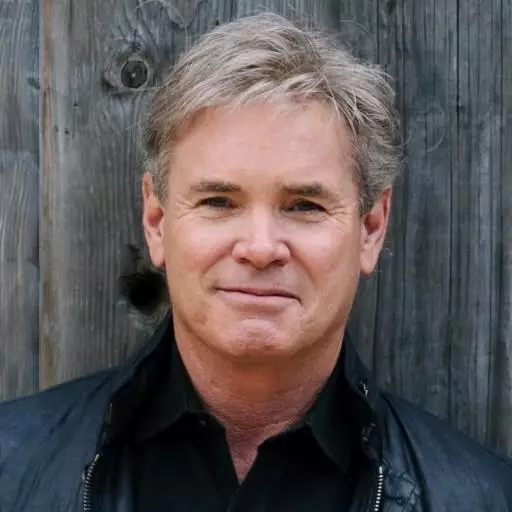
How To Handle The Fool - 1B


Today, Pastor Jack teaches that fools will resist us, as believers, with insults and slander. David had been a blessing to Nabal, but Nabal tried to get the better of him, and David responded without, first, consulting with God.
Jack Hibbs: And then it begins to eat on you. Why would you let another man's sin become your sin? Get rid of it. Forget about it. It's not worthy of your attention.
Because if you don't let it go, and if you go to do what David's about to do, it'll destroy your life.
David J.: Today on Real Life Radio. This is Real Life. Welcome to Real Life Radio with Pastor Jack Hibbs. I'm David J. thanking you for joining us today as we listen, learn, and are challenged by God's word, the Bible.
Fear does not have to control your life, not when Christ is at the center of it. This month, we're featuring a powerful and deeply personal book, "Living Fearless in Christ" by Hediyeh Mirahmadi. Once a devout follower of Islam and a high-level attorney in Washington, Hediyeh had everything except peace until she encountered the living Jesus.
Choosing to follow Him cost her everything. Her career, her status, and her place in the world she once knew. But what she gained was far greater. Freedom, identity, and a fearless faith that cannot be shaken. Her story will challenge you, encourage you, and remind you of the power of the gospel to transform lives.
"Living Fearless in Christ" is more than a testimony. It's a call to bold surrender. Available for the month of February for a gift of any amount at jackhibbs.com. That's jackhibbs.com, where real stories point you to real truth and real life in Christ.
On today's edition of Real Life Radio, Pastor Jack continues now with his series called First Samuel and a message titled, "How to Handle the Fool, Part One." Samuel of the Old Testament was the last judge of Israel and the first of her prophets. So here in chapter 25, we'll consider how even though Samuel has now passed on, David, prone to his own humanity and passion, was still a blessing to those around him.
You see, our human nature is always tempted to seek its own before anyone or anything. But the life of a wise man is a powerful example to all those who look on. Saul, of course, ignored the example of Samuel, and here we'll see that a man named Nabal ignored the example of David.
So today, Pastor Jack teaches us that fools will resist us as believers with insults and slanders. David had been a blessing to Nabal, but Nabal tried to get the better of him, and David responded without first consulting with God. Now with his message called "How to Handle the Fool, Part One," here's pastor and Bible teacher, Jack Hibbs.
Jack Hibbs: Verse 6 teaches us that they don't understand what they have. And thus you shall say to him, "Who lives in prosperity," that's Nabal's life, "Peace be to you, peace to your house, and peace to all that you have." People, this is a very precious blessing. David is saying, "Peace to all that you have, to all who you are, and all that you encompass. Peace."
But listen, Nabal's not understanding this. He's a fool. This matters nothing to him. There's no quality or standard in his life. We would say today, "Man, what's wrong with that guy?" This verse 7 through 9 really rips on your heart. When a fool has an unthankful heart, they don't appreciate others.
What are the marks of a fool? They don't care about anybody. They don't understand what they have. And verses 7 through 9 teach us that they don't appreciate others. "Now I have heard that you have shearers. Your shepherds were with us," in other words, David's men protected his shepherds, "And we did not hurt them, nor was there anything missing from them all the while they were in Carmel. Ask your young men, and they will tell you. Therefore, let my young men find favor in your eyes, for we come on a feast day. Please give whatever comes to your hand to your servants and to your son David."
Listen to the humble approach that David's taking here. So when David's young men came, they spoke to Nabal according to all these words in the name of David and waited. They waited for a response. They waited for him to speak. The Bible says in Philippians 3:18, "For many walk," Paul said, "For many walk of whom I have often told you, and now even tell you weeping, that they are enemies of the cross of Christ."
Whose end is destruction, whose god is their belly. They only care about what they can amass. Whose glory is in their shame, who set their mind on earthly things. This is Nabal. And so David is saying, "Ask Nabal that he might bless us." What David's saying is, "We've provided great protection for your flocks. Your men can even attest to the truth of that. And it's at a feast time. So can you show us some kindness by allowing us to have some food and some water and some provision?"
This man's got it all, and he won't share one bit of it, like he's going to take it with him. His god has become his belly. It's all he can think about is what he can acquire, what he can have, and he won't share anything. And it's quite tragic. Acts chapter 20 verse 28, again Paul speaks to the elders in Acts chapter 20. He says, "Therefore take heed to yourselves and to all the flock, among which the Holy Spirit has made you overseers or shepherds or pastors, to shepherd the church of God which He purchased with His own blood. For I know this, that after my departure savage wolves will come in among you, not sparing the flock."
So even among the Christian setting and even in the church, Paul is saying these fools, these Nabals, exist. Their god is their belly. They don't spare the flock. What's implied here is that they fleece the flock. They take money from the flock, they pad their lives with proceeds from the flock. And Paul says, "Watch out for them." They've completely forgotten that Jesus bought the church with His own blood. What Nabal has forgotten, and every fool does forget this, is that God has given him all that he possesses. It's comical, church, listen. Is this not true? When you see somebody strutting around town with their wealth and they think that they did it?
Well, pastor, what do you mean? I'm the one that went to Yale. Well, you know what? God gave you the graces to go to Yale. I beg your pardon. My father worked hard to send me there, and I got there on my grades, on my 4.0. Who gave you the ability to have a 4.0? It's all of God. And it's a funny thing when you see somebody. In my opinion, in my life's experience, the people that I've seen the most wealthy as Christians anyway, the really super-wealthy Christian, you don't even know he's wealthy.
They buy their shoes at Kmart, or I guess they're out of business now, but Payless. It's no big deal to them anymore. They've come through that silly stage. And then you see people who maybe make an okay living but they're in hock up to their neck and they've got everything leveraged out there. They don't own anything but it looks like they own everything and they're flashing it around. And when you see that, they're not really wealthy. They're not wealthy.
A couple of weeks ago, we had to laugh. We were driving out there through Palm Springs and we're at a stoplight and this kid pulled up with this incredible Mercedes-Benz. Two kids in the car and they're acting like it's theirs. And it's so funny because we're old enough to figure it out that they're taking their dad's car to go get gas in it. Or they probably just had it washed because his dad wanted it washed, but they're acting like it's their car.
And maybe some young girls would go, "Oh, look, those young guys are so wealthy." And then some old guy like me looks at the thing and you want to roll down the window and say, "Hey, when'd your dad get that car? Or shouldn't you take your dad's car home?" It's hilarious. Forgetting that it's come from the hand of God.
Fools don't appreciate anything. They rarely say thank you unless it's to their benefit. They expect everything to be handed to them and they'll work for nothing. They won't work at all. They want it handed out. They want it doled out. And it's a sad thing. Paul says in 1 Timothy chapter 6 verse 4 that this type of man is conceited and understands nothing.
He has an unhealthy interest in controversies and quarrels about words that result in envy, strife, malicious talk, evil suspicions, and constant fractions between men of corrupt minds who have been robbed of the truth and who think that the gospel is a means to financial gain. Wow.
Verses 10 to 13, we learn that to handle a fool, we need to know that a fool will resist us. A fool will resist you. And they'll do that with insult, slander, and mockery. Listen to Nabal. Nabal answered David's servants and said, "Who is David? And who is the son of Jesse?" Church, everybody knew who David was. He knows who David is. "Who's David? Who's Jesse? There are many servants nowadays who break away from his master."
That's a key. Verse 11, "Shall I then take my bread and my water and my meat that I have killed for my shearers and give it to men who I don't even know where they've come from?" He's insulting. He's attacking and mocking David. When he says, "Many nowadays depart from their masters," do you know what that implies? David is not being submissive to Saul. He's being bad. He is mocking and insulting and slandering David. Nabal is. And that's what fools do.
Listen in verses 12 to 13, by trying to get the better of us is what fools will attempt to do. So David's young men turned out on their heels and went back and they came and told David all these words. Then David said to his men, now church, listen, verse 13, we've got to take this into our hearts and not do what David does here.
David, who just did so well in chapter 24, says, "Every man gird on his sword." So every man girded on his sword. And David also girded on his sword. And about four hundred men went with David and two hundred stayed with the supplies.
Four hundred men to kill one guy? Four hundred men going to issue and carry out David's will. What's David doing? He's been insulted, mocked, and injured. What do we do? Kill him! There's no consultation of God. David is God's man and now look, the sin of Nabal, and here's what happens to us, the sin of the fool so upsets us that we enter into that sin. We can be having a fine day and somebody comes by, "I don't like you." We should just keep having a fine day.
But that gets under our skin and it begins to boil there and get all pussy like a splinter in your finger. And it's a little tiny thing, but it starts to really bug you. And then everywhere you reach for you seem to hit that little thing. "Ow!" And now you're supersensitive to that thing. "You know what he said to me? He said he didn't like me." And then it begins to eat on you.
Why would you let another man's sin become your sin? Get rid of it. Forget about it. It's not worthy of your attention. Because if you don't let it go, and if you go to do what David's about to do, it'll destroy your life. "I'll make you like me." Now if David is going to carry out what he's starting, God will intervene. The tragedy is the insult, the mockery, and the slander that Nabal puts upon David, it will have its end effect upon David's life. It will ruin him.
And when somebody attacks David or you or me, it doesn't even have to be true. It doesn't have to be true at all. All we have to do, church, is mismanage what comes to our lives. And isn't that true even if something good comes to our lives? We can mismanage good things even. This is a very dangerous thing. David is allowing sin to take hold of his life.
Years ago, I told the church and it's actually still there to this day, but this tree, we planted a sycamore tree when we bought our house and the girls named it, his name's Zacchaeus, and now he's giant and now my kids are giant and they don't even probably notice the tree anymore. But it's massive, giant sycamore tree. But when we got him, he was in a five-gallon plastic container.
And we got pictures of the kids digging the hole and putting him in and the girls have gloves on, the gloves are like the size of their head, it's so cute looking, but they named the tree. And as the tree grew up, I always kept the branches really low because they loved to climb the tree. So you've got to keep the branches when the kids are young kind of low so they can climb up the tree.
But when they grew up, they stopped climbing the tree. And in one of the branches, I'm mowing the lawn, I'm mowing and whack! I ran right into this branch and I just stopped the mower, I went in the garage and I got the bow saw and I just cut it right off. And the interesting thing was, I don't know why I did this, but I left about eight inches of that branch sticking out. And it's there to this day.
And I have been up in that tree, I'm not going to say how recently, it's none of your business, but it's interesting because I can't reach the rest of the branches unless I grab onto that stub that was left from years ago. And what David is doing is he's allowing a remnant of his old sinful life to be available so that sin might climb up and take advantage.
All you have to do is have a little bit of the door open or a little bit of the tree hanging so sin can take hold and advance upward to destroy. And now with what's going on, David, he's the king in waiting, he's got mighty men of valor, and he just got done handling chapter 24 so well. And just, I mean, is this not how our lives are? Great spiritual victory. And then we turn and step right into a puddle of nothing and get all whacked out and goofed up on things.
Didn't Solomon say it's the little foxes that spoil the grapes? You know that. In the vineyards, they would build fences to keep out those big nasty foxes because those foxes would come and eat all your grapes. But when the grapevines are just producing the grapes, the little tiny grapes, when they're the most tender, Solomon found out it's those little pups, it's the little puppy foxes that slither between the rocks, they get between the fence, and they run in and they eat all of the little virgin grapes and it ruins the whole crop.
It's the little foxes that spoil the vineyard. It's the little sins that trip you and I up. The Bible warns us to be careful and not to be ensnared or have a sin trip us up or beset us, the book of Hebrews says. Don't let it grab us and pull us down. It's usually the really silly little things that we don't think are big that get us. Maybe you battled with alcohol in earlier years and now you're not worried about that because you know what, you don't get near it. That's great, God bless you. Stay at it.
But what does get you? Is it temper? Is it something else? Paul tells us that when we think we're strong in an area, watch out because that's the area most often that we fail at, we fall in.
David J.: Pastor and Bible teacher, Jack Hibbs here on Real Life Radio with his message called "How to Handle the Fool, Part One." You know, this message is part of Pastor Jack's series called First Samuel, a series that highlights the Prophet Samuel, who was called by God during one of Israel's darkest times to bring the people back to a heart of true worship. And we'll continue on the next edition of Real Life Radio.
Jack Hibbs: Hey everybody, Pastor Jack here. And joining me today is Hediyeh Mirahmadi, author of this month's featured resource called "Living Fearless in Christ." Now, Hediyeh has an amazing story. She became a Muslim in college, but ultimately her search for truth led her to Jesus but at great personal cost. Her story is honest, courageous, and deeply relevant for the times we're living in. Hediyeh, welcome to Real Life Radio.
Hediyeh Mirahmadi: Thank you so much for having me.
Jack Hibbs: In "Living Fearless," you talk about the moment Islam began to unravel for you. And we have been hearing about this going on in the Muslim world, but take us back to that moment. What started it all for you?
Hediyeh Mirahmadi: Well, I was a devout Muslim for a very long time, over 20 years. And in that period of time, I constantly was asking myself where I was going when I died. Because Islam does not promise eternal security. So there was this sense of will my good deeds ever outweigh the bad because there is this portrayal of Allah was that there was going to be a day of judgment and your good deeds better outweigh your bad or you would spend an eternity in hellfire. So I was constantly plagued by this fear that the good deeds were never enough. It was something that lingered in my mind the entire time that I was a Muslim.
Jack Hibbs: So why do you think that question kept pushing on you?
Hediyeh Mirahmadi: Well, because in my devotion, I was so regimented. I did everything that I was supposed to do, and it really it drove me crazy that nobody could say, "Okay, you've arrived. You've done enough. You're dressed as you're supposed to be. You're doing all the things you're supposed to do," and yet nobody could say, "This is the finish line."
And it was exhausting because the rituals were extremely demanding, the lifestyle was very demanding, and I got to the point where not only did I have the lingering question about where I went when I died, but that I was exhausted from the rituals. I was exhausted from trying to reach a destination that nobody could tell me I would reach.
Jack Hibbs: Now, you're very clear in the book, and this is one of my favorite parts of your story, but finding Christ wasn't an emotional decision for you, but a very real, surprising, in-your-face thing that happened. What was it specifically that brought you to the Lord?
Hediyeh Mirahmadi: Well, first of all, I had a supernatural encounter with the Lord. The Lord, yes, so I met the Lord online. I did not walk into a church, I had no Christian friends. It was listening to the simple gospel on the internet from a pastor I'd never met or never heard of that was in another state. And so through this listening to his preaching of the simple gospel, I started to pray.
And I was a devout worshiper, so I knew how to pray, constantly asking God to reveal Himself because the more I listened to the reality of who Christ was, the more confused I became of who God actually was. And it was in those prayer times, one in particular, that the Lord called my name. So I audibly heard the voice of Christ say, "Hediyeh, it's me."
Imagine that. After that supernatural encounter, I just I was struck because it was an absolute reality. And now I had to kind of work my way backwards and basically say, "Okay, now that He has revealed Himself to me, how do I line up my intellectual understanding of God with the reality of the Bible?" And then I bought a Bible, and once I started reading it, I realized the historicity of the Bible, the authenticity of it was undeniable.
It was a continuous story of God's promises to humanity from creation to the last day. And that resonated with me, just the authenticity and the veracity of it. The fact that you could verify so much of what was in the Bible was extremely compelling to me.
Jack Hibbs: Wow, I love that. That's so good. A lot of people don't realize that we serve a God that can be verified historically, right? You wrote this book not just to tell your story, but to point people to Jesus. If someone listening right now, especially a Muslim, is searching for truth, what would you want them to know about Christ?
Hediyeh Mirahmadi: That Allah in the Quran has hid the power of the cross on purpose. He only told half the story. He told about the divinity of Christ, the ascension of Christ to heaven, the return of Christ in the last days, but he hid the power of the cross because if you knew that Jesus died and rose again to defeat death, hell, sin, and the grave, you would know for sure that He was the way, the truth, and the life.
And that if you just open your heart to know the truth of the cross, that who else could have died on that cross because historically someone died on that cross and that Allah tells this fake story of His body being changed into Judas and His soul ascended, that that's just a lie. And that if you were to just rationally, spiritually, emotionally open your heart to the truth, pray to God to reveal the one true God to you, that He will respond.
He will reveal Himself. People have to understand a lot of Muslims like myself are devout worshipers. They believe they're worshiping God. And so I fully believe that with an open heart, Muslims will encounter the one living God because He is alive, He does speak, He does respond, and Muslims all over the world have experienced it.
My supernatural experience is nothing compared to some of the things that people have experienced throughout Iran and China and the Muslim world, encountering the living God. And so I just want to invite them to open their heart. They don't have to leave their house. I didn't. They could encounter Jesus exactly where they are and He will respond.
Jack Hibbs: Hediyeh, thank you so much for joining us. You are an inspiration and your story is one to be told.
Hediyeh Mirahmadi: Thank you so much for having me. It's an honor.
David J.: The book is called "Living Fearless in Christ" and it is the featured resource for this month. "Living Fearless in Christ" by Hediyeh Mirahmadi, available for the month of February for a gift of any amount at jackhibbs.com. That's jackhibbs.com.
This program is made possible by the generous contributions of you, our listeners. Visit us at jackhibbs.com, that's jackhibbs.com. Until next time, Pastor Jack and all of us here on Real Life Radio wish for you solid and steady growth in Christ and in His word. We'll see you next time here on Real Life Radio.
Featured Offer

Bold Stand is a back-to-school faith guide designed to equip kids to stand for Jesus with courage, kindness and confidence wherever the school year takes them. Rooted in Scripture, it helps children understand their identity in Christ and prepares them to live out their faith even when they’re standing against the crowd.
Past Episodes

Video from Jack Hibbs
Featured Offer
Bold Stand is a back-to-school faith guide designed to equip kids to stand for Jesus with courage, kindness and confidence wherever the school year takes them. Rooted in Scripture, it helps children understand their identity in Christ and prepares them to live out their faith even when they’re standing against the crowd.
About Real Life Radio
Real Life with Jack Hibbs is dedicated to proclaiming truth. Standing boldly in opposition to false doctrines designed to distort the Word of God and the character of Christ, Jack’s voice challenges today’s generation to both understand and practice what it means to have a biblical worldview. His bold preaching will encourage and embolden you to walk with Jesus. Unwilling to cower to the culture’s demands or to tickle listening ears with a watered-down gospel, Jack addresses key topics that will challenge you to deepen your relationship with Christ and make an effective impact on the world around you.
About Jack Hibbs
Jack Hibbs is the founder and senior pastor of Calvary Chapel Chino Hills in Southern California. He started the church with his wife, Lisa, as a home Bible study fellowship and church plant from Calvary Chapel Costa Mesa in 1990.
Under his leadership, Calvary Chapel Chino Hills has grown to minister to more than 14,000 people on campus and reaches millions worldwide through Real Life television and radio broadcasts. The Real Life broadcasts can be heard on more than 800 stations in the US, including SiriusXM satellite radio, and is also heard internationally in regions like South and Central America, Europe, the Middle East, Africa, and Australia.
Jack Hibbs also hosts weekly "The Jack Hibbs Podcast," and a radio version called "The Jack Hibbs Show" geared for secular radio markets, where he challenges today's generation to understand and practice an authentic Christian Biblical worldview. On the show, he explores timely topics such as Israel, Jesus, sin, abortion, and heaven with Jack's Biblical insights and faith-based perspective.
Jack Hibbs is also the founder and president of The Real Life Network (RLN), a video-streaming platform that provides truth-based, quality content in a wide variety of categories, including films and documentaries, faith and culture, children’s programming, Bible prophecy, legacy teaching, podcasts, and live events. He also is actively involved in various national executive committees and boards, including the Family Research Council in Washington, D.C.
Committed to promoting and defending Biblical values and principles, Jack and Lisa Hibbs have been married for more than 40 years and reside in Southern California, where they continue to serve the church and impact lives with their ministry.
Contact Real Life Radio with Jack Hibbs
mail@jackhibbs.com
https://jackhibbs.com/
Real Life Radio
P. O. Box 1273
Chino Hills, CA 91709
877.777.2346