


#18 Dealing With Doubt - Part 1


Real faith learns to live with unanswered questions while holding firmly to the God who has already revealed enough to be trusted.
Guest (Male): Thank you for joining us for today's Practical Living broadcast. I pray that through this message, you will learn how to apply God's Word and truths to any situation in your life. Stay with us as we discover God's truths that will transform us.
Dale O'Shields: Would you join me in giving a good welcome to our Frederick campus this morning? Good morning to all the folks in Frederick. If you're joining us online, we welcome you as well. Let me just add my appreciation to both the Gaithersburg and the Frederick campuses as well for helping us reach that 500 mark with all the bicycles that came in. There are going to be a lot of happy kids in Africa because they'll get a brand new bicycle or a refurbished bicycle because of Church of the Redeemer. We did it in the name of Jesus.
That is one of the things that's very important to us. When we reach out to our communities, we do it not just as a benevolent act or a charitable act. It certainly is that, but we always do it in the name of Jesus. You were a part of that, so thank you for being a part of it. Today, we continue our series entitled Lifequakes. I want to talk to you this morning and next week as well about dealing with doubt in your life.
That term "Lifequakes" is used to describe things that shake up your life. These are things that come your way that are difficult to deal with. They may knock you off your equilibrium spiritually or emotionally. Sometimes these things happen to us very suddenly, and we're not expecting them. On other occasions, they sneak into your life and shake you up without you realizing this has happened to you. Sometimes they happen just through the transitional points of life, but all of us go through what I'm calling Lifequakes.
Jesus made it clear that every person faces this. No matter if you're a person of faith or a person that is out in the world without any faith at all, every human being on the planet will experience moments when their lives are shaken. In fact, Jesus talks about this in Matthew chapter seven, where he very clearly describes two men building houses. One man built his house on a foundation of sand, and another man built his house on the foundation of rock. Jesus clearly described the fact that the storms of life came to both men.
Only one of their houses stood strong, and that was the man who built his house on the solid rock. Of course, Jesus emphasizes that the rock represents relationship with God, relationship with His Word, and obedience to God's Word. That's how we are to build a life that is not destroyed by the quakes that come our way. In this series, what I'm hoping to do is to help each one of us build our house on the rock. We want to build our house on the things that really matter, on the truth of God's Word and obedience to God's Word, so that when various Lifequakes come our way, we're not destroyed by them.
These Lifequakes come in many different forms. We've talked about grief. We've talked about disappointment. We've talked about lots of things. This is the 18th message in the series, so you can understand we've talked about a lot of stuff so far. As I said today, we're going to talk about doubt because doubt is one of those subtle Lifequakes. It doesn't normally come in a sudden way, but it sort of sneaks into your life. Before long, if you're not careful, doubt can undermine your spiritual foundation.
I'm going to talk to you this weekend and next weekend about how you deal with doubt. There will be five total points this weekend and next weekend, so make sure you're back next weekend for the second installment of this message. Today, I'm going to give you three of those five. We'll look at two more next weekend together. Let's dive in today. What do we need to understand about dealing with doubt in our life? The first thing I want to remind you of is that you should never be surprised by doubt. Don't be surprised when doubt shows up in your life.
Let's start with a definition of doubt. On the screen, you'll see this definition. I would invite all of you to read aloud and loudly together right off the screen. Doubt is a state of uncertainty, hesitation, or lack of confidence regarding something that is believed, hoped for, or claimed to be true. Let's break this definition apart. Doubt is a mental and emotional state of uncertainty. You're not quite certain about this anymore. It is hesitation, not being sure you want to commit fully to this anymore. It's a lack of confidence. Can I really be confident that this is true?
Notice that this is regarding something that is believed. It is not something you're not convinced of. You've already been convinced of it. You can't doubt something that you don't already believe. Doubt goes along at some level with faith. It's something that is already believed, something you've already hoped for, and something that is already claimed to be true. It's just a shaky moment when something that you've believed in, hoped for, and been certain of in the past, you're getting a little shaky about.
When doubt shows up in your life, it can have an impact upon you spiritually, mentally, and emotionally. Doubt can show up when it seems like a prayer hasn't been answered. You pray a certain prayer, and where's the answer? You've been praying for it maybe for a long time or praying a very serious kind of prayer, and you're wondering why God is not answering. Doubt sneaks in there into your thinking. It can come when you're going through an extremely difficult season of trouble or pain in your life.
You're going through this really hard time and you're wondering why God would allow you to go through something like this. Why am I facing this? Doubt sneaks in. it can happen when your dreams are broken or you're disappointed in some measure of life. You'd hoped for something, and maybe it had started to materialize or manifest in some way in your life, and then it seems as though those dreams were broken. You thought, "God, I thought you promised me this. I thought this was going to happen in my life, and why has it not happened? Why are my dreams being broken?"
Doubts can sneak in anytime when our faith is challenged, when someone challenges why you really believe that. Do you really believe that? Doubts can sneak in into those moments. I want to help you today by realizing that you're not alone in your doubts. In fact, many people in the Bible went through brief seasons of doubt. This will tremendously help you if you'll understand this. Let me walk you through a few examples of some of the great heroes of the Bible who had brief moments of doubt.
Anyone remember Abraham? We all know Abraham, the father of our faith. Abraham was given a promise by God that he was going to have a child, a son. In fact, he waited from the time he was 75. Many, many years passed, and no son came to pass. He had no children, and he's getting older and older. Finally, he and his wife, Sarah, decide they're going to have Abraham sleep with Hagar, and Ishmael is born. That comes out of a doubting period for Abraham.
How about a man by the name of Moses? God showed up with Moses at a burning bush in the wilderness and called him to go back to Egypt and to bring the people of God out of Egyptian slavery. Moses thought, "God, you certainly could never use me." He doubted not only his ability, but he doubted God's ability to give him the ability to do what he was being tasked to do.
Anyone remember a man in the Bible by the name of Gideon in Judges chapter six? God shows up with Gideon in a time when Israel is going through terrible oppression by a group of people called the Midianites. The Midianites were ravaging all of Israel and stealing their crops. Every time they would bring in a great harvest, the Midianites would come in and steal the harvest away. Gideon, when God approaches him, says, "God, where are you? If you're with us..." God said, "I'm with you," and Gideon said, "Well, if you're with us, where are all these wonders that we've been hoping for? Where are the miracles that we've seen in the past? Why aren't you working right now?" Gideon has this brief period of doubt in his life.
How about John the Baptist? You remember him, the great forerunner of Jesus, the one who said, "Prepare the way for the coming of the Lord." He looked at some of his disciples when Jesus was coming his way and said, "Behold, the Lamb of God who takes away the sins of the world." He was a great man of conviction and faith, and yet John the Baptist, in the latter years of his life, was arrested by the king and put in prison. He's going to be executed because he's preaching the truth, preaching righteousness.
In prison, wondering what would happen to his future, he's concerned about whether Jesus really is the Messiah. He sends one of his disciples to Jesus to ask him the question, "Are you really the one, or should we look for another?" John the Baptist received a message back from Jesus: "The sick are healed, the blind see, and the lame walk." In other words, Jesus reassured him in the midst of his doubt.
How about the disciples? They were doubting all the time. Every time you turned around, they were doubting. It's certainly true at the time of Jesus' resurrection because, at the time of the resurrection, the Bible says that Jesus eventually goes up to Galilee to meet with the disciples. When they saw the resurrected Savior, the Bible says in Matthew 28:17 that when they saw him, they worshiped him, but some doubted. We all certainly know a man by the name of Thomas. Thomas was not present when the resurrected Jesus first appeared to the disciples after his resurrection. He had not been there at that moment, and the disciples told him about the resurrected Savior.
Thomas said, "Nope, not going to believe it. Unless I can see the nail prints in his hands and I can touch the nail prints in his hands, unless I can see the pierced side and place my hand in his side, I will not believe." Jesus showed up and revealed himself to Thomas and said to Thomas, "Stop doubting and believe." If you've ever doubted before, you're in really good company because all of these individuals in scripture had moments of doubt, but they didn't live there. They came through their doubt back to faith again, but all of them experienced it, so don't be surprised.
A lot of people get all shaken. "Well, I'm having doubts." Well, yeah, you're human. "I'm having doubts." Well, yeah, there's a devil who wants to feed lies into your thinking. "I'm having doubts. What should I do, Pastor? It seems like a crisis." No, it's not a crisis. It's just a moment where you have the opportunity to reinforce and strengthen your faith in God. When considering this topic of doubt, it's very important to draw a distinction because I don't want to mislead anyone here. I want to make sure there's a clear line I want to draw here that the scripture draws. There's a true distinction between what I would call sincere, appropriate, processing doubt and what we might call hardened, stubborn unbelief.
There's a difference. The doubt I'm talking about is the doubt that says, "Well, I'm seeking to understand better. I may be a little confused here, but I want to understand more, and I'm trying to grasp the truth here." It's sort of an inner struggle that you're working through. This idea of stubborn, hardened unbelief is something very different where someone says, "I don't want to believe. I refuse to believe. I refuse to accept what is clearly presented as the truth." It is a stubborn rejection of the truth.
There's a difference between doubt and stubborn unbelief. When you see Jesus in the New Testament dealing with people, he would often deal in a straightforward manner, but yet lovingly, with people who doubted. However, he rebuked very sternly people who were stubbornly refusing to believe. When it comes to this category of doubt versus stubborn unbelief, you definitely don't want to be in the category of stubborn unbelief, but you should not be surprised when doubts come your way. We all have to deal with doubts from time to time. It's part of your spiritual journey.
What should you do? What should be the first thing you do when you start doubting something that you've known to be true from God's Word? What's the first step that you take? The first step that you take is to take your doubts to God. Some people say, "Well, I'm not sure I want to do that because wouldn't God be upset with me if I talk to him about my doubts?" No, in fact, God welcomes us to come to him with anything that we have in our lives. We can open up ourselves. In fact, he already knows it, by the way.
If you think you're hiding something from God, guess what? He already knows it anyway, so you might as well be honest with him and go to God and say, "Let me talk to you, God, about what's going on inside of me. I've got some questions and I've got some doubts." Again, if you do this, you'll also be in good company. Let me take you to a little book in the Old Testament. It's a hidden little book. It's hard to find. Perhaps the best way to find it is to go to the Gospel of Matthew and just flip back a few pages in the Old Testament, and you'll land in something called the minor prophets.
The word "minor" is used there not because they're insignificant or not of the same value as the other prophets, but it's because the writings are much more limited or smaller than the other books like Isaiah, Jeremiah, and Ezekiel. Those are very lengthy writings by these prophets, but these minor prophets are much smaller books. One of those minor prophets is a prophet by the name of Habakkuk. In Habakkuk chapter one, I want you to hear Habakkuk as he is struggling with some doubts and some questions with God.
Let's see what he does with his doubts and questions in Habakkuk one, beginning in verse number one: "This is the message that the prophet Habakkuk received in a vision." Now we're about to hear his prayer. He's going to God with his prayer. Habakkuk is a prophet, a true man of God. "How long, O Lord, must I call for help? But you do not listen." Does that sound like a little bit of doubt? "Violence is everywhere. I cry, but you do not come to save. Must I forever see these evil deeds? Why must I watch all this misery? Wherever I look, I see destruction and violence. I'm surrounded by people who love to argue and fight."
Sound like our world, right? "The law has become paralyzed, and there is no justice in the courts. The wicked far outnumber the righteous, so that justice has become perverted." This is a sincere prayer coming from a true man of God, but it includes questions and it includes doubts. He's presenting these honestly to God. Notice then how God responds to this honest opening of Habakkuk's heart to God, presenting his doubts and questions.
In verse number five, the Lord replied: "Look around the nations, Habakkuk. Look and be amazed, for I'm doing something in your own day, something you wouldn't believe even if someone told you about it." In other words, God says, "Habakkuk, I heard your questions and I heard your doubts, but you don't see everything that I see. You don't know everything that I know. You're limited in your perspective. You can't see everything that I see, and so just be aware that I'm working. It looks like things are bad right now."
But God says, "Please be aware that I am still working. In fact, if somebody told you what I'm about to do, you wouldn't even believe it." There in that moment, there's a reassurance and a comfort that comes back from God to the man who had questions and doubts. He does not rebuke him for his questions or his doubts. He reassures him and he comforts him in the midst of it. Do not be surprised by doubt. If doubt shows up in your life, it's a part of living life. It's a part of our ongoing spiritual battle. It's not something to call 911 on. It's something to say, "I've got to deal with this. It's going to lead me to a stronger faith in my life." Do not be surprised by doubt.
Principle number two today: If we're going to deal effectively with doubt, we have to accept the reality of unknowns. This is vital to dealing anytime you're doubting. You have to accept the fact that unknowns are real things. There are certain things that we don't know. There's a tendency in all of us to feel like we have the right to all information and that God is obligated to tell us everything he's going to do and how he's going to do it, especially when it relates to our lives. Somehow we're entitled to know everything.
Today, I want to tell you, if you haven't learned this lesson, just be reminded of the fact that none of us are entitled to know everything that God knows in our lives because we can't handle everything that God knows. It is above your pay grade. It is above your capacity. The Bible tells us that it's foolish to have this mentality. Scripture reminds us time and time again that there are mysteries, there are unanswered questions, and there are hidden things that belong to God alone. I'm going to repeat that. The Bible's very clear and reminds us over and over again that there are certain things we would call mysteries and things that are unanswered questions that will linger for us this side of eternity.
There are hidden things that belong only to God. Only God knows. Moses, as he's preparing the children of Israel to enter the promised land, is going to die very soon, and he speaks these words in Deuteronomy 29:29: "The Lord our God has secrets known to no one." Notice this: He has secrets known to no one. Then Moses says, "We're not accountable for them. We're not accountable for the secrets, but we and our children are accountable forever for all that he has revealed to us, so that we may obey all the terms of these instructions." Moses said, "Hey, guys, understand there's some things that are secrets with God, and guess what? We're not accountable for what we don't know."
We're not accountable for the secrets that God has, but he's revealed certain things to us, and we are accountable for what he's revealed to us. I will quickly add that what he's revealed to us is this book called the Bible. This is not a secret. It's not a mystery. Ecclesiastes 11:5, Solomon writes and says, "Just as you cannot understand the path of the wind or the mystery of a tiny baby growing in its mother's womb, so you cannot understand the activity of God who does all things." There are certain things you will never understand.
Romans 11:33: "Oh, the depths of the riches of the wisdom and knowledge of God. How unsearchable his judgments and his paths beyond tracing out." How unsearchable his judgments and his paths beyond tracing out. Certain things that we will never know, never have the answer to. Isaiah 55:8-9: "My thoughts are nothing like your thoughts," says the Lord, "and my ways are far beyond anything you could imagine. For just as the heavens are higher than the earth, so my ways are higher than your ways and my thoughts higher than your thoughts."
There are things that you will go through in life that you will never fully understand this side of life. You'll understand it in eternity. The old folks used to sing a song, "We'll understand it better by and by." You and I will understand a lot of things when we get to eternity that we could never figure out here. It will all make sense there. The puzzle will come together at that moment when we see our Savior. We understand the revealing of the full measure of God's plan and purpose in the earth. Suddenly all those things that we questioned, that we doubted, that we wondered about, all of that will make sense.
Here this side of eternity, there are things that we just don't know, far beyond our pay grade. One of my favorite characters of history, real character, real man, and I think a real hero, was a man by the name of George Washington Carver. I became acquainted with this man in history when I was probably in maybe third grade. I had a reading assignment, and one of the books I was given to read was a biography of this particular man. I fell in love with George Washington Carver and all the adversities that he went through and the amazing man that he was of character amidst all kind of difficulties.
He was an agriculturalist. He was, in essence, a scientist. He was a man that loved to study nature. I'm going to paraphrase here, so don't hold me to the quoting of George Washington Carver. What I understand is that George Washington Carver, who was a very devout Christian and loved the Lord, went to God one day: "Oh, Creator, show me the mystery of the universe." God reportedly speaks back to George Washington Carver, "Son, your mind's not big enough to handle the mysteries of the universe, but I will show you the mystery of the peanut."
George Washington Carver started studying the peanut. The little thing called the peanut, he studied it and studied it and broke it apart and did all kind of things that people like him do. Today, we have over 300 products today from the peanut that we can thank George Washington Carver for. Do you love peanut butter? You better thank George Washington Carver. Why? Because there were certain things that were beyond his capacity to understand, but God said, "I can allow you to understand this." You and I should never be surprised when doubts come our way.
It's just a part of life. Don't let it shake you up. Don't let it feel like an emergency in your life. There are people in the Bible that went through doubt. You can come through it as well. Don't let it rob you of the hope of your faith. Then understand that some things are going to be unknown to us, things we cannot figure out ourselves. Then there's a third and final point today that really is the essence of my message or the foundational point of my message. If you're going to deal with doubt, you have to settle your source of truth. This is one of the most important steps in overcoming doubt.
What will be the ultimate source of truth in your life? If you don't settle this question of what will be the ultimate source of truth in your life, every challenge that comes your way and every feeling you get and every doubt that shows up in your life is going to throw you into confusion. It will shake the foundation of your life, and it can, in fact, destroy you. Doubt grows in the absence of a solid source of truth.
I thought what I would do for a few moments here is just share with you some of the things people look to for truth. The last one will be the most important one, but let me walk you through these sources. Think with me for a moment about some of the things that people use to define truth for themselves. Once you know the truth, you don't have to doubt anymore because you know the truth. What is my source of truth? If I can know a good source of truth, then it will help me deal with my doubts.
What are these sources of truth that people rely on? Let me give you seven of them. Number one, you can use yourself as a source of truth. Not very smart, but you can do it. I hear people today: "Well, my truth is..." Well, when did you get elected as God? "My truth is..." What do you mean, your truth? They define what is right on the basis of what they feel is right. They define what is wrong on the basis of what they feel themselves as wrong. They become the arbiter in their own lives of what is morally right and what is morally wrong. They become, in essence, their own God. There are so many people in our world today living that way, that they've assumed the position of being their own God.
The second source of truth a lot of people rely on are their feelings. "Well, I felt it; it must be true. I had this feeling in my heart, a quiver in my liver. It's got to be true because I had this feeling. I just felt that way about it, so it's got to be true because I felt it." Anyone in the room made any decisions that you thought were true on the basis of a feeling that you found out was a really big mistake in your life? You counted on your feelings being true, and your feelings were not true at all. Your feelings, by the way, will lie to you.
Some people use circumstances as their source of truth. "Well, I know it's true because I see this happening in these circumstances. My perception of the circumstances will define my life for me." They base their world on what they see with their eyes and look at around them. Here's the next one. This is a big one: popular opinion. "How do I know what is true? Well, let me just lick my finger and stick it in the air and see which way people's morals are blowing. If everybody says it's okay, it must be okay. If everybody says it's right, it's got to be right."
Everybody can say it's right, and it can still be wrong. Everybody can say it's okay, and it can still not be okay. There are people that are living their whole life on the basis of what is popular opinion and defining what truth is on the foundation of what the world around them is saying. Then the next one is culture. By this, I mean it's deeper than popular opinion. It's the culture you came from. All of us come from a culture, and your cultural background will feed into you certain ideas about what is right and wrong in life.
Unfortunately, there are a lot of cultures that are not biblically based cultures. All of us do learn certain things from cultures that we grow up in that are faulty worldly systems. We've gathered things into our system, and they begin to be the filter of how we view right and wrong, morality, and eternity. Here's your next one. This is a big one. A lot of people use what I would call personal reasoning or intellect, intelligence. What's the knowledgeable community telling us is truth? Guess what? The knowledgeable community is changing all the time.
Have you ever noticed that one thing they told you was healthy for you last week will make you sick this week and die the third week? The same scientist told you that. Something that was going to kill you last week is good for you this week. Well, make up your mind. I'm all in favor of us pursuing intellectual pursuits. They are all valuable and wonderful, but there's a limit to all of this. It can't define all truths for you.
I will tell you what will define the foundation of truth for you, and that's the seventh thing: God's Word. All of us are going to rely on one of these things. We'll rely on ourselves, our feelings, our circumstances, our popular opinion, culture that we've been grown up in or developed around us, intellectual pursuits, or we will believe that God's Word is solid and God's Word is true. When doubts arise, if your feelings are the source of your truth or any of these other things are the source of your truth, your faith will rise and fall on these things.
If circumstances are the source of your truth, your faith will rise and fall on what's happening with your circumstances. Are you guys understanding what I'm saying this morning? If people or the culture around you is the source of your truth, your faith is going to be subject to the changing tides and the changing trends and the changing fads and the changing fakeness of the world around us. If you are the source of your truth, you're a fool.
But if God's Word is the source of your truth, you have an anchor that remains steady regardless of what you ever see or feel in your life. You have a solid anchor for your life. The Bible teaches us that God is that solid anchor. It's a settled anchor for your soul. It's a sure thing to believe in. Next week, I'm going to share with you several reasons why you can believe that your Bible is the Word of God. I want our church to know why they can believe that the Bible is the Word of God.
I'm going to lay out for you clearly why I believe this Bible is the inspired Word of God and to help us to understand this because it's a settled anchor for your soul. God's truth, God's Word doesn't change with culture. God's Word doesn't change with trends. God's Word does not change with human opinion. God's Word does not change over time. God's Word was true millennia ago. God's Word will be true until Jesus returns again and, furthermore, for all eternity.
Psalm 119: "Your Word, Lord, is eternal. It stands firm in the heavens." Isaiah 40:8: "The grass withers and the flowers fall, but the Word of our God endures forever." Matthew 24:35, the words of Jesus himself: "Heaven and earth will pass away, but my words will never pass away." Jesus himself demonstrated his confidence in the Word of God multiple times. I don't even have time today to show you the times that Jesus relied on scripture himself. It's all in the gospels. He goes back; he quotes the scriptures. He quotes the Word of God.
I'll give you one example of that today. After Jesus was baptized by John the Baptist in the Jordan River, he comes up out of the water and the Spirit of God descends upon him like a dove and the voice, this amazing voice, the Father booming from heaven: "This is my beloved Son in whom I'm well pleased." There in that incredible, amazing moment in history. The Bible is interesting because the very next chapter and next verse says, then Jesus was led into the wilderness where he was tempted by the devil and he fasts for 40 days.
His body more than likely was very emaciated. Not only did he not eat, but he didn't drink anything for 40 days there in the wilderness, so he's in a weakened state. Guess who shows up there? Satan shows up, the same serpent, the same Satan that had showed up in the Garden of Eden in Genesis chapter three shows up in the wilderness with Jesus. It's the battle for humanity right there in that moment. The same battle that Adam and Eve lost in the Garden of Eden, Jesus is about to win in the wilderness over Satan. It's a showdown moment.
Satan comes to him and tempts him. There are three temptations. They are very unique temptations. They were addressing a certain thing that Satan had an agenda, a strategy that Satan was using against Jesus. How did Jesus deal with it? When Satan tempted him, did Jesus say, "Well, I feel the right thing is... I think the right thing would be"? He said nothing like that. What he said three times, he declared: "It is written. It is written. It is written."
Jesus came back and appealed to the only source of truth and authority that has any power, any legitimacy. He appealed to the source of the truth of God's Word. It is written. Jesus anchored himself in scripture, not in culture, not in feelings, not in anything else. Jesus anchored himself in the Word of God, and this was, it is, the authoritative source for moral truth and for eternal realities. The Word of God is the only solid, authoritative source for morality, for moral truth, what is right and what is wrong.
Do not let the world define for you what is right and what is wrong. Don't let people define for you what is right and wrong. Don't let the media define for you what is right and what is wrong. Don't let the propaganda of the world around you define for you what is right and what is wrong. Please don't let yourself define what is right and what is wrong. You have no clue, nor do I. The Bible says our hearts are deceitful, wicked, so we'll deceive ourselves in a skinny minute if we use ourselves as our measure for what's right and wrong.
I will tell you what will define for you without any doubt, any question. You can count on it every time, and that's God's Word. It is the source of truth for morality, it is the source of truth for your life now, it is the source of truth for all eternity. When God gave us this book called the Bible, he did not give you this book as a rulebook. He didn't say, "Well, here my people, they need a bunch of rules; I'll give them a book." God gave you this book called the Bible as a life book. Open up the pages, for my words are life to you.
God gave you this book to say, "This is the best way to live your life. This is truth for you." When you know the truth and live the truth, this truth will bring you not into bondage, but this truth will bring you into liberty. If you know the truth, the truth will set you free. Not just know it, but actually live it in your life. It's the source of our truth. Feelings are real, but they're not reliable. Thoughts, are they real? Oh, yeah, they're real, but they're not reliable. Reasoning, is it real? Oh, really, very real, but not reliable.
There are going to be days when God's going to feel a million miles away. I would not be a good pastor unless I told you that. Don't ever expect that you're going to wake up every morning and feel like singing the Hallelujah Chorus. You don't. Some mornings you're going to wake up and you're going to feel like God is a million miles away. Is he? Well, what does the Word say? "I am with you always, even to the very end of the age." He's the God of the mountain, but he's also the God of the valley. He's the God of the good times, but he's also the God who's with you in the tough times of life.
There will be times you will feel that God is distant, but he's not. There are going to be times when you're going to feel that God is not answering your prayer. You're not going to surprise me if you come and say, "Pastor, I've been praying about this. I don't have an answer yet." Well, yeah, me too. I have some of those as well, things I've been praying about that I haven't seen an answer to yet. But does that mean the answer's not there? Maybe I just haven't seen it yet, right? Sometimes the problem is not with God; it's with us. We're just not seeing the answer.
Sometimes it's because God's got a timetable that I don't recognize, or maybe God said, "No, that's not good for you. I don't want to give that to you." So we pray our prayers, we put our trust in God. There will be times that life will be hard at times. It's not going to always be easy. If you bought into a theology that life is supposed to be easy all the time and everything is lived on spiritual easy street, you've bought into a lie because that's not true at all. It's not the kind of faith that we're told to hold on to in scripture. The Bible talks about a faith that carries us through the hardest times of life. "Even though I walk through the valley of the shadow of death." That's hard. That's not easy.
This past week, I went to Birmingham, Alabama. I went there because two Sundays ago, in between this service and the 1:00 service, I got a text from a friend of mine: "Pastor Dale, I hate to tell you this, but a dear pastor friend of mine in Birmingham, his son, 30 years of age, had died the night before." Thirty years, good health, excellent health, football player, had been married not too long ago and had a little baby. He was sitting at dinner in Houston, Texas with a friend and just fell over with a cardiac arrest. Thirty years of age. Is that hard? It's hard.
Why? You start doubting. Why does this kind of stuff happen? Then you realize there's some unknowns that we don't recognize. I went to his funeral this week and was reminded of the fact that we have to put our trust in God. Life is hard sometimes. It's not always easy. But as surely as life is hard, life is also good at times. There are the good times and the tough times of life, and there are times when your faith is going to be tested. Get ready for that. Your faith will be tested at times, but understand something. This Word endures forever.
I want to conclude today with this final scripture that I want you to read together with me. It will be on the screen, and this should carry you through the good times, the bad times, the moments of life when it seems like your prayers aren't answered, the moments when it feels like God's a million miles away. Whatever the doubting case may be in your life, this one short little scripture should carry you through. You should put it on your refrigerator, write it out on a card, look at it regularly until it gets down deep into your spirit. Would you read it aloud together with me like you mean it? Let's read together: "For we live by faith, not by sight."
How do we live as Christians? We live by faith. We don't live by sight. If you're living by sight, you're going to be miserable a lot of times. But the Bible says, "We live by faith." That's the faith that we use as ammunition against the doubts of the enemy that comes our way, the doubts that we generate in our own mind. We live by faith, not by sight. How do you deal with doubt? Don't be surprised. You're going to doubt sometimes. Don't be surprised. You've got to accept the reality of things that are unknown. Some things, always remember, some things are beyond your pay grade.
You'll never get it. On this side of life, you'll never grasp it all because there are secrets that belong to God, mysteries that belong to God. And make sure if you do nothing else today, settle your source of truth. Join me back next weekend as we talk more about this idea of how we can have confidence in the Word of God being our source of truth. Would you bow your heads with me today?
Lord, there have been many times in all of our lives when we've had those moments when doubts have come our way. Thank you that we're not alone. Thank you that we see through scripture that there have been many great men and women of scripture who've faced moments like this, but you brought them through. You'll bring us through as well. Let us not be surprised by these moments. Lord, help us to recognize when we're trying to figure everything out in life that we can't always figure everything out. Some things are secrets that you know, only you know. Some things are mysteries that only you have hidden in your divine will and purpose. They're unknowns that we'll never figure out in this life, but we trust you with the unknowns.
I would like to close today by giving you an opportunity to ask Jesus to be the Lord of your life. Would you pray with me right now? Right where you are, just simply bow your head with me. I'm going to give you a prayer to pray, and you can simply speak this prayer out, whisper this prayer out, and from the sincerity of your heart call upon God. I promise you that he will hear and answer you. So let's pray together. Start by simply whispering the name Jesus. Let there come from your heart just the declaration of his name. Say, "Jesus, I know that I am a sinner, that I have fallen short with you. I'm sorry for all of my sins."
"Jesus, I believe in you. I believe that you are God's Son. I believe that you are the Savior of the world. I believe that you died on the cross for my sins, and I believe that you rose from the grave, that you are alive today. Lord Jesus, come into my heart. Come into my life. Forgive me of my sins. Give me a new start in you. I commit my life to you in Jesus' name. Amen."
Now, if you prayed that prayer with me, I want to encourage you with a promise from God's Word that says that when we call upon God's name, we call upon the Son of God, there is salvation that comes to our lives. He changes us from the inside out, and you become a new creation. Old things pass away, all things become new, and that's exactly what has happened to you today. Your next step really is to make sure that you get into a good Bible-believing church, and you begin to study God's Word. Get God's Word in you.
Make sure that you get a copy of the Bible if you don't have one and begin to read it. Spend some time every day in prayer. I would encourage you also to check out the resources on our website that will help you to get going in your relationship with Jesus. You can find them at church-redeemer.org. Get those into your hands. Get started in your new life with Jesus Christ. Thanks again for joining us today. May God bless you, and we look forward to seeing you next time.
Featured Offer
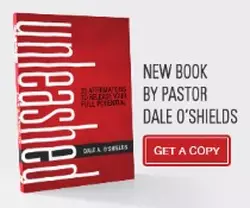
Positive changes happen in us when we know, believe, confess and obey God’s Word. When we agree with what God says about us, our minds are renewed, and our choices and habits improve. In this new book from Pastor Dale O'Shields, you will find 25 biblically-based affirmations that will help you think right about God, yourself, others and the world.
Past Episodes
- 10 Lessons for a Life of Significance
- 35th Anniversary
- 7 Things You Need To Know About Your House
- re:MIND
- think.thanks
- A Big Christmas
- A Life That Works
- A Timeless Christmas
- Amazing Grace How Sweet The Sound
- Are you ready ?
- Faith +
- Family Matters
- Fathers Day
- Fear Less
- Fear Not
- Forward
- Fresh
- Friend
- Friends
- From Me to We
- FruitFull
- Hallowed Be Your Name
- Heart Check
- Heaven HOPE Us!
- Heaven to Earth
- Help Is Here
- History Changers
- House Builders
- How to Stay Sane in a Crazy World
- How’s Your Love Life?
- I Have Decided
- I Want A Happy Family
- I Will Go Deeper
- I Will Grow Stronger
- I Will Not Settle
- I Will Overcome
- I Will Reset
- It’s Time to Change Your Mind
- Raising Resilient Kids (and Adults)!
- Real Deal Faith
- Reasons To Believe
- Recover
- Relate
- Renew
- Resolve
- Restored
- Rise
- Road Trip
- Rudders and Routes
- Runway
- Take Hold
- Talk To Me
- Teach Us To Pray
- The Best Christmas
- The Call of Christmas
- The Gifts of Christmas
- The God of Miracles
- The Heart Of Christmas
- The Life of Worship
- The Pathway to Joy
- The Power of Personal Choices
- The Way Of Worship
- The Way To Pray
- Tides, Winds and Currents
- Turning Point
- Waymaker
- What If?
- What To Do When...
- When God Comes Down
- When Prayer Changes Things
- Who is Jesus?
- Whose Friend Are You ?
- Wise Up
- Wiser
- Worship 101

Video from Dale O'Shields
Featured Offer
Positive changes happen in us when we know, believe, confess and obey God’s Word. When we agree with what God says about us, our minds are renewed, and our choices and habits improve. In this new book from Pastor Dale O'Shields, you will find 25 biblically-based affirmations that will help you think right about God, yourself, others and the world.
About Practical Living
About Dale O'Shields
Dale O’Shields is the founding and Senior Pastor of Church of the Redeemer, a multi-cultural church that operates four campuses in Maryland, just north of the greater Washington, DC area.
Dale O’Shields is known for his relevant teaching style focused on practical application in people’s lives. His messages are regularly broadcast on radio and television. He is also the author of several books, devotionals and group study guides.
Dale O’Shields is a frequent conference speaker with a passion for leadership development and church growth. He has served as the Senior Pastor of a thriving local church for over 25 years. His heart to equip and encourage pastors and church leaders has led him to be a key founder of United Pastors Network.
Dale O’Shields has been involved in pastoral ministry since 1978, serving previously as Director of Campus Ministries and as an adjunct instructor at Regent University in Virginia Beach, VA. He and his wife Terry have two married daughters and seven grandchildren.Contact Practical Living with Dale O'Shields
Info@church-redeemer.org
Church Of The Redeemer
19425 Woodfield Road
(301) 926-0967