


#1 Keeping Faith In A Faithless World


In a world drifting from God, lasting faith is not just believed—it is lived, practiced, and passed on.
Scene 1: Introduction (approx. 00:00 - 00:15)
Dale O'Shields: Thank you for joining us for today's Practical Living broadcast. I pray that through this message you will learn how to apply God's word and truths to any situation in your life. Stay with us as we discover God's truths that will transform us.
Scene 2: Lifequakes Series and Unpredictability (approx. 00:15 - 01:25)
Today we start a new series of messages entitled "Lifequakes." I'm going to talk to us about the shaky things that come to our lives and how to handle them appropriately. There are often times in life, and they'll happen for this new year as we're going through 2026, these next number of months together, Lord willing, that during these months we'll experience a variety of things in life. Life is going to deal us a number of different things. You can never anticipate or predict exactly what life is going to bring your way.
Sometimes the things that we go through in life we can anticipate. They're going to be a little challenging to get through. We might be aware of some transitions that need to happen in our lives or things that need to occur in our natural journeys, our natural life experiences. But sometimes we're hit by things we don't expect. We don't really know that they're coming our way, but we still have to deal with them. So life is kind of unpredictable in that regard, but God is not unpredictable. God is always God in the midst of whatever we go through.
Scene 3: Faith in a Faithless World (approx. 01:25 - 03:00)
In this series, we're talking about a number of things that we need to navigate as we go into this next year together and in the years to come. I want to talk to you this morning about keeping your faith in the midst of a faithless world. How do you keep faith going strong in the midst of a faithless world? I believe that perhaps the most important thing that we will need this year, in fact, I believe it certainly is the most important thing we'll need this year and in all the years of our life, is a very vibrant, strong faith. We need to understand how to build that.
The focus of our attention today is actually on a man that I've never done as far as I can recall, I'd have to go back and look at all of my particular past messages. I don't think I've ever done a one individual message on this particular man before. I've talked about him a number of times, but today over almost 40 years, you're going to get a message on a man that I think I've never preached on specifically before, and that's the man Noah.
Scene 4: The World of Noah (approx. 03:00 - 04:30)
We're going to take a look at the story of Noah and how he was able to hold on to faith in the midst of a faithless world. To understand the story of Noah, we have to go back and understand something of the circumstances in which Noah lived. The Bible describes this for us in Genesis chapter 6, verses 5 through 7. Look at this environment that Noah existed in. This is the time of Noah.
The Lord saw how great the wickedness of the human race had become on the earth, and that every inclination of the thoughts of the human heart was only evil all the time. The Lord, notice this word, "regretted." The Lord regretted that he had made human beings on the earth, and his heart was deeply troubled. So we've got all this wickedness going on in the world.
The Bible continues here, "So the Lord said, 'I will,' here's the judgment coming, 'I will wipe from the face of the earth the human race I've created, and with them the animals, the birds, and the creatures that move along the ground, for,' there's the word again, 'I regret that I have made them.'" It's hard to imagine how sad of a condition this must have been for God to look down upon his beautiful creation and to say, "You know what, they've gotten so bad and so evil." We're only six chapters into the beginning of the books of the Bible, the sixth chapter of Genesis, the very first book of the Bible. Six chapters in and the world has gone to such a terrible condition that God says, "I regret that I've actually created mankind," because they've become so evil and so disregarding of me. A tremendously sad commentary.
Scene 5: God's Regret and Judgment (approx. 04:30 - 05:40)
That word "regretted" is a strong word. For God to say that he regretted something, I mean think about it in your own life, you have to get to a pretty strong point of frustration to be able to say that you regret something. And so God twice in this passage describes that he regrets having made the world and he gives us this declaration that he's going to bring judgment upon an evil, evil world. It was time for judgment to come.
Now, there's one bright star in the midst of all this very significant ugliness and darkness. The one bright star is a person who stands out in the midst of all of this. You've got this terrible world around, everybody's evil, their hearts are intended upon disobeying God, but there's one person that stands out and shines in the midst of all this, and his name is Noah.
Scene 6: Noah's Character (approx. 05:40 - 07:10)
Here's how the Bible describes Noah in the same chapter: "But Noah found favor in the eyes of the Lord. Noah was a righteous man, blameless among the people of his time, and he walked faithfully with God." So the Bible speaks out of all these evil people that God found one man. Think about this. Out of all of humanity, we don't know the population of the world at that particular time, whatever it might have been, at that particular time in history, he could only find one person, one man who was different from everybody else, who was a man who had not compromised his faith, a man who had not compromised his morality, a man who had not followed what everybody else was doing. The crowd was going against God, but Noah was seeking and serving God. The Bible says that Noah found favor or he found grace in the eyes of God.
So God is going to now preserve Noah and preserve Noah's family from this coming judgment, and he's going to start rebuilding humanity through Noah and through his family. It's an incredible story of salvation, it's an incredible story of redemption. We see in this story that God now gives Noah an assignment. We know that assignment, but I want to read it for you here continuing in Genesis chapter 6.
Scene 7: Noah's Assignment (approx. 07:10 - 08:35)
Here's the assignment: "So God said to Noah, 'I'm going to put an end to all people, for the earth is filled with violence because of them. I am surely going to destroy both them and the earth. So,' here's the assignment, 'so make yourself an ark of cypress wood, make rooms in it and coat it with pitch inside and out.'" So the assignment is to make an ark. We all know the story of Noah and the ark. So make yourself an ark. He tells him how to make it and it's described in great detail in scripture.
"I'm going to bring floodwaters on the earth to destroy all life under the heavens, every creature that has the breath of life in it, everything on earth will perish. But I will establish my covenant with you. Notice this, Noah I've picked you out. You're this man that's the only one that's not following the crowd. I will establish my covenant with you and you will enter the ark, you and your sons and your wife and your sons' wives with you." So he's going to extend that to Noah's family. "You're to bring into the ark two of all living creatures, male and female, to keep them alive with you. Noah did everything just as God commanded him."
Scene 8: The Power of Faith (approx. 08:35 - 10:10)
So he's given this assignment. We see the wickedness of the world, God finds one man, and then God says to Noah, "You have found favor or grace in my eyes. Here's an assignment for you. Build an ark, bring your family into it, get two of every living creature, bring them into the ark because I'm going to preserve the world through you. You're going to be the one through which the world will be repopulated."
For Noah to fulfill this assignment, there's one primary thing that's required of him. The primary thing that's going to be required of Noah to do this, to accomplish what God has asked him to do, is one thing, and that's faith. Noah is going to become known not just for building the ark, but Noah is going to be known in scripture as a man of faith. This is recorded in the New Testament, Hebrews chapter 11, verse number 7.
"By faith Noah, when warned about things not yet seen, in holy fear built an ark to save his family. By his faith he condemned the world and became the heir of righteousness that is in keeping with faith." What word appears three times in that verse? We think of Noah being known for building an ark. God knew Noah for his faith.
Scene 9: Building Faith in a Broken World (approx. 10:10 - 11:40)
It was his faith that resulted in the building of the ark. It's vital to understand that it was not about building the ark, indeed that was important, but it was faith that would get this accomplished, that would cause this to happen. So we're going to talk today about the kind of faith that Noah possessed. What was his faith? What did it look like? And how did he maintain faith in the midst of a faithless world?
I think all of us would agree, at least most of us if not all of us, at least to some degree would agree that we're living in a very wicked world today. A world that is falling apart, a world that's broken in so many ways. It's been the case for all of humanity, but certainly we see it in significant measure in our world today. So we as Christian believers are called to be Noah-like people in the midst of a world that is very perverted and wicked. So we need to have the kind of faith that Noah did.
Scene 10: Private Faith (approx. 11:40 - 13:10)
I'm going to give you six characteristics of the faith of Noah today as we study something about his life, and six kinds of faith that you need to have to be strong in a faithless world. The first kind of faith that Noah possessed is his private faith. This is vital for each one of us, to understand that our real lives are our private lives. Real character is revealed behind the scenes in the private moments and the private encounters and the private practices of our life.
How do you know what a person really is? You don't know what a person really is just by what they do externally in the public environment. You really know what a person is by how they live their private lives because our private moments tell the true story of who we are as individuals. The greatest investment that any of us will ever make is not in who we become externally to the world or publicly to the world around us, but the highest dimension of growth in your life is in the private dimension of your life, developing private faith. If you don't have a private faith, you'll never be able to have a public faith in your life.
Scene 11: Honesty and Integrity with God (approx. 13:10 - 14:40)
So it all starts with us on the inside. Noah was a man with a very deep private faith. When God inspected Noah, when he inspected his private life, he found a sincere believer, he found a sincere follower of God, he found a man who was deeply devoted. In verse number 9 of Genesis chapter 6, there are three words that are used or three phrases that are used to describe Noah that are applicable for us as well. What does this private faith involve?
First of all, the Bible says that Noah was a righteous man. He was righteous. This is verse 9 of Genesis chapter 6, and that word righteous means he was innocent. He was just. He did the right things. He lived according to God's standards. And this was not just in public, but it was also in private. There was no moral compromise in him.
The second word that is used to describe Noah is that he was also blameless. So he was righteous and he was blameless. The word blameless means without blemish. It means to have integrity, to not be a phony. He was the real deal. He was really who he was projecting himself to be. So there was an integrity to his life.
Scene 12: Walking Faithfully and Personal Devotion (approx. 14:40 - 16:15)
Thirdly, the third phrase the Bible uses to describe him is that he walked faithfully. So Noah had this personal relationship with God. The idea of walking faithfully with God, there's intimacy there with God that's implied, and he had this integrity with God. His primary motivation in life was to please God. That's what he wanted more than anything else. He was not there to impress people or to look good to other people. He was there to actually please God.
The first goal in your life and my life needs to be the goal of having strong spiritual integrity in our private lives. Who we are when no one else is looking. What do we do when no one else is looking? How do we think when no one else is looking? How do we live our lives in the secret elements of life? Noah had this private faith. He had integrity.
Now, I'm quick to add that integrity does not imply perfection. Noah was not a perfect man. You'll see later on in the story of Noah that there are some imperfections obviously in this man's life. So he's not perfect, but he's honest with God. That's really what integrity is all about. It's the ability to be honest with God, and when God deals with you about something, you own up to it in your life and you deal with it before him. Integrity is not about being perfect, but it is about being honest with God. Anytime God puts his finger on something in your life, you don't fight with him about it, you don't resist him, but you're owning up. You're honest in your relationship with him. So Noah was the real deal in private.
Scene 13: Self-Reflection on Private Faith (approx. 16:15 - 17:45)
Let's start today by asking you this question: How's your private life? Just let that sit there for a moment. How's your private life? How's your private faith? When no one else is looking, when no one else is around, what's your private life like? What do you do in your private moments? How do you think in your private moments? What do you do with your private world? How do you live in that world? To keep this faith in a faithless world, we need a strong private faith.
I would add another question to this: What will you do in 2026 to strengthen your private faith? What will you do this year? No one else can do this for you. But what will you do this year? What will I do this year to strengthen my private faith? Not what anyone else has the ability to see, but what only God can see in my life and my relationship with him.
Scene 14: Active Faith (approx. 17:45 - 19:10)
Noah's faith, first of all, was a private faith. Number two, the second aspect of his faith is that it was an active faith. Noah did something with his faith because he had this private faith, it translated into action. Noah's faith actually made him a builder. It made him do something. The Bible describes Noah in this way in Hebrews 11:7: "By faith Noah, when warned about things not yet seen, in holy fear," what did he do? What did his faith motivate him to do? To build an ark. So his faith resulted in his building.
He did something with his faith. Noah knew God told him that the world was about to be destroyed and judgment was coming. So Noah got busy doing something productive. He got busy doing something redemptive. He got busy doing something that had eternal worth and value, and he built a place of safety and salvation. That's really what the ark was, a place of safety and a place of salvation. Noah got busy making a difference, becoming a part of the solution, not a part of the problem. He answered God's call to actually build and to do something with his faith.
Scene 15: Translating Faith into Action (approx. 19:10 - 20:30)
I would say to you today, for us to be reminded of this, that private faith, once you begin to form and grow in your private faith, it never stays private. Eventually it comes out in your life by what you do and by the actions of your life. So real faith is always active. It causes you to do something. James 2:17 says, "In the same way, faith by itself, if it is not accompanied by action, is dead."
If you say you have faith but there is no action, your faith isn't very real, is it? What your faith should motivate you to do is to get involved in doing something, to get involved in using your faith to take on a building assignment, to contribute to God's work in the world, to serve, to give, to advance God's cause in a broken world. Noah was motivated by a private faith to translate that private faith into an active faith.
Scene 16: Faith to Build the Kingdom (approx. 20:30 - 21:55)
I would say to all of us this year, as we head into 2026, as we grow our private faith, then begin to say, "God, now how can I take that private faith and do something with it? How can I contribute to the work of your kingdom in my serving and in my giving?" There are many opportunities that God has available to help you to not only serve and give, but to grow in your private faith as well. Don't wait until it's too late. Put your faith to work now.
I heard a statement, I thought it was very powerful, and I'll give it to you as I modify it a bit from how I heard it. But one writer said that mental assent to something, many people think that believing is just mentally assenting to something, just saying, "Oh yeah, I believe that's true." But mental assent has the ability to cause you to nod your head. You might agree with that. "I believe that." But real faith moves your feet.
Mental assent will nod your head, but real faith will do what? It'll move your feet. Can I just ask you today, again we're searching our hearts together this new year, we're thinking about what God's doing in our lives, do you have just that mental assent? "Yeah, I believe, I believe in Jesus. I believe all that stuff the Bible teaches." Do you just nod your head or has your faith moved from just the nodding of the head to something that actually moves your feet, that causes you to do something and to be a builder in God's kingdom?
Scene 17: Unintimidated Faith (approx. 21:55 - 23:25)
Private faith, active faith, number three: Noah had an unintimidated faith. Noah starts building this ark and it's massive. I've never been to the Ark Encounter, I think it's maybe in Kentucky or somewhere toward the Midwest there, but they've built a replica of the ark there. I'm sure my wife and I will visit it at some point in time. I hear it's amazing. But this thing is massive. This ark is huge. It's massive.
Noah goes to work building this massive big ark or we would think of it as a ship or almost like a container ship. If you've seen the big container ships out in the ocean or on the Chesapeake Bay, you've probably seen them before, more massive than many of those even are. He's building this thing and people are looking at him building this ark, and I can only imagine the amount of ridicule that Noah must have experienced. "What in the world are you doing?"
Scene 18: Faith Through Ridicule and Rejection (approx. 23:25 - 24:50)
Noah is building this ark telling people judgment is coming, it's going to rain. God's going to flood the earth. Rain is coming, rain is coming, floods are coming. He's giving this message as he's building this massive ark. What we must understand is that prior to this time, as far as we understand in scripture, the world had never experienced rain before.
According to scripture, the vegetation had been watered by mist coming up from the ground and maybe there had been sort of a light rain that had existed to kind of keep the vegetation green, but the world had never known rain before. So now Noah is building an ark telling people it's going to rain and their response is, "What's rain? We don't even know what rain is. It's going to flood. What's a flood?"
Noah has to be the brunt of a lot of ridicule, a lot of misunderstanding on his part. I'm sure he's rejected by the world around him, first of all because he's different from the world around him. So here he is building this, declaring judgment is on the way, no one believed Noah at all, but Noah kept building and he kept building. He was unintimidated by the rejection and the ridicule of the world around him. He stood strong, unintimidated.
Scene 19: Standing Strong for Christ (approx. 24:50 - 26:15)
If we're going to be holding on to our faith in a faithless world, you better have a strong private faith. You better have a strong private faith because if you don't have a strong private faith, you're not going to make it. And then you need to have an active faith because the world needs you, Jesus needs to use you to help reach the world around you. So you need to move from just this strong private faith to "what can I do with my faith?"
Once you get out there doing something, let me assure you, people will ridicule you when you stand up for Christ. When you start doing something for the kingdom of God, the devil never bothers with someone who's doing nothing for God. The devil only bothers people who are doing things for God. So once you stand up and start doing something, you can expect there will be voices that will ridicule you and make fun of you and ostracize you. You've got to have enough faith to stand up when everybody else around you is laughing at your faith and saying, "Who are you? Who do you think you are? Oh, you think you're this Christian person."
Scene 20: Acknowledging Christ Before Others (approx. 26:15 - 27:45)
We have to have the kind of faith that gives us the strength to handle those moments of life. Jesus said it this way in the Gospel of Matthew, chapter 10, verses 32 and 33: "Whoever acknowledges me before others, I will also acknowledge before my Father in heaven." Notice that. Whoever acknowledges me, I will also acknowledge. Then there's this word of transition, "But whoever disowns me before others, I will disown before my Father in heaven."
Let's break this down into two parts here. Here are two choices you make. Which side of that equation would you prefer to be on? I want to be on the side where I'm acknowledged, how about you? So for me to be acknowledged by Jesus before the Father in heaven, I need to be willing to acknowledge him before others. However, if I choose to disown him before others, then I'm disowned before the Father in heaven. Very serious verse of scripture, but this brings us to what real faith is all about. Real faith is faith that stands up and says, "Oh, maybe the world will ridicule me and make fun of me, that's okay because I will always stand strong for Jesus Christ."
Scene 21: Never Ashamed of the Gospel (approx. 27:45 - 29:10)
I will always declare that he is my Lord and he is my Savior and he is my Redeemer. As Paul said in the book of Romans chapter 1 as he declared, "I am not ashamed of the gospel because it is the power of God that brings salvation to everyone who believes." Never be ashamed of the gospel because it is the power of God unto salvation. There's all kind of messages in the world that are trying to say, "Hey, this is the right way and that's the right way." No, stand for the truth of God's word, and the truth of God's word is the gospel of Jesus Christ. There is no good news apart from Jesus. No eternal good news apart from Jesus.
Jesus is the source of good news. He is, as I regularly try to remind you because the voices of the world will tell you differently, Jesus is the way, he is the truth, and he is the life. Stand strong for the reality of the gospel. Never be ashamed of the gospel of Jesus Christ. You might be ashamed sometimes of some of the stuff you do, but never be ashamed of him. Be an unintimidated Christian.
Scene 22: Patient Consistent Faith (approx. 29:10 - 30:40)
How do you keep faith in a faithless world? You better have some private faith in your life. You've got to get it strong. And then your faith needs to move you to do something with it, action. And then as you start acting, you're going to have to be unintimidated by the world around you, correct? Not ashamed of the gospel.
There's a fourth kind of faith that Noah has: Noah has a patient, consistent faith. If you study the genealogies of Noah and the timelines, it's a little bit tricky to put all the timelines together in Noah's life because of all the different genealogies and people that lived so many years and the flood lasted so long and all these kind of things. But once you try to put all of those pieces together, it seems as though from everything we can tell that Noah would have spent a minimum of 50 years building the ark. Minimum of 50 years. He may have spent some scholars say up to 75 years, some will go as far as to say that Noah spent as many as 100 years building the ark. It was a massive undertaking.
Scene 23: The Long Haul of Faith (approx. 30:40 - 32:10)
So somewhere between 50, 75, to even up to 100 years Noah is doing this work. So it was a long project. Day after day, day after day for five, to six, to seven plus decades, Noah would get up every day and he goes to work and he built and he built and he built. Decade after decade, patiently waiting for God to fulfill the promise that God said he was going to fulfill in bringing judgment upon the earth.
Can you imagine somewhere in about the 25th or 30th year that Noah's saying, "I wonder if this is really going to happen or not"? He could have easily given up, but he builds and he builds and he builds. I will tell you something about real faith: real faith is tested not by your days, but real faith is tested by your decades. Anybody can build for a few days, but it takes a Noah to build for decades.
Scene 24: Lifelong Commitment to Jesus (approx. 32:10 - 33:40)
Anybody can follow Jesus for a few weeks or a few months or even a few years, but it takes someone with a strong faith to follow Jesus their whole life. Starting now that I'm a follower of Jesus not just for a day or a month or a year or a few years, no, I'm going to be a follower of Jesus for the rest of my life. I'm going to serve Jesus until I die. I will serve him the decades of my life.
Whether you're young or middle-aged or older, it's a commitment that you need to make in your life to say, "My faith is not just going to be a short-term faith. It's a long-haul faith." Jesus talked about this in the Gospel of Matthew chapter 13, as he's describing different kind of conditions of the heart. He uses soil as an analogy for the condition of the heart and he gives various kinds of soil. I'm going to focus in on one of those that he spoke of here because it applies to what we're talking about today.
Scene 25: Building Roots in Faith (approx. 33:40 - 35:10)
He's talking about the seed of God's word falling on the soil of our hearts, and how different conditions of the heart will produce certain results. The seed, the seed of God's word, falling on rocky ground refers to someone who hears the word and at once receives it with joy. So they're all happy they hear the word of God and they're really happy about it. But since they have no root, they don't develop private faith. They don't develop anything strong on the inside. No rootedness to their spiritual life. But since they have no root, what happens? They last only a short time.
How long is a short time? A short time. A short time is a short time. We might be a year, might be a few months, might be a matter of a few years that they're serving and loving God. But suddenly at some point in time they drop off. They last only a short time. Notice the condition here that results in that short-time commitment: when trouble or persecution comes because of the word, what do they do? They quickly fall away. Don't let that be you.
Scene 26: Developing Long-Term Faith (approx. 35:10 - 36:40)
Don't have rocks in your heart that you don't let God remove and allow no rootedness to happen there. Develop good spiritual roots in your life so that you will not last a short time, but so you will last a long time in the kingdom. Long obedience in the same direction is what we need. A patient, consistent faith.
I've got two more for you. Number five: what kind of faith did Noah have? He had a family faith. Noah's faith included his concern for his family. He cared about his family. God cared about his family. Going back to Hebrews 11 verse 7 again, it says, "By faith Noah, when warned about things not yet seen, in holy fear built an ark to save his family." What was his primary first concern? To save his family.
Scene 27: The Mission Field of the Family (approx. 36:40 - 38:10)
I would remind you that your faith, our faith as Christian believers, has a first and foremost mission field. Did you know that if you're a believer in Jesus Christ, you're a missionary? You're on a mission. That's what a missionary is. And you're on a mission to share the gospel with the world. And the primary mission field that you and I are called to is not first and foremost out there somewhere, but our primary mission field is to our family. That's where we all start. That's the beginning point.
We are to be sincere followers of Jesus in our family, do everything we possibly can to win our family for the gospel of Jesus Christ, to pour into our family, to demonstrate the grace of Christ to those that are closest to us, to build an ark of salvation for our homes and for our families. I'm going to take a few moments and walk you through this. I want to help you to know how to be a good missionary in your family.
Scene 28: Winning Your Family for Christ (approx. 38:10 - 39:40)
How do you win your family for Christ? Because I will not ask for a show of hands, but I would almost want to, but I'm not going to because I don't want to embarrass anyone. But how many of you, don't raise your hand on this, but how many of you have family members that don't know Jesus right now? You have family members that don't know the Lord. Maybe you have kids that don't know the Lord. You have parents that don't know the Lord. You have extended family members. You have people in your family that have not yet come to know Jesus and you're concerned about them. And that's wonderful that you're concerned about them. But how do we win our family for Christ? How do we do this? Noah was really concerned about his family and God was as well.
Let me give you some things that are vital. Number one, if you're going to win your family, you need to be a believable witness yourself. You need to live the kind of life that people can look at and say, "Well, that person is a follower of Jesus." Again, you're not perfect, you're not going to get it all together all the time, but people can see that you're believable, that you are a person when you're actually backing up your faith with reality in your life. It's not just words you speak, it's a true witness of your life.
Scene 29: Personal and Family Devotion (approx. 39:40 - 41:10)
The second thing that you need to do is show personal devotion. Let's talk about just in the family structure. Whether you're in a nuclear family, mom, dad, kids, or a single-family home, a blended family, whatever the case might be. Family structures vary in design in today's world. But your family members, if you're a Christian in the family, they need to see you with a personal relationship with Jesus. They need to see you opening up your Bible. They need to see and know that you pray. They need to see that there's a devotional part of your life.
When we were raising our kids, and my wife and I continue to try to do this together as well, is to have our private devotional times, but times that we do devotions together. That's the third thing that we'll talk about here, to make sure that you actually establish family devotions, where you're spending time reading the Bible or sharing Bible stories. If you have little kids, just take time and give them a Bible story. There are tremendous Bible story books. If you can't find one, let us know and we'll try to help you get some resources for this. But it's vital that you have family devotions.
Scene 30: Raising Families in the House of God (approx. 41:10 - 42:40)
Let me just digress and say this for a moment. Our world today desperately needs Christian families. I mean like real deal Christian families. Christian families that actually don't just say, "Well, we go to church every so often." No, Christian families that actually Christ is in their home. That Christ is actually in their home. That Christ is honored in their home and Christ is a central part of their home.
I grew up in an environment where every evening my mom and dad, they would bring me and my sister together and we would have a little prayer time and my dad would read a portion of scripture and share with us. And then as our kids grew up, we tried to do the same thing with them. To just share something brief, especially when they're young. You don't need to read, "Okay tonight kids, we're going to read the Book of Leviticus together." No, don't do that. But just a short little passage of scripture or maybe a Bible story.
Scene 31: Church Participation and Prayer (approx. 42:40 - 44:10)
Then if you have small kids, invite them: "What would you like us to pray about?" And just take some time to pray as a family. We used to call that back in the old school days the family altar. That there's an altar in your home where you bring the family together and Jesus is present in the home. We don't need Jesus just in the church, we need Jesus in the home. You need Jesus in your neighborhood. And for him to be in your neighborhood, he's got to be in your house. He's got to be recognized there.
And then to also make church a priority in your life. Your participation a priority. Church is vital. I'm not saying this just to try to get you to church, although I want to get you to church. The reason I want to get you to church is not because we're counting numbers, the reason I want to get you to church is because you need church. Church is designed by God. He said, "Don't forsake the assembling of yourselves together. Don't do that as some have fallen into the habit of."
Scene 32: Prioritizing Spiritual Growth (approx. 44:10 - 45:40)
So I want to challenge you this year to take not only your family devotional time up a notch, but take your church participation up a notch. Because many times, and I say this not to condemn anyone or make you feel bad about anything at all, I understand some of this aspect, but I watch parents today and they spend all kind of time and money running their kids around to this event and that event and this sports event and that athletic event, these extracurricular activities, and never bring them to church.
And the one thing that's going to get your kids through life is a faith in Jesus Christ. They need that more than anything else. I'm not saying you have to do away with any of the other things, I'm not condemning those other things. I love extracurricular activities. I grew up doing them as a kid. But I will tell you what, I never made it to the NBA. I know it's hard for you to imagine that, especially as tall as I am. And I never made it to the NFL. Now, I played football and baseball and all that stuff in school, but I tell you what, on Sundays I was in church. And on Sunday night I was in church. And on Wednesday night I was in church. That's where I was.
Scene 33: A Legacy of Faith (approx. 45:40 - 47:10)
In fact, in the summertime when we had baseball, and I'm not saying this to condemn anyone, make this your conviction. It may not need to be your conviction. But my dad was so committed to church, he says, "Son, if there's a baseball game on Wednesday night, we have Wednesday night church, you're going to church, you're not going to the baseball game." Do you think it warped me? Do you think I was warped by that? I don't think so. I think I'm blessed because of that.
So the point I'm trying to make for you is that you need, especially as a parent, to get your kids in church in the house of God. Don't raise them apart, raise them in the house of God. I love seeing little kids around here falling asleep on the floor during church service. It reminds me, I used to lay on the pews during church service and fall asleep. No better place to fall asleep than in church. Get them in the nursery. Now that's not for older people, the best thing for you to do is stay awake during church service. But if you're five and under, you have permission.
Scene 34: Raising Kids in Youth and Children's Ministry (approx. 47:10 - 48:40)
But the point I'm trying to make is raise your kids in the house of God. If you have young people, get them to youth group. Even if they say, "I don't want to go to youth group." You're still the parent. Tell them they're going to youth group. Get them there. Because once you get them there, God will get a hold of them. Get them to children's ministry. Get them involved in these things. And all that's completely free for you. That's not in my notes at all, but make church participation a priority.
And then show your faith by giving and serving. Let there be an expression of your faith that's seen throughout your life. We've already talked about that, that it's an active faith. And then the last one I'll mention here on this part is to make sure that you follow Jesus with joy. Following Jesus is not a sad thing, it's a joyous thing. And unfortunately a lot of Christian people, a lot of Christian families, I mean you would think that they've been baptized in vinegar or something. I mean it's like they have such a sour look on their face and, "We're going to go to church today. We got to go to church."
Scene 35: Joy in the House of God (approx. 48:40 - 50:10)
No, I was glad when they said to me, "Let us go to the house of God." I will serve the Lord not with madness and with sadness, I will serve the Lord with gladness, the Bible says. There's joy in the house of the Lord. That's where joy is found, in his house. That's why we try to do things here that kids can enjoy. I want them to have fun in church. That's why we do stuff like our Harvest Festival that we do every year. And we give out, you should see all the candy we buy for that. You know why we do that? It's because we want the kids to feel like the best place they can go to get candy is at church. And their memory is like, "I never got more candy in my whole life than at church. My neighbors can't match that at all. If I want candy, I'm going to church." Because they identify this idea that church is a fun place to be and we raise them with the atmosphere that there's joy in the house of the Lord.
Scene 36: Grateful Worshipping Faith (approx. 50:10 - 51:40)
What kind of faith do we need? Let me conclude here with this one. I'm going over just a little bit, is that okay today? I cut it short last week so I could go over today. So, grateful worshipping faith. This is what Noah had. When the flood finally ends, if I remember correctly I think it was 40 days and 40 nights and then there was about 150 days I think after that the flood waters were still on the earth, if I remember correctly from Genesis. So 40 days and 40 nights it rains, it floods, and then for about another 150 days there's water out and Noah starts sending birds out to check and see if the water's gone away yet. And finally when the floods ended and the waters are receded, Noah and his family eventually they exit the ark. They come out of the ark and the door is opened, God lets them out of the ark.
And what was the first thing that they did? What was the first thing that Noah and his family did when they stepped out of the ark? Do you know the answer to that question? I'm going to give it to you. The answer to that question is in Genesis 8 verse 20. This is the first thing they did as soon as the door opened and they stepped on dry ground again. The Bible says, "Then Noah built an altar." The man who had built an ark, what does he now build? An altar.
Scene 37: Honoring and Worshipping God (approx. 51:40 - 53:10)
"Then Noah built an altar to the Lord, and taking some of all the clean animals and clean birds he sacrificed burnt offerings on it." And so what he does here is he says, "God now I'm going to give you praise and honor and thanksgiving in a sacrifice of deep appreciation for bringing me through this." And so real faith is to recognize and to always recognize and to give God honor and worship and praise for what he's done in your life.
If you've been saved through the flood waters of sin, you need to thank God for it. If you've been saved by the washing of the blood of the Lamb, you need to thank Jesus for what he's done for you. There needs to be a faith that is always filled not with entitlement, not with a sense of what God has to do for me, but appreciation for what God has done for me in my life.
Scene 38: Review and Closing (approx. 53:10 - 54:40)
So let's just review for a moment. How's your private faith? 2026 what will you do to build your private faith? Take that private faith this year and make sure it becomes active faith, that you're going to do something with your life. You're not going to sit back any longer, you're going to put your gifts to work, you're going to serve God, you're going to be a giver, a server, a contributor to the kingdom. Make sure as you start serving, don't be intimidated. Have an unintimidated faith. The world may reject you, people might laugh at you, stand strong. Be patient and consistent with your faith. It's not for a day or for a month, it's for decades that you're going to serve God. Have a faith that reaches your family, that your family can look at and say, "Oh, that mom is a great person of faith. Dad is a great person of faith." They see that through your life. And then in everything that we do, have a grateful worshipping faith. Would you bow your heads with me as we pray today?
Scene 39: Closing Prayer (approx. 54:40 - 56:05)
Father, we're grateful for your word this morning. We're grateful for the story of Noah, what an amazing man he was to be the only bright light in the midst of a tremendously dark world that you regretted even making. We thank you that you found Noah and Noah found grace in your eyes and that we've learned today some lessons from his life. And we pray, Lord, that the faith that was in Noah would be in us, Lord, because we too live in a dark world, a broken world, a world that's headed toward judgment. And I pray Lord today that that faith, the kind of Noah faith would be our faith. Build it strong in us we pray, in Jesus' name.
Scene 40: Acceptance of Christ (approx. 56:05 - 57:35)
I would like to close today by giving you an opportunity to ask Jesus to be the Lord of your life. Would you pray with me right now? Right where you are, just simply bow your head with me and I'm going to give you a prayer to pray and you can simply speak this prayer out, whisper this prayer out and from the sincerity of your heart call upon God, and I promise you that he will hear and answer you. So let's pray together. Start by simply whispering the name Jesus. Let there come from your heart just the declaration of his name. Say, "Jesus, I know that I am a sinner, that I have fallen short with you. I'm sorry for all of my sins."
"Jesus, I believe in you. I believe that you are God's Son. I believe that you are the Savior of the world. I believe that you died on the cross for my sins. And I believe that you rose from the grave, that you are alive today." Now pray these words. Say, "Lord Jesus, come into my heart. Come into my life. Forgive me of my sins. Give me a new start in you. I commit my life to you. In Jesus' name, amen."
Scene 41: Final Guidance and Blessing (approx. 57:35 - End)
Now if you prayed that prayer with me, I want to encourage you with a promise from God's word that says that when we call upon God's name, we call upon the Son of God, there is salvation that comes to our lives. He changes us from the inside out and you become a new creation. Old things pass away, all things become new. And that's exactly what has happened to you today. Your next step really is to make sure that you get into a good Bible-believing church and you begin to study God's word. Get God's word in you. And make sure that you get a copy of the Bible if you don't have one and begin to read it. Spend some time every day in prayer. And I would encourage you also to check out the resources on our website that will help you to get going in your relationship with Jesus. You can find them at church-redeemer.org. Get those into your hands. Get started in your new life with Jesus Christ. Thanks again for joining us today. May God bless you and we look forward to seeing you next time.
Featured Offer
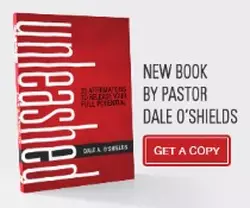
Positive changes happen in us when we know, believe, confess and obey God’s Word. When we agree with what God says about us, our minds are renewed, and our choices and habits improve. In this new book from Pastor Dale O'Shields, you will find 25 biblically-based affirmations that will help you think right about God, yourself, others and the world.
Past Episodes
- 10 Lessons for a Life of Significance
- 35th Anniversary
- 7 Things You Need To Know About Your House
- re:MIND
- think.thanks
- A Big Christmas
- A Life That Works
- A Timeless Christmas
- Amazing Grace How Sweet The Sound
- Are you ready ?
- Faith +
- Family Matters
- Fathers Day
- Fear Less
- Fear Not
- Forward
- Fresh
- Friend
- Friends
- From Me to We
- FruitFull
- Hallowed Be Your Name
- Heart Check
- Heaven HOPE Us!
- Heaven to Earth
- Help Is Here
- History Changers
- House Builders
- How to Stay Sane in a Crazy World
- How’s Your Love Life?
- I Have Decided
- I Want A Happy Family
- I Will Go Deeper
- I Will Grow Stronger
- I Will Not Settle
- I Will Overcome
- I Will Reset
- It’s Time to Change Your Mind
- Raising Resilient Kids (and Adults)!
- Real Deal Faith
- Reasons To Believe
- Recover
- Relate
- Renew
- Resolve
- Restored
- Rise
- Road Trip
- Rudders and Routes
- Runway
- Take Hold
- Talk To Me
- Teach Us To Pray
- The Best Christmas
- The Call of Christmas
- The Gifts of Christmas
- The God of Miracles
- The Heart Of Christmas
- The Life of Worship
- The Pathway to Joy
- The Power of Personal Choices
- The Way Of Worship
- The Way To Pray
- Tides, Winds and Currents
- Turning Point
- Waymaker
- What If?
- What To Do When...
- When God Comes Down
- When Prayer Changes Things
- Who is Jesus?
- Whose Friend Are You ?
- Wise Up
- Wiser
- Worship 101

Video from Dale O'Shields
Featured Offer
Positive changes happen in us when we know, believe, confess and obey God’s Word. When we agree with what God says about us, our minds are renewed, and our choices and habits improve. In this new book from Pastor Dale O'Shields, you will find 25 biblically-based affirmations that will help you think right about God, yourself, others and the world.
About Practical Living
About Dale O'Shields
Dale O’Shields is the founding and Senior Pastor of Church of the Redeemer, a multi-cultural church that operates four campuses in Maryland, just north of the greater Washington, DC area.
Dale O’Shields is known for his relevant teaching style focused on practical application in people’s lives. His messages are regularly broadcast on radio and television. He is also the author of several books, devotionals and group study guides.
Dale O’Shields is a frequent conference speaker with a passion for leadership development and church growth. He has served as the Senior Pastor of a thriving local church for over 25 years. His heart to equip and encourage pastors and church leaders has led him to be a key founder of United Pastors Network.
Dale O’Shields has been involved in pastoral ministry since 1978, serving previously as Director of Campus Ministries and as an adjunct instructor at Regent University in Virginia Beach, VA. He and his wife Terry have two married daughters and seven grandchildren.Contact Practical Living with Dale O'Shields
Info@church-redeemer.org
Church Of The Redeemer
19425 Woodfield Road
(301) 926-0967