

Episode 2 - Effects of Sexualized Content


A pornography addiction usually starts with something small, like seeing an online ad or hearing a song with explicit lyrics on the radio. Erin and Greg give some practical ways for protecting your heart from sexual content in the media; Dr. Juli Slattery and Dannah Gresh talk about the dangers of erotic literature; Pastor Levi Lusko shares about the modern-day abuse of dating apps; and author Jamie Ivey explains how pornography affects men and women differently.
Dr. Greg Smalley: Song of Solomon 2:15 is one of the most powerful Bible verses about marriage. It says, "Catch all the foxes, those little foxes before they ruin the vineyard of love." Pornography is definitely one of those little foxes that we're being warned about. It can start off in a small way—watching a sex scene from a movie or maybe seeing a sensual advertisement that causes you to look and find more. If you let those little foxes in, they're ultimately going to destroy your vineyard of love. It can definitely impact your marriage.
What are those little foxes in your life? Welcome to the No Porn Marriage podcast. I'm Dr. Greg Smalley and I'm joined by my wife, Erin. We're discussing how to guard our hearts against sexualized content in the media. Erin, we certainly have to be willing to address this because it can be so subtle at times.
Erin Smalley: Absolutely. Within the counseling office years ago, I can remember this one young gal came in because she simply read a book. She had no idea that "Fifty Shades of Grey" was literally pornography in writing. As she read that, she was seeking something, but it led her to being curious and ended up going online and just viewing a couple sites.
What it ended up doing, though, is leading her to a full-blown addiction. You never know what little things are going to lead to those little foxes. Identifying those little foxes is important to prevent leading you down that road.
Dr. Greg Smalley: To help us understand this better, we want to hear now from two good friends of Focus on the Family, Dr. Juli Slattery and Dannah Gresh. They address this subject of erotica and why women are drawn to this. Here's Focus on the Family's president, Jim Daly.
Jim Daly: Let me ask you this. I can't imagine that many in our audience haven't heard about "Fifty Shades of Grey." I was in the dark with it, but I am shocked by the impact that that book has had and books like it. Help us understand. What is it, and why are Christian women drawn to reading it?
Dr. Juli Slattery: I think one of the first things you need to understand is it's pornography. It's a written form of pornography. Just because it's called erotica doesn't mean it's less. Many women are excusing it and saying, "Well, there aren't pictures." Well, you're still having very sexual images in your head. In this case, "Fifty Shades of Grey" is very transgressive. So, bondage, dominance, masochism, sadism—very dark sex.
What kind of impact it's having is what's startling because at the release of our book, we were up to 100 million copies of "Fifty Shades of Grey" that have sold. It literally has cannibalized much of the publishing industry because now we see all these other erotic copycat series popping up. Really, it's on a pace where you can't compare it to anything else out there, not even things like "Harry Potter." The only thing you could compare it to, and it's still trailing behind, would be the Bible. The only person outselling E. L. James right now is God.
Jim Daly: Let's put it into some perspective because I want to sit in the seat of those listening. I would think there's probably three camps: a woman who is going "what in the world are they talking about" and they're probably getting ready to write us a letter to say "how could you do that?" We get it, folks—certainly write us if you're concerned—but we understand it.
We believe the other two camps are the folks we really need to get to: those that may not know much about it, maybe a girlfriend has talked about it and they're maybe thinking this is something I should look at if 100 million people are reading it, and then those that are already reading it. They're into it, yet they're going to church. In fact, that survey that we talked at the top of the program—these were Christian women. These are women that are doing Christian Bible studies, reading Christian devotionals.
Dannah Gresh: They were not nominal Christians. They were customers for some of the best Bible studies out there and at the same time reading this dark erotic book.
Jim Daly: I'm painting the picture of the appetite because we men, we understand this. What's a shock is that women are now starting to develop this appetite. Why do you think that is?
Dr. Juli Slattery: One of the things that Dannah and I did as we were researching for "Pulling Back the Shades" was look at what is drawing women into the "Fifty Shades of Grey" phenomenon. It's not just a random thing. We think that there's a real spiritual element to that. But when you break it down in terms of what are women looking for, what are they going after, Dannah and I found five needs that we think are representative of what women are really longing for that "Fifty Shades of Grey" and books like it seem to be promising to address. Frankly, Jim, they're needs that some of them the church has not addressed well.
Jim Daly: What are they?
Dr. Juli Slattery: One of them you probably wouldn't have even thought of, but it's a real longing in a woman's heart, and that's to escape reality.
Jim Daly: That may connect with a lot of people, but I'm not sure I get it. I see Jean busy and engaged. I don't see her wanting to escape reality. What's happening in the secret heart of a woman?
Dr. Juli Slattery: To some extent maybe a guy can relate to this and it might be what pulls him into things like pornography as well. You might be busy, but life feels bored. It's mundane. Every day you get up, you go to the same job. Or a woman gets up and she's doing housework and taking care of kids or going to a job and doing all that, too.
Her marriage—maybe she's been married 10 or 15 years and it's kind of blah. There's not a lot of excitement, there's not a lot of romance. She wants a heartbeat. She wants to wake up and feel like life is exciting and adventurous. All of fiction kind of pulls us out of our mundane lives and gives us an infusion of excitement. There's nothing wrong with that, but this takes it to a whole another level. When we've interacted with women, a lot of them will say, "I just needed an escape from my boring and in some places very painful lives and this seemed to promise it."
Dannah Gresh: The one that really puts a fire in my belly is the one that women are longing to be rescued by a strong man. In a society that emasculates men constantly, we have created this world of strong women and weak men. Even in the church, we have been guilty of that.
Barbara Walters was on "The View" discussing the "Fifty Shades of Grey" phenomenon and why women were reading it. She actually said something to the effect of, "Well, women at the end of the day just want the man to be in charge. They're tired of being in charge and they want the man to be in charge." She went on a few months later to be recorded saying that what this book really is about is a book about submission.
But here's the problem. It's a twisted, distorted view of submission. When a man is tying you up in chains and beating you because it gives him sexual pleasure, that is not a healthy submission. But it's being honored. We're living in this culture, this feminist culture, and yet the sexiest words right now are obedience, master, and submission. How does this make sense? We're starving for something and so we reach out for this twisted counterfeit.
Jim Daly: Dannah, I want to park here for a minute because as I've thought about the program today, there's a paradox that I sense. You see the feminist movement in one direction wanting independence, wanting to be like men. What's fascinating is it's almost a bait and switch that's occurred.
Women traditionally have been the stabilizers in the culture. They're the ones who domesticate men. It's been known that this is the way men behave because of testosterone and all that, but when they get married, they get committed and it controls their appetite. Now we're seeing that unleashed within women, which is I think reasonably new for any culture. This hasn't been the way that human beings have behaved. Women for the most part have been chaste and have been the ones to calm the human sexual appetite down and put it in a right place, in a godly place, which is in marriage. What's going on?
Dannah Gresh: I think one of the things that's happening is our society just really wants to erase gender. We're telling women they have to be a certain way or act a certain way, and they certainly can't fall into the typical stereotypes. The problem with that is that when I look back in the book of Genesis, God loves gender. When he says, "I have created you in my image," he lists two things: male and female, that make us most like him. Gender matters to God.
Dr. Juli Slattery: You can look at this from a sociological perspective and say it's the war, the battle of the genders. But the way I've really begun to see it is it's a battle to destroy God's design. A lot of this is just a spiritual battle. If you look at the fact that Satan has won the hearts of many men and pulled them into pornography and lured them with extramarital affairs, he's after the women now.
He's very audaciously going for the heart of women and we see many of them being entrapped by this. Again, not just the world. We see Christian young women who love the Lord get confused about their role in marriage or whether marriage is even worth it to start with. You take that into sexuality. They're very confused about sexuality and how to express that in a way that honors the Lord and they don't have any discernment to see what's really happening.
Erin Smalley: I love what Dr. Slattery is saying—that there's so much confusion and the enemy loves that. It's important that we step back and call "Fifty Shades of Grey" what it really is, and that's pornography, erotica. It's just to recognize that the enemy knew that seeking after women in this way that he's really tapping into the longings of a woman's heart.
There are these righteous longings within our hearts that then through reading this stuff it becomes this substitute for seeking that in unrighteous ways. Maybe it's that we're bored, we're bored within this marriage and we're seeking excitement or adventure and by reading that we can step into that. Or maybe it's that we're wanting to be cherished or rescued by a man and well, that's what the story's all about—and in unrighteous ways. It's important to recognize there's these longings that a woman has and how do we get those met in righteous ways versus turning towards unrighteousness.
If you're listening to this and you realize that the Lord is dealing with you to come out of hiding and get help, feel free to give us a call. Our number is 1-800-A-FAMILY. There's counselors here on staff and they'd love to connect with you and do a consultation and then refer you to a counselor in your area. Again, that number is 1-800-A-FAMILY.
Dr. Greg Smalley: Another one of those little foxes that can destroy our marriage are dating apps. While the apps themselves are not bad, many people are abusing them for sexual pleasure. Jim Daly sat down with Pastor Levi Lusko to explain how technology is affecting our culture today with a phenomenon called Swipe Right.
Levi Lusko: Well, "Swipe Right" started out as a way that people could on a particular relationship app that you download from the app stores, where you could look at random strangers and decide if you would like to be with them intimately, relationally, in any kind of way or not. You'd swipe left on their profile if you would not be interested in them. You'd swipe right on them if you were.
Now, if they swiped right on you and you swiped right on them, you're brought into a messaging service where you could then choose to meet up in real life and have a casual encounter or maybe begin a relationship. But this has taken off. It started out as the way that Tinder, this particular app, worked. But now it's bigger than that. As a matter of fact, I heard Jimmy Fallon the other night saying that he tried to put his daughter to bed and she tried to swipe left on his face.
It's kind of become bigger, synonymous with more than just yes, no, left, right. But Tinder recently said that they've had a trillion swipes. But that's not the only app now. There's OKCupid, Plenty of Fish, Hinge. Every day a new app is being made. Basically, relationships and dating and sexuality are being brought into a mobile experience where many, many young people in big cities like Los Angeles or New York are using the app to facilitate a quick hookup. They're not using it to date as much or get a boyfriend or girlfriend, but just to find someone to have sex with for the evening. And then, in the words of one user that the Vanity Fair article I read about it that kind of opened my eyes to it said, "People are looking for this app to help them hit it and quit it."
Jim Daly: I guess the question then, Levi, is what is going on? I'm the parent of two teen boys. John, you have 20-somethings and teens. I knew none of this. I really didn't. I'm in the culture, more or less getting information from our producers here at the program, yet I had no idea the depth of this, this easy hookup culture.
Levi Lusko: In New York City, 80 percent of 18-to-24-year-old men and 60 percent of 18-to-24-year-old women are on Tinder. So that's how—and as New York goes, so eventually goes the culture.
Really, what it is, is—I mean, you have Amazon doing it for packages, you have Uber doing it for cars, and now you have these apps that are bringing this to what is ultimately an instant-gratification-obsessed approach to relationships. So that's what's happening. It's just now becoming easier. You used to have to go to a bar or a club to meet someone to hook up with for the night. Now you can fire up an app.
Millennials and younger are viewing sexuality more and more as simply a purely physical exercise. At the end of the day, if you think about the evolutionary mentality, that's all it is. If we're talking purely secular humanism and there's no God, then sex is just biological, it's just an appetite. So that's more and more what's happening. As God's out of the equation, sex is just something physical. So as long as you're taking the proper precautions to not get pregnant or not get an STD, then it doesn't make any difference. That's at least how this worldview is looking at it.
Those things without context are archaic. They don't make any sense in this modern day. Plus, I think a lot of us saw our parents go through divorces, and for a lot of young people, it caused there to be a disillusionment for all things marriage. It didn't work. It doesn't seem like it works. And so now, fast forward as things compress because technology is just changing the world. The average American touches their phone 150 times a day. Once every six minutes. So it's changing us.
They say some of us are developing phantom vibration sensation, like you thought you got a text, your phone's not in your pocket and it's buzzing. And then I'll just go on Instagram for a second. It's just changing us, and now it's impacting relationships too and sexuality. I think for me, the concern isn't, okay, technology's bad, let's go back to churning butter and live on an Amish settlement. The thing we need to learn to do is in this left-right world, we need to learn to swipe right, which is up, to live up in a left-right world.
Because Moses in Exodus 2, the Bible says he looked this way, looked that way, then killed the Egyptian. He had a good desire to save a Hebrew, but he chose to not look up. If he would have looked up, God could have told him there's a better way. Your desire's good, it's just not right now. You're eventually going to bury the whole army in the Red Sea. But acting on your desire doing something impulsively is only going to cause delays, 40 years in the desert. I think the desire for sex—we need to tell our young people the desire for sex is good. That's God-given. It just needs to be God-governed because God knows that sex isn't just pleasurable, it's also powerful. When you take what He told you not to touch, it can keep Him from being able to give you what He wanted you to have all along.
Dr. Greg Smalley: Those are powerful insights from Levi. I wasn't even aware of some of what he shared. Like for example, I didn't realize that 30 percent of people using the dating app Tinder are already married. That's shocking because they're married, you wouldn't think that they would even need them. Erin, why are married people on dating apps like Tinder?
Erin Smalley: It's shocking to me as well, but I've learned so much over the years working with people who found themselves in that situation. There are these longings of their heart. Specifically, married women that are feeling ignored, not good enough, and really wanting to be cherished turn towards this. Looking at it like, "Oh, I'm just hooking up, whatever," it is devastating to them personally, to their integrity, to their character. How is that caring for themselves but then also to their marriage, obviously? It's important to take a step back and look at that and to recognize this is a real problem within our culture today.
Dr. Greg Smalley: I like how you're saying that this is a deep longing that we have turned towards more unrighteous ways to fulfill that. We're going to turn now to a conversation that Erin and I had with author Jamie Ivey about her struggles with pornography. She really describes part of the slippery slope that can happen when you view this sexualized content. How is pornography different for men versus women? I know like for guys, usually guys are drawn to the visual part of that, the graphic sexual images. What's the big draw for a woman?
Jamie Ivey: I was telling someone earlier today that I was probably in third grade the first time I saw pornography. We were at a friend's house. My parents were visiting some friends, and it was in their bathroom. I found it in a cabinet. I don't know why I was looking through their cabinets, but I was.
I found a magazine, and it was my first experience, my first introduction. I don't remember much, but I remember that it made me feel something. Men and women are both sexual beings, and so there is this misconception that only men can be sexualized and only men can be turned on by images. I think that's a false reality as well, that that can have an effect on a woman as well.
I remember then in college, I was in a dating relationship, and we used to watch pornography together. I remember the first time I felt as though this might be an issue was when he wasn't even home, and I found myself wanting to put that VCR tape back in alone because of the feelings that it brought to me, because of the experience that I could have, or because the fantasy that I could step into another world. Women can be sexually enticed by that as well, and there is the fantasy.
I even had to struggle in college of, if I like this so much, do I like women? Because there's a lot of images of women in pornography. It is just our brains. I don't know how our brains work, but I do know that those images can also turn on a woman. I think that's also where women can feel like, is there something wrong with me? Why am I turned on by the images I'm seeing? Because they're not holy images. It's not a married couple having married sex. It can be really shameful. You don't know what to say about it. You don't know how to talk about it. It's very confusing for a young girl in college.
Dr. Greg Smalley: I so appreciate Jamie's vulnerability and the clear reminder that it's a slippery slope when we consume this sexual content. I appreciate that she admitted how it even impacted her identity. Because I believe deep in our hearts that we crave the real thing. God gave us this amazing intimacy that we want to experience with others, especially in the context of marriage. But sexual content, whether it's small or something super graphic, it will never deliver on its promise to satisfy this desire.
Erin, I'll never forget reading a story, it's from the 1950s about this Nobel Prize-winning researcher who was studying butterflies. What he found is that there were certain color markings, color combinations on the female butterfly that made her super attractive to the male butterfly. Once they figured out what the patterns were, they replicated this using cardboard butterflies with this unique color combination. Once they figured out what the male butterflies were really, really attracted to, they used these cardboard cutouts to find that after a certain amount of time, the male butterflies would only pursue the fake female cutouts because of that unique color combination.
I'm telling you, that's exactly what Satan is trying to do with us. He's the father of lies and he wants us to forsake real relationships and pursue the counterfeit. Erin, when you're counseling someone, how do you help them avoid these little foxes, these imitations, and to catch them before it becomes a slippery slope?
Erin Smalley: I've had so many conversations with single women, married women, young and old that really it's looking at, what is the trigger? What leads you? When you're about to get online and seek out pornography, what's going on within your heart? Looking at what's the trigger, what's the feeling that causes you to be most vulnerable? Are you feeling alone? Are you feeling rejected? Are you feeling minimized? Just recognizing that is when I'm most vulnerable.
Therefore, as I recognize when I'm most vulnerable, what then is a healthy way, what's an alternative way of really coping with that feeling? Instead of going down the road of unrighteousness and viewing pornography or whatever you're doing to soothe that feeling in an unhealthy way, looking at it, what really can I turn towards that's righteous, that's not going to cost me my character or my integrity?
Dr. Greg Smalley: I love what you're saying because for me, like last episode, we shared that this was something that we've had to deal with within our marriage, that I have struggled with pornography in the past. For me, what really helped to overcome this was recognizing that when I was really tired, when I was exhausted from traveling, when I was feeling super stressed out, those were the kinds of triggers that would lead me to be tempted.
If I see something, it was so easy for me to turn towards pornography versus learning a better way. I know one of the things that really helped me is to actually come to you and say, "Right now I'm just worn out, I'm super stressed out at work or some finances, and I know that that can easily lead me towards temptation," and then you and I end up having a really good conversation about just stress and what are some other things that I can do.
Erin Smalley: I see that just as such an opportunity for that conversation is now open between us and we're able to support each other in that. Of course, you don't have to go looking far to find sensual pictures and images online. We were just talking to our 18-year-old son as we were preparing for this and I asked him, "Garrison, what does this look like in your life?" I know you and he have had in-depth conversations about this. But it was really—he's like, "Mom, those things pop up on just a very clean website."
It's important to recognize you don't have to go looking far. So when that does happen, what do you do? It's important to know when you are vulnerable because when that stuff does pop up, it's important to know, "Hey, this is a time maybe I shouldn't be online at all." No matter if this is something you've run into recently or you've been looking at pornography for decades, we're here to help. You're not alone. Focus on the Family has Christian counselors on our staff who are trained to help people in areas like pornography. We offer free consultations to where they can hear your story and then refer you out to trained Christian counselors in your area. If this is you, the number to call is 1-800-A-FAMILY.
Dr. Greg Smalley: Be sure to visit our website at focusonthefamily.com/npm, which stands for No Porn Marriage. We have an incredible six-part video series called "Discovering God's Freedom From Pornography." In it, Focus president Jim Daly talked with Nick and Michelle Stumbo about how they overcame pornography. Sign up for it free on our website. Next time on No Porn Marriage, we'll be discussing the negative effects pornography has on marriage. I'm Dr. Greg Smalley and for my wife Erin and everyone here at Focus on the Family, thanks for listening.
Featured Offer
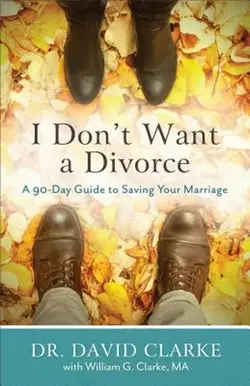
What could be good about a bad marriage? The good news is that couples can get beyond their old marriage and its destructive habits and build a brand-new one with the same spouse. And they can do it in just 90 days, even if only one spouse is committed to change.Thousands of couples in marriages that are on the brink of divorce will never enter a therapist's office. For others, it's too late by the time they do agree to come. But for more than twenty years, David Clarke has seen marriages turn around in just three months. In I Don't Want a Divorce, he takes his practical plan and presents it using wit, Scripture, and personal stories to help couples turn difficult marriages into great ones. Whether the issue is communication, the kids, negative attitudes, or even serious sin, Clarke's personalized approach will put readers on the road to a great marriage.

Featured Offer
What could be good about a bad marriage? The good news is that couples can get beyond their old marriage and its destructive habits and build a brand-new one with the same spouse. And they can do it in just 90 days, even if only one spouse is committed to change.Thousands of couples in marriages that are on the brink of divorce will never enter a therapist's office. For others, it's too late by the time they do agree to come. But for more than twenty years, David Clarke has seen marriages turn around in just three months. In I Don't Want a Divorce, he takes his practical plan and presents it using wit, Scripture, and personal stories to help couples turn difficult marriages into great ones. Whether the issue is communication, the kids, negative attitudes, or even serious sin, Clarke's personalized approach will put readers on the road to a great marriage.
About No Porn Marriage
About Dr. Greg and Erin Smalley
Dr. Greg Smalley serves as the vice president of Marriage at Focus on the Family. In this role, he develops and oversees initiatives that prepare individuals for marriage, strengthen and nurture existing marriages and help couples in marital crises.
Erin Smalley serves as the Marriage Spokesperson for Focus on the Family’s marriage ministry and develops content for the marriage department.
Contact No Porn Marriage with Dr. Greg and Erin Smalley
Colorado Springs, CO
80920-1051