


Episode 5 - Rebuilding Trust in a Marriage


As your marriage is healing from a pornography problem, rebuilding trust with your spouse will take time. Greg and Erin explain the importance of allowing your spouse time to heal; and Nick and Michelle Stumbo share their story of learning to rebuild trust.
Erin Smalley: When trust has been severed in a marriage because of a pornography addiction, it's a lot of work to rebuild it. But by God's grace and with proper help, it is possible. There's hope. This is the No Porn Marriage podcast. I'm Erin Smalley and I'm here with my husband, Dr. Greg Smalley. Greg, why is it so difficult when pornography has invaded a marriage to rebuild the trust after it's been broken?
Greg Smalley: I think it's so difficult because love is risky. Love requires vulnerability. It's the ultimate dilemma in marriage that in order to reach this profound level of connection and intimacy that we all crave, you have to give your spouse access to the most vulnerable part of who you are, your heart. The risk is there's no guarantee how your spouse will treat your heart.
Trust leads to safety and security. When people feel safe and secure inside their marriage, they tend to open their hearts and intimacy and connection happen. But as things like pornography or other kinds of things that hurt your spouse take place, your heart closes. When you feel unsafe, your heart will close and then there's going to be this natural disconnect and over time, this drifting apart. People quit working out problems when their heart is shut down.
That's why for us, we've recognized how important safety is. That trust leads to safety and that creates open hearts. That's why for me, I had to begin to understand that as I confessed my pornography problem many years ago, how that instantly made you feel unsafe. That broken trust created a marriage relationship that didn't feel safe, and it took a while to rebuild that.
Erin Smalley: Absolutely, because when trust is broken within a marriage, it's like an injury to the connection within the marriage. Of course, the connection is one of the deepest longings we have and it comes from the heart. When your heart's closed, you're not going to feel that deep connection. As you're on this journey, there's going to be different stages of rebuilding the trust in your marriage.
There are a few things that are helpful amidst this journey that you're beginning. First and foremost, own and accept 100% responsibility for your choices. Again, I wasn't responsible for your choices, and recognizing that was helpful because so often women begin to internalize that.
Thank goodness I knew because I had read so much research and worked with people who had dealt with pornography. I had no idea that I was going to be dealing with it, but I knew that this was a sin that you had been carrying. So often we want to look at sexual sin differently than other sin. What I know to be true is that there is no grading level of your sin is worse than mine.
Granted, there are greater impacts of sexual sin on a marriage because it severs that connection. There's a lot more at risk. However, if I was consistently lying to you about something else, that's going to impact the level of trust as well. It definitely is recognizing we are entering in this journey together.
Together we are going to battle for our marriage. Together we're going to come and support each other. I'm not responsible for your sin, you're not responsible for mine. As we continue to each seek individual healing, then we can come together and begin healing this marriage relationship. There's so much hope around the healing that can come after sexual sin, infidelity, and any break in trust within a marriage relationship. There's so much hope as you begin to dig around and understand where is this coming from for each of you? What is your part in this process?
Greg Smalley: As you look back on our journey, as I confessed to you that I had been looking at pornography, what were some of the things that really helped restore the trust in our marriage?
Erin Smalley: For me, it was knowing that there was safety that you automatically put a filter on your phone. You put one on our son's phone as well. That helped me to know that you weren't taking this lightly, that this wasn't something that you were saying, "I'll be fine. I can handle this," because clearly you couldn't handle it.
It was important to know that there were things in place to guard your mind and guard your heart in those moments of weakness. You also went to a week-long individual intensive to seek healing not just in this sin, but overall, holistic healing and really beginning to put the pieces together of how did I get here? That made me know that you were truly pursuing something different and something better than pornography.
Greg Smalley: As I look back on that season, I had to accept that this wasn't going to be a quick fix. This was going to take time. As much as I wanted just to be done with all this and to move on, really looking back, I think building trust is just saying let's take this slow and let's just move through this healing process both as individuals and within our marriage.
Right now we're going to hear a conversation from Nick and Michelle Stumbo of Pure Desire Ministries. Nick struggled with pornography for many years before he was set free. They do such a great job of describing how it affected their marriage. Here's Focus on the Family president Jim Daly.
Jim Daly: Nick, let me kick it off. In the book, you mention something about the gift of pain, that you believe this ended up being a real positive thing the way you're describing it. You called it the gift of pain from God. We Westerners aren't used to putting it in that context.
Nick Stumbo: It was in 2010. We'd been married for 10 years at that point. In my pattern of confession to her, which was happening once or twice a year where I'd get up the courage and feel guilty enough, I would share that things were still happening. I would always excuse or minimize my behavior to say it's not about you. This has been in my life long before I met you, so it's not a reaction to your beauty or lack of sex. Things are great there. I would say it to her to say if you only understood, you wouldn't be angry or upset because it's not about you.
The gift of pain was on this time in 2010 when I had relapsed. As I imagined myself needing to tell her yet again that I'd crossed those lines, the pain I was feeling wasn't my pain. It wasn't like, man, she's going to be mad and I'm going to have to go through this again. For the first time, I could see in advance the pain it was going to cause her.
It was heartbreaking to realize I would do this to someone I care about so much. I could feel the way it was going to make her feel because we'd been through this enough times that I could hear the words she was going to say and I was feeling her pain. I think that's what really opened my eyes to say this is a major issue that I have to address. I can't just keep excusing it to say it's getting better or I'm working on it. If I'm causing someone I love this much pain, I've got to be willing to do whatever it takes to stop it.
Jim Daly: What year was this in your marriage?
Nick Stumbo: Year 10.
Jim Daly: This is year 10. Think of that battle. This is when you first become empathetic to Michelle's heart. Some people go, "Wow, are you dense? What happened there?"
Nick Stumbo: Addiction dials down our empathy. When we're involved in any behavior, whether it's pornography or a food addiction or drugs, it's actually a way of numbing our emotions. You can't dial down one emotion in your life. If you're feeling lots of shame and rejection and fear and so you're acting out to numb those emotions, then you're also dialing down the healthy ones that you need for a good marriage.
What I was seeing in my life is what we see for so many men and women that struggle in this area. They don't have much empathy. Again, that's why I think of it as such a gift from God because somehow by His Holy Spirit that night in 2010, He just broke through and I felt things I'd never felt before. Someone listening might think, why didn't you feel that every time? I would say I don't know. I wish I had because we probably could have launched onto this journey of healing a lot sooner.
Jim Daly: Michelle, turning to you, you've got tears in your eyes. You're welling up and that's a good thing. It's okay because a lot of women are in your corner reliving this, thinking, "What was going on? Why were you putting up with this? What was happening for you emotionally?"
Michelle Stumbo: I love this man and he is a great dad and he's an amazing pastor. I just didn't know why God wasn't freeing him from this struggle. That was my prayer. God, we're both wanting out of this. Why aren't you helping him? He's doing everything we knew what to do.
At 10 years, I'd had enough. He'd called me and I think for every woman, there's a breaking point. You try to fix him, you try to get counseling or whatever, you try to make it work. But then there's like this breaking point of, is this going to be my forever? Am I okay with that or not? Then you either stay or you leave. There's like this heart connection that just kind of breaks.
Jim Daly: What did it feel like to know that Nick was coming back to you a couple times a year saying, "I blew it. I looked at things. I saw things," however that was expressed? As a woman, what did it feel like?
Michelle Stumbo: It felt like knife cuts where he'd hurt you and you're bleeding out. They'd heal but there was a scar left. That was just over and over and over. There wasn't much life left at the end of 10 years to keep working. I'd kind of decided, okay, I'm going to figure out how to move to where my parents were and live with them.
Jim Daly: You began to think of your escape plan?
Michelle Stumbo: I was starting to think and then I was like, well, that's not fair to the kids. I can't take their dad away from them. So when the kids are gone, I'm out.
Nick Stumbo: I know every time I'd confess, you would tell me that it made you feel like you weren't good enough, like you had to compare to these images. Even though I would say it's not about you, that wasn't your reality.
Jim Daly: That was the feeling question I had. Even though Nick may have been saying that, you had to feel inadequate, not enough.
Michelle Stumbo: Why am I not enough? I don't understand why I'm not enough. For him it was separate, for me it wasn't. For a woman, in order to do the acts that men do to their wives, we would have to hate them to do those things. For men, it's so separate. It's almost not even about you, but for us, how could it not be about me? I remember sitting in churches where speakers would come up and say, "Oh, I'm freed," and I'm sitting there thinking, "Well, why aren't we freed? We're doing all those things too."
Nick Stumbo: The important thing is that our journey of freedom wasn't just about how to stop the behavior. That's what we realized in our year-long healing process that continued beyond the year. It wasn't about changing the behavior, it was about changing the way you do life.
When you do that and you start to get into core issues that are driving me, how am I dealing with shame, what do I believe about God and myself, the way that opened up conversations in our marriage not just about pornography or sex, but about what did we believe about ourselves, what did we learn from our families of origin, what were the wounds that we were bringing in that I'm treating you in a way because of how my dad treated me and we don't even see that we're doing it.
All of a sudden it's like our eyes are opened to how all of these things contribute. In our healing journey, we had conversations we'd never had before. Not that we didn't want to, we just didn't even know how to have them. It connected us emotionally, spiritually, and sexually as a couple in ways I don't know how else we would have gotten there. We do look back and say we're so grateful for that pain and that journey because of what it brought us to.
Greg Smalley: That's a powerful realization when for the first time you get the pain that you've caused your spouse. That type of humility and that kind of empathy that Nick and Michelle are talking about is such an important part of rebuilding the trust in your marriage. I know for me, Erin, as I began to share my own struggle as I dealt with pornography, it was so hard to tell you that because I hated the fact that I had hurt you, that I'd disappointed you, that I'd made a mistake, that maybe I wasn't the man that you thought I was.
All those thoughts were running in my mind and I know that there were many times when you tried to have an ongoing discussion about me viewing pornography that I would shut you down. I hated to have the ongoing. It was kind of like, "Hey, we shared it, we talked about it, let's move on." It was so hard for me, but I know that this kind of defensiveness really hurts the whole healing process.
Erin Smalley: Absolutely. It's so important that you allow your spouse as much time as they need. I love in my office when I hear a man who has confessed to pornography use or infidelity, or a woman who has done that. I love when I hear them say, "You know what? I'm going to listen to you for as long as you need."
That's when I know that humility has set into their heart because that's humbling to say, "I'm going to keep listening to you even though I don't want to." I want to get angry every time you bring this up because it just reminds me of the sinful choices I made and the shame probably rises up, the guilt rises up. But just recognizing attending to your own heart is key in those moments.
Greg Smalley: That's exactly what I had to learn. Looking back, I wasn't good at it when you would want to talk about this. It took me to such a bad place that I didn't know how to manage my own emotions. I tried to shut you down or I would try to say, "Hey, how about saying some good things about me as well? Do you notice all the good things that I'm doing?"
Erin Smalley: Because women, we focus on what you're not doing.
Greg Smalley: Now we're going to counseling again. I recognized though that I was trying to make you be responsible for my feelings. A big part of what I'd started to learn in counseling was no, that's my job, my feelings. So the more that I could in those moments actually state to you that I know you want to talk about this but it makes me feel so failed, something about just saying that out loud really helped me get grounded. Then you would show up a little bit differently, but it also gave me a moment to then turn to the Lord and say, "God, right now I do feel failed, but I want to be there for my wife. I want to have the humility and the empathy that the Stumbos are talking about. Help me get there."
Erin Smalley: It's such a different conversation when you talk about those underlying emotions and what really is going on. To hear you say, "Gosh, when we talk about this, I feel like such a failure," then I could be compassionate with you because of course I didn't see you as a failure. You had made a mistake. I wasn't defining you as that, but you were. Knowing that was key for me to really step into the place of empathy and compassion.
To differentiate, sympathy is when you feel sorry for someone. Empathy is when you feel sorry with someone. There's something very different about entering into this together and really allowing yourself to feel what the other person is experiencing. It's life-changing. I've seen it again and again in my office.
There's one young man who comes to mind who confessed to a whole lot of secret sin. I can tell you months later, that young man is a different person than the guy I met who walked through my office door. The greatest thing is when his wife just looks at him and goes, "You are totally different. I don't even know what to say." It just puts a smile on my face because they walked the hard road and they have a marriage that is beginning to rebuild in a way that it never would have if they hadn't gone through the pain, but then also through the pain of confession and the pain of beginning this rebuilding process. It's powerful.
Greg Smalley: That's the power of empathy. Let's go back to the conversation that Jim Daly had with the Stumbos as they talk about how they rebuilt that sacred trust that is so important for a great marriage.
Jim Daly: Let's get to the bow of the story because it's so beautiful. 10 years, we've gotten to that point. All the angst and I appreciate again your vulnerability to share that. Let's talk about how the Lord tied this together when you did make that final decision to say it's done. Both of your reactions, the role that Pure Desire Ministries played in that regard, the one you now lead and took over from I think the founder. Just describe that for us and the fact that you're in a much better place now. You're helping hundreds if not thousands of people with this sexual addiction problem. Tell us what happened.
Nick Stumbo: Admittedly, I still was so minimizing. I didn't think I needed it. Michelle heard those same words of invitation to get help and she knew we did. I took this intermediate step to go meet with a counselor friend in our district who asked me really three life-changing questions because I said, "I don't think I need anything. I just need a little bit of tips how to avoid pornography."
He said, "Nick, let's think about this. Number one, how long has this been in your life?" By that time it had been over 15 years. He said, "Okay, number two, how many times have you tried to stop?" I actually chuckled because I said, "Well, every time's been the last time, so I've tried to stop literally hundreds if not thousands of times." He said, "Okay, and is it causing you or people you care about significant amounts of pain?" I said, "Well, yeah. I believe if I don't change, my wife will leave me."
He said, "Well, put that together, Nick. It's been a problem for a while. You've tried repeatedly to stop and can't, even though it's causing you or people you love pain." I said, "Yeah, that's a pretty good description." He said, "Nick, that's a clinical definition of addiction." I remember I sat back in my chair like he'd sucker-punched me because I was a pastor.
Jim Daly: That's the first time it came together?
Nick Stumbo: I truly loved the Lord with my whole heart and the idea that I could simultaneously be that and be an addict was as foreign to me as the German language would be if I tried to speak that. That language was so bizarre, but when I allowed that to sink in, the openness of maybe this is why I can't just stop it on my own and gave me the willingness to go down and meet with Ted and Diane Roberts. We got to go together, which I think was so important that from the get-go they worked with us as a couple so we could deal with my wife's pain and sense of betrayal and the lack of trust and then also the behaviors in my life.
We met with Ted and Diane Roberts and started to go through the counseling process. Probably the most significant thing they required of us was to be in a group, which I also did not want to do because I already had Saturday night services and elder meetings and small groups. Who needs one more nightly commitment a week? But Dr. Ted said to me, "If you don't do this, you won't change," because he saw the central role community has to play in recovery.
I went to a group. I didn't like it at first, but I found about eight or 10 weeks in as we're going every week that one night as I was driving up, I'll just tell this one part of the story. I was driving up to my group and I realized I'd been looking forward to it all week. I thought this is so bizarre. I'm going to a place where people know the very worst things about me. I've told them things I've never told anybody else and I can't wait to get there. What is going on?
Again, it was one of those moments I heard the voice of the Lord just whisper to my soul. He said, "Nick, it's the only place in your life you feel real." I realized that was it. Everywhere else I was so involved in that public me that I felt like if people knew they'd reject me. But in that group, they knew the private me like no one else ever did and I was a part of that group. I was loved and accepted. It was that group that really along with the counseling created such transformation where I knew I didn't have to posture or pretend anymore for love.
When you experience that from other people, that's where I think I most deeply experienced the love of God. I'd been a pastor for 10 years and I knew knowledge-wise, head-wise, all about the love of God. I could preach about it, but I don't know that I'd ever really experienced it because of that voice of shame that said people would reject you. When I experienced the love from those other men, that's where the love of God became real. From then, marriage and ministry became ministering out of the love of God rather than ministering in a hope that I might achieve the love of God. That was a night and day change for me.
Jim Daly: That's the common phrase about being known. That is the Christian life, that God loves you even though He knows you. I think it's hard for us to believe that He truly knows us. We try to hide those places thinking that the Creator doesn't know us. It's kind of idiotic.
Nick Stumbo: Or we know He knows, we just think He has a very disapproving opinion of most of our life.
Jim Daly: Michelle, so your best day?
Michelle Stumbo: That was one of them when Pure Desire came and they were up there telling about this program. I was bawling. My eyes were like big as saucers. This is it. Lord has answered my prayer today. This is it. This is what's going to save my marriage. Then I look over and he looks over at me and I'm just crying. To hear him not like realize that he was going to be all in was still kind of like surprising. Like, why wouldn't you be running up there and like, "Pick me!"
That was a big important day. Meeting with Ted and Diane was wonderful. I didn't want to go to a women's group though. I had little kids at home. I was thinking, "Why do I need a group? This is his problem." But then going through it's called Betrayal & Beyond, women's groups, and seeing all the other women there, all Christian women whose husbands struggle with this or some husbands have left but they're there working on their stuff. To hear all their stories and all our stories are so different but it all we all feel the same pain. We all feel the similar reality.
Jim Daly: Same material, same cloth, but different stitch.
Michelle Stumbo: Yeah. It was just like, "Whoa," and just to see all of us feel so like not enough. I think that's just the way that Satan gets to us is like you're not enough.
Jim Daly: It's so impressive the way you highlight community and the importance of being vulnerable in a group where you can be real. How few people actually experience that today in modern community. It's just so fast, everybody's busy. "How are you?" "I'm great. How are you?"
Nick Stumbo: The nature of sexual sin, it isolates us. When we try to fix it in isolation, that doesn't work. We want to be better and not have anyone know about it. But the pathway to being better is having other people know about it and be part of that journey with us.
Jim Daly: Talk to the length of time to get counseling, to work on these things intentionally. What was that period of time like? How long was it with counseling and help?
Nick Stumbo: Initially, what I would kind of call the intense change process was about a year long of the counseling and being in groups. But the healing continues. The second time of going through the group material where I got to lead it in my church and help other men, I was still learning so much about myself because really that first year in some ways is like triage where we're stopping the bleeding and the pain and figuring out how to arrest the behavior.
The behavior in my life actually changed very quickly. But the underlying issues, those things don't change overnight. It was a full two to three years of working through performance and shame and guilt that occurred. That's what we really try to encourage people to see is this change isn't something you can do in a five-week study or read a good book and you'll be okay. It's funny to say that as the author of a book, but to really take the long view to see if these are issues that have developed in my life over years and maybe decades, it may take a year or two of intentional work to unravel what's gone on.
Michelle Stumbo: And it'll take the wife about two to five years to rebuild that trust and work on that. I had to actually go through book one twice because the first time I was pretty numb. I think that's how I coped with our struggle is I just numbed out to it all.
Greg Smalley: That's a really powerful reminder that Michelle was talking about, the healing process. This journey that we're on can take up to two to five years. That's a good perspective. That's the right sort of expectation.
Erin Smalley: So often we want our rush our way through this healing process, but you don't want to miss out on the growth and the gifts that come through the pain. I just encourage those listening to recognize two to five years seems like a really long time. That doesn't mean that there aren't going to be good times during that two to five years.
Greg Smalley: Lots of victories and all of that.
Erin Smalley: It's recognizing two to five years, yes, that's long, but we're together and we're going to do this together and we're going to support each other through this journey.
Greg Smalley: I also like how Nick was talking about the deeper issues. Pornography is sort of the tip of the iceberg. There's a whole lot going down. Matthew 15:19 says, "For out of the heart come evil thoughts, murder, adultery, sexual immorality." In other words, things like pornography really come from these deeper heart issues. Erin, as you're working with your counseling clients, how do you help them really begin to identify those deeper issues that are below the surface really driving things like pornography?
Erin Smalley: It's important to look back at when did this start. So many of the clients I've worked with, this started when they were young, eight, nine, 10. They're young. In many ways this stunts their emotional growth because they begin numbing out and turning towards pornography to feel something. It changes the brain, lots and lots of research out there on that.
But it's recognizing, "Okay, I've got to figure out what were the emotions, what was going on in my life at that point?" Was this something that I was bored and I just happened to come across this? Well, then I continued to choose to view it for years and years and never told anybody. What did that result in? Is there shame and fear of being known, fear of being inadequate or worthless? Then there's a fear of being vulnerable and authentic and really showing up. It's looking at that. Maybe there's past sexual abuse, past painful memories, there was stress within the home. What was it that led you to this place? It's just understanding it with curiosity. How has this impacted me, how has this impacted my marriage?
Greg Smalley: I know for me, a big part of the growth and the healing was spending time with a counselor to really unpack, to your point, that porn is a symptom. It's an acting out behavior. There were other things going on. As I've shared, at one level, exhaustion, feeling tired, became a trigger for me. But also the fact that as a very young teenager being exposed to pornography, that's when that began to happen for me. Being able to go back with a counselor and really work through that made such a big difference.
Someone wrote, and I love this quote, "Porn meets a hungry soul with a terrible lie promising to provide fulfillment." In more than anything that I've learned, that's exactly right. Pornography can't meet that deep longing in the soul, in the heart inside. To get clarity on that can make such a big difference for not only my own personal healing but also for the marriage. The reality is if you don't figure this out, you're going to simply pick up some other unrighteous coping mechanism to soothe yourself, whether that's drugs or food or exercise, shopping. We'll continue to do something to cope with whatever's going on down deep.
Please know that Focus on the Family, we're here to help you to begin to understand those things. We're not going to shame you. Our counselors on staff are available to talk about whatever you might be going through. The number to get in touch with one of our counselors is 1-800-A-FAMILY. Again, that's 1-800-A-FAMILY. At our website, focusonthefamily.com/npm, which stands for No Porn Marriage, you're going to find lots of great resources.
One of those is our video series, Discovering God's Freedom from Pornography. That includes more of what you've heard today from Nick and Michelle Stumbo. To view this free series, visit focusonthefamily.com/npm. Next time we'll be discussing God's amazing gift of sex and marriage. This has been Dr. Greg Smalley and for my wife, Erin, and everyone here at Focus on the Family, thank you for joining us.
Featured Offer
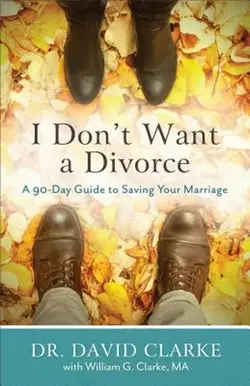
What could be good about a bad marriage? The good news is that couples can get beyond their old marriage and its destructive habits and build a brand-new one with the same spouse. And they can do it in just 90 days, even if only one spouse is committed to change.Thousands of couples in marriages that are on the brink of divorce will never enter a therapist's office. For others, it's too late by the time they do agree to come. But for more than twenty years, David Clarke has seen marriages turn around in just three months. In I Don't Want a Divorce, he takes his practical plan and presents it using wit, Scripture, and personal stories to help couples turn difficult marriages into great ones. Whether the issue is communication, the kids, negative attitudes, or even serious sin, Clarke's personalized approach will put readers on the road to a great marriage.

Featured Offer
What could be good about a bad marriage? The good news is that couples can get beyond their old marriage and its destructive habits and build a brand-new one with the same spouse. And they can do it in just 90 days, even if only one spouse is committed to change.Thousands of couples in marriages that are on the brink of divorce will never enter a therapist's office. For others, it's too late by the time they do agree to come. But for more than twenty years, David Clarke has seen marriages turn around in just three months. In I Don't Want a Divorce, he takes his practical plan and presents it using wit, Scripture, and personal stories to help couples turn difficult marriages into great ones. Whether the issue is communication, the kids, negative attitudes, or even serious sin, Clarke's personalized approach will put readers on the road to a great marriage.
About No Porn Marriage
About Dr. Greg and Erin Smalley
Dr. Greg Smalley serves as the vice president of Marriage at Focus on the Family. In this role, he develops and oversees initiatives that prepare individuals for marriage, strengthen and nurture existing marriages and help couples in marital crises.
Erin Smalley serves as the Marriage Spokesperson for Focus on the Family’s marriage ministry and develops content for the marriage department.
Contact No Porn Marriage with Dr. Greg and Erin Smalley
Colorado Springs, CO
80920-1051