

Episode 1 - Stories of Healing


Pornography is a dark epidemic in our world today, even within many of our churches. But through God's grace, men and women are experiencing the bright light of freedom. Dr. Greg and Erin Smalley share part of their story and talk with Pastor D.A. Horton and his wife, Elicia, about their healing process from past pornography abuse.
Need help with a pornography problem? Find it here: https://www.focusonthefamily.com/no-porn?utm_source=focusonthefamily&utm_medium=podcastpagev&refcd=1283502
Dr. Julie Slattery: Many young men are coming into marriage with some form of addiction to pornography. For many of them, it started at the age of eight or nine or 12. So for years, they've had sex on demand. When they want it, how they want it, a beautiful woman displaying herself without any effort, he can have that.
Now all of a sudden, a young man is thrown into a marriage where he actually has to listen to his wife and try to understand her needs and try to figure her out and try to wait to please her. And he can't do it. It's too complicated and he goes back to that instant gratification.
What's fulfilling? I mean, he's used to eating cotton candy and now you're saying enjoy an apple. It doesn't taste sweet. And so the normal beauty and pleasure of sexual intimacy that God's designed has been destroyed.
Dr. Greg Smalley: What Dr. Julie Slattery said is sadly where many people find themselves today. In fact, we knew a couple that seemed to have a great marriage, but really under the surface, pornography was robbing them of their joy, of their trust, of true intimacy. In case you're wondering, that couple was us.
I'm Dr. Greg Smalley, I'm joined by my wife Erin. We'd like to welcome you to a new podcast series from Focus on the Family, No Porn Marriage. Erin, right off the bat, there are many couples who find themselves in the same place where we were.
Erin Smalley: Absolutely. If you find yourself in this place, you're definitely not alone. The statistics are staggering. Over 40 million Americans are viewing porn regularly. Forty million, that is a ton. Sunday is the most popular day that pornography is viewed.
Eleven years old is the average age that kids are typically exposed. Honestly, the devastating thing is pornography increases the chance of infidelity in your marriage by 300 percent. So if you are listening to this and you're hearing these statistics, I'm hoping that you're hearing what I'm hearing: that you are not alone.
Dr. Greg Smalley: Oftentimes when we talk about pornography, it seems like this is obviously a male problem, but Erin, I know sadly that many women are wrestling with this as well.
Erin Smalley: Absolutely, Greg. Thirty percent of porn users are women. And 33 percent of women ages 25 and under search for porn at least once a month. So it definitely is not just men. There are women as well that are suffering, that are struggling through a porn addiction or occasional porn use.
Dr. Greg Smalley: It's something that both men and women are dealing with and certainly what they're struggling with inside their marriage. Erin and I recently had a chance to sit down with Pastor D.A. Horton and his wife Alicia. They are pastors at Reach Fellowship in Long Beach, California, and they are very open about their past struggles with pornography.
So here now is a part of the conversation with them. D.A. and Alicia Horton, thank you so much for being with us today.
D.A. Horton: Thank you for letting us be here. It's a privilege.
Alicia Horton: Thank you for having us.
Dr. Greg Smalley: We know that through your book that you've shared your struggle with pornography. Alicia, we'll start with you. What did that struggle look like for you?
Alicia Horton: Being a young teenager and going through the whole puberty change and all those things that we go through as adolescents, I didn't understand a whole lot about what to expect. Looking back now, and when I stop and think about it, I didn't realize that even my sexual abuse as a young child catapulted me in that direction of curiosity more so than had I not been abused and exposed to things that I wouldn't have been exposed to.
I feel like that, coupled with my curiosity about things, I just realize I found myself having an enticement to watch things that I wasn't supposed to. Here's the crazy thing. Being where we grew up, we didn't have a whole lot of money to have cable, so I didn't have that. Whenever I went to a family member's house that did have that, that's when I would sneak that and just find myself indulging in that and later feeling bad about it, but not seeing anything really wrong with it.
So that was my experience as a teenager. Again, not having anybody to talk to about it, not having anybody to say that's wrong. It was the norm. I'd go back to school and people are talking about it, so I just thought this is normal.
Erin Smalley: You said that it was curiosity and much of it was as a result of some of the abuse you had experienced. Was there something else that you were seeking through viewing pornography? Specifically, once you were married, was there something that you were seeking? Because there's research out there that says that married women are viewing pornography more than single women.
Alicia Horton: For me as a married woman, I didn't feel like there was much of a curiosity anymore because now that I have been able to experience sex inside the boundaries of marriage, I didn't feel like I needed to explore that anymore. I praise God that even in my later teenage years going into adulthood, I had literally sought the Lord and asked Him to free me from that. I felt like that was something I was being able to overcome.
As a married woman, I didn't have that because I'm thinking differently now. I'm thinking, okay, I'm seeking fulfillment from my husband, I'm getting that, so I didn't really feel any type of enticement to view things to give me any other outside pleasure. So more as a teenager, it was the curiosity of it, body changes happening.
Because I was exposed to things at a young age, being sexually abused, that sparked my curiosity. Why am I thinking about this? What I saw, I want to see again, as a young child and not realizing that was unhealthy. Because as a young child, you're not supposed to know about these things in this type of a way. Not having told my parents that had happened to me, I didn't have anybody really to protect me, not only myself physically but my mind.
Dr. Greg Smalley: That curiosity gets ignited from going through the sexual abuse you talked about, and then to not have anybody to help guide you through that makes sense.
Erin Smalley: At what point then did you share that with D.A.?
Alicia Horton: That's a really good question because it took me five years into our marriage where I talked about my sexual abuse and then became a little bit more open with my struggle with pornography as a young girl. That really opened our connection and took our intimacy as husband and wife even deeper in a good way because I now felt like I was going to be protected by somebody who not only loved me for who I was, regardless of what I went through, but was saying, "I'm willing to walk you through this so that you can have healing in that."
For me, that was very liberating because I had never experienced that ever in my life. As much as I knew if I told my parents, they would have wanted to protect me, but because I experienced that and felt such guilt and shame for what I had experienced and not realizing that I was a victim, not being somebody that was preying upon people, it's so hard as a young child to wrestle through all those feelings and realize, "You were a victim, it's okay to talk about that."
So now for once in my life, being able to be loved by somebody who looks at me no differently, I felt the freedom and liberty to be like, "Okay, this is okay and we can talk about this and have real conversations. Oh, you struggle too? Okay, great, we're going to work through this together."
Erin Smalley: In many ways you took a big risk and it really paid off relationally and individually.
Dr. Greg Smalley: Because that can be a scary thing. You had to live with that secret for such a long time and I know fear of what will he do with that story can keep a lot of people from sharing that, a lot of women from sharing that. What was he doing specifically that helped you to feel safe enough to show him that part of yourself?
Alicia Horton: I think the first thing is acknowledging my hurt. I think that was very important for me because I felt like because you're the first person I'm telling, you just acknowledging it and being sorrowful with me made me feel all the more protected. Like, okay, I'm in good hands. It's not going to fall on deaf ears and you actually care and you're asking the right questions that make me understand that you really want to know the depth of my pain.
Dr. Greg Smalley: Instead of dismissing that or making light of it, he joined you in that empathy.
Alicia Horton: And I liken it to an example that he gave me because even years down the road when I got a diagnosis physically for my health, he would always tell me, "This is not your struggle. I'm in the struggle with you and you're not fighting this disease by yourself. I'm actually in the ring." And that makes all the difference. So for that abuse and the things that I endured, that's what he did. He got in the ring with me and said, "We're going to fight this together."
Dr. Greg Smalley: I love their transparency and to hear how they really tackled this issue together as a team. I know for me, I was first exposed to pornography as a young teenager. Some kids in the neighborhood found some dirty magazines up by the garbage and we ended up looking at them and that really launched me into this whole issue.
Although it never really came out in our marriage until a number of years ago in a unique way. What happened was I was on a business trip with some colleagues, three of us guys. We were out to dinner and just ended up having a real powerful conversation where we just openly shared some struggles, some things that we had dealt with within our marriage. I loved it because everybody was sharing their stuff.
After we came home, one of the guys told his wife that we had this great conversation and he was able to share about his struggles with pornography. He and his wife end up having a really good conversation because they had dealt with this over the years. But then you ran into this wife.
Erin Smalley: I was just at a mom's group one Tuesday and this wife came up to me and said, "It sounds like our husbands had some really deep conversation the other night at dinner." And I was like, "Oh really? Tell me more." She said that you guys had gone around and shared the one area of struggle that you each had. So I didn't bring it up when I saw you that night for whatever reason, but later on in the week we were teaching a marriage seminar.
Dr. Greg Smalley: Ironically.
Erin Smalley: We actually had a night off, so we went to pick up some pizza in this drive-thru. In the midst of being in the drive-thru, I asked you. I said, "So-and-so told me that you and her husband and the other guy had a really great conversation and that you all shared an area of struggle within your personal life."
Dr. Greg Smalley: Of course I'm dying because I know where this is going.
Erin Smalley: And I didn't necessarily know where it was going. So I said, "So what did you share?" And it got a little bit awkward really quick.
Dr. Greg Smalley: It did, because I think I said something like, "That was kind between the three of us." And you continued to say, "Tell me what was your secret." "I don't need to share every little thing with you." But you continued to press me around this, not in a super unhealthy, mean way or anything, but I just remember my heart sinking, my stomach churning.
And I finally just said, "All right, if you really want to know, I shared about my own struggle with pornography." Of course I instantly launch into, "But I mean it's not like this is a porn addiction. I'm not doing this frequently. It's very infrequent. I'm not going to any hardcore sites," anything like that, trying to minimize and marginalize so that it didn't hurt you because that was my biggest fear, essentially you thinking that somehow it was about you or what ways that somehow you're not adequate enough for me, I have to be looking at this.
Erin Smalley: But it was shocking to me. Granted, we had to teach a marriage seminar the next day, so I had to put this aside for the time being. But it was shocking. I had an idea that this may have been going on. I didn't get the sense that it was something that was super frequent, but I'm a therapist, I knew that this was a struggle that most men had.
But as I continued to process this, not only that night but for the next weeks and months, I asked a lot of those questions. There was a lot of grief that I had to work through. What does this mean about our relationship? What does it mean about being deceived? What does it mean about intimacy within our relationship? So it definitely sent me down a road of asking a lot of questions about me and about our relationship.
Dr. Greg Smalley: And I am so grateful that you asked that question because it set into motion an opportunity, one for me to deal with this and also for us to deal with this. I'm excited because over the course of our podcast series, we're going to share kind of how we ultimately had that conversation and what we've done and how we've grown and benefited and how God has used that within our marriage.
Erin Smalley: And I love that Alicia talked about how D.A. entered with her into the ring and that they walked this journey together. In many ways that is the same thing that we've done and I see that walking this together, although there's many feelings and many different phases of that, walking it together has been so healing within our relationship.
Dr. Greg Smalley: It really has, and this is the opportunity that you have as well. I know that a conversation like this could help you realize that I too need help. If you're struggling with pornography or really any kind of sexual problem, we have counselors on staff that are here to talk to you. Our number is 1-800-A-FAMILY. Again, that's 1-800-A-FAMILY. No judgment, no condemnation. We're here just to help, so please don't hesitate to call us.
We're going to return now to more of our conversation with the Hortons as D.A. shares about his own battle with pornography and how God has redeemed their marriage. D.A., what about for you? I know that this is something that you shared in your book as well that you struggled with.
D.A. Horton: It's crazy because I was first exposed to pornography at six years old. Even as I'm thinking about it, I remember the day, I remember it was summer. I remember my next-door neighbor said I could borrow some of his video games on the Nintendo console that he had. He had a lot of games I didn't, and it was in his backpack and he was back in town because they had moved away.
In that backpack was a videotape. I remember putting the videotape in and immediately it was an orgy scene. I can never unsee that. It's 32 years later and I still see that day.
Dr. Greg Smalley: It prints on your brain.
D.A. Horton: It really does and it rewires you neurologically. It really does. So that sparked a curiosity, but then growing up, like Alicia said, in the environment where we did, it's an impoverished community. We call it the hood, the trap; there's various different ways to call it. But as a young man growing up, your masculinity is daily checked by people and their assessment of you.
So the more girls you pursue, your sexual prowess, that all says you're a man. This is what it means to be a man. Constantly being told that not by my dad, not by my older brother, but by the people that were stakeholders in my life, who were the neighborhood gang members, the dope dealers. They're the ones that we aspired to be like.
Watching my friends, a lot of them didn't have dads, so their moms had boyfriends and the boyfriends had magazines and they had videos. So we would see that. It almost seemed like pornography was a rite of passage where I just remember some of our uncles, it was, "Hey, stay away from that you little cochino," which is a Spanish word like you little nasty, "stay away from that."
But then by the time we got 10, 11, 12, our uncles are telling us, "Hey, turn on Showtime," or turn on this channel, "Watch this." They're coaching us like this is how you learn, this is what you're supposed to do. And that stuff really, the way that God has wired me, that actually led to more insecurity than anything than curiosity because pornography kind of backfired in my mind, in my life specifically.
Because I didn't know about Alicia's abuse until five years into the marriage, I'm thinking, "How come she is not pursuing me or is as easy as what I see? Something's wrong with me. These women do all these things with these guys on these videos. She won't do that with me. I don't even have the courage to ask her to do these things. But at the same time, she's not pursuing me, she's not seeking after me."
So pornography, as weird as it sounds, actually became a turn-off for me because I was like, "I'm never going to be as good as those guys. I'm never going to be where my wife is after me like that." So then why even invest in that hopelessness because I constantly am just constantly tearing myself down.
In the rewiring of my brain from viewing those things, I never was, and God's grace, addicted to the point that I couldn't function without it or anything along those lines. There was no accessibility. We didn't have cell phones, anything like that back then like the young people have today.
Dr. Greg Smalley: So scary.
D.A. Horton: It is, and that's why my heart goes out to them to let them know I was exposed to it, I can never unsee those images. But at the same time, let me help introduce you to the beautiful design that God has given sexual expression. There's actually a boundary and there's a framework.
But even operating as a married couple inside that boundary and framework doesn't mean it's always going to be pleasant, it's always going to be reciprocated. Most of the time, this is the negative effects the pornography had on me is that I would objectify Alicia. I would strip away the imago Dei. I would see her as someone who was supposed to give me sexual pleasure and not in a demeaning way to her, but even in my aggressive pursuits just touching her, saying things to her that are not inappropriate, but it's okay for a husband to say to his wife.
But she would only say, "Man, you only pursue me when you want to have sexual intercourse. You don't engage me emotionally, you don't seek to help around the house, you don't think about me. Only time you really show attention is when you want that this evening." She had to confront me into that and I had to really look and say, "Man, why is it that way?"
I began to recognize that as we began a process and dialogue when she opened up about her sexual abuse, it made all the sense in the world. I wept because my heart was broke for her. I wish I could have been there to protect her that day that it happened. So I'm angry myself and I'm angry at these gentlemen that did that. Then I'm also frustrated at the fact that every time I touch her now she has to relive this moment.
So there was like this little girl meets this little boy that was exposed to sexuality way too soon before God had designed, and it's like these children were meeting for the first time in the most private intimate corners of our hearts. From that day forward, it hasn't been perfect. There's been struggles, there's been challenges.
But at the same time, there's this desire to work through these things together with honest communication where Alicia will express to me, "I am attracted to you." And I'm like, "I just don't believe you. I don't believe you, Alicia." So we have to have those conversations. Then she's like, "I want you to pursue me in these ways."
And I'm like, "But I tried to, but you shoot me down and you leave me with no answers and I'm supposed to think I have to have all the right answers. I don't." So there's those constant conversations that we have to have, but the safety net and the security is that we know we're committed to the relationship, Christ is committed to us, so we will work through all these nuances situation by situation. So we're still mining out things from our past and our present.
Dr. Greg Smalley: One thing that you said that really stands out is we all know pornography has an impact on marriage. So if you're viewing this as a young child as you guys both talk about, certainly it's going to impact the marriage relationship for you. Though what I think people don't understand is that pornography creates that objectification, that instant sexual gratification without having to pursue the relationship, without having to win her heart. And thus you walk that right into your marriage.
D.A. Horton: Right. And that's the thing that guys ask me regularly whether they're in community with me or not. I'm traveling speaking, "Man, were you ever addicted to porn?" I was not addicted to the viewing aspect of it, but the objectification I'm still trying to recover from: objectifying my own wife. Because I don't look at other women that way and the reason Alicia knows that is she knows that about me.
We could be in a movie theater and there's a sex scene and automatically I turn my eyes. She shields my eyes, we shield eyes. She'll be the first one to look like, "Okay, it's over."
Dr. Greg Smalley: You've got glasses on so she can poke 'em in. You're protected.
D.A. Horton: I mean, some people may be like, "Oh man, that's infantile." No man, I don't need to see another woman's body. I don't need to see another man's body either. I don't. Like I recognize the sacredness of that. Even raising our daughters, they got to certain ages and I said, "Okay, mija," which is daughter, "I can't give you a bath anymore. Mom is going to be the one because you need to learn that a male needs to respect your body. Only your husband should see your body from here on out. Daddy does not need to."
And so trying to set those boundaries so that they'll recognize this is supposed to be safety, protection, and privacy. And we have to reinforce that so that God forbid if anybody did anything contrary to how Mommy and Daddy is with me, then I should tell Mommy and Daddy they've done this to me or they've watched me or they asked me to do this. And we have those conversations. We just had one this last week with our ten-year-old.
Alicia Horton: And how safe that must feel for you as well. You talked a lot about the protection. To see him stepping in and absolutely doing that, living that out with your daughters, it's so encouraging to my heart because those things that stood out that he just said is that there's safety there. There's protection. There's a limitation and there's boundaries that we're creating for them that we didn't have ourselves.
I feel like oftentimes now looking back as parents, we're like, "Man, we don't want to make the same mistakes, right?" And I don't think it was a mistake that my parents made. I just feel like because they didn't know and we didn't give them the opportunity and we didn't have the freedom to talk about that, I most certainly know they would have done everything they can.
But we want our girls in this day and age that we live in, when it's everywhere explicitly, we need to talk about this. This is going to be a conversation that we have together and there's going to be safety here. There's going to be no shame. There's going to be a little embarrassment because it's Mom and Dad, but we want you to know that we want to learn these things together as a family. So when you are mature and ready to handle more in-depth conversations, you heard it from us first.
Dr. Greg Smalley: I love their transparency. I love that they're just being real about what they faced and how they've allowed God to work through their brokenness. And Erin, this really reminds me of 2 Corinthians 12:9-11. I love this verse: "But he said to me, 'My grace is sufficient for you, for my power is made perfect in weakness.' Therefore I will boast all the more gladly about my weaknesses, so that Christ's power may rest on me. That is why, for Christ's sake, I delight in weaknesses, in insults, in hardships, in persecutions, in difficulties. For when I am weak, then I am strong."
And that's exactly what the Hortons are doing and that's, Erin, what we want to do. We want to boast in our weakness because there is hope for people in Christ because He makes us strong. I can't do this on my own, so no matter how long you've struggled with this issue, there is always hope.
Erin Smalley: Absolutely. I love that verse and I love the one also in 2 Corinthians that talks about He comforts us in our troubles so that we can comfort others in any trouble. He allows these things to go on. Granted, there's choices that are made, there's sin, and as we work through this stuff, God is so faithful to use it. I mean, I can think back even to that weekend that we were speaking.
Dr. Greg Smalley: Just trying to get pizza.
Erin Smalley: Just trying to get pizza and go about our business. But I can remember we stopped by to see a friend who we knew from graduate school and we walked in and I started to have this deep conversation with her and she shared with me that they had just been through major porn addiction and he had gone inpatient for treatment and on and on.
I just remember going, "You know what? I am not alone." And I also know that God allowed her to be there in that moment on that weekend that we saw them to comfort me.
Dr. Greg Smalley: If this is something that you're struggling with, we so want to come alongside of you. Focus on the Family has trained Christian counselors on our staff to help with practical tools for fighting against sexual temptation. To set up a consultation with one of our counselors and to get a referral, the number to call is 1-800-A-FAMILY. Again, that's 1-800-A-FAMILY.
And be sure to visit our website at focusonthefamily.com/npm as in No Porn Marriage. There you'll find lots of helpful resources like our six-part video series called Discovering God's Freedom from Pornography. In it, Focus President Jim Daly talks with Nick and Michelle Stumbo about how God rescued their marriage from pornography. You can sign up for free and watch it on our website.
Erin Smalley: Next time on No Porn Marriage, we'll be discussing how to guard our hearts from the harmful effects of sexualized content in the media. I'm Erin Smalley and for my husband Dr. Greg Smalley and everyone at Focus on the Family, thanks for joining us.
Featured Offer
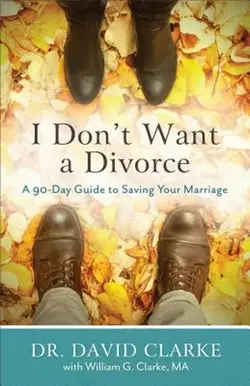
What could be good about a bad marriage? The good news is that couples can get beyond their old marriage and its destructive habits and build a brand-new one with the same spouse. And they can do it in just 90 days, even if only one spouse is committed to change.Thousands of couples in marriages that are on the brink of divorce will never enter a therapist's office. For others, it's too late by the time they do agree to come. But for more than twenty years, David Clarke has seen marriages turn around in just three months. In I Don't Want a Divorce, he takes his practical plan and presents it using wit, Scripture, and personal stories to help couples turn difficult marriages into great ones. Whether the issue is communication, the kids, negative attitudes, or even serious sin, Clarke's personalized approach will put readers on the road to a great marriage.

Featured Offer
What could be good about a bad marriage? The good news is that couples can get beyond their old marriage and its destructive habits and build a brand-new one with the same spouse. And they can do it in just 90 days, even if only one spouse is committed to change.Thousands of couples in marriages that are on the brink of divorce will never enter a therapist's office. For others, it's too late by the time they do agree to come. But for more than twenty years, David Clarke has seen marriages turn around in just three months. In I Don't Want a Divorce, he takes his practical plan and presents it using wit, Scripture, and personal stories to help couples turn difficult marriages into great ones. Whether the issue is communication, the kids, negative attitudes, or even serious sin, Clarke's personalized approach will put readers on the road to a great marriage.
About No Porn Marriage
About Dr. Greg and Erin Smalley
Dr. Greg Smalley serves as the vice president of Marriage at Focus on the Family. In this role, he develops and oversees initiatives that prepare individuals for marriage, strengthen and nurture existing marriages and help couples in marital crises.
Erin Smalley serves as the Marriage Spokesperson for Focus on the Family’s marriage ministry and develops content for the marriage department.
Contact No Porn Marriage with Dr. Greg and Erin Smalley
Colorado Springs, CO
80920-1051