

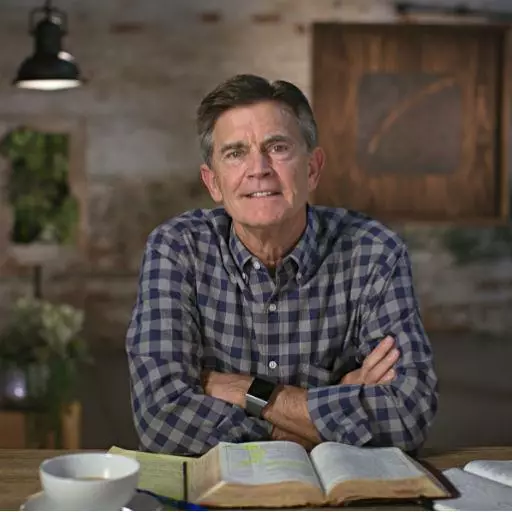
Why a Change in Scenery Rarely Improves the View, Part 2


Why a Change in Scenery Rarely Improves the View, Part 2
When life is really tough, should we consider it a sign that God wants us to move on? If we’re offered a better paying job, is that an indication that God is leading us away from our current situation? Maybe; maybe not. In this message, Chip lays out four steps to follow when considering a change of scenery.
Resources
Connect
- 888-333-6003
- Website
- Chip Ingram App
- YouTube
Partner With Us
- Donate Online
- 888-333-6003
Dave Drouilly: Today on Living on the Edge with Chip Ingram.
Chip Ingram: Is life really tough for you right now? I mean, your job's not rewarding. Maybe your marriage feels stale. I k mean, are you just like I'm tired of all this stuff? I'm going to make a big change. Well, let me encourage you before you take that big step that you stay with me because we're going to learn from God when it's time to move on and when it's time to stay put and why.
Dave Drouilly: I'm Dave Drouilly and today on Living on the Edge, we're wrapping up our series Building Authentic Community, How to Lift Up Those You Love. Chip Ingram picks up in James chapter 5 with lessons from the prophets, from Joseph, and from Job. For anyone who's tempted to bail out of a painful relationship or situation, Chip shows us that God may not want to deliver you out of your circumstances, but through them. And understanding the difference could change the way you face your hardest season. Well, here's Chip with today's message, Why a Change in Scenery Rarely Improves the View.
Chip Ingram: We all tend to play what I call the if-only game. And the if-only game goes like this, and it's the fifth lie. The lie is that the grass is greener on the other side of the fence mentality. If you'll look in your notes, I put exactly what God would say to people in a very difficult situation of conflict and adversity. And here's what he says to them beginning in verse 7 of chapter 5 of the book of James. Be patient then, brothers. Well, how long? Until the Lord's coming. See how the farmer waits for the land to yield its valuable crop and how patient he is for the autumn and spring rains.
You too. Be patient and stand firm. Well, well, why? Because the Lord's coming is near. Don't grumble against each other, brothers, or you'll be judged. The judge is standing at the door. Brothers, as an example of patience in the face of suffering, take the prophets who spoke in the name of the Lord. As you know, we consider blessed those who persevere. You have heard of Job's perseverance and you've seen what the Lord finally brought about. The Lord is full of compassion and mercy. Above all, my brothers, do not swear, not by heaven or by earth or by anything else.
Let your yes be yes and your no no or you'll be condemned. In other words, keep your word. And out of this, I think are three very, very clear commands for us. The first point I see out of this passage in verses 7 to 9 is that we are commanded to be patient even when circumstances are beyond our control. He says don't give up, don't give in because God is in control, but they're out of your control. Look it says be patient, brothers, until the Lord's coming. And then this is the lesson of the farmer.
See how the farmer waits for the land to yield its valuable crop and how patient he is for autumn and spring rains. How much control does the farmer have about how much sunlight and how much rain? Zero. So he says take a lesson from the farmer. Notice there's a second lesson not just from the farmer, but there's a lesson to be learned from the prophet. And note notice what he says here about the the prophets. He says brothers, as an example of patience in the face of suffering, take the prophets, plural, who spoke in the name of the Lord.
And And you think to yourself, well, what's amazing about that? He says, well, we're commanded to be patient even when our circumstances are unfair and unjust. Verse 10. See that's what I get from the prophets. When I study the prophets' lives, I'm just thinking if you really love God, if you're really for God, if you're really willing to take a stand, if you're going to live a righteous life, then life's going to be good. He's it's going you're going to be happy, right? Yeah, Daniel, happy, happy, happy with all those lions. You know, I'm the lion tamer.
This year is fun. Jeremiah, happy, happy, happy. I'm in a cistern down in a well. Now I'm in prison. Happy, happy, happy. Study the life of the prophets. Life is not certain. Life is not easy and life is not fair. That's a biblical appraisal. When you do what is right, when you're in the center of God's will, if you are expecting that everything lines up and goes your way, that your circumstances align, that people are going to be wonderful, that all your kids are going to make great decisions and turn out right, then you set yourself up wrongly for a life of despair and discouragement and you'll get disillusioned with God.
I meet Christians all the time that are disillusioned with God. God promised the abundant life. God promised I would be happy. God promised and I'm thinking, yeah, God promised persecution. God promised suffering. God promised character building. How come no one's writing books on that? If Jeremiah was writing a book, that's the one he'd write. But what do you find out about those prophets? What's the lesson? It's where they land. It's not what they go through. Consider all joy, my brethren, when you encounter various or all kinds of difficulties, knowing that the testing of your faith produces perseverance.
Hupo meno, he's going to use this word. Hupo to be under, meno, stress or pressure. Knowing the testing of your faith produces perseverance and allow perseverance or the difficulty to do what? Produce Christ-like character or maturity in you that God may do in you what he wants to do. See the the premise of the New Testament is not God wants to make you happy. You know what the correct premise is? God wants to make you holy. It changes everything, doesn't it? That's his agenda. That's his agenda. He gave some as apostles, some as prophets, some as evangelists, pastors, teachers for the work of you know, building up the body of Christ until they all attain to the unity of the faith, of the knowledge of the Son of God to a mature man.
What's a mature Christian? It's one who looks like Christ. How does God produce maturity or holiness or Christ-likeness? It's not because we're happy all the time and everything goes our way. It is when he takes us through things that the pressure and the difficulty like a piece of coal in the heart of the earth, the pressure, pressure, pressure, pressure, pressure, pressure, pressure takes it and makes it a diamond. Or it's like the the piece of sand inside of a pearl where all the rubbing and the difficulty and the irritation produces a pearl. God's looking to create men and women whose character and whose hearts and whose lives from the inside out are diamonds and pearls reflecting the fragrance of Christ.
That's his agenda. But if we think it's to make us happy, we get very ticked off with God and disillusioned when he allows us to experience what the prophets experienced. Jot down, if you will, Genesis 50:20. Here's the principle. Here's what we learned from the prophets. It is a fallen world. Life is not fair. Life is not certain. But all the evil, all the difficulty that came into Joseph's life, he could When he saw it all, looked backwards and said to his brothers, as for you, you meant it for evil, but God meant it for good to bring about this present result, to preserve many people alive.
He said your motives were bad. You were evil. You did the wrong thing. Some of you in I'm reading into the text here. Don't look for this in Genesis, but you know, little elaboration here. You know, some of you wanted to kill me. You know, thank heaven, some of you wanted to put me in slavery. You know, Potiphar, his wife did me in. He treated me wrong. The baker, he didn't even remember my name. All these things happened to me, thinking directed for evil, but God meant it. He's sovereign. He's all-knowing. He's all-powerful. And notice the text, he's compassionate.
That words means there's something down and literally the idea is out of the bowels of God, out of the inner parts of God that when he sees your need, he wants to rescue and help. He loves you. God out of his mercy and out of his grace meant it for good to bring about what? He delivered all these people. He He wanted the the nation of Israel to be a little incubator over here. And the way he did it is he sent me and he knew there would be a famine and he knew what he wanted to do and he knew what he the promises he made to Abraham.
And what he did is he brought me here so that by the time the things happened, I would be the second most powerful man in the world. And I would be able to be the shepherd and take care of God's people. Other people don't have the power to ruin your life. Circumstances do not have the power to ruin your life. The only thing that can ruin your life is failure to believe that God is good, God is sovereign, and God is faithful to his promises. And so he says learn first the lesson of the farmer.
There are seasons in life. Patient wait, patient until you see God bring about what he's going to do. Don't miss out. Second, learn the lesson of the prophet. Even when life is unfair or unjust, don't get your expectations skewed thinking that God has left you. If he left you, he left Daniel, Jeremiah, Joseph, Elijah, Paul. 11 of the 12 disciples. Does anyone know how they happened to die? They were martyred. And the only guy left is on an island, you know, writing down Revelation for us. I mean, that the the prosperity gospel won't work through the New Testament.
But didn't work for Paul, didn't work for James, didn't I mean, he's saying, so I followed Jesus. What happened to you, Paul? They killed me. Peter, what happened to you? I followed Jesus. They killed me. James, what happened to you? I followed Jesus. They killed me. What You know, there's another good book title, How to Walk with God and Die Young. And you know when they did it? Church history says Peter didn't do it like God deserted me. Peter requested to be crucified upside down because he felt unworthy to be crucified in the same way as his Lord.
Paul would understand that it's not the frivolity being happy and all the circumstances lining out. In Philippians chapter 3, he will say for me, forgetting what lies behind, pressing forward, I want to apprehend or gain or get what God's called me to. And so what I want to do, I want to know him. I I want to know the power of his resurrection and the fellowship of his
Guest (Male): suffering.
Chip Ingram: suffering. You will never be closer to God. You will never have more intimacy with God. God will never speak more loudly or more clearly than when you are in pain, when you need him. When there's You know what? When When sex and food and trips and money and possessions and houses, no matter how nice they are, all in the right frame of mind with all the right people can't deliver. Jesus said I'll be there for you.
Dave Drouilly: You're listening to Living on the Edge with Chip Ingram and we'll get back to today's message in just a moment. Did you know Chip isn't just on the radio? He's on YouTube, too. Just search Living on the Edge with Chip Ingram and hit subscribe. You'll find full-length video teaching from Chip on marriage, parenting, leadership, and a whole lot more. Ready to watch whenever it fits your schedule. It's also a great way to share a message with a friend who needs it. All right now, back to our message.
Chip Ingram: The third lesson we learn is the lesson from Job. We're commanded to persevere even when we don't understand why God is allowing such adversity in our lives. Notice it changed from patience patience to persevere. The third picture with Job is um this idea of I I alluded to, patience is having a long fuse. But with Job, it's not just patience, it's perseverance. Perseverance is holding up under pressure. Uh the word picture that I have I have a little stick figure in my notes that when I think of this word hupo under meno is I have a little stick fixture picture and I and I take a bag with a bunch of weights.
And the bag with a bunch of weights is on his shoulder and um on it is stress, pressure, life demands. And hupo meno is it's I'm under this. And what happens is with a lot of people, if you put weight on their back, it crushes them. But these people just one day, one moment of time, this marriage is difficult, this health is difficult, this financial situation is difficult, this conflict at church is difficult, but I'm going to hold up today, I going to hold up today, I going to hold up today. It's hurt it hurts.
I'm going to hold up today. And when you persevere and persevere and persevere and persevere and persevere, all you people out here that are athletes, you know, there's some people that actually pay to get to do this. But instead of a bag, it's actual weights. And if you take actual weights and you put them on your shoulder and you persevere and you persevere and you persevere and you persevere and you do about three sets of that with just a little bit more than your legs will burn and then your core will get strong. And you do that for about 6 months and you know what?
You can get under that thing and it's no problem at all. Because the weights don't change, but the person under the weight gets stronger. Did you ever consider that part of God plan may not be to deliver you out of your difficult circumstance, but he might want to deliver you through it? And there's biblical precedent, isn't there? The apostle Paul, I mean, it wasn't he had enough faith. Apostle Paul had a pretty powerful prayer life. Apostle Paul had seen the third heaven. Who knows what that is or what it looks like, but we're going to find out soon.
And he asked God one time, two times, three times, take take the adversity away. Take the thorn in my flesh away. We don't know what it was, but some some difficult, painful, physical thing that just bugged him to death. And what did God say? No. See if he went to a meeting today, people would say, well, Paul, you just don't have enough faith. That's your problem. If you just believe God, then no, no. God's will in this situation for him was no. But then in 2 Corinthians 12 verses 9 and 10, he tells him why.
He says, Paul, my grace is sufficient for you cuz power is made perfect in weakness. I'll do something in you. You You hupo meno. You You allow me to strengthen who you are as a man in your inner man. My power is perfected in your weakness and in your pain. In fact, we learned the reason he got the thorn was that he saw and had such a revelation of who God was and what he'd done that that arrogance would have been impossible. And so it kept Paul in the sense of dependency out of his pain.
Could it be that God has some so something so wonderful to do in you and through you that he has chosen, not because you've been bad, but because you've been good and he knows that he can trust you with it to allow you to endure through the pain of the relationship or the health issue or the difficult situation and that through the pain, his grace will be sufficient and one day you'll be able to say therefore most gladly I will take joy or rejoice in difficulty and suffering and persecutions and And he goes on and lists about everything bad that could ever happen in your life because when I am weak, I am strong.
That the lesson of Job, isn't it? Persevere. Persevere. Why? Because God plan is at work even when we can't see it or understand it. Did Job know what was going on? He didn't have a clue. He did not have a clue and his friends were not a lot of help. But he knew God. There's a song I heard years and years and years ago and who knows who wrote it and who knows the melody, but I mean, there was one line in it. It says um when life is hard and difficult I'm paraphrasing here because I'll get to the line that I really like.
And you just don't think you can take it. It says when I can't see your hand, God, I can trust your heart. It's a great line. You know, there are times where you're a Christian and you love God and and you know, it just stinks, okay? Let's just I mean, it's hard it just I mean, there's probably stronger words the youth would use. I don't know what they are cuz they don't come to my mind, but you could probably think of one or two just like it. And there's times as a believer it's like that.
And you pray. Man, you know, it's not sin. At least you don't I mean, unless if it is, I mean, you've asked and prayed and confessed and you know, you look back on your life and you say, you know, I'm walking with the Lord. I've been obedient to what I know. I feel like I I I I'm I'm meeting with him. I feel like I I'm honoring him with my life. I'm I'm want to be used by him. And life is just hard, hard, hard and you pray and you know, you're waiting for the breakthrough and you know, there's no breakthrough and it gets harder and harder and harder and harder and you just get to where I mean, there's one thing where there's times where you cry out to God and there's sometimes I've had at least and I'm sure you have where you just cry.
You just get before the Lord and you cry and you go I don't get it. There's times there's a veil. And what he says to do is you you persevere even if you can't understand. Final thing he says here is there's a lesson from the farmer. There is a lesson from the prophets and a lesson from Job. And then the application, we're commanded to demonstrate How do you demonstrate your patience? We're commanded to demonstrate our patience and our perseverance by keeping our words and our vows. Verse 12. Did you notice what it says here? Above all, my brothers.
I mean, beyond all that I've said, do not swear by heaven or by earth or by anything. Let your yes be yes and your no be no. Don't bail out. If you made a commitment to God, keep it. Made a commitment to marriage partner, keep it. Made a commitment to your kids, keep it. Made a commitment to your church, keep it. Made a commitment to someone else, keep it. Psalm 15:4. He who swears to his own hurt and changes not, those are the kind of people that can enter the temple of God, the holy hill and be honored by him.
Now are there please here, are there unique situations where immorality or things happen in a marriage? Are there unique situations where churches go off doctrinally or there's dysfunctional things that you've done all you can and God releases you yes, okay? But we're living in a world of exception clauses and loopholes. We're living in a world where it really wasn't adultery. It was kind of this and kind of that and I am miserable and I'm happy, so I'm going to get a divorce. Well, you know, yeah, the church really ain't all that bad, but I'm just so sick and tired and so much work, so I'm just going to keep your commitments.
Keep your commitments until God tells you this is what I want you to do. And if he tells you this is what I want you to do, you better be able to open your Bible and say and here's the biblical basis for it. Not because I felt it or even because some Christian leader, person or pastor said it was okay. We got all kind of pastors and leaders telling people unbiblical things to justify our immoral behavior in the church right now. And it's got to stop. And it's got to stop by starting with us. I know the plans that I have for you, declares the Lord.
Plans for good and not for evil. To give you a hope and a future. Part of that plan will mean times where you have to patiently wait. Part of that plan will mean that you'll have to be like a prophet and say this isn't fair and this really stinks and I'm not giving up. And part of that plan will mean you will persevere when you don't understand why God is doing what he's doing. And so you will have to trust his heart cuz you can't see his hands moving. But what I want to remind you is all the cards aren't dealt yet.
All the cards of your life and his purposes aren't dealt yet. And forgive me if I've kind of watched a couple of those ESPN or those you know, poker shows now and then, but I always like it and it looks like one guy's going to lose, you know, and then they have the low hole card, right? Card on the river. You know, and I know they're only playing for fun. There's no real money exchange. I don't endorse gambling in any way. People take these illustrations wrongly sometimes. But you know what? The whole thing looks like this, but there's one card left and you turn it over.
God has a card he's not turned over in your life yet. Don't give up. In the words of Winston Churchill to his alma mater, when the war was going desperately wrong for England, he gave a very short, meaningful speech. Never give up. Never give up. Never, never, never, never give up. And England responded to the call. And that's God's word to some of you. Never give up.
Dave Drouilly: You're listening to Living on the Edge with Chip Ingram. Today's message is titled Why a Change in Scenery Rarely Improves the View. The final lesson in our series Building Authentic Community. To revisit or share any of these messages, just go to our website, livingontheedge.org. If you'd like these messages delivered right to your phone the moment they release, subscribe to the Living on the Edge podcast wherever you listen. And to hear the original sermon in full, subscribe to the Chip Ingram sermon podcast. Over these past few weeks, we've talked about lifting people up, rescuing those who are drifting, guarding our words, and today hanging in there when it would be easier to walk away.
Every one of those comes back to a simple choice, the choice to love. That's the heart of Chip book I Choose Love. Chip explains how agape love isn't sentimental. It's a decision to give, to serve, and to keep your commitments day in and day out regardless of feelings. And here's an idea. Get a copy of Chip book for yourself and a second copy for someone else in your life and invite them to read it with you. You can get your copies of I Choose Love at a special price online at livingontheedge.org/offers. You know, for so many listeners, this program has been part of how God has kept them going through their hardest seasons.
And it stays on the air because people like you decide it's worth supporting. Become a monthly partner today or make a one-time gift right now by simply going to livingontheedge.org or call our team at 888-333-6003. You can also send your gift by mail to Living on the Edge, PO Box 3007, Suwanee, Georgia 30024. Well, now here's Chip Ingram.
Chip Ingram: As we close today's program, my prayer for you is that you would tie a knot at the end of your emotional and spiritual rope and hang on. Don't give up and don't give in. But it's tough, isn't it? And and God never intended you to make it on your own. This is the last part of the series on five lies that ruin relationships. And I know it's a penetrating set of messages that really cause us to examine our assumptions and those unconscious lies that we believe. And what I also know is that there's little chance of change of you trying to do this by yourself.
You break these lies and build great relationships when you face them together with people that you love. Find a handful of people who will say, hey, let's spend 10 weeks together and really expose those lies we believe and take our relationships to the next level. Let me encourage you, dig in, expose the lies and build the kind of relationships that last a lifetime.
Dave Drouilly: That's Chip Ingram and the end of our series Building Authentic Community. Don't miss the start of our next study all about revival. Next time here on Living on the Edge. Today's program is produced and sponsored by Living on the Edge.
Featured Offer

A Pathway to True Discipleship
Move beyond routine reading with an intentional pathway designed to help you follow Jesus from the inside out and build a rooted, resilient faith. It's also perfect for Christmas gift-giving!
Past Episodes

Featured Offer
A Pathway to True Discipleship
Move beyond routine reading with an intentional pathway designed to help you follow Jesus from the inside out and build a rooted, resilient faith. It's also perfect for Christmas gift-giving!
About Living on the Edge
About Chip Ingram
Chip Ingram's passion is to help Christians really live like Christians. As a pastor, author, coach and teacher for more than twenty-five years, Chip has helped people around the world break out of spiritual ruts and live out God's purpose for their lives.
Chip is the author of eleven books and reaches more than one million people each week through online, radio and television outlets worldwide. Chip serves as CEO and Teaching Pastor of Living on the Edge, an international teaching and discipleship ministry. Chip and his wife, Theresa, have four children and twelve grandchildren.
Contact Living on the Edge with Chip Ingram
info@lote.org
http://livingontheedge.org/
Mailing Address
Living on the Edge
PO Box 3007
Suwanee, GA 30024
(888) 333-6003