

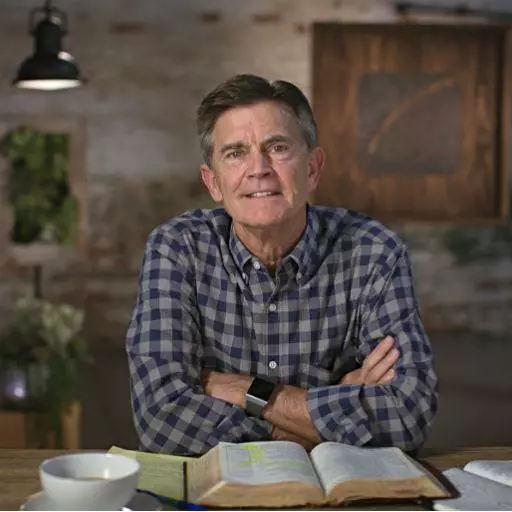
Strongholds Must Fall, Part 2


Stop treating the symptom and start fighting the lie! Whether you battle the stronghold of control, deep-rooted shame, or chronic victimhood, true freedom requires a new strategy. Learn the process of cognitive reappraisal: recognize the specific lie, replace it with God's truth, and reinforce your new mindset with Christian community.
Kyle Idleman: We take captive every thought and we make it obedient to Christ. We're in this series called "Every Thought Captive" and what we're learning together is that we start to interrogate our thoughts so that we can take them captive. Because otherwise our thoughts form these neural pathways that become strongholds, and that's the word Paul uses here as a word picture, a stronghold.
Dave Druey: There's a thought you've been thinking for so long, it feels like the truth. But what if it's a lie? A lie that's been shaping your decisions, your relationships, your whole life. It's called a stronghold, and it's time for it to fall. Today on Living on the Edge, Chip Ingram invites you to hear pastor and author Kyle Idleman for a special lesson about breaking strongholds. Chip, give us some context for where we're headed today.
Chip Ingram: Let's face it. Every single person struggles with managing our thought life. We all deal with discouragement, temptation, anger, resentment—thoughts that can overwhelm us. Here's the good news: God's Spirit was provided to help relieve us from these unwanted pressures.
But we play a role. It's not just God's Spirit; we have to cooperate with Him. We have to renew our minds. And what I love about this series that my friend Kyle Idleman is teaching, he's helping us in very specific, practical ways take every thought captive. That's the beginning of life change, and you're going to love what he has to share.
Dave Druey: Thank you, Chip. Today's message from Kyle Idleman is titled "Strongholds Must Fall."
Kyle Idleman: What I'd love to do is just challenge you to identify one or two strongholds in your life. Some lies that you've believed—maybe you don't recognize them as such, but just some things that have been determining the direction of your life, some thoughts that you think subconsciously that you're going to really pay attention to. I just want to talk about where these strongholds come from as a way to help us identify them in our own lives.
The first is they come from early and frequent thinking. When you are young, your brain is when it's the most plastic, it's the most moldable. And there are some strongholds that were passed down to us that we never wanted, and we didn't intentionally choose. Second is cognitive reinforcement. This is how some strongholds in your life have been formed. It's your instinct and my instinct to surround ourselves with voices and opinions that reinforce thoughts that we've had for a while.
Thirdly is emotional association. Our thoughts are strongly connected to emotions when it comes to forming lasting patterns. This is why thoughts that you have during a time of trauma or rejection or intense loss or intense grief will create, without you even knowing it, will create a stronghold. The fourth is generational patterns. Some strongholds are passed down through families, not genetically, but through repeated patterns of thinking, of speaking, of believing, and it just gets transmitted from child to parent, from child to parent.
Ezekiel 18 says that these generational patterns, these generational strongholds, can be broken. And it's one of my favorite things about being a pastor in this church is almost every week I witness that. Of someone saying, "By God's grace and with the help of the Holy Spirit, it stops with me. It stops with me." A person recognizes the way their family has operated under a stronghold of fear, under a stronghold of addiction, under a stronghold of control or of anger or rejection, and they say, "Not anymore. It stops with me."
And part of this is understanding the fifth factor, and that is it's spiritual warfare at its heart. Spiritual warfare. The Bible calls our enemy the Father of Lies in John 8. His job from the time you were born is to get you to buy into a few of these lies. Because if he can get you to believe this lie and establish a stronghold in your heart by the thoughts you think, then his job is done. He doesn't really have to do anything else. The stronghold will do what the stronghold does.
Think about this. If Satan can get you to think, "God doesn't really care about me," if he can get you to say that out loud and think that over your own life, then it affects everything. It keeps you from prayer, it keeps you from believing God's promises, it keeps you from having a relationship with God. If he can just get you to focus on a few failures or inadequacies or insecurities and convince you to believe this thought, "You're not worthy of love," then he can create a fortress around your life that will sabotage you from all the good God wants you to have in walking with Him and sharing life with others.
And so this is why when we talk about taking our thoughts captive, we're not so much talking about psychology. We're talking about spiritual warfare. So what is a stronghold in your life that needs to fall? Can you identify it? I was at a men's conference, speaking at a men's conference a few years ago, and I sat down at a table with a group of men. And we were focusing on this idea of strongholds and trying to identify them specifically, looking at these strongholds that we'd had since we were perhaps boys that were affecting our lives now as men.
And we just went around the table to share the strongholds. And so Joe went first and Joe said, "I didn't think it was okay to be sad." And he grew up in a home where the expectation was to be happy, no matter what, all the time—real men aren't sad. Being sad is for weak people. And so when his family dog died and he cried, he remembers his dad teasing him. And now Joe, because of the stronghold of "it's okay not to be sad," he deals with lots of loneliness in his life.
Why? Because when he's sad, it doesn't feel like it's okay to share that with anybody. And so he keeps his sadness to himself and that's really isolating and it's really lonely. And Joe deals with anger because of this stronghold. Why? Well, because what he learned as a boy is it's not okay to be sad, being sad isn't masculine, but it's okay to be angry. And so every time he's sad, it shows up as anger, and he's been angry a lot.
Around the table we go, Mike identifies his stronghold: "I thought of women as objects." Mike's parents divorced when he was six and he would stay at his father's house. He had easy access to his dad's collection of porn. He was hooked by the time he was eleven. When he got married, he thought marriage would break that stronghold in his life, but it didn't. Instead, what he did without meaning to is he sent his wife down that neural pathway of objectification. And he looked at her as someone who existed to satisfy him. It put pressure on her, it was demanding with her. She became bitter and resentful. They divorced after three years.
Around the table, Scott's stronghold: "I thought my worth was determined by how much money I made." He grew up thinking that success in life was determined by the income he made, the car he drove, the house he lived in, the vacations he went on. And look, he was surrounded by kind of real-life algorithms, real-life examples that reinforced this thinking—that the measure of his worth was determined by how much he was worth. And what he could see now as a man in his mid-fifties is that that stronghold has directed every major decision of his life. Like, every major decision has been filtered through this lie that "my worth is determined by how much money I can make." He wasn't thinking about legacy or eternity or God's will or God's kingdom.
And all around the table we went. The next one that got identified, the next stronghold that got identified, is "I thought I couldn't ask for help." And that one was mine. I've shared this with you before, but I don't remember ever intentionally thinking this. But somewhere along the line, I picked up on this idea and thought it, and then kept thinking it, that it's okay to help people but it's not okay to ask for help from people. My thinking, this stronghold, convinced me that asking for help was the same as admitting failure. And so if I asked for help, I'm calling myself a failure. I didn't want to do that.
This thinking, this stronghold, convinced me that it's okay to be someone who rescues, it's okay to be a rescuer, but you don't want to be somebody who needs rescued. And that seemed to work okay, like that stronghold seemed to work okay until it didn't. And I can tell you in our early years of marriage, and we're working through some things and trying to figure some things out, my young wife would say, "Hey, why don't we just ask somebody for help as we navigate this?" And in my mind, that wasn't an option. "No, we can't. I got this. I can fix this. We'll figure this out. I'm not going to ask somebody for help."
When we're in the thick of parenting and we're trying things that clearly aren't working, and my wife says, "Why don't you just ask someone for help? At your job, you're surrounded by people who can help you with this. Why don't you just ask someone for help?" "I'll figure this out. It's fine. I've got this under control." And here's what I finally had to recognize is that this thought, "I can't ask someone for help," it wasn't just holding me captive. It was holding my wife captive. It was holding my children captive. It was holding people I lead captive.
Around the table we go. What's yours? What's a stronghold that has had its grip on your life long enough? And how do we fight the strongholds? Go back to 2 Corinthians 10. "The weapons we fight against are not the weapons of the world. On the contrary, these weapons, divine weapons, have the power, divine power, to demolish strongholds." Okay, what are we talking about, God? You got a nuclear arsenal over there? You've got some weapon that I don't know about where you just push that button and this stronghold just explodes once and for all? What weapons are you talking about? Well, you keep reading. Weapons He gives us: thoughts and prayers. Thoughts and prayers.
This is the Almighty's strategy for breaking some strongholds in your life: thinking differently. Why? Because He created your brain. He understands concepts of neuroplasticity. He knows that if you can change the way you think, it'll change your brain, it'll position you to experience His transforming power. That when you start to take biblical truth and scriptures and replace the lies with His truth, transformation happens.
Dave Druey: You're listening to Living on the Edge with guest teacher Kyle Idleman. There's more just ahead, so stay with us. Today we continue our journey through a fundamental series called "God's Dream for Your Life." And if you've missed any part of this study or want to find more Bible lessons, just go online to LivingOnTheEdge.org. There, you'll discover a wide array of teaching content, downloadable materials, and daily discipleship with Chip Ingram. Find it all at LivingOnTheEdge.org. Now let's get back to our lesson with guest teacher Kyle Idleman.
Kyle Idleman: So how do we take our thoughts captive or to borrow a term from neuroscience, cognitive appraisal? How does cognitive appraisal happen? Well, here's how it works. First, you recognize the lie. You have to identify the lie. Now look, what most of us do is we identify the behavior rather than the lie that's led to the behavior. Like even as I've tried to ask you to identify a stronghold in your life, likely, and this is what I would do too, likely what you've done is you've tried to identify a behavior. A way you react, a way that you respond to people, an addiction that you've been struggling with, and you think the stronghold is the behavior. But the Bible would say the stronghold isn't the behavior. The stronghold is the lie that's led to the behavior. It's identifying the lie.
Secondly, replace with truth. You find God's truth that directly contradicts the lie. It's not about positive thinking; it's about identifying a scripture that speaks truth into that lie and then aligning your thoughts with God's thoughts. Recognize the lie, replace with truth. Number three, you reinforce the truth with community and content. Strongholds are reinforced in isolation. The moment you share your struggle with a trusted Christian friend or in a small group, the moment that stronghold will lose some of its grip on your life. So you reinforce the truth with community and then with content. You pay attention to what you're thinking about, to what you're exposing your mind to, to the algorithms that are establishing these pathways in your brain.
And so I just want to end by getting real practical. I don't know what stronghold you've identified, but I tried to pick a few common ones and walk through what this looks like. So let's just start with the stronghold of control. If you're not in control of something, you feel anxious, you feel overwhelmed, you're constantly concerned with the "what if" and what might happen and all these things you know you don't have control over, whether it's circumstances in life or global events or whether it's the emotions of the person sitting next to you.
It's a stronghold of control. So recognize the lie. Don't pay attention to the behavior as much as you pay attention to the lie. "I believe the lie that I have to manage every outcome or everything will fall apart, and if I don't control it, it won't work out." And I don't know where that lie came from—maybe because of some people who've let you down and you just recognize that unless I'm in charge of it, it's going to fall apart. But that's a lie.
And so you recognize the lie and then you replace it with truth. You find a scripture, and whenever that thought starts to take root, you replace it with the scripture. Proverbs 3:5, "Trust in the Lord with all your heart and lean not on your own understanding." 1 Peter 5:7, "Cast all your anxiety on God because he cares for you." Romans 8:28, "God works all things together for good for those who love him and are called according to his purpose." And then you reinforce that with community and with content. What's that look like? Well, it means that you share your struggle with control, your anxiety, with a trusted friend who can call you on it when you start spiraling or you start micromanaging. It means that you're going to limit the content that reinforces the idea of all these things that might happen. Reinforce with community and with content.
Second stronghold, as an example, would be one that I think almost all of us have, although we're often unaware of it. It's a stronghold of shame. And so you recognize the lie. "I believe the lie that my past mistakes define my worth and that I'm too broken for God to use me or to love me fully." You recognize the lie that says, "I'm too broken." And then you replace it with truth. Romans 8:1, "There is no condemnation for those who are in Christ Jesus." 1 John 1:9, "If we confess our sins, he is faithful and just to forgive us our sins." Isaiah 53, "He took our shame upon himself." As I told many people who were baptized a few weeks ago, the shame that you've been carrying stays in this water. You don't walk out of here carrying the same shame that you came in here with. Jesus has taken it upon himself. 2 Corinthians 5, "I'm a new creation in Christ. The old is gone, the new has come."
And then you reinforce that with community and with content. That means that you find safe Christian community where you can be honest about your struggles without feeling fear of judgment or condemnation. And then it means that you pay attention, maybe to some testimonies. You listen to testimonies of how God has redeemed people's shame and guilt and brought good, and His grace has been demonstrated in the lives of others. Let me give you one more. It's the stronghold of victimhood, where you're at the mercy of your thoughts that say, "Look what somebody else has done to me." And you recognize the lie. "I believe the lie that I'm powerless to change my circumstances or my responses because of what happened to me. I have no choice but to stay stuck because of what this person did to me or because of life's circumstances."
And you replace it with truth. Philippians 4:13, "I can do all things through Christ who strengthens me." 2 Peter 1, "He has given us everything we need for life and godliness." 1 John 4:4, "Greater is he that is in you than he that is in the world." And again, Romans 8:28, "God causes all things to work together for good." And then you reinforce that with community and content. You surround yourself with people who will encourage you in your growth rather than enable your excuses. They'll challenge you when they hear you start making excuses. And you seek out stories of people who've overcome difficult circumstances because of God's strength, and you remind yourself that's true for me too.
Scripture, through the power of the Holy Spirit, will bring down strongholds in your life that seem impossible to tear down. Strongholds are built through repeated exposure to lies; they are demolished through repeated exposure to truth. Dr. Caroline Leaf, a Christian neuroscientist, talks about how it takes about twenty-one days-ish to begin breaking down a toxic thought pattern, and it takes about sixty-three days to establish a new healthy pattern. God can tear down some strongholds in your life supernaturally and then in the days ahead, as you take your thoughts captive, He replaces them with new life-giving truths.
I believe God is calling some people in this room to say, "It stops with me." To be a generation that breaks strongholds. Some of you right now, you don't know it, but you are sitting on the edge of either passing down some strongholds or breaking them. The lies that have held you or held your family captive for generations must fall. Patterns of anger and addiction and anxiety and control—they don't have to be true for you and they don't have to define the next generation.
So I just want to challenge you in the next few minutes to identify a stronghold that needs to fall. Write it down. Not the behavior, the lie that you've been believing that's led to it. Find one scripture verse that speaks truth against that lie. Share it with a trusted friend who will help you fight the battle. Because that stronghold has had enough time to rule your life, and this morning, by the power of Jesus and the power of the Holy Spirit, it's time for that stronghold to fall once and for all. Let's pray.
Jesus, this is not a message about the power of positive thinking. It's a message about surrendering our thoughts to You, of recognizing how the enemy has set up camp and built these strongholds, maybe over the years, maybe since before we can even remember, that has had so much control over our lives and over Your plan for who You want us to be. So Jesus, would You give us the humility and the courage, would You give us the eyes to see these strongholds that have been built?
God, if we hear some of this and we're immediately defensive and we're immediately feeling threatened, and the things that You've brought to the surface in our minds over the last few minutes, we don't want to think about, would You help us to recognize that that's all the more likely that it's a stronghold that needs to be dealt with? And so Jesus, I just ask You that You would work supernaturally in this room over the next few minutes. That we would experience Your power as You break strongholds that have been passed down and that we find freedom in You, supernatural freedom. We fight with Your divine weapons and we do it together. We help one another along the way. Would You work in that way? Through the power of Your son Jesus and in His name we pray. Amen.
Dave Druey: You're listening to Living on the Edge with guest teacher Kyle Idleman, and a message titled "Strongholds Must Fall." Chip Ingram has more to share on this important topic in just a moment. Today, Kyle gave us practical tools for breaking down our own strongholds: recognize the lie, replace it with truth, reinforce that truth with community and content. Maybe you're the one God is calling to say, "It stops with me." The anger, the shame, the fear—it doesn't have to pass to the next generation. And by the power of Jesus and the Holy Spirit, it can fall.
Well, that's the kind of life-changing teaching that Living on the Edge has been committed to for thirty years. And it reaches people every single day because of friends who give and friends who pray. If you're already one of those partners, we want you to know how much your faithfulness means. Every program, every resource, every moment of teaching that lands in someone's heart at just the right time—it happens because you said yes. Thank you.
And if you've never given before, today is a great day to start. Join a community of believers who are investing in something that outlasts all of us: the transformation of lives through God's Word. To give right now, visit LivingOnTheEdge.org or mail us at Living on the Edge, Post Office Box 3007, Atlanta, Georgia, 30324. You can also call us and give over the phone, just dial 888-333-6003. By the way, full sermons are now available on the Living on the Edge podcast, with a feature called the Chip Ingram Sermon Podcast. Find these episodes right alongside our regular broadcasts on your podcast app. Now, here's Chip with some final thoughts.
Chip Ingram: Today, Kyle gave us a practical battle plan for tearing down strongholds. I want you to pause for just a moment and think about what you heard in the teaching, because we're going to talk about where the rubber meets the road. I want you to really grab hold of this. Number one, recognize the lie. Don't just identify the behavior, identify the lie that is driving it. The stronghold isn't your anger, your anxiety, or your addiction; it's the lie underneath it.
Number two, replace it with the truth. Find a scripture that directly contradicts the lie. When that surfaces, replace it with God's Word. And third, reinforce it with community and content. Strongholds lose their grip when you share them with trusted Christian friends and pay attention to what you're exposing your mind to. God can work supernaturally, but transformation takes partnership with the Holy Spirit.
I shared in our last broadcast that pleasing people was a stronghold in my life. I memorized Proverbs 29:25. It says, "The fear of man is a snare, but blessed is he who trusts in the Lord." I wrote it on a card. On the other side of the card, I wrote about the lie of pleasing people, and then I put a stop sign and said it's a lie. I turned over the card, and every time I felt that or thought that, I quoted Proverbs 29:25. Bam! The stronghold got broken over time. What's your stronghold? What's the lie? What's the passage you need to go to and go into training? God will change your life.
Dave Druey: I'm your host, Dave Druey. Join us as we continue this special study from guest teacher Kyle Idleman next time, right here on Living on the Edge.
Featured Offer

Every gift is matched to help fuel discipleship worldwide!

Featured Offer
Every gift is matched to help fuel discipleship worldwide!
About Living on the Edge
About Chip Ingram
Chip Ingram's passion is to help Christians really live like Christians. As a pastor, author, coach and teacher for more than twenty-five years, Chip has helped people around the world break out of spiritual ruts and live out God's purpose for their lives.
Chip is the author of eleven books and reaches more than one million people each week through online, radio and television outlets worldwide. Chip serves as CEO and Teaching Pastor of Living on the Edge, an international teaching and discipleship ministry. Chip and his wife, Theresa, have four children and twelve grandchildren.
Contact Living on the Edge with Chip Ingram
info@lote.org
http://livingontheedge.org/
Mailing Address
Living on the Edge
PO Box 3007
Suwanee, GA 30024
(888) 333-6003