

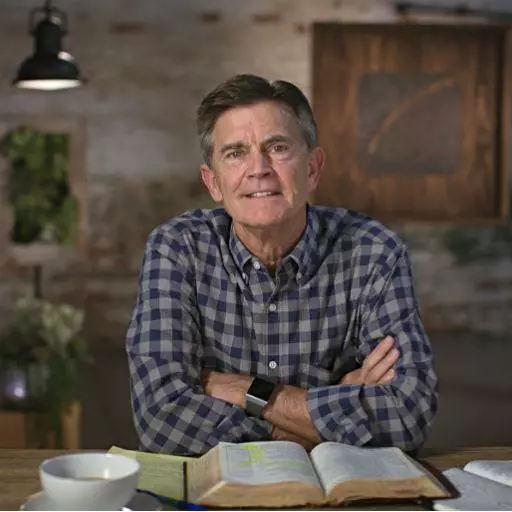
Love Serves, Part 1


In this program, Chip reveals five ways we typically measure greatness. But as with any scale, we always want to know whether the scale is accurate. From Philippians, Chapter 2, Chip explains how true greatness is achieved.
Dave Druey: Today on Living on the Edge with Chip Ingram.
Chip Ingram: Deep in the heart of every human being is a desire to be great. We're made in the image of God. We want to be and do something significant. Here's the question: what's the path? How do you get there? Today we'll learn from the Apostle Paul how to become great in God's eyes. Stay with me.
Dave Druey: Welcome to Living on the Edge with Chip Ingram. I'm Dave Druey. And today we're continuing our series Choosing Love by revealing two distinct pathways to greatness. One is the world's way, ascending through power, possessions, and productivity. The other is Jesus's way, descending through humility and service.
Today Chip shows us why the greatest people you'll ever know aren't measured by fame or fortune, but by how well they love. So if you have your Bible with you, go ahead and open to Philippians chapter 2, looking in verse 5. Here's Chip Ingram with today's message titled Love Serves.
Chip Ingram: We tend to think about love as a romantic feeling or an emotion and I'm all for those. But the kind of love we're talking about requires a choice. There's some things that work against us being loving people and they're not necessarily bad but they can distract us. I'd like you to think just right now of when was the first time, just as back far as you can go, when you really thought to yourself, "I want to be great at something."
See, here's what I want you to know. The quest for greatness is universal. Everybody wants to be great. Everyone wants to be successful, esteemed, valued, admired, significant, known, appreciated, accomplished, right? We want to look our best, do our best. We want to achieve. And by the way, I don't think that's wrong. I think we want to be great because we're made in the image of God.
When you look at the galaxies, they're great. When you look at the earth, it's great. When you look at beauty, it's great. We're the pinnacle of God's creation. But desiring to be great is one thing, but then sort of in our humanness, we start deciding how we're going to measure greatness. How do you know if you're really great?
Whether it's basketball, climbing the ladder of success, business, music, or relationships, historically about five ways we tend to say this is what makes you great. First is power. Who and how many people do you control? And I of course mean control in the best sense of the word. But it's that idea that you have the final say, that you have either formal or influence that just you're a somebody.
The second way is possessions. Possessions provide freedom. Buy what you want, go where you want to, do what you want. And we just kind of tend to think the people with the most possessions are really great. In fact, sometimes we buy things we don't even need so that other people understand how great we are. Third is position, our rank in the pecking order.
And we all have this little pattern of power, possessions, position, and then prestige. How many people look up to you? You're great because of what other people think of you. And then finally, productivity. What do you produce? How good is it and how much of it? And no matter how much, it can be better and it can be more, and new and innovative.
See, what productivity provides is a visible proof of your greatness. It's games won, buildings built, children raised, deals done, work accomplished, companies developed, accolades and awards. Now, just before you start feeling like I'm going to give you the left-hand hook and smash you and say how terrible of you to measure your greatness that way, I don't think any of those things are bad. They're often perverted.
But if God would choose as you walk with Him to give you power, position, prestige, and you saw it as a stewardship in order to honor Him and use your position and your power and your possessions and the people that look up to you to fulfill the will of God, here's what I want: I want you to get more position, more possessions, more power, and more prestige than anybody in the world and love God with it.
But the problem is, there's a way that we become great in God's eyes and there's a way that we become great in the world's eyes. And what we're talking about is genuine love. So notice, how do you obtain greatness? I'm going to suggest there's two pathways and they're very distinct. Pathway number one is ascending. You climb the ladder of success. And no matter where you are, there's one more rung. That's the world's mode.
And you can love God with all your heart and He can bless and you can go up that ladder. You just have to remember who got you there. I love the little picture of the post. Have you seen this? There's a fence post and there's a turtle on top of it. And the byline is, "I didn't get here on my own." And being great and having some of all these things, if you can really recognize you're that turtle on the fence post, more power to you.
But we live in a world where there's a lot of pressure to ascend in the world's mode. The second way we become great is by descending. This is what we're going to see is that the Apostle Paul's going to be speaking to a group of people. And when you want to be great, you tend to compare. And when you compare, you try and get better than other people. And when you compare and want to get better with other people, you kind of put them down to put yourself up.
And what we learned last week is the "me set" mindset. The only way to really be great in God's eyes and to have unity in relationships, you have to declare war on selfishness and you have to attack image management. And Jesus is going to say true greatness comes with humility. And the way is you descend into greatness.
We're going to find that Jesus will be the supreme ruler of all creation and the creator. And then He's going to take on human flesh. And then He's going to become a servant. And then He's going to sacrifice His life. And then He's actually going to die. And then He's going to have the death on a cross of absolute humiliation and shame. And because He descends into greatness, then God will highly exalt Him.
Mark it down. God blesses and rewards humility. And humility is the pathway to deep, abiding relationships. True greatness is defined by: do not think only on your own things, but also on the things of others. Does that sound familiar? Do nothing from selfishness or pride or vainglory, but with humility of mind, consider others more important than yourself. Here's the acid test of greatness. It's how well do you love?
The greatest people in the world are the people who love others the best. I have a unique part of my job. I bury a lot of people. Someone has to do it. And I've never sat around a graveside or gone to a house afterwards and had any group of people talk about, "Wow, man, did that guy have a great house?" Or "Man, her jewelry was off the charts." What do they talk about?
They talk about relationship and they talk about, "Whether she had a lot or had a little, she was the kindest woman I ever knew." "He was the man that stayed after work even though he was busy when I was going through a big marital problem and every Tuesday night he met with me and talked with me and shared this new thing about faith I didn't know about. And he was a vice president in the company."
"He was someone that when my husband walked out on me, he and his family had me over for Thanksgiving. They met me at church. They made me feel loved." At the end of the day, the greatest people on earth, the greatest people you'll ever know, will not have anything to do with how famous they are, how much money they have, how much power they have, how many likes they have on Facebook. It will be love.
Dave Druey: You're listening to Living on the Edge with Chip Ingram. We'll hear more from Chip in just a moment. If today's message is speaking to your heart, don't keep it to yourself. Share this teaching with someone who needs to hear it by visiting livingontheedge.org.
And while you're there, be sure to check out all of the other faith-building resources we have available, including teaching videos, blogs, and devotionals from Chip. It's all waiting for you at livingontheedge.org. Let's continue with Chip's message.
Chip Ingram: Now open your notes because I want to walk with you through how God is going to teach us to achieve true greatness. How do you get there? How do you experience true greatness? One word: humility. By the way, humility's not thinking too high of yourself, it's not thinking too low of yourself, it's kind of self-forgetfulness. It's not thinking of yourself at all.
There's a focus on God and there's a focus on others. The most humble people in the world actually don't think they're humble because they're not focused on themselves. Humility is the channel through which the supernatural power of God's love flows to heal our deepest hurts and restore our most important relationships.
Can you think of anything more important than your hurts or the hurts of someone else? We all have dysfunctions, we all have struggles, we've all been betrayed, we've all hurt. But humility is someone who cared enough to get off of thinking about themselves to invest in us and love us. And as they did that, the Spirit of God, His love came through them and wholeness occurred so that we could do the same.
Humility is the channel by which grace flows downhill into our hearts and it restores us and it restores relationships. Have you ever seen what happens in a group or in a marriage or in a family when people forgive one another? It's pride that keeps relationships apart and it's the other person, they should apologize first.
Do you know what happens in a marriage or a family or a small group or a business when there's someone that has genuine humility and lets go of their rights and their positions, their prestige and said, "This relationship matters more than..." That's what Jesus did. And He changed your world and my world and the whole world.
So I want to take you on a journey following Jesus into greatness. And as we do, I have to tell you that all of Scripture is God-inspired, all of Scripture is very important. But there are some passages that I think rise up to the pinnacle of the truth, the majesty. We're going to a holy, holy place where what we will see about the second person of the Trinity is so mind-boggling, so counter-intuitive.
And for those of you that have been Christians for a long time, my prayer is that you would see this with fresh eyes. We're going to talk about one who is in the pinnacle of glory and myriads of angels are worshipping Him. And He sits on the throne: God the Father, God the Holy Spirit. He owns everything. He controls everything. He has the utmost position. Colossians 1, He spoke and the galaxies came into existence. By the word of His power, He holds everything.
And He will take on human flesh. And then He'll become a servant. And then He'll sacrifice His life. And then He'll die. And then He'll actually die on a cross, which was the most shameful, humiliating way. A Roman citizen could never be crucified because it was so lowly. And it will be out of that humility that you and I and whoever would believe could have life.
And what He's going to say is, "Here's the path." Paul's going to say, "There's bickering between you all and there's persecution and pressure without. You have to become humble so there's healing and there's life." I'll walk through the model rather briefly because then I want to get to the end and apply it for all of us. Notice humility flows from a specific mindset.
Hear the command: have this attitude in yourselves, which was also in Christ Jesus. Circle the word attitude if you will. Literally it's, let this mind be among you. I talk about reading the Scriptures, I talk about meditating, I talk about putting good things in your mind. We are the product of our thought life. This passage literally is: your mindset, how you think, how you view yourself, how you view money and position and power and prestige, how you think—have this mindset in you all that was in Jesus.
And now He's going to tell us what the mindset is. We achieve true greatness when we embrace, not just agree with, when we embrace Christ's mindset toward power and possessions. How did Jesus view power? He had all the power, He was the ruler. How did He view possessions? He owned everything.
Notice what the text says: who although He existed in the form of God, did not regard equality with God a thing to be grasped. Put a box around the word form and then put a line under did not regard equality with God a thing to be grasped. Literally that phrase is as something that must not slip out of His hands. The word form here is *morphe*. We get our English word "morphed".
The meaning of the word is the inner essential quality of a thing or a person. In other words, when it says that although in the form of God, we think of form of something exterior. He's going to use a different word for exterior in a minute. Form of God is the essential inner nature. In other words, although He and the Father and the Holy Spirit all have the same *morphe*, God, He didn't regard His equality with God something that He had to hang onto.
In other words, He was going to take His power, He's going to take His rulership over positions, and He's going to let them go and start descending downwardly out of His love for you and His love for me. Notice next, we must become truly great when we embrace Christ's mindset toward positions and prestige. But He emptied Himself.
So instead of holding onto this position, He emptied Himself, taking the form of a bondservant and being made in the likeness of a man. Underline the word emptied, put a box around form—it's the same word—and then underline bondservant and a circle around likeness of men.
And if you're here thinking, "My gosh, I didn't even bring a pen," well, bring one next time. What I want you to see, these words, the theology is so rich, it's so mind-boggling. In other words, He was equal with God. When it says He emptied Himself, for Bible students, the word is *kenosis*. Literally it means He made Himself nothing. What that means is about two or three things.
Number one, He had pre-incarnate glory. If you would have met the pre-incarnate Christ, the light emanating from Him would have caused you to be gone. And so He veils His glory by putting on human flesh. Then He limits the independent use of His attributes. Sometimes we think of Jesus like Superman. He had this toga on, but when it got really hard, He just ripped off the toga and instead of an S, there's a G. "I am God! I will overcome this." He didn't do it that way.
He limited the independent use of His attributes and He took on a body permanently. Have you thought about that? Jesus is at the right hand of the Father. He has a resurrected body. When you see Jesus, you can see a bit later, those of you that are followers of Christ, you want to see the holes in His hands. It's a sacrifice that's unbelievable.
And what He's doing is, He's saying, "I was in the form, the very essence of God. I make Myself nothing," never ceasing in any way relieving Himself of any deity—He's fully God, fully man—and then notice what it says: taking the form, not just the acting, the form, the essential nature not just of a servant, but of a bondservant. A bondservant in Jewish and in Roman culture had no rights.
You might have a number of servants in the house. The bondservant is the guy that picks up the do-do. He's the guy that empties the trash. He's the guy that has zero rights, no anything, anywhere at any time. Could you just pause for a moment? Could you imagine? I mean, when you think of how we cling to our rights, "How come they didn't do that for me?" "Don't they know who I am?" Could you imagine the creator of the universe taking the form of a bondservant?
And it says He's made in the likeness of a man. The word likeness is our word "schema". It means just the outward fashion of, the appearance of. And He was fully human except He wasn't like all other men. There's no sin nature. Jesus, everything He did, He said, "Follow Me, model this. I can do nothing apart from Him."
His entire life was, "I'm dependent on the Father and in the power of the Holy Spirit to live this life so you can follow behind Me and you be dependent on the Father and the power of the Holy Spirit." And He did that because He loves you. He did that to rescue mankind. He descended into greatness.
You want to have a mindset, want to embrace the mindset with regard to your position? We all have one, we do. And prestige, what makes me a somebody? Let me give you three characteristics of the mindset of a servant. Characteristic number one: no job is too low. Why? Because you're a servant. No recognition is required. No one needs to know who you are. No job too low, no recognition needed, no thanks required.
Dave Druey: This is Living on the Edge with Chip Ingram. And we're continuing in our series Choosing Love. Today Chip revealed the radical truth about greatness. It's not measured by power, possessions, or prestige. It's measured by how well we love. Chip will share one more thought in just a moment.
What if I told you there's a resource that can help you start experiencing breakthrough in your relationships this week? Well, it's Chip's newest book, *I Choose Love*. Chip walks you through Jesus's model of descending into greatness. You'll discover why the servant mindset—no job too low, no recognition needed, no thanks required—is actually the pathway to the deepest, most fulfilling relationships you can imagine.
*I Choose Love* shows you how to shift from the world's ascending ladder of success to Jesus's descending pathway of humility. You'll learn practical ways to consider others more important than yourself without losing your identity. And you'll see how this kind of love, agape love, transforms not just your relationships, but your entire life.
At the end of the day, the greatest people aren't the ones with the most followers or the biggest bank accounts. They're the ones who loved the best. Now, if you want to be that person, get *I Choose Love* today by going online to livingontheedge.org.
Messages like today's only exist because listeners invest in this teaching ministry. When you give to Living on the Edge, you're spreading this transformative message around the world. Will you partner with us? To give, visit livingontheedge.org or mail your gift to Living on the Edge, PO Box 3007, Atlanta, Georgia, 30024. You can also call 888-333-6003. Now once again, here's Chip.
Chip Ingram: As we finish up today's broadcast, I was reminded of a verse that I reviewed this morning. I write down little verses on cards and I memorize them and then I review them as often as possible and candidly, I need to do it a bit more. But Psalm 113:5 and 6, I reviewed today and it just struck me so powerfully. It says, "Who is like the Lord our God, who humbles Himself to behold the things that are in heaven and on earth?"
Now think of that. The God that we serve is so great, so powerful, so pure, so holy, He humbles Himself to even look into heaven, which is an absolutely perfect environment, let alone the things on earth. And then imagine that this God, God the Son, came and humbled Himself to the point of death. He allowed Himself to be separated from the Father, that He paid the ultimate price so that you and I could have relationship with Him.
Jesus is the greatest, the first, the foremost, everything in heaven and earth has been created by Him and for Him and through Him. And yet He descended into greatness. He humbled Himself. He was willing to give up His rights. He thought of us instead of Himself. Instead of convenience or comfort, He left the pleasures of heaven, of being worshipped by myriads of angels, and was treated like a common thief, was stripped, embarrassed, humiliated, and then died upon the cross.
To say to you and to say to me, "I love you." And that is our model. He says, "Have this attitude in yourselves, which was also in Christ Jesus." You talk about humility, you talk about what love really is about. I will tell you this: love serves.
For years and years, I recognized that I was arrogant and proud and I tried really hard: I don't want to be proud, I don't want to be arrogant. And as soon as I got pride out the window, it came in the door. I put it out the door and it came in through a crack in the floor. Finally I had a dear older brother say, "Chip, quit thinking about trying to be humble. You want to be humble, you just serve people.
Just choose, choose to go to the back of the line. Choose to let other people go first. Choose to not hurry to get on the plane. Choose to look at the two pieces of meat at dinner and let someone else have the best one. You just start choosing to serve and over time, God will make you humble." Jesus came to serve. Here's my question: what are you going to do? Today, say to the Lord, "Help me become a servant like Jesus." Let's be servants of the living God.
Dave Druey: Jesus modeled servant leadership. But how do we actually live it out? I'm Dave Druey. Don't miss tomorrow's teaching on Living on the Edge. Today's program is produced and sponsored by Living on the Edge.
Featured Offer

Partner with Us and Get this Devotional Free
This month, when you give for the first time or become a monthly partner, you’ll receive a free copy of Growing Deeper in Christ: A 365-Day Journey to True Discipleship by Chip Ingram. Strengthen your own faith while helping equip believers around the world to grow in a real, rooted, and resilient relationship with Jesus.

Featured Offer
Partner with Us and Get this Devotional Free
This month, when you give for the first time or become a monthly partner, you’ll receive a free copy of Growing Deeper in Christ: A 365-Day Journey to True Discipleship by Chip Ingram. Strengthen your own faith while helping equip believers around the world to grow in a real, rooted, and resilient relationship with Jesus.
About Living on the Edge
About Chip Ingram
Chip Ingram's passion is to help Christians really live like Christians. As a pastor, author, coach and teacher for more than twenty-five years, Chip has helped people around the world break out of spiritual ruts and live out God's purpose for their lives.
Chip is the author of eleven books and reaches more than one million people each week through online, radio and television outlets worldwide. Chip serves as CEO and Teaching Pastor of Living on the Edge, an international teaching and discipleship ministry. Chip and his wife, Theresa, have four children and twelve grandchildren.
Contact Living on the Edge with Chip Ingram
info@lote.org
http://livingontheedge.org/
Mailing Address
Living on the Edge
PO Box 3007
Suwanee, GA 30024
(888) 333-6003