

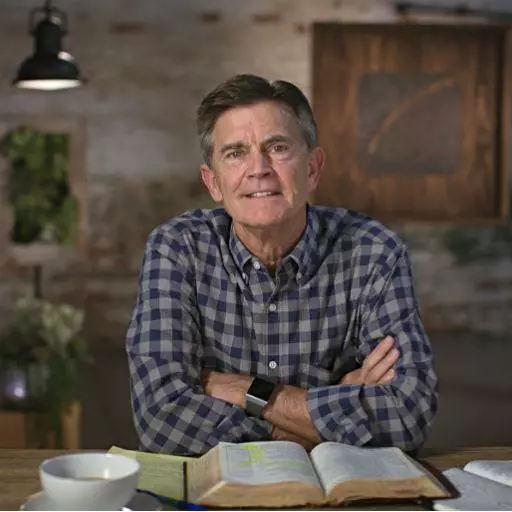
It All Begins with God


Chip reminds us that because everything begins with God, we need to choose His Word as the handbook for relational guidelines. Learn how aligning our lives with His Truth creates the foundation for healthy, lasting connections.
Resources
Connect
- 888-333-6003
- Website
- Chip Ingram App
- YouTube
Partner With Us
- Donate Online
- 888-333-6003
Dave Druey: Today on Living on the Edge with Chip Ingram.
Chip Ingram: I would guarantee today that each of you listening to my voice, if you have a problem in your world, it's probably with another person. Relationships are the greatest and the worst things in life. When they're not working, nothing else seems to matter. If you're struggling in a relationship, there's something foundational that every good relationship is built on. That's what we're going to learn today. You don't want to miss it.
Dave Druey: Welcome to Living on the Edge with Chip Ingram. Have you ever walked away from a conversation with your spouse wondering how something so small turned into something so big? Or found yourself completely baffled by why your teenager does what they do? In our series, Caring Enough to Connect: Building Bridges to Those We Love, Chip is teaching some of the most practical, life-tested principles on what builds good relationships.
These are not theories from a textbook, but truths he's learned the hard way over more than three decades of marriage, parenting, pastoring, and counseling people just like you and me. Today, Chip lays the foundation for everything else coming up in this series. Before you can talk about communication, conflict, forgiveness, or trust, there's a deeper question that has to be answered first: where do you actually go to learn how relationships are supposed to work in the first place?
Chip is convinced there's only one place to start, and once you see it, he says you'll never approach a relationship the same way again. Let's get started with today's message titled, "It All Begins with God."
Chip Ingram: I have a strong sense as I talk with people that we need to give people some very practical ways in terms of relationships. These are the things that have most impacted me. These have been the principles that have helped me build relationships with friends. Over the years, I came from a dysfunctional family, my wife did, and probably all of you did too. It's just a matter of how much in this fallen world.
Both of our dads were alcoholics. If you know anything about how all that works, it creates systems that are pretty unhealthy. Theresa and I have had to work very hard at getting our minds renewed and saying, "God, we have deep imprints about how families work, and what we actually know is how they don't work. We need to learn Your way." This has been a lifelong journey.
What I'm going to share is not from Mount Sinai, but I'll give you the biblical principles. These have been the most important principles that have helped me build friendships where it's heart-to-heart, honest, and real. By God's grace, we have four kids who grew up, love God, and still like to be around us. As parents, that's what you dream about and wonder if it will ever happen.
Principle number one may sound simple, but perhaps because of my background, it is: It all begins with God. There are lots of voices that will tell you how to do relationships. You can turn on the TV and find a zillion talk shows and amazing interviews. You came from a family background. Some of you came from amazing Christian homes. Some of you, like me, didn't come to Christ until you were an adult.
Every movie that you have seen unconsciously has told you how to be a parent or how to attract the opposite sex. You've got books, movies, and now, if you have a question about anything, you Google it. You get on there and search for what to do and what the experts say. The most important principle in my life has been that it all begins with God.
God has lots of truth through lots of experts. I'm glad for all the disciplines of social research and psychology, people's experiences, and great talk show hosts. But God created me, God created you, and God created relationships. Proverbs 9:10 says, "The fear of the Lord is the beginning of wisdom, and the knowledge of the Holy One is understanding."
In Hebrew literature, the word "wisdom" is not intellectual capacity. A better actual fundamental word for us would be "skill." When the temple was being built, it said God gave them the skill or the wisdom to build the temple, to have the ideas. The Hebrew concept of wisdom is understanding how God designed life and then having the skill to follow it His way.
The fear of the Lord is a reverence for God, the idea that God has spoken about relationships. You so revere and are afraid to do it any other way, knowing He's good and loves you. I appreciate that Oprah has some really great ideas. I'm sure there's some good stuff on the internet. I'm sure the multi-billion-dollar self-help industry will have a few keys. I know there are good counselors that have good things.
But my authority begins with the fear of the Lord. I want to know His wisdom and His skill for great friendships and a great family. I want to hear from Him. The authority I'm going to submit to and learn from is God. At 18, I realized I was introduced to the Bible, which I'd never read, and I decided this is going to be the basis for how I'm going to do relationships.
It took me two or three years as a Christian trying it my own way and having some bad results to realize that God has wisdom, knowledge, and skill for me. God gives wisdom, but He doesn't give wisdom for you to check in on. He doesn't want you to say, "Lord, I'd like to know what to do as a parent, or as a single person relating to the opposite sex, or in this special situation with one of my kids, so that I can compare that with all the other things and then decide what I want to do."
He doesn't work that way. The fear of the Lord means that if you will seek Him and His Word, and if you commit to do whatever He tells you in advance, 100% of the time, He'll show you what to do in every circumstance. James 1:5, written by Jesus' brother James, says, "If any of you lacks wisdom, let him ask of God, who gives to all men generously and without reproach."
But let him ask in faith without any doubting. The idea of doubt here is not questioning God's existence; it's coming with a double mind. The person who comes saying, "God, I want to know what You want me to do so I can decide if I want to do it or not," should not expect anything from the Lord. The very first principle that is so basic for me is that I'm going to make God's Word my handbook for relational guidelines.
I appreciate my family background and their good ideas. I'm sure there are movies that will give me great ideas about relationships. I thank God for all the books and resources everywhere, but I'm going to filter everything I ever read through His Spirit giving me clear direction from His Word. The most fundamental principle is that it all begins with God.
The practice is to systematically study what God says about relationships. Imagine the way God has it planned. He loves you, He's good, He's died for you, and He cares for you. He has a wonderful plan for your life. As a loving, caring Father, He says, "I made you, I made marriage, I made parenting, I made singleness. The road that you follow is like a winding road, and I've put guardrails, commands, and warnings.
If you follow this road that I've given you, you're going to end up on the top of this mountain in a beautiful chalet with the people that you love, with relationships intact. But when I say turn left, you need to turn left. When I say turn right, you need to turn right. When I say slow down, you need to slow down. You need to do relationships My way."
He has given direction from His Word, placed His Spirit in you to nudge you where His Word isn't clear, and put His Spirit in the community of other believers to give you wise counsel and to model and mentor. Most of what I've learned has been from the Scriptures and from good models and mentors about wanting to do relationships God's way.
What do you do if you don't know much about what God has said? It's a long story, but I had the privilege of adopting my first two kids. I was married for about a year and I had two five-year-olds, and I didn't have a clue about how to be a dad. My dad was a good moral man, a strong ex-Marine, and I learned discipline, but I didn't know how to be a biblical dad.
In all the schooling I had, I never liked writing theses. I had to write one for West Virginia University and one for Dallas Seminary, and I thought the last thing I wanted to do was hours of research on a Greek word of ancient civilization. I decided to take advantage of this opportunity. I wrote my thesis on the role and responsibility of fathers in transmitting values in the family.
I didn't do it for them; I did it because I didn't know how to be a dad. I looked up every verse in the Old and New Testaments on fathering and parenting. I categorized every single passage. From my psychology background, I did empirical research about fathers, sociology, and psychology to find out why people became juvenile delinquents.
I took all the Bible said and all the research said, put it together, and came out with some basic principles about what makes fathers effective in transmitting values in the family. That started me on a journey of saying if you want to know something, intensively study it. Some of you want to have a better marriage. Do you know God's wisdom on marriage? Not just what someone else says, but have you ever studied specifically what God says?
I want to give you specific passages to get you going if you're going to make God's Word your handbook for relational guidelines. If you're a single person, look at 1 Corinthians 7. It's the most definitive passage about singleness. You'll find out that instead of being incomplete, you have some great advantages. If you're a married person, I suggest Ephesians 5. The second half of that chapter will tell you your role and responsibility.
If you're a parent, the two key passages are Deuteronomy 6 and Ephesians 6. If you're unequally yoked—married to someone who is an unbeliever or has no interest in the things of God—read 1 Peter 3. If you're divorced, look at Matthew 5, Matthew 19, and 1 Corinthians 7. They provide the clearest explanation of where you are and how to respond.
For some of you, the relational issues are in the business world. When should you take a loan? Who should you hire? How do you deal with employees or bosses? If you want good quality business relationships, look at the book of Proverbs. It is about wisdom. I've taken multicolored pens and read through Proverbs. In pink or red, I underline anything to do with family relationships and categorize them.
Anything to do with money, I underline in green. You take all of those, categorize them, and see what wisdom says about money. Pretty soon, you'll simply say, "God, my heart is that I want to do relationships Your way. You have given me wisdom." It's not simply the content; it's the process of studying it and discovering it. It's you saying with a yearning heart, "I'm seeking You about this."
You can listen to 5,000 people who know a lot about marriage, but it's amazing when you study Ephesians 5 for yourself. You read a verse, and the Spirit of God takes that verse, encodes it in your heart, and then a little click occurs. You begin to respond to God, and He gives you power in a fresh new way that makes a radical change in your relationships. It may sound overly simple, but the most important thing I've learned is that it all begins with God.
Dave Druey: You're listening to Living on the Edge with a message titled, "It All Begins with God," continuing our current series, Caring Enough to Connect: Building Bridges to Those We Love. This study came out of Chip's desire to share what he's learned from Scripture and personal circumstances about how life works and how it's possible, with God's help, to build really great relationships.
He talks about our hopes, our insecurities, and our frustrations, all in the context of relationships. This may be a series you want to listen to again or send to a friend. Let me remind you the place to go for all of Chip's teachings and resources is over on our website, livingontheedge.org. Chip, would you take a minute here and give us a little more on the whys and the wherefores behind this study and why it's especially relevant today?
Chip Ingram: It was an interesting situation after being a believer for quite a few years—a husband, father, and pastor. I got talking with some people and they just said, "What are the biggest things you've learned about relationships? Not teaching through a book of the Bible, but what have you just practically learned?" I thought about it. I came from a really loving home, but it was a dysfunctional alcoholic home.
I learned a lot about how not to do relationships. I learned how to avoid conflict at all costs, to please people, or to fear speaking the truth in love. I thought the goal was to make everyone happy. There were certain things we all knew were wrong, but you never, ever brought those up. After I came to know the Lord, all those things surfaced in my marriage and relationships.
But as I got into God's Word, as I studied the Scriptures, as God brought good teaching into my life, as I had mentors, and then, honestly, going to marriage counseling early in our marriage, a number of things were like, "Oh, wow, I've totally messed up on relationships." I've been working on these for about 35 or 40 years.
I put them in the form of super practical principles that I just have to tell you have revolutionized my life, my family, and a lot of the people around me. So, what we wanted to do at Living on the Edge was kind of lean back. Yes, by and large, we're always going to teach right through books of the Bible or Scripture, but we're going to take a number of key principles that I think if people latch onto these, it will really help them.
Each time you listen to a message, there'll be something very specific to apply, and then I think you'll see God work. That's our goal. Loving God and loving others is the great commandment, and that's all about relationships. We want to help people do them and do them well.
Dave Druey: Thank you, Chip. That kind of honesty is so rare, isn't it? And it's exactly why so many people trust what Chip teaches. He's never asking you to do anything he hasn't already wrestled through himself in his own marriage and his own family. If you want more encouragement throughout the week, you'll want to follow Living on the Edge on Facebook and Instagram. Just search "Living on the Edge with Chip Ingram."
To catch this whole series on your own schedule, be sure to subscribe to the Living on the Edge podcast wherever you listen. If today's teaching hit home, if you're realizing just how much you absorbed about relationships without ever choosing it, we encourage you to take the next step with Aaron Pierce's book titled, Not Beyond Reach.
It's not a general book about relationships. It's written specifically for the relationship that feels the hardest right now: the son or daughter who's stopped believing, the grandchild who thinks truth is fluid, or the friend who embraces culture that goes against God's Word. Aaron walks you step-by-step from friendship to real spiritual conversation to the gospel itself.
You can get your copy of Not Beyond Reach for a special price today at livingontheedge.org/offers. For more than three decades, this ministry has existed for one simple reason: to help Christians truly live like Christians by working every week to build and deepen our relationship with God. The impact of that kind of teaching reaches homes in ways you don't always get to see—a marriage that gets a second chance, a friendship rebuilt after years of silence.
Friend, none of that happens without listeners like you standing behind it. Your gift today keeps Living on the Edge on the air, bringing practical biblical truth to people exactly when they need it most. Join us as a monthly partner or make a one-time gift right now by simply going to our website, livingontheedge.org, or call our team and give over the phone by dialing 888-333-6003.
Again, that's 888-333-6003. Or if you'd prefer to send your gift by mail, just write to us at Living on the Edge, PO Box 3007, Suwanee, Georgia 30024. Now, here's Chip Ingram with some final thoughts to share with us.
Chip Ingram: As we close today's program, we covered a lot of material and very, very important material. So let's pause for a moment. I want you to lean back. If you're on the treadmill or driving in the car, number one, I want you to remember what I read out of Proverbs chapter 9: "The fear of the Lord is the beginning of wisdom."
In other words, God has a way. He has a way for all of life to work and He has a way for relationships to work, but it begins with a genuine, clear, accurate knowledge of Him. One of the things you need to kind of think about today is how am I doing relationships? Am I willing in my heart of hearts to say, "If God designed me, if He made people, if there is a way that makes relationships work, am I willing to follow that?"
Because if you're not, what I can tell you is you're just going to keep repeating the same kind of things with different people. The names change, there's conflict, and at the heart of all that is what we don't realize is that the way God wants relationships to work, where your interaction is built on respect, kindness, patience, truthfulness, and faithfulness, and where you're willing to sacrifice and where there's genuine generosity.
The fact of the matter is, God wants us to treat other people the way we want to be treated. We can't do that in our own power. And so that's why the title of this, "It All Begins with God," I wasn't trying to be funny. I wasn't trying to be cute. What I want you to know is you want a great marriage, you want a great friendship, you want to have that connection with your kids where they grow up and you're really friends and they respect you?
I'm just telling you, you can either do it your way and through pop psychology and try hard and blame and manipulate and shift and struggle, or you can say there's been a manual written by the Creator of relationships and He wants to teach me. I need to get into His Word. I need to be around people that are committed to these kinds of relationships.
I need to go to a local church that teaches His Word. I need to have friendships and I need to be in a small group with real community where I can learn because you left to yourself and me left to myself, I'll be patient on my terms. I'll think I'm generous when I'm doing it for ulterior motives. It all begins with God and as you begin to experience the way He relates to you and out of His Word and the community of God's people, I am telling you, you can revolutionize your relationships.
But it starts with honestly saying, "I'm going to commit my way to live my life and do relationships His way." And you know what? We all need to learn how to do that. So let me just pause. This is big. Father, I pray right now, every person hearing my voice, would You bring to mind the relationship that matters most to them?
And would You give them grace, grace to begin to think how to give instead of take? Lord, how to receive rather than blame? And Lord, how to begin to be a follower of Jesus that says, "Lord, teach me to do relationships Your way"? And I ask this in Jesus' name, amen.
Dave Druey: I'm your host, Dave Druey. Next time, Chip goes all the way back to the Garden of Eden to reveal the one thing every single person on earth has in common. So be sure to listen then on the next edition of Living on the Edge. Today's program is produced and sponsored by Living on the Edge.
Featured Offer

Build Lasting Connection
Love is a decision, not a feeling. Get practical tools to love your family, friends, and neighbors well.
Past Episodes

Featured Offer
Build Lasting Connection
Love is a decision, not a feeling. Get practical tools to love your family, friends, and neighbors well.
About Living on the Edge
About Chip Ingram
Chip Ingram's passion is to help Christians really live like Christians. As a pastor, author, coach and teacher for more than twenty-five years, Chip has helped people around the world break out of spiritual ruts and live out God's purpose for their lives.
Chip is the author of eleven books and reaches more than one million people each week through online, radio and television outlets worldwide. Chip serves as CEO and Teaching Pastor of Living on the Edge, an international teaching and discipleship ministry. Chip and his wife, Theresa, have four children and twelve grandchildren.
Contact Living on the Edge with Chip Ingram
info@lote.org
http://livingontheedge.org/
Mailing Address
Living on the Edge
PO Box 3007
Suwanee, GA 30024
(888) 333-6003