

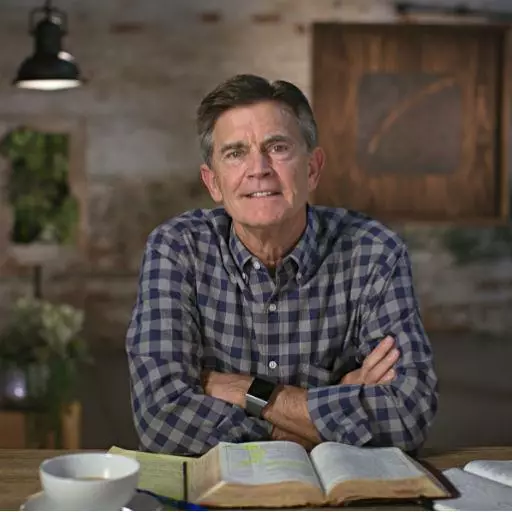
How Our Jobs Can Destroy Our Relationships, Part 2


Life is full of decisions. The question is how do you know which decision you should make? Chip shares a biblical model of decision making that may help you with that very important choice in front of you.
Resources
Connect
- 888-333-6003
- Website
- Chip Ingram App
- YouTube
Partner With Us
- Donate Online
- 888-333-6003
Dave Drouilly: Today on Living on the Edge with Chip Ingram.
Chip Ingram: Many of you are going to make a major decision about work. Where you're going to work, what opportunity you're going to take, are you going to change careers? You will make this decision, and this decision will change the course of your life. Here's the question. How do you know if it's the right decision? How do you make great decisions about work?
Dave Drouilly: I'm Dave Drouilly, and this is Living on the Edge with Chip Ingram. Last time, Chip told a heartbreaking story of Henry, a man whose bigger job offer pulled his whole family away from everything and everyone that had been helping them heal. Today, Chip shares four clear principles for making wise decisions about work, including one lie almost all of us buy without ever realizing it. And if you've already made a job decision you regret, stay with us because Chip has a word of genuine hope for you. Well, here's Chip picking up in James chapter 4 verse 13 with this message, How our jobs can destroy our relationships.
Chip Ingram: And it says, Come now, you who say, Today or tomorrow we shall go to such and such a city and spend a year there and engage in business and make a profit. You do not even know what will happen tomorrow. And then he asks a question. A big question, and notice he doesn't ask about his job or his work. He says, What is your life? What is your life? He answers for you are a mist that appears for a little while and then vanishes. See, the biblical answer to what is your life is you are a shadow.
You are a vapor. The word for mist here was fog or smoke. It's the idea of fog coming up. It burns off by 10:00 a.m. I mean, it's here and it's gone. Your life is transitory. Your life is short. Your life is unpredictable. Your life is way different than you really think. And out of this, what you see is there's two false assumptions to planning apart from God. False assumption number one is life is predictable. The truth is life is very unpredictable and that we don't know what's going to happen. False assumption number two is that life is long.
But what James is saying is a lot of believers in that day just saw, Whoa, dollar signs, opportunity, let's go. And they assumed that things would be as they were predictable, and they assumed that they were going to live a long time. And he says, You're wrong on both counts. And so again, I love James. Inspired by the spirit, he now turns after saying, Wait a minute, and tells us the false assumptions. Now he shifts gears and says, Well, if life is uncertain, if life is short, how should you go about making wise decisions with regard to work?
And then in the next few verses, verses 15 to 17, he's going to give us a clear explanation. Follow along as I read. How do we make good decisions about our work? He says, Okay, in contrast, you ought to say, If it's the Lord's will, we will live and do this or do that. As it is, you boast and you brag, and all such boasting is evil. Anyone then who knows the good he ought to do and doesn't do it, he sins. I think out of this brief three verses, God gives us four very clear axiomatic ways to make good decisions about work.
Number one, in making decisions about work, number one, make God's will the foundation for all decision making. Just, you know, who knows the future? God does. Who has your best interest in mind? God does. That's the part I think we don't believe. Would you jot in your notes Psalm 84:11? This is like one of my most I love this verse verses. The Lord God is a sun and a shield. The Lord gives grace and glory. No good thing will he withhold from those who walk uprightly. God's for He You know what? He's not trying to keep you from a good job with lots of money and all the things you think he can deliver.
The Lord God is a sun, unlimited resources. The Lord is a shield, your protector. The Lord gives grace. In other words, stuff you don't deserve, the Lord gives glory. He wants to expand and multiply and be good to you. He's your father. No good thing will he withhold from those who walk uprightly. Second, I think under this is that uh commit and say to yourself, regardless of the circumstances and the seeming can't-miss opportunity, I am going to do whatever you say. There's got to be a commitment of the heart prior to the decision. Uh I was doing a little research and found out that in the old days on uh believers would write letters to one another, and at the end of the letter they would just put in the olden days D period V period.
Anybody know what that means? It's a Latin phrase And they didn't mean it as a cliché. You know what it meant? It meant if the Lord wills. See, they would write a letter and they would talk about, I'm going to do this or I'm going to do that. I hope to come and see you and hope things are right then. DV If the Lord wills. In other words, it's with an open hand. I think that's making God's will the foundation. Now let me give you cuz I think this is important some very specific ways I think to make God's will the foundation of all your decision making.
Here's here's here's how when I have to find the will of God. Be willing to do whatever God wants you to do. Underneath that you might jot John 7:17. Jesus said to a group of people, If any man is willing to do my will, he'll know the teaching, whether it's of God or whether I speak from myself. I think almost 90% of the will of God is getting my heart to the point where instead of trying to read into verses or read into counsel, God, I will do. No matter what it is, I will do whatever you want me to do.
The second way that at least for me to find God's will is to pray. Matthew 7:7, Seek and you'll find. Ask and you'll receive. Knock and it'll be open. Ask God, Lord, show me. Show me. Speak to me. The third is God's word. Psalm 119:105, Your word is a lamp unto my feet. It is a light unto my path. So often for me just I keep reading where I'm reading. God, you know it's a big decision. Lord, I don't know what to do. I'm willing to do whatever. I'm asking you. And as I'm reading, speak to me from your word.
So I'm going to be willing. I'm going to pray. I'm going to get into the scriptures. And number four, wise counsel. He who dwells with wise men will be wise, but the companion of a fool will suffer harm. That's Proverbs 13:20. So make make God's will the foundation. And I think that's how you do it. I'm willing to do it. I'm asking. I'm in your word. And I'm going to ask the people who know me best and who really walk with God, What do you think of this opportunity? And I'm not going to do what they say.
It's in the multitude of counselors their safety. I'm going to weigh that. The second principle that flows out of this to make good decisions about work is recognize the root cause of planning apart from God. And that's in verse 16. As it is, you boast and you brag. Literally, you take pride in your arrogance. I like the Phillips translation. He says, You get a certain pride as he translates this in yourself in planning for the future with such confidence. And I think the key here is motive. It's in pronouncing our plans or our capabilities as a statement of faith.
This is what I believe the Lord wants me to do. But actually, when you get good at stuff I mean, when you know you're good and by the way, it's okay to be good at stuff. God made you good at stuff. But that's where you can get tripped up. You're good at it and you know, Hey, I've done this. Look what happened. I've done this. Look what happened. I've done this. Look what happened. Here's another opportunity. I I'm just going to go do this. And I can tell you I can tell you what's going to happen cuz I built that.
I built that. I built that. And bang, you know. I was manager here, director here, supervisor here, VP here, and And when that great next juicy opportunity is, there's something in the human heart. And so I I think we just need to be open and sensitive to the Lord. God's will may be that's the next step. God's will may be this is a test. And you know, Jesus has Jesus has these statements that are so hard to get around. It's either me or mammon. Remember that one? You can't worship it and me. And so often upwardly mobile opportunities put us to the very test about what's the core value.
I I remember when Bill Carter said no to that job, I remember like coming home and talking to my wife and sort of telling the story and going, I can't believe that. It was so rare. It was so unusual. But really it was his spiritual priorities and relational priorities were higher than making more money. Why would I be shocked that a Christian thinks that way? You you know? Because I don't meet many Christians who think that way. If Henry would have thought that way, he would have an intact family. If Henry would have thought that way, his kids would be still flourishing.
If Henry would have thought that way, he'd be living in his own nice little house in rural Texas, growing and changing and stopping the abuse and starting a new generation of people. And instead it's living in a station wagon. Every upwardly mobile opportunity may not be God's will. And that's the third principle from this passage. Don't buy the lie. Upwardly mobile work opportunities are automatically the will of God. That's the lie. We just we just think unconsciously. Often we don't even think. Upwardly mobile opportunity, this this this, it must be God's will. And I would say do not buy the lie.
Doesn't mean you shouldn't take them. Doesn't mean not to pray about them. It doesn't mean that it's more spiritual to say no to those. The other test may be God is stretching you. God's giving you capacity and you were here and the director here and the manager here and the supervisor here and the VP here. And this is a new platform for ministry. But you go there not because of look at who I am and how much I've got and how much I'm going to make. You go there as a steward of the manifold grace of God.
This is a big responsibility. This will mean major changes if you still have a family. Uh I Before I go, I mean, Bill, you know what he did? He flew out. He visited a half a dozen churches. He said, I didn't sense that I would have uh the kind of fellowship that I need for where I'm at my life right now. It doesn't mean that you don't take upwardly mobile opportunities, but the lie is believing upwardly mobile opportunities are automatically slam dunk the will of God. And what James is saying is they're not.
Dave Drouilly: You're listening to Living on the Edge with Chip Ingram, and we'll get back to today's message in just a moment. Did you know Chip isn't just on the radio? He's on YouTube, too. Just search Living on the Edge with Chip Ingram and hit subscribe. You'll find full-length video teaching from Chip on marriage, parenting, leadership, and a whole lot more. Ready to watch whenever it fits your schedule. It's also a great way to share a message with a friend who needs it. All right now, back to our message.
Chip Ingram: The fourth principle that flows out of this passage in making wise decisions about work is to act on your God-given dreams and impulses. In verse 17, what's it say? If anyone knows what the good is, the blessing is, the beautiful thing, the praiseworthy, the morally positive thing to do, and knows that he ought to do it but doesn't do it, he sins. In verses 13 to 16 it's a sin of commission. It's arrogant planning apart from God. In verse 17 he warns us about the sin of omission. And so I would ask you, What is the good that God has prompted you to do?
What is the good that you think he might be saying, Hey, See, this passage pushes real hard on don't buy the lie, upward mobility about your job. But then not just with regard to the job, this is sort of a summary statement. This verse I think is summarizing where we've been in terms of the teaching of James. Is there anything in your life or anything in my life you say, This is the good I ought to do. I ought to teach that class. I ought to mentor that young woman. You know what? My lands, you know, I've had a great job and he's talking about all this stuff and I got a 401k and a 701k and a 1501k and people have had all kind of problems and you know, in my honest honest hearts of hearts I'd have to live about four lifetimes to spend all the money.
And I've hoarded my security. And I I ought to You know what? I ought to divest. And all the research I've done I I've worked with a group called Generous Giving. They've done research with people that extraordinarily wealthy and they can't give you one or two instances of leaving it to their children where it's worked out well and they have zero instances where millions and millions of dollars have done anything but totally corrupt and ruin their grandchildren. And yet people have the stack of money. I remember one guy saying, Well, I mean, this is how we all have that that little that little line that says, Well, I'm going to give over and above when I sort of this is okay.
And then probably years ago is when I have a million dollars and you know, and I know, you know, in sort of net assets and things or in I'll be okay. And then it got to be 10 million and then 100 million. And I actually had an encounter with someone said, You know something? I feel real free to give generously. But it's kind of after you have 1 billion set aside. And I'm thinking, Dude, how much steak can you eat in one day? I I mean, you know? You know how And what I realized, what is the good that we ought to do?
Is it Is it giving wildly and generously? Is it Is it Is it saying that you know, maybe some of us in in those middle or more twilight years have more to offer and instead of figuring out how to lower your golf score quite so well that you invest your wisdom and your life and your gifts in the next generation. I I don't know what it is. Maybe it's taking a risk. Maybe it's stepping out. What is the good? What's the dream in your heart that God maybe has been kind of saying, Hmm, that you ought to do?
And he says, You know, what This is an interesting definition of sin, isn't it? If you know what's right to do and don't do it, it's sin. And sin just means missing the mark. And why does God not want us to miss the mark? Because he's a sun and a shield. He gives grace and glory. No good thing does he withhold. His plans for us are great. Why Why is James reproving these entrepreneurs and business people from planning apart from God? It's because your plans and my plans and their plans apart from God will never land us in the best place.
He's a loving God. Think somehow we get this idea that all of God's rules and all of his commandments, you know, he's kind of just trying to keep us from something good. His commandments are like the guard rails on a windy road where that if you go over the edge of the road you drop 1,000 feet and die, all those commands and all those guard rails, you know what they're for? They're to keep you on the road so that as you follow the road and get on the highway you get the highest and the best.
But what I will tell you is in the world that we live in, you'll make a lot of tough decisions and you'll look very different than the average Christian when you make your plans not apart from God, but surrendering them to God. And um I would guess a little bit from your faces and just a little bit from experience, Is there some people in this room that took some jobs years back and you look back now and and literally in your mind as I've been talking, you thought, Boy, I wonder why I took that. I didn't even think about whether to take that job or not.
And then one of your kids went through a rough time or that was Let's see, you took the job. It was 3 years later it's when your divorce hit. Uh the company that looks so rock solid and you got the big promotion and then stock options went down. They hired a new CEO and they downsized and some of you in this room can think back to a job decision you made that you just think, Boy, I wish I would have heard this about 5 years ago or 10. And I think the danger is thinking there's no hope.
The danger is thinking, Man, I I did. I took a job and I I wouldn't I wouldn't say I was selfish and greedy. I just kind of just did it. Just made sense. And if you happen to be one of those people with lots of pain, I want to ask you just to jot down two little chapters and I want to tell you a story cuz I want you to know that you can blow it big time, make terrible decisions, and even make them innocently. And our God is a God of grace, a God of hope, and a God of restoration.
And jot down if you would just in the corner, Genesis chapter 12 and 13, and you maybe can get a Coke or a cup of coffee or tea or whatever you like and put your feet up and if you're in that situation and read it. And the story is very simple. There is a man who has a very important relationship with God and God calls him and he obeys him. And he obeys him, but there's an opportunity. See, you think about these kind of jobs and there's some difficulty and it wasn't like exactly a job, but the economic conditions caused him to make a decision to go down into Egypt.
And then he got in the wrong place at the wrong time. And so then that causes us to compromise our integrity. And then he started telling some lies about his wife to protect his own skin. And then if you know the story uh his wife ends up in Pharaoh's harem, God disciplines and saves Abraham's wife out of that situation. And Pharaoh is pretty hot. And what you find is he he leaves Egypt. And that that's not a pretty time in Abraham's life. He was a chicken, okay? He made a decision apart from God. His circumstances led him directly to economically try and handle what was happening instead of saying, God, you called me to this place.
I don't know how you're going to provide for him, but I'm going to trust you. Instead, he took a decision economically based. Then he began a whole journey of lies that almost ended him up completely in the ditch. And it's really interesting that God is gracious to make him aware that it's a mistake. And maybe that's what he did for you in this room. And then in the end of uh chapter 13 as he moves out in the beginning of chapter 14, you find him in a new land and God sets out some new borders.
And it says, And Abraham built an altar to the Lord. And he worshiped. And I think at that altar Abraham had some, I'm sorry. That was not a good move. And I think probably he and Sarah had a conversation. I sure hope so about I'm sorry. And it's interesting that when you track Abraham's life, that wasn't the end. He made a big mistake. But in chapter 15 God actually renews that great covenant and God fulfills his promises even though he made a major major significant nearly fatal mistake about where to be and where to go, based primarily on economics.
And you know, I just like you to know that's how God will treat you. And you don't have to live with regret. You don't have to feel like all is lost. There may be some pain and some consequences that were for Abraham. And so I think what you need to do is just bow your head and if that's the case, just say, Lord, I'm sorry. And you know, whether willfully, consciously, unconsciously, I look back in my life and see that's happened and I I want you to not only forgive me. I want a fresh start.
I want you to restore me. And I want to be your man or your woman cuz who knows how many years you've given me. I just talked to a guy who remarried at 70 and celebrated his 25th anniversary after his first wife died. See, we you know, your faces tell me you're thinking, You know, who wants to get married at 70? Well, he did. But who He's got a 25-year anniversary. You know what? God wants some of the people to live to 90. He's in good health, sharp as a tack. You know, God You know, God may have a lot more years for you.
Life is short, but who knows? So let's not live in regrets. Let's live about what God will do in the future.
Dave Drouilly: You're listening to Living on the Edge with Chip Ingram and a message titled, How our jobs can destroy our relationships. It's part of our series Building Authentic Community. And if you'd like to hear this lesson again or share it with someone facing a big decision, you'll find it anytime at livingontheedge.org. You can also get these daily lessons downloaded automatically by subscribing to the Living on the Edge podcast wherever you listen. And to hear Chip's original full-length sermons, subscribe to the Chip Ingram sermon podcast. Every job decision Chip talked about today eventually lands on the people closest to us.
That's why love has to be part of the equation from the very beginning. In his book I Choose Love, Chip shows that biblical love, what scripture calls agape love, isn't a feeling that happens to you, but a decision you make to put the good of the people God has given you ahead of your own ambitions. It's a practical, honest look at what it means to love on purpose in every season and every choice. Get your copy of I Choose Love at a special price today at livingontheedge.org/offers. You know, some of the best decisions we ever make are the ones that invest in something bigger than ourselves.
If this ministry has helped you think more biblically about your work, your family, or your future, we invite you to invest in it today. Become a monthly partner or make a one-time gift right now by going online to livingontheedge.org or call us at 888-333-6003. You can also send your gift by mail to Living on the Edge, P.O. Box 3007, Suwanee, Georgia 30024. Well, now here's Chip Ingram.
Chip Ingram: As we close today's program, decisions have huge emotional weight and emotional impact. And for some, I pray today was you know, a flashing light at the at the crossroads and you're about to make a decision and you thought to yourself, Oh, thank you, God. I'm going to I'm going to do it your way. I'm not going to make assumptions. I'm going to I'm going to plan. I am going to surrender. I'm going to really seek you. And I pray today was just a great gift of grace that will help you make a great decision. But my fear is that for some of you, this is something that you're saying to yourself, You know, I already made the decision.
I bought the lie. Yes, I'm upwardly mobile, but that job or that decision or that passion cost me my marriage or a relationship with one of my kids. I want you to know there's hope. Right now God is speaking to you to say, Step number one is let me forgive you. Was it wrong? Yes. Have you paid a price? Yes. Has God abandoned you? Absolutely not. In your heart of hearts, right where you at, just confess, Lord, I'm going to own this. I'm sorry. I misstepped. I was wrong. Will you forgive me right now? I need your son Jesus.
Will you please come into my life right now? I believe that he died on the cross for me. I believe he rose from the dead. And I want to surrender my life, my future. Oh God, I am bankrupt spiritually. Will you please help me? God will hear that prayer and that will be the first step toward making the kind of decisions to rebuild your life. Find a good church that teaches the Bible this week and whoever you know that is the best Christian you know, get on the phone in the next 5 minutes and say, I just prayed to receive Christ.
I'm not sure what it means, but I know I need help. God wants to help you today to make the best decision you'll ever make for all eternity.
Dave Drouilly: Next time Chip begins a brand new message with a question most of us answer a little too quickly. Would more money really make you happier? Don't miss it right here on Living on the Edge. Today's program is produced and sponsored by Living on the Edge.
Featured Offer

Build Lasting Connection
Love is a decision, not a feeling. Get practical tools to love your family, friends, and neighbors well.
Past Episodes

Featured Offer
Build Lasting Connection
Love is a decision, not a feeling. Get practical tools to love your family, friends, and neighbors well.
About Living on the Edge
About Chip Ingram
Chip Ingram's passion is to help Christians really live like Christians. As a pastor, author, coach and teacher for more than twenty-five years, Chip has helped people around the world break out of spiritual ruts and live out God's purpose for their lives.
Chip is the author of eleven books and reaches more than one million people each week through online, radio and television outlets worldwide. Chip serves as CEO and Teaching Pastor of Living on the Edge, an international teaching and discipleship ministry. Chip and his wife, Theresa, have four children and twelve grandchildren.
Contact Living on the Edge with Chip Ingram
info@lote.org
http://livingontheedge.org/
Mailing Address
Living on the Edge
PO Box 3007
Suwanee, GA 30024
(888) 333-6003