

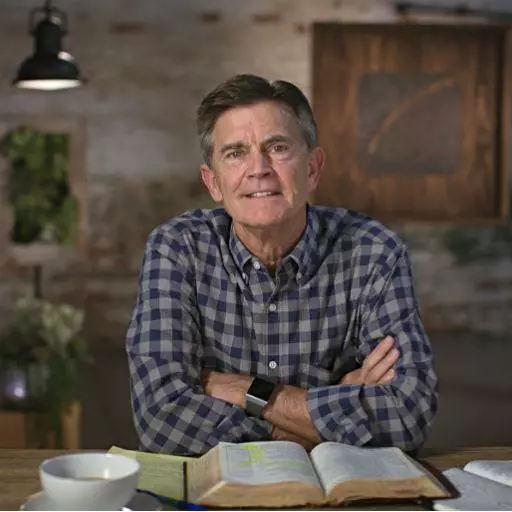
Experience a Broken Spirit, Part 2


Did you know that God wants to speak to you? It’s true. In fact He wants to go way beyond speaking to you. He wants to support you, empower you, direct you, and use you to do things beyond your wildest dreams. Chip reveals how God wants to do this in your life.
Chip Ingram: Did you know that God wants to speak to you? In fact, he wants to go way beyond speaking to you. He wants to support you, empower you, direct you, and use you to do things beyond your wildest dreams. You want to know how? That's the topic today. Stay with me.
Dave Druey: You know, if we're being honest, most of us have a working definition of faith that's safe, manageable, something that fits neatly inside our comfort zone. But today on Living on the Edge, Chip Ingram challenges that.
He takes us to the story of Nehemiah, a man with everything to lose, betting his life on what God had called him to do. That's what a radical step of faith actually looks like. And that's what we're learning to develop for ourselves today. Now let's join Chip Ingram with his message titled, "Experience a Broken Spirit."
Chip Ingram: Let me give you three keys to developing an authentic, genuine, broken spirit. So that when the God who made and created all that there is looks inside your heart, he will say, "This person has a dislocated heart." And number two, they have a broken spirit.
Number one, it begins with a restored view of God. We're going to learn key number one. Number two, that will lead to an accurate assessment of yourself. And later, we'll learn it'll cause your agenda of your life to get aligned with God's agenda and his purposes.
You say, "Well, where do you get that?" We get it from Nehemiah again. Now imagine, he's living in the lap of luxury. Right? He's got his nice chariot, his nice clothes. But he's heard about this. He's got a dislocated heart. And it says he prayed and fasted for three months, we'll learn.
He says, "When I heard these things, I sat down and I wept for some days. And I mourned and fasted and prayed before the God of heaven." Then I said, here's his actual prayer, "O Lord, God of heaven, the great and awesome God who keeps his covenant of love with those who love him and obey his commands. Let your ear be attentive and your eyes open to hear the prayer of your servant is praying before you."
Notice the intensity and notice the high view of God. Yahweh, creator, powerful, fearful, holy, loyal, loving God. Here's what you need to understand. We all have issues and problems. Right? See, you either have really big problems and a really small God, or you have a very big God and very small problems. Those are the only two options.
Nehemiah saw a huge problem. He had a dislocated heart. And he had God-centered prayers. And it starts by beginning to get a high view of God. A view of his majesty, his power, his wisdom, his love, his justice, and his holiness.
I love what Tozer says. I've read probably a chapter of this book the first 15 years I was a Christian, probably every day, and then I kind of cut back to maybe a chapter once a week. Because it's just a tiny book called "The Knowledge of the Holy," and it's just about God. What's God like?
Tozer writes, "Modern Christianity is simply not producing the kind of Christian who can appreciate or experience life in the spirit. The words in scripture, 'Be still and know that I am God,' mean next to nothing to the self-confident, bustling worshiper in the middle period of this century."
"But the alarming thing is that our gains are mostly external and our losses are wholly internal. And since it is the quality of our religion that is affected by internal conditions, it may be that our supposed gains are but losses spread over a wider field."
We've never had more TV, never more video, never more mega-churches, never more presence. Christianity has never had the external affluence and influence. But all the while, the quality of the kind of Christians we've been producing over the last 50 to 70 years are less and less and less like Jesus. They're less holy and they're less loving, and they have less faith.
And in the name of Jesus, we've sought personal peace and prosperity. And the average gospel going out in many parts of the world is, "Jesus is your self-help buddy, and life is really about you. Now make my life work out. And if I ever get cancer or my marriage is in trouble or my kids have a problem or I have a financial dip, hey God, what's the deal? Who do you think you are? Don't you understand I'm the center of the universe?"
Tozer goes on to say, "What comes into our minds when we think about God is the most important thing about us." I put a little passage there, it's Isaiah chapter 6, because the way you get a high view of God is becoming a worshiper. I will tell you this, having done this, you can become a Bible student and read the Bible a lot, which is very important.
You can go to a small group, and all those things are helpful. But if you are not a person that takes the Word of God as your prayer book and begin to worship God for who he is, the connection of all this intellectual stuff you're putting in your brain will never go into your heart so that you can really trust him when it's difficult.
That happens by worshiping. That's when you sit quietly in a room and you sing to God. That's when you adore him and praise him and thank him and honor him. And you're not trying to get anything done, and you're not looking at your watch. And you open your eyes and you look at things that are beautiful.
And you thank God for what he's made and who he is. And you cry out, "Holy, holy, holy is the Lord God Almighty. Heaven and earth is full of your glory." And you begin to rapture in the presence of the power and the majesty and the love of God. Worshipers and in worship, we get a high view of God.
And when that happens, you'll notice, as you read in that Isaiah passage, there's worship and there's angels. And the train of the robe, it was about his majesty and his power, fills this temple. And Isaiah, this prophet, has this amazing experience. And when he sees God high and lifted up and holy, then he says, "Woe is me, for I am a man of unclean lips among a people of unclean lips."
And I would suggest that the average Christian thinks your lips are pretty clean. We're doing okay, and God, I just need a little help to get through the day so that you can help me fulfill my agenda for my world, my family, my singleness, my job. And here's what I'd like you to do for me today.
And therefore you don't have deep experiences of repentance. You don't have times of realizing, "Wow, how have I drifted? How have I become so critical? How did my motives slip into being so performance-oriented? Why am I so short with my kids? Why is it that what I really care about and I'm so upset because the stock went from here to here? I thought I had an eternal perspective. Why are certain things eating me up inside because I can't control them?" Those are evidences.
And God says, and Isaiah responds, "Woe is me." See, when you get a high view of God, you'll get a recalibrated view of yourself. Notice it's not just Isaiah, it's Nehemiah, it's every character I can find in the Old or New Testament. So notice his response.
He says, "I confess the sins we Israelites," notice it's first person. If I was this guy, I hope I would do better. But if I was Nehemiah, I'd be looking at this bad situation. And I'd pray for a while and I'd say, "You know what? All those people messed up. Why did they mess up? They're worshiping idols and they've done this and they've done that. And if they would shape up and," but he doesn't.
He realizes he's a part of it. "I, we, I, we. I confess the sins we Israelites, including myself and my father's house, have committed against you. We have acted very wickedly toward you. We have not obeyed the commands, decrees, and laws that you gave your servant Moses." No excuses. No ducking. No blame-shifting.
No, "Well, Lord, I came from a very difficult family. Circumstances have been really rough on me. You just don't understand what I've been through." He just owns it. And he not only owns it for himself, he owns it for his father's house, he owns it for the nation. And he repents.
The mark of a high view of God are prayers that are God-centered. And the mark of prayers that have genuine repentance and confession are gut-wrenchingly honest prayers. My personal struggle in prayer goes something like this.
When I draw near to God, I see stuff about me I don't like. So when I see stuff about me I don't like, I have to face that or I have to run. And so the difficulty in praying for significant, quiet, in-depth times is the reality that if I really get honest, I'm going to see some things about my motives, I'm going to see some things about me that aren't that pleasant.
And what that does is everything in me then will say, "I'll pray later. I'll pray deeper later." And what I find is when I'm having my most intimate times with God, there's a practice of not only worship but a practice of asking him to search my heart and sitting quietly and letting him bring, not general feelings like, "You're a terrible dad, you're a terrible pastor, you're a selfish no-good," that's the enemy. That's called condemnation.
No, it's more like, "What have you been thinking about for the first four hours today?" "When you were in that conversation, your voice got kind of this way and that way because you were just frustrated. You didn't really care about them." "And when that person came up afterwards when you were tired, you were kind of looking at them, but you were just glazed over. You didn't care." "God, I'm sorry."
Or, "Ingram, your priorities are out of whack. You're trying to do too much in too many different directions, and this is what you need to do." And you know the only avenue? It's not try harder, it's repent. Ask forgiveness. It's "get right". If you don't know how to do that, I've given you a passage to work, and it's James 4:7-10.
And it's the clearest, best repentance passage I know of in all of scripture. And it gives you a very clear model. It says, "Submit therefore to God." When you repent, the first thing you need to do is realize you quit trying to run everything. It's back to the all-in, it's back to the surrender.
And then once you do that, you get a lot of opposition. Then it says, "Resist the devil and he will flee from you." Then you take a positive step. "Draw near to God," promise, "he'll draw near to you." And as you draw near to God, maybe that's getting back in the Bible. Maybe it's getting back connected to a small group. Maybe it's having an honest conversation.
Drawing near to God, maybe you go ask for forgiveness for someone. But you draw near to God, he'll draw near to you. And as he does, then he'll show you stuff. "Cleanse your hands, you sinners. Purify your hearts, you double-minded." See, he'll tell you about some actions and about some attitudes.
And then he talks about mourning and turn your laughter, and the idea it's not that we shouldn't be happy and laugh, the words in the New Testament have to do with this sort of self-sufficient living for my pleasure and not really owning at the level and the depth that, "I'm really living a self-centered life. Will you forgive me?" And you mourn and you grieve.
Just like when you hurt someone's feelings and you really tell them you're sorry and you really mean it. That's what he's talking about. So a broken spirit happens with the restored view of God that leads to an accurate view of myself. A restored view of God requires me to become a worshiper on a regular basis. An accurate view of myself demands repentance and confession.
And then notice what happens. When you're really clean, a lot of us pray like this, "Oh God, please do this. Oh God, please do this. I wonder if he will. Oh God, please do this. Maybe, maybe, maybe. I doubt it, I doubt it, I doubt it. Please, please, please. If this would happen, this would happen, I promise." No, no, no.
When you see God for who he is, and you watch this all through scripture, and when you're around people that God uses greatly, you'll find this in their life. They get an accurate view of themselves. And when they repent and they know they're clean, they kind of come into the presence of God with boldness and clarity, like the Hebrews passage.
"Therefore come boldly before the throne of grace to find mercy in your time of need. For you have a great high priest who's blazed the trail and the pioneer," and it says, "you come in. What do you need?" And you listen to this man pray.
The broken spirit results in a renewed commitment to fulfill God's agenda. And so he's now a new man. He's cleansed. He knows he's blown it. He sees God's on the throne. There's a big problem and he can't solve it. But he's going to ask. And he's going to quote parts of Deuteronomy 30 and Exodus 32.
And he's going to say, "God, I'm going to remind you of some promises you made." He says, "Remember the instruction you gave your servant Moses, saying, 'If you are unfaithful, I will scatter you among the nations.'" "Remember God, remember you said that? Well, we were unfaithful and we're scattered. That one's been fulfilled."
"But remember the second half of it? 'But if you return to me and obey my commands, then even if your exiled people are at the farthest horizons, I will gather them from there and I'll bring them to this place, Jerusalem, the place I have chosen as a dwelling for my name.'"
See, when you start to have a broken spirit, you pray God-centered prayers, gut-wrenchingly honest prayers, and then they're not hopeful prayers, they're promise-centered prayers. You begin to realize God has some promises about your finances. God has some promises about your marriage. God has some promises about when you're stuck and you're depressed.
God has some promises. And you take his word and you say, "I actually believe it's true. I don't feel it, but I believe it's true, and I'm going to pray and claim the promises of God." That's faith. And so notice his prayer and notice the focus. He reminds God and it turns to intercession.
He looks at this bad situation and it's not like, "Well, I'm pretty wealthy and I'm affluent and I've got a good position. I guess I'll really rev it up and make something happen." That's not what he prays. See, he let God work in him before he worked through him. "These are your servants and your people whom you redeemed by your great strength and your mighty hand." Where's the focus? Your, your, your, your, your.
"O Lord, let your ear be attentive to the prayer of this your servant and to the prayer of your servants," notice the small group, "who delight in revering your name." And then over this three months of praying, Nehemiah went from someone who prayed and was asking, "God, I don't know my part in your plan. I don't know my divine design. I don't know my gifts and I don't know in this time of history exactly what you want me to do."
But at the end of three months, he realized God showed him that he had the gift of leadership and that God wanted him to take his leadership skills and go back and head up the rebuilding project. And so he's going to go. He'll take a radical step of faith. He's going to get in front of this king and he's going to act like he's really sad.
And what he knew was in that culture, if you act like you're sad in front of the king, you have two options. Option one, "Hey, what are you sad about? How can I help you out?" Option two, "That's illegal. Kill him. Get rid of him." So he realized he was willing to put his life on the line. And so he intercedes.
James 5:16, God says, very clearly, he says that the prayer of a righteous man, and I have learned the prayer of a righteous woman, will accomplish much. We'll have to get serious. I'm a little embarrassed to be honest, that we gather as a people and we have as many needs and we sing and we hear and we teach, how little we actually stop.
How little in our relationships with one another. We go to each other's house, we talk, we have fun, we drink coffee, we do stuff. When's the last time you said, "Before you leave, let's stop. Right now, let's stop. Let's pray. Let's ask God. Let's believe." I believe that's God's agenda.
Three summary principles that I think will give us some handles to move forward. One, we must let God work deeply in us before he will work significantly through us. What if you asked him and really meant it? What if you said, "O God, what do you want to do in me? What do you want to correct? What do you want to restore? What do you want to heal?"
Second, until we make prayer a priority, progress and power will never be a reality. Here's what I can tell you because I've been down this road before. Not only in my personal life, but in church, Living on the Edge. Here's what I'll tell you. Two and a half months from now, we'll put checkmarks next to these that'll blow your mind.
Because you know what God, his agenda is? It's not like big for him to answer these prayers. He wants to teach us that he actually listens. One of the things I do every year is I think of the biggest top ten things that are most overwhelming or the things that I believe God wants to happen and I write them down. I have my top ten.
They're big and they're specific. And then I pray over them. And I just can't tell you how many Decembers it's like, wow, eight. I never dreamed. And it was like, God, how could I not believe? The Lord, the God, the creator, the great and awesome God.
Third, difference makers are not necessarily those with a lot to give. You don't need to develop leaders at HP. You don't have to have a big house. You don't have to be rich. You don't have to be a super intellect. In fact, actually when you read this book, it's like God goes to great lengths to pick people that don't have much of any of that. The "are-nots" of the world.
Read 1 Corinthians and he lists all these sort of dysfunctional, difficult, sinful people that have been through all this terrible stuff and he says, "And such were some of you." God uses the foolish, us regular people with our baggage and our hurts and our past and our sins to profound the wise. Every great movement of God starts with a little handful of people who ridiculously and mostly at the ridicule of others, actually believe God would do exactly what he says. Grace always flows downhill. It requires humility.
Dave Druey: You're listening to Living on the Edge and a message titled "Experience a Broken Spirit", part of our series, "You Were Made for More." Well, today I want to share a note we got recently from a listener named Matt, who wrote, "This ministry has been a huge part of my life and spiritual growth for way over ten years. I have a very strong local church that I'm connected to, but God has used Living on the Edge in profound ways more than a couple times in my life. The timing and subject of a couple broadcasts was God telling me that he hears my prayers and loves me."
Well, Matt's note captures something we hear again and again, that God has a way of meeting people right where they are through this teaching. That's why this ministry exists, to help Christians step closer to God and into his plan for their life. If you want to take your next step and discovering what God made you for, try "The Real You," a free online assessment we've made available at therealyou.org.
It's a biblically grounded tool that helps you understand how God has uniquely wired you—your personality, your strengths, your spiritual design. Take it free at therealyou.org. And if Living on the Edge has been part of your own story, if God has used this ministry to meet you, speak to you, or move you, we invite you to step up and give today.
Your support is what keeps this gospel work going. Give online at livingontheedge.org or call us at 888-333-6003. You can also mail your gift to Living on the Edge, PO Box 3007, Atlanta, Georgia 30324. Well, now here's Chip.
Chip Ingram: I don't know about you, but down deep in my heart and the inner recesses of my being, I really long for my life to make a difference. And the temptation in my life has been to get active and to get busy and to get involved and to try and do a lot and stir up a lot of dust, and often I get very fatigued, very tired, and maybe like you, overextended.
What God would teach us today is that making a real difference doesn't begin with external activity. It begins internally. We learned already that you have to care, you have to have a dislocated heart. But step number two is a broken spirit.
And I'd like to end today's program where I think God would have us go. I'd like to pray. And I'd like you, even if you're driving in your car or you're listening at work, join me at least in spirit.
Almighty God, we would tell you that you are high and lifted up, that you are great, that you are holy, that you are powerful, and yet you love us. And we ask that you would please forgive us for a small and puny view of you. How in our worst days we actually try and use you and get you to fulfill our agenda, rather than being broken before you and say, "O God, we want to be a part at whatever level of your agenda."
Lord, we repent today of our small views of you and we ask you to give us an accurate, clear, high view of you. And we pray too for the courage today, as we've listened to your word, to be honest about who we are—our sin, our selfishness, our motives. Like Nehemiah, we want to own it, we want to confess it, we want to come broken.
And then, Lord Jesus, we pray by the still small voice of the Spirit, by your word, and then through your people, that you will realign our life, our goals, our time, and our agenda with yours. You placed us each one in a neighborhood, in a relational network, in a church, in a job site where you long for us to make a difference.
We tell you of ourselves we're bankrupt. If you would empower us, if you will show us what it looks like to walk with you, we'll follow. In Jesus' name, amen.
Dave Druey: Well, that's all our time for today. I'm Dave Druey. We'll see you next time as Chip Ingram continues our series, "You Were Made for More," here on Living on the Edge. Today's program is produced and sponsored by Living on the Edge.
Featured Offer

Uncover Your God-Given Gifts
The Real You functions like a "spiritual DNA test," designed to help you uncover your gifts, talents, and unique purpose in the world.

Featured Offer
Uncover Your God-Given Gifts
The Real You functions like a "spiritual DNA test," designed to help you uncover your gifts, talents, and unique purpose in the world.
About Living on the Edge
About Chip Ingram
Chip Ingram's passion is to help Christians really live like Christians. As a pastor, author, coach and teacher for more than twenty-five years, Chip has helped people around the world break out of spiritual ruts and live out God's purpose for their lives.
Chip is the author of eleven books and reaches more than one million people each week through online, radio and television outlets worldwide. Chip serves as CEO and Teaching Pastor of Living on the Edge, an international teaching and discipleship ministry. Chip and his wife, Theresa, have four children and twelve grandchildren.
Contact Living on the Edge with Chip Ingram
info@lote.org
http://livingontheedge.org/
Mailing Address
Living on the Edge
PO Box 3007
Suwanee, GA 30024
(888) 333-6003