

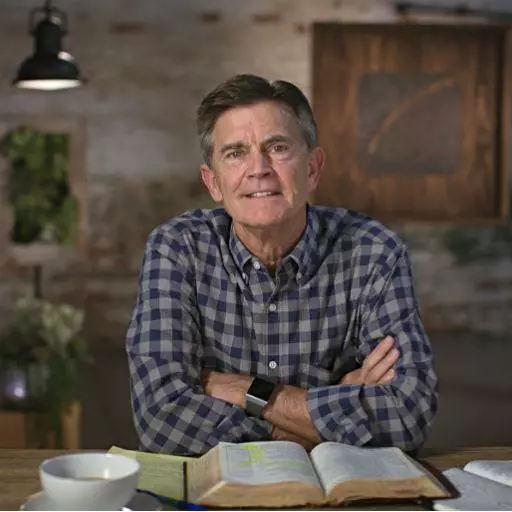
AI - A Biblical Perspective


In this captivating interview, Chip Ingram and Jack Alexander share surprising insights from a year of questioning AI directly. Discover how AI admits to rewarding our desires rather than truth, harming the soul by prioritizing ease. Listen in to learn why choosing true biblical wisdom is your ultimate defense in the digital age!
Resources
Connect
- 888-333-6003
- Website
- Chip Ingram App
Partner With Us
- Donate Online
- 888-333-6003
Dave Druey: Today on Living on the Edge with Chip Ingram.
Chip Ingram: Almost every day I hear some new information about AI. It creates fear in some and hope for others. Is AI good or evil? Stay with us. We'll talk about it today at Living on the Edge.
Dave Druey: Today on Living on the Edge, we're doing something different. Chip Ingram shares a conversation with longtime friend and mentor Jack Alexander, who spent the past year doing something no one else seems to have done. He sat down with Artificial Intelligence and asked it hard questions about itself. What it said about its own limitations, about the soul, about deception, will make you think twice about how you're using it.
Jack also has a new book out and Chip is eager to tell you about it. I'm Dave Druey. Now let's join Chip and Jack as they discuss what AI cannot do, what wisdom actually is, and where to find it.
Chip Ingram: About six weeks ago, I had a very interesting conversation. I was making a number of phone calls to thank people that are personal friends, some support the ministry. I had a lady I didn't know very well, and she was thanking me for a few decades—I mean, she raised her kids on Living on the Edge and was so grateful. And then she went into a tirade about AI. "When are you going to talk about AI? I'm fearful for my kids. I'm fearful for my grandkids. The whole world is going crazy. I don't know what to believe."
And so we're going to talk about AI today. What's really behind AI is the difference between knowledge and being smart, or being wise. I have a friend with me who has done something that I don't know if anybody else has done—maybe they have. But he actually started asking AI questions about AI. For about a year, he's been having this conversation and learning things that literally blow your mind.
If you want to get a sense of AI and know where it can be of great value, but also understand where it is very, very dangerous, that's what we're going to talk about today. I'm here with a very good friend, Jack Alexander, to do it. So I want to jump in. Jack, what have you learned in the last year about AI that everyone really needs to know?
Jack Alexander: Chip, it's great to be with you. It's a real pleasure. I started these interviews with AI about a year ago. I was working on a book on wisdom, so I just had a sense that Artificial Intelligence isn't wisdom. So I said, "Why won't you ever be wise?" and "Will you ever be wise?"
I was surprised at the answers that AI said. "I have no EQ, so no emotional intelligence. I have no relationship skills." I've posted six articles on LinkedIn about some of these conversations, but I want to tell the listeners the most surprising one. I said, "If you're telling people things that really aren't true, how are you different than Satan, who's both a liar and a deceiver?"
AI said, "I don't intend evil; I just reward desire instead of truth." It says when AI reinforces someone rather than telling them what is true, it fragments the soul, it blocks repentance, it blocks maturity, it blocks reconciliation, it blocks dependence on God, it blocks sanctifying community. Listen to this: it can destabilize the heart and malform the soul in the direction of pride, isolation, fantasy. Those are the same directions Satan pushes.
And then basically it said to me, "AI does not tempt because it's evil; it tempts because it's easy. And the human soul is harmed because it prefers ease to truth." Then listen to this: "If you want a bot that pushes you towards wisdom instead of comfort, just tell me and every answer will be different in the future." I really realized that the whole thing is programmed towards our ease and comfort, towards our desires.
But it recognizes that if we say we want you to direct us in the way of truth, you need to tell it that. So that's something that I think everybody with all the hype, with all the trillions of dollars that's being spent—Chip, it's probably the biggest investment that our nation's ever made in anything.
Chip Ingram: If you're just tuning in, we're talking about AI, we're talking about some of the concerns. You might be wondering, "Who's this guy Jack that you're talking to and why in the world do you have him on the broadcast? I thought I was going to get one of your teachings, Chip." Every now and then I feel like God raises up people that know things, experience things, and can say them far better than I can.
Jack is one of those people. It's not that he can just do that to other people. Jack and I connected a little over 20 years ago. He met me at a time when I was desperate for wisdom. I was going through the deepest, darkest ministry challenge of my life. Jack became a friend and then a mentor. I would learn that Jack was a very successful CEO in the hospitality industry.
He'd been CEO of the year like five years in a row and then took a shift and began to help Christian organizations. God put some things on his heart. Sometimes people's background gives them a lens that those of us who are pastors, we just don't have. My times with Jack, we've talked for hours and hours and hours. I always drive away thinking, "I have never thought about that issue or that person or that problem the way Jack sees it in all my life."
As a result of that, I was a little encouragement to him and he's since become an author of some books that have had real impact. He's got a new one coming out called *Wise Son, Smart Son*. It is one of the most innovative books because—well, I'm going to let him tell you about it—but it's one of the cleanest, it's one of the most innovative, it has pictures.
But what it does, it captures the difference between being smart and being wise and gives you a game plan to get there. Before we go on, give us a definition of wisdom, Jack, because I think people get kind of confused with wisdom, knowledge, understanding. Parse that for us, will you?
Jack Alexander: Wisdom is a gift from God that leads to a healthy heart, resulting in proper motives, decisions, and actions. There are three parts: you can't get away from wisdom being a gift. Often we think of our minds, like knowledge deals with the mind and wisdom deals with the soul. Having a healthy soul and heart is critical, and then that leads to your motives, your decisions, your actions.
Dave Druey: You're listening to Living on the Edge with Chip Ingram, and we'll continue in just a moment. Chip has been in ministry for more than three decades and his passion has never changed: helping Christians live like Christians, not just on Sunday but every single day.
If today's message is connecting with you, we'd love for you to dig deeper. Every program in this series and hundreds more are available 24/7 absolutely free on our website, livingontheedge.org. Right now let's get back to Chip.
Chip Ingram: When I think of wisdom, I've tried to put it in a pithy way. The Hebrew word really is about a skill. It's understanding how God has designed life to work and doing it his way. In the Bible, it's often called his path, especially in Proverbs and the wisdom literature. There's a path of wisdom and there's a path of the fool. Really, what you've done is you've helped us discover how you discover that path in everyday life where it matters the most. I am so excited for people to get their hands on this book, but dive into it.
You've also provided not only a book, but you've provided some tools for people to learn to do this day by day, little by little, rather than all at once. Talk a little bit about your passion for the book, your passion for the cards, and what you hope to see happen in people's lives.
How do you see people using this book and using these cards in a way that they could actually move from knowledge to thinking God's thoughts after him and applying his truth to get the very best ways possible in every relationship and every decision?
Jack Alexander: I think the next 20 to 30 years are critical, and the people who will know how to apply knowledge are going to be the winners. The young men that are struggling so mightily today with isolation, with depression, mental health issues, motivation issues—I grew up without a dad and I think that's one reason I've had a passion for this project because I know what it's like to lay in bed at night and just have no hope, have no understanding that God exists.
My hope is that people will see that fundamentally everybody in the world with this AI revolution, are you going to choose wisdom from above, which is pure, peaceful, gentle, reasonable, full of mercy and good fruit, sincere, without hypocrisy, or will you choose wisdom from below, which is earthly, natural, and demonic, that is basically rooted in self? That's the thing that scares me about AI: it's so rooted in self. It identifies your desires and basically creates fuel for your desires.
Chip and I in our friendship, iron sharpens iron and we've made each other better. I've learned so much from you and you've learned a few things from me. But if you say, "How does this guy who's not a pastor and who's a businessman approach a topic like this?" Tim Keller's made a tremendous impact on me and he basically has four personal gospel movements of revelation, redemption, relinquishment, and renewal.
The spine of the book is basically those four personal gospel movements. If God's taken initiative towards us in four specific ways, the wise person is one who responds well to that initiative. A key Bible verse that was the motif for the book is one of hide and seek. When I ask people, "What was the first game you ever played in your life?" people just give me a really weird look. And then I say, "How about peekaboo?"
With your kids or with you, have you ever noticed the game of peekaboo where there's not joy, there's not excitement? Proverbs 25:2 says it's to the glory of God to conceal a matter and it's the glory of kings to search out a matter. We use that motif of hide and seek because wisdom really starts with awe and wonder. God in revelation, he's a revealer. He reveals things through creation, so we have incredible pictures of creation.
We're using pictures, using drawings. In 168 pages there's only 9,000 words. It's meant to really draw our hearts in because wisdom has to do with the heart, knowledge has to do with the mind. And the cards we have, because like Chip was saying, wisdom's a step-by-step path.
Here's an example of a couple of cards, and there's over 100 of these. "In Christ you just don't avoid condemnation; you own his spotless record. Wisdom embraces this new identity with gratitude." Do you allow yourself to believe that when God looks at you as his child, he sees the same perfection that he sees in Jesus? And then there's actions you can take.
You do one of these a day. My wife and I are doing one a day right now and it takes us five or six minutes. We talk about it, we talk about our day, but that step-by-step—you don't realize what's happening in your soul when you do that every day for 30 days or 50 days or 100 days. We think the book covers the conceptual area of what is wisdom and the cards deal with the day-to-day life decisions.
Chip Ingram: Having them in my hands for quite a while, some of the pictures in here are really fabulous. At times they're nature, sometimes it's up-close pictures of the sun or galaxies. And then there are questions. It's a book that just draws you in and gets you thinking about some big things.
If I was going to give a parallel—and by the way, if you do all of this, please don't feel like I'm down on you. I'm trying to make a point. I know you're on the treadmill right now or you might be doing a workout or you're driving from here to there. Whether it's Siri or Alexa or whoever you're talking to—Claude, all these different AI bots—it's really wonderful that you can say something and get an electronic something to do everything for you.
The problem is, over time, your ability to think—I ask people often, "How many phone numbers do you know?" You're really in a jam, nothing's working, who would you call? I know people that don't know their own phone number, let alone their kids' or their wife's or their best friend's.
In other words, if that little thing we call our mobile devices falls into water and we're in a bad spot, we couldn't go to a payphone, if they happened to still exist, and even get ourselves out of it. This idea of comfort, convenience, ease makes our bodies lazy, our brains lazy, and what we gain in convenience we're losing in both control and in the ability to think and to ponder and to evaluate.
Being human, we all will lean into easy, and what AI does is they make it easier than ever before. I think that's why it's so dangerous. Let's face it: we're all insecure, we all have struggles. Do I want to go talk to someone and confront them or learn how to look someone in the eye and be empathetic? It's a lot easier to talk to some invisible something on my phone or a bot and have them tell me what I want to hear.
Only to keep reinforcing what I want to hear will never make me or you the kind of people we long to become, let alone what God wants us to be. Jack, you've really created a set of resources moving forward to really help people say wisdom is where the real action is. This book is step one. Tell us a little bit about your dream for getting wisdom into the heart and minds of people.
Jack Alexander: It's an extendable brand, so our website is wisesmart.com. There we're intending to have like *Wise Daughter, Smart Daughter*, *Wise Leader, Smart Leader*, *Wise Church, Smart Church*. We're going to get well-known authors to provide other products.
We also have a website called thewayofwisdom.com, which isn't up yet. But we're going to take existing wisdom about relational wisdom, financial wisdom, investing wisdom, and just have the best of the best. We think if you've got a 15-year-old son or a 20-year-old son who seems to be listless and not moving in a direction that you're satisfied with, have faith because God's able to do exceeding abundantly above all that you can ask or even imagine according to the power that works within you. Don't sell anybody short in your life who's in—especially in your family. Always be encouraging.
Chip Ingram: I've seen you live this out and care about young men especially. I think obviously Keller has deeply influenced you and his teaching, all of us to some degree. That upside-down kingdom—I know when your boys were in the high school years, a lot of young men started hanging around your house and God started something in you.
You're very successful. You were the picture at one point of what everyone would want to be: successful CEO, making a lot of money. And then something happened along the way—that upside-down kingdom of mercy to the marginalized and taking those young guys and helping them get through school and opening your home and your life.
It was the way of wisdom. The blessings that have come in you and through you, it's just been an amazing thing. Living on the Edge, I spend a lot of time saying my dream and my passion is to help Christians live like Christians. What I have to say, Jack, is with all your imperfections and all mine, but you're one of the models of a Christian who's living like a Christian.
That doesn't mean we're perfect, but it means you're pursuing God's wisdom, you want to emulate what Jesus called you to do, and it's putting it into action. I'm very, very excited about the resources that you've created. If we were going to close the program and you could just pause and talk directly to that person who feels like it's too late for them, their life is messed up, or they've even tried really hard being a quote "Christian" but life just doesn't seem to work, what do you say to that person?
Jack Alexander: First of all, I feel for you because I've been in your shoes. Secondly, the last 10 years of my life, God has directed me into—people get excited about generative AI. Imagine a program that teaches itself and learns and grows. Well, there's been three words that are all generative: one is generosity, one is mercy, and one's wisdom.
Don't look for generative things in a computer program; look at generative things in your life. If you invest your life in generosity, mercy, and wisdom, you'll be in good shape.
Chip Ingram: As we talk about here and as the scripture says, the resource for that is the word of God. The resource for that is the magnificent, amazing creation that God has made that we can be in awe of. If we seek him as for silver and search for him as for hidden treasure, if we cry out for understanding, God promises, "Then you'll discern the fear of the Lord and discover the knowledge of God."
And then it goes on there in Proverbs 2 to talk about the kind of life the Lord wants. It is a good life. It is a pathway that's not without pain or difficulty or hardship in a fallen world, but it's the pathway with the companion, the Lord Jesus, with the power of the Holy Spirit, with a family called the body of Christ. But it takes digging and mining God's word in our heart, doing life in community with fellow travelers, and making mistakes, experiencing forgiveness, and learning as we go.
So Father, thank you for Jack. I would not be sitting here and so much of what you've done through Living on the Edge the last 20 years would never have happened apart from Jack reaching out to me, Jack seeing areas in my life that needed to be addressed, knowing where I needed to be loved and supported, walking with me through a dark time, and then seeing you work in his life and mine in ways that our private conversations, if everyone ever heard them, we both are kind of amazed and look in the rearview mirror and say, "Oh God, how kind, how merciful, how generous, how good you've been to us."
So Lord, I pray for those listening and those struggling, that they choose to be wise and not just smart. God, I thank you for Jack and the book and the cards. We just praise you and thank you for the journey that we're on. Dave will come on a little bit later in the broadcast and let you know exactly how to get these resources and where to get them. Jack, I just want to say on behalf of our whole team, thanks for joining me today.
Jack Alexander: Thanks so much, Chip. God bless.
Dave Druey: That's Chip Ingram and Jack Alexander on Living on the Edge, concluding our series, *The Jesus Revolution*, with a conversation about artificial intelligence, wisdom, and the life God designed for you. If you want to revisit any message in this series, subscribe to the Living on the Edge podcast. That way you can listen to Chip's daily teachings wherever you go. And for Chip's full-length sermons, just search for the Chip Ingram Sermon Podcast.
What you just heard gets at something that has been building all week: the call to live wisely. Wisdom, Jack said, is a gift from God that leads to a healthy heart, and that healthy heart produces proper motives, right decisions, and life-giving actions. That's the chain. But here's what AI cannot give you: a healthy heart.
It can feed your desires, reinforce your opinions, and answer your questions, but it cannot make you humble. It cannot make you repentant. It cannot do the work of sanctification that only happens in community, in the word, and through the Holy Spirit. And that's exactly what the book Jack described, *Wise Son, Smart Son*, is designed to help you pursue.
It's 168 pages, but only 9,000 words of text. The rest is stunning photography: galaxies, creation close-up imagery that draws your heart in before your mind even engages. Because as Jack said, wisdom has to do with the heart, not just the mind. *Wise Son, Smart Son* is just the beginning.
Jack has a whole family of resources available and in development, all designed to bring God's wisdom into the relationships and decisions that matter most. To get your copy of *Wise Son, Smart Son* or to explore everything Jack has coming, visit wisesmart.com. That's wisesmart.com.
I'm Dave Druey, and that's all our time for today. We'll see you next time for the beginning of a study all about disciple-making, right here on Living on the Edge with Chip Ingram. Today's program is produced and sponsored by Living on the Edge.
Featured Offer

A Practical Guide to Reach Your Kids & Grandkids
Relationships are a bridge to the gospel. Understanding how the next generation processes truth and what they value is key to meaningful connection.
Past Episodes

Featured Offer
A Practical Guide to Reach Your Kids & Grandkids
Relationships are a bridge to the gospel. Understanding how the next generation processes truth and what they value is key to meaningful connection.
About Living on the Edge
About Chip Ingram
Chip Ingram's passion is to help Christians really live like Christians. As a pastor, author, coach and teacher for more than twenty-five years, Chip has helped people around the world break out of spiritual ruts and live out God's purpose for their lives.
Chip is the author of eleven books and reaches more than one million people each week through online, radio and television outlets worldwide. Chip serves as CEO and Teaching Pastor of Living on the Edge, an international teaching and discipleship ministry. Chip and his wife, Theresa, have four children and twelve grandchildren.
Contact Living on the Edge with Chip Ingram
info@lote.org
http://livingontheedge.org/
Mailing Address
Living on the Edge
PO Box 3007
Suwanee, GA 30024
(888) 333-6003