

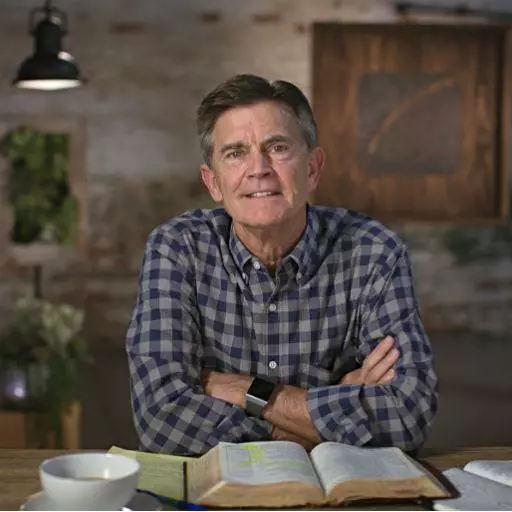
Agenda #2: Maintain the Status Quo, Part 1


There’s something about tradition that makes us feel secure, connected, and grounded. But, there is a dark side to our traditions, even good traditions of our faith, a dark side so powerful that it can destroy the very thing it meant to preserve. So how do you know if a tradition has gone dark? Join Chip and find out.
Resources
Donate to the Match
Connect
- 888-333-6003
- Website
- Chip Ingram App
Partner With Us
- Donate Online
- 888-333-6003
Chip Ingram: Did you ever see the movie Fiddler on the Roof? One of the most popular songs in that movie is called "Tradition." There's something about tradition that makes us feel secure and connected and grounded. But there's a dark side to tradition as well, even good traditions of our faith. So how do you know if a tradition has gone dark? Stick around. That's today on Living on the Edge.
Dave Druey: Hello, I'm Dave Druey and today on Living on the Edge, Chip Ingram introduces us to Stephen, one of seven men appointed to serve the early church, who found himself on trial for his life, accused of blasphemy. His crime? Pointing out that Israel's most sacred traditions—the land, the law, the temple—had quietly buried the truth they were meant to protect.
Stephen's defense is one of the longest speeches in the book of Acts, and Chip is going to walk us through every word. A little later, we'll also have details on the mid-year match just after today's message. But now here's Chip Ingram with his message, Maintain the Status Quo.
Chip Ingram: This is a series, if you're new, not about spiritual warfare or overt demonic activity. This is about the subtle agenda of evil. It's diabolical. And yet, the enemy has us going down a path because it's a tradition, it's just accepted. We all have traditions. I'm using the word tradition in its clear definitional sense, not like, "Oh, a tradition is we put up lights at Christmas." Well, God bless you.
Here's what a tradition is: a tradition is an inherited, established, customary pattern of thought or action or behavior, like a religious practice or a social custom. And then I love this second half of this: it's the passing down of elements of a culture from generation to generation, especially by oral communication. So it seeps into your brain. You've heard it since you were a kid. Everyone does it. Everyone accepts it. I'm going to suggest Satan's number two agenda to ruin, to kill, to destroy, is to maintain the status quo.
Whatever, wherever you're at, however you're moving, maintain the status quo in your life, maintain the status quo in your marriage, your spirituality, in churches, in culture. Just maintain the status quo. Because truth is powerful. Truth brings change. Truth liberates. Truth heals. And so this is very, very subtle. In fact, here's my thesis: traditions are not wrong, but they're dangerous.
I'm not saying that traditions are wrong, things that are handed down. But they're dangerous. Follow along carefully. Traditions are the highway by which we pass on the values and principles that matter most. That's how we pass on things that matter. Then circle the next word: unfortunately. Unfortunately, over time, the means—the traditions we practice to remember those values and truths—can take precedence over the truths themselves.
This was so true in Jesus' day and it's so easy to look back and see it then, but harder now. But follow along as I read just a short passage from Matthew chapter 15. Then some Pharisees and teachers of the law came to Jesus from Jerusalem and asked, "Why do your disciples break the tradition of the elders? They don't wash their hands before they eat," ceremonially washing their hands.
Jesus replied, "And why do you break the commandment of God for the sake of your traditions? For God said, 'Honor your father and mother,' and 'Anyone who curses his father or mother must be put to death.' But you say that if a man says to his father or mother, 'Whatever help you might otherwise have received from me is a gift devoted to God,' he is not to honor his father with it. Thus, notice this line: 'You nullify the word of God for the sake of your tradition.'
"You hypocrites! Isaiah was right when he prophesied: 'These people honor me with their lips, but their hearts are far from me. They worship me in vain; their teachings are but rules taught by men.'" There's good traditions, there's bad traditions, but all traditions have an element of danger. Because here's what happens: good traditions, religious traditions, social traditions, traditions around core and important values—first you do them to remind you of that important thing.
Then over time, they start to become a little bit more important and they consume the truth. And then pretty soon they bury the truth, and then pretty soon they eliminate the truth altogether. And so you have people practicing tradition thinking they are doing exactly what's right. That's why it's so diabolical. You're never, ever in more danger in your entire life than when you're convinced how you're thinking, how you're behaving, and how you're acting is in line with what's true and right and the fact of the matter is you're going south when you think you're going north.
Notice the contrast between truth and tradition. Truth liberates, tradition perpetuates. Truth gives life, tradition nullifies the word of God. Truth brings change, traditions the status quo. Truth defines reality, traditions are built for stability. Truth is threatening, isn't it? You hear a new truth. I need to address this in my marriage. I need to do something with one of my kids. Boy, I've got an attitude. I had a friend who said to me, "You need to deal with this." It's threatening.
Tradition is comforting. It's been this way, I'm used to this way, we'll do it this way. And finally, truth is dynamic, but tradition is static. Let me give you Satan's agenda and this is exactly how it works. His goal is to do this: to separate the truth from the tradition so deceptively that sincere people—people like us. If you weren't sincere you wouldn't be here. We want to learn about you, Lord. We want to follow you. We want to live those kind of lives. We want to be pleasing. We want to grow.
We're sincere. And the enemy wants to take some traditions in your personal life, some traditions in your family, and some traditions in this church, and some traditions in Christendom and get us all, just little by little, separating the truth from the tradition so slowly and so deceptively that we would hold to a form of godliness—that's the way Paul says it—and we would deny its power. That's scary. We're going to see the classic study in the New Testament on this.
We're going to see a man who will defy hundreds of years of tradition at the cost of his life. If you have your Bibles, open to Acts chapter six. Let me give you the scene and the background. Stephen was chosen as one of the seven to help distribute the food. But God gave him these miraculous powers. He began to do miracles to authenticate this new work of God. And then he was being challenged. He was talking about Jesus as the Messiah and so there are implications for the law.
Jesus is the Messiah; therefore, there are implications for the temple and for the future of Judaism. And then the opposition came. And so he's accused of blasphemy. That's the charge. Now you need to understand it's a capital offense. If he's found guilty, he dies. The two charges from the last part of chapter six are this: one, you're speaking against the holy place or the temple; and two, you're speaking against the law of Moses.
Now, background-wise, pull out your pen if you've got it. The historical setting is this: the Jews in Jesus' day had come to venerate and worship the land (Palestine), the law (given by Moses), and the temple (that unique location) more than the purpose of the land, the law, or the temple. In other words, tradition over time had so separated from the truth that the tradition ruled. But they forgot that the land was just a place where God would birth promises to Abraham.
They forgot that the law was given to help us see that no one can keep it and there's a Savior coming. They forgot that the temple was just a place where God's presence would come and manifest itself, but you can never box God in. It's living, it's vital, it's relational. So notice now Stephen's defense. He challenges the status quo tradition concerning the land, the law, and the temple with the truth. He challenges all three.
These are the three most sacred things that the Jews of this time hold on to. He challenges all three with the truth that demand faith, radical change, and then following God's promised deliverer, the Messiah, Jesus. So as I read this passage and you follow along, here's the three things I want you to get. This is what he's doing and use it sort of as a filter so as we walk through it together because this is the difference between the tradition and the truth.
Three timeless truths. First, God's agenda has always been based on His promises which necessitate progression and change. Now as I read this, I want you to see when we talk about Abraham and then Joseph and others, he's going to slip this in. He's going to say it's about a promise. It requires change. It's dynamic. It's living. There has to be faith. Second, God's blessings and purpose have never been restricted to Palestine or to the temple or just the Jewish nation.
The third timeless truth is that God's people have historically and repeatedly rejected God's man (the prophets) and God's plan of deliverance. So you ready? Okay. Stephen's message: truth or tradition. Chapter seven, verse one. He's on trial. Then the high priest asked him, "Are these charges true?" To this he replied, "Brothers and fathers, listen to the God of glory. He appeared to our father Abraham while he was still in Mesopotamia, before he lived in Haran.
"He said, 'Leave your country and your people.' And God said, 'Go to a land that I will show you.' So he left the land of the Chaldeans and he settled in Haran. And after the death of his father, God sent him to this land where you're now living. He gave him no inheritance here, not even a foot of ground, but God promised him that he and his descendants after him would possess this land, even though at the time of Abraham, he had no child.
"God spoke to him in this way: 'Your descendants will be strangers in a country not their own, and they'll be enslaved and mistreated for 400 years. But I will punish the nation they serve and where they're slaves,' God said. 'And afterward they will come out of that country and worship me in this place.' Then God gave Abraham the covenant of circumcision, and Abraham became the father of Isaac and he circumcised him on the eighth day after his birth. And later Isaac became the father of Jacob, and Jacob became the father of the 12 patriarchs."
Dave Druey: You're listening to Living on the Edge with Chip Ingram. Before we continue, a quick word about something happening right now at this ministry. June is mid-year match month, and for a limited time, every dollar given to Living on the Edge is being matched dollar for dollar by a generous group of partners. That means your gift works twice as hard and reaches twice as far.
You can learn more about it at livingontheedge.org and Chip will tell you more after the message. Right now, let's get back to it.
Chip Ingram: We pick up the story in verse nine. Because the patriarchs were jealous of Joseph, they sold him as a slave into Egypt. But God was with him and rescued him from his troubles. He gave Joseph wisdom and enabled him to gain the goodwill of Pharaoh the king of Egypt. And he made him ruler over Egypt and all of his palace. Then a famine struck all of Egypt and Canaan, and with it great suffering and our fathers couldn't find any food.
When Jacob heard that there was grain in Egypt, he sent our fathers on their first visit. On the second visit, Joseph told his brothers who he was, and Pharaoh learned about Joseph's family. After this, Joseph sent to his father Jacob and his whole family, 75 in all. And Jacob went down to Egypt where he and our fathers died. Their bodies were brought back to Shechem and placed in the tomb that Abraham had bought from the sons of Hamor at Shechem for a certain amount of money.
And so now he starts to build the case. And he said, in our great history together of what God has done, there was a deliverer. And the deliverer was given a promise. And the deliverer had to suffer unjustly. These are the smartest guys on the planet right now in terms of Judaism. There's 70 of them. They know the Old Testament backward and forward. And he even uses this Shechem. Shechem is the capital of Samaria.
He just—it's like salt in their face or salt in the wound. He goes now: Mesopotamia is where it starts, blessing. Then the blessing comes out of Egypt. And not only that, but here's where he buried our forefathers. The blessing and the hand of God was even in the capital of Samaria. The Jews hated the Samaritans. Builds his case. He's pulling down one by one the pillars of tradition and he's taking them back to the truth.
Next he'll go to the core. Moses is like bigger than Elvis. I mean, he's rock star of rock stars of rock stars. And not only is there that he gave the law, that he gave the Ten Commandments, that he wrote the Pentateuch, all that, but there was a lot of extra-biblical information about his childhood and amazing stories. He was just venerated, nearly worshipped. So we're going to get the longest section with him. And then notice the location here: where's the blessing occur? Midian.
What's the promise? Moses, you will deliver my people. What's the focus here? God's law is given—that's what the Pharisees like to champion—but it's also rejected. And then finally, faith means returning. He's going to make the point that it's dynamic, it's relational, it's living, it's powerful, it's change, it's progressive. God's living. For one man, faith means stepping out and leaving everything. For another man, it's going back to where you don't want to go to. There are no formulas. It's trusting and believing.
And so now we pick up the story. Moses: the rock star revisited with some of the points highlighted not from tradition, but from the truth. Verse 17: "As the time drew near for God to fulfill His promise to Abraham, the number of our people in Egypt greatly increased. Then another king who knew nothing about Joseph became the ruler of Egypt. He dealt treacherously with our people and he oppressed our forefathers, forcing them to throw out their newborn babies so that they would die.
"It was at that time that Moses was born and he was no ordinary child. For three months he was cared for in his father's house, and when he was placed outside, Pharaoh's daughter took him and brought him up as her own. And Moses was educated in all the wisdom of the Egyptians and he was powerful in speech and in action. And now Moses is going to have a midlife crisis. He was looking for his roots. At age 40, he decided to visit his fellow Israelites.
"He saw one of them being mistreated by an Egyptian, so he went to his defense and he avenged him by killing the Egyptian. Moses thought that his own people would realize that God was using him to rescue them, but they did not. The next day, Moses came upon two Israelites who were fighting and he tried to reconcile them by saying, 'Men, you're brothers. Why do you want to hurt one another?' But the man who was mistreating the other pushed Moses aside and said, 'Who made you ruler and judge over us? Do you want to kill me the way you killed the Egyptian yesterday?'
"And then when Moses heard this, he fled to Midian, where he settled as a foreigner and had two sons." Now you need to understand: one of the greatest evidences of God's blessing is children. Where does Stephen remind his hearers that God's blessing happens? He gets two sons, not in Palestine. Midian. We pick up the story. "I am the Lord." After 40 years, he looked closely and an angel appeared to Moses in the flames. It was at the desert of Mount Sinai.
"And when he saw this, he was amazed at the sight and he went over to look more closely and he heard the Lord's voice. 'I am the Lord, the God of your fathers, the God of Abraham and Isaac and Jacob.' Moses trembled with fear and he did not dare to look. And then the Lord said, 'Take off your sandals; the place where you are standing is holy ground. I have indeed seen the oppression of my people in Egypt and I've heard their groaning and I've come down to set them free. Now come, I will send you back to Egypt.'
"This is the same Moses whom they had rejected with their words, 'Who made you ruler and judge?' He sent them to be their ruler and deliverer by God Himself through an angel who appeared to him in the bush. He led them out of Egypt. He did wonders and miracles and signs in Egypt and at the Red Sea and for 40 years in the desert. This is the Moses who told the Israelites, 'God will send you a prophet like me from your own people.'"
If you have your own Bible, underline that verse, verse 37. This is not a verse that the Pharisees are quoting. Notice what he's saying. He goes: Moses, your hero, the one we all so highly respect, who gave us the law, he had his sons in Midian, there was God's blessing. Then he came and he got the hand of God upon him for this deliverance. And then remember, this is the Moses who told the Israelites, "God will send you a prophet like me." What do you mean like me? A deliverer. Someone that will take you out of your bondage.
And all through the Old Testament we have this picture of Egypt being this sort of place of bondage and sin. The salvation is through the Red Sea and into the Promised Land and new life. And Stephen is saying there's a new Moses, and the new Moses is the Messiah. And he's going to build his case. "He was in the congregation in the desert with our fathers when the angel who spoke to him on Mount Sinai, and he received the living words to pass on to us: the Ten Commandments.
"But our fathers refused to obey him. Instead, they rejected him and in their hearts they turned back to Egypt. And they told Aaron, 'Make us gods who will go before us. As for this fellow Moses who led us out of Egypt, we don't know what's happened to him.' Well, he's up on the mountain getting the Ten Commandments; he's with God. That was a time when they made an idol in the form of a calf and they brought the sacrifices to it and they held a celebration in honor of what their own hands had made.
"Then notice this: 'But God turned away and gave them over to the worship of heavenly bodies. And this agrees with what is written in the book of the prophets.' Then he quotes Amos chapter five and God speaks saying, 'Did you bring me sacrifices and offerings for 40 years in the desert, O house of Israel? You have lifted up the shrine of Molech'—this is a false god they would take their small baby children and they would throw it into the fire to appease this god—'the altar of your god Rephan, the idols that you made to worship. Therefore I will send you into exile beyond Babylon.'
"And so he's telling the story about Moses, but when he tells the story, notice he says the blessings came from Midian. Moses came to deliver, he did have the law, the law was rejected, but it was all about faith. Now he's going to move to Joshua. We pick up the story in verse 44: 'Our forefathers had the tabernacle of testimony. They had it with them in the desert. It had been made as God directed Moses according to the pattern he'd seen.
"Having received the tabernacle, our fathers under Joshua brought it with them when they took the land from the nations. God drove it out before them. It remained in the land until the time of David who enjoyed God's favor and asked that he might provide a dwelling place for the God of Jacob. But it was Solomon who built the house for him.' So he said we had the tabernacle, and then they had the Promised Land. David had it in his heart, but Solomon is the one who built it.
"However, this is what he adds: 'The Most High God does not live in houses made by men. As the prophet says'—and now he quotes Isaiah 66:1 and 2—'“Heaven is my throne,” God speaking, “and earth is my footstool. What kind of house will you build for me? Or where will my resting place be? Has not my hand made all these things?”' Now again, for us sometimes not sort of being steeped in the Old Testament, nor being Jewish, we really don't get how deeply he's puncturing what's going on.
"He has made the case for the land, for the temple, and he's made the case for the law that you are nullifying the truth of God and all of His purposes in all those things by your traditions. And it's put you in control and comfort and power and you have rejected the one who gave the law. And you have rejected everything that God promised to our father Abraham in the land, and the whole purpose was to bless all the nations."
Dave Druey: This is Living on the Edge with Chip Ingram and a message titled Maintain the Status Quo. Chip has a word for us about the mid-year match in just a moment, so stay with us. And remember, you can hear today's message again or catch any program in the Jesus Revolution series on the Living on the Edge podcast. And for Chip's sermons the way they were originally preached, start to finish, subscribe to the Chip Ingram Sermon podcast today.
Truth liberates, tradition perpetuates. Truth gives life, tradition nullifies the word of God. That contrast Chip laid out today is worth writing down because the danger he's describing isn't something happening out there; it's happening in here, in our hearts and comfortable routines. Stephen was willing to say the hard thing at the cost of his life. Chip's asking us to do something far less dangerous: just be honest about where truth has been replaced by habit. Well, now here's Chip with a special word about a very important opportunity.
Chip Ingram: One of the most comforting and uncomfortable things about the book of Acts is this: the early church wasn't perfect, not even close. In Acts six, there's already a conflict brewing over how the widows are being cared for. There's internal division, complaints, hurt feelings, people feeling overlooked. Sound familiar? Well, here's what the early church did that made all the difference: they addressed the problem directly. They appointed godly leaders to handle it.
The early church refused to let conflict become a casualty. The mission was too important, and it still is today. And your gift to the mid-year match this June is a vote for the mission over the mess. Every dollar matched, empowering Living on the Edge to keep the main thing the main thing: learning to live and to love like Jesus. Marriages, families, pastors, people in 50 countries who need exactly this. That's what your mid-year match gift funds.
Give today at livingontheedge.org or call us at 888-333-6003. You can also send your gift through the mail by writing to us at Living on the Edge, P.O. Box 3007, Atlanta, Georgia 30324.
Dave Druey: I'm Dave Druey. Coming up, Chip Ingram completes Stephen's defense and confronts the Sanhedrin with three truths that they have no answer for. Don't miss it next time on Living on the Edge. Today's program is produced and sponsored by Living on the Edge.
Featured Offer

Every gift is matched to help fuel discipleship worldwide!

Featured Offer
Every gift is matched to help fuel discipleship worldwide!
About Living on the Edge
About Chip Ingram
Chip Ingram's passion is to help Christians really live like Christians. As a pastor, author, coach and teacher for more than twenty-five years, Chip has helped people around the world break out of spiritual ruts and live out God's purpose for their lives.
Chip is the author of eleven books and reaches more than one million people each week through online, radio and television outlets worldwide. Chip serves as CEO and Teaching Pastor of Living on the Edge, an international teaching and discipleship ministry. Chip and his wife, Theresa, have four children and twelve grandchildren.
Contact Living on the Edge with Chip Ingram
info@lote.org
http://livingontheedge.org/
Mailing Address
Living on the Edge
PO Box 3007
Suwanee, GA 30024
(888) 333-6003