
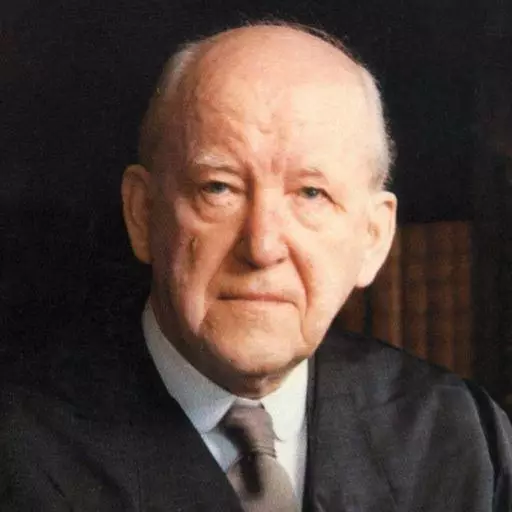
Faith Glorifying God


Dr. Martyn Lloyd-Jones: We continue our consideration this evening of Paul's epistle to the Romans, and we have arrived, you remember, at the fourth chapter and are considering verses 18 to 22. Verses 18 to 22 in the fourth chapter of Paul's epistle to the Romans.
Who against hope believed in hope, that he might become the father of many nations, according to that which was spoken, so shall thy seed be. And being not weak in faith, he considered not his own body now dead, when he was about an hundred years old, neither the deadness of Sarah's womb: he staggered not at the promise of God through unbelief; but was strong in faith, giving glory to God; and being fully persuaded that, what he had promised, he was able also to perform. And therefore it was imputed to him for righteousness.
Now, we are considering here Abraham's faith. The apostle, having established his great argument about justification by faith, sees that in the case of Abraham, there is this wonderful illustration of what faith is and how faith works. And we're looking at it thus because it is one of the greatest statements in the whole of the scripture on this question of faith, as to what faith is and how faith works. And it does, therefore, pay us to look at it carefully and to spend some time with it.
Now, we've seen that Abraham's faith enabled him to do certain things. It enabled him to believe the promise of God. It enabled him to do so on the bare word of God with nothing else. It enabled him to do so in spite of everything that was to the contrary. It enabled him to do so with confidence and assurance, and it enabled him finally to act on what he had thus believed.
Then we went on to see and to consider how it was that faith did enable Abraham to do this. We began considering that last Friday evening. And I pointed out that here in this short passage, the apostle tells us that faith did this in two ways. First of all, the apostle gives us the negative.
Faith prevented Abraham from being weak. That's very important. We're all weak by nature and we are born as children into the Christian life, and children are weak. So we're weak and our tendency is to give way to weakness. So the first thing that Abraham's faith did was it prevented his being weak. And being not weak in faith, he considered his own body now dead. You remember we looked at that. Though he considered his body and that of Sarah, he wasn't made weak by that. And what kept him from being weak was his faith.
The second negative was that he didn't stagger. He staggered not at the promise of God through unbelief. And you remember I interpreted that like this: that it was his consideration of himself and Sarah that tended to make him weak, but it was his consideration of the greatness of God's promise, God's offer, that tended to make him stagger.
The thing was so tremendous, the promise was so great. It's too good to be true. And the tendency when one is confronted thus by some wonderful promise of God is that one staggers in unbelief. But he didn't stagger. He was kept from staggering.
So faith does those two negative works. It prevents our being weak; not only does it thus prevent us from falling altogether, it even prevents our staggering. Because as Christians, we're not meant to stagger through this world. We're meant to walk through it. We're meant to march through it with heads erect, without apology and without fear. It's a bad thing when a Christian is either weak or staggering. Now, faith is something that prevents our giving way to weakness and it keeps us on our feet erect and prevents our staggering.
Very well, that's the point at which we left off. Now, there is what I have described as the negative work of faith. Don't despise it. Thank God for it. But after all, it is only negative. And now we can go on and consider the positive, which clearly and obviously is the most important thing of all. And this is really the thing that explains the negative. It is because of the positive you can have the two negatives.
Well, what is the positive? Well, here is the phrase: he was strong in faith, giving glory to God. Now, we must be clear about the translation here. A better translation than "was strong in faith" is "was made strong." Abraham didn't give way to weakness, he didn't stagger, but rather was made strong. Made strong either in faith or else made strong by faith. I believe that both are true.
He was made strong in his faith. But also he was made strong by his faith. It's interesting this, and to me rather fascinating. It's a kind of circle. And it's very difficult to tell which to put first. In a sense, it's like the old question of the hen and the egg once more. You see, faith makes you strong and because you're strong, you have more faith.
Well, the statement is that he was made strong in his faith or made strong by his faith. How did that happen? What was the secret of this strength of Abraham? Well, according to the apostle, it was this: he gave glory to God. That's the answer. That's the secret of a strong faith. Indeed, I'll go further and say that that is the very essence of faith.
What is faith? Well, faith is that which gives glory to God. In other words, as we give glory to God, we shall be made strong ourselves and our faith will be strong. And that undoubtedly, as the apostle here shows us so clearly and as the author of the epistle to the Hebrews does in very much the same way in that 11th chapter of the epistle to the Hebrews, that was undoubtedly the whole secret of Abraham and his remarkable faith.
Abraham, instead of looking only at the difficulties in terms of his own body and the body of Sarah, instead of staggering at the greatness of the promise, Abraham instead of stopping at those two things, we are told, looked to God. And he looked at God. Now, this is the whole secret of faith.
The whole difficulty which we all get into, of course, in our lives is that instead of keeping our eyes steadfastly on God, we look at ourselves—the weakness of my body, the weakness of Sarah's body, the staggering promise, this, that, or the other—and we look at these things and we become weak or we stagger.
Abraham didn't while—well, he gave glory to God. He kept his eyes on God and he looked at God. But we must analyze this a little more. What does it mean exactly to say that he gave glory to God? This is the phrase. The answer is, of course, that it means this: Abraham considered God. He considered who God is. He considered what God is. That's how he gave glory to God.
It doesn't mean primarily anything that Abraham said or anything that Abraham did. That followed. Abraham glorified God by just realizing who and what God is. In other words, he did it like this: he contemplated all the glorious attributes of God. And that is how one does glorify God. We glorify God by realizing something of the truth about him and worshipping him because of that and committing ourselves to him in the light of that.
Abraham, you see, considered the eternity of God. That God is. Abraham, though God had not yet defined it fully at this point as he did later to Moses, Abraham knew something about the fact that God is Jehovah: I AM THAT I AM. This eternity of God: I AM. And he meditated on that and he contemplated it and he dwelt upon it.
He also thought about and reminded himself of the majesty of God. And there is nothing that is so characteristic of God as his majesty. Oh, read it in the scriptures. You'll find these men of God, these great men of faith, they're constantly celebrating this: the majesty of God.
And the glory of God. I suppose that is the ultimate attribute of God, the glory of God. God is full of glory, ineffable glory, beyond our comprehension, beyond our imagination. But that is true of God. That is what we are told everywhere about God. He dwelleth in a light that is unapproachable. God! Abraham thought of all this.
Then he reminded himself of God's omnipresence. Another attribute of God. God is everywhere. There is no place in the whole cosmos where God isn't. Again, think of the many places where that is celebrated in the scripture. Perhaps very perfectly in Psalm 139.
The psalmist describes it. If it's heaven, God's there. If I make my bed in hell, lo, thou art there. Whither can I flee from thy presence? It's impossible. God is everywhere, omnipresent, filling the whole universe. Everywhere. Abraham thought about that and meditated on that.
And then the omniscience of God. God knows everything. There is nothing that God doesn't know. He knows the end from the beginning. All things are always present before his sight and his scan. He knows all, and nothing can happen anywhere or ever have happened but that God not only knows it but has known it beforehand. His omniscience, his foreknowledge, his complete knowledge without any gap or any blemish or any defect whatsoever. Omniscience. Everything is known to him.
And then of course, his omnipotence. There is no limit to the power of God, absolutely none whatsoever. Indeed, you remember that it is in connection with Abraham that the statement is made, the question is put: is anything too hard for the Lord? Is there anything that God cannot do? And the answer is nothing.
There is nothing that God cannot do. There is nothing that can withstand him. His power is absolute, it's eternal, it is almighty. There is in no sense any limit whatsoever to it. He is omnipotent. Abraham thought about that. And then of course, his righteousness, his justice, his truth, his holiness, his unchangeability, his everlasting and eternal constancy.
Now, there I just mentioned the chief attributes of the being and the character of God. And what we are told, you see, that Abraham did was this: he looked at God and he looked at these attributes of God. And he went on looking at them. That is how he gave glory to God. Because having looked at them, he deduced certain things from them.
And what he deduced obviously was this: Here, he says to himself in effect, well now, God has made this extraordinary statement to me. God has made this amazing promise that I at this age, nearly a hundred, and Sarah in her condition, that she's going to bear a child who is going to be my heir, who is going to be my seed, and out of him and through him, all the nations of the earth are going to be blessed. God has said that.
It's amazing, it's astounding. Yes, but having looked at the attributes of God and having contemplated them and having worshipped, Abraham was able to deduce this: that because God is who and what he is, God never makes a promise lightly or loosely, still less thoughtlessly. Now, that's a tremendous thing, that.
We all tend to make promises, but alas, we don't always keep them. And the trouble is, you see, that we made them without thinking fully what we were saying. We were in a happy mood—oh, I'll do this, we said. We hadn't thought it out, we hadn't considered the possibilities and the repercussions of what might happen. We make our promises lightly and loosely and thoughtlessly, and then we don't keep them, and there's trouble. But God doesn't do that because God is who and what he is.
He never makes a promise without seeing it all from beginning to end, and every factor and conceivable circumstance and situation has been in. He knows exactly what he's doing. Never lightly or loosely, never thoughtlessly.
And secondly, he knew this: that God does not change his mind. Again, because he is God, because he is what and who he is. God, we are told, is the Father of lights with whom is no variableness, neither shadow of turning. Always, everlastingly the same. What God hath promised, he will most surely perform. Oh, I think the best statement of this of all that I'm aware of in the scripture is the one that Paul himself makes in writing to Titus. You remember that statement he makes there in the second verse of his epistle to Titus? Listen to this: God, who cannot lie.
God who cannot lie. Never contradicts himself, never goes back on what he has said, never changes his mind. This eternal righteousness and uprightness and truthfulness of God because he is what he is. Abraham deduced that. The promise, he says, God knows what he's doing, and more than that, God's not going to go back on it. God doesn't change his mind, he doesn't change his point of view.
And then thirdly, God's ability. God's ability to do the thing. We have it specifically in verse 21: and being fully persuaded that what he had promised, he was able also to perform. Now, there I imagine are the three main deductions. And being clear about them, Abraham was in the position to say this: that because these things are true, nothing else really matters at all.
Oh yes, he did consider his own body and he considered the condition of Sarah's body. He knew that the whole thing was contrary to nature and that from the human standpoint, the thing was a sheer impossibility. But the moment those thoughts came to him, he answered them by saying, of course, this is all right, this is true, but God knew all about that before he made the promise.
God was aware that I'm nearly a hundred. God knows all about Sarah and her state and condition. There's no point in looking at these things. God knows all about them and he's seen it all and he's aware of it all, and yet though he knows all, he has said this. It can't happen? Yes, but God is omnipotent. Nothing is too hard for the Lord. With God, nothing shall be impossible.
The one thing that mattered with Abraham was that God had spoken. That God had made a promise. And because it was God who had spoken, because it was God who had made the promise, Abraham says to himself, nothing else need be considered at all. I am wasting my time in putting up these possibilities and these various considerations. The one thing that matters is that it is God who has spoken.
He gave glory to God. Now, I think this is very important for us all to bear in mind, especially if we look at that in the negative way. There is nothing so insulting to God as not to believe him. And that's the terrible thing about unbelief, that it's an insult to God. What a wonderful way this is of looking at faith and of defining faith.
Faith is thus that which always glorifies God. Faith is to believe God simply and solely because he is God. Nothing glorifies God more than this. Nothing is so insulting to God as not to believe that. Now, that's the great lesson here. And so you will find that the men who have glorified God most of all in this world have been these great men of faith.
Yes, but you will also find this: that no body of men perhaps has been called upon to endure so many trials and difficulties and temptations as these self-same men of faith. Why? Well, obviously for this reason: that it is in the midst of their trials and their testings and their problems that their faith has stood out most gloriously.
Or to put it in other language, it is just when everything is going against them to drive them to despair on the natural level that they glorify God most of all. Because in spite of all these things, they still go on believing and they're unshaken. They don't stagger, they don't fall through unbelief. So the severer the test, the more do they give glory to God.
The more difficult the situation, if they still go on looking to him, why, I say the greater is the extent to which they are giving glory to God. Very well, then, that seems to me to be the summary of the teaching at this point: that faith is ultimately that which gives glory to God by seeing the truth about him and trusting to it utterly and absolutely at all costs. That is faith.
And that, according to the apostle here, is faith in its very essence. That was the faith of Abraham. That's the thing he's concerned about. He picks it out and he uses it as an illustration because in the case of this one man and what he did, we see perfectly delineated the main elements and characteristics of faith. And here I say is one of the greatest descriptions of it in the whole Bible.
But now, it seems to me at this point that it is well for us to consider certain difficulties, if you like, or certain problems. Because were I to leave it at that, I am quite certain that a number of people might very well not only be somewhat confused but might even be discouraged. So I've got to put forward a principle like this: that our passage obviously teaches us that there are degrees of faith.
You notice the terms that are used here. The very terms themselves suggest that. The very term "strong" and the very term "weak" are indicative of the fact that there are degrees of faith, or if you like, degrees in faith. Now, the scripture puts before us these big and outstanding examples of faith. That is the method of scriptural teaching almost invariably.
It picks out these wonderful and notable illustrations, and there is none greater than that of Abraham. No man glorified God more than Abraham did, and that is why he's picked out here by the apostle undoubtedly. Now, the method is this: here is faith as it really is in its essence, as it always ought to be. The scripture does that not only with faith but with many other things.
It does it, let me give you a negative illustration. Take the case of Ananias and Sapphira. Now, there were two people you see who were struck dead because they had lied to the Holy Ghost. It doesn't follow from that that everybody who lies to the Holy Ghost is immediately going to be struck dead. It doesn't happen.
No, but you see the case of Ananias and Sapphira is put before us that we may see the thing in its essence and we may learn our lesson. The flood is a great example and illustration again. These cities lived as they did, the world did and the flood came; Sodom and Gomorrah. These are outstanding illustrations to teach a principle. Well, now it's exactly the same here with faith. Abraham's faith is faith which is practically perfect.
He calls it strong faith, or that he was strong in faith. But that leads us to see that there are degrees of faith or variations in faith. Let me give you some other scriptural quotations to establish the point I'm making. Do you remember what our Lord said to Peter on that famous occasion when the incident of walking on the water took place?
Peter went out of the boat, you remember, and walked on the waves towards our Lord, and then he began to look and see the waves boisterous, and down he went. And what our Lord said to him was this: O thou of little faith. He doesn't say that he had no faith at all; he charges him with little faith. Well, now little faith suggests that there is more faith, doesn't it? And still more, and an abundance of faith.
But here is another one. You remember the disciples in the boat with our Lord and he was tired and went to the stern of the vessel and fell asleep and the waves began to come in. And they thought they were going to drown and they awoke him and said, Master, carest thou not that we perish? And what he said to them you remember is this: Where is your faith? Where is it?
Now, again there is a suggestion of a limitation there. Or you get it in the case of the man with the boy at the foot of the mount of transfiguration: Lord, I believe, help thou mine unbelief. He had faith, he had a belief, and yet he's aware of its weakness; he asks for help and strength.
And then you remember this extraordinary statement by our Lord which is found in the gospels—take for instance how you get it in Matthew 17:20: If ye have faith like a grain of mustard seed, you shall say to this mountain, remove hence into yonder place, and it shall remove, and nothing shall be impossible to you. If you have faith like a grain of mustard seed, and it's the smallest of all seeds.
If you have that amount of faith, you can have more, but if you have that much. Again, the suggestion of degrees. Or you remember the case of the Syrophoenician woman who persisted in holding on though our Lord was as it were discouraging her and trying her and testing her, but she holds on. And our Lord turned to her and said, O woman, great is thy faith. Great is thy faith.
And then take one other case, the case of that centurion who, you remember, sent the message to our Lord about his servant who was sick. And he says our Lord needn't come down, he's only got to speak the word. And our Lord said, I have not found so great faith, no, not in Israel. Great faith, strong faith, wonderful faith, great faith.
And you get then a phrase in Hebrews 10:22: let us draw near with a true heart in full assurance of faith. You can go to God in faith, but it isn't of necessity full assurance of faith. You can have just enough faith to go to God at all, but oh, how different is that from a full assurance of faith with a holy boldness.
Well, now then, it's important that we should recognize these distinctions which are drawn in the scriptures themselves. So that I would put it like this in the form of a number of principles: there is such a thing, therefore, as weak faith. It's possible for us to have a weak faith.
But secondly, let us remember that a weak faith is nevertheless faith. It's very difficult to know how to put this, but the very fact that you say it is a weak faith is a statement to the effect that it is after all faith. But you say if a man has any faith at all in God, it must be an absolute faith. No, it is our failure to realize truly and fully as we ought who and what God is.
So our faith may be weak and yet it is a real faith. You can't call it anything else, it isn't unbelief. If it's only like a glimmer of a taper's light, it's enough, it's faith though it may be a very weak faith. It is, if you like, like the analogy I've already hinted at: the difference between a child and a grown man.
You can't say that a child, a babe, has no strength at all. He has a certain amount of strength, but his strength is very small when you compare it with the strength of a man or when you compare it with the strength of an athlete. Or a man who's gone in for some special exercises.
Though the child of course doesn't seem to have any strength at all when you look at this great man with his wonderful muscles, nevertheless, you must grant that the child has strength. He's able to move his limbs, he's able to do certain things. He has a strength though it isn't very much strength.
And thirdly, it seems to me that there are two factors—two main factors at any rate—which determine the strength of our faith. And they are these, and they're both important for us. The first factor is our knowledge of God. That's the most important factor in faith always. Our knowledge of God. It was Abraham's knowledge of God that made him the man he was.
Nothing in Abraham; it was his knowledge of God. That's the chief factor in faith. I must go on emphasizing this; it is the chief essence of faith, knowledge of God. And it was his knowledge of God that made Abraham the man he was. It was the greatness of his knowledge of God that made his faith great. And the second element is, of course, our application of what we know.
And that is important also. If ye know these things, said our Lord, happy are ye if ye do them. And that can be applied to faith. A mere theoretical knowledge that never ventures out upon what it knows and believes will not be a strong faith. So that in addition to our knowledge, there must be the application of the knowledge.
You see, that was the thing that the disciples were not doing in the boat on that occasion. And that is why our Lord put his question to them in that particular form. He said, now, where is your faith? You've got faith, but where is it? Why didn't you apply it to this situation? What have you been doing with your faith? Have you left it at home, as it were? Have you left it in a bag somewhere?
Why isn't it here? Why isn't it being applied at this point? Where is your faith? You've got it, why aren't you bringing it into consideration? Why aren't you bringing it into this very position in which you find yourselves? The trouble with the disciples was that they didn't use the faith they had. They didn't think.
They were looking at the waves and the water coming in and they were bailing it out, but still more was coming in. And they said, oh, we're undone, we're going to drown, let's try and see if he can save us. He says, where is your faith? Lack of application. So that in addition to our knowledge of God, there is this vital and important element of the application of what we know.
Very well, there is one matter, but let me just mention another because of the difficulties which it causes to so many. And I choose to put it in the form of a principle like this: the difference between faith and foolhardiness. Now, I'm putting it deliberately like that in order to emphasize and to call attention to what I'm about to say.
Because there are many people who are very unhappy because of this question of faith, and I think there are large numbers at the present time. And in particular, of course, over something like faith healing. You know there are two great passages in the scripture on this whole matter of faith which cause a great deal of confusion and a great deal of unhappiness. Let me just remind you of them.
The first, of course, is the famous statement in James chapter five. Let me just read the verses to you. Verses 13 and following: Is any among you afflicted? Let him pray. Is any merry? Let him sing psalms. Is any sick among you? Let him call for the elders of the church and let them pray over him, anointing him with oil in the name of the Lord.
And the prayer of faith shall save the sick, and the Lord shall raise him up; and if he have committed sins, they shall be forgiven him. That's one of them. The other one, of course, is in the gospel according to Saint Mark in chapter 11, verses 22 to 24. It's in connection with the incident of the cursing of the barren fig tree.
Peter calling to remembrance saith unto him, Master, behold the fig tree which thou cursedst is withered away. And Jesus answering said unto them, Have faith in God. For verily I say unto you, that whosoever shall say unto this mountain, be thou removed and be thou cast into the sea, and shall not doubt in his heart but shall believe that those things which he saith shall come to pass, he shall have whatsoever he saith.
Therefore I say unto you, and this is the verse, what things soever ye desire when ye pray, believe that ye receive them, and ye shall have them. Now, that's very important. Mark 11, verse 24. And you probably all have met people, as I've met them in large numbers, who've been in great trouble because of both these passages.
They say either that they themselves were taken ill or some loved one, and they went to these two passages and they believed them and they put them into operation, and they prayed this prayer of faith, they say. And they did believe that what things soever ye desire when ye pray, believe that ye receive them, and ye shall have them.
So they say that they not only prayed to God to heal the person who was ill, but they even went so far as to thank God for having done it already. They say that's the meaning of that statement: you believe that you've had it, you say it must have happened already, therefore I don't ask any longer, I thank God that he's already done it. And then the person doesn't get well, and perhaps dies.
I always think that the most notable example of this that I've ever encountered in either in personal experience or in my reading is a case that comes in the life of Andrew Murray, the great and saintly Andrew Murray of South Africa. He, you see, held this view that Christians should never resort to doctors or to means, and he taught that and had taught it for years.
And then came a time when he was going to go out on a preaching tour and there was a nephew of his who was anxious to go with him, but the poor fellow suffered from tuberculosis of his lungs. And yet he wanted to go with his uncle. And they talked about this. And Andrew Murray said to him, well now you believe that God can heal, don't you? He said, yes.
Well, he said, let's go to God in faith believing, and they quoted these passages. And they prayed to God and they both thanked God for the healing that they knew had already taken place. That was how they interpreted these verses. And they went off, confident and assured that the young man was totally healed and that all would be well, but he was dead within three weeks.
And it caused Andrew Murray to change his whole views on these matters. Now, that's a fact of history, I say. Well, now there are many such illustrations and examples. I'm not concerned about faith healing this evening because it happens to people not only about faith healing but about many other matters. Praying for fine weather, praying for some post, or praying for something to happen in your own life or experience.
Praying that some success may come to your children—constantly people are in trouble about these things. Well, now what's the cause of the trouble? Well, again I'm suggesting that there are two causes of the trouble. The first is, and this is really still dealing with the faith of Abraham in this way, the first cause of the trouble with these people is that they misunderstand what God's word of promise is.
Now, Abraham you see was perfectly clear about that. Abraham knew that God had spoken and that God had made this particular, specific statement. There was no question about it and Abraham believed it absolutely. But now the trouble with these friends is, as I say, that there is confusion in their minds as to what God has said.
You see the confusion is something like this: there are some who teach that it is never God's will that any one of his children should be ill. I say that is unscriptural. But if they believe that, you see, and act on it, they're bound to get into trouble. If it is never God's will that any of his children should be ill, well then it must be God's will always that we be healed and that we be well.
And they act on that and they pray in that faith, but it doesn't happen always, and then they're in trouble. I say they're in trouble because their theology's wrong, because their understanding of these passages is wrong. God has not promised that his people are always to be well. There is teaching here quite plainly and clearly that God may use an illness to chastise us and to punish us for the good of our soul.
"Many are weak and many are sickly among you," says the apostle Paul to the Corinthians because of their sinful life and conduct and behavior. God chastises sometimes through illness. Don't misunderstand me, I'm not saying now that every illness is chastisement; I say it may be. I'm simply countering the argument which says that it is never God's will that his children be ill, it is always his will that they be well.
I say it's unscriptural and therefore people who hold that view are bound to get into trouble when they're trying to exercise faith on a matter like that. But the second thing is equally important: they're also guilty of misunderstanding the character of faith. And their misunderstanding I think is something like this: they seem to regard faith as something that you and I can go in for, to use the phrase. Go in for.
In other words, you suddenly read a book on these matters or you hear an address or a sermon and you say, "Ah, I'm going in for that, I'd like to do that." Now, you can't do that with faith, you can't go in for faith. You can go in for cults, and people do go in for cults, but you can't go in for faith. For the reasons that faith is what it is. I've already emphasized it, I'll do so again.
Now, there is nothing so fatal as to think you can go in for faith. "Isn't it marvelous?" they say, "Look at these people, listen to this man's record: a thousand miles of miracles," or something like that. "I'm going in for this." And they go in for it, but it doesn't seem to work in their case. Why? Well, because they've gone in for it.
And you can't do that. You can't take up faith as you like and as you choose. You can't take up faith as it were in cold blood and decide that you are going to be a man of faith. Still less is it this which one has often heard people say: "Faith? Why," they say, "there should be no difficulty about faith. We've all got faith."
"When you sit down on a chair, you're exercising faith," they say, "that the chair's going to hold you. When you go out for a ride in the train or in the bus, you're exercising faith." "Faith," they say, "we've all got faith. And all you need to do is to exercise that faith that is innate in human nature in believing God." I say there is nothing more unscriptural than that. That's not faith at all.
That is what I would call applying the law of mathematical probability. When I sit on this chair, I do so because I'm acting on this principle: that the chances are that it's not going to break down at this moment. It may at some other moment. That's the law of mathematical probability. I have no faith in the chair whatsoever.
And when I go in a train or ride in a bus, I'm doing exactly the same thing. I've no faith in a bus or in a bus driver. No, but I'm arguing like this: I know that so many times out of 999 out of a thousand, probably much more than that, it's going to be all right. That's the thing that I'm arguing subconsciously, and you all do the same.
That is not faith. That is something natural and faith is not natural. Faith is spiritual. It is the gift of God. It is only Christian people who have faith. You can't have faith and not be a Christian. It's impossible. Faith is not something natural in man. Very well, then, let me put another negative: faith isn't just saying now, "I believe this and I'm going to believe this." That isn't faith.
Faith is not just persuading ourselves or arguing desperately that we really do believe. Come back again to Mark 11, this is the verse that's misinterpreted: "Therefore I say unto you, what things soever ye desire when ye pray, believe that ye receive them, and ye shall have them." Now, haven't we all been trying to do something like this?
We want something and we begin to pray for it. And then we persuade ourselves, "I really do believe it, and I must believe it. I say I believe it, I do believe it, and I'm persuading myself and arguing with myself that I really do believe." And then I say, "It must happen." But it doesn't happen. Why doesn't it happen?
Well, because in my case at that point, I really was not believing that I would receive them. I was trying to persuade myself that I was, and what a different thing that is. Well, then, what is it positively, as some say? Well, put it like this: faith is something that is inwrought in us. Faith is something that is given.
I believe that as God spoke to Abraham, he was giving him the faith to believe it. Nothing natural in Abraham that responded to God. No, no, faith is given, faith is inwrought into us. And therefore it is something which always is a quiet confidence in God and a quiet resting upon God. There is no strain, there is no tension where there is faith.
Faith, as I was indicating last Friday night, always has this element of assurance and of confidence in it. "Being fully persuaded in his own mind," we are told. That's the thing that characterized Abraham. Abraham was certain, he was sure. Now, this element is always in faith. If there's strain or tension or if you're trying to have to keep yourself to it and trying to persuade yourself, you can be quite sure it isn't faith.
Faith is the substance of things hoped for, the evidence of things not seen. That's the great characteristic of these wonderful heroes of the faith, isn't it? Look how they went through life. No, no, there was this profound assurance based upon their deep knowledge of God. In other words, for me to finish this evening and to interpret this passage in Mark 11, which begins with the great statement, "Have faith in God."
There is no question at all but that Hudson Taylor's translation of that is the right one and the true one because it puts the right emphasis. Hudson Taylor used to say, you translate that not as "Have faith in God," but this: hold on to the faithfulness of God. You see, the reference is to God. Faith is holding on to the faithfulness of God. And as long as you do that, you can't go wrong.
So I would summarize it in this way: faith does not look at itself. Faith never looks at itself. I want to go further. Faith is never interested in itself and never talks about itself. Now, that's a very good test, in my opinion. I always distrust the people who talk about their faith and that they're doing this and that by faith.
That's the talk of the cults. It always directs attention to themselves and what they're doing. You have to be thinking positively and you have to be doing this, that, and the other, and it's all the emphasis upon you. Faith, you see, doesn't look at itself. It doesn't look at the person who's exercising it. Faith looks at God.
Hold on to the faithfulness of God. The big thing about faith is not what I'm doing but the God's faithfulness. He gave glory to God. Faith is interested in God only and it talks about God and it praises God and it extols the virtues of God. The measure of the strength of a man's faith therefore is ultimately the measure of his knowledge of God.
Oh, this is the important principle and oh, how vital and important it is: faith always glorifies God. So there's none of this excitement that you have always in the cults and these other things that are not always known as cults but which resemble them so closely and which really belong to them. Nothing hectic about faith, nothing excitable.
The great characteristic of Abraham was this man of God, this great gentleman, this man who went on quietly whatever was happening. He was a friend of God and he knew God so well that he was like God and there was something of the calmness of eternity about him. It was all because he knew God. And he knew him so well that he's the friend of God.
And when a man's a friend of God, he's a man of great faith, strong faith. He's not weak and he doesn't stagger. But it's all, you see, not the man but oh, it's this knowledge of God, of the attributes of God, and he is looking at God and thinking about God, not the problem or the difficulty but God, and he's resting there.
And it's the prayers of a man like that who are answered. So you see, you can't suddenly take it up. If you want to be a man of faith, if you want to be a man of strong faith, well I say it'll be the result of your becoming a certain type of person. You can't have strong faith without holiness and without obedience.
So if we're anxious to know how to have strong faith, here's the method: knowledge of the Bible. Not suddenly taking up an idea that this can be got by faith. No, no. If you want to have strong faith, read your Bible, go through it, beginning to end, concentrate on the revelation that God has given of himself and of his character.
Notice what you get in prophecy, watch his promises, see them being fulfilled. That's the way to make a strong faith. Be grounded in all this. Then read the history in the Bible, read the examples. That's why the author of the epistle to the Hebrews gives us that gallery and portraits of these great saints in chapter 11. He says, look at these men like yourselves. What was their secret? Oh, their secret was they knew God.
They gave glory to God. Then meditate on all that. Turn it over in your mind. Keep on speaking to yourself about it. This is the way to develop a strong faith. It's a process, it takes time, unless you suddenly be given it for some specific purpose by God. Normally this is the way. But above all, it means a knowledge of God personally.
Praying, spending time in his presence, waiting upon him. These are the ways. And then finally, you apply it all in practice to the particular cases as they arise in your own life and experience. He staggered not but gave glory to God. That's the secret of faith: to glorify God. It's our ignorance of God that constitutes our main trouble.
So don't think about your little faith, think more about God. Get to know God, realize the truth about him. And as you do so, you will find, to your surprise perhaps, that your faith has become very strong and you'll be amazed at yourself. May God enable us to do so by his grace. Amen.
O Lord our God, we come into thy presence to confess and to acknowledge our sinfulness, our unbelief, above all our ignorance of thee. Oh God, forgive us that we spend so much of our time in looking at ourselves and at our state of faith and at our problems and difficulties and trials. Oh God, have mercy upon us that we waste not only our own time but thy time.
O Lord, deliver us from this self, this self-concern. And so reveal and manifest thyself to us that we shall be concerned only about thee, that we may become such that behold as in a glass the glory of the Lord. And as we look at it and behold it, shall become changed into the same image from glory to glory, even as by the spirit of the Lord.
Oh God, hear us and manifest thyself to us. Make thyself so known unto us in thy word and by thy spirit that we shall hold on ever to thy faithfulness. And now, may the grace of the Lord Jesus Christ and the love of God and the fellowship and the communion of the Holy Spirit abide and continue with us now this night, throughout the remainder of this our short, uncertain earthly life and pilgrimage, and until faith shall be turned into sight. Amen.
Featured Offer

Find peace and comfort this season with your complimentary guide that includes access to 6 free bonus sermons on overcoming spiritual depression from Dr. Martyn Lloyd-Jones, one of the church’s most beloved Bible teachers. Topics include: true Christians can and do struggle with depression, recovering the joy of your salvation, dealing with crippling guilt over past sins, dealing with yesterday’s haunting regrets, encouragement to keep moving forward, and understanding God’s purpose for suffering.
Past Episodes
This ministry does not have any series.
Featured Offer
Find peace and comfort this season with your complimentary guide that includes access to 6 free bonus sermons on overcoming spiritual depression from Dr. Martyn Lloyd-Jones, one of the church’s most beloved Bible teachers. Topics include: true Christians can and do struggle with depression, recovering the joy of your salvation, dealing with crippling guilt over past sins, dealing with yesterday’s haunting regrets, encouragement to keep moving forward, and understanding God’s purpose for suffering.
About From the MLJ Archive
From the MLJ Archive is the Oneplace.com hosted ministry of the MLJ Trust. Our mission is to promulgate the audio ministry of Dr. Martyn Lloyd-Jones.
About Dr. Martyn Lloyd-Jones
Contact From the MLJ Archive with Dr. Martyn Lloyd-Jones
info@mljtrust.org
http://www.mljtrust.org/
PO Box 953
Middleburg, VA 20118