
Lord of the Dead


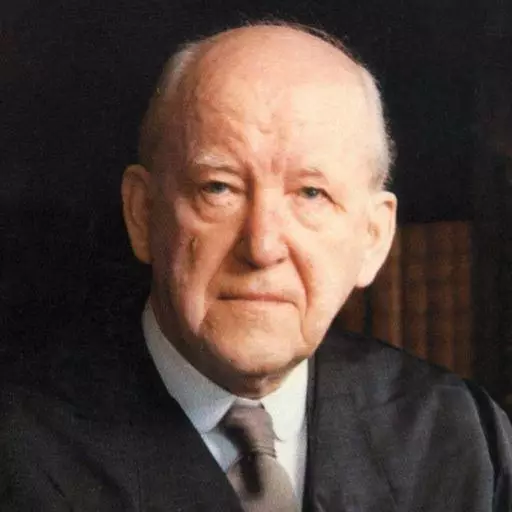
Dr. Martyn Lloyd-Jones: I am going to read this evening from verse six to verse twelve in the fourteenth chapter of Paul's Epistle to the Romans.
He that regardeth the day, regardeth it unto the Lord. And he that regardeth not the day, to the Lord he does not regard it. He that eateth, eateth to the Lord, for he giveth God thanks. And he that eateth not, to the Lord he eateth not, and giveth God thanks. For none of us liveth to himself, and no man dieth to himself. For whether we live, we live unto the Lord, and whether we die, we die unto the Lord.
Whether we live therefore or die, we are the Lord's. For to this end, Christ both died, and rose, and revived, that he might be Lord both of the dead and living. But why dost thou judge thy brother? Or why dost thou set at nought thy brother? For we shall all stand before the judgment seat of Christ. For it is written, as I live, saith the Lord, every knee shall bow to me, and every tongue shall confess to God. So then, every one of us shall give account of himself to God.
Now, we are dealing in particular tonight with the ninth verse. For to this end, Christ, both died and rose and revived, that he might be Lord both of the dead and living. Now it's very important we should bear in mind the connection.
This paragraph again is a most interesting example of the great Apostle's method. We've often pointed out that in his Epistles, there is an obvious division into two main sections: the doctrinal portion, which always comes first, and then the application, where he deals with the outworking of Christian truth, and where he deals with the practicalities of daily life and living. But with this Apostle, we must never fall into the error of thinking that in the second section, he never has any doctrine, or that he's finished with doctrine. That is never the case.
It doesn't matter what subject he deals with, you'll find that sooner or later, he always links it up with doctrine. He was so concerned about this. In other words, if we learn nothing else, this is a great lesson to learn, that the whole of the Christian life is something that derives from the truth that we have believed. Christians are not interested in morality and conduct and behavior in and of itself. Now the world is, the non-Christian is. Anybody interested in ethics, or in morality, isolates it. Now here that is never the case at all.
It's something that is deduced or derived from the great teaching. And so it comes to pass that whether he starts with doctrine and goes on to the practical living, or starts with the practical living, he always does the same thing in the end because each one leads to the other. And you go round and round in a circle. Now there's a perfect example of that here. The theme, of course, is as we've been saying, this very practical question of the rightness of eating certain meats, and the rightness of observing certain particular days, feast or festival days, and so on.
Now, the Apostle has been dealing with this in the way that we have seen. But in the sixth verse, he lifts it up to this level. He says, what really matters is your motive, your object, your objective. If a man does it unto the Lord, well then, says Paul, you've got to be very careful as you criticize him. If a man can eat those meats unto the Lord, and if he gives proof of that by offering thanksgiving unto the Lord, be very careful how you judge him.
And contrary wise, if a man doesn't eat these meats because he's concerned to glorify the Lord and to honor his name, again be very careful. And if he can thank God for what he does, his herbs or whatever it may be, well, be still more careful. Now, that's the point that he's been making. But as I was pointing out last Friday, he can't say a thing like that, you see, without at once showing that here is involved a great fundamental principle in the whole of the Christian life.
This, you see, is an illustration of the thing that I've just been saying. Starting with the most practical matter, you suddenly find yourself led on to the consideration of one of the highest and the deepest doctrines of the whole of the Christian life. And so he goes on, you see, in verse seven to say, none of us liveth to himself, and no man dieth to himself. Whether we live, we live unto the Lord, whether we die, we die unto the Lord, and whether, whether therefore we live or die, we are the Lord's.
Now there is this tremendous doctrine that we looked at last Friday evening. In other words, it was, you remember, that whatever happens to us, we are always the Lord's. We are always in his hands. And we are not to decide either about living or dying. That is always his decision. But now, having said that much, you see, he can't leave it even at that. He's got to establish this. And he does so in the ninth verse. He says, for to this end, Christ both died and rose and revived, that he might be Lord both of the dead and of the living.
Now this is a way in which he's substantiating his statement that the Lord is Lord of the totality of our being, whether it be in life or in death. And here he tells us how it is that this has come to pass. And once more, he gives us an exposition of one of these profound doctrines in connection with the whole of the Christian life. Now he says, to this end. For this purpose. If you like, this is why Christ both died and rose and revived, that he might be Lord both of the dead and the living.
Now, you'll find many translations that haven't got the word "rose." They read, to this end, Christ both died and lives, or died and lived again. That's purely a question once more of this textual criticism. So the best old manuscripts omit the "rose." It doesn't matter. The statement that he revived or lived again includes the rising. What is clear is that he is referring to the resurrection.
So what the Apostle is telling us here is this: that Christ is Lord of his people, whether they're alive or dead, and is always their Lord, and not only determines, but guides them and takes them through everything as the result of his death and his resurrection. Now, this, I say, is, is, is, is a great New Testament truth. There are many statements of it. One of the best, of course, and the greatest, is the one that's found in the second chapter of Paul's Epistle to the Philippians.
Let me begin to read at verse five in Philippians two. "Let this mind be in you, which was also in Christ Jesus: who, being in the form of God, thought it not robbery to be equal with God: but made himself of no reputation, and took upon him the form of a servant, and was made in the likeness of men: and being found in fashion as a man, he humbled himself, and became obedient unto death, even the death of the cross. Wherefore," here it is. "Wherefore, God, because of that, in the light of that, as the result of that, on account of that, God also hath highly exalted him, and given him a name which is above every name: that at the name of Jesus every knee should bow, of things in heaven, and things in earth, and things under the earth; and that every tongue should confess that Jesus Christ is Lord, to the glory of God the Father."
Now, there is a very similar statement at the end of the first chapter of the Epistle to the Ephesians, where he puts it like this. You remember, he has three requests to make in his prayers for the members of the church at Ephesus. The first was, the eyes of your understanding being enlightened, that you may know what is the hope of his calling. Secondly, what the riches of the glory of his inheritance in the saints. Then thirdly, what is the exceeding greatness of his power to usward who believe, according to the power, working of his mighty power, which he wrought in Christ, when he raised him from the dead, and set him at his own right hand in the heavenly places, far above all principality, and power, and might, and dominion, and every name that is named, not only in this world, but also in that which is to come: and hath put all things under his feet, etc.
It's the same idea. Our Lord himself had stated this after his resurrection in those words recorded in the twenty-eighth, the last chapter of Matthew's Gospel: "All power is given unto me in heaven and in earth." That's his statement of it. And then there's a similar one in the book of Revelation in the first chapter, and in the eighteenth verse: "I am he that liveth, and was dead; and, behold, I am alive for evermore, Amen; and have the keys of hell and of death."
Now, you see, in each case, the important thing to notice is that this position, which he now occupies, and it is a position of Lordship, is the result of his death and his resurrection. And we've got to examine this because the Apostle feels that it is essential that we should grasp this principle. He's not content with merely saying, he is the Lord of your life, whether it be in life or in death. He says, realize that he is this because of what he has done for this end.
There's object and purpose. Christ both died and lived again, that he might be Lord both of the dead and of the living. Now, the lesson that we must learn therefore is this: that our Lord is in this position solely as the result of his death and resurrection. And the implication is that he could not have been in this position were it not for that. Now, this is rather an astonishing thing.
As the eternal Son of God, he is not only co-equal with God, but equally omnipotent, and so on. And yet it's quite clear that he would not be the Lord of death if he had not come into this world, and especially if he had not died and risen again. Now, while our Lord was here in the days of his flesh, he was not the Lord of death. He was subject to death. You remember how Paul puts it in Galatians four, "He was made of a woman, made under the law, that he might redeem them that are under the law."
Now, being under the law means that he is under death, subject to death. So that this, you see, is really very important doctrine. And while he was here in the days of his flesh, though he is the eternal Son of God, he was passing through a period of humiliation. That's the thrust of that statement in Philippians two. He did it voluntarily, he did it deliberately. But it is an essential part of this salvation that he has come to give us.
But while he was in the days of his flesh, and in the state of humiliation, he was not Lord of death. He was subject to it. He was under it. It is the very law itself that commends it and brings it to pass. And he being under the law is temporarily not under, he's temporarily not the Lord of death, but is under it and is subject to it. But now, by dying, and this is why he died, and by rising again, the position has been changed.
And I wonder whether you've ever considered this great salvation from this standpoint. People have often made that point, and have asked the question, why couldn't God give us salvation as a gift by just saying so, by just doing so? God is omnipotent, God is all-powerful. Why is all this necessary, namely the incarnation, and the temptations, and the suffering, especially why is the death essential? The burial, and the rising. This has often been asked.
Why did our Lord have to die before we could be saved? Now here is a part of the answer. And a part of the answer is that he could not have delivered us from the thralldom of death unless he had died himself. For this cause, to this end, Christ both died and lived again, rose and lived again, in order that he might be or become Lord both of the dead and of the living.
So you see, the teaching clearly is that the problem of death, and death as related to us, the fallen race of Adam, could not be dealt with by a mere fiat, by a mere statement of God. Something has got to be done about it. And our Lord has done that by dying. Now, his teaching couldn't save us from death. He only saves us from death by dying. That is the teaching, and it is tremendous and tremendously important teaching. What, how did he do this?
Well, the first thing he did was this: he defeated death itself, and he defeated the grave. Now that, as you know, is the great theme of the fifteenth chapter of the first Epistle to the Corinthians. Paul works it out there. The last enemy that shall be conquered is death. It is the last enemy, but it is an enemy. Death is there set against us all, and it is an enemy to the human race.
And the last enemy is death. Well, the great claim of the Christian gospel is that our Lord has defeated death in the grave. He has conquered the last enemy. So that the Christian is able, you see, to turn to death and the grave and say, "O death, where is thy sting? O grave, where is thy victory? Thanks be unto God which giveth us the victory through our Lord Jesus Christ."
Now, what we've got to realize therefore is this: that until our Lord had died and risen again, death had held all mankind in the grave. There's no question about this. This is a most important part of biblical teaching. Death had held all that die in the grave until our Lord came and did this. There's no single exception to that in a sense. You may say that the case of Elijah is an exception, and I grant you that in a way it is. And perhaps also the case of Moses also.
But apart from that, and what happened there, we can't tell, we don't know, we're not told. But what is universal is that death has passed upon all men. Now we've already considered that in the fifth chapter and in the twelfth verse, you remember. "Wherefore as by one man sin entered into the world, and death by sin, and so death passed upon all men, for that all have sinned." And as the result of that, the grave has held the whole of mankind in its thralldom, and in its power, and under its tyranny.
And there was not a single man who could defeat death and the grave. This was universal defeat for the whole of mankind. But now our Lord came. And here, you see, is this wonderful thing that he has done. And it's so interesting to me that Peter, in his sermon on the Day of Pentecost, immediately hastens on to this point and makes a point of it. The first thing that these people were given to realize was the significance of the resurrection. They preached Jesus and the resurrection.
And this was the source of their great joy and their great happiness. They realized something of what was done. Listen to Peter putting it. Acts two, let me read again from verse twenty-two. "You men of Israel, hear these words. Jesus of Nazareth, a man approved of God among you by miracles and wonders and signs, which God did by him in the midst of you, as you yourselves also know, him, being delivered by the determinate counsel and foreknowledge of God, you have taken and by wicked hands have crucified and slain. Whom God hath raised up, having loosed the pains of death," listen, "because it was not possible that he should be holden of it."
It was not possible that he should be holden of it. It was very possible that everybody else should be holden of it. And the "it" refers, of course, to the pains of death, to the bondage and the captivity that death produces and holds mankind in the grave. But it was not possible, says Peter, that he should be held of this. That is, of course, because, as he goes on to quote from the Scripture, David speaketh concerning him, "I foresaw the Lord always before my face, for he is on my right hand, that I should not be moved. Therefore did my heart rejoice, and my tongue was glad. Moreover also my flesh shall rest in hope."
In the grave, David was given to see it prophetically, my flesh shall rest in hope. Why? Well, "Because thou wilt not leave my soul in hell, neither wilt thou suffer thine Holy One to see corruption." Thou hast made known to me the ways of life. Thou shalt make me full of joy with thy countenance. Then he goes on to explain. "Men and brethren, let me freely speak unto you of the patriarch David, that he is both dead and buried, and his sepulchre is with us unto this day."
Don't imagine that David was writing there about himself. David was there writing prophetically about the Son of God who was to come. "He's the Holy One. God will not suffer his Holy One to see corruption." That's why it is impossible that he should be holden of death. Everybody else has been. David included, as Peter makes so plain here in his sermon. And what was true of David, that was true also of all the other patriarchs and all the other saints of the Old Testament. Every one of them was held by death, and could do nothing about it. The last enemy had conquered them all. Here is one who cannot be held. Very well, this is a part of it.
And you've got the same point, of course, really elaborated in the Epistle to the Hebrews, in chapter seven. Listen to this. You see what all this meant to these men. They were illuminated by the Holy Spirit. And you see this is, this man writing to the Hebrews is writing to a number of Christians who were having a very hard and a very difficult time. They were being persecuted, they were being tried, they were being robbed, they were being misunderstood and molested in every conceivable way. And they were tempted to discouragement and to despondency and almost to despair. This is the kind of comfort that he gives them. Listen to it.
Now he, he's contrasting, you see, he's telling them that he's got a lot to tell them about Jesus Christ our Lord as a high priest after the order of Melchisedec. But he says, I'm in trouble. I can't do this very well because you've been so negligent in your study, and in your going into these things. You've not exercised your senses. But he does tell them something about it all the same. And it is yet far more evident, he says, in verse fifteen of this seventh chapter. "For that after the similitude of Melchisedec, there ariseth another priest, who is made, not after the law of a carnal commandment," after what then? "Oh, after the power of an endless life."
Here it is. You see, the only one who can save us finally is one who has an endless life. The power of an endless life. We've got a lost enemy to meet. So a priest is of no value to us who's after the law of a carnal commandment. "For he testifieth, Thou art a priest for ever." There's the point. "Forever, after the order of Melchisedec. For verily there is a disannulling of the commandment going before, on account of its weakness and unprofitableness. For the law made nothing perfect, but the bringing in of a better hope did." What he means by that is, the law made nothing perfect, but it did introduce a better hope.
There's prophecy in the law, prophecy of the coming of Christ. "By the which we draw nigh unto God. And inasmuch as not without an oath he was made a priest. Then," here it is, "those priests were made without an oath; but this with an oath by him that said unto him, The Lord sware and will not repent, Thou art a priest for ever after the order of Melchisedec." Why so much? Was Jesus made a surety of a better covenant, a better testament?
"They truly were many priests, because they were not suffered to continue by reason of death: But this man, because he continueth ever, hath an unchangeable priesthood." "Wherefore he is able also to save them to the uttermost that come unto God by him, seeing he ever liveth to make intercession for us." Now, it's exactly the same argument. All this is put in a much simpler way in many of the statements that we have in the scriptures. You remember Paul preaching before Agrippa and Festus?
He makes exactly the same point. Here it is in Acts twenty-six for us. He tells us, "O King Agrippa, I was not disobedient unto the heavenly vision," and the road to Damascus. "But showed first unto them of Damascus, and at Jerusalem, and throughout all the coasts of Judea, and then to the Gentiles, that they should repent and turn to God, and do works meet for repentance. For these causes the Jews caught me in the temple, and went about to kill me. Having therefore obtained help of God, I continue unto this day, witnessing both to small and great, saying none other things than those which the prophets and Moses did say should come: that Christ should suffer, and that he should be the first that should rise from the dead."
The first that should rise from the dead. And he is. None had ever risen from the dead before. That's a partial explanation of the cases of Moses and of Elijah. They did not rise from the dead. They were taken without going through death, as far as we can understand what happened to them. But here is the first that shall rise from the dead, and shall show light unto the people and to the Gentiles. That is why he is also called the firstbegotten from the dead, or again he is called in First Corinthians fifteen, Christ the firstfruits.
The firstfruits of them that rise from the dead. And the firstfruit, of course, was the first picking of the fruit. You never tasted anything when you were a farmer in the ancient days, until you tasted the firstfruit. There was a sort of feast made, you remember, of the firstfruits. Nobody had ever tasted anything of that harvest until they collected the firstfruits. The very first tasting. Christ is the firstfruit. Afterward, they that are Christ's at his coming. So he is the firstbegotten from the dead and he is the firstfruits. Now then, he was not held by death.
He has conquered it, he's gone through it. And as the result of this, and this is the thing that the Apostle is saying here, the thing in which we should glory is this: as the result of his doing that, it is true to say, not only could not he be holden of death, we cannot be holden of death either. Death cannot hold us. We've already got the victory over death. We are already able to use that language of First Corinthians fifteen, "O death, where is thy sting?" We can say that before we pass through it. "O grave, where is thy victory?" We know that.
It is certain. He having conquered it, has conquered it for us. So death can't hold us any longer who belong to him because of his death and his resurrection. Well now, that's the first thing. But, you see, there's a second thing also. And this is equally important. He is Lord over the dead and the living because he has conquered death itself in that way. But secondly, he is the Lord over the dead and the living because he has also conquered the devil, and conquered the devil ultimately by his death and his resurrection.
Now then, the point of exposition of this, of course, is in that second chapter of the Epistle to the Hebrews, which I read to you at the beginning, and particularly verses fourteen and fifteen. That's why I read them. Listen. "For as much then as the children are partakers of flesh and blood, he also himself took part of the same; that in order that through death he might destroy him that had the power of death, that is, the devil; and deliver them who through fear of death were all their lifetime subject to bondage."
Now, you see, this is something additional. He's not dealing there with the conquest of death itself, per se. He is dealing with the conquest of the devil. "For this cause Christ both died and rose and revived," in order that he might be Lord. Right. Partly, I say, through conquering death immediately, directly. But also, this is equally important, his conquest over the devil who had the power of death. Now what does this mean?
You've often read that second chapter of the Epistle to the Hebrews, but what does it mean? And take with it, if you like, the second chapter of the Epistle to the Colossians. And let me read verses thirteen and following. "And you, being dead in your sins and the uncircumcision of your flesh, hath he quickened together with him, having forgiven you all trespasses; blotting out the handwriting of ordinances that was against us, which was contrary to us, and took it out of the way, nailing it to his cross; and having spoiled principalities and powers, he made a show of them openly, triumphing over them in it or by it."
Same idea, exactly. He has had a victory over the principalities and powers, of whom the head is the devil, in and by the cross. By death, he might, as Hebrews puts it, destroy him that had the power of death, that is the devil. Now what does it mean by saying that the devil has the power of death? Well, it doesn't mean that the devil determines when we die. It cannot mean that because the whole of the Scripture teaches that it is God who decides that, and God who determines that.
The devil doesn't control death and doesn't have the power over death in that sense. Our times are in the hands of God. But there is an absolute proof of this in the book of Job, in the second chapter, where the devil coming back to God the second time about Job, the Lord says to him, "Put forth thine hand now." No, the Lord said unto Satan, "Behold, he is in thine hand, but save his life." The devil can't touch life without the permission of God. It seems quite clear to me in certain passages of Scripture that God sometimes uses the devil to produce and to bring death to pass.
But it is God who uses him to do that. The devil is not got any inherent, absolute power to decide when we live or die. He can't. If he does it, he's given the command to do it, or he is used to do it. So God can prohibit him to take the life of Job. So it doesn't mean that. Well, what does it mean? Well, this word power means influence, it means authority. In what sense then is the devil authority over death?
And it does seem to me that the only adequate explanation that we can find is this: that it is the devil, in a sense, who has brought in death upon us, and put us into this position in which we are under the thralldom and the tyranny and the dominion of death. He did that, of course, by persuading mankind to sin. There again, you've got the teaching of Romans five, chapter, chapter five, verse twelve. So, you can say that the devil, in that sense only, is the author of death. Of course, he's not the ultimate author of it.
God had already said to Adam that the day in which he eateth of that fruit, he shall die. It is God's pronouncement against sin. Yes, but if men had not sinned at the instigation of the devil, sin would never have come in. Sin has, death has come in as the result of sin. And the devil persuaded men to sin. So, in that derived sense, he has this kind of authority. That is why the Scripture says that the devil was a murderer from the beginning. Murderer in the sense that he has produced the death of all mankind because of its sin.
But only in that sense. The devil has introduced the sting into death. The thing about death that damages us and hurts us. Now, it's arguable as to what would have happened to men had he not sinned. I take the view that they would never have been death but for sin. Not that man was originally created immortal, but if he had lived as he should have lived in his time of probation, he would have been given the gift of immortality. But he didn't. So death came in.
Very well then, and the devil, you see, because he persuaded men to sin, has introduced this terrible element into death. Now, I think you can look at this in another way. Paul commentators have agreed that this is a very difficult phrase to expand. But the more I've thought of it, the more I've come to this conclusion, that this seems to me to be the satisfactory explanation. You remember that John says in his first Epistle, and in the fifth chapter, towards the end, that the whole world lieth in the evil one.
What he means by lieth, is lieth in the grip, under the power, under the authority, the evil one. He is the Lord of the whole of mankind. He's called the God of this world. He is called the prince of the power of the air. The spirit that now worketh in the children of disobedience. So, it is true to say that the devil has this authority or this power over the whole of mankind by nature. We are all under the dominion of sin and of Satan. He is, if you like then, the Lord of the lives of men and women.
And in exactly the same way, therefore, he is the Lord or has this authority and power over death. In other words, everything that happens to the unregenerate is under the power of the devil. It is as the result of his influence and the fact that they belong to him. That death is to them the last enemy, the thing that holds. It is in that indirect way that he has this power or authority over death. Now what this man is telling us here in Hebrews two fourteen is this: that Christ has destroyed him that had the power of death, that is to say, the devil.
Now, don't be put off by the word "destroy." It doesn't mean that he's annihilated him. It doesn't mean that the devil is no longer in existence, because we know that he is. And that his ultimate fate yet awaits him. And we know that he will never be annihilated. He will be thrown to a lake of destruction where he will go on bearing his punishment forever and forever. As we are told about the fallen angels in Jude and by Peter, that they are being reserved for that same final punishment. Now, what it means is this: that our Lord, by his death and resurrection, has robbed the devil of that particular power that he has over death, as it applies to all the unregenerate, in the case of all those who believe in the Lord Jesus Christ.
In other words, the whole world lieth in the evil one. But that evil one toucheth us not. He's not our Lord. He's got no authority over us. He's got no power over us. He can't really touch us. He can't harm us. That is our position as the redeemed. And therefore, this applies to all his activities, in life and in death. So that all that he was able to do to us by nature, and in our unregenerate state, has been made quite ineffective by the death and the resurrection of our Lord.
Our Lord has delivered us therefore from not only the thralldom of death itself, but from the tyranny of the devil who holds us, as it were, under death in that way. He's been robbed of his power. And that's the exposition of Colossians two fifteen. He took these principalities and powers, and put them to an open shame, triumphing over them in his cross, in his death and resurrection. They thought they triumphed over him. They thought they'd got him under the power of death. They didn't realize, they didn't know the Scriptures. The Scriptures quoted by Peter in the sermon on the Day of Pentecost.
And that is where they were finally defeated, and indeed put to ridicule, put them to an open shame. They thought they'd got him. But the last instrument by which the devil tyrannizes over us, as it were, was taken out of his hands. This instrument of death. And so he has been robbed even of that derived power that he has exercised for so long over the whole of mankind. He no longer exercises it over those who are redeemed and believe in the Lord Jesus Christ and are not regenerate.
But for those who believe in him, death has lost its sting, its terror. It becomes their servant. Well, very well, let me wind up this by giving you one or two quotations of people who've come to see this. Here's one of them, a poet. "With patient mind thy course of duty run, God nothing does or suffers to be done, but that which thou wouldst do thyself, if thou couldst see the end of all events as well as he." He's Lord of life and of death. Leave it to him. He sees the end as well as everything else. But I was reading of the death of a Christian, I can't even remember his name.
He was in terrible pain, but this is his experience. My pain, he says, has been extreme, but I feel the presence of God continually. And I sensibly know he is as near to me as I am to myself. Whether I die at this time or recover, my will is wholly resigned. But I know if he calls me now, I shall go to glory. To the doctor who, he said, the doctor who was attending him, "It is of more consequence that you should repent than that I should recover. For if I die, I shall go to God, but if you do not repent, you will perish. You must be born again."
Is a man dying in agony saying that? He turns to his daughter, who's hale and hearty, and says, "It is of more consequence that you should repent than that I should recover." He's able to say that as he's dying. "For if I die, I shall go to God, but if you do not repent, you will perish. You must be born again." And then he said, "I am going to the heavenly Canaan, the promised land for which I set out long ago." On being asked by somebody, "Do you now feel God graciously near?" He said, "His spiritual presence is here." And then, weeping with joy, "I am full of God. His glory fills my soul. I have not the least doubt upon my mind, but that I shall reign with him in glory."
That's a man who's not only lost the fear of death, but who realizes that death has become his servant. He's possessing death. Death has become his. And that's what he looks forward to. The same is true, you know, of the dying D.L. Moody. Suddenly stricken in 1899 when he died, and he realized he was dying, he said, "This is my triumph. This is my coronation day. I have been looking forward to it for years. For many years," he said, "he had been homesick for heaven." Very well, my friends, for this cause, Christ both died and revived, and rose again and revived, in order that he might be Lord both of the dead and of the living. And he is. He's conquered death, he's conquered the devil who had that strange power over death and still has it over all who don't believe in the Lord Jesus Christ and who are not regenerate.
But for those who believe in him, death has lost its sting, its terror. It becomes their servant. Well, very well, let me wind up this by giving you one or two quotations of people who've come to see this. Here's one of them, a poet. "With patient mind thy course of duty run, God nothing does or suffers to be done, but that which thou wouldst do thyself, if thou couldst see the end of all events as well as he." He's Lord of life and of death. Leave it to him. He sees the end as well as everything else. But I was reading of the death of a Christian, I can't even remember his name.
He was in terrible pain, but this is his experience. My pain, he says, has been extreme, but I feel the presence of God continually. And I sensibly know he is as near to me as I am to myself. Whether I die at this time or recover, my will is wholly resigned. But I know if he calls me now, I shall go to glory. To the doctor who, he said, the doctor who was attending him, "It is of more consequence that you should repent than that I should recover. For if I die, I shall go to God, but if you do not repent, you will perish. You must be born again."
Is a man dying in agony saying that? He turns to his daughter, who's hale and hearty, and says, "It is of more consequence that you should repent than that I should recover." He's able to say that as he's dying. "For if I die, I shall go to God, but if you do not repent, you will perish. You must be born again." And then he said, "I am going to the heavenly Canaan, the promised land for which I set out long ago." On being asked by somebody, "Do you now feel God graciously near?" He said, "His spiritual presence is here." And then, weeping with joy, "I am full of God. His glory fills my soul. I have not the least doubt upon my mind, but that I shall reign with him in glory."
That's a man who's not only lost the fear of death, but who realizes that death has become his servant. He's possessing death. Death has become his. And that's what he looks forward to. The same is true, you know, of the dying D.L. Moody. Suddenly stricken in 1899 when he died and he realized he was dying, he said, "This is my triumph. This is my coronation day. I have been looking forward to it for years. For many years," he said, "he had been homesick for heaven." Very well, my friends, for this cause, Christ both died and revived, and rose again and revived, in order that he might be Lord both of the dead and of the living. And he is. He's conquered death, he's conquered the devil who had that strange power over death and still has it over all who don't believe in the Lord Jesus Christ and who are not regenerate.
But for those who believe in him, death has lost its sting, its terror. It becomes their servant because it is but the servant, I say, that opens the door that admits us to the vision of God to be with Christ, which is far better and to the glory everlasting. Have you been delivered from the thralldom and the agony and the fear of death? You shouldn't be in bondage. The fear of death shouldn't hold you in bondage. Work it out. Work out the meaning of our Lord's death and resurrection. See what it has done, what it's accomplished. Don't let the devil frighten you. See, that's the trouble. As I've often pointed out, though he can't touch us, we allow him to frighten us.
And he can still frighten people of death, but you mustn't let him. Turn on him and say, you're defeated. All your control over death has gone. It's been taken away. You've been destroyed. All your power has been undone. It's been taken from you. You can't do anything. Say, I am in the hands of this blessed Lord, who's conquered you and death and has brought life and immortality to light through his gospel. Oh, Lord, our God, we thank thee again and more than ever for the glory of this great salvation. Oh, open our eyes to it. We humbly pray thee, that we may enjoy the liberty that is in Christ Jesus.
Liberty from these fears and torments and terrors and imaginations insinuated by the devil our adversary. Oh, God, give us such a clear sight of these things that have been done for us by thy dear Son, our blessed Lord and Saviour, that we shall be able to withstand the devil and to master him and to conquer him, and realize that all things are ours. Whether death or life or things present or things to come, that all things are ours, because we are Christ's, and because Christ is God's. Lord, we pray thee, to write these things deeply in our understandings and in our hearts, that we may be a rejoicing people and rejoicing in him who is Lord both of the dead and of the living. Even thy dear Son. And now, may the grace of the Lord Jesus Christ and the love of God, and the fellowship and the communion of the Holy Spirit, abide and continue with us now, throughout the remainder of this our short, uncertain, earthly life and pilgrimage, and down until, having passed through death triumphantly, we shall be in the glory everlasting. Amen.
Featured Offer

Find peace and comfort this season with your complimentary guide that includes access to 6 free bonus sermons on overcoming spiritual depression from Dr. Martyn Lloyd-Jones, one of the church’s most beloved Bible teachers. Topics include: true Christians can and do struggle with depression, recovering the joy of your salvation, dealing with crippling guilt over past sins, dealing with yesterday’s haunting regrets, encouragement to keep moving forward, and understanding God’s purpose for suffering.
Past Episodes
This ministry does not have any series.
Featured Offer
Find peace and comfort this season with your complimentary guide that includes access to 6 free bonus sermons on overcoming spiritual depression from Dr. Martyn Lloyd-Jones, one of the church’s most beloved Bible teachers. Topics include: true Christians can and do struggle with depression, recovering the joy of your salvation, dealing with crippling guilt over past sins, dealing with yesterday’s haunting regrets, encouragement to keep moving forward, and understanding God’s purpose for suffering.
About From the MLJ Archive
From the MLJ Archive is the Oneplace.com hosted ministry of the MLJ Trust. Our mission is to promulgate the audio ministry of Dr. Martyn Lloyd-Jones.
About Dr. Martyn Lloyd-Jones
Contact From the MLJ Archive with Dr. Martyn Lloyd-Jones
info@mljtrust.org
http://www.mljtrust.org/
PO Box 953
Middleburg, VA 20118