
Oneplace.com

Worship, Ancient and Modern

April 9, 2026
00:00
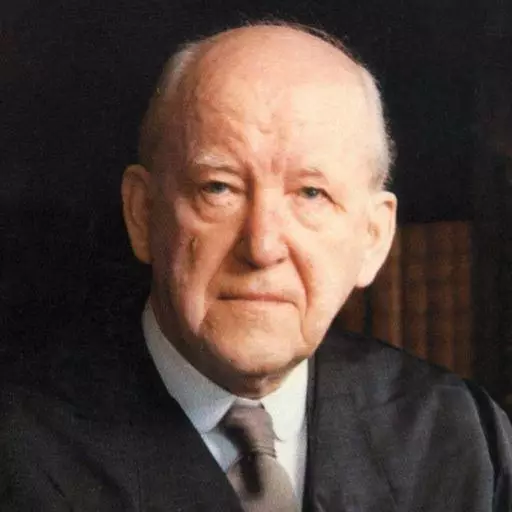
Liturgical forms of worship in free churches were on the rise during the ministry of Dr. Martyn Lloyd-Jones. This tendency hasn’t slowed and continues to this day as evangelicals have a renewed interest in read prayers, prayer books, responsive readings, and vestments. In this sermon on Romans 12:6–8 titled “Worship, Ancient and Modern,” Dr. Lloyd-Jones asks pressing questions of this movement. When one reads the descriptions of early church life, do they see themselves? Do they find these liturgical elements in Scripture and in what sense is the New Testament teaching binding on worship forms? While the liturgical practice of a prayer book and prescribed prayers each week is often argued on the basis of the Lord’s Prayer, Dr. Lloyd-Jones challenges this interpretation of the Lord’s Prayer. But Dr. Lloyd-Jones’s critique of the liturgical movement also takes the listener through church history in order to give a historical context for its development. While Dr. Lloyd-Jones acknowledges that both Martin Luther and John Calvin affirmed the authority of Scripture, it was Calvin who carried that belief beyond the realm of salvation and into church governance and worship. The goal in worship, says Dr. Lloyd-Jones, should be to correspond as closely to the picture given in Scripture. Listen to this intriguing and informative message on the history and development of church worship practices.

Dr. Martyn Lloyd-Jones: To the words found in the epistle to the Romans in chapter 12, reading verses 6, 7, and 8. "Having then gifts differing according to the grace that is given to us, whether prophecy, let us prophesy according to the proportion of faith; or ministry, let us wait on our ministering: or he that teacheth, on teaching; or he that exhorteth, on exhortation: he that giveth, let him do it with simplicity; he that ruleth, with diligence; he that showeth mercy, with cheerfulness."

Now, we are considering this most interesting and important statement. We've already considered it in detail and from the standpoint of the particular instructions that the Apostle was giving to the members of the church at Rome. In doing that, we have discovered that he is incidentally and at the same time giving us a description of the life of the early church.

We are now paying particular attention to that. The danger is that we should just be content with giving the meaning of these different terms, such as teaching and exhortation and ministering and governing and so on, and leave it at that. But we've seen that we mustn't do that. As this is a description of the life and behavior of the early church, we naturally must go on to ask the question: do we see ourselves in that picture? And if we do not, why don't we? What has happened to the Christian church that she should appear in general today to be so different from the picture that we find of her in the New Testament?

We've dismissed the suggestion that these things only applied to the early church. That seems to me to be one of the most dangerous things that we can ever say. We will soon be cutting down, as so many others are doing at the present time, the New Testament teaching to suit us and to conform to our state and condition. That is just to reverse the right and the true procedure. We must measure ourselves always in the light of what we have in the New Testament. Unless we have overwhelming proof that any particular statement has reference only to the apostolic age, we must realize that it applies to us today as much as it did to the early church.

Well now, in doing this, we have found this so far: that from the standpoint of order and of government, the Christian church has obviously wandered very far indeed from that which is described in the New Testament. We tried to give some sort of historical review and survey of that story in order that we might see how it happened. Our object is that in the light of all this, we must take advantage of all this present talk today about church unity to make sure that the only unity that we are interested in is a unity that reproduces what we find in the New Testament.

We've had more illustrations during this week of the other type of unity. The thing for us to do is to examine that and every other proposal for unity or every other attempt for unity in the light of this particular teaching. It's no use just starting with things as they are and modifying them a little bit here and there—the Roman Catholic Church with a little modification, the Church of England with a little modification, and so on—and so we get one great church which will still maintain most of the characteristics of all the different sections going into the amalgamation.

That is not the way in which we view these things. We say that we must view all things in the light of the New Testament teaching. As people are interested in unity, we of all people ought to be interested in unity. The church is to be one and she's to be seen to be one. Surely the call that comes to us is to manifest the type of unity that you read of in the New Testament and to assert that that and that alone is the Christian church and not some counterfeit produced by men.

Very well, we've done that. But still, we are left with one other problem, or rather one other aspect of this same matter. The church as we've known her is not only different from the New Testament church in her order and in her government, but surely we must recognize a great difference also in her mode of worship, in her way of conducting worship, in her way of expressing worship. Here, we are given a picture, a little cameo of the kind of thing that happened in the early church.

I've reminded you several times of the corresponding passage, or a similar passage at any rate, in 1 Corinthians 14, where the Apostle puts it like this in verse 26 and following: "How is it then, brethren? when ye come together, every one of you hath a psalm, hath a doctrine, hath a tongue, hath a revelation, hath an interpretation. Let all things be done unto edifying." And there are other passages. There is a statement in the fifth chapter of the epistle to the Ephesians, which again gives us a picture of the church singing and making melody in your heart, singing in psalms and hymns and spiritual songs, making melody in your heart. Such pictures as that give us an insight into the type of worship that was characteristic of the early church.

Well now, once more, if we are intelligent readers of our scriptures, we must obviously ask ourselves the question: is our worship something that corresponds to the pictures that we have of the worship of the early church? Again, if not, why not? How have we moved from what we find here to what we know today, with what we are familiar with?

Why is this important for us? I do want to stress the all-importance of our doing this. Evangelical people have gone in so often for a type of Bible study or Bible reading, whatever they may call it, which rarely has been most effective. We've been content with a kind of letter knowledge of the scripture, and we haven't troubled always to look at the doctrine, to find the doctrine, to dig out the doctrine, and to see its relevance to us.

Now, here is something at once which surely demands our attention. It's got everything to say to us at this present time. Again, I want us to consider this in the light of everything that is happening round and about us. You've seen again this week a type of worship with dresses and vestments, as they call them, and all the trappings and the paraphernalia of a certain type of what is called worship. There's no use our denying it; that is the trend at the present time. There is an increasing tendency to what you may call liturgical services and all that accompanies that.

This is true in most sections of the Christian church. I've been observing during the last 30 to 40 years the increasing tendency in what are called free churches to modify their type of worship. It's becoming increasingly liturgical. There has been an increasing tendency to read prayers and to have formal services at the communion table and in baptism and so on. The whole tendency has been to move in this liturgical direction, to have a kind of litany.

It's been an imitation on the part of the free churches of what they've seen and known in the Anglican Church. The Anglican Church in turn, as I'm going to show you, took most of it from the Roman Catholic Church. With all this that is to be seen on the television and all that's appearing in the papers and so on, this has had a great impetus. Therefore, this whole tendency in the direction of read prayers and responses and the whole full liturgical service with putting on various vestments and gowns and various other coverings—all this is obviously a very marked tendency at the present time.

Well now, here we are. What we have to do is to say: where is that to be found in the New Testament? How does that compare, for instance, with what we see in these three verses that we are looking at in this 12th chapter of the epistle to the Romans? In other words, a dispute which has been going on many a time in the church is in its acute form once more. There is a main division between what are called sometimes religions of authority and religions of the spirit. Or if you prefer it, there is a vital difference between the Catholic type of worship and the truly Protestant type of worship.

There is all the difference in the world between a worship that is mainly dependent upon ceremonial and ritual and a simple type of worship which exalts the freedom of the spirit. Now, if there's anybody here tonight who feels, "What's this got to do with me?" then all I say is that you don't know your New Testament. It's got everything to do with you. If you really believe this is the word of God, you must be concerned about this. Whether you like it or not, you will be compelled to take decisions on these very matters.

If you don't see the trend toward Rome, well, I'm afraid you must be blind. It's moving and moving very rapidly. The proposal to have one church in this country—and that is the proposal—is a proposal which tells us that it is to be episcopal in its government and liturgical in its form of worship. Most people are very happy and ready to accept that. As we've been reminded very forcibly again this week, the ultimate objective is to have one great world church, including the Church of Rome, or rather the Church of Rome including all the others.

So, you will be committed to the type of worship, as they call it, which you've seen represented on your television screens and in the newspaper pictures this week. Now, the question is: do you want that? Do you believe in that? Do you regard that as right? Now, all this is raised for us by these three verses because here we have a picture of the worship of the New Testament early church.

Is this vital? Is it a vital matter, or is it only a matter of taste? What I've been hearing so much throughout the years and have been very sickened by it, is people who say, "The language of the litany is so beautiful. Cranmer was a master at language and at this kind of liturgical language, and the prayers are so beautiful." That's an argument that one hears so frequently among free church people as well as among Anglicans themselves and others.

Well now, the question I ask is this: is that the test and is that the standard that you apply, or is this merely a matter of tradition? I want to deal with these questions with you. We must not approach them merely in terms of prejudices or of traditions. That's always wrong. We mustn't say we object to these things because we haven't been brought up in that tradition. The others mustn't say this is right because this is our tradition. All of us are called upon to re-examine everything in the light of the teaching of the New Testament itself. To us, nothing matters except: is it right? And we discover whether it's right or not by coming to the bar of the New Testament scripture. Is it in accord with the teaching of the New Testament?

Now, at this point, there is an important matter of principle that I have to put before you. You will know that at the time of the Protestant Reformation, those godly men who were raised up at that time were in general agreed that the New Testament is the ultimate and the only source of authority. But they tended to differ among themselves at one point, and a most important point. It is this: in what sense is the New Testament teaching binding?

Here, there emerged a division between Martin Luther and John Calvin. Not only between those two great men, but also between two great sections of the church in this country. The difference was this: Martin Luther taught that the scripture is an absolute authority on all matters of doctrine with respect to salvation, but that with regard to understanding church government or forms of worship, the New Testament teaching is not binding and that it is allowed to the wisdom of the church to produce a form of worship and indeed a form of church government determined by men.

Calvin took a very different view. He said that the scriptures are not only binding in matters like doctrines of salvation, they are equally binding and are to be our only rule with regard to church government and also forms of worship. Now, you see, that's a very essentially different point. Calvin teaches that our worship and our church government are to be governed by the teaching of the scriptures. Luther says no.

Well now, coming to this country, the Church of England followed Luther. The Church of England has always taught that while the scriptures are binding in the matter of the doctrines of salvation, they are not binding in the matters of church government and of worship. That has been the traditional position of the Church of England. But the other body that arose in this country was that body that ultimately became known as Puritan. This didn't apply to all of them; it applied in particular to what we may describe as the radical Puritans.

So you see, here is a body of people, all believing in the infallibility of the scripture and its unique inspiration, who come to different conclusions with regard to these matters like church government and forms of worship. The Lutherans and the Anglicans regard that as more or less indifferent. The others say no; they are as controlled as much by the teaching of the scripture as is the doctrine of salvation itself.

Very well, having laid that down and having said that for your guidance because I'm most anxious that we should look at this whole situation in a dispassionate manner in the light of the teaching of the scripture and in the light of what has happened in the history of the church, let's go to the scriptures first. Have we any teaching by our blessed Lord Himself with regard to this question? Does our Lord Himself prescribe read prayers or recited prayers? Did He teach that we were always to offer our worship in the same language and in the same words as those who use the same prayer book every Sunday do? Can it be proved or established in terms of the teaching of our Lord and Savior?

The argument put forward by those who believe in read prayers out of prayer books and the same prayers every Sunday, their great argument is the Lord's Prayer. That's why we've read it at the beginning. They say our Lord taught His disciples, "When ye pray, say." Here He is composing a prayer for them that He intends them to repeat. And so in compiling their prayer books and repeating these prayers Sunday by Sunday, they say they are simply doing what our Lord and Master Himself first taught the church.

Now, this obviously has got to be examined. It's the only real bit of evidence that they can produce. How do we deal with this argument, this position? Well, this has been dealt with many times. It was dealt with by many of the leading Puritans like Dr. John Owen and others, and these are the arguments which they've always brought forward and which seem to me to be inevitable from a study of the scripture.

What was our Lord doing when He spoke as He did about "When ye pray, say"? Well, this is surely something which we should regard as a model prayer. What He's saying is not "Repeat this mechanically every time you pray," but He says—and if you look at Luke 11 where you've got the parallel statement of that—the disciples came to Him and said, "Lord, teach us to pray, as John also taught his disciples to pray." They were in difficulties about praying. We're not surprised at that; we've all known the same difficulty. Prayer can be very difficult.

So they come and they ask their question, and our Lord replies, "When you pray, say." Surely what He means is: this is the kind of manner or the style in which you should pray. In other words, you always start with adoration: "Our Father which art in heaven, hallowed be Thy name." You don't start with your petitions and your desires, but you must always worship God. He's instructing them on the great principles of prayer: that we must always recollect and realize we are approaching the almighty and everlasting God, and before everything else, we must offer our adoration and our worship. We must desire the coming of His kingdom, that His will be done on earth as it is in heaven, and so on. It is only then that we come to the personal petitions and desires.

In other words, our Lord is saying, "In this manner, in this kind of way." He's not composing a prayer for them in order simply that they may repeat it mechanically or even repeat it in the spirit. He's concerned about laying down the principles, the general ideas, or the ordering of your prayers. That's the first answer to this argument that would base the use of liturgies and litanies and so on on the Lord's Prayer.

But secondly, the account of that which is given in the sixth chapter of Matthew's Gospel that we read at the beginning surely indicates quite clearly that our Lord was dealing there with private worship rather than public. He talks about going into thy room, into thy chamber, shutting the door, praying in secret, and thy Father which seeth in secret shall reward thee openly. That seems to me to be a very powerful argument.

Then Dr. John Owen points out—and I think there is a good deal to be said for this—that in any case, even if our Lord was dictating a prayer which they should repeat, He was actually speaking under the Old Testament dispensation. It was all before His death; it was all before Pentecost. As you do find a kind of ritual and ceremonial and dictation in the Old Testament, our Lord was just showing how, in their position at that time, this is how they should be praying. I think that can be pressed too far, but as far as it goes, there is some point in what Dr. John Owen says at that point.

But, and this is surely the final argument and a conclusive one: even if we grant that our Lord dictated that prayer and intended that we should repeat it word for word, as we do indeed tend to do so many of us in our services—granting all that—how does that justify repeating Sunday by Sunday prayers composed by men? That is after all something which was uttered by the Lord Himself, whereas the prayers that are used in these prayer books are the compositions of men—men of different centuries, different traditions, and so on. So that even if you justify the reciting of the Lord's Prayer, it surely does not entitle you to go any further and to say that all prayers should be prayers that are composed and written and printed and are to be read and repeated Sunday by Sunday.

So that even granting all that, you see the case surely is one which cannot be substantiated. Very well, that is the only bit of evidence that can even be remotely adduced from the teaching of our Lord and Savior. What about the Apostles? Well, here I think everybody's agreed that there is really no evidence whatsoever from either the practice or the teaching of the Apostles that they believed in these formal, set prayers. They didn't repeat their prayers; their prayers varied according to their circumstances. Certainly in the epistles, there is no instruction whatsoever. They haven't prepared any prayers which they taught the people; they've never given any instruction to the people that they should repeat particular prayers. In the teaching of the Apostles, there is just nothing whatsoever, which in itself, of course, is in many ways the most significant thing of all.

Very well, there is the evidence as far as the New Testament is concerned. What about the subsequent history of the church? What about the early centuries? Well, this is extremely interesting. There is no evidence whatsoever in the first three centuries that anything remotely approaching a prayer book was used. They did not have these liturgical services. It first came in in the fourth century, and there seems very good evidence to say that it came in at a place that is familiar to us, a place which is called Antioch.

Now, there is evidence, of course, to the contrary. Let me read to you some evidence out of the writings of that great father in the church, Tertullian, who lived roundabout 200 AD. This is how he describes their form of worship. He says that they pray, "looking towards heaven, not like the idolaters who looked on their idols and images, not embracing altars or images as did the heathen, not as they who repeat their prayers after their priests or sacrificers, but pouring out our prayers conceived in our breasts."

Now, that's very important, isn't it, and very significant? He contrasts what the pagans did, who repeat their prayers after their priests or sacrificers. In contradistinction to that, he says, "We pour out our prayers conceived in our breasts," which I'm going to suggest to you is in entire conformity with the teaching of the New Testament itself.

And then another quotation from Tertullian. He's talking about someone being received into the Christian church. "After the believer who is joined unto us is thus washed, we bring him to those who are called brethren, thither where they are gathered together for to make their prayers and supplications for themselves and him who is newly illuminated." What sort of prayers are these? "These prayers and supplications," he adds, "the president of the assembly poureth out according to his ability." He doesn't read set prayers, but he pours out his prayers according to his ability. He doth this work at large. In other words, he continues long in his work of praises unto God and in the name of Jesus Christ. But the material phrase is "he poureth it out according to his ability," and the ability varies from case to case, from man to man, in this matter of pouring out prayers from the heart.

Very well, you see, the first three centuries, there was nothing of this at all. But then in the fourth century, it came in. How did it come in? Well, it came in very gradually. It came in first at Antioch, then began to appear in other places. And they didn't all have the same prayers. Prayers were composed by a man in Antioch, another man in another place would compose others, and eventually, this began to happen in the church in Rome. She was far from being the first in this matter.

But eventually, they began to do this in the church at Rome. However, when that great event took place which we referred to last week about the Emperor Constantine and the Roman Empire going into the church, they then, of course, took over everything. As they took over the government, they did exactly the same with forms of worship. They standardized everything. They laid it down that the same prayers had to be offered everywhere.

Standardized everything. Everybody has to offer the same prayers everywhere. It's got to be in the same tongue; it's got to be in Latin. Of course, that's been modified recently, as we know, and it's an interesting concession, but the principle still remains. But that is what Rome did. And at the same time, she not only standardized the prayers, but she began to introduce various other innovations—these various vestments, these robes and so on that are worn by what they call priests. They borrowed most of them from pagan mystery religions. There's no question about this; it isn't my theory. That was her policy. They picked up what they regarded as best, what the people had been accustomed to in all these pagan religions. You always had and still have a good deal of dressing up and so on. Well, they took over all that. They said that they baptized these things into the Christian church. They also said that this was done under the Old Testament dispensation: that Aaron was clothed with various garments and so were the priests and so on. And in this way, they introduced all these vestments, which are still being continued and which you've seen for yourselves once more this week in all probability.

Well now, that's how this tendency came in to liturgical services, read prayers, recited prayers, and so on. Now, here's an interesting question: why did they do all this? Why did this begin in Antioch? Why did anybody ever think of doing this? Now, that's a most important question, and we've really got to consider this very carefully. And there were two main reasons for it. And this is—I'm trying to put the argument for liturgies as fairly as I can. I don't want to give the impression that this was only done at the whim of somebody or the fancy of somebody. They had two what they regarded as very powerful arguments.

The first was that very often the ministers, the priests, whatever they called them, were rather ignorant and they were not capable of offering prayers. They were often men who were badly educated, and they found themselves in difficulties. They welcomed the provision of prayers. So that was one argument: ignorance of the ministers.

But secondly, and this was still more important, there was always this danger, as we saw last week in the matter of church government—there was always the danger of heretical or wrong teaching. This is always a danger. And the position was that some of these men who were in these positions of leadership, they knew that they were being watched in their preaching and that they must be very careful therefore what they said in their preaching. So their tendency was to introduce their heresies into their prayers.

You know, prayers sometimes are sermons and not prayers. We're all a bit guilty of this at times probably; it's a thing we've always got to watch. And some of these heretical teachers, they did this quite deliberately. They were introducing heretical teaching through the medium of their public prayers. And as long as every man had freedom and liberty to pray extempore and freely, well, you couldn't do much about it. Ah, so the Roman church now—she was always keen on discipline as we saw last week. She always wanted to standardize everything. It was something she took over from the Roman Empire—this ordinariness and discipline. Of course, let's agree, this problem of discipline is an important one and something's got to be done about the heretics. Well, they said there's only one way to deal with this: we must prescribe the prayers.

We must set them down, and we must say these and these alone are the prayers that are to be offered. And so you thereby exclude the danger of heretical teaching coming through the medium of your prayers. So that, if we want to be generous, we can grant them that their motive was a good one. They were anxious to preserve true worship as over and against a false and an erroneous type of worship.

Very well, but that led eventually to the full Roman system, with all the ritual and the ceremonial, greatly elaborated of course over the question of the Lord's Supper, likewise of baptism. And then they began to talk about various other sacraments, and there was a corresponding liturgy and order and particular statements developed for each one. It became a vast organization in a sense and a complicated liturgy. That is the typical procedure of the Roman Catholic Church right through the Middle Ages. It was all done, of course, by the priests, and the people were away in the distance somewhere, often not understanding a word of what was being said. But that didn't matter; it was what the priests did that mattered, and the people were away and remote and taking no part in this except some occasional responses which were indicated in the liturgy.

Very well, that brings us up to the time of the Protestant Reformation. Now what happened here? This again surely should be of great interest to all of us, from every standpoint, to know why we've been brought up in the way we have in our traditions. But still more, as I say, to know what we should be thinking and saying and doing at this present time of change and of transition.

What happened there? Well, it's very interesting once more to observe. Luther took over most of what had been done by Rome. Of course, he corrected the Roman Catholic errors, things he'd come to see were quite wrong. But Luther was primarily concerned about this great doctrine of justification by faith only. He wasn't so interested in church government nor indeed in these matters of forms of worship. As I say, that was his view even of the teaching of the scripture. So he took over most of this. The type of worship he certainly took over. He got rid of the errors and what he believed now to be entirely wrong, but as regards the form, he took it over.

Now Calvin is interesting in this matter, and he's often misunderstood at this point. We tend of course to think in this country, many of us, and particularly those who are interested in Puritan, the Puritan teaching, we tend to think that Calvin was in the exact position of the Puritans. But he wasn't; he wasn't at all. Calvin believed in having a liturgy. He believed in set prayers. He allowed more liberty for extempore prayer than the Roman Catholic Church had ever done and indeed more than the Church of England did, but on the whole, Calvin believed in a liturgy and in read and set prayers. This is just a fact of history. Be careful you see, my friends, in your arguments, lest you may be using the name of Calvin very wrongly. There is a sense in which it can be argued that the Church of England in the matter of worship is nearer to Calvin than some of the Puritans were.

Very well, there's the position of Calvin. When you come to this country, you come to the name of Thomas Cranmer, of course, the man who composed the prayer book of the Church of England. And he did more or less again what Luther had done in Germany. He didn't do away with liturgy and prayer book. He took the idea over, and again he rid it of all the errors of Roman Catholicism and its teaching. And so he composed those prayers, which let us admit very readily, are masterpieces from the literary standpoint. We're not concerned about that; we can grant that they are masterpieces from that standpoint and that he had an unusual facility in the matter of producing such written prayers.

But the important thing to ask is this: why did he do it? Why did he decide to have this prayer book and to perpetuate the Roman Catholic type of worship? And again, we've got to be fair, and we've got to recognize that this man and those who were with him were men of their age. Not only were they men of their age, they were men who were confronted by certain very special problems. It is always our duty as honest thinkers to take in the circumstances in which men were placed when they came to their decisions, lest we judge them unfairly. And what Cranmer was faced with was this: he was faced, and this was his biggest problem of all, with ignorant clergy.

They'd been most of them brought up as Roman Catholics, and they were men who were ignorant of the scriptures, men who were devoid of any spiritual experience. But they had changed over in a spirit of fear or because it was to them the expedient thing to do. And there were various other reasons which such people have of changing sides, as they did change in the time of Henry the Eighth and then back again in Mary's time, then back again in the time of Elizabeth. And many similar men did much the same thing in the time of Oliver Cromwell and the Commonwealth and the Restoration—Vicars of Bray, you know, changing according to the political climate and position and so on.

Well now, Cranmer was confronted by such people. But apart from their spiritual state and condition, they were actually ignorant. One of his arguments was that really they must be provided with prayers; they couldn't pray themselves. And if the people were ever to be helped in any way, well, he must provide these ministers with prayers which they could read in their services with the people.

In addition to that, and this again is a most important point, try to conceive of the situation: 15 centuries of Roman Catholicism. The system was in the very blood and bones of the people. They'd never heard of anything else or thought of anything else. Suddenly comes this explosion, the Protestant Reformation. Now, these men came to see this great matter of the doctrine of justification by faith only. The people didn't see it as clearly.

And one of the arguments that Cranmer used was this: he said if we now are not only going to change our doctrine of salvation but change the whole form of worship as well, well, we'll lose everybody and we'll lose everything. The thing that matters, he said, is that they should be right on the doctrine of salvation, justification by faith only. The other matter is really indifferent, and we can afford to go on with that type of worship until we have truly educated them.

Now, I think there's something to be said for that argument as a temporary device, as a temporary expedient. Surely there is not only a great deal to be said for it, I suggest that there is a New Testament justification of it in something that was done by the Apostles and elders. You remember that last week we were discussing what happened at the Council of Jerusalem, as it is recorded in the 15th chapter of the Book of the Acts of the Apostles. And you remember the decision at which they arrived in that conference. And the decision, you remember, was this: there was a very real problem. The Gentiles were coming in, there were the Judaizers who were saying they must all be circumcised, they must all go right back under the law.

"No," said this council in its wisdom, led by the Holy Ghost. It seemed good to the Holy Ghost and to us to lay upon you no greater burden than these necessary things: that you abstain from meats offered to idols, and from blood, and from things strangled, and from fornication. They laid that down as a principle. Now, that no longer applies to us. We don't abstain from blood in that sense. That was a decision for a period of transition in order to avoid a clash. They said, "Look here, we will make it perfectly clear to the Gentiles that they do not have to come back under the law. But in order to make it easier for the Jewish and the Gentile Christians to live together, we will appeal to the Gentiles to abstain from these particular things for the time being."

And it was only for the time being. Very well, I'm suggesting that Cranmer and others were partly motivated by the same sort of argument. Here are the people, so accustomed to this. Well, let's not offend them unnecessarily. Let's be clear about our great doctrine of salvation, but let's make this concession: go on using your liturgy, get rid of the Roman Catholic accretions and errors, make it appear and a true liturgy. Very well, let's go on with that. It is a good temporary measure and expedient. And I'm prepared to grant that as a temporary measure, it was justifiable.

Now, try and put your mind back into that 16th century. There was the great difficulty these men were confronted with. They were confronted by this ignorant populace, deeply prejudiced, had always done it like this. Don't you say things like that sometimes? I hear that argument very frequently from people—not Anglicans, but Baptists and Methodists and others. "We've always done it like this. This is our fathers'..." People were like that then. And you see, you've got to recognize that, you've got to meet that.

And there is nothing wrong in principle in resulting to a temporary expedient or measure when the thing is not concerning a vital essential truth. It is a right principle that for the sake of brotherhood and friendship and the true unity of the spirit, that you make the kind of appeal and concession that was made by the Council of Jerusalem. And that is an argument, I say, for the prayer book in the reign of Queen Elizabeth and still more in the reign of Henry the Eighth when it was first produced, and then in the reign of Edward the Sixth.

But I suggest that that is the most that can be said for it: that it was right then as a temporary measure, but it does not justify the perpetuation of the continuation of that forever and forever. Very well, but that was the argument of people like Cranmer.

But immediately there arose these others whom I've described as radical Puritans. And they objected to this from the very beginning. They said, "No, that's all right, that's expedient, but surely we must be governed in these matters by the teaching of the New Testament itself. Can we stop at only changing our view of the doctrine of salvation? Surely the New Testament teaches us also about the form of government in the church and about the form of worship." They said, "This thing is wrong. It's not consistent with the teaching of the New Testament." They said, "We must carry the Reformation right through. We don't stop at doctrines of salvation; be consistent, carry it right through to the form of worship as well as the other matters."

And the fight began at once. Some of you who've ever read of that great man John Hooper, Bishop of Gloucester, will know how he was one of the real leaders in all this, and many others came after him. And they claimed that they were just going back to the New Testament and that everything that had been added on quite unjustifiably, chiefly by the Church of Rome, must be undone and must be discarded.

Then you come on to the next century, to the great conference held here in Westminster Abbey, the famous Assembly of Divines, called in 1643. There was confusion in this country. It was partly political but very largely also religious, and this question of the form of worship was one of the great questions. It wasn't only a question about bishops, but it was a whole question of a form of worship. The bishops were enforcing the use of the prayer book. It had to be used, and everything else was being prohibited. So with the political agitation and the war coming on—war had already come on—it was decided that this Assembly of Divines should be called, and they met here in Westminster Abbey and they produced their Westminster Confession of Faith, but accompanying it, a directory of worship.

Now, here's a very interesting matter in this whole connection. You see, these men again, and the prevailing majority view of course was that of the Church of Scotland, which was Presbyterian. They, and this is something again that isn't always realized, they, though they owed so much to John Calvin, they departed from his teaching at this point. They felt that there was need for the ministers to be helped and to be guided, but they did not agree with Calvin that you should have a stated liturgy and formal prayers which are to be repeated.

What they said was this: "In this directory, we give you the subjects about which you should pray and a general idea with regard to what you should pray for and how you should pray, but we don't give the words to you. We'll give you the lines, the headings." In other words, they did precisely what I suggested in my interpretation of the Lord's Prayer that our Lord Himself was doing: "When you pray, this is the way in which you should proceed. You start with worship and adoration, and you proceed. You must have order in your prayers. You mustn't just jump about from petition to petition. Your prayers should be orderly." So the directory was concerned simply to introduce an element of order and of arrangement, indication of subjects in general, but certainly not a prescribing of exact words and an instruction that these words and no others should be prayed and offered as petitions Sunday by Sunday world without end.

Now, that's the position of the Westminster Divines and their famous directory. And this brings me to the end of my historical review and I fear to the end of our meeting this evening, to what happened of course in 1662, when those 2,000 men were ejected out of their livings in the Church of England, and it was mainly over this one matter. It wasn't primarily a matter of doctrine. It was this question of worship. The Act of Uniformity laid it down that they must use this prayer book which was produced at that time, which was a modification slightly of a previous one. This was the whole issue. They said, "You must."

Now, remember, people like Richard Baxter and others who were ejected at that time, Richard Baxter himself had no objection to a liturgy; in fact, he believed in a liturgy. But what he objected to was that it should be made compulsory and that unless a man did use it, he shouldn't be allowed to be a minister in the Church of England, and that he should not be allowed to offer his own extempore prayers. It was this whole element of compulsion that really was the crux and the main issue in 1662.

Well now, we've got to leave it at that, I'm afraid, for this evening, but we hope to consider this further next Friday night when I want now, in the light of all this, to consider with you the principles that should govern us in our thinking about this whole matter. We've got to get out of the atmosphere in which we say, "Ah, the beautiful prayer. Isn't the language perfect?" and so on, or some equal prejudice based on ignorance often and sheer thoughtlessness on the other side. I suggest to you that there are certain very vital principles here. It isn't just enough that you react to the sight of those two men embracing one another or whatever they were doing. It isn't enough that you just react to that with violence and abhorrence, with which I am in great sympathy, if I may say so. But we must have solid and scriptural grounds for saying, if that is what we do say, that that is not our idea of the worship of Christian people in the church of God, as we see it in the New Testament and as we would have it be, as we long to see it happening, and as we are prepared to pledge and commit ourselves to do everything we can to see that it is restored.

Well, may God bless us in the meantime and enable us to consider these matters in a spirit of humility and of prayer, in the light of the teaching of the scripture.

O Lord our God, we come unto Thee, and we are amazed more than ever that there is a Christian church at all. We see ourselves, we see other men and women in this age and in other ages. O God, we thank Thee that what we do see clearly above all else is that the church is Thine and that she would have perished long ago were this not true. Lord, we thank Thee for Thy great patience and long-suffering with us. And now again we yield and submit ourselves unto Thee and the word of Thy grace, praying that Thou wouldest control us by it and lead us by it and ever give us a single eye to Thy glory and to Thy praise. Hear us, O Lord, as we come in the name of Thy dear Son, our blessed Lord and Savior.

And now, may the grace of the Lord Jesus Christ and the love of God and the fellowship and the communion of the Holy Spirit abide and continue with us now this night, throughout the remainder of this our short and certain earthly life and pilgrimage and evermore. Amen.

This transcript is provided as a written companion to the original message and may contain inaccuracies or transcription errors. For complete context and clarity, please refer to the original audio recording. Time-sensitive references or promotional details may be outdated. This material is intended for personal use and informational purposes only.

Featured Offer

FREE GUIDE: 6 Keys to Overcoming Spiritual Depression

Find peace and comfort this season with your complimentary guide that includes access to 6 free bonus sermons on overcoming spiritual depression from Dr. Martyn Lloyd-Jones, one of the church’s most beloved Bible teachers. Topics include: true Christians can and do struggle with depression, recovering the joy of your salvation, dealing with crippling guilt over past sins, dealing with yesterday’s haunting regrets, encouragement to keep moving forward, and understanding God’s purpose for suffering.

Past Episodes

This ministry does not have any series.

About From the MLJ Archive

From the MLJ Archive is the Oneplace.com hosted ministry of the MLJ Trust. Our mission is to promulgate the audio ministry of Dr. Martyn Lloyd-Jones.


About Dr. Martyn Lloyd-Jones

Dr. Martyn Lloyd-Jones (1899–1981) has been described as "a great pillar of the 20th century Evangelical Church". Born in Wales, and educated in London, he was a brilliant student who embarked upon a short, but successful, career as a medical doctor at the famous St Bartholemew's Hospital. However, the call of Gospel ministry was so strong that he left medicine in order to become minister of a mission hall in Port Talbot, South Wales. Eventually he was called to Westminster Chapel in London, where thousands flocked to hear his "full-blooded" Gospel preaching, described by one hearer as "logic on fire". With some 1600 of his sermons recorded and digitally restored, this has left a legacy which is now available for the blessing of another generation of Christians around the world — "Though being dead he still speaks".

Contact From the MLJ Archive with Dr. Martyn Lloyd-Jones

Mailing Address
PO Box 953
Middleburg, VA 20118