
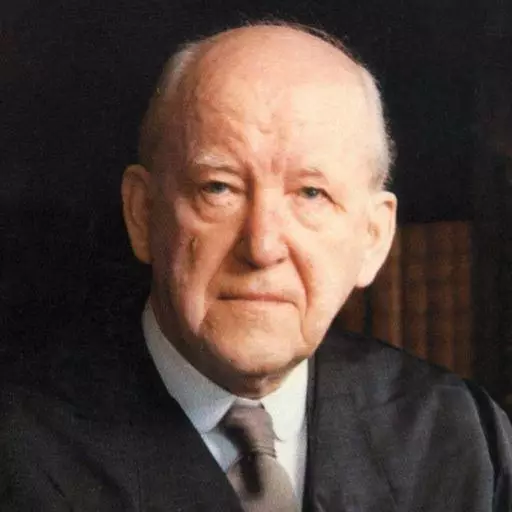
Without Christ


Dr. Martyn Lloyd-Jones: The words to which I should like to call your attention this morning are to be found in Paul's Epistle to the Ephesians, in the second chapter and the twelfth verse. The twelfth verse in the second chapter of Paul's Epistle to the Ephesians.
That at that time ye were without Christ, being aliens from the commonwealth of Israel, and strangers from the covenants of promise, having no hope, and without God in the world. I would remind you again of the eleventh verse which goes with this: "Wherefore remember that ye being in time past Gentiles in the flesh, who are called uncircumcision by that which is called the circumcision in the flesh made without, made by hands, that at that time ye were without Christ, being aliens from the commonwealth of Israel, and strangers from the covenants of promise, having no hope, without God in the world."
Now, I would remind you that we are considering here this great argument which we saw last Sunday morning, the Apostle introduces, in the eleventh verse, his fundamental object is to remind these Ephesian Christians of their wonderful position as Christians in Christ. And he wants them to see that they are what they are for one reason only, and that is because of the wondrous grace and mercy and power of God. And here he is particularly interested to demonstrate the power. That's the theme of the whole of this second chapter. We have already considered the first part.
He shows that nothing but the power of God could ever have raised them from that condition in which they were dead in trespasses and sins. Nothing less than the power that raised Christ from the dead was adequate to deal with that problem. But God has done it.
But that was not the only thing that stood between these Ephesians formerly and becoming Christians. There was this other thing. There was this fact that they were Gentiles in the flesh. Now, that according to the Apostle was a problem that presented itself in two forms.
The first difficulty was that the attitude of the Jews towards them as Gentiles had to be overcome. And then secondly, the attitude of God towards them as Gentiles also had to be overcome. Now, the first problem we dealt with last Sunday morning, the problem of overcoming the attitude of the Jews toward them.
You remember, we saw that the Jews called themselves the circumcision, and the others as the uncircumcision. They put them outside the pale. They said there was no hope for them. They were dogs, Gentiles.
Now, we spent our morning last Sunday in looking at this and in pointing out how tragic it was that the Jews in that way should so completely have misunderstood the purpose and the object of circumcision. It was a distinction introduced by God, yes, but not in the way in which the Jews had interpreted it. They, you see, attached too much significance to the mere external sign in the flesh. Hence Paul's sarcasm, which are called uncircumcision by the circumcision in the flesh made by hands.
And we spent our time in showing how that kind of thing, that outlook, that mentality is still the greatest cause of disruption and a lack of true unity, not only in the world, but also, alas, in the church. God has overcome it in the way that the Apostle proceeds to expound and to unfold. But now this morning, in this twelfth verse, we come to look at and to deal with the second aspect of this problem.
How can these Ephesians who were Gentiles, uncircumcised, how can they possibly be brought into the Christian church and be joined with Jewish Christians to form one new body, the Christian church? Well now, that's the question with which the Apostle deals here. And he does so in a most interesting manner.
Let me put it to you like this. The distinction between Jew and Gentile was a very real one. We mustn't minimize it. We mustn't detract from it. We mustn't make light of it. After all, it was God himself who introduced the sign of circumcision. It was God who commanded Abraham to circumcise himself and his children, and that this should be done in perpetuity.
Therefore, we mustn't underestimate it. It is God's distinction, Jews, Gentiles. Yes, but though we recognize the distinction, we must be perfectly clear in our minds as to what it means and as to what it represents. And it was there that the Jews had gone so wrong.
To them the external sign alone meant everything. It was something in the flesh. It was something external. Is a man circumcised? Then he's all right. He's one of God's people. Is he not? Well, then he is not and he has no hope.
They had completely misunderstood the point of it, the purpose of it, and the spirit of it. Now, the Apostle Paul, as you know, deals with this question in many of his epistles. He puts it, for instance, in a particularly clear manner in his epistle to the Romans, in the second chapter, in verses 28 and 29, where he puts it like this. He says, "He is not a Jew which is one outwardly, neither is that circumcision which is outward in the flesh, but he is a Jew which is one inwardly, and circumcision is that of the heart in the spirit, not in the letter, whose praise is not of men, but of God."
They had completely failed, in other words, to see and to realize that the whole object of this was something spiritual in the mind of God. Now, the Apostle, I say, is very concerned about this. Some people, when they hear that there is no longer circumcision or uncircumcision and Jew and Gentile and so on, are prone to say, "Well, very well, then we need pay no attention to these things."
Some Christians have been foolish enough to say that because we are Christians, we don't need the Old Testament. But that, says the Apostle again, in the epistle to the Romans, is quite wrong. "What advantage then hath the Jew, or what profit is there in circumcision?" And he replies, "Much, every way, chiefly because that unto them were committed the oracles of God."
And then you remember in the ninth chapter of that epistle to the Romans, he works out the same argument again. He says, "He has great heaviness and continual sorrow in his heart." "I could wish that myself were accursed from Christ for my brethren, my kinsmen according to the flesh, who are Israelites." And what does that mean? Well, here it is, "to whom pertaineth the adoption and the glory, and the covenants, and the giving of the law, and the service of God, and the promises, whose are the fathers, and of whom as concerning the flesh, Christ came, who is over all, God blessed forever."
Oh, yes, there was a very real purpose and object in the distinction between Jew and Gentile. It wasn't as the Jews misinterpreted it, but it was there, and it was a tremendously important thing. And here now, in the twelfth verse, Paul gives the true view of it. In the eleventh, the false view of circumcision; in the twelfth, the true view of circumcision and the absence of circumcision.
Well now, he puts it, you notice, in a most interesting and extraordinary and at first sight surprising manner. This is how he puts it: "That at that time ye were without Christ." Now, that's a strange way of putting it, "without Christ," which can be translated, if you like, "apart from Christ," "outside of Christ," "not in fellowship with Christ," "not in relationship to Christ," or if you prefer it, "living apart from Christ."
And then, having put it like that in general, he then goes on to put it in particular in five separate points: "being aliens from the commonwealth of Israel, strangers from the covenants of promise, having no hope, without God in the world." Now, this surely demands our careful attention.
He is obviously referring to the position which obtained before Christ, under the old dispensation, if you like, under the Old Testament. There is the world divided into Jews and Gentiles, those who as Jews have been circumcised and the uncircumcised, the Gentiles, the other nations. And yet you notice that he refers to that time and to that condition in these terms: "without Christ," "outside Christ."
Here he is referring to a position which obtained before the Lord Jesus Christ ever came into the world, and yet he puts it in terms of being "in Christ" or "outside Christ," "living apart from Christ." And one may very well ask, "Well, why does the Apostle do this? Why does he describe that in terms of a relationship to Christ?"
Well, the answer is, of course, that he is doing something which in a sense he's bound to do. And unless we understand and grasp clearly what he is doing here, well, then we must have read our Old Testaments always in vain. Here, you see, he takes a general review of the Old Testament, what characterizes it. Well, here it is, "the commonwealth of Israel, the covenants of promise, the hope that God gave to the people, their relationship to God, their separation from the world." That's a summary of the condition and the position of the Israelites under the Old Testament dispensation. All the other nations were outside that.
And yet, you see, he describes it all in terms of being "in Christ" or "outside Christ." Well, how do we interpret and reconcile this? Well, this is the answer: Everything that God did to and for the Jews under the Old dispensation was done with an eye to Christ. Everything in the Old Testament looks forward to Christ. We must never look at any of these things in and of themselves. Everything that God did to those Jews, those Israelites, he did in preparation for the coming of the Lord Jesus Christ.
Now, the Apostle, of course, puts that, you remember, in a phrase in Galatians 3:23 like this: He says that the purpose of all that was "to shut us up unto the faith which should afterward be revealed." The law was a schoolmaster to bring us to Christ. It was never meant to be anything in and of itself. That's where the Jews went wrong. They thought the law was something in and of itself, and that they were saved because they'd got the law and others hadn't got the law.
"No, no," says Paul, "the law is our schoolmaster, our pedagogue, to bring us to Christ." The purpose of all these things is "to shut us up unto the faith that should yet be revealed." Well now, then let's look at it like this.
God made man in his own image, and there man lived in correspondence and in fellowship with God. But alas, you remember he sinned and fell away from God. He gave birth to progeny. The earth became filled with people. And until the call of Abraham, the whole world and all its peoples and its nations were in the one relationship to God.
There is no division really in an ultimate sense until you come to the call of Abraham. There is a kind of division already between Cain and Abel and so on and the line of Seth. But God has dealt with all nations and all peoples in the same way until the call of Abraham.
And there God does something new. He told Abraham that he was going to turn him into a nation, that out of his loins a great nation would come, a people special and peculiar to the Lord God himself. He was going to create a new nation, a special nation. He was going to set them apart from all the other peoples, and he was going to be in a peculiar relationship to them. That's the formation of Israel. That's the genesis of the commonwealth of Israel, the people of God.
Then you remember that with these people he made certain covenants. He gave certain promises to them. He pledged himself to them. He took this man Abraham aside and he said, "In thee and through thy seed shall all the nations of the earth be blessed." God covenanted with Abraham. He pledged himself to him. He took an oath. That's the meaning of covenant. And you have all these promises oft repeated, the one great covenant repeated in various forms, repeated at Sinai, repeated again to David, preached by the prophets. Here it all is.
The commonwealth of Israel, the covenants of promise, and all these things, and they're all looking forward to the coming of the Messiah, to the great deliverer. In other words, the thing we must grasp is this, that God now looks down upon the world and its people in two ways. He looks upon this covenant people in one way; he looks upon the others in another way.
And the covenant people are known by the sign and the mark of circumcision. Every boy that was born into Israel was to be circumcised on the eighth day. He belonged to this covenant people, this nation of Israel, God's people. There are God's people. Here are the others.
Now, that's the thing that the Apostle is reminding these Ephesians of. And as I say, his object in doing it was this. He wants them to realize the greatness of their salvation. He wants them to realize that the fact that they are now fellow citizens, fellow heirs with the saints of the household of God, he wants them to realize that this is the most astounding thing that could ever have happened.
And the only way in which they can understand it is to understand something of the exceeding greatness of God's power to usward that believe. It's not only a power that raises us from the death of sin, it's a power that overcomes this tremendous question of how can those who are outside the covenant relationship ever be brought into it?
And so he goes on to explain it and to expound it to them. No man will ever rejoice as he ought to in Christ unless he realizes his position before he became a Christian. The trouble with everybody who is not rejoicing in Christ this morning is that they've never realized what they were in sin.
It's no use talking about only being positive. You must start with your negative. If you don't realize what you were before God took hold of you, you'll never praise him as you ought. So Paul goes into it in great detail. There are so many people who have never seen any need of Christ. Why? Well, because they're self-satisfied. They think they're all right as they are. That's the trouble.
Paul is anxious that these people should understand it. He's prayed that God would open the eyes of their understanding that they might do so. "There you were," he says. "But now you've been brought nigh by the blood of Christ. Can't you see what God has done? Can't you see the measure of his love and grace and mercy and his almighty power?" That's his argument.
Well now, then let's look at it. And let's look at it in order to apply it to ourselves. Do you know in your heart as well as in your mind this morning this wonderful love of God? Are you thrilled as you think of it and conceive of it? Are you filled with a sense of wonder, love, and praise? If not, it's because you don't realize what God has done for you in Christ.
Well, here it is, let's put it like this. What is the teaching? Well, the way to understand it is to look at what it means not to be a Christian. "Without Christ," "outside Christ." In other words, the first principle we lay down is this: The one thing that matters in this life and in this world is to be related to God in Christ.
There is nothing more terrible that can be said about anybody than this: "without Christ," "living apart from Christ." You see, when the Apostle looks for a term in which he can show these people the distance they were away and the utter hopelessness of their position, this is the term he chooses: "without Christ," "living apart from Christ," "in no living relationship to Christ." There's nothing worse than that.
But on the other hand, therefore, there is nothing more wonderful than to be "in Christ." These are the New Testament terms: "in Christ," "outside Christ." My friends, those are the only two positions that matter this morning. We are all of us either in Christ or else outside Christ.
Do you know exactly where you are? This isn't theory, this is actual fact and practice. This is the thing that's going to determine our eternal destiny. We are either in Christ or outside Christ. And it's because they don't know what is meant by being outside Christ that there are millions of people in the world today who are spending their Sunday morning in reading newspapers and the filth of the law courts instead of looking into the word of God.
They don't realize what they are as outside Christ. So Paul tells them in detail what it meant. What a terrible position to be in. Well, what's it mean? Well, let's classify it like this. It means two things, and let me suggest this classification of the five things which the Apostle says.
First of all, let us consider what it means to be without Christ as regards our position, or if you like, as regards our relationship to God. And then secondly, we will look at the inevitable consequences of that position. Paul says five things: aliens from the commonwealth of Israel, strangers to the covenants of promise, without hope, without God, in the world. I classify them into two headings.
First of all, what it means to be without Christ as regards our relationship to God. And here the Apostle says two things, the first two. The first is that we are in that state and condition, "aliens from the commonwealth of Israel." Now, what does this mean? Well, in a sense, I've already been describing it to you. A commonwealth means a community of citizens or of people definitely constituted. That's what's meant by a commonwealth, a polity, if you like. It doesn't matter about the exact meaning of the term. It means at any rate a number of people who are definitely constituted into a community. They are something separate and discrete and which you can recognize.
And what we are told, therefore, is this: That God, in the way I've indicated, formed a community for himself. This is God's way of salvation. He forms a people. He forms a community. He sets them apart, and he is in a peculiar relationship to them. If you want a description of that, you read the nineteenth chapter of the book of Exodus. It's there in detail, and you'll find the Apostle Peter quotes it in the first Epistle, in the second chapter, verses 9 and 10.
God gathered these people together there. You remember, before he gave them the ten commandments, and he said, "You are a peculiar people to me. You are a chosen generation, a royal priesthood, a holy nation, a people for my peculiar possession." That's it. He set them apart for himself. He divides them off from everybody else.
Ah, yes, but it doesn't stop at that, you see. He does that because he's going to take a special interest in them. They are a people for his own peculiar possession, so that later on God said through the prophet Amos to this nation of Israel, "You only have I known of all the nations of the earth." That doesn't mean obviously that he wasn't aware of all the others, of course he was. "To know" in the Scripture means to take a very special personal interest in, to be concerned about, to care for, to look with a father's eye and with a loving gaze. "You only have I known of all the nations of the earth." That was Israel.
God saw all the other nations, but he didn't know them. He didn't take this peculiar interest in them. They were outside the commonwealth of Israel. They were aliens. And indeed, the word used here by Paul is very interesting. It reads here, "being aliens." It should be translated, "having been made aliens," "having become aliens."
In other words, man was never meant to be in this position. It's all the result of the fall and the result of sin. He's become an alien, outside the peculiar interest of God. That is the first thing that is meant by being "without Christ," that you're outside that circle in which God is peculiarly interested. You don't belong to the covenant people. You are just one of a great mass somewhere. There's not this special interest, this special object of concern.
"Aliens from the commonwealth of Israel." It's the Christian church that corresponds to the commonwealth of Israel today. It's Christian people. And the most terrible thing about a man who's not a Christian is this, that he's outside that circle. Doesn't belong to them.
Are you an alien from the commonwealth of Israel, my friend? Do you feel strange in this service? Do you say to yourself, "What's that man talking about? What's all this? It doesn't seem to be very practical. It doesn't seem to be dealing with a conference that's about to be held in Washington, or the visit of the Queen to somewhere in Africa. It's not relevant. It's not up to date." No, no, I'm talking about God's citizenship, God's commonwealth.
Is it strange and alien to you? Or do you feel you belong to it? It's a terrible thing to feel you're an outsider, that you're not a part of these things, that some of them have got nothing to do with you. Are you in? Do you love the brethren? Are you a part of these things? It's a terrible thing, I say, to be outside Christ. It means you're an alien from the commonwealth of Israel.
What else? Well, the next thing he tells us is this, that they are "strangers from the covenants of promise." I have reminded you of the covenants that God made. He took hold of Abraham, not because there was anything peculiarly good about Abraham. He was a pagan amongst other pagans. God called him out and said, "Look here, I've set my eye on you. I'm going to bless you. I pledge myself to you."
As the author of the epistle to the Hebrews reminds us, he did it with an oath. He pledged himself and gave an oath that it might be sure to Abraham and to his seed, the promises of God. You read your Old Testament and you see them one after another. God calls these men apart. He gives them a revelation, a vision. He addresses them. He sends a word to them. They've got something that keeps them going. It was the whole secret of the people who are described in the eleventh chapter of the epistle to the Hebrews. The promises, the covenants of God.
God looking upon them and saying, "It's all right. Let the other nations envy you and try to destroy you. Let men rise up against you. It doesn't matter. You are my people. I will never let you go. I will never leave thee nor forsake thee. Hold on to my covenant word, my promise. Look forward to this, the covenants of promise." But the Ephesians were strangers to all that. The Gentile nations knew nothing about this.
You see, while these peculiar people of God, the Jews, were receiving these great messages and rejoicing in them, the others knew nothing at all about it. Strangers, absolute strangers, hadn't heard of it, knew nothing about it, not interested. And that is still true of all who are outside Christ. Those who are not living in relationship to Christ. They can read their Bibles and it doesn't move them. They can look into these exceeding great and precious promises and they say, "To whom does this apply? What's all this about?" They're strangers. They're like people in another country and they don't understand the language. Does the Bible speak to you, my friend? Is it unintelligible to you? Do you feel it's a gibberish and a jargon, or does it speak to you and speak words that lift you on your feet and make you praise God?
Are you a stranger to the covenants of promise, or do you know that they're speaking to you? That you're a member of the company? That God is addressing you as you read his holy word? Oh, what a terrible thing it is to be outside Christ, not in a living relationship to Christ.
Now, there it is, I say, first of all, in terms of our standing or our relationship to God. But let me ask you to consider for a moment the inevitable consequences of that. There are three of them. The first is "without hope." I don't know what you feel. I think that that's the most terrible statement in the whole of Scripture. "Without hope." There's nothing worse than that.
"While there's life, there's hope." Yes, but when hope goes, there's nothing. Hope is the last thing that goes. And when hope has gone, chaos is come again. As Macbeth put it. But a man who's without Christ is without hope. What does he mean? Well, I think he means this: He has no hope in this life. And have you realized that without Christ, there is no hope in this life, in this world? None at all.
Is that an exaggeration? Well, I ask you to consider the statements of the profoundest thinkers the world has ever known. And you'll find that they're invariably pessimists. The greatest works of Shakespeare are his tragedies. Every religion apart from the Christian faith is profoundly pessimistic. The only comfort they give you is this, that you get out of this world sometime. You may have to go through a whole series of reincarnations, but there's no hope here. You've got to get out of it and somehow or another be lost in some nirvana. They have no hope for men in this world. It's the flesh, the body, they say. And there's no hope for you while you're in it. You've got to get out of this world. Hinduism, Buddhism, they're all completely hopeless.
They're the products of profound thinking without revelation, but they're all hopeless. Oh, I say this is something that you find in all the great philosophies, in all the great religions. You'll find it in all the great literature. Have you noticed that our greatest poets are all always pessimists? A man like Wordsworth tells us that he's been listening to the still, sad music of humanity.
Of course, if you're flitting about from dance hall to dance hall and cinema to cinema, you won't hear it because there's such a clatter and a noise that you can't hear it. But a man, a poet, he sits, he listens, he meditates. And what does he hear? Isn't life wonderful? No, what he hears is the still, sad music of humanity.
Life is real, life is earnest. It isn't a giddy round of pleasure after pleasure. No, no, there is no hope in this life and in this world. It's all summarized very perfectly for us in the book of Ecclesiastes, isn't it? Where the man there says, "Vanity of vanities, all is vanity." That's not mere sheer pessimism. It's a profound thinker who's tried all the possibilities, considered all the things that are offered, and they've all come to nothing.
"What is has already been, and what is shall be. There is nothing new under the sun. There is no hope for the world. It's not going to get better and better." And you see this fatal idealism of the last hundred years is utterly condemned by all the great thinking of the centuries. And of course, it's utterly discredited by today. There is no hope in this life and in this world apart from Christ. "Vanity of vanities, all is vanity," can be written over it all.
Not only is there no hope that things will be better, but men, there is no hope that man himself will get better. He's no better than he was under the Old Testament dispensation. He's still committing the same sins. He's still guilty of the same follies. There is no evidence of spiritual improvement in man. Man today is as rotten as he was the moment he fell in the Garden of Eden.
And above and beyond it all, there is absolutely nothing whatsoever to look forward to. We are all getting older. Our powers are failing. Death must come inevitably. Do what you will, you can't get away from it. That's life without Christ.
Oh, let's listen to Shakespeare summing it up, as usual. He puts it perfectly at the end of his life, in one of his last dramas: "The cloud-capped towers, the gorgeous palaces, the solemn temples, the great globe itself, yea, all which it inherit, shall dissolve and like the insubstantial pageant faded, leave not a rack behind. We are such stuff as dreams are made on, and our little life is rounded with a sleep."
That's life without Christ, no hope, absolutely none. This isn't pessimism, this is realism. This is facing the facts. There is no hope in this world. It's not getting better. Look at your papers. Look at the facts. Man's not improving, and there's nothing but death. "The cloud-capped towers, the gorgeous palaces, the great globe itself," everything, it's going to dissolve.
And if there is no hope in this life, in this world, there is certainly no hope beyond it for the man who's outside Christ. Death is but the journey's end to him. As a rhesus bonnet puts it in his hymn: "Men die in darkness at thy side, without a hope to cheer the tomb." They look forward, what do they see? Nothing. They can't see death. They haven't the faith that sees through death. What lies beyond, they don't know. They either say there's nothing, or else there is torment, or else a series of reincarnations as I've said. They don't know. And as they look at the end, they're leaving everything. The palaces are collapsing, and they're nothing, "without hope."
But even worse, "without God." What does he mean by this? Well, this, by this he means obviously, without a subjective experience of God. He's referring to a subjective absence of God. God is still there, of course, but these people don't know that. They're not aware of that, and therefore they're not enjoying God. Shall I summarize it like this?
They don't know God and they're not in fellowship with God. Therefore, they are without all the help and all the peace and all the joy that comes through the knowledge of God and faith in God. Their world is collapsing. Everything is going wrong. They're left alone. And there in their utter isolation, they have nothing. They don't know God.
There are other people in the same position. Christians have troubles in this life. Accidents take place. Things go wrong. The Christian in circumstances may be identical with the other man. Yes, but there's this difference. The other man is without God. The Christian has God and knows God.
But this other man, I say, is without God. Oh, how different he is from the Psalmist, isn't he? Because the Psalmist, you remember, said this: "When my father and mother forsake me, then the Lord shall take me up." His father and mother have left him and deserted him. Friends and companions have all gone. Everything has gone. It's all right, says the man, "When my father and mother forsake me, then, even then, the Lord shall take me up."
Listen to him again: "I laid me down and slept." He was surrounded by enemies at that point. "I laid me down and slept. I awaked." Why? "For the Lord sustained me." Listen to him at another time: "Out of the depths have I cried unto thee." He was down in a horrible pit, and all seemed to have gone. But he looked up, God was still there. "I cried unto the Lord out of the depths."
"The Lord is my shepherd. I shall not want. Though I walk through the valley of the shadow of death, thou art with me. Thy rod and thy staff, they comfort me. I'm seeing nothing else now, I still see them." The other man doesn't know this, he's without God. "The Lord is my light and my salvation, what shall I fear? The Lord is the strength of my life, of whom shall I be afraid?" "With God, not without God."
But listen to him putting it again in one amazing statement: "From the end of the earth will I cry unto thee, when my heart is overwhelmed, lead me to the rock that is higher than I." There he is almost drowning in the ocean, with enemies and everything against me. He cries unto God, "Lead me to the rock that is higher than I, and there I shall be safe."
But this other man doesn't know this. He's without Christ and therefore without God. How unlike the Apostle Paul. Listen to Paul putting it: "At my first answer," he says, "no man stood with me, but all men forsook me. I pray God that he, that it may not be laid to their charge. Notwithstanding, the Lord stood with me and strengthened me." Paul was on trial. All his friends left him. No men stood with me. All men forsook me. Notwithstanding, the Lord stood with me and strengthened me.
And again he writes to Timothy and he says, "I'm in prison and everything's going against me. Nevertheless, I am not ashamed, for I know in whom I have believed and am persuaded that he is able to keep that which I have committed unto him until that day." Oh, yes, as the author of the Epistle to the Hebrews quoting the Old Testament, "The Lord is my helper. I shall not fear what man shall do unto me." Why? Well, God has said, "I will never leave thee nor forsake thee."
But this other man doesn't know that. He's left to himself. His world has collapsed. Everything's gone wrong. He's not only got no hope, he's without God. And he can't look forward to a day which is coming when according to that passage in the book of Revelation that we read at the beginning, God shall wipe away all tears from their eyes. And there shall be sorrow and sighing and weeping no more. This man without Christ, he's doesn't know these things.
Oh, but how unlike our Lord himself. Listen to the Lord saying it: "Behold, the hour cometh, yea, is now come that ye shall be scattered every man to his own, and shall leave me alone. And yet I am not alone, for the Father is with me." He wasn't without God. No, no, God was with him when all had forsaken and had fled. "And yet I am not alone, the Father is with me." Oh, what a terrible thing it must be to be without hope and without God in the world, belonging to this passing world that's under the wrath of God, under condemnation and is yet to be destroyed. The world passes away and the lust thereof. But he that doeth the will of God abideth forever.
Beloved people, I trust that there is no one in this service who is without Christ. My friend, if you are, do you realize where you are? Outside the commonwealth, the special interest of God, no promises, no hope, without God in the world. If you see it and if you know what that means, there's only one thing for you to do. Fly to Christ. The Ephesians were there, "But now in Christ Jesus, ye who sometimes were far off are made nigh by the blood of Christ."
You needn't remain an outsider. You needn't feel these things don't belong to you. They do. God's speaking to you. Believe him. Listen to him. Act upon it. Go to him. Confess that all that has been true of you, and cast yourself upon his love and grace and mercy and compassion, and he will receive you. And he will tell you that he sent his son to die and to shed his blood for you, that you might be reconciled to him and might become his child, and might become a fellow citizen with the saints and of the household of God. And you'll have a new life and a new hope. And you'll know God, and you'll know that he'll never leave you nor forsake you. Fly to him. And if you're already there, rejoice in him. To be in Christ, there is nothing beyond it. It is heaven on earth. It is the fortress of eternal bliss. Amen.
Featured Offer

Find peace and comfort this season with your complimentary guide that includes access to 6 free bonus sermons on overcoming spiritual depression from Dr. Martyn Lloyd-Jones, one of the church’s most beloved Bible teachers. Topics include: true Christians can and do struggle with depression, recovering the joy of your salvation, dealing with crippling guilt over past sins, dealing with yesterday’s haunting regrets, encouragement to keep moving forward, and understanding God’s purpose for suffering.
Past Episodes
This ministry does not have any series.
Featured Offer
Find peace and comfort this season with your complimentary guide that includes access to 6 free bonus sermons on overcoming spiritual depression from Dr. Martyn Lloyd-Jones, one of the church’s most beloved Bible teachers. Topics include: true Christians can and do struggle with depression, recovering the joy of your salvation, dealing with crippling guilt over past sins, dealing with yesterday’s haunting regrets, encouragement to keep moving forward, and understanding God’s purpose for suffering.
About From the MLJ Archive
From the MLJ Archive is the Oneplace.com hosted ministry of the MLJ Trust. Our mission is to promulgate the audio ministry of Dr. Martyn Lloyd-Jones.
About Dr. Martyn Lloyd-Jones
Contact From the MLJ Archive with Dr. Martyn Lloyd-Jones
info@mljtrust.org
http://www.mljtrust.org/
PO Box 953
Middleburg, VA 20118