
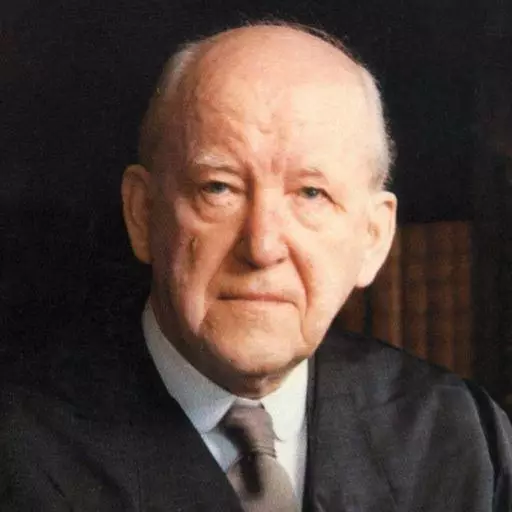
Wisdom and Knowledge


Dr. Martyn Lloyd-Jones: Most of you will recall that in our study of the Epistle to the Romans, we have arrived at the 16th verse in the 12th chapter. The 12th chapter of Paul's Epistle to the Romans, verse 16: "Be of the same mind one toward another. Mind not high things, but condescend to men of low estate. Be not wise in your own conceits."
Now, this is the third Friday evening that we've been considering these injunctions that are recorded here at the end of this chapter, beginning at the 14th verse and going on to the end of the chapter. Here, as I've been indicating, the Apostle is teaching us how we are to react to the things that happen to us and to people. He's already told us how we are to behave toward others. Here, he is telling us how we are to react to others and to what they do to us.
And we have already seen that he's told us to bless them which persecute us and bless them and not curse them. We've also been told to rejoice with them that do rejoice and to weep with them that weep. But now in this 16th verse, he comes and makes this special appeal to us about having a common mind: be of the same mind one toward another. He's emphasizing the importance of agreement amongst God's people in the church. It's the only way to have harmony in the church.
Now, I must remind you again that the two statements, really the two verses, that govern the whole of this section are verses 9 and 10: "Let love," he says, "be without dissimulation. Abhor that which is evil; cleave to that which is good. Be kindly affectioned one to another with brotherly love; in honor preferring one another." Now, there are the controlling principles. And from there on, he goes on to work those out and to show us how they are to apply in the particular details of our lives. Now, that, of course, is a great appeal again for this agreement, this common mind that he's talking about here in this 16th verse. Be of the same mind one toward another.
And then as is his custom as a very wise teacher, he goes on to show us that there are two things that tend to militate against Christian people having this same mind one toward another in the church. Two main things we've got to watch. The first one is the one that he puts in these words: "Mind not high things, but condescend to men of low estate." We dealt with that last Friday. That is a warning to us to beware of haughtiness and ambition.
Minding high things both in understanding and in living and in any other respect, anything that is high, that exalts itself. That's haughtiness, the spirit of haughtiness and ambition. And he's told us that the way to safeguard ourselves against that is this (it's a bad translation, this "condescend to men of low estate"). It means as I told you, let yourselves be carried along with lowly things and lowly people. As long as you do that, you'll never go astray in that respect.
Very well, there's the first danger. Haughtiness and high-mindedness tend to militate against this harmony, this agreement, this unity in the church. But now he says another thing, and this is the thing we are dealing with tonight. The second danger is this: "Be not wise in your own conceits." Now here is another most important thing. The Apostle has already said this, we've found it in the previous chapter, chapter 11 and verse 25, where he says: "I would not, brethren, that you should be ignorant of this mystery, lest you should be wise in your own conceits."
There he was telling these Gentiles not to become puffed up because the Jews were failing for the time being. Don't be wise in your own conceits. Don't exaggerate your own importance, don't overestimate yourself. Well, now here it is once more: "Be not wise in your own conceits." Now the literal translation of these words is this: be not wise with yourselves. Be not wise with yourselves. What he means by that is this: don't talk to yourself about your own wisdom. Don't talk to yourself about your own cleverness.
Don't retire within yourself and congratulate yourself on your great wisdom. You remember the Apostle Paul in speaking and putting up his defense, as it were, before Agrippa and Festus. He says that before his conversion, "I verily thought with myself." And that was his whole trouble. That is the whole trouble with the unregenerate, with the unconverted person. He always thinks with himself. He's always talking to himself.
Every unconverted man is a kind of mutual admiration society. He talks to himself about himself, and especially as the Apostle indicates here, about his own wisdom. Now, here is a great warning against intellectual pride. A man boasting of his wisdom, proud of his wisdom, glorying to himself in his own wisdom, wise with himself concerning this matter.
Now, this is a most important subject. The whole history of the church shows the damage that has accrued as the result of Christian people not observing this particular injunction. It is something against which we must always guard ourselves to the fullest possible extent. Well, now let's look at it. And let's look at it like this. I lay down as a first proposition that this is the greatest of all sins, the greatest of all sins is the sin of intellectual pride.
I don't hesitate to assert that it's a greater pride than what John calls "the pride of life." You remember John in his first epistle in the second chapter talks about the lust of the flesh and the lust of the eye and the pride of life. That, of course, is another danger, worldliness, a worldly-mindedness. And that is a terrible sin. But I say this is greater.
And I say that for a number of reasons. There is something which is rather foolish, I feel, about the pride of life. It's ostentatious and that always makes it look rather ridiculous, a kind of vain show. But this is much more subtle. Why do I say this is the greatest of all sins? Well, it was the sin of the devil himself. That was exactly the sin of the devil, pitting his wisdom against that of God.
He was a created being, and God had endowed him with a mind and understanding. But he became proud of it. He inflated it and his own idea of it, and that was the cause of his downfall. And as you remember, it was the first sin of man. The devil in his subtlety tempted Eve along that very line, this idea that they could become as gods, knowing everything, wisdom.
And as it was the first sin and the cause of the original fall of man, it has continued to be the greatest of all sins for that reason. But look at it like this. It is the greatest sin also because it is the abuse of God's greatest gift to man. When I say greatest gift, I'm not thinking, of course, of the spirit as such, but I'm thinking of the particular gifts and propensities and faculties that we have as human beings, the things that especially differentiate us from the animal.
And this undoubtedly is the greatest gift that God has given to man: this gift of reason, the gift of understanding, the gift of thought, the gift of being able to assess things, and so on. This is the greatest gift. And obviously, therefore, to abuse the greatest gift of all is clearly the greatest sin of all.
Or look at it in this way. It is our minds that really ought to be saving us from most of the mistakes we make and most of the wrong things we do. That is where a man is more inexcusable than a child. You can excuse a child when it does certain things that are wrong because it's a child; it doesn't understand. And it would be very cruel and very wrong to expect a kind of adult form of behavior from a child.
But when we cease to be children and grow up, well, then it's right to expect of us that we can think and reason and understand and be responsible. Well now, the mind, of all the faculties that we have, is the one that should enable us to live in a worthy, in a true and in a sensible manner, as we put it. So, if you sin in this respect and abuse this gift, well, obviously you are abusing this thing that God has given you to safeguard you from your trouble. And there is no greater sin than that.
So, I say again that here the Apostle in putting it like this in this aphoristic, pithy manner is really putting before us one of the most important things we can ever consider together: "Be not wise in your own conceits." Now, we've got to examine this. What does he mean by being wise in your own conceits? Now, this is something that can take two forms, and it's important that we should consider both the forms.
The one form is knowledge and the other is wisdom. And it's important we should be able to draw the distinction between knowledge and wisdom. Did you notice in the reading at the beginning in the third chapter of James in the 13th verse, we read this: "Who is a wise man and endued with knowledge among you?" A wise man, but there's something else: endued with knowledge. Wisdom and knowledge are not the same thing. They're very closely related, of course, but it's very essential that we should realize that they're not the same thing.
What is the difference between wisdom and knowledge? Well, it can be put like this. Knowledge is information, awareness of things, discovery of things, becoming acquainted with things. It is something that you can be taught and something that you acquire as the result of instruction in that way. Now, there's no need for me to elaborate this because we're living in an age that is in a sense given to the acquiring of knowledge.
The age of encyclopedias, the age in which people are listening to instruction which they get, information in many different forms on the television and other places, these quizzes as they call them. They're all giving you knowledge. What do you know? And you get your knowledge. Now, that's knowledge. It's the gathering and the acquiring of a certain number of facts, large or small. That is what knowledge consists of, an awareness of facts.
But what is wisdom? Ah, here's the important point. It is something really which is essentially different. You can be a man of great knowledge and yet entirely lacking in wisdom. On the contrary, you can be a man of great wisdom but have very little knowledge. So, it is important that we should be clear as to the relationship between these two things.
What is wisdom? Well, you can define wisdom if you like as the power and the capacity to use and to apply your knowledge. Now you see the distinction. A man may have great knowledge, but he may lack this capacity to make use of his knowledge, to apply his knowledge. Now, perhaps my simplest way of putting this to you would be to say that the whole tragedy of the world at this present moment is that it has vast knowledge but is terribly lacking in wisdom.
Look at the knowledge we've got scientifically. But why is the world as it is? Why is it nervous? Why is it in a state of tension tonight? Well, because man's wisdom has not grown in a commensurate manner with his knowledge. He's acquired this vast knowledge, but he doesn't know how to use it. That's because it lacks wisdom. Wisdom is this power, this faculty, this ability to make use of what you know to good ends and to worthy ends.
Something that one could illustrate in many ways. I may have illustrated it in this way to you before, but I remember many years ago when I was trying to do a little medicine, a friend and colleague of mine who was a perfect illustration, I always feel, that's why I always use him when I'm trying to bring out this point, showing the difference between having knowledge and being able to use it.
He was an excellent student in the sense that he was good at reading textbooks. He had a wonderful memory. He could almost remember them verbatim and recite some of them. And he was a good examinee. He could answer questions theoretically.
But I remember on many occasions seeing that man confronted by an actual patient with not a very difficult disease, and he seemed quite incapable of applying his great book knowledge to the particular case that was in front of him. He was a very learned man theoretically. He was a very poor clinician, a poor doctor. He couldn't use the knowledge that he had. He couldn't apply it.
Now, you will know of similar instances in almost every walk and department of life. Now, that is the essential difference, if you like, between knowledge and wisdom. Now, of course, knowledge should lead to wisdom, but it doesn't of necessity. That is where we have to be careful in drawing this distinction. The learned man is not of necessity a wise man. And the whole trouble in the world today is that it's exalting men of mere knowledge, sometimes very clever men. But a man can be very clever and yet lacking in wisdom.
And it is the failure to differentiate between these two things, as I say, that causes so many of our troubles. It should be the case that the more we know, the wiser we become. But because of sin, it doesn't follow. And hence, the troubles of the human race. Well, now then, you can see that this can take two forms.
A man who is wise in his own conceit can be proud of his knowledge, or he can be proud of his wisdom. But in both cases, he is wise in his own conceit. The first man, not able to draw the distinction between the two things, thinks that his knowledge means wisdom. And so he goes wrong.
The second man hasn't much knowledge, but he thinks he's a wise man. And he may be a wise man, and people give him that impression and praise him as a wise man, and he becomes conceited and proud about it. So, it can happen in those two ways.
Well, now then, here's the great question: why is this so wrong? Why does the Apostle say, "Don't be wise with yourself. Don't be wise in your own conceit"? Why? Well, there are—I want to give you a number of answers to that question. Here's the first. The first answer is this: don't be wise in your own conceit because it really isn't true. You've got nothing to be proud of. You're deluding yourself, you're fooling yourself.
Take it in this question of knowledge. Take a man who's very proud of his knowledge. The thing to say to him really is this: what do we really know? "Ah," but he says, "I know this, that or the other." But then point out to him what he doesn't know. You will find always that the truly great scholar is a modest man. The old adage puts it perfectly: "A little learning is a dangerous thing."
It's a little learning that tends to turn our heads and makes us think we know everything. The more a man knows, the more he realizes what he doesn't know. So, the greater the scholar, the humbler the man, almost invariably. So, it's very wrong to be proud of your knowledge.
Now the Apostle, of course, the Apostle Paul puts this very well himself, dealing with this very thing in writing to the Corinthians in the first epistle and chapter 8 in the first two verses. "Now as touching things offered to idols, we know that we all have knowledge." Knowledge puffeth up, but charity edifieth. Then in the second verse: "And if any man think that he knoweth anything, he knoweth nothing yet as he ought to know." And that's the simple truth.
So, when you're tempted to be proud of your knowledge, just remind yourself of what you don't know. Look how he puts it again in 1 Corinthians 13: "Now we see through a glass darkly; but then face to face." He says, "We know in part and we prophesy in part. But when that which is perfect is come, then that which is in part shall be done away."
How little our knowledge is! It's only as in a glass darkly; it's only a partial knowledge at the very best. And again in Philippians 3, this same Apostle with his wonderful knowledge of the Lord says, "No, I haven't fully apprehended." He thanks God for what he has got, but he's pressing on toward the mark. Oh, there's so much to be possessed and he's got so little.
So you see, it really isn't true in the matter of knowledge. That's where the world again goes mad, isn't it, at the present time? Boasting of its knowledge. It is wonderful knowledge as long as we don't boast about it. But when you think of what we don't know, our ignorance is appalling.
And of course, it's exactly the same with regard to wisdom. Who is there who hasn't made many a mistake in life? The wisest man often behaves as a fool. One of the wisest men in the whole of the Old Testament is Solomon. But look at the story of Solomon. Look at the end of his life. What a fool he made of himself, this wise man!
You remember how he begins and the wisdom he displayed—those two women and the two children, you remember, and one of them had died. This amazing wisdom of Solomon, he was famous for his wisdom. The man of the Proverbs, and probably of the book of Ecclesiastes. And yet in his personal life, how unwise he was, how foolish he was!
And it is the same with all of us. The moment you're tempted, therefore, to be proud of your wisdom and to boast of your wisdom, just look back across your life and see the mistakes you've made, and it'll humble you and keep you in order. And remember what the Apostle says in the first chapter of this epistle to the Romans in verse 22. He says this is what has happened to the whole human race: "Professing themselves to be wise, they became fools."
And look at the world today in all its supposed wisdom. Has it ever been madder than it is today? It boasts of its understanding, its knowledge, its wisdom, its capacity. But look what it's doing! And we've seen it all, haven't we, so often in individuals—men in the learned professions and others, men of great knowledge, indeed men who can often give very good advice to other people; their own lives are a tragedy.
The failure of wisdom. So you see, if you tend to boast about your wisdom, you're probably doing something that isn't true, so don't do it. It's a lie. And then secondly, consider this: whatever wisdom you've got, whatever knowledge you've got, you've nothing to boast of. You haven't produced them; you haven't created them.
If you've got that sort of blotting paper kind of mind and memory that can absorb facts and make you a good student, well, you didn't produce it. You were born with it. You may have taken up schemes to help it, but if you haven't got something there to start with, you won't get very far with all the schemes.
And with your wisdom, if you're given a natural gift of wisdom, well, you didn't produce it. So don't boast of it. It isn't to your credit. Read again 1 Corinthians 3, and you'll find the Apostle deals with that at great length.
But let me go on to something still more important. Don't be wise in your own conceits because if you do, if you are, it'll do you great harm. It'll do you great harm. Did you notice how Paul puts it there in 1 Corinthians 8:1? "Knowledge puffeth up." Inflates. But what does it inflate with? What does inflate? Gas, air.
It's not real, it's not solid. It isn't—it doesn't build up, he says, as love builds up. Knowledge puffeth up. It appears to be very big, but it's nothing but a balloon. It's just an inflated tire. It's filled with air, not with real substance. And it's a very bad thing when a man becomes like a balloon and just puffed up in pride.
It's very devastating to a man's personality, to his whole outlook upon himself and upon life. But I can put this perhaps best to your consideration by putting it like this: to be proud in our own conceit is to make us guilty of the very things that this same Apostle tells us in 1 Corinthians 13 are not true of love. Now, that sounds complicated, doesn't it?
You remember 1 Corinthians 13, called sometimes Paul's hymn to love. And there you remember, he tells us negatively and positively about love. But I'm interested at the moment in the negatives. He tells us first of all a few positives. Now, if you are proud of your own wisdom, if you boast of your own wisdom, and if you're wise in your own conceit, you will be the opposite of what he says here about love.
This is what he tells us: "Charity suffereth long and is kind." But a man who's puffed up never suffereth long, and he's never kind. "Charity envieth not." The other always does, invariably. "Charity vaunteth not itself." But knowledge puffeth up, vaunteth itself, exaggerates itself, makes itself bigger than it really is, becomes a lie. Charity doesn't do that. And then it "is not puffed up." There it is, the same phrase: puffed up. Blown up, inflated. He says, "It doth not behave itself unseemly."
The truly wise man never behaves himself unseemly. But the man who thinks he's wise does so very often because the very fact that he's proud of his wisdom makes him lose his balance, and then he does things that are unseemly. Then "seeketh not her own." But the man who's proud of his intellect is always seeking his own.
He's seeking admiration, he's seeking applause. He wants everybody to say what a wise man he is. "Look at him," or "this man of knowledge." Always seeking his own. Then "is not easily provoked." The wise man isn't easily provoked. But the man who's got some pseudo-wisdom, he can be easily provoked.
"Thinketh no evil; rejoiceth not in iniquity, but rejoiceth in the truth; beareth all things, believeth all things, hopeth all things, endureth all things. Charity never faileth." Now, there is a very good description. It's there in terms of love, but it is equally true of true wisdom. And therefore the man, you see, who's puffed up, he proves he hasn't got true wisdom, and he becomes the opposite of what we're told there about the man of love or the man of true wisdom.
So it does him very great harm. Nothing can do a man greater harm than to be wise in his own conceit. And that in turn, in the fourth place, leads him, of course, to do harm to others, as we were told there in those verses that I've just read to you. A proud man in any sense is always a very difficult man, difficult to live with, behaves badly, and others suffer because of this. So he not only does himself harm, he does other people harm. So we mustn't be proud in our own conceits; we must avoid it all costs.
But then I want to give you a fifth reason for observing this injunction of the great Apostle. Don't be wise in your own conceits because if you are, it'll place you in an extremely dangerous position. There is no more dangerous position that you can ever be in than the danger that results from being wise in our own conceit.
What am I talking about? Well, again, a proverb puts it perfectly: "Pride cometh before a fall." It is invariable. You've got it in many places in the Scripture. Take 1 Corinthians 10 and the 12th verse. Here's a verse for people who are in this danger: "Wherefore let him that thinketh he standeth take heed lest he fall." Or again, I would remind you of Galatians 6 and the third verse, where we read this: "If a man thinketh himself to be something when he is nothing, he deceiveth himself."
And that's what the man who's proud of his wisdom does. He thinks himself to be wise when he isn't, thinks himself to be something when he is nothing. He deceiveth himself. But again, come back to James 3: "My brethren, be not many masters." Being many masters means don't be authorities, don't regard yourselves as wise men, as leaders.
Don't set yourselves up in these positions of leadership. Why not? "Knowing that we shall receive the greater condemnation. For in many things we offend all. If any man offend not in word, the same is a perfect man, and able also to bridle the whole body." But this is what he's saying, this is the argument of James: don't be many masters. Why not?
Well, for this good reason: that you're setting up a standard for yourself. You're saying, "I'm a wise man, I know." You will receive the greater condemnation. God will take you at your own valuation. He says, "Now then, you used to claim when you were on earth that you were a very wise man, a man of great learning and knowledge and understanding and wisdom.
Very well, this is what you said about yourself. I'll test you, I'll examine you, I'll try you in terms of the very claims you've put forward for yourself." The result will be you'll receive greater condemnation. If you set this very high standard for yourself, your fall, your failure, your condemnation will be correspondingly great.
And James, of course, in saying that is but re-echoing the words of our blessed Lord and Master who puts it like this in the Sermon on the Mount, beginning of chapter 7 of Matthew's Gospel: "Judge not, that ye be not judged. For with what judgment ye judge, ye shall be judged: and with what measure ye mete, it shall be measured to you again."
There it is once and for all. You set up your standard for yourself as a great man of wisdom, very well, and you'll condemn others and you'll show their failures in knowledge or in wisdom. But you'll be judged by the very standard that you yourself have been applying to those people. You are really bringing judgment of the severest kind upon yourself.
A man who's proud of his own wisdom is a man who's putting himself in the most dangerous position possible. He will have to meet his own standard at the bar of eternal judgment. "With what measure you judge, you shall be judged. It shall be measured to you again." There is nothing, therefore, that is more dangerous than this.
We mustn't be many masters; we mustn't set ourselves up as judges in this way, for that will be the consequence to us. But for me to wind up this bit of argumentation under this particular heading as to why we should avoid this, my final answer, of course, is the most important one of all. Any man who is wise in his own conceit is the exact antithesis of our blessed Lord and Master. He was eternally different.
Do you remember what he says? "Take my yoke upon you and learn of me, for I am meek and lowly in heart." That's how he puts it about himself. And that was his character. The bruised reed he will not break, the smoking flax he will not quench. Here he is, Son of God incarnate. Do you know what he said? He said, "I know nothing of myself."
He says, "The words that I speak unto you, I speak not of myself. The Father that sent me, he gave me the word, he gives me the words." This is our Lord incarnate is living life as a man, and he says he's utterly dependent upon the Father. What he says is given to him, what he does is given to him.
He doesn't do anything himself; he does what is being given to him in every single respect. "The words I speak unto you, I speak not of myself." I don't generate them, I don't produce them. Far from boasting of his wisdom, he is the meek and lowly Jesus.
That's the astounding thing that one finds as one looks at him in these portraits in the four Gospels. Though he is who he is, the lowliness, the meekness, the humility of the Son of God incarnate. He is the perpetual rebuke to all men who are tempted to feel wise in their own conceits.
Very well, there are sufficient reasons without adducing any more as to why we should avoid this with all the power that we are capable of. But that leads me to my last general matter this evening. How do we deal with this danger? It's a danger that confronts all of us in a measure. We differ in these respects.
Some men are more in danger at this point than others. But it's a danger to all of us. What can we do about this? How are we to avoid being wise in our own conceits? Well, I hurry a negative that I may leave it. It doesn't mean a feigned, false modesty. It doesn't just mean that you have to go about trying to give the impression that you're an ignoramus and that you're entirely lacking in wisdom.
That's no good. The Uriah Heep type of person is never commended in the Scriptures anywhere. If you are a man of ability and a man of wisdom, well, very well, you are. And it's nonsense to say that you're not. So it doesn't mean false modesty. It doesn't mean an affectation of humility. That's abominable always.
Well, what do we do about this? Well, it's quite clear there's abundant teaching in the Scripture about this. There are certain general things that can safeguard us. What are they? Well, here's the first: walk humbly with thy God. Remind yourself of the things I said at the beginning, of what you don't know and the mistakes you've made and your fallibility.
But above all, walk humbly with thy God. Look unto Jesus, follow him in this respect as in every other respect. Walk humbly with thy God. What else? Well, remember the injunction of Paul again in Philippians 2: "Work out your own salvation with fear and trembling. Fear and trembling." Now, we've rather tended to forget this, haven't we? This hasn't been popular in the 20th century.
We are bright and breezy Christians. But Paul says work out your own salvation with fear and trembling. Not because it's uncertain, not because your salvation or the end is uncertain. In a sense, you do it in fear and trembling because you are certain of the end.
You know you're doing it under the eye of God. You know that you are his child and your responsibility is tremendous. And you're afraid of letting your Father down, letting your family down, letting your home down. Fear and trembling. If you're a truly wise man, you'll know the evil that's in this world. You'll see it: the world, the flesh, the devil. Yes, the devil and his subtlety and his insinuation.
You'll realize it's a terrifying world to live in. So you walk in fear and trembling. And then remember the other words of the Apostle, how he tells us that when he first went to preach in Corinth, he went in weakness and in fear and in much trembling once more. Look at this man, this great man, this mighty man, this Apostle Paul, this outstanding genius. I can't praise him too much, can I?
My language fails me. But look at him. Here's the man of all men who does things in fear and trembling. Not self-confident and assured in his evangelism or in anything else—fear and trembling. Why? Oh, the sacredness of the task. His blessed Lord and Master who had entrusted him with this wonderful treasure of the Gospel.
Fear that in any way he might stand between the people and this, or detract from it in any way, or make it more difficult for them. He realized the forces that were meeting together when he was preaching the Gospel. And he was fearful lest in any way he might fail. He couldn't rely on anything in himself. Not with enticing words of man's wisdom or anything else; in demonstration of the spirit and of power.
Now these are general things that we ought never to forget. They ought to be controlling the whole of our outlook and all our activity. Or as James puts it again in a very wonderful phrase at the end of the 13th verse of that third chapter: "Let him show out of a good conversation his works with meekness of wisdom."
The opposite, you see, of being wise in your own conceit, puffed up with knowledge, is meekness of wisdom. Which leads me to this: that the best way of safeguarding ourselves against this particular danger is to give a very hurried exposition of James chapter 3, verse 13 to the end of the chapter. Here it is, here's the best commentary you'll ever find on the last phrase of Romans 12:16.
The best commentary on the Scripture always is the Scripture itself somewhere else. And James seems to have written this in order to expound this wonderful aphorism that we've got here. Let me read again to you. "Who is a wise man and endued with knowledge among you? Let him show out of a good conversation his works with meekness of wisdom. But if you have bitter envying and strife in your hearts, glory not, and lie not against the truth.
This wisdom," this glorying one, "descendeth not from above, but is earthly, sensual, devilish. For where envying and strife is, there is confusion and every evil work. But the wisdom that is from above is first pure, then peaceable, gentle, easy to be intreated, full of mercy and good fruits, without partiality, without hypocrisy. And the fruit of righteousness is sown in peace of them that make peace."
Take a hurried exposition of what that means. It means this: the way to safeguard yourself against being proud of your wisdom is to learn the difference between true wisdom and false wisdom. And then you reject the false and seek the true. How do you do it? Well, have a look at the two types of wisdom, the false and the true. How do you tell the difference?
Well, first of all, their origin. Where does the wisdom come from? The Apostle tells us that the true wisdom comes from above, which means from God. Where does the other come from? Well, you can start by saying it comes from the earth. It is human wisdom, it is worldly wisdom, it is earthly wisdom. But let him expound it himself.
The characteristics of these two types of wisdom: the one from below and the one from above. Look at the wisdom that comes from below. What are its characteristics? Well, first, earthly. It is earthly. It can never rise above that. It's clever, but it never rises above man. It belongs to this world, knows nothing about the spiritual, nothing about the eternal. Always earthly.
Secondly, he says it's sensual, which means it is soulish. There's nothing spiritual about it at all. It belongs entirely to that which pertains to the animal part of our nature, for understand our brain and our ability is a part of our animal nature in a sense. It lacks the spiritual element. It is a psychical or a soulish element. It's earthly, it is soulish and not spiritual.
But then he even goes so far as to say this. He says it's devilish. There are people who appear to be wise and they're given the credit for being wise, but they're not, says the Apostle. The wisdom they've got is a devilish wisdom. It comes from the devil, it's demon-like. That's what devilish means. It's given by evil spirits.
And the evil spirits can be very clever. As Paul says, the devil can transform himself into an angel of light. And he says his agents can do exactly the same thing. But this kind of wisdom is a devilish one. Listen to what Paul therefore says about the election of elders in 1 Timothy 3:6.
He says don't appoint a novice, lest being lifted up with pride, he fall into the condemnation of the devil. And that, as I told you at the beginning, was pride of wisdom. So this wisdom that puffs itself up and is proud of itself is devilish. It comes from the devil. It can be very clever, it can appear to be wonderful, but really it is always not only earthly or soulish, it is even devilish. It's the thing that made the devil the devil, from being a bright angelic spirit.
And then he goes on to tell us how it shows itself. And it shows itself, this false wisdom shows itself always. It'll always come out; it can't be hidden. You never know when it'll come out, but it's always sooner or later certain to show itself in what he calls conversation: habit and way of living. It shows itself in pride, in envying, in bitterness, in striving, and of course above everything as he's been telling us earlier in the chapter, in failure to control ourselves and especially our tongues.
That's the message of this third chapter of James, isn't it? The wisdom of the world, the men of the world, the false wisdom—which may be true, remember, of a man who is truly Christian; the moment he becomes puffed up about his wisdom, he's proving that he's got worldly wisdom and not the true wisdom. And he shows it by lack of control.
Can't control his tongue, says things he shouldn't say. Is proud, is envious, is jealous, is bitter. These are the very words that are used by the Apostle in indicating to us the characteristics of this false wisdom. It eventually gives itself away, and it's tragic.
What about the true wisdom? Ah, what a difference! Comes from above. Comes from above, the only wise God. And it of course bears the characteristics. The first thing about it is that it's pure. There's no admixture, no adulteration. Nothing false, nothing pseudo. It is pure, it's a whole, not an alloy. And then second, he says it is peaceable.
True wisdom is always peaceable because it always leads to meekness and to humility and so on. And the kind of man who's got true wisdom is a peaceable man. And then the next thing is he's gentle. He's not puffed up, he's not proud. He's a gentleman. Truly a gentleman. He's easy to be intreated. He's not intolerant; you can speak to him, you can approach him.
He's ready to listen to you. He's not a man who says "I know everything, nobody else knows anything." Oh no, he's easy to be intreated. You can get on with him. He's ready to take advice, he's ready to listen. He knows the dangers. Full of mercy and of good fruits. Of course.
Without partiality, he's not prejudiced. He's a man who's prepared to listen to the other side and to consider it carefully. Without partiality, he doesn't decide beforehand. He's got this kind of spiritual open mind. Without hypocrisy. Doesn't pretend to be better than he is or to have more of it than he really has.
And then he ends by saying, "And the fruit of righteousness is sown in peace of them that make peace." In other words, it is this great phrase at the end of verse 13: meekness of wisdom. The man with true wisdom is a humble man. He's a man who's got self-control. He's in charge of himself. He controls his tongue, he controls everything else about himself.
And he's a peace-loving man; he's a peacemaking man. And this comes out in his life. "Who is a wise man and endued with knowledge among you? Let him show out of a good conversation." It isn't something theoretical. Wisdom shows itself always in practice, in behavior, in conduct, in daily life and living. "Let him show out of a good conversation his works with meekness of wisdom."
Here is a man who doesn't boast in himself; he boasts in God. And he says, "I am what I am by the grace of God." Very well, the way to safeguard ourselves against this terrible danger is to understand the difference between the false and the true. And then having realized the difference, to seek for the true wisdom with the whole of your being.
And he's already told you how to do that in the first chapter of his epistle, James 1:5: "If any of you lack wisdom"—and we all do—"if any of you lack wisdom, let him ask of God, that giveth to all men liberally, and upbraideth not; and it shall be given him. But let him ask in faith, nothing wavering. For he that wavereth is like the wave of the sea driven with the wind and tossed. But ask in faith without wavering, and you will be given this true wisdom that comes from above and is of God, that is first pure and then peaceable, and all the other glorious things that characterize it."
And let old John Bunyan in his usual practical down-to-earth manner, let him enforce it by a last word: "He that is down need fear no fall." If you're already on the ground, you can't fall. If you're already humble, you're in a very safe position. It'll save you many a bruise, many a hurt, many a trouble. "He that is down need fear no fall; he that is low, no pride. He that is humble, ever shall have God to be his guide."
Blessed are the meek. Here it is, my dear friends. May God give us grace to understand these things and to put them into practice. This is all, as I said at the very beginning, this is all but a part of the original appeal to be of the same mind one toward another. You'll never be that if you're proud in your own conceit.
May God, therefore, give us understanding and so fill us with his Spirit that we should be meek and humble and lowly, and our blessed Lord will not be ashamed to own us as his friends.
Oh Lord, our God, we do indeed thank Thee that we can come unto Thee. We acknowledge and confess that we all fail and have failed in many things. Our knowledge is small, our wisdom is smaller. But Thou hast told us to seek this wisdom from Thee, and Thou wilt give it unto us. Lord, make us wise in the midst of this evil and perverse generation in which we find ourselves.
God, give us Thine own wisdom: this pure, peaceable, gentle, easy to be intreated wisdom and character. Lord, our desire is to live to Thy glory and to Thy praise, and we realize that we can only do this as we are endued and endowed with this blessed wisdom. Hear us, oh Lord.
And now may the grace of the Lord Jesus Christ, and the love of God, and the fellowship and the communion of the Holy Spirit abide and continue with us now this night, throughout the remainder of this our short, uncertain earthly life and pilgrimage, and evermore. Amen.
Featured Offer

Find peace and comfort this season with your complimentary guide that includes access to 6 free bonus sermons on overcoming spiritual depression from Dr. Martyn Lloyd-Jones, one of the church’s most beloved Bible teachers. Topics include: true Christians can and do struggle with depression, recovering the joy of your salvation, dealing with crippling guilt over past sins, dealing with yesterday’s haunting regrets, encouragement to keep moving forward, and understanding God’s purpose for suffering.
Past Episodes
This ministry does not have any series.
Featured Offer
Find peace and comfort this season with your complimentary guide that includes access to 6 free bonus sermons on overcoming spiritual depression from Dr. Martyn Lloyd-Jones, one of the church’s most beloved Bible teachers. Topics include: true Christians can and do struggle with depression, recovering the joy of your salvation, dealing with crippling guilt over past sins, dealing with yesterday’s haunting regrets, encouragement to keep moving forward, and understanding God’s purpose for suffering.
About From the MLJ Archive
From the MLJ Archive is the Oneplace.com hosted ministry of the MLJ Trust. Our mission is to promulgate the audio ministry of Dr. Martyn Lloyd-Jones.
About Dr. Martyn Lloyd-Jones
Contact From the MLJ Archive with Dr. Martyn Lloyd-Jones
info@mljtrust.org
http://www.mljtrust.org/
PO Box 953
Middleburg, VA 20118