
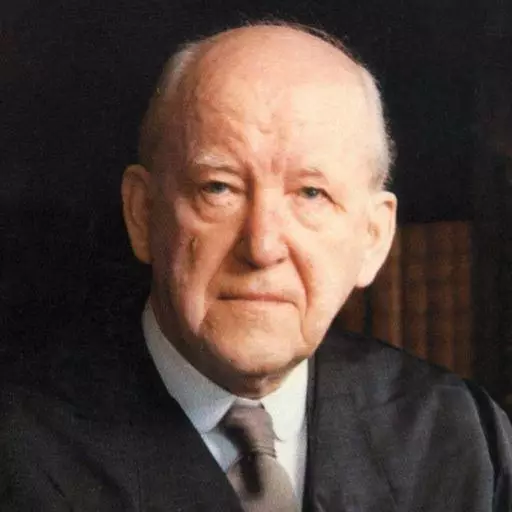
Weak in the Faith, Part 1


Dr. Martyn Lloyd-Jones: We arrive at the beginning of chapter 14. And here, as you, those of you who have been attending here regularly, will observe and realize that once we come to another subsection or subdivision, if you like, of this second major section of the Epistle to the Romans.
You remember the big division in this Epistle is the first 11 chapters deal with the doctrinal matters. Then at the beginning of chapter 12, the Apostle turned and began to deal with the application of doctrine in practice and in daily living. It's very important that we should understand his method. And this is important not only that we may understand the context of what we are now going to do, but I always feel it's very important in order that we may have a due appreciation of the marvel and the wonder of the scriptures.
Nothing so offends in me personally as this extraordinary order. I'm one of those people who is fascinated by the mind of this great Apostle. I like his way of thinking. He always proceeds in his own given manner. And therefore, it is important that we should realize something of this connection.
You remember how in the 12th chapter, he introduces this whole practical section in the first two verses. "I beseech you therefore, brethren," he says, "by the mercies of God, that you present your bodies a living sacrifice, holy, acceptable unto God, which is your reasonable service. And be not conformed to this world, but be ye transformed by the renewing of your mind, that ye may prove what is that good and acceptable and perfect will of God." Now, I've got to start with those two verses because what we are going to deal with in the 14th chapter really is covered by that introduction.
That is the general introduction to the whole of the Epistle to the Romans from the beginning of chapter 12 right until the end. What does he do in this practical section? Well, let me give you a very hurried summary of chapters 12 and 13. He first of all deals with our relationship to other members of the church in the matter of our spiritual gifts.
He shows how trouble and disharmony can arise through a failure to realize the truth concerning that. So he deals with that. Then he goes on to deal with our more personal relationships, our contacts in person with such people. He widens it out a bit and deals with our personal relationships with people who are not Christian. You see, the scriptures are very practical.
It's one thing to become a Christian, that doesn't solve all your problems. You've still got to live in this world and with people as they are. So the Apostle takes up all these things. Then at the beginning of chapter 13, he takes up this great question of the relationship of the Christian believer to the state, to the powers that be, kings, princes, magistrates, presidents, governors, all that is involved in the conception of the state.
We are given, as we've seen, valuable advice and teaching and instruction with regard to that. And then, having given us that, he enforces this appeal which he makes to us in our conduct in all these various relationships in life. He makes a great appeal to us in terms of the law. "Love is the fulfillment of the law," he says.
"So keep the law, do these things, and thereby you will be fulfilling the law of love." And finally, he drove it home and enforced it upon us by reminding us that our time in this world is very limited. It's very short. Indeed, the time of the whole world is limited. The night is far spent. The day is at hand.
And we all people should realize that. And all our activities and all our conduct and behavior should always be under the light of eternity, under the light of this glorious thing to which we are looking and towards which we are working. Very well, there we are at the end of chapter 13. But now he takes up another matter.
That's why I say that there is a new subsection here. Remember, it is still under the general heading of conduct and of behavior and our relationship to other people, whether in the church or outside the church. Here he's back again to our relationship to people inside the church. You see his method, he's dealt with the sort of big major problems and relationships.
Then having done that, he comes to more particular matters. And they are definitely more particular. But they are problems still that tend to trouble Christian people. They are problems that tend to upset us and above all, they are problems that tend to divide us. So he takes them up. He takes them up of course, because they were actually creating troubles in the church at Rome.
But we know that throughout the centuries they've created troubles and problems and they're still doing so at this present time. Now, what are these problems? Well, he's here now primarily concerned with what have been called generally matters of indifference. Now, this is a very important subject.
There are things in connection with the Christian life that are absolutely vital and essential. There are other matters which are quite important, but they're not essential. And there are conceivably different points of view, as we shall see. So these are generally referred to as matters of indifference. And the ones that he takes up in particular are the question of food and drink and the question of the observation of particular days in connection with the life of the Christian.
Now, that's the theme of this section which we are now beginning to deal with and to consider. It's interesting to ask the question, how what is the connection? Has this got any connection at all with what has just gone? Well, I think that it may have. I don't want to be too dogmatic about this.
But you do remember how we ended the previous section? "Let us walk honestly," he says, "as in the day, not in rioting and drunkenness, not in chambering and wantonness, not in strife and envying. But put ye on the Lord Jesus Christ, and make not provision for the flesh to fulfill the lusts thereof." Now, I think it is just possible that in referring there to rioting and drunkenness, and the danger of giving way to license and lust and excess, the Apostle thinks immediately of the opposite of that.
And that opposite is a kind of morbid scrupulosity with regard to conduct and to behavior. Well, whether that's the case or not, of course, we can't prove. But it does seem to me that it does follow in a very kind of logical manner. There are some people whose danger is that kind of excess.
There are other people who tend to swing right over to the other extreme. And here he takes up the case of such people. Well, here is the section. You notice that I went on reading until we finished the fourth verse of the 15th chapter. I did that because I suggest that that is the extent of this particular section that deals with these particular matters.
I remind you again that the division of the scriptures is not divinely inspired. It is only comparatively recently that the scriptures were divided up into verses and into chapters. And we don't of necessity have to agree with the division that has been made because they were only men like ourselves. And I think that at this point, they went astray.
And that the natural division comes at the end of the fourth verse of the 15th chapter. Now, everybody doesn't even agree with that. There are some who would say that this section goes on to the end of the 12th or even the 13th verse of the 15th chapter. They start at the beginning of chapter 14 and go on either to the end of 12 or 13 in chapter 15.
Now, I disagree with that. It seems to me that in verse five in this 15th chapter, the Apostle broadens out, widens out a principle which he's been laying down and shows that it has application beyond the realm of food and drink and days, but even with larger matters and larger causes of division and of trouble.
None of these points, of course, are essential, but I do think that for the sake of orderly thinking and orderly understanding of the teaching, it is good that we should have some kind of classification in our minds. It's always a good thing to think in an orderly manner. Very well, I suggest therefore that the section starts at verse one of chapter 14 and ends at the fourth verse of the 15th chapter.
Now, you will know that this is not the only place in the scriptures where this particular kind of problem is dealt with. You will find something very similar in the first Epistle to the Corinthians and in chapter 8. Now, I'm not going into this tonight, because I think that there is a slight difference between what he does here and what he does there.
But in any case, he does deal with the same principle. There was trouble in the church at Corinth over the question of eating meats that had been offered to idols. So, I think it comes in there. But a yet and the same thing you'll get in the 10th chapter of the first Epistle to the Corinthians. But I think that the closest parallel to this is to be found in the first Epistle to Timothy and in the fourth chapter.
I'm interested to notice, most of the commentators seem to have missed that because I am hoping to show you that that is the closest parallel to this of all the parallels in the New Testament. Well, you see, this was obviously something that was causing difficulty in the early church. And that is why the Apostle deals with it more than once and that is why it's important that we should consider it also.
All right, now then the next step is, can we analyze this section? We must do so, because there is a progression in the thought, and the Apostle advances from step to step and stage to stage. So I think it's a good thing always, when you're starting with a new section, to have a kind of bird's eye view of the argument and to analyze the various steps and stages.
And I'm proposing to divide subdivide this section into five subsections. The first goes from verse 1 to verse 12 in this 14th chapter. The second goes from verse 13 to verse 16 in this 14th chapter. The third is verse 17 to the first part of verse 20. I'm even disagreeing with their division into verses, as well as their division into chapters.
I think you go from verse 17 to verse 20A or verse 21, whichever you like to call it. So that the fourth section is from verse 20B or the second half of verse 20 to the 23rd. And then the final section is in the first four verses of chapter 15. Now, what does he do in these subsections?
Well, here it is. Verse verse one of chapter 14. Statement of the case. Statement of the governing principle with respect to it. It's what he always does. How often have we found him doing this? He starts with a kind of proposition. Him that is weak in the faith, receive ye, but not to doubtful disputations.
There, if you like, is the text which is going to lead to the sermon. I prefer to put it in terms of a statement of the case to be considered and the general principle which is going to govern his treatment of it. Then having stated the thing in general like that, he now comes to his particulars.
You see, I hope we are learning as we are going on. You never start with details. At least if you do, you're making a big mistake and you'll soon be muddled in your thinking. Start with a principle, then illustrations or examples of this principle. So he does that. Verses 2 to 4. This question, this principle, applied to the matter of eating food, certain foods.
Verses 5 to 6A. Did I tell you about 6A? I wonder. No, no, no, this is, this is, this is part, this is my analysis of the first subsection of verses 1 to 12. So follow this. Verse 1 statement of principle. Verses 2 to 4, that applied to the case of eating. Verse 5 and the first half of verse 6.
The same principle applied to observance of days. 6B to 12, the ways in which both these matters, and all other matters, should always be considered, which is our relationship to the law. And especially as we remind ourselves that he is the judge before whom we will all have to appear. Now then, there is our first subsection.
Verses 1 to 12. And we'll have to follow him out as he goes on like this from step to step and point to point. But then the second subsection is this. In verses 13 to 16, he reminds us that we must never consider these matters without remembering that we are brothers. That we are all together the children of God.
We mustn't discuss these things theoretically. We mustn't discuss them in the abstract. We must always remember who we are, who are having this discussion. Because if we don't, all our opinions will be of no value and we'll do more harm than good. We must remember who we are and always be governed by that consideration.
Then the next is from verse 17 to 20A. We must also always remember the nature of the Christian church, or if you like, the nature of the Kingdom of God. It is amazing how in our discussion of details and minutiae, we can forget the whole thing. I believe that's what's happening in the church at the present time.
With all this ecumenical argument and all this discussion about bishops and forms of ordination, they've forgotten what the church is. While they're arguing about details of what should be done in the church, they've forgotten what the church is. Now there's this same tendency here. So the Apostle says, never forget what the church is to which you belong.
Never forget that you're all citizens together in the Kingdom of God. For if you don't do that, well, you'll be arguing abstractly and you'll do more harm than good, you'll all be wrong in your spirit, whatever you like, in your intellect and in your understanding. And then from 20B to the end of the chapter, he sums up the argument about these matters.
And reminds us that though we are brothers, and though we must always bear that in mind, that nevertheless, each one of us is an individual, and we are responsible to our own conscience. And we must be very careful that we never violate the teaching and the dictates of our conscience. Then having done all this, in the first four verses of chapter 15, he makes a great final appeal to us.
An appeal again to the spirit in which we do it. An appeal which lifts up, as he always does with his final appeals, right up to the Lord Himself and to our whole relationship to Him, and especially to what He has already done for us. Well now then, there is your general analysis of the section.
Now, I think you'll see at once that this is a most important and a most practical section. And it is of very great importance to us at this present time. This problem dealt with here, and in its various illustrations, is one, as I'm saying, that has so often caused trouble to Christian people in the church.
And it's doing so at the present time. There are always two dangers, two extremes to which we tend to go. The one is what I've already described as a kind of morbid scrupulosity, which means that we're in a spirit of fear constantly, and always wondering what we should be doing, whether this or that, and getting ourselves into great trouble and criticizing and condemning others because of this kind of scrupulosity.
But then the other danger is the extreme opposite, the danger of antinomianism. And it's remarkable how these two things are still to be seen in the Christian church. There's the type of Christian who is always worrying himself or herself about, should I do this or that? And he's always trying to lay down rules and regulations as to how everybody else should behave, and always in trouble about this with regard to themselves and the others.
And then there's the man who brushes the whole thing aside and more or less says, it doesn't matter what you do now that you're a Christian. Antinomianism, license. And you get these various types of people represented in the Christian church today, as you have tended to do throughout the centuries. Those of us who belong to this church here at Westminster and who were present at a recent meeting we had on a weeknight, a church meeting, will recall, I have no doubt, of something of what I told them on that occasion and what I'd seen recently in my visit to the United States of America.
I found this very thing, the very thing that we're now going to deal with in terms of the Apostle's teaching. I found these two extremes almost blatantly represented. And as this is something that has always tended to divide people, evangelical people, it is very important that we should consider it. And the Apostle deals with it, as I say, in this extraordinary and perfect manner that we find in this section.
Now then, we must start with the first verse. "Him that is weak in the faith, receive ye, but not to doubtful disputations." Very well, here's the problem, here's the great question that's before us. And at once he gives us a hint as to how we are to deal with it. But wait a minute, let's look at the terms.
The terms are most interesting and most important. "Him that is weak in the faith," he says. What does this mean? What does he mean by saying "weak in the faith"? Well, notice he doesn't say "weak faith." There is a difference between being weak in faith and being weak in the faith.
Being weak in faith means that you haven't power in your faith. You believe things, but you're not so ready to trust yourself to them. That's what we mean by saying that a man is weak, that a man has weak faith or is weak in faith. A man like George Mueller had a very strong faith. He could believe and trust God in spite of all appearances.
That's very strong faith. There are others who have weak faith. Now, he's not talking about that. He's talking about weak in the faith, which is a very different thing. He means weak with respect to the faith. And that means weak in his understanding of the teaching concerning the Christian salvation in its outworking.
Now this is the thing with which he is dealing. He's dealing with a man who gets into trouble and into confusion and into a muddle over the outworking of his faith. There is a weakness in his understanding of the implications and the outworkings of this Christian faith. Now this is a most important matter.
So, notice that it is the faith, not faith. Then what's the meaning of this term "weak"? Him that is weak in the faith. And here again, it's very important that our translation should be right. The Apostle put it in a way which tells us that he's thinking of a man who is weak for the time being.
Not permanently. He says, now, you've got to deal with people who at the moment, or up to this present point, have been rather weak or feeble in the faith. Now, they may become strong and they should become strong. That's what they will. But the point is, he says, at the moment, they are weak in the faith.
The actual way in which the Apostle puts it in the Greek is one that compels us to interpret it in that way and to translate it in that way. He doesn't use an adjective. He doesn't just say that they are weak. He says, they're weak at the moment. At the moment, they're in difficulties and they're somewhat feeble in this matter of the faith.
Now then, let's take the whole phrase, "weak in the faith." And what he means is that these people are truly Christian. There's no difficulty about that. They've understood the way of salvation. They're in the faith. They're born again. They're members of the church and have every right to be. And they're quite clear as to their own guilt and their own sinfulness.
They have repented. They're clear as to the way of salvation in the Lord Jesus Christ. And they're furthermore quite clear that we are justified by faith. If you question them on all these matters, you would get the correct answer. They would not have been admitted to the church unless they were clear about these things.
So they are true believers. And they do have this correct understanding of the way of salvation. Well, where have they gone wrong? Well, they've gone wrong like this, that though they have seen the thing itself quite clearly. When it comes to particular matters and details of life and of living, quite unconsciously and unaware, they drop back to an old level.
And they begin to think in terms of justification by works. Now, it's really vital, of course, that we should have this thing quite clearly in our minds. Let's put it like this. Here is the great central matter of salvation. They're quite right about that. But then when you come to a particular situation, should I do this or shouldn't I?
They drop from the faith position and drop back into a legalism. Now, the Jews have been brought up under the law. And this was one of their great problems when they became Christians. It was the failure to think in a consistently Christian manner and in terms of faith right through. It's the difference between believing the truth about salvation and applying that now all along the line in all your contacts and in all your daily life and living as you meet particular questions and particular problems.
And the danger was of falling back into some old legalistic way of thinking, or of dropping back into some pre-Christian way of thinking. I hope this is quite clear to all of you. It must be true to every Christian. We must have, of course, caught ourselves doing this many times. And we must have seen others doing the self-same thing.
It doesn't follow that if you're right on the main issue, that you will always be right in your application of that to the various details and the various problems by which you are confronted. Now that was, that's the kind of problem with which the Apostle is dealing. It is the danger of though you believe that you're justified by faith, that when it comes to particular things, you'll fall back unto works.
Or as Paul puts it to the Galatians, having started in the spirit, you tend to go on in the flesh. Now, that's the kind of thing that is meant by him that is weak in the faith. Here are people who are Christians together in the church. And yet, some of them were in difficulties, whereas others were not in difficulties with regard to certain problems and questions.
And because of this difference, they were tending to judge one another and to quarrel with one another, some to despise others, and so on. And there was trouble in the church. Now, you see, we are here face to face again with one of these basic principles in connection with the Christian life. So let's look at it for a moment.
How does this distinction between weak and strong become possible at all in the Christian life? "Him that is weak in the faith," he says, "then at the beginning of verse 15, we then that are strong." In other words, it is obvious that Christians can be classified into weak and strong. Those who are weak in the faith and those who are strong in the faith.
How does this become possible? Do we recognize this? I say this is a most important matter. Again, we are helped by the fact that this is not the only place in the teaching of the great Apostle where we come across this distinction. You've got exactly the same thing in the first Epistle to the Corinthians and in chapter 8.
You see where he again shows that there are two types of person to be had. And there was trouble in that church over the same thing. The man who said he'd got knowledge. I was touching things offered unto idols. We know that we all have knowledge. "Knowledge puffeth up, but charity edifieth." "If any man think that he knoweth anything, he knoweth nothing yet as he ought to know." That church in Corinth was divided up as between the strong and the weak in this matter of the faith.
Those who understood and those who didn't. And he has to deal with it, as I said, in very much the same manner as he does here. Now, the question in putting it, are we all perfectly clear about this, that it is right to divide up Christians in this way? Well now, let me put to you then certain implications of just this remark, "him that is weak in the faith."
Here are certain things that are implied by the very phrase. One, all Christians are not equal and all Christians are not identical. There's a general proposition. It must be true. Some are described as weak in the faith, some are described as strong in the faith. So all Christians are not identical. All Christians are not equal.
This is a most important principle. I've often pointed it out from this pulpit. That is something you can never say about members of a cult. Members of a cult are always equal. All false teachings go astray at that point. They make all men equal in a wrong way. The scriptures doesn't do that. It recognizes this division into weak and strong.
So my second point is this, that being Christian is not something magical. It's not something that happens automatically. Now, there are many people who simply think that it is magical. And they tend to say that any man who is a Christian must be in exactly the same position as all other Christians and be equal with all other Christians in this kind of way.
That each one receives a direct illumination from the spirit. And as it is direct, and as it doesn't depend upon our abilities, well then we must all be equal. You see the argument. They say, you know, you always say you don't come into the Christian life as the result of your own understanding. You don't come into the Christian life as the result of anything that you do.
Well, therefore, if it is all of God, well then we are all given the same understanding. It all comes immediately, directly, it is all the work of the spirit. We've all got this inner light, this inner illumination, and we all get this direct inspiration on all matters and questions. Now, you are familiar with that position.
That's virtually the position of the Quakers. And that is why, as the Quakers went on, they paid less and less attention to the scriptures. You don't need the scriptures if you're given direct light and illumination on all subjects. And so you see, this has always been a problem and it is still a problem today. I've often known young Christians say this.
I may have quoted it to you before, a man I once remember in a discussion of certain matters in the church meeting, and somebody had been quoting what the Apostle Paul taught and another quoted what the Apostle Peter teaches in his Epistles. This man got up, he said, "I don't care what Paul and Peter say." "Either of them are both of them. I know." He was given direct inspiration, he thought.
Now there's nothing which is more dangerous than that. It is obvious that if Christians can be divided into weak and strong in the faith, that is not something automatically automatic. It is not something magical. It is not something that happens apart from us. Very well, how do we reconcile this with the teaching that our salvation is altogether and entirely by the grace of God and is through faith?
Well, here's the answer. Regeneration is entirely the act of God. We play no part whatsoever in our regeneration. And all we are in natural gifts and everything else does not make the slightest difference. The lives we've lived don't matter. The deeds we perform don't matter at all. Regeneration is entirely and exclusively the action of God.
But that is only the beginning. We are all equal in the matter of regeneration. We are all equal in the matter of justification. Now at that point, there is no difference whatsoever. All of us become Christians in the same way. I don't mean by that that the particularly manifestations of the experience are identical.
What I'm saying is this, there is only one way to become a Christian. It is justification by faith only. It is regeneration. And as that is the act of God, it is always the same. There's only one way into the Christian life and it is all of God. But that, I say, is only the beginning. From there on, this difference which the Apostle is drawing attention to becomes evident.
Because you see what happens is this, in our regeneration, what takes place is that a seed of life is put into us. And a seed is a seed and it is not fully grown and developed. A seed is something that is going to grow and to develop and it's going to lead to growth and development. That is where the differences come in. No difference in the seed, but differences in what happens to the seed.
And so, you will find that in the scriptures, these distinctions are drawn. You're behaving as if you're carnal, says Paul to the Corinthians, and you shouldn't. You will find John classifying us into babes, children in Christ, young men, old men. These are all differences. And he addresses them in different terms.
They've all got the same life in them. They're all regenerate in the same way. But from that point on, the differences come in. It is the planting of the seed only that is common. From there on, you and I are involved. And these differences then become manifest. So some of us may be weak in the faith, some of us may be strong in the faith.
What is it that causes these differences? How do they come in? Well now, I suggest some of the following are the factors that tend to determine the differences between us and as to which position we are occupying. First, and I start with this because I'm not quite sure of it. I think I am, and yet I'm not quite sure.
What do you think about this? Does natural ability make any difference? Now, be clear, natural ability doesn't make any difference in your becoming a Christian. But does natural ability make any difference after you've become a Christian? I suggest to you that it does. This is no reflection on the man who's got less ability, but it is important that he should realize that he has.
The Apostle talks about men who are apt to teach. All Christians are not meant to teach. All Christians cannot teach. All Christians are not meant to preach. All Christians cannot preach. Now, you see, there is a teaching which seems to think that all can. That we're all equal. And that the moment we become Christians, we all are to be doing exactly the same.
It's very wrong. It's a violation of what the Apostle has already taught us in the 12th chapter. But I am suggesting that in addition to that, that this question of natural gifts and abilities also comes in. And we discount it only at our peril. That's one. Second, temperament. Temperament comes in.
Now, it doesn't matter what your temperament is as regards your becoming a Christian. Thank God for this. Christianity is not only a way of salvation for a certain type of temperament or personality. Thank God it isn't. Here is a gospel that can save any kind of man. But remember always that in your regeneration, your temperament is not changed.
You still have the same temperament as you had before. And this is something that will show it. There are some people who by nature tend to be nervous, worried, troubled, dollars. They're born like that and that is, we're all born in some, with some particular temperament or another. And it's not for none of us to judge others.
But there is this type of person, a natural worrier, if you like. Now, all I'm saying is this, that when this natural worrier becomes a Christian, he or she does not cease to be a worrier. And these are the people who tend to get in trouble at this point with which the Apostle is here dealing. Now, I hope you're examining yourselves.
Do you agree with this? Or have you always thought that the moment we become Christians, what we were before doesn't matter? If I was a worrier, I'm no longer a worrier. You know, that's not Christianity, that's Christian Science. That's precisely what Christian Science teaches. It is not Christian teaching. Here we are told that a man's essential personality, his temperament, I mean by that, is not changed.
The Apostle Paul is a perfect instance of this. He was a violent persecutor. He was a violent preacher. He was more zealous than anybody in persecution. He was more zealous than anybody in preaching. That's the sort of thing to which I'm referring. So, you must expect that certain people when they become Christian, will have a certain type of problem.
And indeed, they do. And that's why the Apostle has got to deal with it. And the other people, not understanding this very fundamental point, they tend to criticize them. They say, are they Christians at all? Look at them worrying about these things. They shouldn't be any worry in the Christian life. Now, it's because of their own ignorance that they tend to take that attitude towards this type of individual.
But there are third thing that tends to make the difference is this, our diligence and our application when we come into the Christian life. We are given the life, the seed is put within us. Here we are, we are given a new spirit within us. The spirit of our minds is renewed. Ah, yes. But if you neglect your scriptures, if you neglect teaching and preaching, you won't grow.
And because of that, you'll be involved in difficulties. Well, I needn't keep you over this. I've already quoted 1 Corinthians 3. The Apostle says, "I couldn't speak unto you as unto spiritual, but as unto carnal." He says, "You've made it impossible for me because you haven't developed and grown, I can't give you the teaching I want." The author of the Epistle to the Hebrews is still more explicit at the end of chapter 5, he tells them, "I wanted to tell you a lot," he says, "about our Lord as our high priest according to the order of Melchizedek, but I can't do it. You haven't exercised your senses." "If only you had," he says, "I could deal with this and I'd give you wonderful comfort and consolation, but you haven't exercised your senses and I've got to start with the first principles of the Gospel of Christ again. I've got to feed you with milk. I can't give you strong meat because you're not able to take it." Now this is the sort of thing of which I'm speaking.
And then Peter in his second Epistle, chapter 3, you remember, towards the end there, he refers to these Epistles of Paul. He says, "in which are some things which are hard to be understood, which them that are unlearned and unstable rest, as they do the other scriptures also, to their own destruction." Now then, you see this is very important.
If we neglect the means of grace, if we fail to use and to employ and to become busy in and engaged in all the things that are going to make us strong, well then we're bound to remain weak. And this is a most important matter. I believe it's one of the major problems in the Christian church at the present time. These foolish people who say, but I can't see anything wrong in Roman Catholicism.
Evangelical people, and we're all one now. This is just sheer ignorance. They are untaught. They haven't exercised their senses. They don't know their scriptures and they don't know their history. That's why they're weak. And because they're weak, they're liable to be deluded by false teachers and to be carried about with every wind of doctrine and every slight and cunning craftiness of men.
Very well, that makes a difference. A fourth thing that makes a difference is the length of time we've been in this Christian life. You're born a babe. And the babe doesn't know everything, the babe's got to grow and develop. He needs to be taught and instructed. That's the whole meaning of these Epistles, that's why they're given to us.
You see there are people in the church who are called presbyters, elders. And that involves age and it involves experience. I'm not saying that you should never have a young elder, but I am saying that he's got to give proof of the fact that he has matured in knowledge and in experience. Otherwise, he shouldn't be elected.
They're deliberately called elders, presbyters. They're men of experience. Now, I, I could illustrate all these points. I remember being at an international conference of evangelical students. And it was decided that every country should be represented and that every country should have virtually the same voting power. And I remember having to get up at a certain stage in these proceedings and having to point out very tenderly, I trust, to some of our friends who came from some of these new countries in Africa, and who were speaking as if they were of equal standing with those of us who came from older countries, and who had been in this Christian life for a number of years.
I had to instruct them, and I thank God they were able to see this very principle, that they must not assume that because they were Christian, they've got complete understanding. We learn as we go on, experience does count. And so we are told in the Pastoral Epistles that we must never ordain a novice. But you see, this is what's done, isn't it?
The tendency is today to take the raw convert and put him up to preach the very next day. But we're not to do things like that with novices. People are to be tried, they're to be tested. They've got to grow, they've got to have experience. All this is Christian teaching. Do you regard this as carnal? Is this reverting to the flesh?
It isn't. It's pure scriptural teaching. And what is carnal is to fail to realize this and to think that all Christians are equal. They're not. The young people are told to listen to their elders and to treat them with respect. And if you don't, well, to that extent you're a very weak and a very poor Christian.
The world doesn't do that. Of course, it doesn't like that. The young people are to be leaders, they alone are right. But once you come here, you've got a new mind. You're not conformed to this world. You've been transformed in the spirit of your mind and you're thinking in a Christian way. This is God's way. Everything God does grows and develops.
Flowers, trees, animals, everything else. They start and grow on and mature and develop. Very well. So that's another factor in this whole matter. The next is the teaching that we have received. This is point number five. Some people are weak in the faith because they've never been taught. Now, it isn't their own fault.
There are many people like this in this country today. I know large numbers of them. They've been truly converted. They're born again. But unfortunately, there isn't an evangelical church in their neighborhood. They've never been taught. I knew many people converted in the Welsh Revival of 1904 and 5. They've never had any teaching.
Now, why is it important to remember this? Well, because if you don't remember it, you can handle them unfairly. I think I've got to advise younger ministers on this point more than anything else. Here's a man who's going to a church where where there is a nucleus of believing people, but they've never had any teaching.
And I've always had to say this to them, remember that if those people are weak in the faith, it isn't their own fault. They've never been taught, they've never been instructed. Be patient with them. Don't suddenly expect perfection from them. Don't expect that they will be where you've been. You've been reading, you've been instructed.
You've got to take them as they are and remember that they have never had a chance. If you don't do that, you'll be unfair to them and you won't help them. Indeed, you'll be a hindrance to them. And it's very necessary advice. So it may be due to lack of teaching. And lastly, I would comment on the variations in the manifestation of this kind of weakness in the faith.
The Jews were weak, obviously, at certain points because of their background. The Gentiles were weak at different points because of their background. Can you imagine what it was like for a Jew who'd been brought up under the law suddenly to come into this position of liberty? It's not surprising they were in trouble. Ancestry, nationality, background, these things come in.
Jews, Gentiles. And we find this at the present time. You'll find equally good evangelical Christian people having very different views about Sabbath observance, about smoking and about drinking. Now, these are the kind of things we shall have to go on to consider together. I shall never forget the shock it was to me when first I met some Christians from the continent of Europe.
Indeed, they were called to the mission field and they were being trained for the mission field. I and others in this country where they came to stay were shocked at their behavior on the Sabbath. They went into shops and bought. It was perfectly all right. They had nothing wrong with it. They never even thought of this. And then they were equally surprised at things that were done by Christians in this country.
And it applies even to these other matters. Did you know that it was only in the 1830s of last century that ministers and leaders in the church began to become teetotalers. Prior to that, ministers, all Christians took alcoholic beverages and they never thought there was anything wrong with it. And they smoked most of them.
You can find old church records. I've often seen them. And you'll find items like this in the budget. Shilling for the preacher's for the hay for the preacher's horse. So much for the tobacco for the preacher. So much for the beer for the preacher. Now, would you say that these men were not Christians? Some of them were mighty revivalists, great evangelists, mightily used of God.
But by today, you see, this is to us something appalling. But there was a time, it only came in in the 1830s. And many of the great old saints, they opposed the temperance movement when it first came in. They said that it was violating the principle of Christian liberty. I mustn't go on. These, you see, are the kind of problems that the Apostle now is going to open out for us.
And it would be our privilege to follow him as he gives us this inspired teaching. Here is a man who has been enlightened directly and immediately by the Holy Ghost. He speaks with the authority, the unique authority of an Apostle. And it's our privilege, I say, to follow this teaching and to work it out and to put it into practice.
Well, God willing, we shall proceed to do that. Let us pray. Oh, Lord, our God, we thank thee that we come to thee and that we come with this knowledge of the scriptures before us. We see, oh Lord, how easily we can go astray. So we thank thee more than ever for the perfect provision that thou has made for us.
Oh, keep us humble, we pray thee. Enable us at all times to discern the hand of the enemy and keep us to the simplicity that is in Christ and keep us under thy word and its incomparable and perfect teaching. Now we pray thee to dismiss us with thy blessing and take us on our homeward ways. Bless all our loved ones and dear ones.
Bless us in all our circumstances and in all our associations and make us a blessing to others. And now may the grace of the Lord Jesus Christ and the love of God and the fellowship and the communion of the Holy Spirit abide and continue with us now this night, throughout the remainder of this our short and uncertain earthly life and pilgrimage and evermore. Amen.
Featured Offer

Find peace and comfort this season with your complimentary guide that includes access to 6 free bonus sermons on overcoming spiritual depression from Dr. Martyn Lloyd-Jones, one of the church’s most beloved Bible teachers. Topics include: true Christians can and do struggle with depression, recovering the joy of your salvation, dealing with crippling guilt over past sins, dealing with yesterday’s haunting regrets, encouragement to keep moving forward, and understanding God’s purpose for suffering.
Past Episodes
This ministry does not have any series.
Featured Offer
Find peace and comfort this season with your complimentary guide that includes access to 6 free bonus sermons on overcoming spiritual depression from Dr. Martyn Lloyd-Jones, one of the church’s most beloved Bible teachers. Topics include: true Christians can and do struggle with depression, recovering the joy of your salvation, dealing with crippling guilt over past sins, dealing with yesterday’s haunting regrets, encouragement to keep moving forward, and understanding God’s purpose for suffering.
About From the MLJ Archive
From the MLJ Archive is the Oneplace.com hosted ministry of the MLJ Trust. Our mission is to promulgate the audio ministry of Dr. Martyn Lloyd-Jones.
About Dr. Martyn Lloyd-Jones
Contact From the MLJ Archive with Dr. Martyn Lloyd-Jones
info@mljtrust.org
http://www.mljtrust.org/
PO Box 953
Middleburg, VA 20118