
The Riches of His Grace


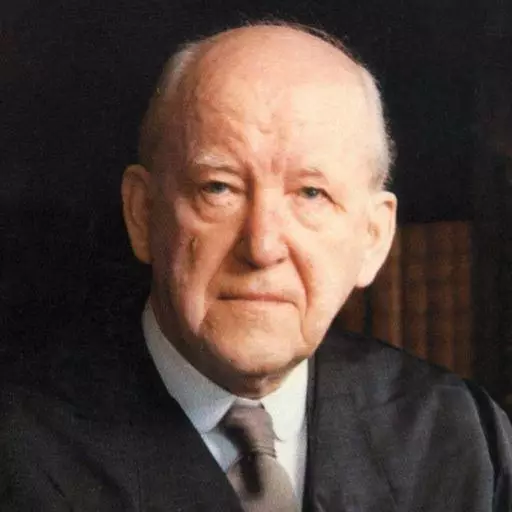
Romans 10:11-13 — In this sermon on “The Riches of His Grace” from Romans 10:11–13 Dr. Martyn Lloyd-Jones continues unfolding the apostle Paul’s argument for the inclusion of Gentiles in salvation. Working from this passage, his second point in the series draws from the glorious fact that the same Lord Jesus Christ, who is Lord over all, is rich in grace to all who call upon Him. Since salvation depends entirely upon God and His power to forgive, there is hope for anyone. It’s the great central theme of the Scripture foretold by the prophets, brought about by Jesus in the gospel, and proclaimed by the apostles and the early church. What does this mean for today? It doesn't matter how much one has sinned or how profound their ignorance is, the riches of God’s grace are endless and He is sufficient to give to all. There is no work or effort one can add to their salvation because His riches in salvation are all-sufficient. All worldly distinctions and prejudices are foolish because God is rich to all, without distinction, and there is nothing one can ever need that cannot be found in this endlessly rich savior.
Dr. Martyn Lloyd-Jones: This is 11, 12, and 13 in the tenth chapter of Paul's Epistle to the Romans. "For the scripture saith, whosoever believeth on him shall not be ashamed. For there is no difference between the Jew and the Greek, for the same Lord over all is rich unto all that call upon him. For whosoever shall call upon the name of the Lord shall be saved." Now, we are considering this little subsection, this little paragraph. I say little because it's little in number of verses, but certainly not little in content, as we are beginning to see.
The Apostle here is proving, as is his custom and method, the proposition that he's been laying down: that salvation is a matter of faith and of belief; that what saves a man is that he should confess with the mouth the Lord Jesus and believe in his heart that God hath raised him from the dead. And now here, he proves this by quoting from the twenty-eighth chapter of the prophet Isaiah and the sixteenth verse. "The scripture saith, whosoever believeth on him shall not be ashamed." And there we saw that he'd got three points: that it is believing that matters, and that if a man does believe, he shall never be ashamed, never be put ashamed.
And that therefore, as it is thus a matter of believing in him who can never fail us, it is obviously a salvation that can be preached to and offered to whosoever. It's to be preached to all, and whosoever does believe in him shall never be put to shame. And then, having said that, having quoted this scripture in order to prove that, the Apostle now in the twelfth verse comes to make his comment on the quotation from Isaiah 28:16. And this comment is, "For there is no difference between the Jew and the Greek."
This is his fundamental proposition. This is the crucial point, of course. That's where the Jews had gone astray. And they were quite wrong, and they were quite inexcusable. They were wrong, but as I say, they were inexcusable because their own prophets, in whom they boasted so much, had established this very point themselves. They were altogether wrong therefore. Wrong in not believing the gospel as the only way of salvation, and wrong in resenting the fact that the gospel should be preached to the Gentiles, and that the Gentiles were being received into the Christian church.
Now then, the Apostle here gives us the reasons for saying that they are wrong, or the reasons for saying that there is no difference between the Jew and the Greek. The first reason is the one we dealt with just at the end last Friday night. He said the same Lord is over all. There is only one Lord, and he is the Lord of the entire universe. Now, the Jews had gone astray there. They had worked themselves into the position of thinking that God was only the God of the Jews, that he had nothing to do with the rest of the world.
And as we pointed out, the Apostle already in the third chapter had dealt with that by putting it in the form of a question. He had put out this question in verse 29 of the third chapter: "Is he the God of the Jews only? Is he not also of the Gentiles?" And he answered the questions by saying, "Yes, of the Gentiles also." God is the God of the Gentiles as much as he is the God of the Jews. He had done certain special things to and through the Jews and had shown them special favors.
But that did not mean that he had finished with the rest of the world. Far from it. He is the God of the Gentiles as well as the God of the Jews. And it's a tremendous argument, as we saw. And you remember how Paul in preaching in Athens, as you have it in the account in Acts 17, had made use of this very selfsame argument. "Now commandeth all men everywhere to repent." And he puts that in terms of the fact that God is the creator and the sustainer of the whole universe and of all men.
There is only one Lord, and he is Lord of all, so that all are confronted by the same situation: their relationship to this one and only Lord. But now, we move to the second argument which he employs. And this is the one to which I was referring particularly when I said last Friday night that the Apostle always, when he does make a comment, never just merely makes a comment. He always adds to what he's been saying.
So that in this twelfth verse, he's not merely putting in his own language what he's been quoting from the scripture in verse 11, he brings out another aspect of it. And it's all to be found here in one word, and it is the word "rich." Rich. "The same Lord over all is rich unto all that call upon him." Here is the second great argument: the argument that is based upon the riches of God's grace. That's why he introduces the word here. It's a very, very powerful argument.
God is the God and the Lord of the whole world. That's one argument. But this is equally an argument: that he has such riches of grace that he is able to give it to all. All stand in need of it, and he is able, as regards his riches, to deal with all, Gentiles as well as Jews. Now, the argument, you see, is roughly like this: salvation depends entirely upon God and his power to give, his ability to give. That's what it depends upon. It doesn't depend upon anything in us at all.
That was Paul's way of bringing down the Jew and raising the Gentile. There's no difference between the Jew and the Gentile, the Jew and the Greek, because all have sinned and come short of the glory of God. All are equally helpless, lying on the ground. There's no point in having any comparisons when you're all licking the dust. And that's the position of the whole of mankind. All have sinned and come short of the glory of God. Well, therefore, all these comparisons and contrasts are not only wrong, but they're a sure waste of time.
Yes, but look at it from the other angle. It is God's power that saves anybody. And therefore, as it's entirely his power and what's in him and what he has put into the Lord Jesus Christ, there is obviously hope for anybody. So again, the distinction between the Jew and the Gentile is entirely demolished. Now, this is the great theme, of course, of the New Testament. And it is in particular the great theme of the Epistles of the New Testament, and particularly the theme of this great man who went under the name of the Apostle to the Gentiles and who gloried in that office which had been given him.
And it is in particular the great theme of this particular Epistle to the Romans. So you see, the Apostle announced it at the very beginning. Watch his architecture, if you like. Watch his structure. He announces it all at the very beginning in the sixteenth verse of the first chapter. "I am not ashamed of the gospel of Christ." Why not? "Well, it is the power of God unto salvation to every one that believeth; to the Jew first, but also to the Greek." He'd already said in a little bit of personal introduction before that, he says, "I long to see you that I may impart unto you some spiritual gift to the end that ye may be established. That is, that I may be comforted with you together with you by the mutual faith both of you and me."
"Now I would not have you ignorant, brethren, that oftentimes I purposed to come unto you but was hindered hitherto that I might have some fruit among you also, even as among other Gentiles. I am debtor both to the Greeks and to the barbarians, both to the wise and to the unwise." He's a debtor to all men. Why? Well, for this reason: that the gospel is the power of God unto salvation to every one that believeth; the Jew first, also to the Greek.
It is the great central theme of this mighty Epistle, and as I've reminded you before, you get it again in the twenty-fourth verse of the third chapter, "Being justified freely by his grace." Notice the "freely." "Being justified freely by his grace through the redemption that is in Christ Jesus." Well now, that's the great theme, and here again he comes back to it. "The same Lord over all is rich unto all that call upon him." This was the thing that staggered the Apostle. This was the thing in which he gloried: the riches of his grace.
It's enough for the whole world. This was the thing in which he boasted and in which he rejoiced. Very well. Because salvation is in the Lord Jesus Christ, and because he is who and what he is, it is a salvation for the Jew and the Gentile. There is no limit in the way in which the Jews were imposing their limitations. Now, I want to take this up with you because it is such a glorious theme. It's very germane to the Apostle's argument here, and it's a very powerful argument, but over and above the argument, the thing itself is so glorious that we must pause and look at it. It's all in this one word "rich."
And we are meant to examine it and to work out its content. Now, what is the New Testament evidence for this term "rich"? What is the basis on which the Apostle is able to say this? Well, you get it, of course, even in the four Gospels. I say even the four Gospels for this reason: that our Lord's earthly ministry was in the main and almost exclusively given to the Jews. Now, there are some very interesting statements with regard to this in which our Lord throws out hints, as it were, of what is going to happen later.
One of them is a very beautiful story. It's the story of the so-called Syrophoenician woman. You remember that story of how this woman came and told him about her trouble and about her predicament, and how our Lord, as it were, played with her for a while. But his object was, of course, to show the real character of the truth. Our Lord is approached by this woman who asks for his help, and our Lord doesn't immediately promise it, but as I say, he plays with her in this way. Let me read the account to you in the seventh chapter of the Gospel according to St. Mark. You've got it in the others also.
"A certain woman, whose young daughter had an unclean spirit," I'm reading at verse 25, "heard of him and came and fell at his feet. The woman was a Greek, a Syrophoenician by nation, and she besought him that he would cast forth the devil out of her daughter. But Jesus said unto her, 'Let the children first be filled, for it is not meet to take the children's bread and to cast it unto the dogs.'" See that classification of Jews, Gentiles? They're dogs. He uses that expression. "She answered and said unto him, 'Yes, Lord. Yet the dogs,'" which means the little dogs, the puppies, "'under the table eat of the children's crumbs.' And he said unto her, 'For this saying, go thy way. The devil is gone out of thy daughter.' And when she was come to her house, she found the devil gone out and her daughter laid upon the bed."
Now, what our Lord is really saying there is this: primarily while I'm here, I am preaching to and ministering to the Jews. But this woman seems to have got an insight, and he blesses her, as it were. He grants her request and the daughter is healed in order to show that ultimately he has come not for the Jews only, but also for the Gentile. You get the same thing in reality in his dealings with the woman of Samaria, as it's recorded in the fourth chapter of John's Gospel. I don't stay with that because I want to take you to the twelfth chapter of John's Gospel where the thing is put before us much more explicitly.
You remember that we are told that at a certain point in his ministry, certain Greeks came to worship at the feast. The same came therefore to Philip, which was of Bethsaida of Galilee, and desired him saying, "Sir, we would see Jesus." Philip cometh and telleth Andrew, and again Andrew and Philip tell Jesus. And then our Lord proceeded to speak. He refused to see the Greeks, but in connection with that refusal, he said this, "Now is the judgment of this world. Now shall the prince of this world be cast out. And I, if I be lifted up from the earth, will draw all men unto me."
Now, that's his real answer to the Greeks. "All men" doesn't mean every single individual in the whole world. It means not only Jews, but also Gentiles. "All men" means here men from any nation whatsoever. He doesn't see the Greeks now, but, "If I be lifted up after I've been crucified, after my work is finished, then I will draw all men unto me." This he said, signifying what death he should die. But it's a most important and a most crucial statement where he's really saying this: that as long as he's but a human teacher here in this world, his ministry is to the Jews. But as the Savior, he is the Savior of Greeks as well as Jews, Gentiles as well as Jews.
Now, that's a most crucial and important statement. Then when you come to the book of the Acts of the Apostles, of course, you get all this being worked out. You see the initial difficulty through which Peter especially had to pass. He wasn't clear about this. It was very difficult for any Jew to be clear about it. And yet, from the very beginning, he seems to have some inkling of it because the moment he heals the man at the Beautiful Gate of the Temple in Acts 3 and the people came crowding together round about Peter and John greatly wondering, Peter said, "Ye men of Israel, why marvel ye at this? Or why look ye so earnestly on us as by our own power or holiness we had made this man to walk? The God of Abraham and of Isaac and of Jacob, the God of our fathers, hath glorified his son Jesus, whom ye delivered up and denied him in the presence of Pilate. But ye denied the holy one and the just, and desired a murderer to be granted unto you, and killed the prince of life, whom God hath raised from the dead. And his name through faith in his name hath made this man strong, whom ye see and know. Yea, the faith which is by him hath given him this perfect soundness in the presence of us all."
Now, there's the beginning. Then in the next chapter, Peter and John are before the court, the Sanhedrin, and Peter then puts it in a tremendous statement in the twelfth verse, "Neither is there salvation in any other." And then the universal statement, "For there is none other name under heaven given amongst men whereby we must be saved." It's a universal statement again. He is indeed the Savior of the world, and he is the only Savior, but he is the Savior of the world. "None other name under heaven given amongst men whereby we must be saved."
And of course, when you come to the Epistles, all this is worked out still more fully. You've got it in this Epistle to the Romans, and we've been working it out in that, so I don't stop with that now. But it's equally clear in the Epistle to the Corinthians. Here, you see, he's writing particularly to Greeks, and he says, "We preach Christ crucified." Well, why? "Well, because Christ crucified is the power of God and he is the wisdom of God." This is God's way of dealing with mankind, Greeks as well as Jews. And he brings out this element of his sufficiency and his fullness.
Here it is in the third chapter of that first Epistle. He says, "Therefore let no man glory in men, for all things are yours, whether Paul or Apollos or Cephas or the world or life or death or things present or things to come; all are yours and ye are Christ's, and Christ is God's." That's to Gentiles. And shows again, you see, that it's all in this one great and glorious person. And still more strikingly does he bring out this whole aspect of the truth in the Epistle to the Ephesians where you see he speaks again on a world scale.
He says that God showed his power in Christ when he raised him from the dead and set him at his own right hand in heavenly places, "Far above all principality and power and might and dominion and every name that is named, not only in this world but also in that which is to come, and hath put all things under his feet and gave him to be the head over all things to the church, which is his body, the fullness of him that filleth all in all." And you see, he's already said in the tenth verse that this is God's purpose: "That in the dispensation of the fullness of times, he might gather together in one all things in Christ, both which are in heaven and which are on earth, even in him."
Everybody, the whole cosmos is included. And then he particularizes: "In whom also we," that's Jews, "have obtained an inheritance, being predestinated according to the purpose of him, that we should be to the praise of his glory who first trusted in Christ." Then in verse 13, "In whom ye also trusted," you Gentiles. "We Jews came in first, you've come in." Our Lord said, "Ye shall be witnesses unto me in Jerusalem, Samaria, the uttermost parts of the earth." That's the order. And here, this is the great theme of Ephesians: how the Gentiles have come in as well as the Jews.
And he's very concerned about this argument. The second chapter of Ephesians is a great outworking of all this. "Listen: wherefore remember that ye being in time past Gentiles in the flesh, who are called uncircumcision by that which is called the circumcision in the flesh made by hands; that at that time ye were without Christ, being aliens from the commonwealth of Israel and strangers from the covenants of promise, having no hope and without God in the world. But now, in Christ Jesus, ye who sometimes were far off are made nigh by the blood of Christ."
This is this tremendous thing he says that has happened. And then as you noticed in the reading at the beginning in chapter 3, he gives us a great exposition of this. And what he says is this: he says, "You know, this had not really been realized until now. Whereby when ye read ye may understand my knowledge of the mystery of Christ, this mystery which in other ages was not made known unto the sons of men as it is now revealed unto his holy apostles and prophets by the spirit."
Now, he doesn't mean by that that this wasn't known at all because he quotes many passages from the prophets in which this had been foretold. The prophets had had a glimpse of it, but the Jews had not understood it. It wasn't plain and clear to them. As I say, it wasn't even clear to Peter after Pentecost, and it took a vision to convince Peter that he must go to the house of Cornelius and open the door to the Gentiles to come in. It needed a vision.
It was there, but they couldn't see it. It hadn't been revealed as it has now been revealed unto his holy apostles and prophets: that the Gentiles should be fellow heirs and of the same body and partakers of his promise in Christ by the gospel. And on he goes to elaborate it. So you see, it's a very crucial part of the argument of the first three chapters of the Epistle to the Ephesians. But then, if anything, and if it's possible, he takes it even to a higher height in the first two chapters of the Epistle to the Colossians.
And that is the great point that he makes there. You see, the early church was being troubled by these Judaizers, by these Jews who either said that salvation was only for the Jews or that even a Gentile who believed the gospel has got to be circumcised and more or less become a Jew before he can be a complete Christian. The Apostle denounces all this. And this heresy was beginning to trouble the Colossian churches together with certain other heresies. And what the Apostle sets out to prove is this: he says all this is wrong. It is all in this one person, the Lord Jesus Christ, "In whom we have redemption through his blood even the forgiveness of sins," verse 14 of chapter 1. "Who is the image of the invisible God, the firstborn of every creature. For by him were all things created that are in heaven and that are in earth, visible and invisible."
This has been sometimes called a description of the cosmic Christ. And he is the cosmic Christ. All things are going to be reconciled in him by God, whether they be thrones or dominions or principalities or powers. All things were created by him and for him. And he is before all things, and by him all things consist. He is the head of the body which is the church, and so on. "For it pleased the father that in him all fullness dwell." Now, you get the same thing worked out in the second chapter. He says, "Beware lest any man spoil you through philosophy and vain deceit after the tradition of men and the rudiments of the world and not after Christ. For in him dwelleth all the fullness of the godhead bodily."
All this is just meant to prove that salvation is entirely and altogether in the Lord Jesus Christ. So he's put it like this, you see, in the third verse: "In whom are hid all the treasures of wisdom and knowledge." The same Lord over all is rich unto all. Same idea precisely. All the treasures of God's wisdom and knowledge are in the Lord Jesus Christ. So he says, "I say this lest any man should beguile you with enticing words. You've got to realize that it's all there, and it's all in him, and it's all absolutely perfect. And so the one thing that matters is your relationship to him."
Very well. Now, there is the essence of the argument. There are other passages that we could quote. I've picked out the great and the crucial passages. Now, I'm more concerned still to draw the conclusions that are to be drawn from all this. What are they? Well, you see, this is what he's saying. The same Lord over all, the one who is the Lord of the whole cosmos, is rich unto all that call upon him. What he means by that is this: that he is all-sufficient, that he is indeed everything that we need. Let me put it in this form: he needs no help. He needs no assistance. He doesn't need to be supplemented. That was the meaning of what Peter said in Acts 4:12, "There is none other name under heaven given amongst men whereby we must be saved."
Somebody translated that like this, "There is no second name." You don't say Jesus Christ and Company Limited. You say Jesus Christ, the Lord Jesus Christ. There's no "and," there's no "company," there's no "addition." You add anything to him, you've destroyed it all. There's nothing. He is everything. There is no second name given under heaven among men whereby we must be saved. And as I was saying, it is in particular the great argument of the first two chapters of Paul's Epistle to the Colossians.
You remember that Colossian heresy? It was a mixture. These false teachers had gone; they were preaching another gospel because Paul refers in the first chapter in verse 5 to "the word of the true gospel." It's translated here "the word of the truth of the gospel." It really means the word of the true gospel in contradistinction to the false gospel. And the false gospel was a queer amalgam and mixture, like most cults and heresies are, a jumble of many false teachings. There was a bit of Judaism, as I say, that you had to go back into the law, and then the observation of days and times and seasons, which he deals with at the end of the second chapter in verses 20 and so on.
"Touch not, taste not, handle not." This false kind of asceticism, and that that's essential to your salvation, which has come out later in Roman Catholicism and so on. And there was a good deal of astrology mixed up with it and a lot of philosophical speculation. There's a great deal of that in the modern world, but it had all started, you see, in the days of the Apostle himself 1,900 years ago.
Now the Apostle writes back, and this is really what he says. "This is all wrong," he says, "because you're making the Lord Jesus Christ but one of a number of intermediaries between man and God." And they said there were all sorts of intermediaries. There were various angels. So you find in Paul's writings to Timothy that he talks about worshiping of angels. What they said was this, you see, "Here's man and there's God in that great glory, and you need a series of intermediaries between man and God. And there are various angels and so on."
And Jesus Christ was just the head of this hierarchy of intermediaries between man and God, and you had to go through all these steps and stages before you could arrive at God. Now, Paul's refuting all that. And he says, "This is all wrong. It is all in this one person." That's why he keeps on repeating this. Chapter 1:19: "It pleased the father that in him all fullness dwell." Well, if all fullness is in him, you don't need to add to him.
Here again, you see, in the second chapter, he says in verse 3, as I say, "In whom are hid all the treasures of wisdom and knowledge." In verse 9, "In him dwelleth all the fullness of the godhead bodily." All the fullness of the godhead is bodily in this one person. You don't add to God. Well, you don't add to Jesus Christ therefore. It's all in him. And then he says in verse 10, "And ye are complete in him, which is the head of all principality and power."
Don't add to him. It's an insult to him. Everything is in him. There is no need for any sort of help or of any assistance. That is why some of us cannot abide nor tolerate a doctrine which tells us that Mary is a co-redemptrix. That is why we cannot grant that you need to pray to saints to help you or to anybody else or do your penances and pay for indulgences and so on. My friends, it is simply a denial of this teaching in the Epistle to the Colossians, as it is a denial of the teaching of the whole of the Bible.
That in him and him alone, there is no other intermediary. There is only one name, there is one God, and one mediator, and one and only mediator it means, between God and men, the man Christ Jesus. He is enough. He is the all-sufficient one. He is the all and in all. He's the alpha and the omega, the first, the last, the beginning, the end. He's everything.
Rich, because he is who he is. But let me go on and draw these other deductions. Oh, let me remind you again that you get the same argument exactly in the very beginning of the Epistle to the Hebrews. Here were again Christian people who were being affected by false teaching, and they were being told that it was wrong to leave Judaism altogether.
"No, no," says Paul. "God who at sundry times and in divers manners spake in time past unto the fathers by the prophets has in these last days spoken unto us in his Son, whom he hath appointed heir of all things, who is the brightness of his glory and the express image of his person, who when he had by himself purged our sins..." He had nobody helping him. He never did have a helper. You can't help him. He's all, he's everything. "...by himself purged our sins, sat down on the right hand of the majesty on high."
And it's the same everywhere. Very well. What is the point of saying all this? Well, it's this, you see. It's this emphasis that it's all in him. "Whosoever calleth upon the name of the Lord shall be saved." There's only one Lord. He's the Lord of all. Yes, and he's rich. And that is why it is all in him because of this riches. So I draw this deduction: that because he is so rich and because all the fullness of the godhead is in him, he is able to give this salvation to anybody. To whosoever.
He is rich unto all that call upon him. What it means, you see, is this. "Yes," says somebody, "I can see that good, godly religious people like the Jews should be saved by him. But what about the Gentiles? What about the dogs who are outside? What about the people who are living the kind of life the Gentiles then lived as described in the second half of the first chapter of the Epistle to the Romans? What about people who lived as Paul describes some of the Corinthians as living before they became Christians? Adulterers, effeminate, abusers of themselves with mankind, covetous, thieves, drunkards, revilers, extortioners? What about them? Can they be saved?"
The answer is, "Oh yes." Why? Well, he's rich. He's so rich, he can take any pauper that may like to come. He can take them all if necessary. No sin is too great. No man has committed too great a number of sins. You don't talk about numbers or the greatness of sin when you're thinking of his riches. If you're talking about some moral standard, of course, the number of sins and the depth of sin is important. But when you're talking of the riches of God, you don't worry about this. One man can be saved as easily as another.
There is no distinction, there is no difference. No sin is too great. No one can have sinned too many sins. No ignorance is too profound. You see, this is a way of salvation that postulates nothing in man but which preaches the riches of his grace, the fullness that is in him. So the next deduction I draw is that he is sufficient to give to all. Now, it's wonderful to watch the great Apostle bringing out these points. You see, he could never think of them or mention them without being thrilled and moved to the very depths of his being.
Let me read it to you out of the second chapter of the Epistle to the Ephesians. In the first three verses, he describes the condition and the predicament and the appalling condition of men in sin. All men. Then listen: verse 4, "But God... But God." What about him? "Oh, who is rich in mercy." See? The same word. "Rich in mercy." And then he goes on. This isn't enough. "For his great love wherewith he loved us, even when we were dead in sins hath quickened us together with Christ, by grace ye are saved; and hath raised us up together, and made us sit together in heavenly places in Christ Jesus, that in the ages to come he might show..."
What? "...the exceeding riches of his grace." What a gathering of words. Grace, free, unmerited favor. But "the riches of his grace." But on top of that, "the exceeding riches of his grace." And another word comes in, "in his kindness toward us through Jesus Christ." On he goes. He can't stop himself as he thinks of this. So you notice that in the third chapter, he even adds to that. "The exceeding riches of his grace." "What am I talking about?" he says in the eighth verse of the third chapter. "Unto me, who am less than the least of all saints, is this grace given, that I should preach among the Gentiles the unsearchable riches of Christ." Not exceeding riches. Unsearchable riches.
You never come to the end of them. You can go on and everybody with you searching, examining, collecting, putting down records. You'll never finish. Unsearchable riches of Christ. And then he goes on towards the end of the chapter. He says, "You know, this is my great prayer for you, this, that God would grant you according to the riches of his glory." He can't get away from this word. It's all so wonderful and so rich. "To be strengthened with might by his spirit in the inner man." Why? "Well, that Christ may dwell in your hearts by faith, that ye being rooted and grounded in love may be able to comprehend..." get some glimmering understanding of "...with all saints..." what? "...what is the breadth and the length and the depth and the height, and to know the love of Christ which passeth knowledge."
You see, that's it. That's the content of this little word "rich" that he slips here into this twelfth verse of the tenth chapter of his Epistle to the Romans. And then he goes even beyond that: "That ye might be filled with all the fullness of God." And you get filled with the fullness of God when Christ dwells in your heart by faith because all the fullness of the godhead is in him, and it is in him bodily. Well, you see, because of that, he's got it to give to everybody. "You," says Paul to these Ephesians. "You were right outside. You were absolutely helpless, without hope, without God in the world. What's brought you in? The exceeding riches of his grace, the unsearchable riches of Christ. He's rich unto all that call upon him." He's got enough for all.
And then you see, he gives us all we need. It's not only for Jew and Gentile, not only for barbarian or Scythian, bond or free, male or female. It is, and it is for these reasons because of this riches. Everybody has a hope here so that all divisions and distinctions are abolished and banished once and for all. But I say he not only can give it to anybody, he gives us all that we need, everything that we need.
You noticed that he pointed out to the Ephesians there in the eighth verse of the second chapter: "For by grace are ye saved through faith, and that not of yourselves, it is the gift of God." And that does mean, remember, that the faith is a gift of God. He gives you the faith. This he gives you. It is the spirit's rising being. And he gives us all we need, I say. So the Apostle has said in 1 Corinthians 1:30, "But of him are ye in Christ Jesus who of God is made unto you wisdom, righteousness, sanctification, redemption."
What else do you need? Well, anything you may ever need, it's all in Christ. There is nothing that you can ever need but that it will be found in him in all its glorious all-sufficiency. Have you noticed, my dear friends, how this glorious way of salvation is always described in terms of superlatives and of profusion? "The same Lord over all is rich unto all that call upon him." You notice the terms that are used always. You get it, you see, even in the books of the prophets who looked forward and saw the coming of our Lord.
Listen to Isaiah in chapter 9 in that great prophetic word: "Unto us a child is born, unto us a son is given, and the government shall be upon his shoulder, and his name shall be called Wonderful, Counselor, the mighty God, the everlasting Father, the Prince of Peace." He's everything. "And of the increase of his government and peace there shall be no end." So later on, this great evangelical prophet and so on is able to issue a great and a universal invitation: "Ho, every one that thirsteth, wherever you are, come to the waters, and he that hath no money, come ye, buy, eat. Yea, come buy wine and milk without money and without price." Wherever you are and whatever your condition, come. It's all here in all its fullness.
And then you see, we get that most interesting incident recorded in the fourth chapter of Luke's Gospel when our Lord really begins his ministry. He's been baptized with the spirit, and he has been tempted in the wilderness, and he comes back to his home town of Nazareth and, as his custom was, he goes into the synagogue on the Sabbath day. And listen: "There was delivered unto him the book of the prophet Esaias. And when he had opened the book, he found the place where it was written, 'The spirit of the Lord is upon me.'"
What for? "Well, because he hath anointed me to preach the gospel to the poor." Nobody else had ever been able to do that. Here is one who can preach to the poor. Why? Well, because they've got nothing but he's got everything. Rich. "He hath sent me to heal the brokenhearted, to preach deliverance to the captives, recovering of sight to the blind, to set at liberty them that are bruised, to preach the acceptable year of the Lord." There's a great summary again of the riches.
But you've got it still more wonderfully in the Gospel according to St. John. On Sunday mornings here, we're considering one of the greatest texts in the Bible, John 1:16: "Of his fullness have all we received and grace upon grace." But look at him putting it in detail to the woman of Samaria in the fourth chapter. "Jesus answered and said unto her, 'Whosoever drinketh of this water,'" that's to say the water in the well, "'shall thirst again. But whosoever drinketh of the water that I shall give him shall never thirst, but the water that I shall give him shall be in him a well of water springing up into everlasting life.'" There's no end to it. Rich.
You get the same thing in John 6:35 where you read this: "Jesus said unto them, 'I am the bread of life. He that cometh to me shall never hunger, he that believeth on me shall never thirst.'" Rich. "I am come," he says in John 10:10. "I am come that they might have life and that they might have it more abundantly." Not just a little. Overwhelming. Showered, as it were, upon us. I've already quoted to you Colossians 2:10: "Ye are complete in him." Absolutely complete. There is nothing conceivable but that we have it in him, and we have it in all its fullness and in all its plenitude.
So you see, it is not surprising that the writers of our hymns, once they have truly known this, once a man has had the fullness of the Holy Spirit, he sees nothing but this: the riches of Christ. Listen to Charles Wesley: "Thou, O Christ, art all I want; more than all in Thee I find." That's the expression. All I want, more than all in thee I find. Listen to him again: "Plenteous grace in Thee is found, grace to cover all my sin." You need never worry about it. "The same Lord over all is rich unto all." Grace to cover all my sin. Plenteous grace.
"Let the healing streams abound; make me, keep me pure within. Thou of life the fountain art, freely let me take of Thee; spring Thou up within my heart, rise to all eternity." Or take him in that hymn we sang just now, which I think is perhaps his greatest hymn of all. "Thou hidden source of calm repose, Thou all-sufficient love divine." All-sufficient. Rich unto all that call upon him. And then he gives you his list of things: "Help and refuge from my foes, secure I am if Thou art mine. Thy mighty name salvation is and keeps my happy soul above. Comfort it brings and power and peace and joy and everlasting love. To Thee, to me with Thy dear name is given pardon and holiness and heaven." He's rich unto all that call upon him. He's everything.
Jesus! "My all in all Thou art; my rest in entire, my ease in pain, the medicine of my broken heart. In war, my peace; in loss, my gain. My smile beneath the tyrant's frown. In shame, my glory and my crown. In want, my plentiful supply." Rich unto all that call upon him. "In weakness, mine almighty power. In bonds, my perfect liberty. My light in Satan's darkest hour. My help and stay whene'er I call. My life in death, my heaven, my all."
The same Lord over all is rich unto all that call upon him. Christian people, are you enjoying the riches? Do you know about it? Are you able to say, "Just as I am of that free love, the length, breadth, depth, and height to prove, here for a season, then above. O lamb of God, I come." You see the argument? Don't draw these foolish distinctions between religious and irreligious, between Jews and Gentiles, between what a man was. Don't bring it in, or what he wasn't. Don't talk about a great sinner and a little sinner when you come to Christ. Forget everybody, everything. Nothing matters but what? Oh, that he's rich. He is rich. All-sufficient love divine. Plenteous grace. Grace to cover all my sin.
Or as old John Bunyan put it: "Grace abounding to the chief of sinners." So you don't talk about human divisions and distinctions. What matters is that he is the Lord of the whole universe and he has such riches that he can deal with the whole problem of sin without any difficulty, in general or in particular. It pleased the father that in him should all fullness dwell.
Praise, my soul, the King of heaven, to His feet thy tribute bring. Ransomed, healed, restored, forgiven, who like thee His praise should sing? Praise Him, praise Him, praise Him, the everlasting King. The same Lord over all is rich unto all that call upon him. That is God's way of salvation. Nothing matters but the riches of his grace.
O Lord our God, we pray Thee as Thy servant of old prayed. O for a thousand tongues to sing my great redeemer's praise, the glories of my God and King, the triumphs of His grace. O God, have mercy upon us that we are so slow to thank Thee and to praise Thee. O Lord, open our eyes to the knowledge of these great riches, the unsearchable riches of Christ, who is so rich unto all that call upon him. Lord, fill us with Thy spirit. Fill us, we pray Thee, until our hearts shall overflow. Shed Thy love abroad in our hearts by Thy most blessed Holy Spirit until we shall be lost in wonder, love, and praise.
O that I could forever sit like Mary at the Master's feet! Be this my happy choice, my only care, delight, and bliss, my joy, my heaven on earth be this: to hear the bridegroom's voice. O love divine, how sweet thou art! When shall I find my willing heart all taken up by Thee? I thirst, I faint, I die to prove the greatness of redeeming love, the love of Christ to me. O Lord, open our eyes to the riches of Thy grace, and then we know that we shall praise Thee with the whole of our being and say, "Bless the Lord, O my soul, and all that is within me, bless His holy name."
And now may the grace of the Lord Jesus Christ, and the love of God, and the fellowship and the communion of the Holy Spirit abide and continue with us now, this night, throughout the remainder of this our short, uncertain earthly life and pilgrimage, and until we shall see him as he is in all his glory and beauty and perfection, and be like him; until the story shall be over, saved by grace, and go on to all eternity to marvel at the unsearchable riches of Christ. Amen.
Featured Offer

Find peace and comfort this season with your complimentary guide that includes access to 6 free bonus sermons on overcoming spiritual depression from Dr. Martyn Lloyd-Jones, one of the church’s most beloved Bible teachers. Topics include: true Christians can and do struggle with depression, recovering the joy of your salvation, dealing with crippling guilt over past sins, dealing with yesterday’s haunting regrets, encouragement to keep moving forward, and understanding God’s purpose for suffering.
Past Episodes
This ministry does not have any series.
Featured Offer
Find peace and comfort this season with your complimentary guide that includes access to 6 free bonus sermons on overcoming spiritual depression from Dr. Martyn Lloyd-Jones, one of the church’s most beloved Bible teachers. Topics include: true Christians can and do struggle with depression, recovering the joy of your salvation, dealing with crippling guilt over past sins, dealing with yesterday’s haunting regrets, encouragement to keep moving forward, and understanding God’s purpose for suffering.
About From the MLJ Archive
From the MLJ Archive is the Oneplace.com hosted ministry of the MLJ Trust. Our mission is to promulgate the audio ministry of Dr. Martyn Lloyd-Jones.
About Dr. Martyn Lloyd-Jones
Contact From the MLJ Archive with Dr. Martyn Lloyd-Jones
info@mljtrust.org
http://www.mljtrust.org/
PO Box 953
Middleburg, VA 20118