
The Only Foundation


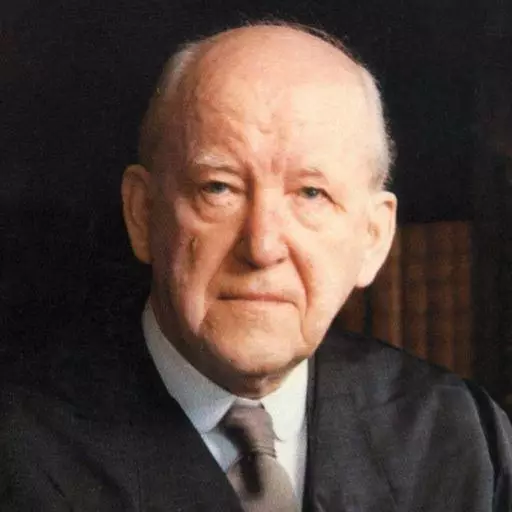
Dr. Martyn Lloyd-Jones: I should like to call your attention this morning to the words which are to be found in Paul's Epistle to the Ephesians in the second chapter verses 20, 21 and 22.
And are built upon the foundation of the apostles and prophets, Jesus Christ himself being the chief cornerstone, in whom all the building fitly framed together, groweth unto an holy temple in the Lord, in whom ye also are builded together.
For an habitation of God through the Spirit. These verses follow, of course, the 19th verse in which the subject the Apostle is dealing with here begins. Now, therefore, ye are no more strangers and foreigners.
But fellow citizens with the saints and of the household of God. And then come these verses, and are built upon the foundation of the apostles and prophets, Jesus Christ himself being the chief corner stone.
In other words, we come back again to consider this most important picture which the Apostle uses here, in order to convey to these Ephesian Christians a true conception of their position in the Christian church, and therefore a true conception of the nature of the Christian church herself.
Now we have seen that the Apostle uses three pictures. We've already dealt with two of them. The first was the picture of a state, a kingdom, a country. We're all member citizens of the kingdom of God. But secondly, he compares the church to a family. And we're all the children of God.
We are members of the household of God. But even that wasn't enough. He goes on to this third picture, which we began to consider last Sunday morning. This picture of the Church of God as a great building. In which God dwells.
Now it's obvious that the picture suggested itself to the Apostle partly because of what he just been saying in the earlier verses about the temple under the old dispensation. His great point is that the middle wall of partition between the Jews and the Gentiles had been broken down.
Well, now the middle wall of partition, of course, was to be found in the temple. The Gentiles were in the courts, the court of the Gentiles, and there was a kind of wall that prevented their going in to the court of the people, and the people in turn were not allowed to go into the holiest of all, and so on.
Now, he was thinking, therefore, in terms of a temple which had divided people. He says, all that has gone. And there is a new temple. And God dwells in this new temple, the temple consisting of his own people. No more a Jewish temple. That has gone once and forever.
No longer Jew nor Gentile, barbarian or Scythian, bond nor free, but all are one. There's this new thing. And the temple in which God now dwells is the church, his own people. Very well. Well, we began to consider it last Sunday morning, and I reminded you then, as I must again remind you this morning, that there are two great principles which we must hold very firmly in the forefront of our minds if we're really to follow this teaching.
The Apostle is out to show two things. One, the unity. The essential unity that must ever be true of the Christian Church and of all who are truly Christian. It's not a matter to argue about. It is something that God has made and God has produced himself.
In Christ, he has made of two one new man. This new thing, the church. And the unity is quite inevitable. The second thing, of course, and it follows from that is the privilege of our position. Very well.
Now, the Apostle in this picture of the church as this temple, this holy building in which God takes up his residence, brings out those two things very clearly. And we began our examination of it last Sunday. We looked at it in general.
We want to come on this morning to a more detailed consideration. The Apostle told us that the building is something that's going on. It's a lively, a living, an active process. Groweth. It's something that groweth.
And we're all fitly framed together, not mechanical. We must never think of unity in terms of mere mechanics or statistics, simply adding together. No, no, it's it's something vital. Groweth. It's this living process. We also saw that it's holy.
The Apostle is not interested in size. He's interested in quality, holiness. Holy temple in the Lord. And we saw likewise that the three persons of the Blessed Trinity are always of necessity involved.
As he brings it out here so clearly, God the Father, in the Lord Jesus Christ, through or by the Spirit. But as I indicated last Sunday, the Apostle doesn't stop at mere general description. He looks at the temple as it were, and he first of all gives his general account of it.
But this matter is is so important in his estimation that he he must come to details. He gives us the plans and the specifications concerning this building, this temple. And therefore, because the Apostle takes this trouble to do this, we must deduce that he regarded it as a matter which was of the gravest importance.
This whole question of the nature of the church, the unity of the church is indeed a fundamental matter. Now, the Apostle deals with it in his own day and generation because it was obviously very essential that he should do so.
It is equally essential that you and I should do so today. The great word of today is the word unity. There is more talk and more preaching and more writing of books and articles about unity in the church today than possibly any other single subject.
Indeed, it is the main topic under discussion and under consideration. And therefore, whether we like it or not, it behooves us to be clear in our thinking concerning these matters. It's a very wrong thing for any Christian person to say, oh, well, of course, I'm simply concerned in my own personal experience.
I'm not concerned about these larger matters. You must be. You can't live in isolation. We all live together. We are in fellowship with one another. No man liveth unto himself. No man dieth unto himself.
And indeed, if we don't think about these matters, we shall find ourselves being influenced by others. And it may well end in disaster. Let me use an illustration. We are reading constantly in the newspapers these days that the world trouble in the industrial world with strikes and so on is very largely due to this.
I don't know whether this is true or not. I'm simply repeating what I have read in the press and you've read. We are told the trouble is due to this, that the vast majority of the members of the trade union simply don't take the trouble to go to the meetings and to vote.
And the result is that a few keen persons who may be communists, they always go, and because they go and the others don't and allow it to pass in an indifferent manner, the whole direction is governed by just a handful of people and all the others who may not really be in agreement have to abide by the decisions.
It may well be true. The sheer slackness and indolence, the refusal to take an active interest allows the position to go by default. Precisely the same thing will happen in the Christian church and often has happened because Christian people in a kind of indolence are saying they can't be bothered and really can't apply their minds to these things, allow things to be done for them by just a handful of officials.
I say it is our duty as Christians to understand something of what the Apostle teaches us here concerning this question of unity. Now, let me give you some further reasons for that. There are many ways in which you can get a kind of unity.
But what matters is a true unity which corresponds to this description. The Roman Catholic Church believes in unity of the churches more than anybody else. They're always saying that. The very word Catholic tells us that.
It's the universal church. And the Roman Catholics are amazed that Protestants ever went out and that there ever been any divisions at all. They say, we should be one, the church should be united. No church preaches unity more than the Roman Catholic Church.
But we know what they mean by that. They mean a uniformity. They mean that we all become absorbed again. They mean that we all return to Rome. But the point is, they are very interested in unity. So if we simply talk about unity and say that nothing matters but unity, well, then I say that logically we all ought to go back into the Roman Catholic Church.
If you put unity first, if you say that nothing matters but unity, they call themselves Christians as we do. Very well then, if we're all Christians together, why separate? Why be different? Let's all be one. Let's all become Roman Catholics.
But of course, when it's put like that, we don't like it, do we? Now, but when precisely the same argument is used within Protestantism, we think it's a very wonderful argument. But the principle is still precisely the same.
You don't start with unity. Unity is something that results from something else. You can't create unity. Take for instance, this picture that the Apostle has used about a family. The unity between the members of a family is not something created artificial.
The unity is inevitable because of their relationship. And every form of unity is the same. Unity is a result. You don't start with unity. Unity is something that is in existence because certain fundamental positions are being observed.
Or let me give you another illustration. Did you read in the papers not long ago of how they celebrated the tenth anniversary of the founding of the United Nations Organization, UNO? Well, in connection with that, they had a wonderful meeting which they called a Festival of Faith.
And the Festival of Faith consisted of this, that there was a great service in which Jews and Mohammedans and Buddhists and Confucians and Christians all took part together in the same service and recited the same prayers together.
Unity. The argument, you see, was this, and oh, how often is the argument used today. They say, we all believe in the same God. The Mohammedan, the Hindu, the Buddhist. We all believe in the same God. They say, you know, truth is like a great mountain.
There's the one summit. But there are many ways of going up. Why should you say that you alone are right? What right have Christians to say that they alone are right and all the others are wrong? Doesn't matter which way you climb up the mountain as long as you get to the top.
So let's all come together in a great festival of the faiths, a great Congress, world Congress of religion, the same God. Well, therefore, why haggle about these things? They say, it's a wrong spirit, you know.
That's the sort of argument that is being used. I wonder sometimes what such people would think of the Apostle Paul if he were alive today. I wonder what many in the Christian church would say about him. Did you notice what he said to the Galatians?
Listen to him. Though we or an angel from heaven preach any other gospel unto you than that which we have preached, let him be accursed. Huh, they'd say, impossible individualist, isolationist. He alone's right. Everybody else is wrong.
He won't come in. He's always standing out on points. Don't you see, my friends, that through allowing ourselves to be influenced by vague general talk, we become terribly unscriptural at times without realizing what we're doing?
No, no, we must observe the plans and specifications. It's no use shouting unity and saying this is the great thing. We all get together. There's something infinitely more important, truth. For a unity which isn't based upon truth is false.
It's man-made. It's not God's plan. It's unreal, it's spurious. Very well, then, I say the Apostle now is teaching us all that in this way. Builded, he says, upon the foundation. You see, he brings us to the vital thing at once.
There can be no true building without a right foundation. You've got to start with foundations, says Paul. You can't talk of a building without knowing something about its foundation. That's absolutely vital and central.
And therefore, because of the modern tragic confusion, I have to ask you to bear with me while I go into detailed descriptions and definitions and expositions of exactly what the Apostle says. The foundation of the apostles and prophets.
Now, here is the only basis of true unity. What's he mean? Well, I've got to ask the question, what's an apostle? What is an apostle? Because I can't understand this whole matter of unity unless I know what an apostle is and what a prophet is, because the church is founded on the foundation of the apostles and prophets.
Well, these are the essential points about an apostle. An apostle was one who had to have seen the risen Lord. By definition, an apostle is one who is a witness to the resurrection because he has seen the risen Lord.
Now, that, you see, was one of the qualifications of Paul himself. He saw the risen Lord on the way to Damascus. If he hadn't, he could never have been an apostle. He might have been a preacher, he might have been a prophet, he might have been a great teacher, but he could never have been an apostle if he hadn't seen the Lord on the road to Damascus.
So that is why you remember in writing to the Corinthians, he says that he himself is as one born out of due time. He didn't see the risen Lord with all the rest of them. He had this special manifestation to himself in order to make him an apostle.
And you remember, he puts it in a phrase at the beginning of the tenth chapter of the first Epistle to the Corinthians. Moreover, brethren, he says, that that that he, I know, at the ninth chapter, rather, am I not an apostle?
Am I not free? Have I not seen Jesus Christ our Lord? That's it. That's the proof that he's an apostle. But not only that, an apostle was one who was specially called and designated and sent as a preacher of the gospel by the risen Lord himself.
That again is a vital part of the calling of an apostle. Read the 26th chapter of the Book of Acts and there you will find the account of how the Lord himself commissioned the Apostle Paul there and then on the road to Damascus.
So the Apostle is one who is specially commissioned by Christ, having seen him risen from the dead to go out and preach the message. Not only that, the Apostles were given a very special authority. They were given power to work miracles and to do various other things.
And it was these that attested their authority as apostles. Now, those are the three main characteristics of an apostle. You will see in a moment how vital it is that we should bear all that in mind. Without those three things, no man is an apostle or in any sort of apostolic succession.
Well, then that brings us to the prophets. What's a prophet? Now, there's been a great deal of discussion about this. The older commentators all agree in saying that this word prophet is a reference to the Old Testament prophets.
Those who prophesied the coming of Christ, those who prophesied the coming of the kingdom, and in that sense laid the foundation. But then there is a great body of opinion on the other side and says, no, this is not a reference to Old Testament prophets.
It is a reference to the New Testament prophets, the prophets in the New Testament church. And they say this must be the case for this reason. If the Apostle had been thinking of Old Testament prophets, he would have said, on the foundation of the prophets and apostles.
The prophets came before the apostles. But he says on the foundation of the apostles and prophets. Therefore, he's clearly thinking in New Testament terms. And indeed, they say he does the same thing in the fifth verse of the third chapter, where we read this, which in other ages was not made known unto the sons of men, as it is now revealed unto his holy apostles and prophets by the Spirit.
And again, in the eleventh verse of the fourth chapter, he says this, he gave some apostles, and some prophets, and some evangelists, and some pastors and teachers. So on the basis of that, they say, this is patently a reference to the New Testament prophet, the prophet in the Christian church.
Very well, that raises the question, what were these, what is a prophet, whether under the old dispensation or the new? And the answer is that a prophet is one who receives a direct message from God.
One to whom truth is revealed directly by the Spirit, not as the result of reading the Scripture or anything else, but a direct message given which he in turn is to impart to others. The Apostle Paul defines it for us in 1 Corinthians 14, first verse, he that prophesied, he says, speaketh unto men to edification and exhortation and to comfort.
And there is no doubt that in the Christian Church in the early days, there were these people called prophets. You see, we hadn't got, they hadn't got the New Testament scriptures then. They hadn't the gospels, they hadn't the epistles. But there were these people who were given spiritual truth and understanding and were enabled to speak it.
Now, the prophet in the Old Testament, of course, did exactly the same. God revealed truth to him and enabled him to speak it. That's the characteristic of a prophet. What then is the Apostle referring to here exactly when he says on the foundation of the apostles and prophets?
Well, it seems to me that probably both things are true. He puts the apostles first because of their utter absolute uniqueness. You get the same in Revelation 21:14.
Featured Offer

Find peace and comfort this season with your complimentary guide that includes access to 6 free bonus sermons on overcoming spiritual depression from Dr. Martyn Lloyd-Jones, one of the church’s most beloved Bible teachers. Topics include: true Christians can and do struggle with depression, recovering the joy of your salvation, dealing with crippling guilt over past sins, dealing with yesterday’s haunting regrets, encouragement to keep moving forward, and understanding God’s purpose for suffering.
Past Episodes
This ministry does not have any series.
Featured Offer
Find peace and comfort this season with your complimentary guide that includes access to 6 free bonus sermons on overcoming spiritual depression from Dr. Martyn Lloyd-Jones, one of the church’s most beloved Bible teachers. Topics include: true Christians can and do struggle with depression, recovering the joy of your salvation, dealing with crippling guilt over past sins, dealing with yesterday’s haunting regrets, encouragement to keep moving forward, and understanding God’s purpose for suffering.
About From the MLJ Archive
From the MLJ Archive is the Oneplace.com hosted ministry of the MLJ Trust. Our mission is to promulgate the audio ministry of Dr. Martyn Lloyd-Jones.
About Dr. Martyn Lloyd-Jones
Contact From the MLJ Archive with Dr. Martyn Lloyd-Jones
info@mljtrust.org
http://www.mljtrust.org/
PO Box 953
Middleburg, VA 20118