
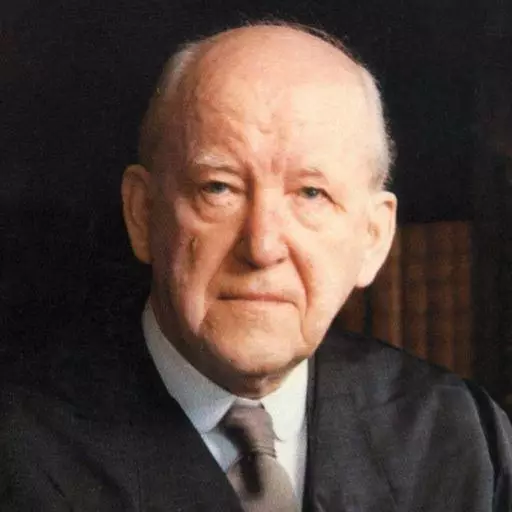
The Hope of His Calling


Christians can often feel distant from God. What is their response when coldness towards spiritual matters creeps into their heart? Does their assurance waver? How can they have a steady anchor for their Christian life? Rather than wait for another experience, the prayer of the apostle Paul for Christians is that they may know the hope of their calling. This is not a general hopefulness, but hope in God. More specifically, hope in God’s calling of them. This will have a profound effect on the assurance says Dr. Martyn Lloyd-Jones. In this sermon on Ephesians 1:18 titled “The Hope of His Calling,” Dr. Lloyd-Jones expounds this great prayer of Paul and carefully navigates between the general call of God in the gospel for all and the effectual call of the Holy Spirit for believers. To find assurance, one must look to the covenant-keeping God and Scripture. The Christian must look to the God in whom there is no variation or change, to the Father who will keep His children by His grace until the very end. Dr. Lloyd-Jones challenges Christians to consider these wonderful truths of Scripture and pray this for themselves.
Dr. Martyn Lloyd-Jones: I should like to call your attention this morning to the first part of the 18th verse in the first chapter of Paul's Epistle to the Ephesians. The Epistle to the Ephesians, the first chapter, and the first portion of the 18th verse.
"The eyes of your understanding being enlightened, that ye may know what is the hope of his calling."
Now, obviously, this is a part of a great statement. So I'd better read again the context, beginning at verse 15.
"Wherefore I also, after I heard of your faith in the Lord Jesus, and love unto all the saints, do not cease to give thanks for you, making mention of you in my prayers, that the God of our Lord Jesus Christ, the Father of glory, may give unto you the spirit of wisdom and revelation in the knowledge of him. The eyes of your understanding being enlightened, that ye may know what is the hope of his calling, and what the riches of the glory of his inheritance in the saints, and what is the exceeding greatness of his power to us-ward who believe, according to the working of his mighty power which he wrought in Christ, when he raised him from the dead."
And so on until the very end of the chapter. In other words, we are still continuing our consideration of the prayer of the Apostle for these Ephesian Christians and the other Christians to whom the letter was undoubtedly designated.
He has already thanked God for them, and especially for their faith in the Lord Jesus, and for their love towards all the saints. And then he has been making a petition for them. He is very careful to remind them, as he always reminded himself, that he was praying to the God of our Lord Jesus Christ, the Father of glory.
And what he prayed for them above everything else was that God might give them a knowledge of himself. That is the supreme thing. That is the ultimate goal of Christianity. There is nothing beyond that. There is nothing higher than that. To know God is indeed everything. It includes every other blessing.
So the Apostle puts that obviously in the first position, that they might have this knowledge of God, which you remember means not merely a knowledge of what God does, but a direct knowledge of God himself, in a personal and in an intimate sense. But then we saw last Sunday morning that the Apostle again is very careful to say that that is only possible as long as we have the Holy Spirit, whom he describes as the Spirit of wisdom and the Spirit of revelation.
Apart from that, I think we saw quite clearly last Sunday morning, knowledge of God is quite impossible. The natural man can never attain unto this knowledge. It doesn't matter how able, how big he is. It's a task which is entirely beyond him. The world by wisdom knew not God. The greatest philosophers can never scale the heights. They can never arrive there.
It's a knowledge that must be given. The natural man understandeth not the things of the Spirit of God, neither can he. Now that is the first and the most obvious lesson which we all must needs learn. And that is why all the talk about the modern man and the special difficulties of today are so completely fatuous. The change of the times, the advance of knowledge is a complete irrelevance in this realm. It has nothing to do with it at all.
Because man, at his best and at his highest, is a complete ignoramus and absolutely helpless face-to-face with the knowledge of God. It is a knowledge that must be imparted and is imparted by the Holy Spirit. And even then, though it is held before him, man needs the work of the Spirit internally upon himself before he can receive it.
Now then, all that is stated in verse 17, that the God of our Lord Jesus Christ, the Father of glory, may give unto you the spirit of wisdom and revelation in the knowledge of him. Very well, that's the general petition. That is if you like, the kind of omnibus, all-inclusive petition. And having started with that, the Apostle comes down to particulars.
It's invariably his method, this. There is no better method conceivable. You first of all state the whole, and then you look at it in parts. Now he comes here to the particulars. And he is anxious that they should understand three things in particular. You notice the three whats. He prays that they may know what is the hope of his calling, what the riches of the glory of his inheritance in the saints, what is the exceeding greatness of his power toward us who believe.
Now then, there are his three particular petitions. And we this morning are going to look at the first of them. But you notice that the Apostle cannot begin to deal with these particulars without again reminding us of a vital principle. He says that the eyes of your understanding being enlightened, that he may know these three things.
But why repeat this again? He has already said that we need the Spirit of wisdom and the Spirit of revelation. Ah, there, I say, is this vital principle. And the Apostle feels that he can't take it for granted. It isn't merely an instance of tautology. He's not just repeating himself. He's emphasizing this most essential truth, without which we are altogether undone.
He is in effect saying to them, "Well, very well, I've told you that the supreme thing, the central thing is to know God himself, yes, but I want you to know these subsidiary things, these particulars. And yet again I must tell you and remind you that you can only do so to the extent that your understanding is enlightened. The eyes of your understanding being enlightened."
Now, what does he mean by this? Well, this is, I say, not simply a repetition of what he has said before. There he stated the thing in general. Without the illumination, without the knowledge that is given by the Spirit and his general influence upon us, we understand nothing at all. Well, how does the Holy Spirit do that? Well, he does it in particular, by enlightening what the Apostle here calls the eyes of our understanding.
Now, you will notice that the alternative translations, the other versions say, "The eyes of your heart being enlightened." It's a question of which manuscript you adopt as being the better. But in any case, there is no contradiction. In the Bible, the understanding and the heart are often identified. The Bible always seems to put it that we understand with our hearts. The heart doesn't mean merely the emotions.
It means the center of personality. It means the source of our being and of all our activity. And therefore the Apostle is praying that in a total sense, not merely in an intellectual manner, not merely in an academic or theoretical way, that we may know these things. He is praying that rather with our whole being we may come to know them and to respond to them. The eyes of your heart being enlightened.
Well, now, what does he mean exactly then by this? It seems to me that the best way to understand it is to realize that this is a contrast to the condition of the natural man. In other words, in this very selfsame Epistle in chapter 4, verses 17 to 19, the Apostle shows us what we all are by nature, and why we therefore need to have the eyes of our understanding enlightened. Listen to what he says.
"This I say therefore, and testify in the Lord, that ye henceforth walk not as other Gentiles walk." Well, how do they walk? Well, here's the answer. "In the vanity of their mind, having the understanding darkened, being alienated from the life of God through the ignorance that is in them, because of the blindness of their heart, who, being past feeling, have given themselves over unto lasciviousness, to work all uncleanness with greediness."
Now the operative phrase there is, "having the understanding darkened." And it's because of that, they're alienated from the life of God and are ignorant and are walking therefore in the vanity of their minds. Now, what does all this mean to us in practice? Well, we can look at it like this. What we all need is not a new faculty.
We all have the faculty. The tragedy of men is not so much that he has lost a faculty, but that as the result of sin and evil, he cannot use and exercise his faculties. You see, the Apostle is there speaking about the pagans, the unbelieving Gentiles. And what he says about them is that their understanding is darkened. They have an understanding, but it's darkened.
Let me think of a simple illustration. There are certain people who have become blind. They can't see. They can't even see light. What's the matter with them? Well, it isn't that they've lost an eye. They've still got the organ. What's the matter with them? Well, is there something wrong with the lens of their eye? Yes, there is. But what is wrong is not that the lens has disappeared.
A film has developed over the lens. It's called a cataract. There's a kind of of opacity. The lens is there as it was before, when they could see quite normally. But a kind of film has developed over this lens, and therefore, though the light is there and though in a sense they've got the organ, they can't see. Their eye has been darkened. A veil has come over it. There is this opacity, this dense condition so that it can no longer receive the light that is coming from the outside.
Now, the state of man by nature and in sin is comparable to that. You see what that blind person needs is not a new eye. What he needs is that the opacity, the veil, the mist, this thing that has developed in his lens should be removed. And then the moment that is removed, he can appreciate the light and he can see things as he did before.
Now that is the condition of men. We have a natural understanding. Man, as it were, has the faculty, the ability, but he can't use it. It's blinded. It's darkened. This veil has come, the shutter has fallen, and though there is that glorious light of God's revelation shining before us, by nature we don't see it. And therefore, it is necessary that this eye of our understanding should be enlightened.
That the opacity, the veil should be taken away, in order that the eye may be enabled to see as hitherto. As far as it goes, I think that illustration is all right. Except perhaps that I ought to add this also. That as I understand the biblical teaching about these matters, the trouble with man is not only that his understanding has become darkened in that way, but because of that, he does also need power itself.
It is as if the eye, because of its not being used, becomes atrophied, and the very optic nerve itself, as it were, has lost its power of life. So that man needs a dual operation. He needs the removal of the opacity and power and strength into his optic nerve. "The eyes of your understanding being enlightened." Now that is exactly what the Holy Spirit does for us.
And without this, I say, we are completely helpless. I put it to you last Sunday morning, I gave you illustrations of it, of men, great men of the world, men of great massive intellect, who were great statesmen in this country, and so on. But when confronted by spiritual truth, they saw nothing, because their understandings were darkened. It's no use taking a blind man and holding him before the most beautiful bit of scenery in the whole world, he just can't see it.
He may even say that there is no such scenery. The trouble is, of course, that he can't see it, it's there. Very well, I say that this process is an absolute necessity. So the Apostle is very careful to repeat it. "The eyes of your understanding being enlightened."
Now the thing obviously for us to grasp this morning is that this is a prayer that he offers for Christian people. He's not praying here for those who are in the world. He is praying for those of whom he has already said that they're in Christ Jesus, that they're fellow heirs with the saints. They've been sealed with the Holy Spirit. They've got love unto all the brethren, and so on. And yet he prays that the eyes of their understandings may be enlightened.
From which I deduce these principles. That as long as we are in this life and in this world, we shall always need the enlightening work of the Holy Spirit. We never get into a position in which we no longer have such a need. As long, I say, as we are here and encompassed by infirmities and in a world of sin, and indeed have a principle of sin still remaining in us, we need this enlightening operation of the Holy Spirit.
And surely we all know that by experience. It doesn't matter how much you may have learned, how much understanding you may have of the Scriptures. If you begin to backslide in your life and living and practice, you will find that the Word doesn't speak to you. It's an invariable law. One can never take a spiritual holiday. You can never, as it were, go on living on a reserve which you've accumulated. No, no.
This, like the manna, has got to be collected freshly day by day. Unless one realizes one's dependence upon the Holy Spirit, the Word won't speak. If you read the Word of God without praying for enlightenment, probably you'll get very little out of it. We must never depart from this consciousness of our dependence upon his power and his enlightening.
That anointing that the Apostle John speaks of, that unction from the Holy One. We need him constantly. We need him increasingly. Or I can put it in this form. Spiritual knowledge is obviously progressive. And here again, it seems to me is another very vital principle. These people knew a great deal already. Paul thanks God for that. And yet he says, "I want you to go on."
Indeed he keeps on repeating this. You remember that great prayer in the third chapter, where he prays very much for the same thing. That's what he's concerned about. We are merely like children paddling at the very edge of a great and a mighty ocean. There is nothing that is quite so tragic as the type of Christian who gives the impression that he's arrived. And that is the danger always, of course, in thinking of the Christian life solely in terms of certain experiences.
You have your experience of forgiveness. You have your experience of sanctification, and you've arrived, you've finished. You rest upon your experiences. But the New Testament is entirely different from that. Here, the rather the picture is of a progressive growth and development, and increasing understanding. You start as a babe in Christ. You begin to grow. You begin to garner knowledge, and it goes on.
You think you know everything, and then something quite new suddenly opens before your gaze. You go on learning from glory to glory, forgetting the things that are behind. "I press forward," says Paul, "he's wanting to learn, to know, ever advancing." That's the Christian life. And therefore, it seems to me, it's a very good test of our whole Christian position this morning.
Is our spiritual knowledge greater today than it was a year ago, I wonder? Those who can look back across 10 years in the Christian life, is your spiritual knowledge greater? I'm not asking simply if you have a greater knowledge of the letter of the Scripture. I'm not asking if you've memorized more verses than you then knew. That's not what I'm asking. I'm asking has your spiritual understanding grown?
Is your grasp of truth more profound? Do you really feel that you are ever being led on from chamber to chamber in a great mansion, and that your total knowledge is correspondingly greater? That's the test. Paul prayed that these people might ever have an increasingly greater spiritual knowledge and understanding of the truth. And therefore my third principle is that we should constantly be praying for this ourselves.
May I put that again in the form of a question. Do we day by day pray to God, the God of our Lord Jesus Christ, the Father of glory, to enlighten the eyes of our understanding? It should be our constant prayer. We should seek this day by day. We should seek it by reading the Word, by praying for this enlightenment before we do so. It should be the constant endeavor of our lives, that we might grow in grace and in the knowledge of the Lord.
Well, now then, that is something clearly which is quite basic. It's primary. It is fundamental. It seems to me that the trouble with most of us is that we've never awakened to this realization. That we seem to think that we've arrived, that we know. We know more than those liberals, those modernists, those people who are not Christians. We seem to think that we have encompassed the whole of Christian truth.
My dear friends, we are but tyros, we are babes. We are merely at the very beginning. We must press on unto perfection. Are we interested in Christian doctrine? Do we really see the importance of Christian doctrine? Or do we find it rather boring and dull? Do we want always some excitement, something to entertain us? Do we realize that having been saved and called and placed in Christ, that what God wants us now to do is to grow in understanding of truth and of doctrine?
That we should be more concerned now about this than anything else, that the eyes of our understanding, our comprehension, may be enlightened. Very well, given that, what is it that he wants us to know? And here, I say, we come to the first of these three things. The first thing he wants us to know is, "What is the hope of his calling?"
Now what does this great phrase mean? There has often been considerable dispute as to the meaning of the word hope here. Some have tried to say that it means that we might know the things for which we do hope. But surely it can't be that because that is the thing that he deals with in his second petition, in his second what. That is the riches of the glory of his inheritance in the saints.
So that we are judge that hope here does not mean the things hoped for. Sometimes it does mean that in Scripture. But not here. Well, what does it mean here? Well, surely here he's talking about our hope in and of itself. He means here our realization that we have been called to those things and for those things. In other words, he is dealing again with this whole question of the assurance of our salvation.
Now that's the first word, the word hope, and the other word we've got to look at obviously is this word calling. "That he may know what is the hope of his calling." What does that mean exactly? Well, of course, the moment I mention this word calling, we are at once introduced into a great theological question and principle, a great matter of doctrine.
Now, shall we test ourselves at this moment? I've been saying that nothing is more important than that the eyes of our understanding should be enlightened. I don't know, my friend, how long you've been a Christian. You know that you've been a Christian, let's say, for a number of years. What do you mean by this calling? What does the Apostle mean when he talks about God's calling?
You and I are to know the hope of his calling. What's it mean? What is God's calling? What is this calling to which he refers? Have you read the Epistle to the Ephesians? Of course, many, many times. But what's the calling? Ah, now then, here is a great New Testament term, a great doctrinal term, a term unfortunately that we hear very infrequently during these decadent days, but a term that once counted for so much.
A great evangelical term: the calling of God. The fathers used to teach, and rightly, that there are two calls. There is a general call and there is a particular call. For instance, you read in the 17th chapter of the Book of the Acts of the Apostles, where the Apostle is preaching to the to the Athenians something like this. He says, "The times of this ignorance God winked at. But now commandeth all men everywhere to repent."
That is the general call. The Gospel of Jesus Christ issues a general call to all mankind to repent and to believe the Gospel. The Gospel is to be preached to all creatures, everywhere throughout the world. They are to be called to repent and believe. That's the general call. But obviously and clearly, the Apostle cannot be referring to that here.
Because here he is not addressing a general letter to the world. He is addressing a special letter to Christian people. And he is offering a special prayer to those who have already believed in the Lord Jesus Christ. Well, clearly, therefore there must be another type of calling. And very patently in the Scripture there is. There is a special call. Or to use the actual term that the fathers used, there is an effectual call.
And you see the difference. The general call of God is not always effectual. There are many people who will go to hell, who've heard the general call. They could even tell you its terms. There are men who are living in sin and gloating it in it this morning, who can tell you exactly what the Gospel says. They can describe to you what the call to repentance is and what the offer of the Gospel is.
They know all about it. They've heard the call. Yes, but they haven't responded to it. It hasn't been effectual in their cases. But there is a call which is effectual. Now this is what the Apostle puts so clearly in the 8th chapter of the Epistle to the Romans in these words, listen. "We know that all things work together for good to them that love God, to them who are the called according to his purpose."
All things work together for good to them that love God, to them who are the called. Well, that can't be the general call. Because those who have heard it and have not responded, do not love God. They've not been called according to his purpose, for this reason that those who have been called, it is true of them to say this also. "We know that all things work together for good to them that love God, to them who are the called according to his purpose, for whom he did foreknow, he also did predestinate to be conformed to the image of his Son, that he might be the firstborn amongst many brethren.
Moreover, whom he did predestinate, them he also called, and whom he called, them he also justified, and whom he justified, them he also glorified." So you see that's a special calling. The people who have been called in this sense, have been justified and have been glorified. But that isn't true of the unbeliever. That isn't true of the men of the world who's been called to repent and to believe.
No, no. This isn't a general call. It's an effectual call. It's a special call. In other words, it can be put like this. God through the Gospel, by the Holy Spirit, sends out this general call to the whole world. But then he calls in particular certain people. And no man is a Christian unless he's called. The called are the Christians. The Christians are the called.
They're these people in whom the Word of God has been made effective. It's been made powerful. It has come as a command which they find irresistible and they readily respond to it with the whole of their being, the called. And therefore, the Apostle's prayer is that we might know the hope of this calling. You have been called, he says, "With a heavenly calling," in another place. "You've been called with a holy calling."
And what he wants us to know is the hope of this calling, the assurance of it, the certainty of it. Now this is clearly something for which the Apostle prays for these Ephesians. And, my dear friends, it's something for which you and I should pray. It's one of the most practical things that I know of in the Christian life. Have you got assurance of your salvation?
Have you made, to use the words of Peter, "You're calling and election sure?" It's the whole secret of a happy Christian life. The enemy attacks. The devil is there with his doubts and uncertainties. Sin troubles us and makes us think that perhaps we've never been a Christian at all. Are you certain of the hope of your calling?
This is the very essence of the very essence of the Protestant and the evangelical position. The Roman Catholics dislike the doctrine of assurance of salvation. They abominate it. They denounce it. You see, they don't want us to be certain. No, our certainty must be in the Church. We commit ourselves to the Church for that sort of thing. Not only that, we have to go through Purgatory, they say. The whole thing is uncertain.
And it all depends upon the Church and the prayers of the Church for us, and the lighting of candles and the prayers, the supererogation of the saints. My whole position is uncertain and precarious. But the essence of Protestantism, as Martin Luther discovered to his great and eternal joy, is this, that the individual Christian may know for certain, and he may defy all devils and hell and Satan himself.
He knows in whom he has believed. His hope is sure. His calling and his election is sure. Very well, then, this is something, my friends, which you and I should possess. The Roman Catholics, I say, don't like it. And certain modern schools of theology don't like it. There is this so-called Barthian school that looks so much like the evangelical school, but which is radically different, and for this reason, again, it denounces assurance.
It says, "A Christian never can be sure." It dislikes the whole conception. But according to the prayer of the Apostle, a Christian should know the hope of his calling. He should be absolutely certain about it. How can he be? Well, he must have the eyes of his understanding enlightened before he can get this. Well, how does he get it? We've already seen part of the answer in the whole doctrine of the sealing of the Spirit.
The purpose of the sealing of the Spirit, we saw when we were discussing together, verse 13, was that we might have this assurance. But it isn't only that. You see, if it were only that, the Apostle would not be praying like this for these Ephesians. He'd say, "I thank God you've got your assurance. You've been sealed with the Spirit, and you need nothing more."
No, no. He says, "I know you've got that, but I still pray that the eyes of your understanding may be enlightened, that you may know what is the hope of your calling, his calling, of you." What is the distinction then? Well, I'd put it like this. The sealing of the Spirit, as we saw, is mainly subjective. It is something which happens in the realm of experience and which in a sense cannot be stated in words.
But it is the Spirit bearing witness with my spirit directly that I am a child of God, subjective. Thank God for it. Yes, but it's not the only grounds of assurance. And thank God it isn't. And I say, thank God it isn't for this reason. That if we are going to rely only upon the subjective, we may find ourselves one day in a state of great doubt. You may have had the sealing with the Spirit.
And yet as the result of falling into sin, or circumstances, or illness, or some feebleness in your flesh, or something like that, the devil may so bombard you. He's like a roaring lion. He may come and attack you. He may shake your whole universe. And you may say, "That must have been a false experience that I had." "I must have been deluding myself." If you rely only on the subjective, you may find yourself in a state of great and grievous misery.
That is why the Apostle goes on to pray that the eyes of our understanding may be enlightened, that we may have a further grounds of assurance and a further certainty of our whole position. And you notice that this is something objective. It's the eyes of your understanding that must be enlightened to receive this. This is something that comes to your mind and then works through your whole being.
It's not theoretical, as I said, but it starts with the mind. It is essentially a matter of understanding. The understanding is no longer darkened. We are alive to spiritual truth. Very well, then, this is a grounds of assurance and of certainty that comes with an understanding of God's truth. "The eyes of your understanding being enlightened" by the unction of the Holy Ghost.
What does it lead to? Let me just note it. The first ingredient, the first essential in this assurance, this hope is that we should come to a deeper and a greater knowledge of the God who has called us. You notice the Apostle is very careful to say that we may know what is the hope of his calling. It's God who calls. And you and I are enjoying God's calling this morning.
Well, very well then. If I want to have the sure hope, if I want to have certainty, the thing I must go for is a knowledge of God, the one who does the calling. What do I know? This. There is nothing that gives me greater hope and assurance this morning than my knowledge of the character of God. I dare not trust my sweetest frame because they're so changeable.
But I can rely upon him, the character of God. God is eternal. God is immutable. God is everlasting. God never changes his purposes. I know of no, I know of no greater comfort than that. God never starts a work and then gives it up. You and I do. We become excited and enthusiastic and keen, and we're going to move the whole world.
And others look on at us and say, "Well, that's marvelous. That's wonderful. I've done nothing at all. Look at that person." You look at the same person in six months, he's given it up. Lost heart, lost interest, become slack and formal again. But God isn't like that. God is everlastingly the same. He's the Father of lights with whom is no variableness, neither shadow of turning.
Is there a greater comfort than that? It's God who's called me and he's like that. That's the God. And then his covenant. My whole position this morning rests in God's covenant. What's the covenant? Well, you see, you must have the eyes of your understanding enlightened before you know anything about the covenant. God has made a covenant, a covenant of redemption, a covenant of salvation.
He made it with his own Son before the very foundation of the world. And it's an everlasting covenant. God is Jehovah, the covenant-keeping God. "I am what I am, and I will never change nor vary." The covenant of God. He has given his people to his Son. He has covenanted to redeem them. And the Son has entered into the covenant.
The Lord Jesus Christ is the head of the new humanity. He's our representative. He's our federal head. And there we are represented by him, the covenant between Father and Son. An everlasting covenant, repeated to men, promised to Adam, repeated to Abraham, again repeated to Moses, repeated to David, the covenant of God. Read it. Understand it. Study it in the Scriptures.
There's the ground of of of assurance of salvation. And then over and above that, we have that great thing of which we were reminded in that sixth chapter of the Epistle to the Hebrews at the beginning. God has even taken an oath in this matter. He needn't have done so, but he did so deliberately to Abraham. He confirmed his promise with an oath.
He swore by himself. He couldn't think of anything greater or anyone greater. So God has confirmed his covenant and his promise by taking an oath. God has sworn by himself that he will do this thing. He's underwritten it. He's pledged it. He's made it absolutely certain and inviolable, the oath of God. Have you studied it in the Word?
Have you spent your time in meditating upon it? You Hebrew Christian, says the author of that Epistle. You've been very diligently, you're ministering unto the saints. You're a very good and a kind people. I agree with you, but he says, "I would that you would put the same diligence unto the full assurance of hope, right unto the end. Go back to the covenant, study the oath of God. Realize its relevance to you. Be enlightened about this matter. That's the way to make the hope sure."
And then the power of God. I shan't stay with this this morning, because the Apostle goes on to deal with that in particular in his third great petition here. But we can be certain of this, that nothing can prevent God's purpose. Nothing can withstand God's plan. It's absolutely certain, and the power of Almighty God is behind it. The character of God. But then another thing, which is very vital for us in this respect is this.
That we must realize that the call of God is a part of his plan. And that it is a whole plan, a complete plan. That God sees the plan as a whole. And therefore, if we are in the plan at all, the ultimate is absolutely certain for us. Now go back again to that 8th of Romans, which is a great exposition of this text. "We know that all things work together for good to them that love God, to them who are the called according to his purpose."
Now listen to the logic. "For whom he did foreknow, he also did predestinate to be conformed to the image of his Son, that he might be the firstborn amongst many brethren. Moreover, whom he did predestinate, them he also called, and whom he called, them he also justified, and whom he justified, them he also glorified. What shall we then say to these things?" And here's the answer. "If God be for us, if that God be for us, who can be against us?"
There's the certainty. There is this blessed hope. In other words, if I have been called effectually, I am called to the end. If I'm called in the mind of God, I'm already glorified. It's as certain as that. When God starts, he always finishes. He who has begun a good work in you will perform it until the day of Christ. Nothing can stop it. The covenant is one. The plan is one.
And if there is one link, then all the links will follow. No one shall pluck them out of my hand. Are you clear about that, my friend? Do you go frequently to the 8th of Romans, and do you read it and pray over it, and say, "This is true of me. I've been called, therefore I'm justified. Therefore I'm glorified in Christ. The thing is certain and it's sure."
Do you answer the devil when he attacks you with these Scriptures? That's what the Lord did. He had the enlightenment. He answered him with Scriptures. And that is what is meant by having the eyes of our understanding enlightened. And the last thing I would say therefore is this. We need to understand the doctrine truly as to what has already happened to us.
There is no greater comfort, no greater grounds of assurance than the doctrine of the new birth and of regeneration. If I am born of God and of the Spirit, I cannot fall away. It's impossible. There is no such thing as falling from grace. Do you ask me to believe that the eternal God should implant in you this seed of eternal life and allow anything to destroy it?
Oh, the monstrous idea that you can be born again one day and then sin and lose it and then be born again and go back and forth. My dear friends, it's ignorance that speaks like that. The eyes of the understanding of such people have not been enlightened. According to this teaching, if I am a Christian at all, I am in Christ. I am united to Christ. I am joined to Christ.
As I was in Adam, I am in Christ. I am bound to him by indissoluble links. Do we understand that? Because if we do understand it, our hope shall be very certain and very sure. You can't be in and out of Christ. You can't be in Christ one day and out of Christ the next. You can't be in Christ and then ever go out of Christ. You're either in to all eternity or out to all eternity.
That is why, you see, we need to have the eyes of our understanding enlightened. We must see and know this doctrine of our blessed mystical union with Christ. He the head, Paul's going to elaborate it at the end of this chapter. He is the head and we are the body. We are in him and belong to him and are joined to him. My dear friends, I ask again, do these things mean everything to you?
That's the test of our spirituality. That's the test of our growth in grace. Paul says, "You Ephesians, you are born again. But do you know these things? Are you sure? Are you apprehending these things increasingly?" Well, as I close, shall I put my test in this form? Can we use this sort of language? "My hope is built on nothing less than Jesus' blood and righteousness."
"I dare not trust my sweetest frame, but wholly lean on Jesus' name. When darkness seems to veil his face," and that does happen. "Darkness seems to veil his face." There are times when you don't seem to be able to find him, are there not? And you look for him and you search for him, as you can read it all in the Song of Solomon.
The saints have always testified to this. The heavens are sometimes like brass. You don't seem to be able to make contact. Well, "Darkness seems to veil his face, I rest on his unchanging grace." I can't see him, but I know that he's unchanging. I can't see the sun. The clouds are there, but I know the sun is there. I don't rely upon my being able to see the sun. I know it's there.
"When darkness seems to veil his face, I rest on his unchanging grace. In every high and stormy gale, my anchor holds within the veil. His oath, his covenant, his blood support me in the overwhelming flood. When all around my soul gives way, he then is all my hope and stay. On Christ, the solid rock, I stand, all other ground is sinking sand."
Do you know the hope of your calling? Have you made your calling and election sure? Are you resting upon his oath, his covenant, his blood, his unchangeableness, whether you see him or not, whether you feel or not? Are you able to rest upon the truth concerning him, which in his grace, he has revealed to us in his Word by the Holy Spirit, and which he enables us to grasp and to apprehend by enlightening the eyes of our understanding?
Seek it. You're meant to rejoice. You're meant to have a sure and a steadfast hope that nothing can shake, and it is for you in this way. Amen.
Featured Offer

Find peace and comfort this season with your complimentary guide that includes access to 6 free bonus sermons on overcoming spiritual depression from Dr. Martyn Lloyd-Jones, one of the church’s most beloved Bible teachers. Topics include: true Christians can and do struggle with depression, recovering the joy of your salvation, dealing with crippling guilt over past sins, dealing with yesterday’s haunting regrets, encouragement to keep moving forward, and understanding God’s purpose for suffering.
Past Episodes
This ministry does not have any series.
Featured Offer
Find peace and comfort this season with your complimentary guide that includes access to 6 free bonus sermons on overcoming spiritual depression from Dr. Martyn Lloyd-Jones, one of the church’s most beloved Bible teachers. Topics include: true Christians can and do struggle with depression, recovering the joy of your salvation, dealing with crippling guilt over past sins, dealing with yesterday’s haunting regrets, encouragement to keep moving forward, and understanding God’s purpose for suffering.
About From the MLJ Archive
From the MLJ Archive is the Oneplace.com hosted ministry of the MLJ Trust. Our mission is to promulgate the audio ministry of Dr. Martyn Lloyd-Jones.
About Dr. Martyn Lloyd-Jones
Contact From the MLJ Archive with Dr. Martyn Lloyd-Jones
info@mljtrust.org
http://www.mljtrust.org/
PO Box 953
Middleburg, VA 20118