
The Growth of the Church


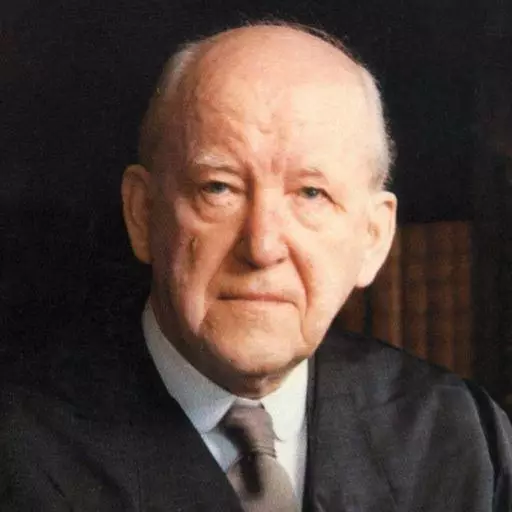
Dr. Martyn Lloyd-Jones: I would like to call your attention once more to the words which are to be found in Paul's Epistle to the Ephesians, in the second chapter, verses 20, 21, and 22. Verses 20, 21, and 22, in the second chapter of Paul's Epistle to the Ephesians.
"And are built upon the foundation of the apostles and prophets. Jesus Christ Himself being the chief corner stone. In whom all the building fitly framed together, groweth into an holy temple in the Lord. In whom ye also are builded together, for an habitation of God through the Spirit."
Now here you remember, the Apostle is giving us his third picture of Christian people. He's thinking especially of these Ephesians, who once upon a time, were pagans, were aliens from the commonwealth of Israel and strangers from the covenants of promise, were without hope, without God in the world.
But he says in verse 19, "Now therefore ye are no more strangers and foreigners, but fellow citizens with the saints, of the household, and of the household of God." "And are built upon the foundation of the apostles and prophets." In other words, as we've been seeing, the Apostle uses three pictures here to describe the Christian church. The character, the nature of the Christian church, and therefore, the privilege of our position as Christians as members of the church.
Now at the moment, we are engaged in studying this third picture, in which he says that the church is a kind of building, a great temple, in which God dwells and is yet going to dwell in a still larger and fuller manner.
Now we've looked at this picture in general. Whenever you're examining or looking at a building, you take a general glance always first. Before you come to details, you want a general impression of the whole edifice. We've done that.
But we have noticed that the Apostle doesn't merely give us a general description of this building. He tells us in detail something about the plans and the specifications which were observed and must always be observed in the erection and building of such an edifice.
We started therefore, of necessity with the foundation, the thing the Apostle starts with. We are built upon the foundation of the apostles and prophets. Jesus Christ Himself being the chief corner stone.
Then having looked at that, we came last Sunday morning to the next thing he tells us. And here of course, we are coming more directly to a consideration of ourselves, and that which is true of us. And we saw that he says that there are certain things which we must always keep in our minds, that as stones in this building, we are all related to the foundation.
We are all related to the Lord Jesus Christ. We are all related to truth. But, and this is the thing that he seems to emphasize most of all, we are all also related to one another. In other words, the important phrase here is this word which has been translated by three words, "fitly framed together."
Now then that's the word that we've got to take hold of again. There are all these individual stones in this wall, in these walls that are going up and they're all "fitly framed together." I mustn't go over that again, but I sure, I did show last Sunday morning how the Apostle used one word, which is rarely three words put into one, in order to bring out this important truth.
And we said that what he teaches therefore, is this: That in this building and in our finding ourselves as stones in this building, there is an element of choice. There is an element of choice and rejection. The master builder takes hold of a stone, finds it isn't suitable, he rejects it. But then he chooses some and puts them there. But that also reminded us of this.
That we are not all absolutely identical. We are all in the same building. We are all on the same foundation. We are all in the same relationship to Christ. But we are not bricks, we are stones. There is not a dull, drab uniformity in the church. All Christians are not meant to be identical in every respect with others. No, no. As the Apostle proves at greater length in 1 Corinthians 12, like the members of a body differ tremendously from one another, so do members of the church. But they're all parts of the same body and they have different functions to serve.
Therefore, we must be careful always to note that point. It is a characteristic of cults that all the devotees of cults tend to be the same always. That is not a characteristic of the Christian church. There is diversity in unity. It is one of the greatest glories of the church. And at a time like this, when there is so much talk about union and unity, it is of vital importance that we should bear that principle in mind.
Then we ended off with this point. That obviously all these stones need to be prepared before they are placed in position in the wall. They are obtained from the quarry, but they are not right as they are. If they're to fitly framed, to be fitly framed together, if they're to fit into one another and therefore do their work. Well, they need a certain amount of preparation. And we dealt with that up to a point at the end last Sunday morning.
But now we continue with that particular theme. Now let me indicate this. All these things are pictures. And obviously, therefore, any one picture cannot contain the whole truth. That is why the Apostle you see, has to use three different pictures here. No no one of them is sufficient in and of itself.
So that in dealing with this preparation last Sunday morning, I indicated that a certain amount of preparation was necessary beforehand, and also that in a sense, the preparation always continues. That is a sort of paradox which you find in the New Testament about the church.
On the one hand, we are given the impression that God already dwells in the church, and He does. And yet there is this other idea that the church is still being built for an habitation. Into which He is going to come to dwell when it has been completed. So that therefore, while in a sense, we are already prepared, we still need this process. But there are other illustrations which are used in order to bring that out.
Now then, let us come back to this great question of how exactly these stones are put into the building. In whom ye also are builted together, says Paul for an habitation of God. You Ephesians, he says, yes, you've been brought into this building, you are parts of the fabric now. You are parts of this great temple that is being built in the Lord for an habitation of God through the Spirit.
Now, a very important question for our consideration is this, when does this preparation take place? Now I say that we've got to remember that primarily and most essentially, this preparation takes place before we are ever in the church at all. We can never be parts of this edifice. We can never be stones in these walls without our being already prepared.
Now let us go back therefore to that verse which I read in the reading at the beginning last Sunday, but which I had no time to expand. I'm going to read to you 1 Kings 6:7. The seventh verse in the sixth chapter of the First Book of Kings. Listen to this:
"And the house when it was in building, was built of stone made ready before it was brought thither. So that there was neither hammer, nor axe, nor any tool of iron heard in the house, while it was in building." Now that is a part of the account of the building of Solomon's Temple. It's a very important bit of history, this.
There it is in that First Book of Kings. Indeed, as we are studying this particular section, it is of great importance that we should go back to the Old Testament and read there about the building of the Tabernacle in the wilderness and also the building of Solomon's Temple in Jerusalem. There is no doubt at all that the Apostle Paul here had those very pictures in his mind. And it is equally clear that what is instructed with regard to the building of the old temple has relevance to what we are considering at this moment.
You remember how, when God instructed Moses to build the tabernacle, He took him up into a mountain and He gave him detailed instructions. God didn't just say to Moses, now I want you to build a tabernacle for me in which my presence can dwell, in which my Shekinah glory can appear. No, no. He gave him detailed measurements. He told him the color of the material. Everything was given in detail and then having given him the plans and specifications, God said to Moses, "See, that thou make all things according to the pattern shown thee in the mount."
And exactly the same thing happened with Solomon. Therefore I say, it is important for us to bear this in mind. It has a very deep significance. Listen to it again. "And the house when it was in building, was built of stone, made ready before it was brought thither. So that there was neither hammer, nor axe, nor any tool of iron heard in the house, while it was in building."
Now there I say is very important doctrine. And it's a vital part of the exposition of this statement of the Apostle here with regard to the nature of the Christian church. What's it mean? Well, the first principle it seems to me is this: There is a secret aspect of this work. This preparation is done in secret.
There were people there undoubtedly in Jerusalem watching the building and the erection of the temple. But they didn't see the preparation of the stones. That was something that had been done before the stones were brought to Jerusalem at all and put into their positions in the wall.
Now here of course, is a great New Testament principle. Before any of us can be truly members of the Christian church, and you see the importance of distinguishing here between the mere having of our names upon a church roll and really being members of Christ and of His church. Before any of us can be truly in the church, a mighty work of preparation is essential.
It is a work that is done by the Holy Spirit. And it is done in the depths of the soul. And it is indeed a very mysterious work, and a very secret work. The world knows nothing about it. Like the people in Jerusalem knew nothing about the preparation of these stones, so the world knows nothing at all about this.
I mean by that, that it's possible for us to be working in an office with people, are even living in the same home with people. And this mighty work of preparation is going on and they know nothing about it. It isn't something done externally, outwardly, superficially. It's a work that is done in the vitals of the soul.
The Apostle in writing to the Corinthians, puts it like this, that we are epistles of Christ written not with ink, not upon, and not upon tablets of stone, but written, he says, with the spirit of the living God upon the fleshy tables of the heart.
That's it. It's an internal work, a mysterious work, which goes on in that part of man which is called the soul. Now you remember a famous anatomist scuffing a few years ago about the soul. He said that he dissected so many bodies in the dissecting room, but he'd never come across an organ called the soul. Of course he hadn't. That's one of the secret things that a mere anatomist cannot understand. Still less could he understand the work of the spirit therefore in the soul.
You know, my friends, this work is a secret as this that the man himself on whom the work's being done, sometimes doesn't know what's happening. The spirit of God deals with us sometime before we come to a realization of what is happening. All we know is that we are being caused to ask various questions which we've never asked before.
All we know is that we suddenly become dissatisfied with ourselves and with our lives, and we don't know why. Somebody else may say that we are not well, perhaps, we ought to go and see a doctor, we may agree. We may think that we're tired. It's a mysterious work.
New interests seem to arise. New longings and desires and aspirations and we say, what is this? I don't understand myself. Something seems to be happening to me. I'm not as I was. What is it? Things are just dropping off as it were. And we don't know, we are ignorant of this secret work of the spirit. But it's there and it's a part of the preparation. The work was done before the stones were brought to Jerusalem. Not there, but there. Before they were brought thither.
I mustn't stay with this, but you remember how our Lord put it once and forever in speaking to Nicodemus, who completely failed at that point to understand this doctrine. How can a man be born again when he is old, says Nicodemus, can he enter for the second time into his mother's womb and be born? I don't understand.
Quite right, said our Lord in effect, "the wind bloweth where it listeth. Thou seest it not, thou canst not tell whence it cometh, nor whither it goeth. So is everyone that is born of the Spirit." You see the result. You don't see how it happens. You don't understand. Thou canst not tell whence it cometh, nor whither it goeth. It's unseen, it's invisible. But you see the effects, the results, the finished product. So is everyone that is born of the Spirit.
In other words, I lay it down as a fundamental proposition. And it's most important to emphasize it today, because there's such grievous misunderstanding about this. To become a Christian means that we are subjected to a power and to a force that is beyond our understanding. Now don't misunderstand that, that does not mean to say that Christianity is irrational.
What it means is that it is supra-rational, supra-rational, if you like. No, no, there is nothing, and I delight in this and often expand this. There is nothing once you're inside it that is so rational, so logical as you have an illustration here in this Epistle to the Ephesians, as the Christian faith. But if you're outside it, you don't understand it. There seems to be something mysterious and almost odd.
Why? Well, because it's God's work. Because it is the direct action of the eternal. He's no longer acting through the laws of nature. He's acting directly. He is acting immediately.
Well, let me again call upon the great Apostle to expand himself. He puts it like this in the First Epistle to the Corinthians and in the second chapter. He says that when the Lord Jesus Christ was in this world, the princes of this world didn't recognize Him. He says, "For had they known Him, they would not have crucified the Lord of glory." They saw but a man, but a carpenter of Nazareth, they said, who is this fellow? They were rather amazed at his knowledge and his learning, but they didn't fathom, they didn't understand. They didn't know He was the Son of God.
But the Apostle says, "The spirit hath revealed them unto us. The spirit which searcheth all things, yea, the deep things of God." He goes on, "For we have received not the spirit that is of the world, but the spirit that is of God, that we may know the things that are freely given to us of God."
He says, "The natural mind receiveth not the things of the spirit of God, for they are foolishness unto him. Neither can he because they are spiritually discerned." He then adds this. He says, "He that is spiritual, that's the spiritual man, judgeth all things. Yet he himself is judged of no men."
In other words, by definition, a Christian should be a problem and an enigma to every person who's not a Christian. And you see, my friends, how important this is as a test for all of us this morning. If a man who's not a Christian can understand you quite well and all that you do and all you say, well, to that extent, I say you're not a Christian.
The Son of God when He was in this world was a great problem to people, they said, who is this? He's an ordinary man. He's never been trained as a Pharisee. He's not one of the scribes. He's not a priest. He's never had the learning and the teaching. Get, look at Him. Listen to what He's saying, He seems to know. Look at His miracles. Who is this? He was a problem and a puzzle to them.
And you remember in the early chapters of the Book of Acts, we are so told, the same was true of His followers. Peter and John healed a man at the beautiful gate of the temple. And they couldn't understand it, they put them on trial. And this is all they could say about them, that these men have been with Jesus. That's all they knew. Ignorant men, unlearned men, yet filled with power. What is this?
Well, that is this secret aspect of this work, this preparation. The Christian because he is one who's been formed and fashioned by the Holy Spirit, is a man whom no one can understand except another Christian. Here it is, I say, not irrational, but beyond reason. Confirming that profound dictum of Blaise Pascal, the supreme achievement
Featured Offer

Find peace and comfort this season with your complimentary guide that includes access to 6 free bonus sermons on overcoming spiritual depression from Dr. Martyn Lloyd-Jones, one of the church’s most beloved Bible teachers. Topics include: true Christians can and do struggle with depression, recovering the joy of your salvation, dealing with crippling guilt over past sins, dealing with yesterday’s haunting regrets, encouragement to keep moving forward, and understanding God’s purpose for suffering.
Past Episodes
This ministry does not have any series.
Featured Offer
Find peace and comfort this season with your complimentary guide that includes access to 6 free bonus sermons on overcoming spiritual depression from Dr. Martyn Lloyd-Jones, one of the church’s most beloved Bible teachers. Topics include: true Christians can and do struggle with depression, recovering the joy of your salvation, dealing with crippling guilt over past sins, dealing with yesterday’s haunting regrets, encouragement to keep moving forward, and understanding God’s purpose for suffering.
About From the MLJ Archive
From the MLJ Archive is the Oneplace.com hosted ministry of the MLJ Trust. Our mission is to promulgate the audio ministry of Dr. Martyn Lloyd-Jones.
About Dr. Martyn Lloyd-Jones
Contact From the MLJ Archive with Dr. Martyn Lloyd-Jones
info@mljtrust.org
http://www.mljtrust.org/
PO Box 953
Middleburg, VA 20118