
The Greatness of His Power


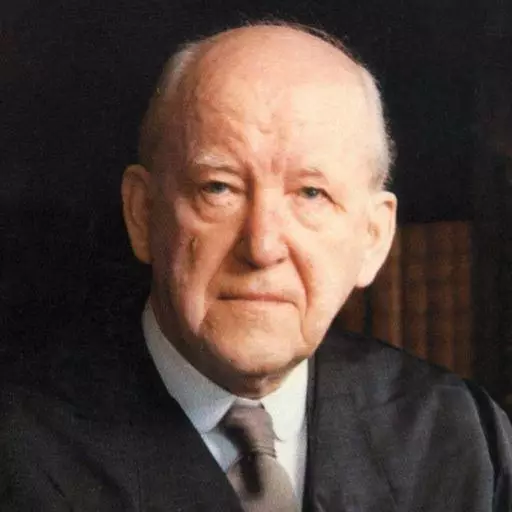
Are Christians guilty of underestimating the need for God’s power? At first it may sound like a silly question. After all, any Christian will rightly affirm their daily need of God’s power. But while Christians may correctly affirm the continual need of God’s power in their lives, many times they will assume initial belief in the gospel is easy. Conversations among some Christians often assume anybody who wants to believe the gospel can do so. In this sermon on the greatness of God’s power from Ephesians 1:19–20 titled “The Greatness of His Power,” Dr. Martyn Lloyd-Jones says this is a grave mistake. To do so tragically misunderstands the need for God’s power to believe. It misunderstands the consequences of sin and the power of the new birth. With its darkened mind, proud heart, and deadly prejudices against the gospel, humanity must experience regeneration if there is any chance of coming to faith in Christ. Do unregenerate people need God’s power? Given these theological truths, it is foolish to think otherwise. Listen as Dr. Lloyd-Jones expands on this topic and explains the desperate need of God’s grace.
Dr. Martyn Lloyd-Jones: I should like to call your attention this morning to the words that are to be found in Paul's Epistle to the Ephesians, the first chapter, reading verses 19 and 20. Verses 19 and 20 in the first chapter of Paul's Epistle to the Ephesians: "And what is the exceeding greatness of his power to usward who believe, according to the working of his mighty power, which he wrought in Christ, when he raised him from the dead, and set him at his own right hand in the heavenly places."
Perhaps again we'd better remind ourselves of the full context. The apostle is here telling these Ephesians of his prayers for them. He first of all tells them that he ceases not to give thanks for them, making mention of you in my prayers, that the God of our Lord Jesus Christ, the Father of glory, may give unto you the spirit of wisdom and revelation in the knowledge of him. The eyes of your understanding being enlightened, that you may know one: what is the hope of his calling; two: and what the riches of the glory of his inheritance in the saints; and three: and what is the exceeding greatness of his power to usward who believe, according to the working of his mighty power, which he wrought in Christ, when he raised him from the dead, and set him at his own right hand in the heavenly places, far above all principality and power and might and dominion, and every name that is named, not only in this world but also in that which is to come, and so on.
Now, we've been looking at this great prayer for a number of Sunday mornings in working through this first great chapter of this epistle. And we began last Sunday morning on a consideration of this third thing which the great apostle is so anxious for these Ephesians to know. He prays that the Holy Spirit may open the eyes of their understanding. They won't know anything apart from that. That is always necessary from the beginning to the end of the Christian life. We cannot know these things apart from the enlightenment, the anointing, and the unction which the Holy Ghost alone can give us. So the apostle starts by praying for that in order that they may come to know these three great and all-important things.
What is the hope of his calling? To know for certain that I am a child of God, that I am an heir of God and a joint heir with Christ. I must be sure of my hope. Then secondly, I must know about the inheritance to which I'm going, this amazing inheritance, the riches of the glory of God's inheritance in the saints. I must experience something of the foretaste of that. He's already been dealing with this in talking about the Spirit as the earnest of our inheritance, but he wants us to know more about it and from a study of the Scriptures and the truth to see the promised land more and more clearly. Nothing is so strengthening to faith as that. Nothing so enables one to go through this earthly life and pilgrimage as that.
And then we come to this third thing: the exceeding greatness of his power in us who believe, and so on. Now, I would remind you again that we emphasized last Sunday morning that it is most important that we should realize that the apostle here is not praying that the Ephesians may have more power. That isn't the prayer at all. He is not asking God to give them more power. What he's praying for is that they may come to know the power of God that is already working in them. You see a very different thing. We need power certainly, and power is offered us and power is given us. But what the apostle is praying for here, this is his peculiar petition, is that they may know the exceeding greatness of his power in us that believe.
And then you remember he goes on to describe it. We've already dealt with his description of it. We've taken these words one by one: the exceeding, the surpassing greatness of his power. His superlatives were exhausted. He piles them one on top of another, and still it isn't enough. So he goes on to talk about the working of his mighty power, the energy of the strength of his might. That's the power. Now, we looked at that last Sunday morning. This energy, this strength of God's might is effectively and effectually working in us who are Christians. And the thing that the apostle prays for is that we may come to know that, that we may understand that, we may be fully aware of it.
But we can't leave it at that because the apostle doesn't leave it at that. In other words, he's not concerned only that we may come to know something about this in general. He is anxious that we should know this in our own particular cases and in our experiences here and now. Obviously, he was writing a pastoral letter. He wants to help these people. He wants them to enjoy the Christian life. He wants them to be excellent and fine advertisements of the Christian faith. So he's praying that they may know this here and now. Very well, how can we come to know this great power of God that is working in us?
Well, the first step, it seems to me, is that we should be perfectly clear in our minds as to what exactly the apostle is saying and that to which exactly he is referring. He wants us to know this exceeding great power of God in us. Well, in what respect? There are those who say that what the apostle had in his mind here was simply our future resurrection and that he was concerned about nothing else. That he was more or less saying this to them: "Very well, I've established the fact that you're heirs. I've given you a glimpse of that inheritance to which you're going. And now I want you to know that not even death itself can rob you of that because there is power in God which will enable him to raise you from the dead even as he raised his own son from the dead."
And they say that that is all. That the apostle here is simply praying that these Ephesians may know this power of God in the resurrection which will raise them up at the last day and therefore take them to heaven and to glory. Now, this is obviously a very vital and a very serious question. Is the apostle only referring to that or not? I want to try to establish this morning that he is not only referring to that. He includes that. It comes in. But I want to try to show you that he is referring not only to that climactic event in the experience and the life of the Christian, but that he is referring to the whole of the Christian life from the very beginning right until the very end.
That what the apostle is concerned about here is to show that it is the power of God that leads to the whole of the Christian life—not only that great event, but even the beginning, the believing, everything in connection with the Christian life. That indeed we are not Christians at all apart from the power of God. Now, there are many ways I think in which we can establish this point. For one thing, it would seem rather odd, would it not, that the apostle should be praying with such urgency that these Ephesians might be confident about their final resurrection? It doesn't seem to be a very appropriate thing to do for people whom he was anxious to encourage at that moment.
But there is further evidence which goes well beyond that. The important statement, the important words here are these words translated "according to." You notice, "And what is the exceeding greatness of his power to usward who believe, according to the working of his mighty power, which he wrought in Christ when he raised him from the dead." Now, the whole question is what exactly is the significance of those two words, "according to"? Do they have reference to the believing that has just gone before, or has he as it were paused after saying "to usward who believe" and then go on to say "according to the working of his mighty power which he wrought in Christ"?
What is the meaning of "according to"? Well, let me give you the answer to that question that is given in an authoritative lexicon like the great Grimm-Thayer Lexicon. It says that "according to" really means "in consequence of," "by virtue of," or if you prefer it, "through," "on account of," "from," "owing to." Those are the words that it offers at this particular point as a better translation than "according to." And undoubtedly this is right, so that we might read this: "And what is the exceeding greatness of his power in us who believe in consequence of, in virtue of, his, the working of his mighty power, the energy of the strength of his might."
In other words, it is an account of how we believe. That we believe in virtue of his power. We believe in consequence of his power. We believe through, on account of, owing to, from his power. Now, lest someone may think that we're relying only upon a lexicon, let me show you some of the parallel statements and passages where the same word is used in exactly the same way. There are quite a number of them in this first chapter of this Epistle to the Ephesians.
The first, for instance, is in the fifth verse where we read this: "Having predestinated us unto the adoption of children by Jesus Christ to himself, according to the good pleasure of his will." The same exactly. In virtue of, obviously, as a consequence of the good pleasure of his own will. Or take it in verse seven: "In whom we have redemption through his blood, the forgiveness of sins, according to the riches of his grace." In virtue of, as the result of, in consequence of the riches of his grace.
Or in verse nine you've got it: "Having made known unto us the mystery of his will, according to his good pleasure." You see, it's all the result of this, in consequence of, by virtue of. And it's the same in verse 11: "In whom also we have obtained an inheritance, being predestinated according to the purpose of him who worketh all things after the counsel of his own will." But let us look at some other examples. This is such a crucial point that I don't apologize for spending so much time on the mechanics of the interpretation this morning. Take the third chapter, verse seven. The apostle is referring to the gospel of Christ.
Then he goes on: "Whereof I was made a minister, according to the gift of the grace of God given unto me by the effectual working of his power." Now, there is a sense in which "according to" there is almost meaningless. It really—he was made a minister by virtue of, as a consequence of the gift of the grace of God. It was the thing that produced it. It was the cause of it. So you see, it's very specific. But take verse 11 again. He says in verse 10, "To the intent that now unto the principalities and powers in heavenly places might be made known by the church the manifold wisdom of God, according to the eternal purpose which he purposed in Christ Jesus our Lord."
Then in verse 16, he prays that God "would grant you, according to the riches of his glory," still the same thing you see as before. And then take verse 20: "Now unto him that is able to do exceeding abundantly above all that we ask or think, according to the power that worketh in us." It means by virtue of, it means in consequence of, and it can carry no other meaning whatsoever. Now, it's exactly the same word used in exactly the same way in all these cases.
Indeed, I have quite a long list here, but I mustn't weary with many more. Take one more in the Epistle to the Ephesians, the first chapter and the 20th verse. The apostle says, "I know that this shall turn to my salvation through your prayer, and the supply of the Spirit of Jesus Christ according to my earnest expectation and my hope," etc. And then perhaps the most striking of all, the one I really had in my mind is the one at the end of the third chapter of Philippians. Paul says, "Our conversation is in heaven, from whence also we look for the Savior, the Lord Jesus Christ, who shall change this our vile body, that it may be fashioned like unto his glorious body, according to the working whereby he is able even to subdue all things unto himself."
Now, there is a sense in which this "according to" doesn't really tell us very much. But if we read it "by virtue of the working" or "in consequence of the working," "as the result of the working," well, then of course the meaning opens out very perfectly to us. Well, there are large numbers of other illustrations. If some of you are interested to turn it up, let me give you the list. You'll find it in Philippians 4:19, in the first chapter of Colossians, verses 11 and 29, in the Second Epistle to the Thessalonians, the first chapter and the 12th verse, the second chapter of Thessalonians, verse nine, 2 Timothy 1:8, Titus 1:3, Hebrews 2:4, 1 Peter 1:3, 2 Peter 3:15.
Now, I've adduced all this evidence in order that we may establish this point beyond any question whatsoever. The apostle here is really dealing with the Christian life from beginning to end. And what he really says here is this: that we may know the exceeding greatness of his power in us who believe by virtue of his, the working of his mighty power. Our very believing is the result of this power of God. The whole of the Christian life, not only the resurrection which is in a sense the end, but the beginning. We are not Christians at all and can't be Christians apart from this mighty working of this power of God.
But of course, there is a sense in which I need not base my exposition upon the meaning of words and grammar and so on and analogies in Scripture. The very passage that we're dealing with does it itself. You remember that I indicated last week that the apostle, in praying for this, goes on with this same theme right into the second chapter. But he interrupts himself because in illustrating this power in the matter of God raising our Lord from the dead, he went off into a digression. He describes him as set in the heavenly places far above all principality and power and says that God has given him as head to the church over all things and that the church is his body, the fullness of him that filleth all in all. And then he, as it were, recollects himself and comes back to it: "And you hath he quickened, who were dead in trespasses and sins."
Wherein in time past you walked. That's what you were. But God, who is rich in mercy, for his great love wherewith he loved us, even when we were dead in sins, hath quickened us together with him. That's the manifestation of the power. So that the apostle is not talking about the resurrection that is to come. He's talking about a resurrection, a spiritual resurrection that has already taken place. He's talking about us as believers, and we are believers because this power of God has already worked in us in that way.
So you see, from every standpoint, from that of grammar and of language and of context and everything else, the apostle clearly here is concerned that we may know the exceeding greatness of this power from the very beginning to the very end of the Christian life. It is all the power of God, even our initial believing. Now, the question therefore arises whether we all are aware of that and whether we all do know that, whether we all realize that. I ask my question for this reason: we all of us tend to betray what we really believe about these matters in our common talk and speech. There's a very simple way to show and to prove whether we realize this or not. If we do know this thing about which the apostle is praying, well, then we shall always give the impression that we are very surprised at the fact that we are Christians at all.
It'll come out in our praise, in our thanksgiving. It'll come out in this sense of wonder, love, and praise and astonishment in our ascribing everything to God and claiming nothing for ourselves. We shall be as the apostle says in writing to the Corinthians, "him that glorieth let him glory in the Lord," from beginning to end and in every respect in all parts of his great salvation. But the question is: do we realize this? Do we realize that our very believing the gospel is by virtue of the power of God that worketh in us? Do we know that? I go on asking my question because there is surely a tendency today to talk in a very superficial manner about believing as if believing were something which is very easy and which any man can do if he's supposed to do so, if he's disposed to do so.
How lightly and glibly we talk about believing in the Lord Jesus Christ or about believing the gospel. It seems today to be the simplest thing in the world to get people to believe and for people to believe. They say "yes" to it. Believing is something extremely simple. There is a great deal of talk about our need of power after we have become Christians. But how rarely does one hear anything at all about the need of power before we become Christians. The impression seems to be that a man believes and decides to believe, and that having done that, he needs tremendous power to continue in the Christian life.
But one never hears it suggested that perhaps one needs exactly the same power in order to enter the Christian life and that without it one simply cannot enter the Christian life at all. Now, I think you'll agree with me that that is the present tendency. There is this tremendous emphasis upon believing and decision. And it is suggested that anybody who wants to do so can do so, that it's simply for a man to decide and if he does, well, he can do it. Believing is apparently something that is easy.
Now, why is this? Why have we got this idea of believing? It seems to me that there are two main answers to that question. The first is that it is due to an appalling failure on our part to realize the consequences of sin and of the Fall of man. It is, I say, our complete failure to understand the devastating effect that the Fall of Adam has had upon the entire human race. That's one thing. The second is our failure to realize what is involved in what we describe as the new birth or regeneration. Our failure to realize the greatness of the change that is described in those terms and what is included in them and why regeneration is ever necessary.
Now, it seems to me, and I hope to establish this, that that is the cause of our glib use of the word "believe." Our tendency to say that the natural man can believe, but having believed, he needs tremendous power. He doesn't need any help in believing as it were, but afterwards, well, he needs great power and God will give it to him. Now, there is no excuse for this, it seems to me, at all because the biblical teaching about the natural man should always have kept us straight in this respect. You've got it in the Old Testament as well as in the New Testament.
Can the Ethiopian change his skin or the leopard his spots? Surely that ought to have been enough alone. Leave alone those great statements that we read at the beginning out of Paul's first Epistle to the Corinthians, chapters one and two. The natural man receiveth not the things of the Spirit of God, for they are foolishness unto him, neither can he, for they are spiritually discerned. And all this talk about the gospel being foolishness unto the natural man at his very best and at his very highest.
Very well then, I want to try to show you that the apostle Paul is here teaching that the fact that anybody at all believes the gospel is a great miracle which can only be explained adequately in terms of this surpassing greatness of the power of God. That it takes the energy of the strength of God's might to bring anyone to believe the Christian gospel and to accept the Christian faith. We believe by virtue of this tremendous power.
Now, let me put it to you like this. Let us look for a moment this morning at some of the things that have to be overcome before any one of us can become a believer. Oh, what a tremendous thing it is to be a believer. I'm not talking about giving a glib intellectual assent to a number of propositions. That isn't what the New Testament means by believing. Paul equates believing here with being born again, as does the apostle John in his first epistle. The true believer is a man who's born again. He isn't a man who just says "yes" and may tomorrow say "no." No, no. Believer is one of these great comprehensive terms. The exceeding greatness of his power to usward who believe. There is no exceeding greatness of his power to them who don't believe. It's only to believers. It's only to those who have been raised from that death in trespasses and sins.
Well, now let's try to consider some of the obstacles that have to be overcome. Why should this power of God be necessary before any man can believe? Well, I'll try to answer that by reminding you of some of the effects of the Fall and of sin upon the human race. What has the Fall done to the mind of man? Here is a man, you see, born in sin, shapen in iniquity, born a child of wrath even as others. And here he is in a world where the gospel is preached by the Christian church. What—what is the relationship of that message to that man? Well, this is what the Scripture tells me about him. It tells me that his understanding is darkened.
His mind is in a state of darkness as the result of sin. Now, let's be quite clear about that. It doesn't merely mean that he's ignorant. He is actually ignorant. He doesn't know the gospel as it is. It's very difficult to discover what the gospel really is in this world. This man is in darkness in that respect. Yes, but not only in that respect. There's something infinitely worse than that. Even though you may put the gospel before him, he can't see it. If our gospel be hid, it is hid to them that are lost in whom the god of this world hath blinded the minds of them that believe not.
There is a veil over their hearts as the apostle about the unbelieving Jews. You put the gospel before them, they don't see it. Why? The veil, the darkness, the blindness, the opacity in the eyes. They can't see. That's why he's already been praying that they might have the spirit of wisdom and revelation in the knowledge of him. You see, merely to put the gospel before a man isn't enough. Something must be done in the man. The Spirit in the word, yes, but the Spirit in the man also, and without it he doesn't see it. Well, let me quote it again. These things, says Paul in that section of 1 Corinthians, are spiritually discerned. The natural man cannot receive them. They're foolishness unto him. He doesn't know. He's not interested. His very faculties of understanding is impaired.
His ability to appreciate spiritual truth has gone. When man fell, that is what happened to him, and nothing less than that. He was not only separated from God, but his spiritual faculty itself was impaired. His mind is dark and dim. His whole understanding is darkened. He lacks the ability and the capacity. That's the apostolic teaching. But that isn't the end of the story as regards this man's mind. He lives in a world where false views are taught. They're recommended by great names. They're loudly advertised. And he is a man of the world and a child of his age. He's entirely prejudiced on that side. All this is ridiculed. It's analyzed and criticized and derided and dismissed.
So that not only is this man a man who has a darkened mind and understanding and who lacks a spiritual faculty and apprehension, but all the prejudice of the life of the world round and about him is dead against it. And it has a tremendous effect upon man. I mustn't weary you nor keep you in elaborating this. We all know the tendency of everybody to believe what they read in newspapers. They still do it. It's an astonishing fact, but it is a fact that people still believe what they see in a newspaper. They're proved to be wrong almost every day on details, political details, facts, yet people still, "I saw it in the paper. It must be right." And they'll even believe what they read in an article. There is this curious tendency to accept anything in a paper or in a book, and especially if it can be said that all the leading people believe it, and all the scientists are saying it. All this comes and presses upon a man's mind. Such is the mind of this man who is confronted by the gospel.
And yet we are given the impression that to believe the gospel is a very simple and an easy thing, something that a man can do if he decides to do it. But wait a minute, there's something much worse than this. Consider the state of his heart. What does the gospel tell—what does the Bible tell us about the man's heart as the result of the Fall and of sin? The first thing it tells us about it is that man as the result of the Fall is proud. Pride. You notice how the apostle Paul generally plays with this word "boasting," translated often "glorying" in our authorized version. "God forbid that I should glory. God forbid that I should boast."
There is nothing that is so characteristic of man as his boasting, his glorying, his pride, and especially his pride of intellect. That is the last citadel. Man is ultimately proud above everything else of his own intellect. Of course, that's very easy to understand. It is man's crowning gift. It is the thing that separates him most of all from the animals: his mind, his reason, his capacity to think and to look objectively at himself. So it's not surprising that man in sin should be especially proud of his intellect, the wise and prudent.
We have the authority of our Lord himself for saying that of all men, they are the ones who find it most difficult to believe because they're wise and prudent. He says, "I thank thee, oh Father, Lord of heaven and earth, because thou hast hid these things from the wise and prudent and hast revealed them unto babes. Even so, Father, for so it seemeth good in thy sight." It is he again who says, "except ye be converted and become as little children, ye shall in no wise enter into the kingdom of heaven." Why this demand for childlikeness? Well, it's because of pride of intellect.
You see, the natural man always has a feeling that to become a Christian means to become a fool, that you've gone soft, that you've become emotional, that you've jettisoned your intellect, you've abandoned your logic. The idea is that if you still believe this, this old story, you're not abreast with the times. You're not a reader, you're not a thinker, you're not cultured. Isn't that it? And it works on man's pride, his pride of intellect and understanding. He's not going to be regarded a fool. He wants to be abreast of the times. He's always up to date. Pride, that's the heart of man.
But it isn't only the only thing that's true of the heart of man as the result of the Fall. We are also told that it's hard. Which I take it means something like this: that man not only is in this state of sin, but he delights in it, and he glories in that which is false. The wrath of God, says Paul to the Romans, is revealed from heaven against all ungodliness and unrighteousness of men who hold down the truth in unrighteousness. And they do. They deliberately hold it down because their hearts, their hearts are hardened.
If they come under a certain amount of conviction, they try to stifle it. They stamp on it. They argue against it. They'll invent arguments against it. They'll put up camouflage and all kinds of resistance. The force of truth they resist with all their might and main. Why? Well, because their hearts are hardened. It's a consequence of sin, and it's true of all of us. And then let me go on to something else. Those of us who attend on Sunday evenings and who realize that an evangelistic service has a great deal to say even to believers, we remember that Jeremiah says in the 17th chapter of his prophecy in verse 9: "The heart is deceitful above all things and desperately wicked."
Which we interpreted a few Sunday nights ago to mean something like this: that man in sin is always fooling himself. And in a sense, he can't help it because his very heart is deceitful. It's twisted. There's a mechanism in the heart protecting a man against his own best judgments at times. This process of rationalizing our sins and explaining away what we've done, of pretending to ourselves that we're better than we really are, and that if we do a certain amount of good, it somehow balances the evil that we've done. The deceitfulness of the heart that imagines that God can be bought by an offering as the Jews imagined in the time of Jeremiah. The deceitfulness, and oh how deceitful are our hearts, how utterly dishonest, how we all put on appearances, and we know in a sense we're doing it, and yet we do it.
But not only is it deceitful above all things, it is desperately wicked. Desperately wicked. Yes, that's true of the most respectable person that's ever been born. It's true of persons who may be highly religious. What's it mean? Well, there's an evil principle within us. Lust, the law of our members, delighting in sin. This is the condemnation that the light is come, but men love darkness rather than light because their deeds were evil. Men rejoice in iniquity. They not only do these things, says Paul in the first chapter of Romans, but they take pleasure in them that do them. They write about them, they joke about them, they talk to one another about them, they boast about their evil doing. They love it. They gloat in it. It's desperately wicked.
That's a part of the description of the natural unregenerate heart. That's man in sin as the result of the Fall. That's the person to whom this gospel comes with its talk about holiness and light and truth and God, and asks him to forsake the world and sin. It comes to such a man, and I'm told that it's an easy thing for him to believe. Oh, how can I, whose native sphere is dark, whose mind is dim, before the ineffable appear and on my naked spirit bear that uncreated beam?
But wait, there is still one other thing I must mention. The heart of man according to the Scriptures, as the result of the Fall and of sin, is guilty even of this: it hates God. It isn't merely that with a kind of intellectual detachment it doesn't believe the Bible and doesn't believe the revelation about God. No, no, it hates God. The natural mind is enmity against God, is not subject to the law of God, neither indeed can be. And there is no question at all about the truth of the assertion. We are all alienated from the life of God, says Paul in the fourth chapter of this very epistle. Why?
Well, it is because God is so utterly and entirely different from what we are and from what we like. So here is the position of man in sin: his spiritual faculty darkened, his mind darkened, the veil is there, the prejudice of the world, his own heart desperately wicked and deceitful, hardened, proud, implacable, but above all, I say, an active hatred of God, an enmity against God. And how obvious it is in this modern world. How ready men are to believe any theory that'll explain away creation. They'll believe the utter nonsense of evolution which is so thoroughly discredited intellectually today. They still hold on to it. Why? Well, it's against God. You see it constantly, I say, not only in the newspapers but even in learned works. This natural hatred and enmity of man in sin against the Lord God Almighty. Oh how he wishes he could get rid of him and remove him and explain the cosmos without him. He's been doing it for a hundred years with all his might and main. The enmity, the hatred of God.
The mind, the heart, and likewise the very will of man is paralyzed. There's a defect even in the will. Sin has affected the whole of man. Oh, my friends, our failure is due to the failure to realize what happened at the Fall. This devastating effect, this wrecking of God's image, this defacing of it in the mind and in the heart and in the will. Well, if you believe all that I've put before you as the teaching of Scripture with regard to the natural man, the unregenerate man, do you still say that such a man can easily believe the gospel? Is such a person capable of believing it?
Surely there is only one answer to the question. What is the exceeding greatness of his power in us that believe by virtue of his mighty power working in us to bring one soul to believe in God and in Christ demands the exceeding greatness of the energy of the strength of God's eternal might? And without it, we are utterly and completely helpless. By the grace of God and by that alone, I am what I am. Why do I believe this gospel? Why am I not today like so many thousands? I passed hundreds of them myself coming to this service this morning. Why am I not going off in my car to the seaside or to a golf course? Why am I interested in this? Why do I believe it? I've only one answer: by the grace of God who worketh in me mightily, I believe, I am what I am. He began it, he'll continue it, he'll finish it until I stand before him perfect, entire, complete, and cast my crown before him, lost in wonder, love, and praise. Amen.
Featured Offer

Find peace and comfort this season with your complimentary guide that includes access to 6 free bonus sermons on overcoming spiritual depression from Dr. Martyn Lloyd-Jones, one of the church’s most beloved Bible teachers. Topics include: true Christians can and do struggle with depression, recovering the joy of your salvation, dealing with crippling guilt over past sins, dealing with yesterday’s haunting regrets, encouragement to keep moving forward, and understanding God’s purpose for suffering.
Past Episodes
This ministry does not have any series.
Featured Offer
Find peace and comfort this season with your complimentary guide that includes access to 6 free bonus sermons on overcoming spiritual depression from Dr. Martyn Lloyd-Jones, one of the church’s most beloved Bible teachers. Topics include: true Christians can and do struggle with depression, recovering the joy of your salvation, dealing with crippling guilt over past sins, dealing with yesterday’s haunting regrets, encouragement to keep moving forward, and understanding God’s purpose for suffering.
About From the MLJ Archive
From the MLJ Archive is the Oneplace.com hosted ministry of the MLJ Trust. Our mission is to promulgate the audio ministry of Dr. Martyn Lloyd-Jones.
About Dr. Martyn Lloyd-Jones
Contact From the MLJ Archive with Dr. Martyn Lloyd-Jones
info@mljtrust.org
http://www.mljtrust.org/
PO Box 953
Middleburg, VA 20118