
The Father of Glory


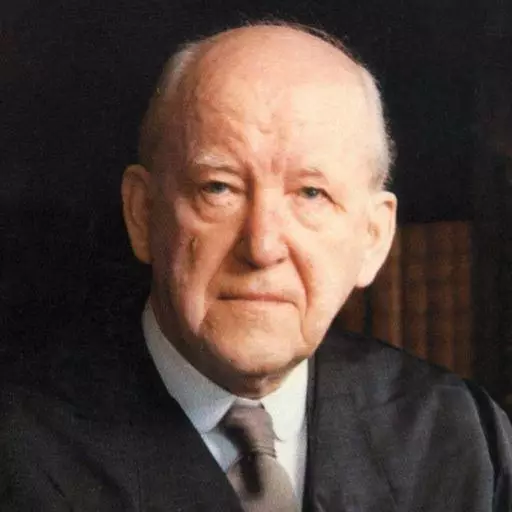
Prayer is central to every believers’ life and critical to discipleship and worship. However, Christians often feel ashamed to talk about their personal prayer life. They read books and manuals on prayer, hoping to find the perfect solution to a fickle prayer life. In this sermon on Ephesians 1:17 titled “The Father of Glory,” Dr. Martyn Lloyd-Jones argues that questions found in books on prayer often miss the point. Christians must not focus on form or saying the most beautiful words. Nor should Christians simply telegraph their petitions in a sentence or two. Instead they must remember, recollect, and pause, as the apostle Paul does, to whom they are speaking. Paul, in just one verse, notes in his prayer that he is praying to the God with whom he has a covenant relationship. The God of the incarnate Son. Not an unknown god, but the God revealed through the Lord Jesus Christ. This God is the source of all glory. He is the glorious One, who gives glory, not only to the Son, but to His people. When one remembers who they are praying to before they begin, they will, indeed, find little trouble engaging in the greatest activity any human being can do: speak to God.
Dr. Martyn Lloyd-Jones: The words to which I should like to call your attention this morning are to be found in Paul's Epistle to the Ephesians, the first chapter. I shall read verses 15, 16, and 17. Verses 15, 16, and 17 in the first chapter of Paul's Epistle to the Ephesians.
"Wherefore I also, after I heard of your faith in the Lord Jesus and love unto all the saints, cease not to give thanks for you, making mention of you in my prayers, that the God of our Lord Jesus Christ, the Father of glory, may give unto you the spirit of wisdom and revelation in the knowledge of him."
I want particularly to deal with the first part, this great statement at the beginning of verse 17, that the God of our Lord Jesus Christ, the Father of glory, may give you the spirit of wisdom and revelation in the knowledge of him.
We began a consideration last Sunday morning of this prayer of the great apostle for these members of the church at Ephesus. In the first 14 verses, he's been reminding them of the riches of God's grace, displaying it to them in all its wonder and all its amazing character.
Having ended his description, he now proceeds to apply this to them and he tells them that he thanks God for them. He's praying for them, he tells us, he tells them. He ceases not to give thanks for them, making mention of them in his prayers to God.
Now, I reminded you last Sunday morning that his prayer is divided, as all prayer always should be, into Thanksgiving and then petition. Thanksgiving, which includes generally adoration and worship, and then he proceeds to petition. That is the order in which our prayers should always be offered.
Now last Sunday morning, we dealt with his Thanksgiving. He thanks God for these Ephesians and he's got two main reasons, you remember, for doing that, namely for their faith in the Lord Jesus and their love to all the saints.
We saw how those two things constitute therefore a very delicate and real test as to whether we are Christians in truth and in fact or only in word. It is ever the characteristic of the Christian and they are the two signs and marks of the Christian which are quite infallible, that he has faith in the Lord Jesus and love toward all the saints.
Well, having done that, we go on with our consideration of this great prayer. The apostle now is approaching the question of his petition for these people. Let's observe him as he proceeds to do this. It's a great lesson, this.
There are many Christian people who are constantly in trouble over this whole question of praying. I suppose that there is no aspect of our Christian life that so frequently raises problems in people's minds as prayer. And I think that that's very right.
Prayer is, after all, the highest activity of the human soul. The greatest thing any one of us ever does is to pray. And therefore, of necessity, it is something that should present us with certain difficulties.
Any man who is privileged to preach will, I am sure, agree with me when I say that preaching is child's play when compared with praying. It's a much easier thing to preach than to pray. Because when one is preaching, one is speaking to men, but when one prays, one is speaking to God.
And God is unseen. And therefore, there are inevitable difficulties. And people are very concerned about this. They often ask questions about it and that is why you will generally find in the great periods in the history of the church that books and manuals are written on this whole question of prayer.
People say they find it difficult to concentrate. They find it difficult to know how to speak, how to form their petitions and so on. The moment you say it, you take prayer seriously. You begin to find what a tremendous thing it is. Of course, if you just mechanically say your prayers, you're not aware of any difficulties at all.
It's so simple, you just repeat the Lord's prayer and offer up your few petitions and you've prayed, you think. But my dear friend, you haven't started praying. The moment you begin to face what really happens in prayer, well then, I say you find inevitably that it is the profoundest subject that you've ever considered.
Oh, how little have we prayed. How little do we know about prayer. It's not surprising that the disciples of our Lord turned to him one afternoon and said, "Lord, teach us how to pray."
As John taught his disciples. But I think they were not only thinking at that moment of John teaching his disciples, they'd been watching their master himself. And they said, "Lord, teach us how to pray." And I don't hesitate to assert that unless you've ever felt like that or offered that petition, it is certain that you've never prayed in your life.
If you've never been aware of difficulties, it is that you've never realized what prayer is. Very well then, I say, we can do nothing better than to watch some of these great models and examples which we have in the scriptures in such abundance.
And none better surely and none greater than this mighty man of God, the Apostle Paul. Let's watch him as he prays. Fortunately, not only here, but in other places, he tells us how he prays and what he does and something of what it means to him.
So, let's look at him and observe everything he says. Let's watch every word. I've been emphasizing that as we've been studying this great epistle. If you really want to derive benefit from biblical study, you must watch every word. Don't take anything for granted.
Now, how easy it is for us to read a statement like this and just imagine that it's a number of words without much significance. We really want to get on to know what Paul's praying about. What are his particular petitions? That's where we are interested and we say that the God of our Lord Jesus Christ, the Father of glory, may give you the spirit. Ah, then we become interested. But the other has been a phrase to us.
But not to the apostle. He takes the trouble to tell us exactly what he does and why he does it. And therefore, I say that we must concentrate on this because I want to suggest this to you, that if we only really get the essence of the apostle's teaching at this point, I think it'll make all manuals on the subject of prayer quite unnecessary.
People are interested, you know, in questions of posture, should you kneel, should you stand, should you prostrate yourself, and all sorts of things. And the manuals generally deal with things like that and the time and so on and so forth and the order and the arrangement. Well, I suppose up to a point, there is a place for such things.
But I think you will find if you read the literature on the question of prayer and read the lives of the saints that all that tends to characterize what we may describe as the Catholic view of worship, whereas the Protestant view, which is surely the most spiritual view, pays less and less attention to such details because being right at the center and on the fundamental principle, these other things tend to look after themselves.
At any rate, here is the big thing and the most vital thing of all. Well, now then, let's observe what we find here. The first thing we notice is that the apostle prays to God the Father.
Now, that has its significance. He doesn't pray to the Lord Jesus Christ. He doesn't pray to the Holy Spirit. Now, I don't want to make too much of this point. It has a point that has often engaged the attention of theologians and expositors, and that rightly.
And yet, of course, it is a point of which we can make too much. It is certainly a subject on which we cannot speak with any finality. Because as our Lord himself reminds us in his teaching, "Life eternal is to know the only true God and Jesus Christ whom thou hast sent." And it is possible for the Christian to have fellowship with the Father and with his Son, Jesus Christ, and obviously by the Holy Spirit, and therefore fellowship with the Holy Spirit.
But still, it is interesting to observe that the Bible, speaking generally, teaches us to address our prayers to God the Father. I pause to make this point at all for one reason only. And that is that I sometimes have rather got the impression that many people seem to think that the hallmark of spirituality is that you pray to the Lord Jesus Christ.
So I'm making this point in order that such friends may go back to the scriptures again and discover whether that is really so. And I think you will find that it is not so, and that the prayers here are offered to the Father.
That the Lord Jesus Christ is the mediator, he's not the end. He is the one who brings us to the Father. We go to the Father by him. He is the great high priest. He is our representative. So that we don't pray to him, but we pray to the Father in the name of the Lord Jesus Christ, through the Lord Jesus Christ, relying upon the Lord Jesus Christ.
He brings us to God, and all he has done, he has done in order to bring us to God, not to himself. As I say, I don't want to attach too much importance to it. And yet, it is vital that we should observe this because there is an enemy who is always ready to mislead us, and if he can get us to put a false emphasis, he is ever ready to do so.
And I have sometimes thought that perhaps the greatest danger confronting us who are evangelical at the present time is, and I speak with reverence, so to emphasize the person of the Son that we forget the Father. And we fail to realize therefore that the Son came, as I shall show you, to glorify the Father and to bring us to him.
Now, of course, I think we are often misled by the hymns. In so many hymns, you will find prayers to the Lord Jesus Christ and prayers to the Holy Spirit. So, I suggest to you that it is a valuable and profitable study for you to take your hymn books with their prayers to the Son and to the Holy Ghost and to search the scriptures to find what evidence you can find there for such a practice and for such a habit.
The Apostle Paul, at any rate, here quite specifically, as you will find everywhere else in this great epistle and in his other epistles, he offers his prayer to God the Father. Very well then. We go on now to a second matter, which is this. And it is the most important thing here, the way in which the apostle prays to God.
This is, I take it, the most vital thing of all. And here again, I would say, we can do nothing better than to observe in detail his method and follow it. Let's watch his terms. Let's ask ourselves, why did he say that? Why does he put it like this? Why does he pray in this way?
If you want to get benefit out of scriptures, ask questions to the scriptures. Talk to the scriptures. Take every phrase and say, "Now, why did he say that? Why this?" And get at it. He's got a reason. He doesn't throw out words haphazardly. He doesn't just say things thoughtlessly.
The apostle knows what he's doing. He's moved by the Spirit and filled with the Spirit, and he prays like this because, well, this is how the Spirit has taught him to pray. Very well then, what do we see here? Well, the first thing we observe is that the apostle pauses to remind himself of certain things.
Yes, he is writing to these Ephesians and he's been reminding them of the riches of God's grace and he's so glad that they've come into it, "in whom he also have received the inheritance after that he believed and so on." And he wants to thank God for this. And there he is now going to thank God. But before he does it, he pauses.
He pauses to remind himself of certain things before he begins to speak. He reminds himself of what he's going to do. He reminds himself of the one to whom he's going to speak.
Now, I don't know what you feel, but for myself, I'm absolutely certain of this, that just there is the whole key to the question of prayer. I go further and I suggest that all our difficulties in detail over praying, all of them ultimately arise because we fail to do this thing that the apostle invariably did.
He doesn't get on his knees or stand, or whatever it was, and begin to speak. He stops. He pauses. He recollects. He meditates. He talks to himself first. He reminds himself of what he's going to do. He reminds himself of the one to whom he's going to speak.
Now, I say, if we only did that truly and did what the apostle does here, I think we'd begin to pray truly. We are creatures of extremes, are we not? We tend to oscillate from one violent extreme to the other. There are two main excesses in connection with prayer.
The one is again that kind of liturgical view of prayer, which concentrates its attention upon the beauty of worship, the beauty of the phrases, the beauty of the words, the beauty of the diction and the balance and its forms and its ceremonies. That's a type of worship that's generally speaking the liturgical, the Catholic type, again, which is concerned about the form.
And it can be very beautiful, let us grant that. But surely, speaking generally, it's very remote. And there's such an emphasis upon the beauty and the greatness and the august that somehow or another, you feel that God is far away in the distance and there's an unreality about it.
It's very aesthetic, it may be artistic, but it doesn't suggest a living act of worship. That's one extreme. But then so many of us in reacting against that and from that, we rush to the other extreme and we regard praying as just a series of telegraphic petitions, with no adoration, no worship, no praise.
And we rather think that this is a sign of great spirituality, that we are so familiar with God and we're in such perfect standing, we rush into the presence of God and we offer a sentence or two of petition and finish. And then others do the same. Then we may offer a few more. This brief telegraphic petition, which is the opposite extreme of the liturgical remote type of worship.
But again, I suggest that both the extremes are wrong. And that if you follow the model and the example of the great apostle, you will find that he invariably combines what is good and right in both. The two elements are always present and he always puts them in the right order.
There was no man who knew how to pray better than this apostle. There was no man who had a greater abundance of answers to his prayer. He prays with confidence, with boldness, of access and of assurance, and yet the other element was always there first.
Well, now then, let's watch him as he goes along. But do let us realize this, the importance of recollection, the pause, the questioning, the reminder.
I'm sure we all could give endless experiences as to how we've caught ourselves in this respect. Let me admit it from this pulpit. I caught myself in this very respect only yesterday. I wanted to thank God for something, but I also had something else to do.
And I was on the point of offering up a hurried thanksgiving to God in order that I might go on. Then I suddenly said to myself, "That's not the way to thank God. Do you realize who you're going to thank?" Everything must be put aside when you're turning to him.
Everything, everybody, all things, what are they face to face with him? Stop, pause, wait a moment, recollect, realize what you're doing. And it's here, I say, we all tend to fail. We don't realize to whom we're going to speak.
Well, let us listen to the apostle. He tells us here. He reminds himself of certain things concerning God before he utters a word. This is how he puts it. He prays unto the God of our Lord Jesus Christ. That's to whom he's going to pray.
Why does he do, why does he say that? Why does he use this term? Why does he pray? Why does he thank and offer his petitions to the God of our Lord Jesus Christ? Why doesn't he just say, "I'm going to pray," and offer up his petition and go away?
No, no. He deliberately says, "I'm praying to the God of our Lord Jesus Christ," and I never forget when I go to him that that is who he is. Well, what's he mean? Well, it means something like this, doesn't it? He's not praying to an unknown God.
He's not, as that poem puts it, thanking whatever gods may be for his unconquerable soul. No, no, he's going into the presence of someone who is known to him. He's going into the presence of a God who has made himself known, a God who has made himself, has revealed himself, and who has enabled us to know him in a particular way.
Now let me put it like this. You read your Old Testament and you will find that they prayed there to the God of Abraham and of Isaac and of Jacob. And it's very difficult for us to realize what a phrase like that meant to an Old Testament saint.
He had seen something of the power and the majesty of God in a thunderstorm or a pestilence or in the conquering of some enemy. God had manifested his power, and these people had a conception of the greatness of God and the tendency was to be afraid to go near God.
But then they remembered that this God was the God of Abraham, the God of Isaac, the God of Jacob, the God of our fathers, the God of Israel. What's it all mean? Those are the terms. You go through the Old Testament prayers and you'll find that that's their terminology.
They are praying to this God whom they know in that way. Well, of course, it's an essential part of the Old Testament teaching. What it really means is that he is a covenant God and a covenant-keeping God. When a man in his fear and trembling went to God and said, "Oh, God of Abraham, Isaac and Jacob," what he was really saying was this, "Oh God, I come as realizing that thou hast revealed thyself, that thou hast said certain things, that thou hast made a covenant with thy people, the people to whom I'm privileged to belong, and therefore with me."
God, you remember, had made a covenant with Abraham that in his seed all should be blessed and that he would bless his seed in particular. He had pledged himself, he had sworn with an oath, he had confirmed it with an oath. There was the promise to Abraham and all his seed.
And these people belonged to that seed. So they went in the confidence and the strength of that, "God of our fathers, God of Abraham, the fear of Isaac, the God of Jacob, the God of Peniel." They went with this confidence, knowing him in that way. He's a covenant God.
Oh yes, but you see, the apostle doesn't pray to the God of Abraham, Isaac, and of Jacob. He prays to the God of our Lord Jesus Christ. Why? Well, there's a new covenant. God has now made a covenant with men in the person of our Lord and Savior Jesus Christ. The covenant of grace, the covenant of redemption, now given in this form.
It is the same covenant as the old one, but now it's in the person of the Son, a second Adam, the new man. The representative of the human race is now the Lord Jesus Christ, and God has covenanted with him for his people. So that when Paul reminds himself that he's praying to the God of our Lord Jesus Christ, he's reminding himself that he's praying to the God of our salvation.
He's praying to the God who has done all the things that we've been considering together from verse 3 to verse 14. The God who has before the foundation of the world chosen and elected and planned and drawn and worked out the purpose in Christ. That's the God, the covenant God in Christ, the God of our salvation.
And what a difference it makes to prayer when you start like that. You don't go to God now, uncertainly or with doubts or queries as to whether he's going to receive you and glad to see you and to receive you. You remember that you're really going because he's done something to you that draws you. The covenant, you're in the covenant. "Our Lord Jesus Christ," God's mediator for us.
It means that. But it doesn't only mean that. I think it means this: he is the God who is and was actually the God of the Lord Jesus Christ himself. And we realize what that means, don't we? In eternity, God the Father was not the God of God the Son. But when the Lord Jesus Christ came unto earth and took on him the likeness of men and of sinful flesh, he went to God as a man. And then God became his God.
So he's able to speak at the end of, "My God and your God, my Father and your Father." You see, the whole of the incarnation is introduced here. The God whom I'm approaching, says Paul, is the God of Jesus, my Lord. Is the God of the Lord Jesus Christ himself. So you can look at it like this.
You go back and read your four Gospels and you read that the Lord Jesus Christ arose a great while before dawn and went up into a mountain to pray. He was praying to this same God. So, I says the apostle, "I'm going and I'm going to pray to the same God as to as the one to whom he prayed. The God on whom he relied for everything."
The God who sustained him. He said that the words he spoke, he spake not of himself, the Father had given them to him. And the works he did, the Father had given him to do. There is nothing that is so obvious about our Lord's life as his utter reliance upon God the Father. He gets strength and power, sustenance and all he needs from him.
And I, says Paul, am going to the God of our Lord Jesus Christ. The God who sustained him. And the God who held him. The God who never forsook him. There was a moment when he'd lost his face, but he immediately adds, "Into thy hands I commend my spirit." The God who raised him from the dead, who didn't forsake him in hell and leave his soul to see corruption, but brought him up again from the dead. That's the God to whom I'm praying, says Paul, the God of our Lord Jesus Christ.
Ah yes, but it goes even beyond that, doesn't it? It's the God in whose presence the Lord Jesus Christ is at this moment. The God in whose presence he is as our advocate, as our intercessor. He is seated at his right hand, ever living to make intercession for us. So that I go with this assurance, the God of our Lord Jesus Christ.
Let me sum it up by putting it like this. He is the God who really cannot be thought of truly, apart from the Lord Jesus Christ, because we can't know him without him. No man hath seen God at any time. The only begotten which is in the bosom of the Father, he hath declared him. And it's on the basis of that declaration I go to him. He's the God who has been revealed by him.
He is the God, I say, who brings me to him. He is the one who has died in order that I may have this access. I enter into his presence in one way only. As the author of the Epistle to the Hebrews puts it, "Having therefore, brethren, boldness to enter into the holiest by the blood of Jesus, the God of our Lord Jesus Christ."
The one whom I'm admitted into his presence by the life and death and resurrection. The God who sent his Son to save and who has treasured in him all his treasures of wisdom and of grace for me. The riches of his grace which I receive in this way. The God of our Lord Jesus Christ.
In other words, I am approaching the God who has promised me all these things in his own Son. Has pledged himself to them in his Son, has covenanted with the Son. He is Jehovah, the covenant-giving and the covenant-keeping God. And he will never break his word, and he's given it in his Son, no longer in prophets, no longer in parts, in pieces, in types, in his Son.
Therefore, as the apostle puts it in the third chapter and in the 12th verse of this self-same epistle, "In whom we have boldness and access with confidence by the faith of him." So that whenever we pray to God, we should always remind ourselves of these things. We should go with full assurance of hope and full assurance of faith because of the Lord Jesus Christ.
But we must stop to recollect this and to work it out and to remind ourselves of it all, as the apostle invariably does. The God of our Lord Jesus Christ. And then this addition, listen to it. He prays that the God of our Lord Jesus Christ, the Father of glory.
Why does he add this? What's it mean? What is this phrase of God as the Father of glory, as well as the God of our Lord Jesus Christ? Well, this has troubled the commentators throughout the centuries, and some have tried to avoid the difficulty by saying that what it really means is this, that it should read, "that the God of glory, the Father of our Lord Jesus Christ."
But it doesn't mean that. And it's doing violence to language to try and make it mean that. The two phrases are separate as we've got them in this authorized translation. What does it mean then? The God of our Lord Jesus Christ, the Father of glory. Now, my friends, let me admit freely that I attempt to expound these two words with fear and trembling.
Who am I to speak on such words? I hear a voice coming to me and saying the same thing as it said to Moses at the burning bush, "Take off the shoes from off thy feet, for the ground whereon thou standest is holy ground." Father of glory. What's it mean? Well, there is no doubt that it means partly this, that God is the source and the embodiment in and of himself of all glory.
There are phrases like this in the scripture, do you remember them? We read of God in the Epistle to the Hebrews in the 12th chapter as "the Father of spirits." We read of him in the Epistle of James as "the Father of lights, with whom is no variableness, neither shadow of turning." You remember there's a word in Isaiah chapter 9, verse 6, where there is a description of the eternal Father, it really means "Father of eternity."
So it means, when you have this phrase, "the Father of glory," the source, the fount of all glory. What is glory? And it's just there we fail so utterly and completely. Glory is God. Glory is the summation of all the excellencies and perfections and attributes of the Lord God Almighty himself.
That is why you will find him referred to at times in the scriptures as "the glory." Ultimately, the characteristic of God is glory. He is that in and of himself. His essence is glorious. It is unutterable, absolute perfection.
And so, we stand in amazement before this great phrase, "the Father of glory." You remember Stephen, on trial and addressing the court, he starts his great speech in the Seventh of Acts by putting it like this. He reminds them of history and he says, "History begins in this way, the God of glory appeared to our father Abraham."
The God of glory, the glorious God. This being who is ineffable and indescribable, who dwelleth in a light that is unapproachable, whom no man hath seen or ever can see. The God of glory. That is the one whom you and I approach in prayer.
Yes, and everything he does is a manifestation of his glory. You remember that Paul wound up his great description of the plan of salvation in these words, "unto the praise of his glory" in verse 14. We considered it about a fortnight ago. Well, that's it. Everything he does is a manifestation of his glory.
Paul says in the Epistle to the Romans, in the sixth chapter, in the first, fourth verse, that God raised, that Christ was raised from the dead by the glory of the Father. Everything he does is a manifestation of his glory. The heavens declare the glory of God.
Do you see it in the sun? You should. The glory of God in the sun and the moon and the stars and the firmament and the flowers and the whole of creation and of nature, they're declaring the glory of God. Everything he does is glorious. It is magnificent. It is wonderful. It is perfect in its beauty and in every other respect.
The Father of glory. You know, again, I speak with reverence. The greatest thing the Lord Jesus Christ did was to manifest the glory of God. You read his high priestly prayer in the 17th of John and you'll find that he says that and he claims that at the end of his work, "I have manifested unto them thy glory."
And you know, he's going to do so again because he describes his second coming in these words, "For the Son of Man shall come in the glory of his Father with his angels." He came to glorify God. That is why I said at the beginning that Christ really brings us to God.
He has done everything he's done in order to glorify his Father. And therefore, we mustn't stop short of that. He brings us not to himself. He takes us to the Father. He takes us and comes with us. God and the glory of God is the end and the terminus of salvation.
But I believe it also means this, and this is where it is of such value to us in our acts of prayer. "The Father of glory." Yes, it can be read like this, if you like, "the glorious Father." It's a Hebraism. The Hebrew is rather fond of doing that. Take that phrase that we often use, we quote one of Paul's epistles, when he says that he's been given the privilege of preaching the gospel, the glorious gospel of the blessed God.
That's how the authorized puts it. But you know, a better translation is this, "the gospel of the glory of the blessed God." Not the glorious gospel, but the gospel of the glory. Well, now this is the same, "the Father of glory," the glorious Father if you like.
So that it means this, that God the Father is not only glorious and the source of all glory and the summation of all glory in himself, he is one who is prepared to manifest that glory and to reveal that glory and to impart that glory. He's a Father and a Father gives, a Father generates, a Father passes on.
God is not someone who keeps his glory to himself, if I may so put it. He gives it out. He manifests it, he imparts it. He did so with the Son, didn't he? So that the Son again in the 17th of John, he prays this, "Father, I pray that thou wouldest give me the glory that I had with thee before the foundation of the world."
He'd laid it aside for the purposes of the incarnation. He now asks that he may have it back. And the Father gave it him. And then you remember our Lord's prayer in another place, just before the cross, he said, "Father, glorify thy name." And he does glorify himself in the Lord Jesus Christ.
Listen to Peter saying that, "who by him do believe in God that raised him from the dead and gave him glory, that your faith and hope might be in God." The Father glorified the Son while he was here on earth. He gave him power to perform miracles. He gave him words to speak. He enabled him to raise the dead. He glorified him in his death. He glorified him in the resurrection. He has put glory on him.
He is the glorious Father. The Father who gives his glory to the Son. Yes. And this is the thing that staggers us because of its immensity. Because he gives his glory to the Son, he is ready to give it also to us. "I pray to the God of our Lord Jesus Christ, the Father, the glorious Father."
Not like an earthly father, but the Father is he who is in glory and who is glorious, the glorious Father. He has given the glory to the Son and we are in the Son, because he is our Lord Jesus Christ. He is the head, as Paul is going on to say before the end of this chapter, and we are the members of his body.
So that the glory that is in him becomes ours. And we go to the Father who is giving this glory. We wait upon him. We desire to know his glory. Paul's going to pray about that, "that we may have the spirit of wisdom and revelation in the knowledge of this glory." The eyes of our understanding being opened, that we may see this glory and receive it and be filled with it.
He's our Father and will manifest his glory to us. So again, I end by quoting our Lord in the 17th of John, "Father, I will that these also may be with me where I am, that they may behold my glory." And this is the astounding thing when you and I go in prayer into the presence of God, we should go expecting some revelation of the glory.
"We all with open face beholding as in a glass, the glory of the Lord, are changed into the same image from glory to glory." The process of our glorification has already started. It will eventually be perfect when we shall be glorified even in our bodies, as well as in our spirits, and shall stand in the presence of the Father of glory and see God.
Oh, my dear friends, let us never again attempt prayer without reminding ourselves that we are going to speak to the Father of glory. Amen.
Featured Offer

Find peace and comfort this season with your complimentary guide that includes access to 6 free bonus sermons on overcoming spiritual depression from Dr. Martyn Lloyd-Jones, one of the church’s most beloved Bible teachers. Topics include: true Christians can and do struggle with depression, recovering the joy of your salvation, dealing with crippling guilt over past sins, dealing with yesterday’s haunting regrets, encouragement to keep moving forward, and understanding God’s purpose for suffering.
Past Episodes
This ministry does not have any series.
Featured Offer
Find peace and comfort this season with your complimentary guide that includes access to 6 free bonus sermons on overcoming spiritual depression from Dr. Martyn Lloyd-Jones, one of the church’s most beloved Bible teachers. Topics include: true Christians can and do struggle with depression, recovering the joy of your salvation, dealing with crippling guilt over past sins, dealing with yesterday’s haunting regrets, encouragement to keep moving forward, and understanding God’s purpose for suffering.
About From the MLJ Archive
From the MLJ Archive is the Oneplace.com hosted ministry of the MLJ Trust. Our mission is to promulgate the audio ministry of Dr. Martyn Lloyd-Jones.
About Dr. Martyn Lloyd-Jones
Contact From the MLJ Archive with Dr. Martyn Lloyd-Jones
info@mljtrust.org
http://www.mljtrust.org/
PO Box 953
Middleburg, VA 20118