
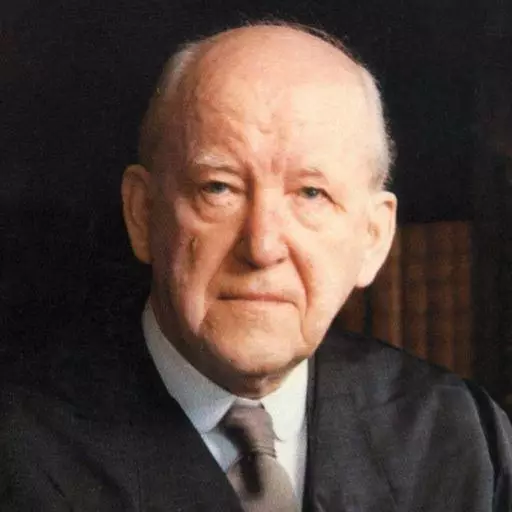
The Body of Christ


Guest (Male): We're considering at the present time, as most of you will remember, the words found in Paul's epistle to the Romans in chapter 12, and especially verses 3, 4, and 5. "For I say through the grace given unto me to every man that is among you, not to think of himself more highly than he ought to think; but to think soberly, according as God hath dealt to every man the measure of faith.
For as we have many members in one body, and all members have not the same office, so we, being many, are one body in Christ, and every one members one of another." Now we have dealt already with the third verse, so we are in a position to start this evening on the fourth verse.
Dr. Martyn Lloyd-Jones: You remember that in dividing up and subdividing the message of this chapter, I was able to show how in that third verse, the apostle introduces his subject and lays down his first principle, which is the principle that everything is of grace. That's why we should think soberly and not think more highly of ourselves than we ought to think, but to think soberly because it is God who has dealt to every one of us the measure of faith, or of grace, if you like, that we have.
That was his first principle. But now we come to look at the second principle, which in a way, of course, enforces the first principle, and that is this doctrine concerning the church as the body of Christ. This is both a doctrine and an illustration. The two things are here, and what we've got in these two verses is just that.
In verse 4, he works out his points that he feels are essential to his argument in the analogy concerning this nature of the church in terms of what is true of our physical bodies. Then having done that, he applies it in the fifth verse. Now this is a most important doctrine. It is most important, as he shows here in the immediate context, in a practical manner, but it is also obviously very important as a part of our whole understanding of the New Testament doctrine of the nature of the Christian church.
The apostle here is concerned about it in its practical aspect. As I've been reminding you, difficulties arose in so many of the early Christian churches largely because they had never understood the real nature of the church. And the apostle has to keep on telling them that. Take for instance that first epistle to the Corinthians. There the apostle deals with this doctrine of the church, not only in chapter 12, but he really deals with it in the whole of that great epistle until you come to the practicalities in the last chapter.
He starts off, you remember, in the first chapter of that epistle by saying that he hears that there are divisions among them—some saying "I am of Paul," others saying "I am of Apollos," others "I am of Cephas," others "I am of Christ." "Is Christ divided?" he asks. The whole trouble in that church, indeed with regard to so many of those questions, was that they had never understood as they should have done this whole doctrine of the nature of the church.
Here he takes up exactly the same thing. When there are troubles in the church owing to the exercise of gifts, it just means that people have not only not understood the truth concerning the gifts per se, but beyond that, they are defective in their understanding of the whole nature of the church. Now this, of course, is of unusual importance at the present time. We're living in an age when there is more talk than there has been for many centuries about the unity of the church, and so on.
It's right that this should be considered. Our Lord prayed in His high priestly prayer that they might all be one, even as He and the Father are one. A Christian who doesn't believe in the unity of the church is a most unworthy Christian. You can't be a Christian without desiring that with the whole of your being. But the first question that you should ask is this: what is the church? Before you begin to talk about amalgamating denominations, the first question is what is a church?
What is the Christian church? That's the first great question, and so much of the confusion that exists at the present time is solely due to the fact that they're bypassing the most important question: what is the church? And indeed, that even raises a yet more fundamental question: what is a Christian? If a church is a gathering of Christians, what is a Christian? Well, I'm just showing you the all-importance and the immediate relevance of this great subject.
Now here, you see, the apostle is concerned primarily about the use of the gifts. But he says you can't understand that unless you first understand the nature of the church. And the doctrine, the way he puts it here, is that the church is the body of Christ. Now he's got other comparisons. He sometimes compares the church, as you remember, to a great empire. He says that we the Gentiles have become fellow citizens with the saints.
It was an obvious comparison for him to use. He was a Roman citizen and he was in the Roman Empire. And what more natural than to point out that the church in some respects is similar to a great empire? She has her central authority and government, but she has her citizens scattered in different parts of the world. Again, another time he compares the church to a building—something that is erected up on a foundation—and the church is a great building.
He sometimes compares the church to a family. He says we have become not only fellow citizens with the saints but of the household of God. The church is a family. And then you remember that he sometimes compares the church to a bride. What the bridegroom is to the bride, our Lord is to the church. So you see, this is a great doctrine, this doctrine of the church, and no one analogy is perfect, so he has to use a multiplicity of analogies and illustrations.
But I think you'll agree with me as you read the epistles of Paul in particular, that of all the illustrations which he used, the one which he obviously felt was the best in many ways was the one that he's using here: the church as the body of Christ. He does it here, he does it in that section which we read at the beginning out of 1 Corinthians 12:12-27, and he does it at the end of the first chapter of the epistle to the Ephesians, especially in verses 22 and 23.
In Ephesians chapter 4 and verse 16, you've got the same idea repeated once more where he puts it in these words, you remember. He talks about the head, even Christ, from whom the whole body fitly joined together and compacted by that which every joint supplieth, according to the effectual working in the measure of every part, maketh increase of the body unto the edifying of itself in love. And the analogy is implicit in other statements also.
Clearly this is a most important matter. And it is therefore very right for us that we should now look at this illustration which the apostle uses. If you want to understand the nature of the church, a very good way of doing so is to consider the nature, the character of the human body, the physical frame. So he gives us that in the fourth verse and, as I say, he then applies it to our position as members of the Christian church, members of Christ, in verse 5.
Let's start by looking at what he teaches us here in the fourth verse about the body, the nature of the body. Fortunately, he has worked it out for us in that section in 1 Corinthians 12, and so we will interpret what he says here in the light of his more detailed and elaborate teaching there. The fundamental picture is this: that you can think of the Christian church as being comparable to the body.
What is the truth about the body? Well, the body consists of a head where the brain is to be found within the skull. Now from that brain come out all the various nerves and forces of control that are going to control the whole of the body. All the nerves and all the rest of the direction and the power and so on, they come from that center. So his fundamental analogy is that what the head and the brain are to the rest of the body, so the Lord Jesus Christ is to the Christian church.
That's the fundamental statement. He is the head out of whom and from whom comes the whole body and is compacted in the way that he indicates there in Ephesians 1 and Ephesians 4. Let's take this statement concerning the physical body. There are most important lessons to be learned here. He says if you are to be right about the exercise of these gifts that you've received in the church, if you are to avoid overestimating yourself and underestimating others, very well.
The best thing to do is to understand exactly something about the essential constitution of the human frame, the human body, and realize that in so many respects, that is the truth concerning the nature of the Christian church. I've tried to put the teaching to you in terms of a number of principles. The first principle is this one: that the body is an organic unity. "As we have many members in one body." There it is.
That is worked out in greater detail in 1 Corinthians 12; look it up there for yourselves. But this is what he's teaching: that our bodies are an organic unity. A body is not just a collection or an aggregate of independent parts loosely attached together. I've sometimes put it like this: that a man's body doesn't consist of a number of fingers which are stuck onto a hand, and then a hand stuck onto a forearm, and a forearm stuck onto an arm, and so on, and the arm stuck onto the trunk. That's a completely false notion of the body.
The essential thing about a body is that there is this essential unity. In other words, the unity of the body is not like the unity of a train—think of a train with an engine and a number of trucks attached to it by couplings. That's not the analogy at all. Here you've got a vital relationship, a vital and an organic unity which means that there is a living connection between the parts. It's not a kind of soldering on; it's not a kind of tying on.
No, there is an inner unity which is of course provided, as he suggests in such a wonderful way in Ephesians 4:16, which remember was written 1900 years ago. There is this extraordinary insight into what we claim to know today as the result of anatomy and so on. Now the unity is provided by the blood system, the vascular system, and the nervous system. And that is the basis of this organic unity.
You have your heart and main blood vessels coming out, they go along and they divide and they divide up until you get your small capillaries. But it's all part of one system. It's one vascular system. And the same with your nerves. With all the multiplicity of minute tendrils and divisions, all of them ultimately can be traced right away back until you get back to the nerve centers in the brain or in the spinal cord. Now the apostle is using an anatomical illustration, and he's got the whole principle of the thing here.
This is the very thing he's saying: many members, but one body. In other words, the one body is not a collection of the many members. The body is more important than the parts. Indeed, we could actually go further and say this: that this organic unity comes into being and is a fact because of the way in which the body develops. Have these fingers of ours been developed independently and then coalesced with the arms and so on? It isn't how it happens at all.
The whole of one's body was originally just one cell. That cell became fertilized, and out of that one cell all the parts of the body have come. They've not been added to it; they've come out of it. This one cell begins to develop and to divide, sends out proliferations, a little root goes out to form the right arm and another one on the left, another one goes up to form the head and so on, and the other the trunk and the legs. The whole of all these individual parts have come out of an original unity.
So they've been in organic connection with the central part from the very beginning. That is the simple truth about the human body, and the apostle's teaching is that it is exactly the same with regard to the Christian church. This is obviously an all-important matter, and it is because this is so frequently forgotten that the church gets into such terrible error, never more so than at the present time. Because of this principle, you must never think of yourself as adding yourself to the church. You can't do that.
A man can join a church, but that doesn't mean that he becomes a part of the body of Christ. No man can put himself into the body of Christ. There's a statement at the end of the second chapter of Acts which puts this right once and forever: "The Lord added to the church daily such as should be saved." "The Lord added to the church daily such as were being saved." It is He alone who can add to the church.
Because of this organic, vital, living unity that characterizes the Christian church, it is impossible for a man ever to put himself or anybody else into this relationship. Now you can add people to statistics; that's not difficult at all. And the Christian church far too often is like the train I talked about, rather than the body—just these odd additions. But that's not right. And this whole idea today of adding denomination to denomination, that's not the way to get the unity that the Bible talks about.
It is the Lord alone who can create this, "the unity of the Spirit in the bond of peace," as he puts it again in Ephesians 4. It is the Lord who adds to this body, as 1 Corinthians 12:13 puts it so well: "For by one Spirit have we all been baptized into one body." We don't do it; it's something that's done to us. It is the Spirit alone who can perform this operation. It is such a vital operation, it's a living, it's a life relationship.
So that no man can ever do it. You don't solder on people into the Christian church. If they're not in this vital organic relationship to the head and the other parts, it is not really a part of the Christian church at all. Now there's the first thing. Well then, of course, he goes on to show that there is a great variety in the parts. "We have many members in one body, and all members have not the same office." This is the obvious thing about our human bodies.
The body is one, but look at the many different parts, the variety, the variation in the different parts—hands, feet, eyes, ears, and so on—and then the subdivisions of those. They're all different and they all have these differing functions. But the thing that he is emphasizing is that we must realize this variety. How important this is, especially with certain people and their view of the church. There are some people who seem to think that every church member should be identical with every other.
Indeed, there are some teachings that tend to produce that kind of person. But it's a violation of this essential teaching. All Christians were never meant to be the same, in the same way as the individual members of the body are not the same and were never meant to be the same. So all Christians were not meant to be the same. They're not meant to be the same in their temperament, in their abilities, in the way they do things or in anything else.
The great thing about the body is that you've got a variety in unity, or a unity expressed in a variety. It's the same again as you get in nature. But this is a most important point. If you do find a number of Christian people who all seem to be doing the same thing in the same way—they almost get to look like one another and they walk like one another and they speak with the same sort of accent and use the same phrases—well, I say you are entitled to deduce that what has produced that is not the Holy Spirit.
I'm not saying they're not Christians, but I am saying that another influence has come in which is false to the true spiritual position. The cults always tend to produce a standard type; it's their characteristic. But it is never the characteristic of God's work. God varies always. No two flowers are identical, no two persons are identical. In fact, our two eyes are not identical. The two sides of our faces don't measure exactly the same.
There's always this variation and variety in God's work. That's true of the body, it's equally true of the church. So that if you get your postage stamp kind of Christian, it's wrong, it's not true, it's violating this essential doctrine concerning the nature of the Christian church. You'll all know to what I'm referring. I've watched men so often who were becoming Christians, who were obviously born again, and then I meet them in a year or two and I find that they've conformed to a pattern.
There was one particular case that I knew very well. There was a very forceful minister, and he never said "Amen." He always said "A-men." And I used to watch how his followers and disciples gradually adopted the same habit, and they all always said "A-men" in exactly the same way. Well, my dear friends, I'm ridiculing the thing deliberately for you to see how wrong this is. It's not only true of church members.
There was a famous preacher in South Wales at one time, and he was a very eloquent man, but he didn't know how to use his voice properly and he got into serious trouble and had to have many long holidays. At last he discovered the secret of speaking without losing his voice, and that was to speak with a nasal intonation. He also had a tuft of hair that tended to come down over his right eyebrow, and in preaching he would toss it back periodically.
He produced a whole school of young preachers who spoke with a nasal accent and tossed their hair back repeatedly. Now that's the kind of thing I want you to see is entirely foreign to the New Testament teaching. That's not spiritual; that's carnal. That is carnality. It's not the spiritual teaching concerning the nature of the Christian church. Here, variety in unity, unity expressed through variety.
That leads to the next great principle which is this: patently and obviously the different parts have different functions. "All members have not the same office." The apostle works that out in detail for us in 1 Corinthians 12—the function of the eye and the hand, obviously different. Now here again is the thing that people tend to forget: that the functions are essentially different. In the case of the body, that would be obvious to all of us.
They differ, as he works out in 1 Corinthians 12, not only in their position in the body, but they differ in their degree of power, their degree of importance. He talks about the less comely parts and the more comely parts, parts which we tend to despise, and so on. But the point which he's making is that every one of them has a different function which it is to perform and which is an essential part of the whole body.
This again is something that has been so frequently forgotten. This is where the envying and the despising come in and the wrong view of ourselves and of one another. We want to be this or we want to be that. It's a very real thing, this. If you don't know something about this in your personal experience, well then I fail to understand you because the devil will always tempt a spiritual person along this line. We all want to be doing certain things, and it's very difficult for us to reconcile ourselves to doing something else.
I mean something like this: there are many people who are prepared to go to foreign lands, to the Far East or Africa or somewhere else, to perform certain menial tasks, tasks of charity and of love for the sake of the Lord and the gospel. They're very prepared to go to the end of the earth to do that, but they're not prepared to do those selfsame things in this country. Now those selfsame things are often needed in this country, but they won't do them here.
There is a kind of glamour about the foreign work, and so our carnal nature wants to be doing that. Sometimes I've had to point out to young men that all Christians are not meant to be preachers. We're not all meant to be doing the same thing, but you know there are people who obviously have got that impression. It's amazing how frequently one has to say this. A certain type of person is converted and immediately his first thought in a sense is he's got to get out of the profession that he's in.
All Christians should be doing the same thing, full-time Christian work. But we're not all meant to be doing full-time Christian work. There are Christians who can function in society, whatever the calling. I needn't remind you that that was one of the great discoveries which Martin Luther made at the time of the Protestant Reformation—that you could be as good a Christian sweeping a floor as you could be in a monastery or a nunnery or something like that.
Now it's all due to the failure to realize this truth, this principle concerning the working of the physical body, which is such a perfect analogy at this point of the working of the Christian church. So let me enforce that further by putting it like this: each function of every single part in the body is not only important, it is essential. You see, not only must we get rid of the notion that we're all to be doing the same thing, as the apostle puts it, if every member of the body was an eye, where would the body be?
If every member was a foot, you wouldn't have a body. The genius of a body is that you've got all these different parts and functions and so on. And here, I say, he goes on further to say that each one is not only important but it is essential to the working of the whole body. The function is not only important in and of itself, but it is also of importance with regard to the other parts of the body, and indeed it is important for the whole of the body.
You realize that the moment you come to think of the human body. The apostle suggests it so plainly and so clearly. There are less comely parts of our body. We don't talk about them in public and we don't write about them. There are parts of the body you don't speak about, says the apostle, and that is the Christian and even the decent view of these matters. But you see, because you don't speak of them, you mustn't say that they're of no use, that they're of no value.
Of course they are; we couldn't live without them. Every single function, every single member has this function which is essential, not merely important, it is essential to the whole of the body, to the working of the entire body. And if that particular member was not there, it would not only be an abnormal body, it would be a body that is not capable of functioning in a true way and manner. Think of it in terms of the Christian church.
There is no such thing as an unimportant Christian, no such thing as an unimportant church member. Every one of us has a function and that function is of vital importance to the whole. But let me put it like this as the next principle: no one function therefore of the body is independent of the others, and no one of them is independent of the head. No one of the members of the body can exist on its own.
It only has meaning as it is related to the others and as they all together are related to the head and to the whole. The moment you realize this, you will realize that the body works harmoniously when all the particular parts and portions and members and functions are serving their true and their proper function. That is that they are called upon to partake in this total action at given points and for given ends and purposes. They can't exist alone, and they must not act alone.
They must never act independently. Now this is the real point that the apostle is stressing here and is pressing home. People tend to think of their gifts as their gift—something independent, something I've got, forget everybody else, this is what I've got—and they're anxious to show their gift. And there they were in Corinth, all of them wanting to speak in tongues and all perhaps wanting to do it at the same time and so on. That's the very thing he has to correct.
He does it in terms of this analogy. In other words, the particular member, the particular function of the body must never act alone, it must never act independently. It is a part of the whole, and it only acts when it is moved to do so. The moment any part of my body begins to act on its own, independently of me or independently of the other parts of my body, it means that I am ill. The best illustration that I can think of still is the illustration of some person suffering from an attack of what's called epilepsy.
Have you ever seen a person suffering from epilepsy? Different parts of the body are in convulsions, moving. The person doesn't want them to do this. That is the essence of the disease. It is an irritation somewhere making these different limbs to act and to do things without the person willing it or desiring it. That is a diseased condition. Or to take a yet simpler example, have you noticed people who have what are called tics and perhaps twitching of certain muscles of the face or of the eye?
That's not something voluntary; they don't want that to happen. It happens in spite of them, and it is again a sign of an abnormality not to say a diseased condition. The moment the individual members begin to act on their own in independence and not in the way they're supposed to act, you are face to face with a diseased condition. You read the history of the Christian church and you will see that illustrated time without number.
That was the essence of the trouble of the church at Corinth. You can if you like describe the church of Corinth as a church in convulsions. And there are similar churches today. One man is supposed to be preaching from the pulpit, but others begin to shout and to sing or to do this, that or the other. The apostle says let everything be done decently and in order; God is not the author of confusion but of peace.
These people began to act on their own. They're not functioning as parts of the body. It's an independent action and it always leads to a diseased condition and to confusion and to chaos. This is what the illustration is teaching us. He uses it in order that he may bring out those points as he does in such detail in the 12th chapter of that first epistle to the Corinthians. Each particular function contributes to the whole.
The body is always meant to act as a whole, and each part is involved in that total action. Take for instance my preaching now, my speaking as I'm doing at the moment. What makes this possible? What makes it possible is the harmonious working of all the parts of my body. I once defined health as that state and condition in which a man forgets that he's got a body. I think that's a very good definition of health.
You're really healthy when you forget about your health and when you forget that you've got a body. Everything's working so well and as it should be working that you're not aware of it, and your attention isn't called to it. The moment your attention is directed to a particular part, it is probable that there is something wrong there. What makes the functioning of the whole body possible is that each part is behaving in the way that it was meant to behave.
I can't take any action such as preaching or speaking without the whole of my body being involved in that. My mind is engaged, but my will is engaged; I'm choosing to do it. Yes, but though I might have a good mind and I might have worked out a good message, if my heart isn't functioning properly, I wouldn't be able to speak. My circulation must be all right, my muscles must be all right, my nerves must be all right, my limbs must be all right.
Nay more, my digestive organs must be all right. What, you say, does a man preach with his stomach? Of course he doesn't, but if his stomach is diseased, he won't preach as well as if it wasn't diseased. That's all I'm saying. If there's anything wrong at any point, it's going to affect my preaching. That's because the body is a whole, because it's a unit. And this is the way in which you see that every single function is of vital importance and every single function contributes to the functioning of the whole.
In other words, what makes the body the glorious thing it is is this extraordinary balance, this cohesion, this interrelationship, this harmony. That's the condition of the body when it is truly functioning. And so we must never forget that every single part and function of the body is of vital importance. Many a man has got into trouble for forgetting this. You take your sort of scholar, a man who likes to spend his time in reading, he never takes exercise and so on.
He says what's the body? He hasn't got time to take exercise. All you need is a brain and understanding and clear views. But many such men have been invalids all their lives and what they might have done for the church has been very much less than it could be simply because they've forgotten this vital principle. You cannot despise your body. We are one body, soul, and spirit. And you neglect any one part or even any one part of the body and you are immediately interfering with the functioning of the whole.
I go on to my seventh principle which is that the great thing we've all got to remember is that every single function, every single member, every single part or portion of the body therefore must always be subject to and subordinate to the will and the control of the head, the person. That's the great principle. Let me give you one passing illustration of this kind of thing as we find it in the book of the Acts of the Apostles in chapter 16, verses 6 and 7.
Now when they had gone throughout Phrygia and the region of Galatia and were forbidden of the Holy Ghost to preach the word in Asia—they wanted to go there to Asia. That was their desire and they were on the verge of doing it. They as parts of this body of Christ were beginning to move, but they were forbidden of the Holy Ghost to preach the word in Asia. After they were come to Mysia, they assayed to go into Bithynia, but the Spirit suffered them not.
They were going to act on their own; the Spirit prevented their so doing. So the way we've got to look at this is that we all are to be subordinate to and subservient to the head. We don't decide when to move, we don't decide what to do, He does. I come to my last principle which is this one: that failure in any one part always affects the whole body. This is where it becomes desperately serious.
You say, I don't count in the church, I'm an unimportant member. There is no such thing as an unimportant church member. But still more are you wrong in this way: that you have forgotten that your state and condition affects the whole. It's all because of this organic unity. Paul puts it here in 1 Corinthians 12 in verse 26: "And whether one member suffer, all the members suffer with it." And the other side of that is: "or one member be honored, all the members rejoice with it."
Because of this organic unity, if there is trouble in any one part of the body, the whole body is going to suffer. Take for instance a man who suddenly gets an infection in the tip of his little finger. Too trivial, you say? It does matter. If you get an acute infection in your little finger, you'll soon have a headache. You'll soon be running a temperature, you'll be sweating, you won't be able to think, you may become delirious.
The trouble was only in the tip of the little finger. Yes, but remember the blood that passes through there goes right round your body. It affects everywhere else. Get poison here, it'll poison the whole of your system. That's the sort of teaching, and you see how important it is. So what you and I must have in the forefront of our mind is not the importance of our particular place or position or function.
The thing we should be concentrating on is this: that whatever our position is, it is given us of God, it is vital, it is important, it is essential to the working of the whole. And above all the thing that I must be concerned about and careful about is this: that whatever I am and however unimportant people may think I am in the church, because I am in it, because I am a part of this body, my supreme duty is to make sure that I'm always healthy, that there is no disease in me.
Because if there is disease in me and I suffer, the whole body's going to suffer. The head is involved in the suffering likewise. You find that that is the great teaching of the New Testament. The New Testament is not so much concerned with our function as to what it may be in particular. What the New Testament is concerned about with all of us is our sanctification, our holiness, our health. How often have I have to put it like this?
How often do you see in the newspaper a heading something to this effect: "Sunday school teacher charged with so-and-so"? Then you read the story and you find that this man who's in court had perhaps 20 or 30 years before been a Sunday school teacher. He hadn't been a Sunday school teacher for years, but because he was ever attached, that's the thing they pick out, and the whole church comes into disrepute.
That's true of every one of us. Because of this organic unity, what happens to any one part involves the whole. So the call to us for me to leave it at that for this evening is this: you should never think at all about the particular function that is allotted to you. You should never think of it in terms of its importance or its unimportance. We should say, I am what I am by the grace of God.
The gift, the position allocated to me is not of my choosing nor of my making; He has put me there. I am vital. I am as much a part of the body as the most exalted or the most glamorous part of the body. I am in the same body and I've got a function which is as essential as his, ultimately. They differ in degree and in importance and so on, but not in their ultimate value.
So we mustn't think about that. There should never therefore be pride, there should never be envy, there should never be jealousy, there should never be despising. We must discover what we are and what gift is given to us. Not all meant to do the same thing, not all meant to be the same, but in this glorious variety and variation we reveal the unity, the wonder of it all: the church as the body of Christ.
As we think of ourselves as individuals, there's only one thing for us to think about, and that is that I am always totally, completely, healthily at His service. That's what we should be concerned about: that we should never be the cause of the hindrance. Take my illustration. You tend to think glibly stomach's got nothing to do with preaching. Well, all I say is make sure that the stomach isn't diseased. Make sure that it isn't causing indigestion to the whole body, and every other part in exactly the same way.
Be ready, be always at His service so that whenever He acts, He moves, there's no hindrance, no let, no restraint, no obstacle, no blockage anywhere, but every part is ready. And then He acts and He does His mighty and amazing work, and His name is made glorious in the earth. Well, there is the analogy and the illustration as the apostle uses it in this fourth verse of the 12th chapter of his epistle to the Romans. May God give us understanding of this and grace to apply it to our own case and position as members severally and together of the body of Christ.
O Lord our God, we humbly beseech thee to enable us to do this. We thank thee more than ever for thy word, for the clarity of this statement, this explanation, this illustration. O Lord we see how foolish we are and that our folly is ever based upon our ignorance. Lord make us wise, open the eyes of our understanding, that we may each come to the position in which we shall glory in the body and in the head and in the fact that we are any place at all in such a body.
Lord forgive us for all we have ever done that has hindered thy work or has in any way marred it. Lord forgive us and have mercy upon us, and so fill us with this understanding that henceforth we shall all always be ready at thy service and ready to obey thy every command and behest. Hear us for Christ Jesus' sake.
And now, may the grace of the Lord Jesus Christ and the love of God and the fellowship and the communion of the Holy Spirit abide and continue with us now this night, throughout the remainder of this our short uncertain earthly life and pilgrimage and evermore. Amen.
Featured Offer

Find peace and comfort this season with your complimentary guide that includes access to 6 free bonus sermons on overcoming spiritual depression from Dr. Martyn Lloyd-Jones, one of the church’s most beloved Bible teachers. Topics include: true Christians can and do struggle with depression, recovering the joy of your salvation, dealing with crippling guilt over past sins, dealing with yesterday’s haunting regrets, encouragement to keep moving forward, and understanding God’s purpose for suffering.
Past Episodes
This ministry does not have any series.
Featured Offer
Find peace and comfort this season with your complimentary guide that includes access to 6 free bonus sermons on overcoming spiritual depression from Dr. Martyn Lloyd-Jones, one of the church’s most beloved Bible teachers. Topics include: true Christians can and do struggle with depression, recovering the joy of your salvation, dealing with crippling guilt over past sins, dealing with yesterday’s haunting regrets, encouragement to keep moving forward, and understanding God’s purpose for suffering.
About From the MLJ Archive
From the MLJ Archive is the Oneplace.com hosted ministry of the MLJ Trust. Our mission is to promulgate the audio ministry of Dr. Martyn Lloyd-Jones.
About Dr. Martyn Lloyd-Jones
Contact From the MLJ Archive with Dr. Martyn Lloyd-Jones
info@mljtrust.org
http://www.mljtrust.org/
PO Box 953
Middleburg, VA 20118