
Spiritual Gifts, Part 3


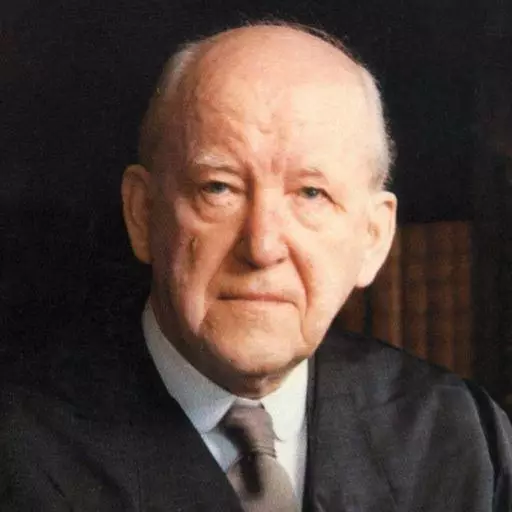
Host (Male): In the following sermon, Dr. Martyn Lloyd-Jones is preaching from Paul's letter to the Romans, chapter 12, verse 6. That's Romans, chapter 12, and verse 6.
Dr. Martyn Lloyd-Jones: Having then gifts differing according to the grace that is given to us, whether prophecy, let us prophesy according to the proportion of faith. Now here, the apostle comes to the application of certain principles which he has been laying down in the previous verses with regard to the exercising of spiritual gifts in the church. His point is that they must always be thought of and conceived of in terms of the great controlling doctrine that the church is the body of Christ. We must never think of the gifts in and of themselves, we must never think of ourselves possessing gifts in and of ourselves. We must always think of them in terms of the body, the good of the body, the edification of the body, and the well-being of the body.
But the point that he makes in particular is this: the moment we understand that these gifts vary, as the members of the body vary, but that all are essential and all are important, we shall then be put right on this dangerous tendency to exalt overmuch in particular gifts and thereby cause not only confusion, but unhappiness and even sin in the life of the church. His great statement is, therefore, that the gifts differ according to the grace that is given to us. We all have some gift, and we've considered how it is we may discover what that gift is.
And now we are looking at this first illustration that he takes up in order to illustrate these general principles. The first gift he looks at is the gift of prophecy. Now, all we did last Friday was to define in general what is meant by this gift of prophecy. We distinguished and differentiated between it and teaching and preaching. In the same verse, he takes up teaching separately, making that perfectly clear. But it is different from preaching and teaching, and it differs essentially in this way: that there is an immediacy about it and a directness. Prophecy is a man speaking for God, giving a word from God to the church.
It means a very special illumination, therefore. It's a kind of direct inspiration. We saw that it is something that women can do as well as men. They're prohibited to teach and preach, but they do act in this manner, as we saw from the 21st chapter of the Book of the Acts and the 11th chapter of the first epistle to the Corinthians. Well, now, that is what is meant essentially by prophecy. It is a revelation, not in the sense of fundamental revelation, but a particular truth is laid upon the mind of a believer by the Holy Spirit in order that he may communicate it to the members of the church.
As we saw in 1 Corinthians 14, it is a word that has a specific object. 1 Corinthians 14:3 says, "He that prophesieth speaketh unto men to edification, and exhortation, and comfort." That is the function and the business of prophecy. But what we are particularly concerned about tonight is this statement which is made with respect to it. "Now," says the apostle, "if a man has been given the gift of prophecy, let him prophesy according to the proportion of faith." What does that mean? There have been two main interpretations that have been put forward with respect to this.
The first suggestion is that it means let him prophesy according to the proportion of his own faith. Which means this: that he must be sincere. The danger with all these gifts is that one tends to overdo them in order to exaggerate one's own importance. So this interpretation would have the apostle to say here, "If a man has got the gift of prophecy, well, let him prophesy in a manner that is sincere. Let him never go beyond that which is revealed to him." The devil comes and tempts such a man to say something striking and remarkable which will bring credit to him and exalt him in the opinion of others.
His danger is either to add to what has been given him in order to be spectacular, or to withhold something that has been given him because he may think that it's not going to be popular, that people will dislike it and therefore dislike him. So these are the dangers that confront a man who has this gift of prophecy. The apostle's solution to the problem is, therefore, "Do it according to your own faith, the proportion of your own faith." You will know when you're going beyond, you'll know when you're holding something back. Don't do either. Be honest. Let what you know to be right in terms of the faith that you have govern you and control you. In other words, it is interpreted in terms of sincerity.
That is the subjective interpretation of this statement. Somebody has summed it up very well by putting it like this: "Let him prophesy according to the strength, clearness, fervor, and other qualities of the faith bestowed upon him." In other words, you don't allow self to come in, you don't allow the flesh to come in, but you are quite honest and in no way do you add or subtract, but you just deliver the message as it is given to you. Well, now, that's one of the interpretations that is put forward for this particular statement. It's a most important statement, as I'm going to show you.
The second one takes a more objective view of this statement about the way in which those who have the gift of prophecy are to prophesy. You may have the gift of prophecy without being a prophet. You notice in the New Testament there are these orders: apostles, prophets, evangelists. Now, the prophets were a very special group of people to whom revelation was given in a manner only secondary to the apostles themselves, and they spoke with great authority. This gift of prophecy isn't that. We're not dealing here with an order within the church. We're dealing rather with a gift which was much more common and more widespread than the peculiar, exceptional gift of this body or order of people who were called prophets.
As there were not many apostles, there were not many prophets in the early church, but the gift of prophecy was obviously much more widespread. Well, now, the second interpretation interprets this phrase "according to the proportion of faith" in a more objective manner. It would translate it like this: "Let him prophesy according to the proportion of the faith." Or, if you like still another translation: "If prophecy, whether prophecy, let him prophesy according to the analogy of the faith." The faith. Something objective.
In the New Testament, you find these references to "the faith." The faith meaning the whole body of truth that has been delivered to God's people. You get a perfect statement of it in the third verse of the epistle of Jude. "Beloved," he says, "when I gave all diligence to write unto you of the common salvation, it was needful for me to write unto you and exhort you that you should earnestly contend for the faith which was once and forever delivered unto the saints." That's it. The faith. And you'll find that expression in the New Testament in many places.
This second interpretation says that we should take this phrase, the proportion or the analogy of faith, as meaning the proportion or the analogy of "the faith." This faith. In other words, they say that it means this: that the inspired utterance must always conform to this body of teaching and of doctrine that has been given by God through the apostles and prophets to the church. And that the prophet, the one who has this prophecy, must never add to this revealed body of truth nor again subtract from it. It says, in other words, that every prophecy that is uttered must always be tested in terms of this faith that has been given to us.
Now, this is where it becomes so important. For myself, I'm very ready to accept the two expositions of this statement. I think both are right. The one who utters the prophecy must obviously be sincere, but I think there is this further element. It goes beyond that. It is this statement that the prophecy should always be tested by the faith. We've got a specific statement by the apostle himself in 1 Corinthians 14 and in verse 29, where he says, "Let the prophets speak two or three, and let the other judge." Let the other be testing. As the prophets are speaking, as they're making these utterances, their utterances must be tested.
And the only way in which you can test them, of course, is by the faith. Or take the way in which the same apostle puts it in 1 Thessalonians 5 and in verse 21, and it's in this context. "Quench not the Spirit. Despise not prophesyings. Prove all things." Test them, prove all things, "hold fast that which is good." In other words, you have to test these utterances, and you test them obviously only by this faith that has been given to the church. The faith. The whole body of truth.
And this, of course, is of necessity true. All truth is given by the Holy Spirit. And therefore, all truth is always self-consistent. It will never contradict itself. Truth is given by the Spirit, so he's not going to say one thing on one occasion and another one on another occasion. There are certain characteristics of truth that comes from the Spirit. And therefore, every utterance is to be tested by this truth that has been given to the church through the apostles and prophets. Now, there's a very good example of this very thing in the first epistle to the Corinthians, chapter 12 and verse 3, where the apostle says, "Wherefore I give you to understand, that no man speaking by the Spirit of God calleth Jesus accursed."
He can't do that. If a man is speaking by the Spirit of God, he cannot call Jesus accursed. So if ever you hear a man claiming to be under the inspiration of the Holy Spirit saying that Jesus is accursed, you can know that he is not speaking under the inspiration of the Holy Spirit. Our Lord Himself said that the Spirit was given in order to glorify Him. So if He doesn't glorify Him, but speaks against Him, He cannot possibly be the Spirit of God. But He says conversely, "No man can say that Jesus is the Lord, but by the Holy Ghost."
Now, when he says that "no man can say that Jesus is the Lord," he doesn't just mean uttering the words. Anybody can say that. He means really saying it from the heart, believing it and rejoicing in it. No man can do that except by the Spirit of God or by the Holy Ghost. Now there is what is meant by this verse that we're looking at concerning this proportion of faith. Or let John interpret it in his first epistle, chapter 4: "Beloved, believe not every spirit. Don't believe every spirit, but try the spirits whether they are of God. Because many false prophets are gone out into the world. Hereby know ye the Spirit of God: every spirit that confesseth that Jesus Christ is come in the flesh is of God. And every spirit that confesseth not that Jesus Christ is come in the flesh is not of God."
"And this is that spirit of antichrist, whereof ye have heard that it should come; and even now already is it in the world." So as these people are uttering these prophecies, as we are told there in 1 Corinthians 14:29, the others have to judge. They have to test this. You don't accept it as it is without testing it. And of course, you've got the same thing in other epistles. Paul, for instance, says in Galatians 1:8, "Though we, or an angel from heaven, preach any other gospel unto you than that which we have preached, let him be accursed." There were people going round claiming to be preachers of the gospel. Don't listen to them, says Paul, it's a false gospel, it's another gospel, which is not a gospel.
So you see, he's always exhorting these people to judge and to estimate and to test these things. Indeed, John reminds his people, his hearers, you remember in the first epistle and the second chapter, "Ye have an unction from the Holy One, and ye know all things." He means all these things. Again, he says in verse 27, "But the anointing which ye have received of him abideth in you, and ye need not that any man teach you: but as the same anointing teacheth you of all things, and is truth, and is no lie, and even as it hath taught you, ye shall abide in him." Now then, this is what is meant by, "let him prophesy according to the analogy or the proportion of the faith."
Everything has got to be tested, therefore. And we only accept it on condition that it fits into the pattern of truth that has already been given. Now, in the days of the early church, before the New Testament canon had been formed and so on, and before indeed any of these books had been written at all, the way in which they did this was that they had heard the teaching. They wouldn't have been members of the church but for that, and they had subscribed to it and they knew what it was. And that, plus the unction and anointing of the Spirit that was in them and on them, enabled them to test what claimed to be a prophecy uttered under the inspiration of the Holy Spirit.
Now, this is, of course, a tremendously important matter and of crucial importance at this present time. Particularly in the light of two things. The first is the ecumenical movement and the statements that are made by leaders of churches in the name of Christ. We've got to test them. The second reason is a certain new interest in the gifts of the Spirit. And that at all times needs this careful teaching. There were people in the early church, as we see from the quotations I've given you, that had gone astray in this respect because they had forgotten that the prophecy must always be according to the proportion of "the faith."
The importance of testing. Well, now here is a phrase which, if you like, I can put in this form. Here is the basis of what we call systematic theology. Here is the great justification of, here indeed is the thing that calls us to have a systematic theology. What is systematic theology? Well, systematic theology is something like this. You read your Bible. And the Bible is full of doctrines, particular doctrines, from beginning to end. The great doctrine of God, God as Creator, and so on. All the great doctrines of the faith. They're taught somewhere or another in the scriptures.
Now, systematic theology is this: that having read the whole of your Bible and having noted the doctrines, you now put them into a systematic order. You can start, if you like, as many do, with the doctrine of the scripture itself, in which you find the doctrines. Or you can start, as I would personally always do, with the great doctrine of God Himself. And you come right through all the doctrines until you end with the final consummation and the everlasting state of glory. Now, that is systematic theology. The doctrine of the triune God, the doctrine of man, and then the doctrine of the fall, then the great doctrine of redemption in all its parts and portions, including the doctrine of the church and the Spirit in the believer, sanctification, all these truths. They're all part of this. And eventually, I say, glorification and this final state of perfection when everything shall be complete. Now, to set all those out in order is what I mean by systematic theology.
So if you like, you can interpret this sixth verse of the 12th chapter of the epistle to the Romans in this way: if a man is given the gift of prophecy, let him make quite sure and certain that the prophecy that he utters is in accordance with the teaching of the systematic theology. Now, you notice what I'm saying. I've defined systematic theology as men putting in order the doctrines that are to be found in the scriptures. Sometimes theologians haven't stopped at that, they've added their own speculations. Or they've started using their own logic and they have pressed things a little bit further than you actually find warrant for in the scripture itself. I'm not defending that.
That is always a danger and it's very difficult to safeguard yourself against that danger. But true systematic theology should confine itself to an orderly arrangement and statement of the great doctrines that are taught in the scriptures. So when a man utters a prophecy in the church, it must be certain, says the apostle, that it in no way contravenes or doesn't fit into this body of truth, this systematic statement of the truth. It isn't so much that it contradicts the systematic statement of it; it mustn't contradict the truth. That is the thing that the apostle is emphasizing.
Now, here I say, and you can see I think at a glance, what an important matter this is. This, of course, governs not only prophecy, prophetic utterance, but it also applies equally to exposition, the thing I'm doing tonight. It applies to preaching. A man should always preach according to the proportion of faith, and he should always teach accordingly. There have been great troubles in the church and sometimes even tragedies because men have not always done this. We should always compare scripture with scripture. That is why people who don't believe in theology tend to go astray.
They come to a particular statement and they get out their lexicons and so on, and they'll arrive at an interpretation of this in terms of particular meanings of words, and they'll lay it down. But then later on somewhere in the scripture, they'll do the same thing again, and somebody looking on will see that they're contradicting what they said before. Well, they should never do that. If they'd only been careful in the first instance to check their interpretation or exposition by the whole statement of doctrine, they could never fall into that error. That is where people who rely overmuch on lexicons and upon concordances for interpretation of scripture instead of this systematic body of doctrine invariably get into trouble.
It sounds very biblical, but you know, it isn't. In other words, what we should all be doing is this, and particularly those of us who are called to preach and teach: you read your Bible. And as you read your Bible right through, you see, I say, this great body of doctrine laid out. Very well, you get that into your mind. Then when you come back to a particular verse in your reading, all that will help you to interpret this. And you must never interpret a particular verse in such a way that it doesn't fit into this whole body of truth or contradict it. That's more or less what he's saying. And here, it's of course with regard to prophetic utterances, but it's equally true with regard to preaching and teaching.
Now, let me show you how important all this is at the present time. Any teaching, therefore, which tends to speak a little bit disparagingly about doctrine or about theology or teaching is wrong. It contradicts this direct command of the apostle. He says the prophecy must be uttered according to the proportion of faith. So if you dismiss and deride the only standard by which you can apply that test, you are contradicting the very thing that the apostle lays down. Now, the danger is this, you see. People say, "Ah, yes, men of intelligence can interpret the scriptures and can read theology and doctrine and so on and be learned in the word of God. But here is a direct inspiration. And we're going to listen to this direct inspiration. We don't care what your doctrine says."
Now, that was the whole trouble, as you know, with the Quakers. That's exactly where the Quakers went astray. George Fox, very rightly, the founder of Quakerism, he very rightly saw the danger of a dry-as-dust theology, of a kind of intellectual belief of truth which is of no power in the life and of no value. And he undoubtedly was a man who was baptized with the Holy Spirit. And he himself kept the balance more or less while he was alive. Even he at times tended to say things which were a bit loose, but many of his followers went into serious error. They went so far as to say this: they didn't care what the Bible said. They had been given this direct word. They put this inner light, this direct illumination, before the scripture.
They put it against the scriptures. They said, in a sense, you don't need your scriptures, you can get it all directly. And of course, this has been teaching that has shown itself in many ways. I remember once listening to a preacher, and this was one of his favorite phrases. He dabbled a good deal in mysticism, and his great phrase to us always was, "Get into yourself, get into yourself." That was his way of putting the inner light. In other words, he says, you be still and begin to listen and God will speak to you, the inner light, the direct illumination and inspiration. Now, all I'm saying is this: that while I'm accepting, as I share you, the gift of prophecy as one of the gifts that may be given to anybody in the church at any time, I'm setting no limit upon it at all.
We cannot, it's the sovereignty of the Spirit. I've already shown you that I totally disagree with those who say all this ended at the time of the apostles. No, no. We've seen instances of it since then. I gave you some examples last week. All I'm saying is this: don't put this over against the scripture. Don't put it above the scripture. Why not? Well, because it is the same Spirit who gives the prophecy as gave the scriptures. And he gave the scriptures to the apostles and prophets largely in order that we might be enabled to prove and to test the spirits. You deride scripture and doctrine, you'll have nothing whereby to test the spirits. And there are evil spirits who can appear as angels of light and delude, where it possible, even the very elect. So it's a very wrong and a very dangerous teaching that puts prophecy over against scripture. It is even worse when it puts it above the scripture. Nothing can be so dangerous.
Or let me put it in a second way, and it's another important lesson at the present time. There are those who say that people may be given this kind of gift and other gifts, that they may be baptized with the Holy Ghost and given these gifts, but that it doesn't make any difference to their doctrine. Now, this is being said rather freely at the present time by certain people. They tell us that bishops and even cardinals, I believe, in the Roman Catholic Church recently have been baptized with the Spirit and are speaking in tongues and so on. Well, then, if you say to them, "Well, now, does this mean, therefore, that they no longer believe in the assumption of Mary and the immaculate conception? Do they no longer therefore believe in transubstantiation and all those other additions which are not scriptural at all and which indeed are contrary to scripture? Have they therefore renounced these errors of Roman Catholicism?"
The answer they give is, "Oh no, not at all. It doesn't make any difference. And what's it matter? The great thing is that they're now speaking in tongues or that they're prophesying." It doesn't matter, apparently, that they should be holding these grievous errors. Now, my friends, this is where these things, you see, become very dangerous. Surely, when a man is baptized with the Holy Spirit, he has an understanding of the truth and he begins to apply it. His prophecy will be according to the proportion of faith. And he will immediately have to face his whole position. If you could tell me about Roman Catholic bishops and cardinals who, as the result of the baptism of the Spirit, have tried to reform the Roman Catholic Church and have been turned out because of it or have left it themselves, well then I'd accept it all wholeheartedly. But what I cannot accept is that this can have happened to them and still they go on preaching and teaching the same old error as before. No, no, this is to discount doctrine. And the moment you do that, you cannot test whether your prophecy is according to the proportion of faith.
Or let me give you a third deduction which we draw from this most important clause. It is this: that there is no new truth at any time since the time of the apostles. The faith was once and forever delivered to the saints. The faith, the truth, was given to the apostles and prophets. The church, says the apostle, is built upon the foundation of the apostles and prophets, and you cannot add to the foundation. You build upon the foundation, you don't add to it. In other words, the whole of the truth was given to the apostles and prophets. And we believe that it is here in the scripture.
Here, therefore, is the only test we have and the only standard whereby we judge anything that claims to be revelation or truth from God. And once more, you see, this is where we convict the Roman Catholic Church. I'm not here to preach against the Roman Catholic Church, I'm only illustrating this point that the apostle is making. You see, there's a church that has added so much to what you find in the New Testament. You never find the place given to Mary in the Roman Catholic teaching in the New Testament. There's no suggestion here that she's a co-redemptrix or anything else. Immaculate conception, all these things, transubstantiation, it's not here. And they don't even say it is. They say, "No, this has been revealed to us since then."
And here I say again they're contravening this injunction. The truth has been delivered once and forever to the saints. So there cannot be any addition, and there hasn't been any addition. Very well, I go on to my fourth deduction which is this one: that we must always be very careful, therefore, not to base our position, our teaching, upon a prophetic utterance. And what we teach and what we preach must not be determined by prophetic utterances. Prophetic utterances only have value as they direct attention to this faith that has already been given. What prophetic utterance does is to bring out some particular aspect or facet and to emphasize it because it may be the thing that's needed supremely at the present time. But it never lays down doctrine, and our position must not be determined by this.
Now, let me give you just one example of what I mean at this point. This, of course, was one of the things that tended to cause a great deal of trouble in connection with that movement associated with the name of a man of the name of Edward Irving, round about 1830 and the few years following. They claimed that the gifts of the early church had been restored to them, speaking in tongues and particularly prophetic utterances. And there is no doubt at all about this as an historical fact. The teaching about the secret rapture of the saints was a teaching that came in for the first time in history in 1831 in that circle, and it came in directly as the result of a prophetic utterance.
Now, I quote the great S.P. Tregelles as my authority for this statement and I'll quote his words to you. He says, "I am not aware that there was any definite teaching that there should be a secret rapture of the church at a secret coming until this was given forth as an utterance in Mr. Irving's church from what was then received as being the voice of the Spirit. But whether anyone ever asserted such a thing or not, it was from the supposed revelation that the modern doctrine and the modern phraseology respecting it arose." You see, here is something quite new. It had never been thought of before, and by now most people are ready to agree that it should be rejected: the secret rapture.
But it was given in a conference held at a place called Powerscourt in 1830. They used to have these prophetic conferences, and at those conferences, Tregelles was present often and Benjamin Newton and J.N. Darby and Edward Irving and others. They soon broke from one another, I know, but there they were. And this came for the first time and they all accepted it. Why? Well, because it was a prophetic utterance. And they didn't take the trouble to test it as they should have done according to the proportion of faith. Now, therefore, I say that we should always be extremely careful that we don't teach doctrines simply because they have come to us in a prophetic utterance. Everything must be tested according to the proportion of faith.
My fifth deduction is this one, and this again is a most important one today and especially in the light of past history. Prophetic utterances must be watched with unusual care and must be tested with unusual care when they involve the actions of others and when they involve the actions of the whole church. Now, in a prophetic utterance, it often happens that people say, they give a message and it is a message to tell somebody else to do something, or sometimes to tell the man himself to do something, or to tell the whole church to do something. And the danger has been that it has been received as an authentic word from God and people have acted on it for that reason, and it has resulted sometimes in near tragedy.
I give you one illustration. Again, at the time of Edward Irving, there was a man, a very learned man, a barrister of the name of Robert Baxter who lived in Doncaster. He was taken up with this, and he claimed that he was given these revelations generally about himself. Poor man, there was never a more honest man and he was an able man, he was a man who was desiring God's best. But he really believed that the Spirit had told him to leave his own wife and children, to give up his career. He believed it. Thank God he came to see how wrong it was before he'd actually done this. You see, here is something that contradicts the scripture blankly. The scripture doesn't tell a man to do that. It doesn't tell us to cut these natural ties and so on. It tells us the exact opposite, in fact.
But here it was because it appeared to be a message from the Holy Spirit, he was ready to act on it, as he was on another occasion when he felt he was called upon to go to a certain court and to make an utterance there one afternoon. Again, he fortunately didn't do that. And later he came to see that he'd been suffering from a delusion. Now, there's past history, but let me quote to you from an excellent modern book on the history of Pentecostalism in this country by a well-known and able Pentecostal writer, Mr. Donald Gee. In his book on the history of Pentecostals in this country, I'm quoting him: "The enthusiasm of novelty that attends the first experience of such spiritual gifts as prophecy, tongues, or interpretation of tongues tends to unbalance the believer's perspective for a time, especially if not well-rooted and grounded in the scriptures of truth beforehand."
"This proneness to undue emphasis upon 'messages' has been a constant danger amongst newcomers into the Pentecostal revival, and strangely enough, the highly educated fall as readily victims as the unlearned and ignorant. The thing can be innocent and simple enough, so long as the use of such spiritual gifts does not take on a directive character in private or church affairs. That is where trouble begins." Now, there is a man writing from a long experience of the Pentecostal movement, and that is what he tells us. So you see, here is a modern word warning, reinforcing the warning that we get from the history of Irvingism, the movement of Edward Irving in the 1830s.
Well, now let me finally close, therefore, by putting what I regard as a most important point to you. Something that we neglect only at our great peril. There is surely a principle, therefore, to be discovered here in this whole matter of the exercise of gifts. And it's a principle that seems to me to govern the exercise of any gift and of all the gifts. It's put here for us in this one phrase: "Prophecy, let him prophesy according to the proportion of faith." Here's the question, and it's a marvelous thing to consider. You see, in these matters, there is a blending of the supernatural and the natural, the divine and the human. And we get into trouble when we fail to realize that both are present and both should always be present. There is God's part in this, there is man's part in this.
And that is where we see, of course, that we're dealing with something which the scripture calls a mystery or a marvel, something that the natural man doesn't understand at all. He probably thinks we're all mad in doing what we are doing tonight. He couldn't follow this. He doesn't recognize anything outside his own comprehension. But here, you see, we are in the realm of the spiritual. Spiritual gifts. What are the rules? Well, I suggest to you that the rules are these. The first thing that is emphasized here is this: that these things are always given. Now, let me give you my warrant for what I am saying. Take 1 Corinthians 14:30. He's dealing with the prophets. "Let the prophets speak two or three, and let the other judge." Now listen to this, 1 Corinthians 14:30, "If anything be revealed to another that sitteth by, let the first hold his peace." Now, that's the principle. It is given. Here are the people in the church, and a man is giving a prophetic utterance. But something is now given to a man, revealed to another that is sitting by.
Now, I deduce this from that statement: this is not something that can be initiated by a man himself. It is not something that a man himself can start. It is not something that a man can do whenever he wants to do it or feels inclined to do it. It is always given to him. "If anything be revealed to another." It is always given. Now, I suggest to you that 1 Corinthians 14:18 supports what I am saying. Indeed, it is the only conceivable interpretation of this verse to me. Here is 1 Corinthians 14:18: "I thank my God, I speak with tongues more than ye all." What's he mean by that? Well, to me there's only one meaning. The word "more," as the authorities point out, is an adverb. He means "more frequently." "I thank God that I speak with tongues more frequently than ye all."
Now, if speaking in tongues is something that a man can do whenever he likes, well, I see no point whatsoever in that statement of the apostle. But that isn't what it means. He's saying this: "You people are talking about your spiritual experiences. Now," he says, "if it comes to a question of talking about spiritual experiences, I can tell you that I know more about this than any of you do." He has a higher degree of endowment by the Spirit than any of them in that particular respect. In other words, if a man can speak in tongues whenever he likes, all the apostle is saying there is that he decides to speak in tongues more frequently than anybody else. But there's no point in saying that.
But if he means this, that he finds himself taken up by the Spirit and finds himself speaking in tongues, well then there is point in the comparison. If it is a kind of spiritual ecstasy into which one is lifted up, not that one decides to do it, but it is given, as the prophecy is given, and as all these things are given, well then there is point in his claim that he knows more about it and does it more frequently than anybody else. Now, I think this applies to all the gifts, everyone of them. It applies to miracles and healings and tongues and prophecy and all others. Always given. Always initiated by the Spirit. Now, look at it like this. Isn't this something that should be obvious to us? Look at it in the Book of the Acts of the Apostles. Are you suggesting that the apostles could work miracles whenever they liked? The apostles had the gift of miracles. Does that mean that an apostle, I say, could work a miracle whenever he liked? Obviously not.
No, no, they were given a special commission. Peter and John going up to the temple see the man at the beautiful gate. They fix him with their eyes. There's a commission here. And you find exactly the same thing with the apostle Paul at Lystra in Acts 14:9. But have you ever noticed this? It's most important and most interesting to me. That in not only in miracles and healings and things like that is it given, but even in speech. You must never forget this given element. Take, for instance, Acts 4:8. Peter and John are on trial before the Sanhedrin in Jerusalem. And they say to them, "By what power, or by what name, have you done this?" Then Peter, "filled with the Holy Ghost, said unto them." But he'd been filled on the day of Pentecost.
But here he is filled again. What's it mean? Well, it means that he was given another special endowment. He didn't do anything himself. It was done to him. He was filled with the Spirit in order that he might choose the right words and put it in the right way. It's the Spirit that comes upon him again in a special, particular manner in order to enable him to do this particular task. And of course, you find the same thing in that same chapter, Acts 4:31. When they had prayed, the place was shaken where they were assembled together, and they were all filled with the Holy Ghost and they spake the word of God with boldness.
You've got the same thing in chapter 5 in verses 12 to 16, after the death of Ananias and Sapphira. "By the hands of the apostles were many signs and wonders wrought among the people." There was an unusual profusion of miracles after the death of Ananias and Sapphira. Why? Well, in order to impress this great truth upon the multitude of people. And they brought forth the sick into the streets and laid them on beds and couches, so that at least the shadow of Peter passing by might overshadow some of them. And we are told the people from the cities round and about brought in their sick folks and them that were vexed with unclean spirits, and they were healed every one. In Acts 19 you will read, "special miracles were wrought by the apostle Paul." Special. Unusual. You see, it's always given. Special occasions, special endowment of power. You don't do these things. You don't just decide "now I'm going to work a miracle now," or "I'm going to speak in tongues now," or "I'm going to prophesy." You can't do it. They're all given and they're all controlled by the Spirit himself.
But sometimes I think that one of the most wonderful statements which clinches this matter is what we read about the apostle John in the first chapter of the Book of Revelation in verse 10. John is now introducing his book and he puts it like this: "I John, who also am your brother, and companion in tribulation, and in the kingdom and patience of Jesus Christ, was in the isle that is called Patmos, for the word of God, and for the testimony of Jesus Christ. I was in the Spirit on the Lord's day, and heard behind me a great voice, as of a trumpet." What's he mean by saying "I was in the Spirit on the Lord's day?" Wasn't he always in the Spirit? Wasn't he a man who had been baptized with the Holy Ghost on the day of Pentecost and filled again many times over, as the Book of Acts tells us? What's he mean by saying "I was in the Spirit?"
Well now, there's a better translation. This Authorized isn't quite accurate there. A better translation is this: "I became in the Spirit on the Lord's day." The Spirit was always in John, but he became in the Spirit. What it means is this: "I was taken up into the Spirit. I was given a special experience of the Spirit by the Spirit. I was lifted up into this realm, and there I began to see things." Now, that, I suggest to you, is the great controlling principle with all these gifts. This propensity is given to certain people. One to one, one to another. Yes, but you can't do it whenever you like. That's where I am in trouble with so much I'm hearing at the present time. That is where I feel that psychology tends to come in, leave alone something worse.
When a man tells me "I can do this whenever I like," I feel that as I understand the proportion of faith, there's something wrong in what that man's telling me and in his experience. For here you see this given element is always stressed. It's the same with miracles, healings, prophecies, tongues, any one of them. A man hasn't got it as a permanent possession. No, no. This comes, or he finds himself lifted up into the realm of the Spirit, and then the commission and the power are given to him. There's the first rule. The second I just mentioned: though he can't initiate it, he can stop it. It is within his control.
Now, the reading at the beginning should have made this quite clear to us. You see, they're told to speak in tongues only two or three at a time. Only two or three in one meeting apparently are to use the gift of prophetic utterance. The apostle makes this quite plain. Well, if you can lay down that only two or three are to do it, and many are stimulated or are feeling the impulse, it is obvious that they've got the control. And as you saw here, he says, "If anything be revealed to another that sitteth by, let the first hold his peace." This other man sitting by gives an indication that he's received a message. So the first, seeing that, he sits down and the second man gets up.
But you see, there are other statements which are still more specific. 1 Corinthians 14:32: "And the spirits of the prophets are subject to the prophets." Verse 33: "God is not the author of confusion, but of peace, as in all the churches of the saints." Where there is confusion and disorder, it is not the Holy Spirit, except in the most exceptional circumstances, and even then, it is the weakness of the flesh that accounts for the confusion. There should be no confusion. And indeed, the apostle ends up and says, "Wherefore, brethren, covet to prophesy, and forbid not to speak with tongues. Let all things be done decently and in order."
In other words, though this is something that is given, though it is the activity of the Spirit, there is no loss of self-control. This is the marvel, this is the mystery, this is the paradox of it all. All given, all of the Spirit in power, and yet there is no loss of control. That is the difference between this and hysteria. In hysteria, there is loss of control. There should never be loss of control here. And when there is loss of control and people cannot obey these clear and distinct injunctions, it is, I say, not according to the proportion of faith.
This then is the marvel that we're confronted by. We can't start it, it is always given. But we can control it. We can not speak, we can stop speaking. The divine and the human, the supernatural and the natural. But God has so ordered these things that there is this perfect harmony. God is never the author of confusion; He is always the author of peace. Well, there are some other thoughts that come to us as we read this first injunction given by the apostle: "Whether prophecy, let him prophesy according to the proportion of faith. Prove all things; hold fast that which is good."
Oh Lord our God, we thank thee again for the glory of thy way. we thank thee for its perfection. Thou art indeed the author of peace and of order. We bless thee more than ever for thy word. We have seen once more our great need of it and how easily we can be led astray. Oh God, receive our humble praise and thanksgiving for what thou hast provided for us. Make us wise, oh Lord, in these things. Give us an ever deeper understanding. We find ourselves in days of confusion and of trial and of difficulty. We dare not trust our sweetest frame. We know that sincerity alone is not enough. But we thank thee that the truth has been given once and forever to the saints. And that we can prove and test all things by this. We thank thee for the unction and the anointing of the Holy One enabling us to do so. Hear us, oh Lord, in this our unworthy prayer. And now may the grace of the Lord Jesus Christ, and the love of God, and the fellowship and the communion of the Holy Spirit abide and continue with us now this night, throughout the remainder of this our short and uncertain earthly life and pilgrimage, and evermore. Amen.
Featured Offer

Find peace and comfort this season with your complimentary guide that includes access to 6 free bonus sermons on overcoming spiritual depression from Dr. Martyn Lloyd-Jones, one of the church’s most beloved Bible teachers. Topics include: true Christians can and do struggle with depression, recovering the joy of your salvation, dealing with crippling guilt over past sins, dealing with yesterday’s haunting regrets, encouragement to keep moving forward, and understanding God’s purpose for suffering.
Past Episodes
This ministry does not have any series.
Featured Offer
Find peace and comfort this season with your complimentary guide that includes access to 6 free bonus sermons on overcoming spiritual depression from Dr. Martyn Lloyd-Jones, one of the church’s most beloved Bible teachers. Topics include: true Christians can and do struggle with depression, recovering the joy of your salvation, dealing with crippling guilt over past sins, dealing with yesterday’s haunting regrets, encouragement to keep moving forward, and understanding God’s purpose for suffering.
About From the MLJ Archive
From the MLJ Archive is the Oneplace.com hosted ministry of the MLJ Trust. Our mission is to promulgate the audio ministry of Dr. Martyn Lloyd-Jones.
About Dr. Martyn Lloyd-Jones
Contact From the MLJ Archive with Dr. Martyn Lloyd-Jones
info@mljtrust.org
http://www.mljtrust.org/
PO Box 953
Middleburg, VA 20118