
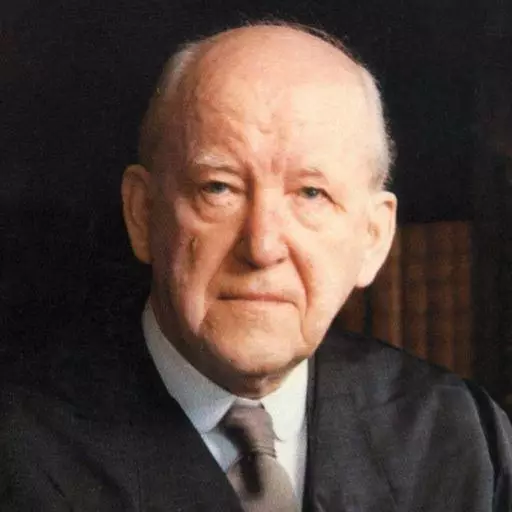
Spiritual Gifts, Part 2


Dr. Martyn Lloyd-Jones: We'll resume this evening our study of the sixth verse in the twelfth chapter of Paul's Epistle to the Romans. The Epistle to the Romans, chapter 12, and verse 6. "Having then gifts differing according to the grace that is given to us, whether prophecy, let us prophesy according to the proportion of faith."
Now we're considering this sixth verse, but we haven't quite finished our consideration of the first part of that verse. "Having then gifts differing according to the grace that is given to us." We have already started considering that, and we've emphasized the point that all these gifts are given. They're not self-generated, self-produced. Indeed, we can do nothing about that at all, and there is nothing more dangerous than to attempt to do so.
They're not natural gifts, these. He's not talking about natural gifts. These are spiritual gifts. I believe it's possible that sometimes the spiritual gift, as it were, is superimposed upon a natural gift. But that still means that it isn't the natural gift. It is what is superimposed upon the natural that really constitutes the essence of these spiritual gifts. But some of them are just distinct and separate and don't seem to have much relationship to the natural gifts at all.
We've seen also that these gifts are only given to believers. We've seen that it's right for a believer to covet the better gifts. Indeed, he's in a sense exhorted to do so. But he must only do so for the reason that he's anxious to edify the whole church. It's all in terms of this body to which we belong, not something personal, private, individual. The setting of the gifts is always that of the church as the body of Christ.
So our coveting of the better gifts must be for that reason. And we saw also that we must covet them, and the best way of doing so is to seek for love. Follow after charity. Follow after love. That's the best and the most certain way of seeking and obtaining the gifts. And we ended by saying that we must always be satisfied with the gift that is given to us. We must avoid the terrible trouble they had gotten into in Corinth, the people with the weaker gifts being jealous of those with the better gifts, and the people with the better gifts despising those with the lesser gifts.
Once we see this truth in terms of the body and that it is all given us by grace, well then I say it excludes this personal ambition and selfishness. Then there is no danger of our doing what he tells us in verse three not to do, which is not to think of ourselves more highly than we ought to think, but to think soberly according as God hath dealt to every man the measure of faith. Now then, that's the point at which we have arrived. And we emphasize of course this word "differing." "Having then gifts differing according to the grace that is given to us."
I cannot find any teaching in the New Testament that all Christians must have some particular gift, one particular gift I mean. We all do receive some particular gift, but I cannot see any teaching which tells us that we're all to have and must have one particular gift. No, no. The emphasis is on the differing. "Gifts differing." There is a variety of gifts. And the important thing for us is to make sure that we possess one or more of these gifts.
Well, now we continue and we raise this point. Somebody may ask—indeed people do ask this very often—is this something purely academic that you're doing? Are you simply doing this because you're expounding the Epistle to the Romans? And of course, it is of interest for us to know something about what the early church was like. But this by now has nothing to do with us. All that finished with the apostolic age. It is of interest, perhaps, to know how things were then. But has it any real relevance or application to us at this present time?
Now I think that's a most important question, a very vital question. I did just touch on it in passing last Friday night, but I want to take it up a little more this evening. What we did last Friday was to consider the argument that is sometimes based upon the teaching of 1 Corinthians 13, which is supposed to teach that there the Apostle says don't be concerned about all this. These are to pass away. And then they go on to say that at the end of the apostolic period, and especially when we had the scriptures as we've now got them, that all that ceased. And now, having the scriptures, these things no longer apply.
And they go so far as to suggest that nothing along this line has ever happened since. Well, we tried to give you a hurried exposition of 1 Corinthians 13 at that point last Friday. I leave that at that. But let's look at it in this way. You notice the list of the gifts that the Apostle gives us here. Whether prophecy, let us prophesy according to the proportion of faith, or ministry, let us wait on our ministering. He that teacheth, on teaching. He that exhorteth, on exhortation. He that giveth, let him do it with simplicity. He that ruleth, with diligence. He that showeth mercy, with cheerfulness.
Now, I think you'll all have to agree that whatever you may think of the first, the gift of prophecy, you've got to agree that all the others are clearly gifts that have continued in the church ever since and are in evidence at the present time. It's to me almost laughable the way in which people say, well, if you believe in these gifts, I don't see any evidence of these gifts today. That means of course they're only thinking perhaps of speaking in tongues or of prophecy or of miracles. They don't realize that all these others are equally gifts. They're put into the same class, the same category.
And it is clear, I say, that these are obviously manifest in the church today, as they have been throughout the centuries. So that we're entitled at this point to argue like this: if any of these gifts, for that matter, have been in evidence throughout the history of the church and still are, well then, why not all? It's a fair question to put. The Apostle doesn't seem to draw any distinction. He puts them all into the same category. And if these others, therefore, are in evidence, then I say why not all of them?
That's, therefore, another part of the answer to these people who say that all this finished with the Apostles. Another argument I would say is this one. If you feel that there is not much evidence of this kind of thing in the church at the present time, well then, may it not be the case perhaps that the explanation of that is the low state of spirituality of the church? And here is a most important point. One of the greatest dangers, it's always seemed to me, is this: that we interpret the scriptures in the light of our experience instead of testing our experience by the teaching of the scripture.
And that is what is happening, I think, very often at the present time. People lay down as the norm what they have and what they're familiar with, and they test everything by that. But you see, that's a very dangerous thing to do. We should rather take it like this: what is the New Testament picture of the church? How do we come out when tested by that standard? And the result is that it may well be that the absence of the manifestation of gifts is due solely to the low state of spirituality in the church.
We know that that is so, that that is true, because the scripture itself teaches that. If a church backslides or falls from the truth or limits the truth of God, well, she will lose her power. And the history of the church throughout the centuries demonstrates, of course, very clearly that that is something that has frequently happened. Let us be very careful, therefore, lest we be found to be wresting the scriptures simply in an attempt and an endeavor to bolster up our prejudices or to try to justify our own low state of spirituality.
That is what the Apostle means there in 1 Thessalonians 5 when he talks about quenching the Spirit. It's one of the most fruitful ways of doing so. You lay down to start with that certain things don't happen, can't happen, not meant to happen. And then, of course, you will find they don't happen. But your argument has been in a circle and you've been altogether wrong. That is quenching the Spirit. So I go on to a fourth point, and this is still more pertinent, it seems to me. We're involved here, of course, in the whole question of the sovereignty of the Holy Spirit.
And we must be very careful not to quench and not to limit this. Now, the doctrine of the sovereignty of the Spirit is taught us here. "According as God hath dealt to every man the measure of faith." It is God who has dealt it. We emphasized that when we were doing the third verse. Here it is again in this sixth verse. "Having then gifts." The very fact that they're called gifts should remind us always that it is His prerogative and in His sovereignty. "Gifts differing according to the grace that is given to us." The sovereignty of the Spirit.
And what I want to deduce from that at the moment is this: that it may be the will of the Spirit, therefore, at times that none of these gifts should be given or are in striking manifestation. It is for Him to decide. And we must be very careful as we approach this. There are certainly evidences, many of them, in the scripture that God, for His own great purposes at times, seems to withhold certain influences from the church and from the individual. He does it sometimes to teach us and to humble us and to do many other things. Or if we misuse His gifts, He is likely to withdraw them.
So it is possible in the sovereignty of the Spirit that He may give them or withhold them. And unless you've got absolute proof or a statement which is specific and explicit that these were only meant to be temporary and at a given point were to be withdrawn, I say be very careful in laying down your rules that you are not quenching the Spirit and at the same time fighting against the whole teaching concerning the sovereignty of the Spirit in the matter of this dispensing or dealing out of these gifts. But then I want to make a suggestion. Is there not clear evidence in these passages that deal with these gifts?
And it is evidence that is supported, as I'm going to remind you in a moment, by the history of the church, especially in times of revival. That we can divide up this matter into two main groups: what you may call, if you like, the regular gifts and the unusual gifts. Now, I was tempted to use the classification ordinary and extraordinary. I didn't do it because one doesn't like to use the word ordinary. So I've substituted the word regular. What I mean by regular is that they are constantly, almost normally, you may say, in evidence and in manifestation, apart from days of backsliding and of quenching of the Spirit.
The regular gifts and manifestations. And then the unusual ones. Now, I mean something like this: that here the majority of the gifts referred to in this 12th chapter of the Epistle to the Romans certainly seem to come under the heading of what I'm calling regular. Now I'm excluding the gift of prophecy there. But as to the others, I would say that they come under this heading of regular. Or if you take the list as you have it in 1 Corinthians 12, you will find there miracles, healings, and so on, which I call the exceptional, the unusual. And then the more ordinary: wisdom, understanding, and so on. Helps, governments, these things.
These are the normal, usual, regular. The other you put into the category of the unusual. Well, let me put it to you like this. In the church—and I would say thank God that this is in evidence at the present time—you do see the gift of faith. But there are times or there are occasions when you see the gift of faith in a most unusual and exceptional degree. Now there are many Christian people who have the gift of faith. That doesn't mean saving faith, of course. The gift of faith which is mentioned in 1 Corinthians 12 is not saving faith because everybody has saving faith.
You can't be a Christian at all if you haven't got faith to believe the message, faith unto salvation. All Christians have that. But all Christians have not got what is called there the gift of faith. I say many Christians have it in a mild degree or in a regular degree. But then you suddenly come across examples where this is manifest in a marked or in an unusual degree. Now you can think at once of the obvious examples, can't you? You think of a man like George Müller of Bristol. Now there is a man you see who had the gift of faith in an unusual degree and manner. You know the story. If you don't, well, you should familiarize yourself with it.
And there is something for people to answer who say that all this finished when the New Testament came into being. How do you explain a man like George Müller of Bristol and the faith which he had? Read that marvelous story of how that man had sufficient faith to put up buildings without a ha'penny, and was able to take in all these orphans. And when there was financial trouble, when there was a shortage of money, he never issued a report. He never did anything in any way to give publicity to his needs. He did it by naked faith. And there are still more astounding examples.
You remember, perhaps, the story of him crossing the Atlantic and was due at a meeting, and suddenly the ship became fogbound and couldn't move because of the fog. And there was nothing to be done. But George Müller began to pray and the fog dispersed in a most exceptional manner. That's the kind of thing. You get similar examples in people like Hudson Taylor and others. And there have been people, beyond any question, in the history of the church who have been given a very definite gift either of faith or of healing. It's sometimes difficult to tell which they have.
Have you ever read about Pastor Blumhardt in Germany, for instance? Or have you read of that Swiss woman, Dorothea Trudel, and others whom I could mention? Now here we're in the realm of fact, it seems to me, well-attested facts. And we must be very careful, my friends, lest we become guilty of quenching the Spirit because we've laid it down that all this ended with the Apostles. You're confronted by these great facts in the history of the church. I think I once quoted here—I don't think it was on a Friday night—it is said of John Welsh, who was the son-in-law of John Knox.
And John Welsh—I say this for the benefit of the reformed Calvinistic people present—John Welsh was as reformed and Calvinistic as John Knox was. There is good evidence—and this again you can read in a book which was again written by an equally reformed and Calvinistic writer—there is very good evidence that John Welsh was used to raise from the dead a woman in the south of France when he was living there. Now you've got to face facts. Be careful, my friends, lest in your neat and tidy, logical arrangement of all truth, you be found fighting against God. We need to be very humble in these matters.
There are unusual gifts in this way. Or take this gift of prophecy and use this as an illustration. Have you ever read, well, take John Welsh again, or take another great martyr in Scotland, Alexander Peden? You read the lives of those men and you will find that they were able to prophesy exactly things that were going to happen in Scotland and which did happen. Let's be careful. Let's be very careful lest in our supposed knowledge and understanding, we be guilty of quenching the Spirit in a grievous manner. And you see not only that, even contradicting men whom we regard as heroes.
There is no question but that throughout the history of the church, there have been these exceptional and unusual manifestations of these various gifts. But to put it more generally: take a time of revival. And every time you get a revival, which means an outpouring of the Spirit of God—I don't mean an evangelistic campaign. I mean a revival. Men can't produce revivals and they can't organize them. There's a lot of confusion about this, unfortunately. Our friends in America tend to confuse these two and they announce that a revival will be held. They mean an evangelistic campaign. I'm not talking about that.
I'm talking about a visitation of the Spirit of God. I'm talking about the sort of thing that you will be able to read in this book by Jonathan Edwards. There you see in Northampton, in the town of Northampton in Massachusetts, in 1740, 1742, and indeed before that in 1734, there was an outpouring of the Spirit. The Spirit of God came down upon that congregation in a most amazing manner. And there have been many such events in the long history of the Christian church. Now my point is that whenever you do get a true revival like this, you always get a manifestation of some of these gifts.
Sometimes some and sometimes others. One gift that is given always at such a time in an exceptional way to certain people is this gift of preaching and of teaching. Unusual manifestation of that particular gift. But you'll often find also that at such a time the gift of discerning of spirits is given. I could tell you many stories to illustrate this point. Some of them are almost incredible. How men filled with the Spirit of God have been given a kind of spirit of discernment and are able to detect spirits and the working of evil spirits in a meeting, and are even able to indicate certain people who were guilty of this.
There are many such well-attested stories of things like that happening during revival. And indeed again, even prophecies—I mean foretelling at this point of events which subsequently took place. Now all I'm trying to show you is this: that we must be very, very careful lest in having our neat and tidy system, we are quenching the Spirit of God and are laying down our rules as to what He is to do. We even become deniers of the facts of history in the history of the church. But it is above all such a terribly dangerous thing to do.
My friends, we are concerned with a truth that is limitless and endless. We know in part, says the Apostle. Well then, let's always remember that we only know in part and let's always be ready to be surprised and to be amazed. Now you see history, in other words, demonstrates this very point that I'm trying to make. That you get your periods in the church when you almost feel, well, there's no manifestation of any of these gifts at all. Then revival suddenly comes and you see them demonstrated in a most unusual manner. That's been going on throughout the running centuries. So I feel it comes to this.
The fact that you cannot be a Christian at all without having the Spirit of God in you means that each one of us who is a Christian has a spiritual gift. But then the baptism with the Spirit heightens those and perhaps adds to them. That, it seems to me, is the way in which you reconcile the teaching of the scripture with the actual history of the church in the past and the condition of the church at the present time. The Spirit being in us, He dispenses these gifts of His amongst us. Then I say the baptism of the Spirit obviously greatly heightens this and may add to that certain gifts which we did not have before.
But remember, it is all in the sovereignty of the Spirit, and it is He who decides what to give. I've talked to you about revivals. There have been many revivals in the history of the church with no speaking in tongues at all. Don't forget that. There have been instances of individuals baptized with the Holy Spirit—no evidence at all of speaking in tongues. Be very careful that you don't fall into two errors here. One is to dispute whether they've been baptized with the Spirit because they didn't speak in tongues, which, as I tried to show last Friday night, is unscriptural. And on the other, the danger of saying that there's no such thing as a unique baptism with the Spirit apart from regeneration.
And even if there is, that there can be no gifts. You see, we need to be careful and to be scriptural on all sides. And I say again for myself that my position is this: that I believe in the baptism of the Holy Ghost as a separate, distinct, unique experience. It may be accompanied by remarkable gifts. It may simply manifest the regular gifts in a heightened degree. It is not for us to say that none of these things can happen. Anything is possible in the sovereignty of the Spirit. And I must equally oppose to the people who make the rule on one side and the rule on the other.
Those who say that none of this can happen since the time of the Apostles and those who say all must speak in tongues. They're both making man-made rules, and I suggest that they're both equally unscriptural at that point. We don't decide these things. Our business, our duty, is to be open always to His gracious influences and to what He may decide to do. We can't predict this. We can't prophesy it. He does. And in the long history of the church, you see His sovereignty being demonstrated and manifested. He confounds all our man-made rules and systems and regulations. And thank God that He does so, for then the glory must always be His and His alone.
Very well, I leave that subject at that and take up now a very practical one. People have often asked me this: they say, in the light of this teaching, how do you know what your particular gift is? This has often troubled people. I know it's troubling people at the present time. It's not an easy question to answer. The lines of the answer, as I see it, would be something like this. How do you know your gift in a natural sense? Is that simple? Is that easy? Everybody's got some natural gifts. There's no such thing as a person entirely devoid of every gift.
No, we've all got natural gifts. How do you know which your natural gift is? I think it's an equally fair question to put. Well, the answer, you see, in both cases is surely this: the gift will manifest itself. And really it doesn't matter so much that you and I should know what it is, as long as we are functioning. Now let me illustrate what I mean. Take a person in a natural sense now who has a singing gift, a voice, and able to sing. Not sing like we all sing, but really able to sing. Now that is a natural gift. We haven't all got it.
But some have it. How do they know they've got it? Well, the answer, you see, is this: they just find themselves singing. That's what happens. They don't sit down and say in a kind of vacuum, "Now I wonder what my gift is. I wonder whether I've got the singing gift." No, no. You see, because they've got it, they find themselves singing. And it is so with all these other natural gifts. So I would say to you all who tend to be worried about this matter, it is wrong of you to be worried about it. Don't be worried about it. All you and I have got to do is this: we've got to seek to know Him and we've got to submit ourselves to Him.
We've got to tell Him that we don't care what we do nor what we are, as long as we are His and are functioning as He wants us to do. You do that, and I suggest to you you'll soon know what your gift is. Sometimes He has to persuade us as to our gift. We may even fight against it. But it doesn't matter. It is His sovereignty again and it is His power and He will make it manifest itself. There's no question about that. And probably many who are troubled about this are already exercising and manifesting the gift without knowing that they're doing so.
I don't think that's a bad thing. I think it's very much better than the people who boast about their gifts and who are always parading them. It's more consonant with the humility and the meekness of the Christian man. But you see, we've got another test at this point which is very valuable, and that is that other people can confirm which is your gift. And it is one of the duties of the Christian church as a whole to do this. In other words, it isn't left entirely to us. The church is involved because it's always a question of a gift in terms of the functioning of the whole body.
And so it has been the case in the church throughout her long history that the church has been able to do two things. She has been able on the one hand to question and to query claims which are made by people as to certain gifts which they think they have. And on the other hand, she has been able to indicate to people who were not aware of it that they have certain gifts. She's had to do both and she's capable of doing both. You see, you get instruction, don't you, in the pastoral epistles. They're told to choose certain men as elders and as deacons.
And amongst the qualifications are given down there, they're told to look for certain things. You don't appoint a man to teach unless he's apt to teach. You see, you don't call a man to be a preacher if he can't speak. There's an extraordinary common sense in the Bible, isn't there? You're to look for certain qualities. You're to look for certain manifestations of the gift. Apt to teach and patient and so on. There, you know the list of the characteristics that are given in 1 Timothy 3 and in Titus and so on. Well, now, here you see is a great help therefore to aid us in this matter of discovering what our particular gift is.
Not only will you find that it's manifesting itself, but the church will be able to help you. People sometimes think they've got a gift, but the church doesn't always agree. And it's important, as we've already seen, that the man who claims the gift should be ready to listen to the church. Any man who's been a pastor for any length of time will know exactly what I'm talking about. I've had men who have come to me and have told me that they've been called of God to be preachers. Am I claiming that I have the gift of discrimination or of wisdom? Well, to the glory of God I say it, I am.
And I've been able to tell such brethren as gently and as patiently and as quietly as I can to examine the matter again and to make sure. Why? Well, it was evident and obvious to me that they were lacking in certain of the basic essential gifts in this respect. And I'm happy to say that afterwards, I think almost without exception, that such men have come to me and have thanked me. Mind you, at the time some of them didn't like it and they felt that I was against them. I think of one man in particular, a most sincere and honest man that had a marvelous conversion.
And he was quite sure that he was called to preach. I was quite sure that he wasn't. He hadn't the mental capacity, he hadn't the knowledge, the ability even to learn, let alone to teach others, which would qualify him for such a task and a position as a pastor and preacher and teacher. But I was away from my church—it wasn't this one, but my former church—for a Sunday, and a visiting minister came who's a very nice man. And this young friend of mine, of course, he approached the visiting minister and told him about his call. And the visiting minister, being a nice man and not knowing the man, encouraged him for all he was worth.
Well, of course, not only was this man a very much better preacher than I was and a better everything else, but the poor young man was convinced that I was against him. However, he came to see differently. Now you see, the church is involved in all this and it is the business of all of us to listen to the church and the voice of the church on these matters. And it works, as I say, on both sides because thank God we've had other men who were humble and modest and perhaps guilty of fearfulness and temerity, who were not aware of their gifts. And the church has often had to show to such men that they possess gifts.
And she's had to open their eyes to it and convince them. Some of the greatest preachers the church has ever known have trembled at the thought of preaching, have done their utmost not to, almost had to be pushed into the pulpit. You can read their biographies. That was in a sense and in a measure true of the great George Whitefield. And it has been true of many others. The church in those cases, you see, has to do the exact opposite: to show a man that he's been given this gift and that it is his business and his duty to put it into exercise and into operation.
Well now, there are the general matters which seem to me to introduce this subject which the Apostle is here putting before us. And having done that, you see, he goes on. "Having then gifts differing according to the grace that is given to us, whether prophecy, let us prophesy according to the proportion of faith." Now we can only just introduce this this evening. We can't get any further, it seems to me, than just define as to what is meant by the term prophecy, which is the first gift he deals with and which, with which he illustrates his general principles. What is this gift of prophecy?
Now here again is a subject which can be very difficult. And I think it's difficult very often because people have relied rather on their own ideas and prejudices instead of on the scripture. Now what do I mean? I mean this. Let me tell you what prophecy does not mean. It does not merely mean that a man has a gift of expounding the Old Testament prophecies. You know there have been people who have taught that. They say prophecy here means the gift and the capacity to expound the writings of the prophets as they are recorded in the Old Testament. It may amaze you to hear that that was the way in which John Calvin and Martin Luther interpreted this.
But it's generally agreed by commentators of almost every school of thought more recently that they are completely and entirely wrong. It doesn't fit in with what the New Testament tells us about prophecy. But that's what Calvin and Luther and others in those times taught about this gift of prophecy. Why did they do that, you think? I don't know, but it's always dangerous to impute motives to people. I wonder sometimes whether it was due to some of the things that were happening at that time amongst the Anabaptists. The Anabaptists claimed that they had got these various New Testament gifts, that they'd all been revived in them.
And as we know, Luther and Calvin were very opposed to the Anabaptists. It may have been that it was that that influenced them. Whether it was or not doesn't matter. But what is clear is that that is a totally inadequate explanation of what is meant by this gift of prophecy. Others have confined it to foretelling the future only. Now prophecy does include sometimes foretelling of the future, but it isn't only that. Indeed, you can have prophecy without any foretelling of the future at all. Sometimes it is foretelling of the future, not of necessity, certainly not only that. Others have said that what is meant by it is a gift or a capacity which certain people have to discover the truth and the facts about others.
As to their state and condition and as to what they're to do and so on. Again, I would say that that may happen at times and be a part of prophecy. But to confine prophecy to that is certainly entirely wrong. And there are others who confine their definition of prophecy solely to a knowledge of the will of God in certain particular respects. They confine it entirely to that. Again, that may be included, but it must not be confined to that. Well, what then is the gift of prophecy? Well, I would define the gift of prophecy as being this: it is undoubtedly a direct inspiration of the Holy Spirit.
It is a person definitely receiving inspiration from the Holy Spirit. What for? Well, to give a word from God or the word of God, if you like, to the church. Now there is a very good definition of prophecy in the first Epistle to the Corinthians in chapter 14 and in verse 3. Let me read from the first verse. "Follow after charity, and desire spiritual gifts, but rather that ye may prophesy. For he that speaketh in an unknown tongue speaketh not unto men, but unto God: for no man understandeth him; howbeit in the spirit he speaketh mysteries. But he that prophesieth speaketh unto men to edification, and exhortation, and comfort."
Now you've got the same thing again in the 31st verse of that chapter. "For ye may all prophesy one by one, that all may learn, and all may be comforted." Now that is the content. Somebody's defined it like this, and I feel it's rather a good definition. It is the inspired delivery of warning, exhortation, instruction, judging, and making manifest the secrets of the heart. It is a man who is given this gift of passing on, as it were, a word from God to the church and to individuals in the church. It is an inspired delivery of warning, exhortation, instruction, judging, and making manifest the secrets of the heart.
Perhaps the best way of defining it is this: what is the difference, would you say, between prophecy on the one hand and preaching and teaching on the other hand? Because there is a difference between prophecy and preaching and teaching. What's the difference? Well, I would say the difference can be put in one word, and the word is immediacy. Immediacy. What does that mean? It means this. It is a word that is given to a man, that comes to him. Now preaching and teaching is not like that. A preacher and a teacher is a man who takes time to study. He takes time to think, to prepare.
He arranges his matter. He's got order, he's got system. That's the truth about preaching and teaching. A preacher and a teacher should not enter into a pulpit without any preparation and trust to the inspiration of the moment. That's not preaching and teaching. But that is prophecy. Prophecy is something that is given to a man immediately and directly. Now let me give you my proof for saying this. Go to 1 Corinthians 14 and verse 30. Or start at 29. "Let the prophets speak two or three, and let the other judge. If any thing be revealed to another that sitteth by, let the first hold his peace."
You see, you can picture the meeting. Here is a prophet speaking his prophecy. But a word is revealed to another man that's sitting by him. That's it. That's prophecy. It is a direct revelation. It is something revealed, something given directly by God. So you see it differs from preaching and teaching in that way, and it is this whole element of immediacy and directness. Now it's difficult in this way. A preacher and a teacher may also be a prophet. I've no doubt about this at all. I say it again to the glory of God. I think I know just a little bit about this.
I think I know something of what it is to be preaching or teaching and suddenly to find myself prophesying. What I mean by that is this: that you're aware that it isn't what you prepared, it is what is given at that moment and with unusual clarity and force and directness, and you're uttering, and you're listening to yourself as it were because it isn't you. So you see it may come in the middle of a sermon or a teaching or something of that kind. But the thing that differentiates it from teaching and preaching is this immediacy: that God is giving a message.
Now I haven't got time tonight, but next Friday night I'm going to go on to show you how this has to be safeguarded. Because I talk about revelation. It's the Apostle's term. "If anything be revealed to another." Now don't think that we mean by that revelation in the sense that the writers of the scriptures were given revelation. It doesn't mean that. It simply means this: that you are saying what you're saying not as the result of your thought and meditation and preparation, but you are just stating what has been shown you, given to you to say.
I'll show you the relationship between that and the scripture, God willing, next Sunday night. Now that is then prophecy in its essence. You draw the distinction between it and preaching and teaching, and I can prove that to you quite clearly because we are told in Acts 21:9 that women sometimes prophesy. We are told about Philip the evangelist that that same man had four daughters, virgins, which did prophesy. We are told of the same thing in 1 Corinthians 11:5 which reads like this: "But every woman that prayeth or prophesieth with her head uncovered dishonoureth her head: for that is even all one as if she were shaven."
Now those two, without anything more, prove that women can prophesy. But the scripture also tells us that it is not permitted to a woman to preach or teach. That's why it's important to be clear in our minds as to the difference between prophesying on the one hand and preaching and teaching on the other. This message may come to a woman, but doesn't make her a preacher nor a teacher. The thing is essentially different. Well, there it is. We've got to leave it at that for tonight. Now there we've got some idea as to what is meant by prophecy.
But as we go on to consider the next thing that the Apostle says about it and as to how it is to be done, it'll help us also to understand more clearly what the thing itself really is. Let us pray.
Oh Lord, our God, we thank Thee at the beginning for Thy word. We thank Thee for it now more than ever. We see that we are here in the realm of mysteries. The marvelous, the divine, the supernatural, the glorious. And we see how carefully we have to tread. We remember the command that came of old to Moses and again to Joshua: "Take off thy shoes from off thy feet for the ground whereon thou standest is holy ground."
Oh God, forgive us for our tendency to intrude and to rush in, in one extreme form or the other. Keep us humble, we pray Thee, and teachable. But oh God, open our understanding to the teaching of Thy word, lest we may on the one hand be guilty of limiting Thy truth and the possibilities to the Christian, or on the other be guilty of foolhardiness and of wild fanaticism that brings glory only to the devil. Oh Lord, receive our praise then that we have this Thy holy word. And keep us ever, we pray Thee, subservient to it and ever ready to listen to it as it speaks to us.
Hear us, oh God. Pardon and forgive us all for our many errors and faults and failures. And oh Lord, fill us all with Thy love. Shed it abroad in our hearts and give us a burning desire to live to Thy praise, to edify the church, and be the humble instruments in Thy hand of preaching the truth to others, whether in pulpits or in private, that they may be drawn out of darkness and brought into Thy marvelous light. Hear us, oh God, and follow us all with Thy blessing. And now may the grace of the Lord Jesus Christ and the love of God, and the fellowship and the communion of the Holy Spirit, abide and continue with us now this night, throughout the remainder of this our short, uncertain earthly life and pilgrimage, and until we see Him face to face in the glory everlasting. Amen.
Featured Offer

Find peace and comfort this season with your complimentary guide that includes access to 6 free bonus sermons on overcoming spiritual depression from Dr. Martyn Lloyd-Jones, one of the church’s most beloved Bible teachers. Topics include: true Christians can and do struggle with depression, recovering the joy of your salvation, dealing with crippling guilt over past sins, dealing with yesterday’s haunting regrets, encouragement to keep moving forward, and understanding God’s purpose for suffering.
Past Episodes
This ministry does not have any series.
Featured Offer
Find peace and comfort this season with your complimentary guide that includes access to 6 free bonus sermons on overcoming spiritual depression from Dr. Martyn Lloyd-Jones, one of the church’s most beloved Bible teachers. Topics include: true Christians can and do struggle with depression, recovering the joy of your salvation, dealing with crippling guilt over past sins, dealing with yesterday’s haunting regrets, encouragement to keep moving forward, and understanding God’s purpose for suffering.
About From the MLJ Archive
From the MLJ Archive is the Oneplace.com hosted ministry of the MLJ Trust. Our mission is to promulgate the audio ministry of Dr. Martyn Lloyd-Jones.
About Dr. Martyn Lloyd-Jones
Contact From the MLJ Archive with Dr. Martyn Lloyd-Jones
info@mljtrust.org
http://www.mljtrust.org/
PO Box 953
Middleburg, VA 20118