
Character of Unity
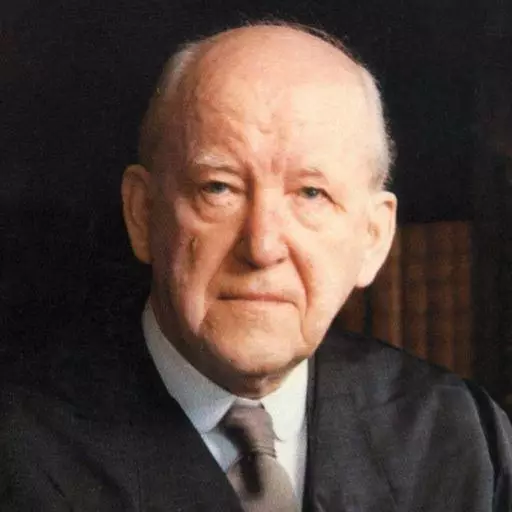
Dr. Martyn Lloyd-Jones: So, in that same way, we, being many, are one body in Christ and everyone members one of another. Now then, we began dealing with this last Friday, and we saw that the teaching concerning the church and the body of Christ is the thing which the apostle puts here before us. And it's a very profound doctrine, and I was trying to show its extreme relevance to the present situation. There's always talk about church unity, but before you can talk about unity, you must be quite clear in your mind as to what the church is.
Because the character of the unity is determined by the nature of the church. And so, we saw certain things last Friday. The unity is always of course a spiritual one, the unity of the spirit in the bond of peace. The church is one, that unity is meant to be visible. It is as I say a spiritual unity, which can only be brought about by the Holy Spirit himself. No man can ever add anybody to the church. You can add people to a church roll, but that isn't the same of necessity as adding them to the church, to the Lord Jesus Christ.
The spirit alone can do that. No man can be a member of the body of Christ unless he is born again, unless he is a partaker of the divine nature. How vital all this is to the doctrine of the church and especially to this modern discussion about church unity. And then we ended by saying that this is a unity that must include the mind, the thinking, the outlook. It's no use talking about a vague general spirit of unity. The unity that is here described is a unity which includes the head and the head governs all the rest.
So the Apostle Paul is so right when he writes to the Corinthians in 1 Corinthians 2:16 and says we have the mind of Christ. He's already reminded us here that we've got to be renewed or transformed by the renewing of our mind. And unless a man's got a renewed mind, he's not a member of the body of Christ. So, unity includes doctrine. It includes fundamental agreement about basic doctrine, of necessity. I think we were able to demonstrate that. But now we must go on. The next thing I would say about this unity is that it is a living and a functioning unity.
This, of course, follows directly from the statement that it is an organic unity, not an organizational unity, but an organic unity. The church is an organism, not an organization. And therefore, I deduce that the unity is a living one and a functioning one, an acting one. A body is meant to be active. That's what it's for. It is the means through which a person acts and expresses himself. So the body is meant to be active and functioning. Now, here again, you see we must draw the distinction between a body and a machine.
There's all the difference in the world between the working of a machine and the working of the human body. The working of a machine is mechanical. The working of the human body is physiological. And what a difference there is between mechanics and physiology. You see, physiology is the study of a living organism working, quite different from engineering or the study of machinery. The machine is dead. You can do many things with your machine but you can never make it alive. Even with these new computers that they talk about as being able to think. They don't think. You put things in and you pull a lever and you get your results. That's not thought. That's mechanical. Now, the working of the body is entirely different from that.
But the point I'm emphasizing at the moment is this, that the great difference between a machine and a body is this living, vital, active element. It is, of course, of the very essence of a body. Now, the church as the body of Christ is obviously meant to do the work for which it was created, for which it was brought into being. Our human bodies, we've been given our bodies in order that we may function in certain respects. And the body is most appropriate for the functioning of a human being. That's why he has a body and not a machine through which to express himself. And this is equally true of the church. The church is to express a living and an active unity.
How does she do so? Well, what are her functions? What was she created for? There are many answers to that question given in the New Testament itself. Take that great statement which is made by the apostle in 1 Timothy 3. The church, he says, is the pillar and the ground of the truth. It's said, it's thought, and I believe it's right, that what he means by that is that the church is a sort of pedestal on which this great noticeboard is held up before the world. That's one of her primary functions, if not the primary function. The first task, the first business of the church is to preach the gospel.
To make known the good news of salvation. If preachers are heralds of this good news, well, the whole church is the same. He has the special function, but it's a function of the whole church. The preacher's not apart from the church, he's a part of the church. Or you can put it in the words of Peter. Peter, you remember, in reminding those early Christians to whom he was writing in the first epistle, chapter 2 and verse 9, says, "Ye are a chosen generation, a royal priesthood, an holy nation, a peculiar people." What for? Well, "that ye may show forth his praises who hath called you out of darkness into his marvelous light."
Same idea. Now, this is the primary task and function of the church as the body of Christ, this living organism. It is through her that he makes known the truth concerning himself and his great salvation. Sometimes, some of the fathers used to put this by saying this kind of thing: that the business of the church is to bring children to the birth. Now, some of you may be surprised that I say that because the Roman Catholic church has been so fond of calling herself the mother. But you know John Calvin used exactly the same term, and we mustn't allow them to misappropriate it. There is a sense in which we are all born of the church.
What that means is not that the church in a theological sense is essential to our salvation. But it is through the church and by the church that we are born. There is no question about that at all. It is she who indulges in the activity that leads to our birth. It isn't hers, it's God's, as I'm going to show you. But this is God's chosen way of doing this. So there is a sense in which she is, as Paul puts it in the fourth chapter of the epistle to the Galatians, the mother of us all. This Jerusalem which is above, which is the mother of us all. That's just another way of saying then that the church was created in order that she might function.
And be active in that way. Why am I emphasizing that? Well, for this reason: that if the church is not active in this way, she is failing. Now, I don't care how orthodox a church may be, but if she's not active, she is failing. The body, I say again, is not a mechanism, it's an organism. It's not dead. You can have a perfect machine more or less, every screw in position, every wheel in position, but if nothing happens, it's no use. And the church, unless she is active and active, it means that there's something wrong with her, she is diseased. The characteristic of the body is that the various organs and the various parts are always functioning.
They're always working, and so the whole body is functional. A man who spends his time lying in bed doing nothing is really doing violence to his body. He was never made, he was never given a body in order to lie in bed or lounge on a couch or something like that. No, it's meant to be active. And this is something, I think, which should come as a challenge to all of us: that if we are not manifesting the activity for which the body was created, there's something wrong with us, and we mustn't rest on our orthodoxy or on anything else. A dead church is a contradiction in terms. And a church can be orthodox and dead.
I mean by that that she's not really heralding the gospel. Nobody's come to the birth as the result of her doing it. Such a church is not functioning as she was meant to function. But let me hasten to add this. We've got to keep a balance with all of this. That's where this analogy of the body is so important and at the same time so fascinating. Though I say that the church is meant to be active and living, I must again emphasize this: that the activity of the church is his activity. It isn't hers. Take this analogy again. What the body is to me, to my brain, to my personality, the church is to Christ.
He is the head of the church, which is his body. Now, it is the head that controls everything. This is where movements are initiated. This is where everything starts. So, the fundamental proposition is that the activity of the church is the activity of the Lord Jesus Christ and not merely the activity of the church. And therefore, what this analogy teaches us is that one of our dangers is to try to act on our own and independently of him. See, there are always extremes here. The people who do nothing, the people who do what they can or try to do what they can, try to act on their own and independently of him.
Now, the analogy demands this. And I think the history of the church proves this very abundantly. I believe it's one of the great lessons we all need at this present time. Let me illustrate what I mean. The church can never organize a revival. Never. Oh, how often have men tried to do this. It cannot be done. You can do everything you like. You'll never organize a revival. You can organize activities. But I'm talking of a true revival, a movement of the spirit, this vital activity of the whole church, when men and women are converted by the thousand, struck down perhaps even before they get to the meeting and so on.
What is characteristic of a true spiritual revival? It can never be organized. Men can never produce it. The church can never produce that. Or let me add something else. I've already said it under another heading, but it's got to come in here as well. The church can never add to her true membership. Now, this happens so often. I remember a few years ago reading the address which was delivered by a man whom I knew, no longer alive. He was then the moderator of his particular church. And he solemnly in his moderatorial address put a program before his denomination. He begged the people to pledge themselves to it.
And they went back from the assembly in great enthusiasm. He said, "Let us decide together to add to the church in the next 18 months 50,000 members." Well, the man was speaking in all seriousness. But he was speaking in an utterly unscriptural manner. You see, he was conceiving of the church as if she were a business organization. Businesses can do that. They can add to the business. They can decide to send people out with leaflets and call from door to door and knock and get fresh customers, and you can add to the number of your customers by that sort of method. It's done, it's done frequently. He thought the church could do that. Well, poor man, he discovered that she couldn't.
Of course, I hasten to add that you can certainly add to the numbers of the people on the roll of your church. But you see, you can't even do that at the present time, and thank God for that: that all these methods and organizations actually fail in practice. But they should never be attempted. Patently, if the church consists only of those who are born again, you cannot sit down and say we are going to add a given number during the next year. You don't know. You don't know what's going to happen. So even to attempt to do it is indicative of a failure to understand the true doctrine of the nature of the church.
No, the analogy compels us to say this: it is he who gives the order. It is he who moves. It is he who controls gifts and everything else. Let me sum this up then by saying that there are two dangers always confronting us as members of the body of Christ. And I put these up as being opposite extremes. The first danger is the danger of activism. This busy-ness, this failure to remember the true nature of the church and to think of her in organizational or mechanical terms and decide to go out and do things: activism. That, I suppose, is the commonest of the two besetting sins of the church at the present time.
What's the second danger, the other extreme? Well, I've put it down here in my notes as hypochondriasis. What do I mean by that? Well, what I mean by that is this. The first man, you see, he's so busy he doesn't have time to think about his health at all. And that is why he eventually ends in backsliding, almost invariably. If you live on your activities, you'll not only go wrong in your belief, you'll go wrong eventually in your spiritual life. It's like living on alcohol, living on stimulants. It'll carry you so far, but in the end, you'll collapse. I'm not sure we are not witnessing something of that kind of thing during these years.
And if I may venture on a prophecy, I think we shall witness it still more in the next few years. We shall see a collapse when people have reached the stage of exhaustion. They've been so active that there's no energy left at all, even this false one. Activism. But then you see the other extreme is hypochondriasis. What's that? Well, it means this: that a man was so busy studying his own health that he's got no time to do anything at all. He's always feeling his pulse, taking his temperature, testing himself in various ways. And it becomes a whole-time occupation. So worried and concerned about your health. Well, clearly you can't do anything else.
You can't go to your office, you can't go to work because there you'd have to be doing things. And if you're compelled to do things, well then you have no time to take these various tests. Hypochondriasis. You know the people who are always worrying about themselves and worrying about some minutiae and details of belief and this and that, and so concerned about correctness in many respects. As I say, it's a whole-time occupation. They're the whole time turning in upon themselves and watching themselves valetudinarianly, hypochondriacs, whichever you like to call them in a spiritual sense. Well then, somebody may say, what are you suggesting is the true position? Well, I'll tell you the true position.
It is neither of those extremes. What are we meant to do as the body of Christ? There are only two demands which he makes of us. The analogy of the body proves it. We're called to be healthy. And we're called to be ready or responsive. That's what we are called upon to do. If we concentrate upon being ready, being fit, as it were, so that when he gives the slightest indication, we're immediately ready. There's no blockage, there's no paralysis, there's no hindrance. Then, I say, we have fulfilled what he really demands of us. It's not to act apart from him or instead of him. Neither is it, as I say, to be doing nothing in this morbid preoccupation.
With the mumps and measles of ourselves, as Charles Lamb called them. It is rather, I say, to be in such communion with him, which leads to health in and of itself, which is sanctification. Building ourselves up in the faith and so on. Not in a morbid way, but in a healthy way. Taking the exercise, reading the scriptures, praying, doing the things which are a part of this spiritual exercise. Then I say, if we do that, but above all, keep ourselves in this condition of responsiveness. One of the best ways of testing a man's sanctification is to determine his sensitivity to the will of the Lord. The man who knows him so well.
That he's able to interpret immediately any of his desires or his behests. You can think of the obvious illustration. In the old days, the servants of kings and so on, that was the man whom the king prized above everybody else. The man who was so sensitive to his master and always kept his eye on him. The king didn't have to shout at him or command him or threaten him. A look was enough. And the man interpreted the look of his master, was always ready to carry it out. Just a word, a slight movement, and the servant being in such accord and so sensitive to his master's every mood.
Every word, every desire, that's the perfect servant. Well now, you and I are meant to be like that. And that's the thing on which we should concentrate. If we only concentrated more on him and this responsiveness, this sensitivity to his desires and what he wants, I think the church would experience an activity that she hasn't known for many a long day. And then we would see real activity coming down from the head, and not this excitable mechanical activity which we produce. That's what the church is for as the body of Christ. And so, I come to my last point under this particular heading, which is this. As that is the nature of the activity.
The activity of the church will always be an activity that is consistent with and in conformity with the thinking and the mind of the head. There is a tremendous principle. And oh, how it's been broken and neglected by, I think we can say, every single major section of the Christian church. Now, you must start with the analogy. The activities of the body are meant to be conformable to, consistent with, the person who is functioning through the body. In other words, a man is not meant to behave like an animal. A man is not meant to behave like a machine. A man's meant to behave like a man. Our activities are in this essential consistency.
With what makes man man. Man behaves as a man. Very well. Now, the same principle applies here. And so you see the activity of the church, all of her activities are to be in accord with the fact that she is the body of the Lord Jesus Christ. What does that mean? Well, you remember his own statement. "My kingdom," he said, "is not of this world." You remember his saying that to Pilate. "My kingdom is not of this world." He said, "If it were, my servants would fight, as the servants of the kingdoms of this world fight." He said on another occasion, "the Son of man is not come to be ministered unto."
But to minister and to give his life a ransom for many. He says, "it isn't as it is with the kings and the princes of this world. There," he says, "the greater are served by the lesser. But I am among you as one who serves." It's altogether different, he says. And of course, he says these things to his disciples and others in order that they might have a clear notion of his kingdom, which takes now the form of the church. But you see, this has been violated. Oh, how many, many times. Let me give you some instances of what I mean. There have been times and eras in the history of the church when the Christian church has made people confess.
That they were Christians at the point of the sword. And they thought that they were carrying out his will. They said, "It's good for a person to be a Christian. But here are people who don't want to be Christians. We'll compel them to be Christians." So they have made people at the point of the sword confess the Lord Jesus Christ. Now, that I say is an activity on the part of the church which is a complete denial of this principle. It's the exact opposite of not only what the head taught, but of what he has always done. He's the exact antithesis of this. But can't we go further? Everybody would more or less recognize that.
That for the Christian church to start a war or to take part in it, I mean now not as citizens of a nation but specifically for the purposes of spreading the gospel, is something which is a complete denial of this doctrine. But we can go further, I say. Is not any alliance between the state and the church an equal violation of this principle? And yet you see, not only the Roman Catholic church fell into that error, Luther perpetuated it, and indeed John Calvin did, not in exactly the same way as Luther, but equally definitely. And Ulrich Zwingli in Zurich did exactly the same thing. He actually died on the field of battle. But in any case, he said it was the business of the state.
The ruler, to enforce the true religion. And Calvin said that it was a part of the function of the state to do the same thing: to preserve this and to punish those who didn't conform to this. And of course, in this country likewise, exactly the same thing in the Church of England and John Knox did exactly the same thing in the Church of Scotland. It's been an amazing thing, this. Of course, we understand how the reformers with so much to do hadn't time to do everything, not to look into all these questions. They were concerned about one great thing, this great doctrinal central matter of salvation. They took over all that. And it has led to untold misery.
But the point I'm establishing is that in any case it is quite wrong in theory. The church does not belong to the kingdoms of this world. "My kingdom is not of this world." This is a spiritual body, a spiritual society. And therefore, I say, she can never be entangled with such things. And any desire for such relationship violates the true principle. But I want to take it even a step further. Surely the attempt to maintain the life of the church by means of social entertainment is an equal violation of the principle. And this, of course, has been the great sin of the church especially during the last 100 years. All these things are so important today.
I believe that you and I are living at the end of an era. We are seeing the end of all that, and I'm one of those who says thank God it is the end of it. Let's go back to the New Testament and start afresh. You see, the argument for the social entertainments was this. Darwin writes his book in 1859, *Origin of Species*. Science is developing. An attack comes on the faith. Not only that, industry spreading, towns are growing, and people are changing and are being more educated and so on. And they said, "Now the danger is of course we're going to lose these people. How can we hold them?" Well, they said, "They don't seem to like our prayer meetings."
They don't like too much preaching, they don't like relating spiritual experiences and conferring together about these matters. Well, very well, we must do less of that or we're going to lose them. But on the other hand, they do like other things. They like dancing, card playing, games and so on. They like lectures on literature. Well, let's give them all this and thereby we'll hold them. But surely this is a violation of the whole principle. The activity of the body is to be consistent with and to conform to the mind of the head. And he came into the world not to do things like that, not to interest us. He came to seek and to save that which was lost.
He came to give a new birth. He came to form a spiritual kingdom, not of this world. It's a spiritual kingdom. He's concerned about our souls, our relationship to God. He doesn't say that there's anything wrong with the body as such. He doesn't say that people shouldn't play football or any games they like if they want to outside, but that isn't the function of the church. The church in a sense is not to hold people. The church is to save people and to build them up in our most holy faith. And the moment she compromises that, she is really just displaying that she's misunderstood this principle, or else has failed to put it into practice. Now, it is one thing, you see, to maintain an organization, to maintain the appearance of the church.
But if you try to do it in these manners that are inconsistent with the principle, you will find that you've only got a temporary success. And the history of this century is proving that abundantly. There was a great vogue for what was called the institutional church at the beginning of this century. You don't hear much about it now. It was a complete failure. And people who are only held by things like that are not being held by the living thing. And eventually they'll get tired of that so they'll have nothing at all. No, no. The church has got to realize what she is, her relationship to the head, and that all her activities must be consistent with. Now, that's the great principle.
In practice, you may have to make particular decisions. But as to the principle itself, there is no question at all. And of course, history demonstrates it and proves it so abundantly throughout the running centuries. You see the church trying to bolster herself up by various means. They all fail and she goes down almost to the end. And the scoffers begin to think that she's finished. Then suddenly God, the Lord, arises. He moves the whole body and there's a mighty revival and people are brought in, truly converted, and you have living fellowships, prayer, fellowship together about these things, building one another up in the faith. People really interested in the things of the spirit.
In other words, you have a true church instead of just an organization or a shell. Now all this follows, you see, from this principle. And indeed, we can put it like this, can we not? That's the argument of Paul in 1 Corinthians 13. "Though I have the tongue of men and of angels and have not charity, I've become as sounding brass and tinkling cymbal." Well, a brass band can collect a crowd and it'll keep the crowd together for a certain length of time. Or a man who's just a good speaker or an orator. He will collect a crowd and entertain them, but there's no church there. You can get a following, but the business of the preacher is not to get a following.
Not simply to interest people or to attract people by anything that he can do. From the ultimate standpoint, he's sounding brass, tinkling cymbal. No value. You can indulge in the rites that the apostle speaks of, giving your body to be burned. No value. Of course, it'll attract temporary attention. It'll call a crowd together. And for a while, they'll perpetuate the memory of this man. But is there a church there? That's the question. And likewise with knowledge. With knowledge, you can interest a certain type of people and they'll find it tremendously interesting, intriguing, and fascinating and so on. But if there's no life there, there's no church there and the thing will eventually vanish into thin air.
Oh, these are absolute fundamental laws. The church has failed to see this principle for such a long time. And you and I, my friends, are living in an age when we are seeing the outworking of this principle. In spite of all that the church has done by means of organization in this present century, look at the present position. It really doesn't work. It cannot work. The church cannot be kept going on her own activities. Her activity must always be in conformity to and with the thinking, the mind, the spirit of the head himself. And so it comes to pass, and it's one of the most glorious things about the life of the church and being in the church, that here we are not dependent upon numbers.
We are dependent upon the spirit. "Where two or three are gathered together in my name, there I am." This power of the spirit, through one, alone can do more in a minute than thousands can do in 100 years in this vital, living, real sense. And that's the great story of the church. That's precisely what the whole of church history demonstrates so clearly. Isn't it time we came back to this? You see, here it is: "we, being many, are one body in Christ and everyone members one of another." Well now, I've got to leave that at that point and go on to my last point about the character of this unity, which is this. It is a unity always in which we are aware of our oneness and of our interdependence.
"So we, being many, are one body in Christ and everyone members one of another." Not only members of him, but members one of another. And I say those who are members in this body are always aware of this. Now, here are some of the subsidiary principles, if you like, that come under that general heading. This oneness is a oneness that is made up of many who are different. "So we, being many, are one body." You see, it's a variety, a variation. We shall be drawing later certain deductions from that as to how we are to regard our gifts and how we are to exercise them and so on. I'm just leaving it in general at this point. But this is the glory of the church.
Many constituting the unity, the one. The one consists of this perfect adaptation of the many to one another. The variety of gifts, but that one central unity. The second point I make is that we should therefore always think of the whole more than of the parts. That's the problem, isn't it? But you see, the analogy compels this. That's what the apostle was doing here. He's warning these Romans: now, he says, if you start thinking of yourselves and of the parts and the function of the parts, you'll go astray. That was the whole error of the church at Corinth. That's schism, that's atomism, call it what you like. The way to counteract that is this: it's to realize that the whole is more important than the parts.
And we should always be thinking of the whole. Let's work that out a bit more in this way. What is, after all, the most central and essential glory of the human body? Isn't it this: it is the balance and the harmony of these varying parts and portions. How different they are. How refined is the eye, how crude in a sense by contrast is the foot. And so on, I could take you to the various organs or parts of the body. Not only would you find that they're all different, but they differ in a very striking manner. And yet the marvelous thing about the body is that they're all in it, all essential to it, and the balance of it all and the harmony with which they all work together.
That's why I say we should always concentrate on the whole, not on the parts. Think of the whole rather than the particular part. I'll go further and put it like this. It's all a part of this statement: "we, being many, are one body in Christ and every member members one of another." The next point I make is this: we should realize that the part, the individual part, has no real meaning in and of itself. Now, that's a pretty extreme statement, but it's right. An isolated finger is really unthinkable, isn't it? It's ridiculous. Think of a finger just on its own, with nothing else, just one finger. Well, it's useless. There's no point in it. It has no meaning. It has no purpose.
The part has no meaning in and of itself. It is a part of a whole. Let's go on. The part cannot really function in and of itself and in isolation. It can't do that. I've already indicated in working out the truth about the body that if a part does try to do that or does for some reason do that, well then it means disease, it's abnormality. I'm talking about true functioning. And I am saying that the part cannot really function in and of itself or in isolation. The body has been so made and constructed, so organized by God who made it, that the parts cannot function without the head, neither can they function without one another. There is this extraordinary interdependence, members one of another.
If you worked out for yourselves, as I'm begging of you to do, the analogy of the body in terms not only of anatomy but still more of physiology at this point, which is the working of this body of ours, not merely knowledge of the parts but how does it go, how does it function? You will find that every part is dependent in a sense upon every other part. They all are interdependent, they all interact, and they all help one another. The next point I therefore make is this: the value of the contribution of any particular part is what it contributes to the functioning and the activity of the whole and is of benefit to the whole. In other words, the action of my finger is not something in and of itself.
If I merely do that and it's a purposeless action, or if it's not purposive, it's ridiculous. The object of any action like that is to do something that I want to do. I want to call your attention to something or something like that. It's not an action in and of itself. It has value only as it contributes to the object and the purpose of the whole and as it is of benefit to this whole. And so the final conclusion I draw is this: that we should therefore as parts of this body be content with our lot, our position, our gift, our activity, under him, whatever it may chance to be. Now, that does really arrive, we do arrive at that, by an inevitable logic.
If it is the whole that matters, not the parts, and if the part is thus interdependent upon all the others as well as upon the head, and its own individual action has no real value except in its relationship to the whole, and if the parts are essential to the harmonious functioning of the whole, well then I must be content with my part, the part I am, with my lot. To start with, I don't determine it, and I have no right to be there at all. It is all of his grace that I'm in the body at all. That ought to be enough for us. But over and above that, I say to myself, surely the thing that matters is his functioning, not my functioning.
Not is this thing I'm doing wonderful or isn't it? It's his functioning. It is the functioning of the head, it is the functioning of the whole. It's the whole body that matters. And I am only of interest and of value as I am given the privilege of playing a part in that. Well now, I don't care therefore what it is I am in it. And in a sense, I'm vital to it, I'm essential to it. So you see, that is the way in which we judge and evaluate the importance of what we are and what we are privileged to do. In other words, in the church and as Christian people and as active members of this body of Christ, our main interest should never be in what we are doing.
It should be in what he's doing. This is only a part of that. Let me try an analogy. The analogy of the body, I think, puts it absolutely perfectly. Let's try a military analogy then. The business of the soldier in the army is really to be concerned ultimately about the whole. What's the fight about? Why is his country in it? And so on. He's not there to do exploits himself. He's not there to make a name for himself. That sort of man is probably a greater danger than a help, more useful to the enemy than his own side. The man who wants to cut a great, great figure or to do something dramatic. No, no. He's concerned about the whole campaign, the whole thing.
He doesn't direct that. All he is to do here is to be ready when the command comes down to him as an individual to act immediately. That's the kind of thing that I'm trying to say. And as you work these things out and consider them in your own life and in your relationship to the church, as you look at them in the history of the church throughout the centuries, you will see quite clearly that most of the difficulties and the disappointments and the heartaches and, above all, the failure of the church as a whole is mainly due to the failure to understand this essential bit of teaching: that we, being many, are one body in Christ and members one of another.
You may say that I'm not important. You are. That part next to you is more important, perhaps yes, but he can't go on without you, and he's dependent upon you, and he will suffer if you are not in a fit condition. You see, it's this vital relationship that makes that kind of thing true. So all of us are vital, all of us are essential, all of us have the great privilege. And the way to avoid these troubles and disasters is always to be thinking of the whole body and especially the head. And then you will be always looking, keeping your eye on him, ready, sensitive, responsive, so that when he initiates an action, it's carried out.
That's the great New Testament doctrine for the Christian church and our unity and our functioning. We've dealt tonight with this great principle that the unity of the church is a living and is a functioning unity. And that is how she functions, and that is how each one of us functions within the great and the glorious unity. Well, God willing, we can go on next Friday night to verse 6 where he now applies all this to particular activities. Let us pray. Oh Lord our God, we come to thee again and we come to thank thee for thy word. Lord, we've already thanked thee that it is indeed entrancing and enlightening and uplifting.
Oh God, we pray thee by thy spirit so to implant these things in our minds and in our hearts that we shall delight in being made more and more conformable to this image and to this pattern. Grant, oh Lord, that each one of us may have a single eye to thy glory and to thy praise. Give us, oh Lord, that love, shed that love abroad in our hearts we pray thee, without which all our activities are in vain and empty and utterly useless, caricatures of the activity of the church, mechanical action. Oh Lord, shed thy love abroad in our hearts by thy Holy Spirit so that we shall altogether be looking unto thee.
Looking at thee, forgotten ourselves and at one another. Lord, may we so love thee that we shall forget ourselves and be lost in wonder, love, and praise. Hear us, oh Lord, and now may the grace of our Lord Jesus Christ and the love of God, the fellowship and the communion of the Holy Spirit abide and continue with us all this night, throughout our journey through this life and until we arrive safely in thy presence for evermore. Amen.
Featured Offer
Find peace and comfort this season with your complimentary guide that includes access to 6 free bonus sermons on overcoming spiritual depression from Dr. Martyn Lloyd-Jones, one of the church’s most beloved Bible teachers. Topics include: true Christians can and do struggle with depression, recovering the joy of your salvation, dealing with crippling guilt over past sins, dealing with yesterday’s haunting regrets, encouragement to keep moving forward, and understanding God’s purpose for suffering.
Past Episodes
Featured Offer
Find peace and comfort this season with your complimentary guide that includes access to 6 free bonus sermons on overcoming spiritual depression from Dr. Martyn Lloyd-Jones, one of the church’s most beloved Bible teachers. Topics include: true Christians can and do struggle with depression, recovering the joy of your salvation, dealing with crippling guilt over past sins, dealing with yesterday’s haunting regrets, encouragement to keep moving forward, and understanding God’s purpose for suffering.
About From the MLJ Archive
From the MLJ Archive is the Oneplace.com hosted ministry of the MLJ Trust. Our mission is to promulgate the audio ministry of Dr. Martyn Lloyd-Jones.
About Dr. Martyn Lloyd-Jones
Contact From the MLJ Archive with Dr. Martyn Lloyd-Jones
info@mljtrust.org
http://www.mljtrust.org/
PO Box 953
Middleburg, VA 20118
