
Privileges and Responsibilities


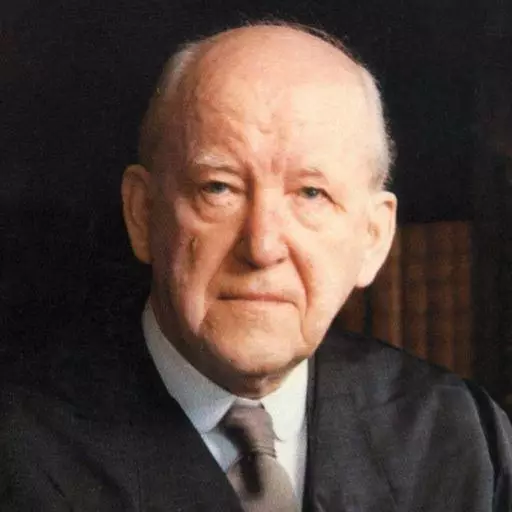
Many people vie for the opportunity to be a citizen of a great nation, but Dr. Martyn Lloyd-Jones dives into the reality that Christians have a far greater privilege and responsibility as citizens of the kingdom of God. In this sermon on Ephesians 2:19 titled “Privileges and Responsibilities,” Dr. Lloyd-Jones explains the magnificent realities that entail being made a citizen of the kingdom. God is actively pursuing the good of each and every member of the kingdom. As Dr. Lloyd-Jones notes, “All the resources of the Godhead are for us.” Accordingly, Christians have been given all the spiritual blessings in the heavenly places and find their pinnacle in access to God Himself. Dr. Lloyd-Jones turns the sermon to discuss some of the responsibilities of the Christian. By way of illustration, if a person is in the army, they are going to be expected and required to live, look, and act a certain way, and it will be the greatest joy to do so. They want to represent their king and kingdom well. How much greater is the weight of responsibility for the Christian who was brought into the kingdom by the blood of their King?
Dr. Martyn Lloyd-Jones: The words to which I should like to call your attention this morning are to be found in Paul's epistle to the Ephesians, the second chapter, and the 19th verse. The 19th verse in the second chapter of Paul's epistle to the Ephesians: "Now therefore ye are no more strangers and foreigners, but fellow citizens with the saints, and of the household of God; and are built upon the foundation of the apostles and prophets, Jesus Christ himself being the chief cornerstone; in whom all the building fitly framed together groweth unto a holy temple in the Lord: in whom ye also are builded together for a habitation of God through the Spirit."
The Apostle is here, as we've already seen, describing in a positive manner the privileges of membership of the Christian church. He's giving these Ephesians and all Christians a very wonderful picture of what the church really is and therefore, as I say, the high and great and glorious privilege of membership in the church. He's been describing how God in Jesus Christ has brought together the Jews and the Gentiles for to make of twain one new man, this new body.
Now there is the conception of the church. And having explained how the two parties were brought together, he now shows them both together what their position is as members of the church. And we have reminded ourselves that in order to do this, he employs a number of figures and of pictures. The church is like a body, but here he tells us that the church is also like a state, a kingdom, fellow citizens. He says that the church is also like a family, the household of God. But indeed, the church is also like a temple in which God himself dwells.
Last Sunday morning we considered what this definition means in general. We considered also how one obtains this citizenship, and then we looked at some of the general privileges that belong to us as citizens in such a kingdom. We reminded ourselves, for instance, of our King, the extent of his kingdom, our fellow citizens, and the future glory of this wondrous kingdom into which we have been brought. But now we must continue this morning, and we must look for a moment at some further particular privileges that belong to us as members and citizens of this great kingdom.
Now this was the whole object of the Apostle in writing his letter. He is most anxious that these Ephesians should realize these things. They've been saved, they're in the church, they've been sealed by the Holy Spirit. Ah yes, but he isn't satisfied with that. He prays that the eyes of their understanding may be enlightened, that they may know these further things and amongst them, this one in particular.
And there can be no doubt at all about this. Our main trouble as Christian people is that we do not realize the privilege of our position as members of the Christian church. The greatest need of all today is a true and an adequate conception of the nature of the Christian church. It's because we who belong to her don't realize what it is that we fail to attract those who are outside. We give such a poor impression that they are not interested. Revival starts in the church. True evangelism can never be carried on with a church that is not a living demonstration of the gospel.
So from every standpoint, the thing we need to concentrate on at the present time is the character, the nature of the church and the privilege of our position in the church. Well then, let us go on to consider some of these further privileges that we may see what is true of us this very moment. Now, here are certain things which we can add therefore to the general privileges we considered last time. And they are all quite obvious, it seems to me, as we work out this analogy of the church as a kingdom. Think, for instance, of the benefits that we enjoy because we are citizens of such a kingdom.
That is one of the first things one thinks of in connection with a kingdom. As a citizen of a country, you enjoy all the benefits of the reign and the rule and the laws of that particular country. It has often been the proud boast of citizens of this country that this country is the home of freedom, parliamentary democracy, and so on. Now, those are things which we enjoy as the result of our citizenship in this country. There are other countries which haven't got these privileges. They're still more or less in a state of serfdom. There are others under awful tyrannies and so on.
One of the most glorious things about citizenship is that it does at once entitle you to enjoy all the benefits of the system and form of government, the economy of that particular state. Now, we can transfer all this to the realm of the church, and it's equally true. Now the Apostle has already reminded us of that, of course, in the very first chapter where he has said in the third verse, "Blessed be the God and Father of our Lord Jesus Christ, who hath blessed us with all spiritual blessings in heavenly places in Christ."
There is a summary for you of all the blessings of this particular kingdom. Of course, they're endless. It's quite impossible to attempt to describe them. But we must lay hold on that great principle. All spiritual blessings in the heavenly places in Christ are ours. That is what God has brought us into. The kingdom, the state to which we belong, is a kingdom in which all these blessings are given and are given freely. It is the King's good pleasure that they should be given. He delights in doing it. He's interested in his citizens, he's interested in all his people.
He's the father of his people and he's concerned about their welfare and their well-being in every single respect. Now, I can do nothing better therefore than to just give you one or two other statements which we find in the scripture to the same effect. The Apostle Paul, in writing to Timothy in the fourth chapter of the 10th verse, refers to God in this way. He says, "God who is the savior of all men, especially of them that believe." Now, what savior means there is, of course, the one who blesses, the one who looks after, the one who delivers us out of trouble. And the scripture teaches that everywhere.
God causes his sun to rise upon the evil and the good and sends his rain upon the just and the unjust. There are men and women in the world today who never think of God and never mention him except to blaspheme his name. They, even they, enjoy some of the common general benefits and blessings of God's kingdom. All they have comes from God. He is the savior of all men. Yes, but especially of them that believe. He's got a personal interest here, a special interest, a most peculiar interest. And you and I, as citizens of the kingdom, are, of course, the recipients of these peculiar benefactions, these special blessings that he has for his own people.
Everything in a sense is ordered, we are told in the scripture, for our good. Listen to this. "We know," says Paul. There's no need to argue about this. There's no question or query about this. "We know that all things work together for good to them that love God." Now, you can't get anything beyond that. But it's the simple truth about us that the God who controls the whole universe and cosmos manipulates everything for the good of his own people. Everything is working to this end. God as the controller of everything is our King, and he manipulates all his resources for our benefit.
Or take another way in which the Apostle puts it. "He that spared not his own son, but delivered him up for us all, how shall he not also with him freely give us all things?" Now, there are some of them. You remember our Lord says that the very hairs of our head are all numbered. Nothing can happen to you, he says, apart from your Father. The whole teaching of the Sermon on the Mount is just to inculcate this idea of God's special interest in and concern in his people. It's, I say, something that is, of course, integral to any conception of a kingdom with a king and citizens.
And so you and I should remind ourselves this morning of this most wonderful thing of all. In this kingdom of God and of his Christ to which we belong because we are in Christ, all the resources of the Godhead are for us. Now that is the teaching everywhere. You get it in the Old Testament, God's concern for his people and so on. Here it is still plainer in the New Testament. We are the recipients of all these amazing, untold, unsearchable riches and blessings of God's kingdom.
I've got to hurry on because there are a number of things to deal with. Another privilege is this: we have a right of access to the King. That is true of the humblest citizen in the land. Ultimately, he has a right of appeal to the King. The whole processes of the law are there in a sense to enable him to do that. And he can take his appeal right away along until ultimately he is appealing to the King. I needn't stay with it. But it's true of every one of us this morning as a Christian.
We have a King, my friends, who, though he is the King of Kings and the Lord of Lords and the ruler of the ends of the earth, knows and is interested in his citizens one by one. Are you burdened? Are you heavy laden? Are you struggling and straining? I'm here to and it's my privilege to remind you that you have a right of access to the King. You can take your case to him. He may be in his royal procession, there may be something big and great engaging his attention. I assure you that if you hold up your hand as he's passing and hold out your petition, he has time to listen to you, to look at you, and to deal with you.
Let us never become lost in the church or in the world. Let us never think that we're so small and insignificant that this great and high King is not interested in us. The whole teaching is to the reverse and to the contrary. He is ready to listen to your humble cry. Oh, how many instances have we got of that in the life and ministry of our blessed Lord when he was here on earth? Do you remember when he was on his very last journey up to Jerusalem? He was followed by a great crowd and he was going along, but there was a poor blind man and this man cries out, "Have mercy on me, thou son of David." And the people tried to silence him. "Keep quiet," they said, "he's going to Jerusalem, he hasn't got time."
But he heard him and he had time to stop and to speak to him and to heal him and to deliver him. He likewise had time for a Zacchaeus. He had time to deal with a man, another blind man at the gate of a temple. The other impotent man. It didn't matter where he was, however great the throng, the crowd. You remember the woman who touched the hem of his garment? Well now, there you have illustrations of all this. So that in your need, in your desperation perhaps, remember that as a citizen of this kingdom, you are known to your King, and he's ever ready to listen to your petition, to hearken unto your cry.
But come, let us go on to another aspect of the kingdom. The resources of the kingdom are shared amongst us. We already have adverted to the fact of our fellow citizenship with the saints. Well now, let's take this in a practical form. We only looked at it from the standpoint of its greatness last Sunday, but this is very precious to us from the practical standpoint. The fellowship that we enjoy with our fellow citizens. Again, it's an essential part of any conception of the state.
We talk a great deal today about the welfare state, the basis of which is meant to be this: that the strong are meant to bear the burdens of the weak, the wealthy the poor. It's a sharing, an equalizing so that none have superabundance and others nothing. That's the idea. Well now, that's still more true of the kingdom of God. You've got an injunction to that effect. "Ye that are strong ought to bear the infirmities of the weak. Bear ye one another's burdens and so fulfill the law of Christ."
And surely, there is nothing that should be more precious to us at this moment than the way in which as fellow citizens together, as members of the Christian church together, we know and experience this in practice. Is there anything more encouraging to a Christian than to know that he's being prayed for by others? That other people have got you and your burden and your problem on their hearts and are making intercession for you because they don't only think of themselves? You're fellow citizens and so you go together. We pray for one another, we can sympathize with one another, we understand one another.
Oh, I could elaborate this at great length. But again, let me put it simply and hurriedly in this form. How often when we have felt that we can scarcely pray, when we've been discouraged or perhaps the devil has been particularly busy and we are entirely forgetful of the fact that we have this right of access immediately to the King himself and are there commiserating with ourselves perhaps and we meet another fellow citizen and we begin to talk and we find that he or she has got the same problem and difficulty and immediately we're eased and helped?
And so we go forward together. We bear one another's burdens. The sympathizing tear, the understanding. We are marching to Zion together in a strange land and it is, I say, a very wonderful thing to realize that the resources of one another, the strength and the ability of another becomes available for us and helps us in our difficulties. And when they in turn are down and we are up, as it were, we can help them. There is this amazing fellowship among the fellow citizens.
But let me go on to another thing which is again another great source of comfort: the protection that this kingdom affords us. And it's a very remarkable thing, this. It's true, isn't it, on the secular level? All the power and all the might and all the resources of a kingdom are behind and are available for, in the defense of, the humblest citizen. Let me give you an illustration of this which always seems to me to put it very plainly and clearly. Do you remember, I wonder, from your study of history what happened in 1739?
They began in 1739 what is called the War of Jenkins' Ear. I wonder how many of you remember that. Well, what was it about? Well, let me tell you. There was a certain Captain Jenkins sailing the high seas and a Spanish man-of-war took possession of his ship, attacked him without any justification at all, and to add to the infamy of their action and their deed, they cut off one of the ears of Captain Jenkins. And Captain Jenkins eventually got back to this country. He kept his ear and put it in a bottle. And he went and presented it to Parliament. And because of that, this country, Great Britain, declared war upon Spain in 1739.
The War of Jenkins' Ear. He was just a citizen. Who's Captain Jenkins? There are hundreds, there are thousands of such people. Doesn't matter. He's a citizen of Great Britain and he's not to be insulted by Spain or by any other country. And because they have insulted him, all the might and the power declares war upon Spain in defense of the individual citizen. That's it in the secular realm. When you and I may travel abroad and some indignity or insult is now hurled upon us, we are conscious of the same power behind us. All the resources of the kingdom stand behind us, concerned about our defense.
Well, when you come to the realm of the church, this is infinitely more the case and still more wondrous and glorious. Listen to the Old Testament putting it. Here's a man of God hard-pressed, his enemies are surrounding him and attacking him. What does he say? He says, "The name of the Lord is a strong tower. The righteous runneth into it and is safe." The name of the Lord. If you want to see it gloriously expounded, you'll find it in Psalms three and four, where the Psalmist again is surrounded by all kinds of dangerous and desperate enemies. And yet his whole point in these Psalms is just to tell us what happened to him. Listen to him. "Thou, O Lord, art a shield for me, my glory and the lifter up of mine head. I cried unto the Lord with my voice and he heard me out of his holy hill. I laid me down and slept. I awaked, for the Lord sustained me. I will not be afraid of ten thousands of people that have set themselves against me round about. Arise, O Lord, save me, O my God, for thou hast smitten all mine enemies upon the cheekbone, thou hast broken the teeth of the ungodly. Salvation belongeth unto the Lord," and so on.
Now, there it is, you see, in the Old Testament. Listen again to Zechariah expressing this. "For thus saith the Lord of Hosts, after the glory hath he sent me unto the nations that spoiled you. For he that toucheth you toucheth the apple of my eye." Do you want anything beyond that? "He that toucheth you," says God to you as a Christian, "toucheth the apple of my eye," the most sensitive spot in the whole of my being. That's the protection. "I," says the Lord Jesus Christ, "have given unto them eternal life and they shall never perish, neither shall any man pluck them out of my hand. My Father, which gave them me, is greater than all, and no man is able to pluck them out of my Father's hand."
Featured Offer

Find peace and comfort this season with your complimentary guide that includes access to 6 free bonus sermons on overcoming spiritual depression from Dr. Martyn Lloyd-Jones, one of the church’s most beloved Bible teachers. Topics include: true Christians can and do struggle with depression, recovering the joy of your salvation, dealing with crippling guilt over past sins, dealing with yesterday’s haunting regrets, encouragement to keep moving forward, and understanding God’s purpose for suffering.
Past Episodes
This ministry does not have any series.
Featured Offer
Find peace and comfort this season with your complimentary guide that includes access to 6 free bonus sermons on overcoming spiritual depression from Dr. Martyn Lloyd-Jones, one of the church’s most beloved Bible teachers. Topics include: true Christians can and do struggle with depression, recovering the joy of your salvation, dealing with crippling guilt over past sins, dealing with yesterday’s haunting regrets, encouragement to keep moving forward, and understanding God’s purpose for suffering.
About From the MLJ Archive
From the MLJ Archive is the Oneplace.com hosted ministry of the MLJ Trust. Our mission is to promulgate the audio ministry of Dr. Martyn Lloyd-Jones.
About Dr. Martyn Lloyd-Jones
Contact From the MLJ Archive with Dr. Martyn Lloyd-Jones
info@mljtrust.org
http://www.mljtrust.org/
PO Box 953
Middleburg, VA 20118