
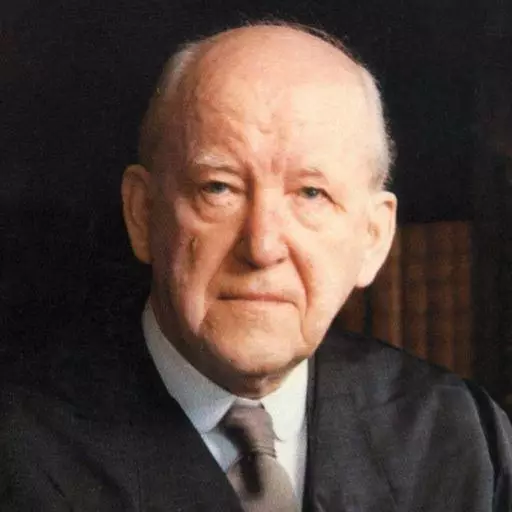
Praying in the Spirit


Dr. Martyn Lloyd-Jones: I should like to call your attention this morning to the words which are to be found in Paul's Epistle to the Ephesians in the second chapter and the 18th verse. The 18th verse in the second chapter of Paul's Epistle to the Ephesians: "For through Him we both have access by one Spirit unto the Father. For through Him," that's to say our Lord Jesus Christ, "we both, Jews and Gentiles, have access by one Spirit unto the Father."
We come back once more to this great verse, this all-important verse, which is a part of this great argument that is here unfolded and displayed by the great apostle as he shows these Ephesians what cause they have for rejoicing in that they are Christians and are therefore fellow heirs of the Kingdom of God with the Jew. Now, we've looked at this verse before because it is such a crucial verse. We have seen that here we are reminded that the three persons in the blessed Holy Trinity are concerned about us, are concerned in our salvation, and play their part in our salvation.
That is, I take it, the most glorious fact which we shall ever know. There is nothing beyond that even in heaven. It is there we shall know in its fullness what God the Father, God the Son, and God the Holy Ghost have done about us and our salvation. And then we have looked at it like this: that immediately here in this life, the greatest benefit of all that we derive from this great fact of salvation is that we have access to the Father. That is, I say, the end of salvation.
That is the grand object behind everything that God has done in and through our Lord and Savior Jesus Christ. He died to bring us to God. He shed His blood, His blood was shed in order that we might be able to enter into the holiest of all. And therefore, to stop at any point short of this is not only to ignore the scripture, it is indeed finally to be unscriptural. Because it's not what you and I think we need or desire that matters ultimately; it is what God has provided. And this is the end and object of salvation: that we might have access to the Father, that we might go into the presence of God and enjoy communion with Him.
Now then, being that that is the greatest and the highest privilege and the greatest blessing that we can ever know, it is not surprising that it is at this very point that most of us, indeed all of us, have oftentimes found great difficulty and may still be in great difficulty. I suppose in the last analysis, the most difficult thing we ever try to do, because it is the greatest thing that we ever do, is to pray. And there are problems in connection with prayer which often agitate the minds and the hearts of God's people.
It's not surprising, I say, because it is the greatest thing of all. And because it is the greatest thing of all, the enemy, the adversary of our souls, is particularly concerned to attack us at this point. And that is something which we all have learned from experience. There is nothing in a sense which is so difficult as just to pray. There are many difficulties. Let me just remind you of some of them in order that we may see the whole object which the apostle has in his mind in stating what he states in this verse. There is the difficulty of realizing the presence of God.
God is Spirit; God is unseen. And that in itself at once constitutes a difficulty for us. We're accustomed to seeing people or to hearing their audible voices as we have communion and fellowship with them. But God is unseen. No man hath seen God at any time. So, there is this first great difficulty of realizing that we're in the presence of God. Or to put it in another way, oftentimes one is aware of a sense of unreality in one's prayer. And there are voices that come to us, suggestions sent by Satan, to the effect that really we are just going through some psychological procedure.
We are just persuading ourselves; we are just being deluded. We are virtually speaking to ourselves and encouraging ourselves. There is this general sense of unreality which people so often complain of. And then the awful problem of concentration. If you're reading a book, it isn't so difficult to concentrate. If you're talking to somebody else, it isn't. But haven't we all found oftentimes when we begin to pray, our minds wander in every direction? Our imaginations travel the whole world. And though we may be on our knees with the intent of speaking to God, we think about problems, something that happened yesterday, something that's going to happen tomorrow.
How difficult it is to gather together one's mind and one's thoughts and to concentrate truly so that it becomes a living and a true and a vital act. And then the sense of unworthiness, the reminder of our sinfulness and so on, and the feeling that we have no right and so on. This awful sense of unworthiness, it militates against it. And then doubts come, doubts insinuated into the mind, questions and queryings. Well, I needn't keep you; we're all familiar with these things. I'm just reminding you that these things tend to happen because prayer is the supreme activity of the human soul. It is the highest point we ever reach in this life: communion with God.
So that as we engage in it, all the forces of hell, as it were, are playing upon us and are doing their utmost to spoil our efforts. Now, I say that not only as a matter of fact, but also partly by way of encouragement. Don't be discouraged by the fact that you have found prayer difficult. Indeed, the thing to fear is when prayer is too easy. Because if we realize exactly what we're doing, we'll see how inevitably it must be the case that we become the special target and victim of the great adversary of our souls. Very well then, for all these reasons, it becomes very necessary that we should be taught how to pray and that we should know how to pray.
Nothing, I say, is so fatal as to engage in prayer without thinking. The first act in prayer always should be what the fathers used to call "recollection." There should always be an act of recollection. It is so wrong to rush into the presence of God with petitions without realizing what we are doing. We stop, we pause, we meditate, we remind ourselves of what we are doing. Now, there are so many ways in which this can be made clear. If you are to have an audience in Buckingham Palace, you will probably find it wise and expedient to discover something about court etiquette.
And even if you don't desire to do so, it'll be suggested to you that you'd better do so, and you will be told what to do. And quite rightly. Well, now multiply that by infinity, and there is a soul going into the presence of God. It's not something that we can do lightly and thoughtlessly, not something we can rush into. We must realize what we have to do. Well, now here the apostle, in giving a list of the amazing things that have happened to these Ephesians, brings us to this tremendous height: "Through Him we both have access by one Spirit unto the Father."
Not only are you no longer strangers and foreigners and aliens and so on, you are right in the presence of God. How do you get there? Well, he tells us, you remember, that there are two essentials. And three weeks ago, we emphasized the fact that there are only two. There are only two things about which we must be absolutely clear and certain. One is the Lord Jesus Christ Himself, and the other is the Holy Spirit. There is nothing else to add to that list. You don't add the Virgin Mary, you don't add the church, you don't add a priesthood, you don't add the saints; you add nothing.
All that is essential to prayer is that we go through the Lord Jesus Christ—and we've considered how—and the second thing is that we realize that it is by one Spirit. Now, the first thing, therefore, that we have to emphasize is this: that this means the Holy Spirit Himself. The apostle is not saying here that now because Jews and Gentiles share the same ideas and have the same outlook and that they've got a common spirit, they can pray together. That, of course, is true, but it isn't that; there's something much bigger here.
This isn't a reference to human spirits which have now come into unity or unison. He refers to the Holy Spirit. So, very rightly in our Bibles, we find "Spirit" here with a capital S. It is a reference to the Holy Spirit Himself. And what the apostle is teaching is that the Holy Spirit is as essential to prayer as is the Lord Jesus Christ Himself. Not one without the other, but both together. Now, again, we must ask ourselves certain questions. Do we realize this? Are we surprised at this? Have we in our prayer lives up till this very moment realized the place, the vital place and importance, of the Holy Spirit?
Have we realized that without Him, we really can't pray at all? And that true prayer is always prayer by the Holy Spirit through the Lord Jesus Christ? Now, as Christian people, we've all realized how essential the Lord Jesus Christ is, the one and only mediator between God and men. But here, according to the apostle, it is equally essential that we should realize our dependence upon the Holy Spirit and His own peculiar work and activity in us. Now, this isn't merely an isolated statement. The apostle repeats this, for instance, in the last chapter of this Epistle to the Ephesians, in the 18th verse.
When he's been talking about putting on the whole armor of God and so on, he winds it up by saying, "Praying always with all prayer and supplication in the Spirit," again with a capital S—in the Holy Spirit. That is his conception of prayer. And if you go on to the Epistle to the Philippians, you will find that again he says the same thing in the third chapter and the third verse, where he tells them to beware of dogs, beware of evil workers, beware of the concision. "For," he says, "we are the circumcision." Well, who are we? Well, we are those who worship God in the Spirit, again capital S.
Or you might translate it: we who worship God by the Spirit and who realize that we're utterly dependent. Formerly, they didn't worship God in the Spirit or by the Spirit. It was a mechanical form of worship. It's now a spiritual worship. And what differentiates Christian worship and prayer from every other type and kind of prayer is that it is in the Spirit. There are many other people who pray, but they don't pray in the Spirit. This is the peculiar thing, the differentiating thing about Christian prayer.
And then the apostle Jude says exactly the same thing in his letter. In the Epistle of Jude, verse 20, you read these words: "But ye, beloved, building up yourselves on your most holy faith, praying in the Holy Ghost, keep yourselves in the love of God." Now, there it is quite explicitly. You are praying, he says, in the Holy Ghost. Now, these expressions are not used just at random by the New Testament writers. It was to them of the very essence of prayer. And indeed, in saying all this, they are just showing, of course, how the prophecy of Zechariah in Zechariah 12:10 has been fulfilled, where he prophesies that a spirit of grace and of supplications shall be sent upon the people in this age of the Messiah. A spirit, again the same capital, of grace and of supplications.
Very well then, it is of vital importance that we should understand how the Holy Spirit comes into this question of prayer and the part He plays. And in a sense, we've already got our exposition for us in that fourth chapter of the Gospel according to St. John, which we read together at the beginning. There, in speaking to the woman of Samaria, our Lord put this thing clearly once and for all. She talks glibly about worship: "Our fathers said that you should worship in this mountain, but you say it should be at Jerusalem." She talks about worship, you see, and our Lord corrects her.
And he puts this matter plainly and clearly: "God," he says, "is Spirit. And they that worship Him must worship Him in Spirit and in truth." What is prayer? What are the true characteristics of prayer? What is this praying in the Spirit? Well, let's take our Lord's negatives first. It is obviously not a matter of place, not a matter of ceremony as such. You see at once he puts his finger on that complete fallacy in the mind of the woman of Samaria: this mountain. If you want to worship, they said you must worship here. The Jews, on the other hand, tended to say that you must be in Jerusalem and you must be in the temple. That God was confined to the temple, as they thought he was confined to the mountain. Places, ceremonies.
There are people who only pray when they're in a place of worship. They know nothing about private prayer, about secret prayer. Prayer to them is something that only happens on certain set occasions in particular places. Now, true prayer in the Spirit is, of course, the very antithesis of that. It isn't confined, says our Lord, to any particular place or to any particular kind of ceremony. And then we could add to this many others. There are some people to whom the very essence of prayer seems to be a question of posture. How concerned they are about being able to kneel. Indeed, I've known some such people who have seriously suggested that you can't possibly be praying unless you're on your knees.
Now, that's an interesting subject; indeed, all these points are. We can't go into them; I'm simply trying to emphasize the great central principle. But there is no one posture that is essential to prayer. It is right to kneel in prayer. It is equally right to stand praying. It is equally right to fall prostrate on your face on the floor; all these things are in the scripture. In other words, it isn't the posture that matters. And if you find a tendency within yourself to say that the posture is the great and the central and the vital thing, it is no longer praying in the Spirit. You're attaching significance to an incidental.
Of course, you could pray in the temple. You could pray in that mountain, but not only in the temple or in the mountain and not only in any given posture. And then you come to the whole question of forms of prayer. You see again here's another tremendous subject. Should you have set prayers? Should you have formal prayers? Should you have liturgies? What a vital subject this is. Three hundred years ago, this was largely responsible for the Puritan movement. They said there is no freedom in prayer while you're tied to liturgies and to set forms and to read prayers. They said that's a relic, they said that's a relic of Roman Catholicism.
They say prayer, they said prayer must be free. Prayer must be under the guidance and inspiration of the Holy Ghost. So, you mustn't put your emphasis upon beautiful phrases, perfect diction, upon particular forms. Don't misunderstand me; I am not saying that a written or a read prayer cannot be a true prayer. But always in this matter of prayer, we've got to be very careful that we keep the balance between the freedom of the Spirit and the form. The two things up to a point are essential, but clearly the teaching of our Lord Himself is that the vital thing is the Spirit, the control, the inspiration, the freedom of the Holy Ghost.
And so, you will always find in every great period of revival in the long history of the church that when you get revival, people begin to shed the forms and the liturgies and indulge in extempore free prayer. But, of course, that again can become mechanical. And the fact that you're not using forms doesn't of necessity mean that you're always free. There is a danger in forms which is greater than in the extempore form, but even the extempore doesn't guarantee that you'll not become mechanical and tied. The great principle is, I say, not to put your emphasis upon form or beauty or perfection of diction or anything like that, but upon the fact that it is in the Spirit.
So, let us bear that in mind. In other words, prayer according to this teaching is never something merely formal. It is always something vital. Again, I'm not saying that you shouldn't have set times of prayer, but the moment you start doing that, you've got to be careful. There will be the danger that you're praying because it's 12 o'clock or 7 o'clock or whatever it is, rather than because you're looking forward and longing to be in communion with God. All these things are dangerous. But it isn't merely formal. That is why it seems to me that there are certain phrases and expressions which we should never use.
It seems to me that this teaching about the Spirit in prayer should mean that we should never talk about "saying our prayers" and that other glib phrase that is so often used by certain sections of the church, "saying a prayer." People talk about going into a building and saying a prayer. What they mean by that is that they're reciting a phrase. You can't say a prayer when you're having communion with God. Where's the Holy Ghost? Where is this vital something? Repeating phrases isn't praying. No, no, says our Lord, you've got to get rid of all that. Prayer is a spiritual matter.
God is a Spirit, and they that worship Him must worship Him in spirit and in truth. And therefore, the Holy Ghost is absolutely essential, and without Him, we can't truly pray. Prayer, you see, means a living and a vital and a real communion with God who is Spirit. God is Spirit, and prayer really means my spirit in communion with God. It's personal. It is this fellowship, this immediate fellowship and nothing less than that. And what the apostle is here reminding these Ephesians of is this: that in this, the Holy Spirit is absolutely essential.
You can read your prayers without the Holy Ghost. You can repeat phrases without the Holy Ghost. You can be on your knees speaking without the Holy Ghost, but you can't make contact with God. You can't really commune with God who is Spirit without the activity of the Holy Ghost. Let me even go so far as to say this: that even the Lord Jesus Christ Himself and His work alone cannot bring us into this vital relationship to God. Oh, let us get rid of these other ideas. "The hour cometh and now is when the true worshippers shall worship neither in this mountain nor yet in Jerusalem, but they shall worship the Father in spirit and in truth."
That's the thing he says that's coming, and that is what is produced and made possible by the Holy Ghost. Without the Holy Spirit, prayer is mechanical; prayer is lifeless; prayer is difficult; prayer is an awful task. But with Him, the whole thing is changed, and it becomes free and glorious and the supreme enjoyment of the soul. Very well then, that leaves us with the question: what exactly does the Holy Spirit do in this matter of prayer? And the answers, of course, are almost endless. I'm simply going to give you certain headings.
We might, in a sense, sum it all up by saying this: that it is He who mediates to us and makes actual and living and real for us all that has been done by our blessed Lord and Savior Jesus Christ. But let me divide it a little and put it like this. Why do I pray? Why, why should I ever pray? Why do I ever want to pray? Well, the answer is that it is the Holy Spirit that creates within me a spiritual mind. Man by nature, as we've seen at length in this chapter, has not got a spiritual mind nor a spiritual outlook. And without that, of course, prayer is a complete impossibility.
We simply cannot pray at all. Of course, we may have been taught to say our prayers, and we may go on mechanically doing that throughout our lives. And oh, how many of us remain children in this matter until our very graves? Taught to say your prayers morning and evening, and you'll see grown-up adult men, intelligent men, men of business and of professions, they still go on saying their prayers as they've always done, and they're rather pleased about it and rather proud of it. They have remained children in this matter. They haven't remained children in other matters, but in this, they're simply doing still what they've always done. And it's as thoughtless now as it was then.
That's not praying. The first thing that is absolutely essential is that we should have a spiritual mind, a spiritual outlook. We are dead in trespasses and sins. And though we have become Christians, the deadness still tends to remain and to afflict us. Isn't it difficult at times to rouse yourself? You don't feel inclined to pray. You feel lifeless, lethargic, and dull. And spiritual things are not real to you. Well, you can't pray like that. Well, the Holy Spirit enlivens us. He quickens us; He disturbs us; He moves us; He stimulates us; He makes our minds begin to think spiritually.
And that is always the first essential in this matter of prayer. We become aware of the spiritual realm, and we are reminded that we ourselves have a spirit within us. And the moment you begin to realize that, in a sense, you're already beginning to pray. But, of course, it doesn't stop there. It is He who shows us our need. It is He who reminds us of our sin. There is nothing that is so likely to lead a man to prayer as consciousness of his sin and of his need. And this is the peculiar work of the Holy Spirit. You see the difference between just rushing into the presence of God with certain petitions and truly having fellowship and communion.
You say to yourself, "I'm going to have this audience with the King Eternal, Immortal, Invisible. Who am I to go in? What kind of a creature am I? How am I clad? How am I shod? What's my appearance?" In other words, the Holy Spirit is making you see your sin. He's convincing you and convicting you of your need. He's creating within you a godly sorrow, a true repentance. That's most conducive to prayer. He's preparing you. And that, of course, leads to the next thing, which is He shows us our need of God and of God's mercy and of God's blessing.
At once, you see, you're taken out of the realm of generalities, and you realize that you're an isolated soul. You're not interested in things now or merely in events or happenings. You've been brought by the Holy Spirit to realize that God has given you this special gift, the soul—the spirit if you like—that you came into the world on your own and that though you're one of millions of people in this world, you're still a separate, distinct, isolated being. And you have a relationship to that God who is Spirit and personal also, and you're going on to meet Him. And you begin to feel a desire to know Him and to make contact.
The Holy Spirit does that. Now, this is of the very essence of prayer. It becomes personal at that point and is no longer interested only in forms, appearances, and in things. But all this, you see, is still somewhat vague. But it's a vital step that, when a man begins to feel his need of God. I don't know about you, my friends, but more and more I find myself these days looking for this one thing in all people. The people I am drawn to, the people I like, are those who give me an impression that they are hungry for God, that they've got a longing in their souls for the living God.
Ah, I say that I put them in the supreme position. I put them well beyond people who are merely active and busy and rushing hither and thither. This is the thing: a hunger, a thirst for God. There is nothing in a sense beyond that. You see, you can be very busy and active without that. You can be so busy that you're almost impersonal; you're outside yourself and you don't realize your own soul's condition and your need of God and your relationship to God. Very well, the Holy Spirit produces all that, and then He goes on to reveal God in His glory to us.
And this is something again that is so absolutely vital and essential. I take it that ultimately all difficulties in prayer spring from this one: our failure to realize the truth about God. Oh, what a difference it would make. You see, we are all like Moses, aren't we, and like Joshua after him? We want to rush into the presence of God. You remember Moses at the burning bush. He didn't quite understand; he was going to investigate. He was rushing in. The voice came and said, "Stand back. Take off thy shoes from off thy feet, for the ground whereon thou standest is holy ground."
And that's the ground that you and I are always on when we engage in prayer. We are going into the presence of God. And the Holy Spirit reveals Him to us in His glory and in His majesty. But not only that, He reveals Him to us as our Father. And so, He creates the desire within us to know Him and to have communion with Him. It was something like that that made the Psalmist say, "As the hart panteth after the water brooks, so panteth my heart after Thee. My soul cries out for the living God, the living God." He no longer merely wants to pray to God; he wants the living God—the real, live act of communion, the knowledge that he is with God.
Now, the Holy Spirit alone does that. And you see at once when this kind of thing is taking place, prayer is absolutely different. It becomes the most exciting thing in the world. It becomes the most thrilling thing. It's no longer formal and set and difficult, and we no longer have all these problems, but here we are: this tremendous possibility. And then, of course, He does the work which our Lord Himself says is His most special and peculiar work of all: namely, that He keeps our eyes on the Lord Jesus Christ. The Lord said that the Holy Spirit would glorify Him. He said, "He shall glorify Me."
That's His supreme task and purpose, and that is what He does. Having shown us our utter sinfulness and helplessness and smallness and the glory of God, He leads us to the Lord Jesus Christ. He makes us see Him in all the glory and wonder of His person, in all the glory and wonder of His work. We see Him as the mediator. Now, let me put that in the form of a question. Do we always realize when we pray our utter, absolute dependence upon the Lord Jesus Christ and His atoning work? Are we always mindful of the fact that apart from the blood of Jesus, we cannot have access into the presence of God?
Well, I think we'd all have to confess that thousands of times we've prayed, we've taken it for granted, we say. This is what we take for granted: the most glorious fact in history. We take it for granted. We don't thank God for it. We don't meditate upon it. We don't think of it until our hearts become ravished. We assume it. Is there anything more terrible or in a sense almost more blasphemous than to assume the blood of Calvary and the death of the cross? The Holy Spirit will never allow you to do that. He will reveal the Lord Jesus Christ to us in all His glory, yes, and thank God in His all-sufficiency.
So that as you're there in the presence of God, oh, terribly conscious of your sinfulness, your unworthiness, your uncleanness, and your vileness and your weakness, the Holy Spirit will reveal to you that it was while we were without strength in due time Christ died for the ungodly; that while it was while we were yet enemies, we were saved by the death of the Lord Jesus Christ. It is then He will remind us that Christ said, "I came not to call the righteous but sinners to repentance." It is then you will see the procession: the Mary Magdalenes and all the others in their rags and in their filth coming led by Him to God. The Holy Spirit will show it all to you.
And you will realize that in spite of your utter vileness, you nevertheless have an access into the presence of God. You will say with Charles Wesley, "Just and holy is Thy name; I am all unrighteousness; vile and full of sin I am; Thou art full of truth and grace." He reveals, He unfolds the Lord Jesus Christ. Tell me, my friends, when you engage in prayer, have you more exalted views of the person and the work of the Lord Jesus Christ? That's the test of whether you're praying in the Spirit. You cannot pray in the Spirit without being led to see Him and to realize Him in a manner that you've never done before.
And then let me hurry on. It is the Holy Spirit likewise that leads us to an understanding of all the promises of God. We know what it is to be hemmed in by trials and tribulations and problems and to be aware of our own weakness and ineffectiveness, and we are tempted to cry out saying, "What shall I do? What can I do?" But there the Holy Spirit begins to reveal to you the exceeding great and precious promises, and it transforms everything. It is He who reveals God to us, I say, as our Father, as the Father of our Lord and Savior Jesus Christ and our Father. You remember in the first chapter Paul put it like this: "Blessed be the God and Father of our Lord Jesus Christ, who hath blessed us with all spiritual blessings in the heavenly places."
And the moment you realize that, your whole outlook is changed. You say to yourself, "Well, though things are as they are, God is my Father, and I have the authority of the Lord Jesus Christ for saying that He has numbered the very hairs of my head, that He is not only interested in the fall of every sparrow, He is infinitely more concerned about me and of everything that happens to me. He's the Father of Jesus Christ, and He's my Father, and as He cared for Him, He will care for me. He has said, 'I will never leave thee nor forsake thee.'" Do you know anything about that? To feel in the presence of God, though you may be overwhelmed by troubles and problems, a sense of joy and of happiness because you're a child of God that overrules and overrides everything? That's what the Holy Spirit does.
And oh, how vital it makes prayer. Well, let me put it finally in this form. The apostle says in writing to the Romans, "We have not received a spirit of bondage again to fear, but we have received the Spirit of adoption, whereby we cry, 'Abba, Father.'" We know about the bondage, don't we? We know about all the difficulties that I enumerated at the beginning, and that is sheer bondage. You're trying to think of something to say; you're trying to work up a feeling. And oh, what a bondage it is; there's no freedom there. How unlike a child speaking to his father, holding out his hands for the father to embrace him, mumbling his little nothings because he's glad to see his parent. That's how we should be praying.
With a glorious freedom, not a spirit of bondage again to fear, but a spirit of adoption whereby we cry with this elemental, childlike, filial cry, "Abba, Father." Do you know this freedom in prayer? Do you know this spiritual eloquence in prayer? Do you know what it is to be carried out of yourself in prayer? Do you know what it is almost to desire to go on praying forever and finding it difficult to stop? That's praying in the Spirit when it's reached its greatest height. Now, you see, this is true prayer. This is the way we have access to the Father, says Paul, through the Lord Jesus Christ, but by the one Spirit.
Let me put it in one question: do you enjoy prayer? Have you ever enjoyed prayer? Is it to you the most delightful occupation? If it isn't, it's because you have forgotten that the operations of the Holy Spirit are absolutely essential to prayer. And therefore, when you engage in prayer next, remember this: pray to Him, ask Him to enliven you and to quicken you. He will do so. He's already done it without your knowing it. The desire for prayer, as I say, has been produced by Him. The very thought about it. He is the one who produces all these desires. He worketh in us both to will and to do.
So, ask Him, and He'll increase it. Go to Him in your dryness, in your deadness, tell Him that you feel ashamed of yourself, tell Him that you want to know God, tell Him you want to enjoy God, tell Him you want to know this freedom in the Spirit. Ask Him to make it possible and go on until it does happen, and it will happen. Because I have the word of the apostle again in Romans 8 to this effect: "We know not what to pray for as we ought, but the Spirit maketh, and He Himself maketh intercession for us with groanings which cannot be uttered. He that knoweth the hearts knoweth what is the mind of the Spirit."
Very well then, it's even as wonderful as that. That even when we are utterly helpless and don't know what to pray for nor what to do and are desperate, as it were, even then—and haven't we known it, thank God—we've found ourselves groaning. We didn't know what we were saying. What was it? It was the Spirit Himself making intercession for us in us, through us, with groanings which cannot be uttered. Very well, if He does it like that, I say, apart from our requests, without our asking Him to do so, how much more certain is it that if we truly ask Him and seek this aid, this activity of His without which we cannot pray in the Spirit, He will surely answer us. And beginning to pray in the Holy Spirit, we shall have a true access into the presence of God and shall not only glorify God but begin to enjoy Him forever. By Him, we both have access by one Spirit unto the Father. Amen.
Featured Offer

Find peace and comfort this season with your complimentary guide that includes access to 6 free bonus sermons on overcoming spiritual depression from Dr. Martyn Lloyd-Jones, one of the church’s most beloved Bible teachers. Topics include: true Christians can and do struggle with depression, recovering the joy of your salvation, dealing with crippling guilt over past sins, dealing with yesterday’s haunting regrets, encouragement to keep moving forward, and understanding God’s purpose for suffering.
Past Episodes
This ministry does not have any series.
Featured Offer
Find peace and comfort this season with your complimentary guide that includes access to 6 free bonus sermons on overcoming spiritual depression from Dr. Martyn Lloyd-Jones, one of the church’s most beloved Bible teachers. Topics include: true Christians can and do struggle with depression, recovering the joy of your salvation, dealing with crippling guilt over past sins, dealing with yesterday’s haunting regrets, encouragement to keep moving forward, and understanding God’s purpose for suffering.
About From the MLJ Archive
From the MLJ Archive is the Oneplace.com hosted ministry of the MLJ Trust. Our mission is to promulgate the audio ministry of Dr. Martyn Lloyd-Jones.
About Dr. Martyn Lloyd-Jones
Contact From the MLJ Archive with Dr. Martyn Lloyd-Jones
info@mljtrust.org
http://www.mljtrust.org/
PO Box 953
Middleburg, VA 20118