
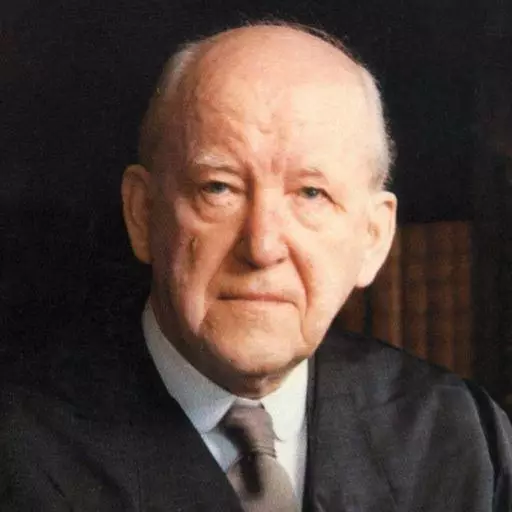
Power to Us-ward Who Believe


Hardly anyone claiming the title “Christian” would deny the need for God’s power in salvation. There is, however, a fundamental difference between the person who says salvation is the power of God in addition to something they do, and those who say salvation is God’s power working in them and through them. The latter has roots in the apostolic testimony but the former does not. Neither is this a mere linguistic quibble, says Dr. Martyn Lloyd-Jones, but one’s very assurance is at stake. In this sermon on Ephesians 1:19–23 titled “Power to Us-ward Who Believe,” Dr. Lloyd-Jones says Paul is not simply concerned with God’s power towards His people, but His power in them. This is ultimately the final grounds of the Christian’s assurance. When they consider all that glory entails, especially standing before a holy God and seeing Him face-to-face, how can they ever have confidence that they will be fit to stand? Given that the world, sin, and the devil are constantly at war against the Christian, how will they ever overcome? Dr. Lloyd-Jones shows how the apostle Paul’s prayer calls minds to the resurrection power of God in order to assure that glory will be attained by God’s saints. It is God and by His power alone Christians are made and not even death will keep them from glory.
Dr. Martyn Lloyd-Jones: The words to which I should like to call your attention this morning are to be found in Paul's Epistle to the Ephesians, in the first chapter, and I shall read from verse 19 to the end of the chapter. From verse 19 to the end of the chapter in the first chapter of Paul's Epistle to the Ephesians. "And what is the exceeding greatness of his power to us-ward who believe, according to the working of his mighty power, which he wrought in Christ, when he raised him from the dead, and set him at his own right hand in the heavenly places, far above all principality, and power, and might, and dominion, and every name that is named, not only in this world, but also in that which is to come: and hath put all things under his feet, and gave him to be the head over all things to the church, which is his body, the fulness of him that filleth all in all."
Now, there we have undoubtedly one of the greatest statements which even this mighty apostle Paul ever uttered. It's one of those all-inclusive, comprehensive statements which holds us face to face with ultimate things. Those who meet here regularly will realize that we have arrived at this point in our consideration of this first chapter of the Epistle to the Ephesians. The apostle having thanked God for these people tells them that he offers petitions for them. In particular, he is offering three great petitions. The first is that they may know what is the hope of his calling. The second, what the riches of the glory of his inheritance in the saints.
We have reminded one another that he has pointed out that apart from spiritual enlightenment, apart from the operation of the Holy Spirit upon our minds and understandings, we cannot hope to see and to know and to understand these things. He has prayed, therefore, that the God of our Lord Jesus Christ, the Father of glory, may give unto them the spirit of wisdom and revelation in the knowledge of him. But even that isn't enough for him. The eyes of your understanding being enlightened, that they may know these three things: what is the hope of his calling, the riches of the glory of his inheritance in the saints, and now this: "What is the exceeding greatness of his power to us-ward who believe."
You notice, therefore, that the apostle arrives at this by a kind of inevitable, logical, and spiritual sequence. The first thing he wants us to know is that we are really amongst the redeemed, the called, the elect. We must make our calling and election sure. We must know beyond a peradventure that we are heirs of God and joint-heirs with Christ. He puts that first. Then he went on to give us some idea and some conception of our inheritance—the riches of the glory of this inheritance which God has prepared for us. Nothing, as we saw, is more stimulating to endeavor, nothing more comforting than to see something of the land for which we are destined. The eternal glories gleam afar to nerve my faint endeavor—glimpses of the inheritance of the promised land. He takes us up to the top of the mountain, and we survey the land.
Well, having done all that, he now comes to offer this particular petition. It's the third of the third "whats" that introduce a petition. Therefore, we at once address ourselves to the statement. What exactly is the apostle praying for here? What is he asking for these Ephesians at this point? It's a very essential question because if we are not careful, we can very well come to the wrong conclusion and misinterpret the apostle's prayer. Take, for instance, a little heading which I find in the Scofield Bible at this point. In a desire to help in that way, the heading which they have at this point is this, governing the three petitions: "The prayer for knowledge and power." In other words, their suggestion is that the apostle here is praying two things for these Ephesians: that they may have certain knowledge, and then that they may have power.
As I want to try to show you, that is an entire misinterpretation. The apostle is not praying here that they may have power. He is praying that they may know the power of God that is already working in them. You see that's an entirely different thing. In this context, there can be no question whatsoever as to the fact that that is what the apostle really is dealing with. The whole object of this entire section, as we have seen so repeatedly, is assurance—that these Christian people might know, that they might have certainty, that they might have confidence. It is because of that that it is quite clear to me at this point that the apostle is emphasizing the power of God in the saints, rather than the power which God gives to the saints.
Now, you will see at once that this raises a fundamental problem of theology and of doctrine. Indeed, it raises at once the two possible views of Christian salvation. It is interesting to notice that people's views of salvation generally are determined by their whole view of this question of power. One view is this: that salvation is the result of something that I do plus the power that is given to me by God—I plus the power of God. They say, of course, I can't do it without the power or the help that God gives me, but their conception of salvation is just that: I plus the power of God. God helps me, God aids me, God enables me to do certain things. That's one view.
But there is another view, and the other view is this: God's power working in me and through me. I am suggesting to you that that is the view which we must take of this particular passage. At this point, the Revised Standard Version really is helpful because it translates it like this: instead of saying "what is the exceeding greatness of his power to us-ward or towards us that believe," it says "what is the exceeding greatness of his power in us." That's it. What the apostle is dealing with is the power of God not toward us, but in us. The whole theme here is the working of God in us. It is, of course, right and true to say that God does give us strength and power, and we need that. But here, the grand object which the apostle has in mind and in view is that if these Ephesians and we with them only realize the greatness of God's power in us, what he is doing within us, well, then our fears would vanish and we would have a new confidence and a new assurance with respect to our salvation.
This is ultimately the final grounds of assurance, and there is nothing which is so wonderful as this if we truly grasp it. You see, he's made us sure about the call itself, in terms of the character of God, the ultimate character of God. Then he's led us on and has given us that glimpse into the transcendent glory for which we are destined. Then he introduces this. Why do you think he did so? What is it that calls for this particular petition? He's concerned about these people. He knows that they've believed, they've trusted in the Lord Jesus, they've been sealed by the Holy Spirit. But he's not happy about them. He's praying for them without ceasing. What he prays for them is that they may know these things.
Well, as I've suggested, it's quite inevitable if we really have understood the first two points. Because no man can have any conception at all of that inheritance, that glory to which we are going, without immediately becoming conscious of certain things. The very greatness of the glory in and of itself, because of our state and condition in sin, tends to create doubts within us. Here we are, we listen to these descriptions of these unseen and eternal things, the far more exceeding and eternal weight of glory to which we are going. Having looked at it and having heard about it, isn't there a tendency for us to turn to ourselves and say, "But surely that's not really possible for me"?
You've given us that description of ourselves in that glory, but surely I'm not fit for that, and I never can be fit for that. I contrast myself as I know myself and as I am with all that, the brightness of God's glory. You read the 21st chapter of the Book of Revelation, and there you see it—the Lamb in the midst is the sun, the light, the moon thereof, and all this glory, outside of the dogs and all the rest of it. You say, "But surely this is impossible. It's too wonderful, it's too glorious." Isn't it almost an immediate reaction? Or you may say to yourself, "Well, how can I ever fit myself for that? If I spent the rest of my life in doing nothing else but culturing and nurturing my own spiritual being, would I ever be fit?" It's not surprising that people have felt the need of becoming monks, of segregating themselves from the world and giving themselves to holy meditation and contemplation. The thing is so marvelous, and I have so much to do. How can I? Shall I ever be able to do it?
How natural these thoughts are. Then I begin to think of my waywardness, my weakness, and my sinfulness. I say to myself, "It's all very well in the house of God when listening to these things to feel, 'Yes, it's wonderful and I look forward to that and I am really going to do something about it.'" But I know that I've often taken such resolutions, but I've forgotten them and I haven't carried them out. I've deliberately determined and decided, but I don't keep it up. I'm so wayward, I'm unreliable. I can't trust myself and my feelings, my mood, my states, my resolutions. There is ever this sin that is with me, this law in my members dragging me down so that the good that I would, I do not, and the evil that I would not, that I do. Here I am, and that's the kind of creature I am, and you talk to me about that glory and that inheritance and that purity, that ineffable perfection. It's impossible.
Then I go on and I consider my body with seeds of decay in it, again with weakness, again subject to illnesses, subject to all kinds of things along that line—the very frailty of my body. How difficult, indeed how impossible it seems at times to imagine myself, therefore, in such a body enjoying such a state. Then add to all that life as we know it in this world—circumstance and chance, the way of the world, its influence upon us, friends and others enticing us and attracting us, preoccupation with worldly things, business and affairs. We must make our living in this world, we must sustain ourselves and maintain ourselves and our families, and all these things. It's so impossible to find time—the pressure of life and of circumstance. How can I ever fit myself for that?
These are the questions. Then at the back of it all, we know that we are confronted by a mighty adversary, the most subtle foe: the devil as a roaring lion roaming about seeking whom he may devour, confronting us at every corner. The accuser of the brethren, knowing all about us, and there with subtlety enticing us and attracting us and luring us into sin and into failure and into indolence. We are aware of all this, that he set against us, the devil. Then finally we realize that between us and that glory lies the fact of death—that awful specter, the last enemy, the whole power of death and the grave and Hades. We can't go from here to that glory without going through that, and there many a saint has trembled. As he's thought of it—the dissolution of the body, the passing through the valley of the shadow of death, the last river.
Now, you see, these are the thoughts that come into our minds, and they come especially to those who see most clearly the glory that awaits us—the riches of the glory of his inheritance in the saints. Now you see why I pay my little tribute to the greatness of this man and to the working of his majestic mind. How he leads us on from step to step. He's not merely acting as a theologian here; I see his pastoral heart coming out. He knows that having prayed for the other two things, if we see them, well, then we urgently need this. Here he deals with all our problems and with all our difficulties. He's praying also that they may know the exceeding greatness of his power toward us-ward that believe, according to the working of his mighty power which he wrought in Christ, when he raised him from the dead and set him at his own right hand in the heavenly places.
We are on the threshold of these great things, we are entering into them. I venture to say that there is nothing more wonderful than just this teaching at this point. In many ways, I think it is the most wonderful and astounding truth that we can ever learn. There is nothing surely beyond this. We need to know above everything else the greatness of his power, the power that he is exercising in us, and which he works in those which believe. Now, then, this portion from verse 19 to the end deals with that. Obviously, in one sermon, I can't hope to deal with it; it'll take us at least three.
The apostle, you see, begins to deal with it and then he puts it in such a way that he leads himself off, as it were, in what from the immediate standpoint of his purpose may appear to be a slight digression. But then he comes back to it in the first verse of the second chapter. You see, the theme is the greatness of God's power toward us or in us that believe. But in describing that, he mentions the raising of the Lord Jesus Christ and the setting of him in that high position of power, and how he has been given as the head to the church. So, in he puts just in a nutshell the whole doctrine of the church, and then having done that, back he comes to it in the first verse of the second chapter.
He divides his matter into two main sections: first, the greatness of the power in and of itself; secondly, the way in which that power is being worked out in us. Or if you prefer it, look at it like this: first and foremost, the greatness of the power in and of itself, then secondly, how I may be certain and sure that this great power is working in me. That's it—the assurance that this power is really operative and effective in me myself. Well, now then, let us come to look at this, and we can only look this morning at the first section, namely, the greatness of the power in and of itself. He emphasizes this, I say, in order to meet the difficulties that have arisen in our minds and our hearts as we have contemplated the glory.
Well, I would put it to you in the form of a number of propositions. The first thing we need to know is this: that Christian salvation is a demonstration of the power of God in us. I am increasingly convinced that the final trouble with all of us who spend so much of our Christian lives in shallows and in miseries, the trouble with all who in any way are doubtful and uncertain and hesitant, is that they really have never laid hold on this first great fundamental principle. I am what I am by the grace of God and by the power of God.
A Christian is the result of the operation of God—nothing less. No man can make himself a Christian; God alone makes Christians. Let me give you some evidence to substantiate my contention. It's here, but let me give you some supporting statements from the Scripture. "I am not ashamed of the gospel of Christ," says the apostle in writing to the Romans. Why? Well, there's only one answer: "It is the power of God unto salvation to everyone that believeth." What do we preach? We preach, says the apostle, Christ crucified. Why? Well, because he is the wisdom of God and the power of God, the power of God. Preaching is of no value, says the apostle again, unless it is in demonstration of the Spirit and of power—the power of the Spirit.
"Our word came unto you, not—our gospel came unto you not in word only, but in power and in the Holy Ghost and in much assurance." These are his terms. What's a Christian? Well, the second chapter of this epistle answers it like this: "We are his workmanship." It's he who's made us. We, as Christians, can say that—it is he who has made us and not we ourselves. This is absolutely fundamental in an understanding of the Christian position. Listen to him again, he's always saying it. He who hath begun a good work in us will perform it until the day of Jesus Christ. He hath begun a good work, he's been working in us. Yes, he worketh in us both to will and to do of his good pleasure. It's endless.
And what is preaching again, asks the apostle? And here's his reply: "Whereunto I also labor, striving according to his working, which worketh within me mightily." You see, his emphasis is always upon the working and upon the power of God. Indeed, there is another phrase which puts it all perfectly, isn't there? What is a Christian? Well, a Christian is a new creation. He's nothing less than that. He's not merely a member of a church, he's not merely a good man, he's not merely a man who's made a decision. You can do all that and still not be a Christian. There is one thing without which one cannot be a Christian, and it's this: the Christian is one who has been created anew. And there is only one who can create, and that is God.
Had you realized that, Christian people? It takes the power of God to make a Christian. That you may know, therefore, the exceeding greatness of his power in us. Oh, what unworthy views we have of Christianity and of being Christian. We all think so much in terms of ourselves and what we do and what we've decided and what we have taken up and what we have proposed to do. My dear friends, you and I have much to do, and we must do it, and that needs to be emphasized. But the whole teaching of the New Testament is this: you and I can do nothing until God has first done something. You hath he quickened, who were dead in trespasses and sins. That's where you were, that's where I was, that's where everybody is, and no man can do anything until he's been quickened, raised, given life, created anew. The power of God!
There is no category according to the New Testament that is adequate to describe what we are in Christ save this amazing conception of the rebirth, regeneration. A man can't give birth to himself again; Nicodemus could see that quite clearly. He can't do any of these things. All the terms are indicative of an activity and a power of God.
The second point he makes is, of course, the greatness of this power. What a theme. You notice the terms that he uses. He piles a superlative on top of a superlative and yet another. Why? Well, because language is inadequate. Let's watch him. He prays that they may know what is the exceeding greatness—not the greatness, but the exceeding greatness. What's he mean? Well, you can translate that word "exceeding," if you like, by "surpassing." What does it surpass? Well, it not only surpasses our power of expression, it surpasses our power of comprehension. The exceeding greatness. Let me commandeer all the dictionaries of the world, let me exhaust the vocabularies, and when I've taken them all and piled them on top of one another, I still haven't begun to describe the greatness of God's power. He chooses the best term: the surpassing greatness, the exceeding greatness.
But you know, he wasn't content with that. He goes on. That doesn't put it sufficiently specifically for him. He goes on to say, "according to the working of his mighty power." Now, let's analyze this phrase. It's one of the greatest that even Paul ever used. He says we must know the exceeding greatness of his power to us-ward according to the working of his mighty power. What does he mean? Well, let me put it like this. A better way of translating this word "working" is the word "energy." It's a much stronger word; it gives—it gives the impression, doesn't it, of some power, something which is efficacious. It isn't mere static power or potential power—energy. It's been liberated, it's actually working, it's kinetic power. It's been set free, it's being manifested. The working, yes, the energizing, the energy working itself out and permeating everything. That's the first word: "according to the working, the energy."
And then take this second word, "mighty." The word "mighty" stands for strength, and it stands for strength in a very special manner. The delicate meaning which is suggested by this particular word is this: it's a strength which overcomes. It's a strength which prevails, it's a strength which conquers. It's a strength which comes up against resistance but it overcomes it; it brings down every high mountain, it can raise every valley. There's nothing that can stand before it—the strength, the energy of the strength. This mighty force which is in God that can lay down everything and overcome everything to which nothing is impossible.
And then the third term, which is translated here "power," really stands for might—the might of God, God's own essential and inherent power. So you notice again that the apostle, who seems to throw his words about, isn't doing so; he's got a very definite gradation again. He first of all is looking at an energy, at a power in action, and he says, "Well, well, where does that come from? What is it that produces that?" "Oh," he says, "that comes from a force that is irresistible." Where does that come from? Well, it comes from the ocean of God's might, the eternity of the illimitable God, the God whom Isaiah described in that section in the 40th chapter of his prophecy which we read together at the beginning. You see, he picks up his analogies. What can we say? To whom can I liken him? With whom can I compare him? It's all inadequate, he says. He sitteth upon the circle of the earth, but we are too small to grasp that. He contrasts him with idols, he contrasts him with powers and princes and governors and men of wisdom. But he says it's all as nothing. What can I say about him? Nobody's able to advise him or give him anything. He is everything in and of himself—his everlasting might and strength and power.
And what we've got here, therefore, is this, you see: this eternal might of God beginning to exert itself, overcoming all obstacles and resistances, and doing the thing which God wills it to do. So that if you like some alternative phrases, you can take these: he says that he's praying that they might know the efficacy of the force of his strength, or that you might know the energy of the might of his strength—take it as you will. But you notice that all language is entirely and totally inadequate. What he's saying is this: that in the making of a Christian, that might of God exerts itself and manifests itself. Christian people, had you realized that that's true about you? That you are what you are because of this eternal everlasting might of God which has become energy in you? He's working it out in you. We are his workmanship.
But then you notice the apostle, in order to help these Ephesians and in order to help us, illustrates it. We're all helped by an illustration. The language is glorious, and yet when I talk about the energy of the strength of the might, my mind almost boggles, my mind reels at the magnificence and the majesty of it all. "Very well," says the apostle, "let me give you an illustration of it." The energy of the strength of God's might has already been manifested in an objective manner. How? In the resurrection of the Lord Jesus Christ from the dead, "which he wrought in Christ, when he raised him from the dead, and set him at his own right hand in the heavenly places, far above all principality, and power," etc., etc.
Now, we are constrained to ask a question at this point. Why does the apostle choose this particular illustration? Why does he show forth the might of God in this particular way? Why doesn't he use the creation? There was a notable manifestation of the power of God. He said, "Let there be light," and there was light. Can you imagine anything greater than that? The mere fiat, his word was enough: "Let there be light," and there was light. He made everything out of nothing. Why didn't he use that?
Or why didn't he use the comparison of God's power and might as exercised in providence? How all these spinning orbs in the heavens are all maintained and sustained and everything is ordered by him. The world would collapse if God by his providential power did not keep it and sustain it and watch its ordering. Everything works and works together because God has so made them, and not merely made them and left them, but he is still energizing in them. The power of God is manifested in providence and in the whole ordering of the life of the world. Why didn't he take that?
Or why didn't he take the might of God as manifested in some of the great judgments of history? Was there anything more signal as a manifestation of God's power than the flood? How the rain came, and the very doors and windows of heaven were opened, and down came the rain, the flood. Or the destruction of Sodom and Gomorrah? Or the mighty miracles in connection with the exodus of the children of Israel from Egypt to Canaan—the dividing of the Red Sea, the dividing of Jordan? Why, I ask, and I could add many others to the list, why does he not choose some of these and but rather go to this raising of the Lord Jesus from the dead?
Well, now, this will be something that we'll have to open out at leisure, but let me give you some headings. He chooses this, I believe, because it is a grand objective demonstration of the power of God. I think he also chooses it because it is such a perfect analogy to what happens to us spiritually. I think he also brings it in because he's anxious to introduce the doctrine of our mystical union with Christ, and that when Christ was raised, we were raised with him and are seated with him even now in the heavenly places—it introduces that.
But I somehow have a feeling that he chose it for this reason: that this is the proof beyond every other proof of the fact that every obstacle and hindrance and enemy set in our path shall be overcome because in the raising of the Lord Jesus Christ from the dead, we have proof positive, absolute, that even the last enemy has been conquered and defeated. There, I say, is surely the reason. You remember how the apostle Peter puts this in his first sermon under the auspices of the Christian church on the day of Pentecost at Jerusalem: "Whom God hath raised up," he says, "having loosed the pains of death: because it was not possible that he should be holden of it." That's how Peter puts it there.
In other words, what we've got to realize is this: in addition to all our own weakness and sinfulness and waywardness, oh, the final enemies are just these, are they not? Death itself. My dear friends, you and I don't realize what the power of God in us is because we've never quite realized the power of death. Read your Bible again and keep your eye on what it says about the power of death. Death is something that holds us, it binds us, it bends us, it chains us. There is nothing that so holds and grips and grasps as death. It's the one thing that always overcomes. There is something terrible about its power—the awful power of death.
And then add to it Hades, the place of the dead. It's not surprising that the Old Testament writes about all this as it does. They hadn't got the clear light of the resurrection, you see, and they trembled and they feared as this awful power was there waiting to receive them, and his grip was so strong and so mighty. And then, of course, the power exercised by death and by Hades is a power that is ultimately exercised by Satan himself. So that the author of the Epistle to the Hebrews in his second chapter, you remember, glories in this fact: that Christ came and did all he did in order that he might destroy him that has the power of death, that is to say, the devil, and to set us at liberty who all our lifetimes have been held captive and in bondage by the fear of death.
Ah, I say it's because we don't realize the power of death that we don't realize this power. But what the apostle is saying here is this: that by raising the Lord Jesus Christ from death and from the grave and from Hades, he has given us this public demonstration and manifestation that the last enemy has been conquered. The last enemy, says Paul, that shall be destroyed is death. But Christ has already conquered him. "The sting of death is sin; and the strength of sin is the law. But thanks be unto God, which giveth us the victory"—he's already vanquished. Death, Hades, Hell, Satan have been conquered.
So that there is no greater proof of this invincible, overpowering, mastering might of God and his strength than the fact of the resurrection and the raising of our Lord and Savior Jesus Christ from amongst the dead. Very well, then, what is our immediate conclusion? Isn't it obvious? Whatever may be true of us, whatever may be true of our experience this morning, whatever may be true of the world and its darkness, whatever may be true of the seeds of decay and of illness and of death that are in me and in my body at this moment, whatever may be true of the last enemy, death, and of the devil and hell behind them—I am certain and confident of this: that nothing can prevent the carrying out of God's purpose with respect to me. There is no power that can withstand him.
There is no mightier influence, there is no source, there is no antagonist. And you see why the apostle chose this rather than creation—there was no opposition to creation. There's no opposition to providence, but it's here the opposition comes in: these forces set against us in the path, and God overcomes these likewise. Nothing can withstand him. Or to put it in another way, we can put it like this: there is nothing too hard for the Lord. With God nothing can be impossible.
So, as you think of the glory and of the perfection and of the marvel and the wonder of it all, and as you say to yourself, "I feel uncomfortable if I spend but five minutes in the presence of a saintly man or woman in this world—so how can I ever hope to enjoy heaven and the very vision of God?" Here's the answer: the God who's working in you will make you fit for it. It's he who's doing it, not you yourself. With him nothing is impossible. Nothing can resist him.
I am persuaded, therefore, that neither death, nor life, nor angels, nor principalities, nor powers, nor things present, nor things to come, nor height, nor depth, nor any other creature, shall be able to separate us from the love of God, which is in Christ Jesus our Lord. The work which his goodness began, the arm of his strength will complete. His promise is yea and amen and never was forfeited yet. Things future, nor things that are now, nor all things below, nor above, can make him his purpose forego, or sever my soul from his love.
Beloved people, do you realize the exceeding greatness of his power in you? Do you realize the energy of the strength of his might that is already working in you? And because it has begun, it will continue and continue until you will find yourself faultless and blameless, without spot or wrinkle or any such thing, in the presence of God in the glory. "Now unto him that is able to keep you from falling, and to present you faultless before the presence of his glory with exceeding joy, to the only wise God our Saviour, be glory and majesty, dominion and power, both now and ever. And may grace, mercy, and peace from God the Father, God the Son, and God the Holy Spirit abide and continue with us now, throughout the remainder of this our short and uncertain life and earthly pilgrimage, and until we shall see him face to face in glory. Amen."
Featured Offer

Find peace and comfort this season with your complimentary guide that includes access to 6 free bonus sermons on overcoming spiritual depression from Dr. Martyn Lloyd-Jones, one of the church’s most beloved Bible teachers. Topics include: true Christians can and do struggle with depression, recovering the joy of your salvation, dealing with crippling guilt over past sins, dealing with yesterday’s haunting regrets, encouragement to keep moving forward, and understanding God’s purpose for suffering.
Past Episodes
This ministry does not have any series.
Featured Offer
Find peace and comfort this season with your complimentary guide that includes access to 6 free bonus sermons on overcoming spiritual depression from Dr. Martyn Lloyd-Jones, one of the church’s most beloved Bible teachers. Topics include: true Christians can and do struggle with depression, recovering the joy of your salvation, dealing with crippling guilt over past sins, dealing with yesterday’s haunting regrets, encouragement to keep moving forward, and understanding God’s purpose for suffering.
About From the MLJ Archive
From the MLJ Archive is the Oneplace.com hosted ministry of the MLJ Trust. Our mission is to promulgate the audio ministry of Dr. Martyn Lloyd-Jones.
About Dr. Martyn Lloyd-Jones
Contact From the MLJ Archive with Dr. Martyn Lloyd-Jones
info@mljtrust.org
http://www.mljtrust.org/
PO Box 953
Middleburg, VA 20118