
Peace With God


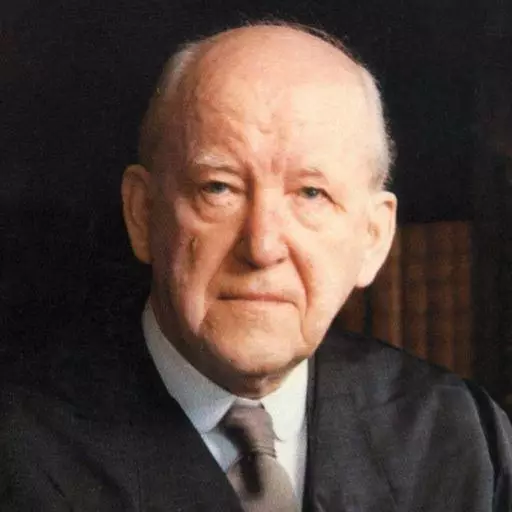
Dr. Martyn Lloyd-Jones: Paul's Epistle to the Ephesians in the second chapter in the 17th verse. The 17th verse in the second chapter of Paul's Epistle to the Ephesians. And came and preached peace to you which were a far off. And to them that were nigh. Or as some other versions have it, and came and preached peace to you which were a far off and peace to them that were nigh.
Now the apostle takes us another step forward in his great statement at this point in this particular verse. His theme is how God in Christ has brought the Jews and the Gentiles together in the church and that he has done so by making of them one body and so reconciling them unto himself by our Lord's death upon the cross. Now the apostle has been reminding us in detail of what exactly all that involved. And he has told us how the Lord Jesus Christ by dying upon the cross has broken down the middle wall of partition.
It was there, the middle wall of partition was broken down on the cross, not before then, not until then. The veil of the temple was not rent until our Lord died upon the cross. It's the cross that does it. He didn't do that in his teaching, nor in his miracles. It was there and there alone that the veil was rent. However, the apostle has told us that there this has been done once and forever. So that the law of commandments in ordinances has been abolished, has been done away with. He did that.
Not only that, he has made of twain one new man. There's a new body, the church, this new thing. And all having to come into that, irrespective of what they were before. This great unity is thus made possible. And finally he told us the thing we were considering last Sunday, how it was by dying upon the cross that God, that God thus reconciled both unto himself in his Son. And so he tells us that the way has been prepared, the way has been made open.
But that obviously is not sufficient in and of itself. Here is mankind in sin. God has sent his Son to make a way of salvation. The Son has done everything which he was sent to do. He has obeyed his Father in all things, he has kept the law positively, actively. He has borne the punishment of our sins passively in his own body on the cross. We've emphasized all that. I repeat it because it's obvious that it still needs to be repeated and that people can still preach on the cross and not even mention the bearing and the punishment of sins. However, we've been into that in great detail.
But now the question I say arises, how is all that which has been done, which has been prepared to come to us? Well, this verse we are looking at this morning answers that question. And came and preached peace to them, to you that were a far off and to them that were nigh. In other words, having made the way and the possibility, he now comes to us and tells us that, proclaims that, heralds this good news to us. That the peace is possible between man and God which man so sadly needs.
Now, there is a good deal of disagreement as to what exactly our verse means, what exactly it says. It refers to the Lord Jesus Christ. He is the one who has been doing all the things that we have been considering, that he might reconcile both unto God in one body by the cross, having slain the enmity thereby. And he came and preached peace to you which were a far off and to them that were nigh. The Lord Jesus Christ is the one of whom he's speaking, it is his action.
And the two possible views therefore, you see are these. First of all, there are those who say that this verse is a reference to what our blessed Lord did while he was here in the world. You see the phrases we've got to consider are these, and came and preached peace. A better translation is this, having come he preached peace. What does this having come mean? Well, as I say, the one group would have us believe that it is a reference to the incarnation, to the first coming of our Lord, and to his ministry here on earth which is described in the pages of the four Gospels.
The second view is the view which has us to believe this, that this is a reference to the preaching of the Lord Jesus Christ through the apostles. Not his own preaching in person, but his preaching through the church, through the apostles, that which has happened after subsequent to his death and resurrection and ascension and the sending of the Holy Ghost upon the church on the Day of Pentecost. Now, it's an interesting matter. It isn't fortunately a vital one in an ultimate sense and yet it is of interest and therefore we must just glance at it in passing.
There are certain things which seem to me to militate very strongly against the first view. Because as you read the Gospels, you will find that our Lord's ministry was confined to the Jews. He said himself specifically that he had not come except to the lost sheep of the house of Israel. He specifically said to his disciples, go not into the way of the Gentile. The ministry was confined to the Jews. You remember the incident of the Syrophoenician woman, when she came and asked a blessing for her daughter, his reply was, it isn't right to take the meat of the children and to give it to the little dogs under the table.
That's his attitude, that's his attitude everywhere. But yet it isn't quite as simple as that. Because we do find, as I think many will realize, that now and again in his teaching he did indicate that he really had come for all, for Gentiles as well as Jews. I believe there is a hint of that even in that great statement in Luke 4:18, his quotation of Isaiah 61, in the synagogue in Nazareth, and where he seems to be preaching a universal gospel. And especially as he continues in his discourse in that synagogue.
He also said on one occasion, other sheep I have which are not of this fold. Clearly a reference to the Gentiles. And then you remember that though he had refused at the request of Andrew to see the Greeks that had come saying, Sir, we desire to see Jesus. Though he refused to see them, he nevertheless did go on to say, and I if I be lifted up will draw all men unto me. That is clearly a prediction that he is going to do something by his death which will open the door of entry even to Greeks, to Gentiles, to those who are a far off.
So that I, it seems to me that a fair consideration of the four Gospels leads us to that conclusion, that our Lord deliberately confined his ministry and that of the disciples to the Jews but gave indications now and again that there was to be something larger and bigger and greater after he had accomplished the work on the cross which he had been sent to do. Very well. I therefore say on the whole that surely the second interpretation is the better. That what the apostle is really saying here is that Christ through the apostles, through his servants preached this gospel of peace with God that he had made possible by his perfect work upon the cross.
Now there was a sense in which he couldn't do that during his life on earth because men couldn't understand the doctrine of the cross, even the apostles couldn't. They always stumbled at it. It was necessary that the work should be finished, that he should have risen again, and that the Spirit should have been given before this can happen. And so it does happen. You notice that the first verse in the Book of Acts tells us this, that the writer Luke reminds Theophilus of all the things that Jesus began to do. He's now going to tell him about the things that Jesus has continued to do. And that is the meaning of the Book of Acts, the Acts of the risen Lord through the church.
He's acting. You remember how Peter and John having healed the man at the beautiful gate of the temple, said, don't look at us as we by our own power had done this. He, his name through faith in his name referring to Christ has done this. In the name of Jesus Christ of Nazareth, he's the actor as it were through the apostles. And of course this is an idea with which we are familiar. The Apostle Paul says in writing to the Corinthians, we are ambassadors for Christ, as though Christ did beseech you by us. Christ beseech you by us. We beseech you in Christ's stead be ye reconciled to God.
And of course there is this tremendous fact that it was Peter on the Day of Pentecost preaching who said this, the promise is unto you. Speaking to Jews primarily and proselytes, the promise is unto you and to your children, and to as many as are a far off. There it is. That's the first great unmistakable explicit pronouncement that the gospel is indeed meant to be for all. And I would argue that the next verse in our very section, namely verse 18, where the apostle immediately refers to the Holy Spirit is a confirmation of that fact. The very statement he makes in this 17th verse makes him think of the Spirit at once and that leads him on to his next statement.
But to me perhaps the clinching final proof is this. The apostle in 1 Timothy 3:16 gives us a remarkable statement. He says this, without controversy, great is the mystery of godliness. Well, what is it? Well, here it is, God was manifest in the flesh, justified in the Spirit, seen of angels, preached unto the Gentiles, believed on in the world, received up into glory. You notice the sequence. Preached unto the Gentiles follows not only being justified in the Spirit but also seen of angels, which to me is an unmistakable reference to his death upon the cross. There is a sense therefore in which it is clear that that was the sequence that was in the mind of the great apostle.
Very well. That's more or less the mechanics of our text, interesting and important and worthy of further study. But the important thing is this, the apostle is asserting a fact. Whether it began with the Lord himself in his earthly ministry or not, the fact is this, that the Christian message is a proclamation to Jews and Gentiles, Gentiles and Jews that the way to peace with God has been opened by Jesus Christ and him crucified. That's the message. And that is the thing that the apostle was anxious that these Ephesians should lay hold of.
That's the thing he's talking about. That's the thing he wants them to be amazed at. That this is possible, that this has happened and that Christ himself is thus preaching it, offering it to them, holding it before them, inviting them to enter in upon it. So that this is the message still which the Christian church must preach. This is her message to the world this morning. And therefore our business is to discover the teaching, the doctrine if you like of this tremendous statement. It's one of the most glorious in the whole of Scripture.
And preached peace to them, to you that were a far off and peace to them that were nigh. What's the teaching? Well, shall I summarize it like this. The first great statement obviously is that man's fundamental need is peace with God. That is the peace that our Lord preaches, peace with God. It's a continuation you see of the statement of the previous verse, that he might reconcile both unto God in one body by the cross, having slain the enmity thereby, by the cross. And then he will go on in the next verse to say, through him we both have access by one Spirit unto the Father. That's the peace therefore. Not so much peace between Gentiles and Jews here, he's finished with it.
It's now the peace that both need with God. And that is why I like that other translation which says, and came and preached peace to you which were a far off, and peace to them that were nigh. They need the peace as much as the others. In other words, I say our fundamental proposition is that man's supreme and fundamental need is the need of peace with God. Man out of relationship with God, man in sin is restless and wretched and unhappy.
Now, there is a wonderful statement of all this in the Book of the Prophet Isaiah, and I have no doubt at all that the apostle had this passage in his mind as he was writing these words. There is a statement which is identical, peace, peace, says the Lord, peace to them that are a far off and peace to them that are nigh. But then the prophet goes on to say this, the wicked he says are like the troubled sea when it cannot rest, whose waters cast up mire and dirt. There's the picture, there's the explanation.
The wicked are like the troubled sea when it cannot rest, whose waters cast up mire and dirt. Now we are all familiar with that picture. The sea is always restless. And why is the sea always restless? Why is the sea always in motion? Why are there waves? Why is there ebb and flow? And the scientists tell us that the answer is this, that the sea is being acted upon by two opposing forces. There is first of all the moon. The moon controls the movements and the motions of the sea partly. But on the other hand, there is the magnetic force that is in the heart of the earth.
Down in the depths of the whole universe, there is a tremendous magnetic pull. There is the pull and the influence of the moon and the converse influence of the magnetic powers in the center of the universe. And the result is that the sea is in constant motion. You have your waves and your billows, your ebb and your flow. And then occasionally, there comes a gale. The wind rises and it begins to blow upon the sea and it raises the billows and you have a terrible mighty storm. The wicked are like the troubled sea when it cannot rest, whose waters cast up mire and dirt.
Have you ever walked along a beach after a storm and you've seen the mud and the dirt and you've seen the bits of wood and the various other things cast up there, the flotsam and the jetsam, and all the filth and the mire left upon the seashore after the quelling of the storm? What a wonderful, what a perfect description it is. Well, says Isaiah, and it's in the mind of the apostle here undoubtedly, the wicked are like that. That is man apart from God restless like that sea. What's the cause of this? Well, it's exactly the same explanation in a spiritual sense as the explanation of the state of the sea.
You see it all began in Eden. Man was made by God, and he was in Paradise. There was no motion there, there was no restlessness in Paradise. Why? Well, there was only one force working upon man, God. God made him in his own image. He was in correspondence, in communion with God. He was enjoying God, and his life was a life of unmixed peace and bliss. There was no unhappiness, there was no problem, there was no trouble, there was no anxiety. Man was in a state of innocence and absolute peace and quiet and freedom. But unfortunately, man fell.
Man listened to another power and to another force. And in listening, became subject to it. The force of the devil, the force of evil, the force of hell began to play upon man. And from that very moment, man's life has been one of restlessness and of conflict. Man I say out of relationship with God is exactly like that sea. This is his position. There is still in man a recollection, a memory of his original righteousness. He doesn't know that. He can't put it like that. He doesn't believe the Bible. He doesn't believe in theology. But whether he can put it or not, it is a fact.
There is in man a thing called the conscience. Oh how many a man has wished he hadn't got one, but he's got it. And it will go on speaking. It'll pull. It's there, it's an influence in his life. What is it? It's the memory, the recollection, partly of his original righteousness. Man knows in his heart of hearts he was meant for something better. He's got a sense of justice, of right and wrong, of good and evil. I go further, he has a sense of God. He doesn't like it, but he's got it. And it disturbs him. That's one side you see, the power that comes from above.
Oh, but there's another power pulling in the opposite direction. Man's fallen nature. Lust, passion, desire, jealousy, envy, all these horrible, foul things. The apostle has put it once and forever in the 7th of Romans, hasn't he? With my mind, I find another law drawing me down, the law that's in my members. The two and they're antagonistic. And man's restless is like the waves of the sea. The troubled sea when it cannot rest. And then occasionally the storms come. What do I mean by this? Oh, I mean some ferocious onslaught by the devil.
There's always a slight movement in the air, isn't there? But you don't always call it a gale, do you? It's the same thing magnified and it becomes a gale. The devil's always there and he's always troubling us, but there are times when he makes an onslaught. And we are attacked violently and we are thrown hither and thither and dashed about like the, the storm at the sea. The devil and his forces seem to be unleashed. And our little lives are as turbulent and as tossed about as the sea in the mightiest storm. And not only that, circumstances.
Wars come, illnesses come, a loved one is taken ill, something goes wrong, and our whole life is upset. We don't know where we are. Our foundations we say are shaking. We are altogether rocking like the sea. You see how perfect the description is. That's man out of relationship with God. That's man as the result of the fall. He hasn't peace, he's restless. What is the result of all this? Well, the result is of course, as I say that man is never satisfied. There is nothing so characteristic of the sinful life as its restlessness.
Don't you see it in the world today? Has the world ever been so restless as it is at the present time? Look at this pleasure mania. What's it due to? Well, it's restlessness. People say, let's go out, let's go and do something. We can't stand it. If we stay at home, we'll go mad. Let's go out. Let's forget it. Let's get away from it. Pleasure. Trying to run away from it. The restlessness. Some new excitement. Some lust for something fresh. Escapism is the term that's used for it today, and it's perfectly true. The world is excited and it's trying to excite itself.
It must take its stimulant in the form of drink or entertainment. It must have something to keep it going. It's all an expression of this fundamental restlessness, this disease. This lack of peace, this lack of the quiet mind. No, no man in sin doesn't know peace of mind. He doesn't know peace of heart. He's as unstable says James, as the waves of the sea. He's double-minded. This pull, that pull, feels you ought to be better, likes something that's bad. And there he is torn between the two. And all his life and all his ways are indeed like the restless waves of the sea.
No satisfaction. Oh, I mustn't keep you. The analogy is so perfect, isn't it? The mire and the dirt that's thrown up by it all. And there are millions lying in their beds at this moment reading it in the News of the World. The mire and the dirt. It's nothing but that. It's in all the papers. It's everywhere. People are talking about it. It's obvious on the streets. Did you read an account in your papers this week of that terrible incident that happened in the north of England last weekend, that football train that went back from Manchester to Everton?
With young and old and middle-aged being pushed into the carriages like cattle trucks, and coming out drunk and bleeding. Did you read it? My friends, that's the mire and the dirt. It's becoming more obvious and evident. Respectability is going. It's becoming open again. The storm has been blowing for some time. But the mire and the dirt is becoming increasingly evident. That's man in sin. No peace, no rest, no quiet, like the troubled waves of the sea. And it throws up the mire and the dirt, the filth, the horror of it all. In our streets everywhere, it's to be seen.
And the tragedy I say is that man in his ignorance and blindness doesn't realize all this. He doesn't know. He doesn't understand. He feels it's his circumstances or something and he's always trying to find peace and to produce rest. But he can't. Try as he will, he fails. I say therefore the supreme need of man, the fundamental need of man is the need of peace, rest, the quiet mind, the tranquil heart. But let me go on to the second point, it is the need of all men. Not only some.
He came and preached peace to you that were a far off and peace to them that were nigh. The Jews need the message quite as much and in exactly the same way as did the Gentiles that were so far off. Now this of course is the apostle's great point here. He's got to establish this that the Jews needed this message quite as much as the Gentiles. But the Jews couldn't see that. That was their whole problem. Of course, Gentiles might need this, although they didn't even like that because they felt nobody should have it but themselves. But they certainly didn't need it. That was why the Pharisees so hated our Lord.
You know our Lord's preaching made the Pharisees feel that even they were sinners and they didn't like the feeling. They said, we are godly, we are religious. We are the good people, we've got the law. And so the Apostle Paul has to write chapters 2 and 3 of his epistle to the Romans just to show them that they needed the message of peace as much as the Gentiles. The tragic position of the Jews was this, they thought that because they had the law, that that somehow meant that they'd kept it. That because they knew there was a law, that that put them right with the law.
And so Paul has to say, by the law is the knowledge of sin. It doesn't save you from it. It's no more. But they couldn't see that. They felt that their privileges, and they had privileges as Paul there shows us. They had the oracles of God, the Old Testament scriptures. The law was given to them. The fathers belonged to them and so on. All right. But if they relied on the mere possession of those things, they are outside the kingdom. And they couldn't see that. So the message has to come to them as it has to come to all others.
But you know this is still a problem to many people. There are many people who think that the gospel in an evangelistic form certainly needs to be preached to certain people but not to all. They say, that's not necessary for people surely who have been brought up in Christian homes and who were taken to Sunday school and have always gone to a place of worship. You don't need to preach evangelistically to them, they say. Surely these, they're there, they're nigh. They can't see this. They can't see that those who are nigh need the same message as those who are a far off. But they do, says Paul, preach to them that were a far off and to them that were nigh.
Well, how do you explain this? Well, here is the explanation surely. Far off and near are only relative distinctions, not absolute distinctions. They are relative I say and not absolute. Now, what do I mean by that? Well, let me give you an illustration to show it all perfectly. Take two men, two men who figure in the New Testament. One is this Apostle Paul. The other is the Philippian jailer. Now look at those two men. Look at Saul of Tarsus. A Pharisee, Hebrew of the Hebrews, tribe of Benjamin, trained as a Pharisee, sat at the feet of Gamaliel, knows all about the law, enjoys it, revels in it.
Nothing makes him happier than to study it. He's serving God, he thinks, with all good conscience. A godly, good moral man, a religious man. The Philippian jailer, a Gentile, a vile and foul fellow, living a loose, dissolute, immoral life. A man who's ready to commit suicide when things go wrong. You see the two. Now I look at those two men, what you say about them? Well, there's only one thing to say. The Apostle Paul is very near. The Philippian jailer is very far. And yet what the apostle himself tells us is this, that in reality the two men were identical.
That he needs the gospel of peace as much as the Philippian jailer did. It is a faithful saying and worthy of all acceptation, he says, that Christ Jesus came into the world to save sinners. People like the Philippian jailer, and the members of the church at Corinth who were adulterers, fornicators, abusers of themselves with mankind, refuse of society. No, no. Christ Jesus came into the world to save sinners, of whom I am the chief. Doesn't it sound monstrous? Doesn't it sound quite ridiculous? That this godly young man, this good Pharisee, is in the same position as the Philippian jailer?
But he says, it's identical. There was no difference. I'm a sinner as he was. There is none just, no, not one. We're all in the same position. And my dear friends, it's still the same today. Let's be quite clear about this. There are some people this morning, it's obvious, isn't it, and evident that they are about as far away from the kingdom of God as it's possible for a man to be. The poor people to whom I was making reference just now, whose idea of happiness and of joy is to get drunk and to become worse than beasts.
People who live in sinks of vice and of iniquity, with never a thought about God or of morality or anything else, but just living to their animal nature, unmixed. There they are, you say, as far off from the kingdom of God as it is conceivable for anyone to be. But here are other people, nice, quiet, respectable, never doing such things, hating, trying to do good, striving morally, trying to uplift the race, full of good works and deeds and actions, full of intellectual interests and pursuits, interested in the things of the mind, and so on, attending a place of worship, a member of the church perhaps.
At first and on the surface, the two positions seem to be diametrically opposed and you tend to argue that there is nothing at all in common between them. And yet the whole purpose of the gospel is to say this, that they're identical. They need exactly the same message. The second type needs the message of peace as much as the first. Peace to them that were nigh as well as those that were a far off. These people seem at the very door of the kingdom. Yes, but they're not in the kingdom. And the moment you begin to analyze it, you see how true this is.
You are intellectualists and moralists and idealists are as restless as the other people. And they are as unhappy as the other people. They can no more find peace than the other people. Of course, they don't throw up as much dirt and mire. It isn't the filth that's obvious in their case. But the wreckage is equally obvious. It isn't mud and dirt, it's bits of stick perhaps, a bit of ornaments or something like that. But it's equally there. Where do you find it, says someone? Well, I'll tell you.
The poor people who are living the life of the gutter that I've been describing. It's obvious, isn't it? It's, it's open. It's out there. Everybody can see it. A man drunk, or a man in a rage, or drunk. It's obvious, everybody can see it. But you know the fact that you don't see much motion on the surface of the others doesn't mean that there isn't any motion. And I can demonstrate to you that there is tremendous motion. Beneath the apparent calm, equable surface, there's a riot going on. There's a tremendous storm raging. How do I know it? Well, I know it in this way.
The great disease of mankind, of civilized men particularly, is what's called neurosis. What are neuroses due to? Neuroses we are told are due to repressions. What's a repression? Something you keep down. You don't let it come to the surface. You don't go out and get drunk or commit adultery or something. No, no, but there's a fight. It's raging within. It's a tempest, a veritable torrent of lust and passion kept down as it were. But it's there. There's no rest, there's no peace. Repressions and neuroses. Coming out perhaps in gastric ulcers. Coming out in sleeplessness. Coming out in having to live on phenobarbitone.
That's the disease of modern man and of civilization. Yes, you know the first people I've been describing never have to take these drugs. It takes a different form with them. But these others, they repress it, and nature protests. The struggle is so great, the nerves give way. And so these things are necessary. You see, the two positions are really identical. It isn't the symptoms of a disease that matter. It's the disease itself that matters. And so you find that these people who seem so near the kingdom, who are so nice and good, and who are always talking about moral uplift and trying to improve the lot of man, and who go in for culture.
They are as restless and as much at dis-ease as the violent open sinner. They need peace as he needs peace. But perhaps I can prove it more conclusively to you if I ask you to look at the two types, the two kinds, theologically. The test of where we are, as I said in my first principle is this, is whether we know God. It isn't whether you believe things about God. There is no peace without knowing God. So that you see your learned intellectual, highly moral and good person who is always reading books on theology and perhaps the Bible, may not know God at all. And because of that is restless and unhappy, can't find him. Always seeking, searching, going to lectures, hoping something's going to happen, but hasn't got it.
Hasn't got it anymore than the other. That's the test. They're worried about some past sin. They're afraid to die. They don't know where they are. They don't know that their sins are forgiven. They don't know what awaits them in the future. They haven't the faith that sees through death. They haven't an assurance of salvation. They don't know that they're the children of God. And the result is they're restless, they're ill at ease, they're unhappy. Am I making my principle clear? Isn't this the trouble with them? They're so near and yet so far.
A far off and near I say are relative terms. My dear friend, the question that matters is this, are you in the kingdom? And if you realize that that is the question, you'll realize that to say that you're near it doesn't put you in it anymore than to be far off from it. May I give you an almost ridiculous illustration? You want to go on a journey. You want to go on a bus. So you go and join a bus queue. And the bus comes along, and you're about the 10th in the queue. The bus comes, and people go on. You say it's all right, I'm getting on. The ninth man goes on. The conductor says, no more, full up.
Does it help you at all that you were to be the next if there had still been room? The fact is you're not on the bus. And the fact that you're the very next man, does it help you? Well, consult yourself the next time you find yourself in that position. Or it's the same thing as a man going to catch a train, and just as he goes to the barrier to give his ticket, the whistle goes, the train's gone. He says, I nearly caught it. But does that help him? Very well, I'm glad you're laughing at it. But I do trust that everyone who's laughed will ask himself or herself this solemn question.
Are you in the kingdom of God? Or simply near it? You may have been standing on the doorstep for many long years. My dear friend, that will not help you. I'm asking, are you in? Do you know God? Do you know that your sins are forgiven? And when you go to pray to God, when you've got some problem, do you know that you find him and that you're speaking to him? Have you access with confidence and boldness? Do you enter by the blood of Jesus into the holiest of all? That I say is the question, and there is no other question. So near. And yet so far. To be an inch outside the kingdom is no advantage over the man who's a thousand miles away from being in the kingdom.
Peace to them that were a far off and peace to them that were nigh. It is needed by all. There is no peace, says my God to the wicked. There is none righteous, no, not one. All have sinned and have come short of the glory of God. Or as Augustine put it finally in his own experience, Thou hast made us for thyself. And our hearts are restless until they find their rest in thee. Moral, intellectualist, are you at rest? Is all quiet within? Is there peace in your soul and peace between you and God? It's needed by all.
And that brings me to my last principle, which is this. Christ and Christ alone offers and can give this peace to all who see their need of it. That's what the apostle is glorying. He has made the way. He has opened it. No man can find out God by seeking. No man can reconcile himself to God. But Christ has made peace between man and God. As we saw last Sunday morning, by the blood of his cross. It was there he abolished the enmity. And he did it by taking it upon himself. Not only the vile, foul, open, flagrant sin.
But the sin of self-righteousness, self-satisfaction, smugness, moralism, doing duty for spirituality. He's even taken that upon himself. He's taken them all. He's taken it all. Who his own self bare our sins in his own body on the tree, that we being dead to sin should live unto righteousness by whose stripes we are healed. And it was because of that he could turn and say, Peace I leave with you. My peace I give unto you. Not as the world giveth, give I unto you. Let not your heart be troubled, neither let it be afraid.
My dear friend, have you received his peace? He reconciles you to God. And the peace of God that passeth all understanding can keep your heart and mind. If you but go to him, in nothing be anxious, but in all things with prayer and supplication and thanksgiving, let your requests be made known unto God. And the peace of God that passeth all understanding shall keep your hearts and minds in the knowledge of Christ Jesus. Take it to him. Christ has opened the way for you to go to God. Take your troubles, take your problems, whatever they are. Oh, what peace we often forfeit. Oh, what grievous pains we bear. All because we do not carry everything to God in prayer.
And the way is open for you to do so. Christ has opened it. The sin has been taken away. The enmity, the antagonism has been destroyed. And you can go confidently into the presence of God. And having taken your problems and troubles to him, leave them with him. Leave them there. Thou will keep him in perfect peace, whose mind is stayed on thee. Stay it on him. You have an abundant, open, free entry by the blood of Jesus Christ. Go in. Look on him. Stay your mind upon him. And begin to enjoy his blessed peace. Christ gives peace with God, peace with others, peace within.
He came and preached peace to them that are a far off and to them that are nigh. There may be somebody in this service this morning who's been living as it were in the very jaws of hell. My friend, you can have this peace now. But if your position is that you've always been interested and have been very near always, you also can have it now. You can have it together. It is the free gift of God through Jesus Christ our Lord. Have you got it? Are you rejoicing in it? It can be yours now and evermore. Amen.
Featured Offer

Find peace and comfort this season with your complimentary guide that includes access to 6 free bonus sermons on overcoming spiritual depression from Dr. Martyn Lloyd-Jones, one of the church’s most beloved Bible teachers. Topics include: true Christians can and do struggle with depression, recovering the joy of your salvation, dealing with crippling guilt over past sins, dealing with yesterday’s haunting regrets, encouragement to keep moving forward, and understanding God’s purpose for suffering.
Past Episodes
This ministry does not have any series.
Featured Offer
Find peace and comfort this season with your complimentary guide that includes access to 6 free bonus sermons on overcoming spiritual depression from Dr. Martyn Lloyd-Jones, one of the church’s most beloved Bible teachers. Topics include: true Christians can and do struggle with depression, recovering the joy of your salvation, dealing with crippling guilt over past sins, dealing with yesterday’s haunting regrets, encouragement to keep moving forward, and understanding God’s purpose for suffering.
About From the MLJ Archive
From the MLJ Archive is the Oneplace.com hosted ministry of the MLJ Trust. Our mission is to promulgate the audio ministry of Dr. Martyn Lloyd-Jones.
About Dr. Martyn Lloyd-Jones
Contact From the MLJ Archive with Dr. Martyn Lloyd-Jones
info@mljtrust.org
http://www.mljtrust.org/
PO Box 953
Middleburg, VA 20118