
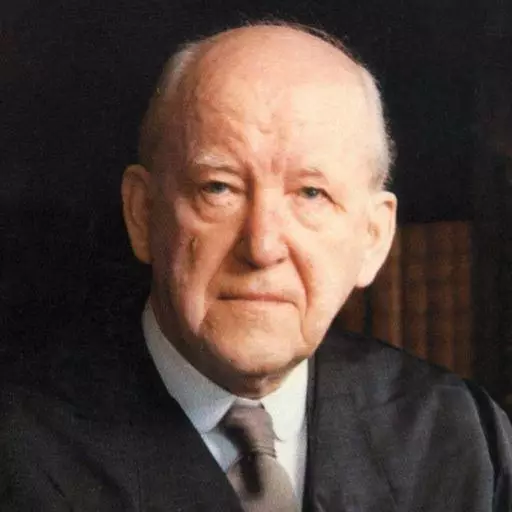
In Heavenly Places


When a person is saved, a profound change occurs and they are taken from one realm to another. The non-Christian only knows the earthly realm. But the Christian knows two realms: earthly and heavenly. In this sermon on Ephesians 1:3 titled “In Heavenly Places,” Dr. Martyn Lloyd-Jones expounds the mystery of Paul’s words, showing that in Christ, the Christian has heavenly citizenship. The consequence of this teaching is far-reaching. This makes the Christian an enigma to others and to themselves. They wrestle with sin like others do but do not enjoy it. There are social consequences as well. While the world places its confidence in the perfectibility of humanity and hope for a better future through education, government, and culture, the Christian is engaged in such matters, but their hope is firmly set on the heavenly places, in their afterlife with Christ. Their faith is on the sure ground of the return of Christ and the eternal home where the Savior is, seated in the heavenlies. No one can change their nature; it is only done through faith in God's only Son.
Dr. Martyn Lloyd-Jones: I should like to call your attention this morning to the words which are to be found in Paul's Epistle to the Ephesians, the first chapter and the third verse: "Blessed be the God and Father of our Lord Jesus Christ, who hath blessed us with all spiritual blessings in heavenly places in Christ." Now, I want particularly this morning to deal with that phrase which I emphasized, "in heavenly places."
The apostle praises and thanks God and ascribes unto Him all glory as the God and Father of our Lord Jesus Christ, who hath blessed us with all spiritual blessings in heavenly places in Christ. Now, those who attend here regularly will remember that we have already been looking at this verse. We come and look at it for the third time this morning. The apostle is full of a sense of praise and of thanksgiving because he's looking into God's great plan and purpose of salvation.
He realizes that all that has happened and all that is connected with the history of the coming of the Son of God into this world and all He did and accomplished, that all that is the outworking of this great covenant of God, this great plan. And that the Lord Jesus Christ is the mediator of this new covenant. That is why God is to us, not so much the God of Abraham, Isaac, and of Jacob, but the God and Father of our Lord Jesus Christ.
Well now, I say that we have looked at these blessings in general. We've seen that they all come to us through the Lord Jesus Christ, mediated by the Holy Spirit. Hence he describes them as spiritual blessings. And we looked last Sunday morning at these blessings in detail. And in passing, we said just a word about this description of them as being in heavenly places, or if you prefer it, in the heavenlies, because both translations are possible here.
And we contented ourselves with just a glancing remark last week to this effect, that the apostle undoubtedly partly introduces the phrase here again to draw a contrast between the position of the Christian and the position of the Old Testament saints. They who received their blessings as the children of Abraham in the flesh, they had blessings which were mainly material and temporal. You judged a man's blessing by God in terms of his flocks and his herds and so on.
But now, says the apostle, the blessings have a different character. They are not so much earthly as heavenly. They belong to a different realm. And of course, that is absolutely vital to the whole Christian position, as I shall try to elaborate this morning. But there are so many who go wrong in their entire thinking about Christianity because they start at the wrong point. They have got such a materialistic conception of the blessings of Christianity and fail to realize that the Christian faith is avowedly and confessedly otherworldly.
They never really begin to understand it and are constantly involved in difficulties. For instance, there are so many people who say they can't be Christians because they see the state of the world and the things that are happening in the world. Their whole argument is, if God is a God of love and promises to bless those who turn to Him, well, why is it that any Christian ever suffers? Why does a Christian ever experience adversity? Why should a Christian ever be taken ill and so on?
Now, there is one of those initial misunderstandings because they have not realized that these blessings are spiritual and that they are in heavenly places. They belong to that particular realm. But now, I rather want to look at this more in detail with you this morning. And I think it is not inappropriate that we should do so on a day like this which is now becoming known as Remembrance Sunday, in which so often even in the church of God, the attention and the minds of men and women are turned to this world rather than to the next one.
But here, I say, we are reminded as to how the Christian looks at all things, and it is always in terms of this idea that our blessings are in the heavenly places, in the heavenlies, in Christ. Now, I have said many times about this Epistle to the Ephesians that the apostle rises to greater heights in this epistle than in perhaps any other. And if that is true, it is certainly true to say this: that he never rises to greater heights than he does in this particular phrase.
Here is a phrase which really does lift us right up into the heavens, and it represents the Christian standpoint and viewpoint as it is in its greatest glory and majesty. Now, it is in many ways a kind of key phrase in this particular epistle. The apostle uses it five times in this one epistle. Here it is here in the third verse. In the 20th verse, you've got it also in this first chapter. He's talking about God and His power which He wrought in Christ when He raised Him from the dead and set Him at His own right hand in the heavenly places.
Now, there are some people who don't like that "places." They say that's localizing it too much, but you must localize it because Christ is in the heavenly places, and that suggests a location. And merely to say "the heavenlies" is not enough. It is the heavenly places. Then we've got it in the sixth verse of the second chapter. He says that even when we were dead in sins, that God hath quickened us together with Christ and hath raised us up together and made us sit together in heavenly places in Christ Jesus.
Then you'll find he uses it again in the third chapter and in the 10th verse, where he says that God's purpose is that to the intent that now unto the principalities and powers in heavenly places might be known by the church the manifold wisdom of God. And the fifth, the last reference, is in the sixth chapter in the 12th verse, in the famous statement: "We wrestle not against flesh and blood, but against principalities, against powers, against the rulers of the darkness of this world, against spiritual wickedness in high places," which should be "in heavenly places" again, if you like, "in the heavenlies."
Well now, obviously the apostle doesn't keep on repeating a phrase like this without its having some very deep and very real significance. And it has, of course. It is, as I say, one of the most glorious representations of the whole of the Christian truth. And if we could only see ourselves as we are in Christ in the heavenly places, it would revolutionize our lives. It would change our whole outlook. Our experiences would be entirely different. We should indeed be entering into the joy which was the great characteristic of the life of the great apostle himself.
Well now, what is the meaning of this "heavenly places," this "heavenly realm," if you like? What does he mean when he uses it? Well, there is no doubt at all but that he is using here a descriptive term which was very popular in his age and at that time. It's a characteristic Jewish conception. The apostle uses the same idea, you remember, in the second Epistle to the Corinthians in the 12th chapter, where he gives that bit of autobiography and where he tells us that he knew a man some 14 years ago, whether in the body or out of the body he doesn't know, but this man, he says, was lifted up into the third heaven.
Now, what does he mean by that third heaven? That third heaven there is exactly the same thing as the heavenly places in this verse and right through this Epistle to the Ephesians. What's it mean? Well, look at it like this. The first heaven, according to this conception, is what you may describe as the atmospheric heavens where the clouds are. We talk about looking up into the heavens. Well, we mean we're looking up into that part of the atmosphere where the clouds are. That's the first heaven. That's the heaven that is nearest to us. It's atmospheric.
But then there is a second heaven. The second heaven is what can be defined and described as the stellar heaven. It's that part of the atmosphere where you have the sun and the moon and the stars, very much further away from us than the clouds or the atmospheric heaven. It's far away. Modern science gives us these so-called astronomical figures that really represent nothing to us at all. They are probably correct, we don't know, but at any rate they tell us this much, that the stellar heavens are a tremendous distance far away from us. That's where you have your sun and moon and stars.
Ah yes, but there's a third heaven, and it's the third heaven that is really important. The third heaven is not the atmospheric heaven nor the stellar heaven. It is that realm in which God in a very special way manifests His presence and His glory. It is also the place where the Lord Jesus Christ in His resurrected body dwells. It is also the place in which these principalities and powers to whom the apostle refers in the third chapter have their abode.
Indeed, it is the place of which we read that marvelous description in that fifth chapter of the Book of Revelation in the reading at the beginning. There the glory of God is manifest. There is Christ, I say, in His glorified body as the Lamb that once was slain. There you have these bright angelic angels, the beasts, the four and twenty elders, all these great angelic dignitaries and powers, there they have their abode, there they exist. And still more wonderful and glorious, there also at this moment are the spirits of just men made perfect. There are those who have died in the Lord, who have died in Christ and who are with Christ at this moment. They are there in the heavenly places, in the third heaven if you like, in that realm where God manifests specifically and gloriously something of His eternal glory.
Well now, that's the phrase, and that is the meaning of the phrase. Very well then, what exactly is the apostle telling us? He says that we have been blessed with all spiritual blessings in these heavenly places in Christ Jesus. Well now, I want to try to deal with this statement in the light of these five references to it in this Epistle to the Ephesians. It seemed to me that it was a right and a convenient thing to do as we first encounter the phrase, so that as we come across it later on, we shall be able to carry in our minds exactly what it represents.
We can summarize it, if you like, by putting it like this. The Lord Jesus Christ, risen from the dead, is already in that place, in that realm. Here it is, I say, in this 20th verse. God has manifested the power in the resurrection, the power which He wrought in Christ when He raised Him from the dead and set Him at His own right hand in the heavenly places. The Lord Jesus Christ is there, risen from the dead, in His glorified body. Now, says the apostle, all that we have and all that we enjoy as Christians comes from Him and through Him, who is there.
Yes, but you see, he says more than that. By the new birth, by our regeneration, we are joined to the Lord Jesus Christ, and therefore we become sharers and participators in His life and of all the blessings therefore that come from Him. That's his whole teaching. We are in Christ, we saw that even in the first verse of this epistle. Yes, because we are in Christ, it means that we are a part of Christ and that we are so bound to Him by this organic mystical union that whatever is true of Him is true of us spiritually. Well very well, He is in the heavenly places, so we are in the heavenly places also. And that is why the apostle says that the blessings that we enjoy as Christians are really blessings in the heavenly places, because they all flow out of Christ, and because we are in Him.
Well, such is the nature of these blessings. Now, here I'm suggesting we see more clearly than anywhere else, if we can see it, the profound change that a person undergoes by becoming a Christian. It's nothing less than this. It isn't a mere superficial change. It isn't merely that we don't don some garb of respectability or of decency or of morality. Oh, it isn't merely some surface improvement or some temporary change. It is as profound as this: that we are taken from one realm right into another. As God brought the Lord Jesus Christ out of the grave and from the dead and set Him at His own right hand in the heavenly places, so the New Testament teaches us the change that we undergo as the result of the work of the Spirit in us, which leads to our rebirth and regeneration, leads to a change which is corresponding in us. That is why Paul prays for these people that the eyes of their understanding being enlightened, that they might know the exceeding greatness of His power toward us-ward that believe, according to the working of His mighty power which He wrought in Christ when He brought Him from the dead, etc.
Well now then, I say that that is and nothing less than this is the truth about the Christian. What does it lead to? What are its consequences? Well, let me admit quite frankly that this is something which is extremely difficult to put into words because, in view of our limited capacities, all of us as the result of our finite condition and of our sin, we find it very difficult to take hold of these things. And yet the whole business of this Epistle to the Ephesians is to urge us to strive to get hold of it, to pray for enlightenment in order that we may understand.
The difficulty arises in this way, that the Christian of necessity because this is true of him is in a sense two men at one and the same time. And because of that, those who are not Christians simply cannot understand him at all. Now, that's not my statement, that is again the statement of the apostle Paul. You remember he has a very wonderful description of the Christian in the second chapter of his first Epistle to the Corinthians, and he describes the difference between the natural man and the spiritual man.
And he puts it like this, he says, "He that is spiritual judgeth all things, yet he himself is judged of no man." Now, the "judging" there means discerning, understanding. He says the Christian understands all things, but he himself is understood of no man. The Christian, by definition, is a man that the non-Christian cannot possibly understand. And one of the best tests therefore which we can ever apply to ourselves is just that. Do people find it difficult to understand us because we're Christians? Not because we're difficult, but because we're Christians.
If this statement is true, the Christian must be an enigma to everybody who's not a Christian. They can't discern him. They say there's something odd about that man. I look at him and I see a man and yet he's not like everybody else, there's something different. And there should be. Well now then, I say that by the very definition of the Christian in terms of this heavenly life and this heavenly realm, he is someone who eludes the understanding of others. And indeed, it's true to say of him that in a sense he cannot even understand himself and he's become a problem to himself.
And he's become a problem to himself because of this new thing that's happened to him. I live, yet not I, but Christ dwelleth in me. I am myself, I'm not myself, that's it. And it's all because now we belong to this heavenly realm. Well, let me divide it up and try and put it like this. The Christian, because of this, has two natures. Let's try it like that first of all. The Christian is a man who's conscious of having two natures. He is still, in a sense, a natural man. That which he has inherited by his birth from his forefathers, he still possesses.
He is still in this world and in this life like everybody else. He has to live, he has to earn his living, he has to do all things like other people. He still lives the so-called soulish, psychic life, the life, I mean, which is lived in terms of intellect and understanding and emotions. He can study subjects and does like everybody else. He's interested in the affairs of the country. He's interested in politics, social conditions, interested in housing, has to buy and sell things like everybody else. He can study the arts, he's interested in music. That's his soul life, his soulish, his psychic life. He's still got it. He's got that like everybody else has got it. He's not deprived of that. He's got that as much as any other person who is not a Christian.
Indeed, we can go further. He still knows something about the life of sin. He's conscious of failure, he's conscious of sin. You look at him or he looks at himself and at first he says, "Am I different from other people? I seem to be identical with them. I fall, I fail, I do things I shouldn't, I still am guilty of sin." He appears to be a natural man. So if you take a very superficial view of the Christian, I say you would very well come to the conclusion that indeed there is no difference at all between him and anybody else.
But that isn't true. It isn't the whole truth about him. In addition to that, there is another nature. There is something else which has come in, and it is this something other that makes the Christian an enigma to other people and to himself. He's a natural man in a sense, but he's also a spiritual man. And of course, because he's not only this natural man but he's spiritual as well, the apostle contrasts the natural man and the spiritual man.
Because the great thing about the Christian now is that he is this spiritual man, and this is the big thing about him and this is the dominating thing in his life. The Christian at his very worst knows that he is different. Let me put it at its very lowest by putting it like this. I have said that the Christian is still guilty of sin. Yes, but the Christian doesn't enjoy sin as he once did and as other people still do. There's something different even about his sin.
This spiritual principle is in him, this spiritual nature, this consciousness of a new life, of a life which belongs to a different order and a different realm. Now, I say it's very difficult to put this in words, and I'm sure that your experience will agree with what I'm saying. There is something almost elusive about it all, and yet it is something that the Christian knows. I've got to put it like that because it is something which is essentially subjective. It is something subjective that results from belief of objective truth, but it itself is something subjective.
In other words, unless you feel that you're a Christian, you're not a Christian. Unless something has happened to you experimentally, experientially, subjectively, use any term you like, unless something has happened to you and in the realm of your sensibilities, I say you are not a Christian. There is a great danger, I sometimes think at the present time, so to objectify faith as to speak of it in a very unscriptural manner. There are people who come to you and say, "Do you believe this?" They point you to a verse and they say, "Do you believe that? You subscribe to that?" And you say, "Yes, I do." Well then, they say, "You're a Christian." Not of necessity, I reply.
That may be nothing but an intellectual assent. If to be a Christian means that God through the Spirit has worked in your soul and has given you a new birth and has put a principle of heavenly life within you, I say then you must know it, you can't help it. You are conscious of this something else, this difference, this power that's working in you, this disturbing element if you like.
Let me put it like this. You are of necessity conscious even of a new conflict in your life. The person who is not a Christian is in a sense only one, but the Christian is two. To use the scriptural phraseology, the non-Christian is nothing but the old man. But the Christian has a new man as well. There's a new man and an old man. And the new man and the old man don't agree, and there is a tension between the old man and the new man, and there is a conflict. The flesh lusteth against the spirit and the spirit against the flesh. That's it, there's a conflict.
And I say that the very lowest stage in a sense of true Christian experience is that stage in which we're conscious of just that, perhaps not much more than that. We don't know what it is yet to be filled with all the fullness of God. We may not have had those blessed experiences of direct, personal, conscious communion with Christ, but at any rate we know this much: that there's something in us not ourselves that is disturbing us, that there is, as it were, another person, that there is a conflict, that there is almost this dual personality as it seems to be, this dualism as it were. Don't worry about the terms. I'm simply trying to convey to you this consciousness which the Christian has of two natures. And he has the consciousness of the two natures because he is in Christ and Christ is in the heavenly places. And he has received that life from Christ and he draws everything he has from Christ, and that is so different from everything else. It's a new nature.
So the Christian, I say, is one who is conscious of having two natures. But let me go on. He not only has two natures; in the second place, he has two existences. He lives in two worlds. I don't know what your reaction is, my friends, but I find this rather thrilling. This is to me one of the most romantic things about the Christian life. The Christian is a citizen at one and the same time of two worlds. He belongs to this world, he's still in it, he's still living in it, he exists in it. And yet, you know, he doesn't only belong to this world. He is aware that he belongs to another one as definitely as to this one. And of course, it's an inevitable consequence of the fact that he's got this new nature.
Now, let me put it in terms of Scripture to you. What's a Christian? Well, says the apostle in so many places, a Christian is one who has been translated from the kingdom of darkness into the kingdom of God's dear Son. Translated, moved, changed his position. That's the constant expression that is used in the Scriptures. Now, you see, it's parallel with what has happened to our Lord Himself. God has manifested this power in Christ when He raised Him from the dead and set Him. Now, according to this argument, that is something that has happened to every Christian. You don't stay where you are if you're a Christian. You've been moved, you've been translated, you've been shifted over from one place to another, from one realm into another realm, from one world into another world, from one kingdom into another kingdom.
And this is something again which is vital in this whole experience of the Christian. The Christian doesn't retire out of this world. You know historically many Christians have made that fatal error and blunder and they've said, "Well, because I'm a Christian, I no longer belong to the state. I don't do this and that." There were some in the early church who said, "We must no longer do any work, we are waiting for Christ to come." But you remember how the apostle deals with such people in the second Epistle to the Thessalonians. There are those who say the Christian shouldn't vote at an election. He should never stand for Parliament. He shouldn't take any interest in this world's affairs at all. All that's non-Christian, he doesn't belong to that realm. But that isn't true, that isn't scriptural. He does.
He is still a citizen of this world, and he belongs to this world and to this realm. He has many reasons for that. Amongst others, he knows that this is still God's world and God has a purpose for him in this world and that the powers that be are ordained of God and so on. All that is God's ordinance. Oh yes, the Christian knows that he's a citizen of Great Britain and that he's got his duties and his responsibilities like everybody else. In fact, he ought to be a better citizen than anybody else in the land because he is a Christian.
Ah, but he doesn't stop at that. He knows that he's a citizen also of another kingdom. It's a kingdom that can't be seen. It's a kingdom that is not of this world, and yet it's in a sense in this world and it's always impinging upon it. It seems to permeate it and yet you can't define it. You can't say, "There's the boundary." It's everlasting, it's eternal. It's that stone that Daniel speaks about that was thrown in and began to grow and expand until it eventually covered the whole universe. It's that. And the Christian knows that he belongs to it.
And again I say, what a wonderful test this is of our whole standing and our whole profession as Christians this morning. You're aware of the claims of Great Britain upon you. Are you aware of the claims of the other kingdom? You're anxious not to transgress the law of the land. Are you still more anxious not to grieve and to wound and to hurt the King, the King invisible eternal, who belongs to the other realm and who is its Lord? That's the question.
Now, the apostle says not only that we belong to that, but you notice he says something in that second chapter in the sixth verse which sounds to us so daring as to be impossible, but he says it. He says this, that God hath raised us up together with Christ and hath made us sit together in heavenly places in Christ Jesus. That means this and nothing less than this: that you and I in Christ at this moment are seated in the heavenly places. We are there. He doesn't say here we are going to be there, he says you are there. How does that work? How can you say that to someone while I'm still in this world of time with all its confusion and all its fighting and its contradiction? How are these things true at one and the same time? I said at the beginning that it sounds enigmatic, doesn't it? It sounds paradoxical and contradictory, and yet it's the most glorious thing about the Christian. It works like this.
Spiritually, I say this with my words measured and considered, spiritually I am in heaven at this moment in Christ, in one sense as much as I shall ever be. But my body is still left on earth. I'm still in this world of time. My spirit has been redeemed in Christ as much as it'll ever be redeemed, but my body is not yet redeemed. In me, that is to say in my flesh, dwelleth no good thing. As a Christian, I am with all other Christians waiting for the adoption, to wit the redemption of our body. Or if you prefer it as Paul puts it in writing to the Philippians, he says that we spend our time, we should as Christians, waiting for what? Our conversation, he says, is in heaven, from whence also we look for the Savior, the Lord Jesus Christ, who shall change our vile body, this body of our humiliation, that it may be fashioned like unto His glorious body, that it may be fashioned like unto the body of His glorification, according to the working whereby He is able to subdue even all things unto Himself. That's it.
So you see, in my spirit I'm already there, but I'm still on earth in the flesh and in the body. But this is the marvelous thing, isn't it? Because I am in Christ, it is as certain as we are here at this moment that even the body's going to be emancipated, the adoption is going to come to wit the redemption of our bodies. And a day is coming when I shall be there not only in my spirit but in my body as well. We shall be changed. Our bodies shall be glorified. And without any sin or any blemish or wrinkle or spot in spirit or in body, we shall be with Him, we shall see Him as He is, we shall be like Him, and in the whole of our being and personality, we shall be in those heavenly places.
But remember the deduction we draw is the deduction of Augustus Toplady: "More happy, but not more secure, the glorified spirits in heaven." They are happier, of course. The glorified spirits in heaven this morning, Christian people who have gone on and are with Christ, which is far better, they're happier than we are. And they're happier than we are because we that are in this tabernacle do groan, being burdened, earnestly desiring to be clothed upon with our house which is from heaven. They no longer have to struggle with sin in the flesh and in the world. No, no, they're delivered from all that, that's gone as far as they're concerned. But we are still in the flesh and in the body and still struggling and still groaning because of that. They're more happy, but they are not more secure. They are no more in Christ than we are in Christ. They are there because they were in Christ and are in Christ, and we are in Christ. And we are seated together in the heavenly places with them and with Christ at this very moment.
Don't you see here this marvelous conception of the Christian church? We have not come to the mountain that could not be touched. Where have we come to? We have come to the general assembly and the church of the firstborn, the spirits of just men made perfect. We've come to this heavenly place. We've come to Christ, the mediator of the new covenant. We are there. We are there in our spirit. We shall be there even in our bodies.
And that brings me to my last word, which is this. The Christian not only has two natures and not only has two existences, he has two outlooks of necessity. The Christian looks out upon life and the world, and in a sense he sees them as everybody else sees them. And yet I hasten to add, he sees them differently at the same time. And were I one who believed in preaching some peculiar exceptional message because it's Remembrance Day, this would have been my entire theme. But we approach these things scripturally. We look at Remembrance Sunday not as the world does, but as people who belong to the heavenly realm do and should. We see everything differently. We see everything from the spiritual standpoint. What does that mean? Well, this.
Everybody today is considering the state of the world and the wars and the causes of these things and whether there's going to be another war. I've no doubt many sermons will be preached about that today. Suggestions will be offered to statesmen as to what should be done. Sermons will be preached on pacifism or whether you should have armies or shouldn't have them, civil defense, and so on and so forth. But my dear friends, that's not looking at things from the heavenly standpoint. Don't misunderstand me, those things have got to be done. And the Christian as a citizen of this visible realm has got to do all that, it's his duty to do it and to arrive at decisions and to be able to give reasons for his decisions.
But that is not the message of the Christian church. That in a sense has nothing to do with the Christian church. And it is wasting the time of the Christian church to spend time with such things because the Christian church is here to give this other outlook. And what is that? It's spiritual. It sees the cause of the troubles in an entirely different way. That other view sees the causes, of course, in a matter of the balance of power as between nations, certain political and social alignments and how you can deal with them most effectively.
"Well, all right," says the Christian, "that's all true, but that isn't the real, that isn't the fundamental cause." What is the fundamental cause? Well, Paul tells us in this last use of this term "heavenly places": "We wrestle not against flesh and blood, but against principalities and powers, against the rulers of the darkness of this world, against spiritual wickedness in the heavenlies." The Christian knows that the world is as it is because of Satan, because of the devil. He sees all these things that the other view concentrates on alone as but the manifestations of this satanic power. The conflict in this world is finally a spiritual conflict. It isn't a material conflict. It isn't a clash of material conceptions only. No, no. It's the powers of hell and of Satan arrayed against the powers of God. Now the Christian sees that.
So you see his view is very much more profound. He doesn't only see things on a level, he sees this horizontal element as well, this perpendicular element as well. And therefore he is not as excited as the man who takes the horizontal view alone is because he sees the profound character of the whole problem. But he doesn't merely stop at a difference in the view of the problem, his view of how to deal with these things must by consequence and inevitable logic also be entirely different. He sees that God has got two ways of dealing with this great problem that has resulted from the activity of the devil and the fall of man and of sin. God has two ways of dealing with it.
The first is that He has ordained to restrain evil. And God restrains evil in many ways. He did it partly by dividing up the world into kingdoms and setting the bounds. He did it by ordaining that there should be kings or heads of state and magistrates and powers. Let us never forget that the powers that be are ordained of God. It is God that ordained government and systems of government. That's why the Christian is exhorted to honor the king and to honor masters and people like that. Very well, now all that is negative. That is God keeping evil within bounds, restraining evil. He does it by means of government. He does it therefore by using statesmen, international conferences, political arrangements, all these things, they're all ordained of God. But they never become positive, they're only negative. They simply restrain evil.
A police force can prevent men doing certain things which are riotous, no police force can ever make men good. Now, it applies not only to government, the same thing is true of the whole of culture. All education, all culture, everything that is designed to improve manners, as we say, and to make life orderly and harmonious and enjoyable, all that again is simply a part of God's mechanism for restraining sin, and it's all negative. You can have a highly cultured man, he will have polished manners, he won't do certain things, but that doesn't of necessity make him a good man. It certainly doesn't make him a spiritual man. It is simply something that holds this power of hell that is within him and in his world within bounds and in check.
That's one way, and God has ordained that way. Even the devil is on a limit and is held in by God ultimately. God's permissive will allows certain things. But there is this other aspect. God deals with the problem of sin and of the world in a curative manner. And the curative manner, of course, is in Christ and in His great salvation. He takes men out of this present evil world in this spiritual sense and puts them into the kingdom of Christ. He puts a new principle within them. He doesn't merely prevent their sinning, he gives them a love for holiness. They become positively good, they hunger and thirst after righteousness, they become like Christ. So there is a new kingdom within that larger kingdom of the world, and it is God's kingdom, it's Christ's kingdom. That's curative. That eventually is going to be so great that sin will be destroyed and banished and will be no more.
So the Christian sees that. Nobody else sees that. The statesmen of the world at their best who are not Christians know nothing at all about that, and they see only in terms of the visible and that which is immediately before them. But let me end by putting it like this. The two views are entirely different with respect to the future. The non-Christian, of course, pins his faith to human enactments. He pins his faith to conferences. "Oh," they say, "if we could only meet and have a round table conference and sign agreements, never to use the atomic bomb, never to use the hydrogen bomb, never to have armies beyond this and that, then we all agree, and then the world's going to be perfect." And they really believe that and they're hoping it's going to come and they're clutching at it always. But it never seems to come, does it?
But they can't go beyond that, of course. They know nothing about this spiritual element. They believe in the perfectibility of man, they believe in evolution, they believe that man must get better as he's more educated. They won't face facts. They won't face the fact that a highly educated man can be a beast and worse in his moral life and so on. They won't face that. They say man must be getting better and he will. And eventually, of course, he'll banish war and the world will be perfect. I confess that if I had to believe that and had no alternative this morning, I would be of all men the most hopeless. My dear friend, that sort of thing's never going to happen. It can't because of this spiritual element in the conflict. While man has got sin in his nature, he'll not only be an adulterer and a murderer, he'll do it on a national scale. Why should man in the mass be different from man in the individual? And while there's sin in the individual, it'll be out, it'll express itself. Do what you will, you won't be able to stop it.
But thank God there's another message. And oh, to me the greatest tragedy in the world this morning is that the church so often in her pulpits, instead of preaching her own message, is simply preaching that other message, that earthly, human, carnal message. Forgive me, I read in a local paper which I see this week in bold type of the protest made by three ministers who are County Counselors at the meeting of their particular County Council. Their protest was over this: the Education Committee of that County Council had refused to give permission for temperance lecturers to give lectures on temperance in the schools, the primary and the secondary. And the three ministers of the gospel were protesting and were appealing and agitating that these temperance lecturers should be allowed to go and give their lectures in the schools, so that the children being taught the evil effects of alcohol would never drink when they grew up and so the great problem of drunkenness in that locality should be solved.
Is that the message of the church? Has the church to appeal to County Councils to solve the moral problem? Has the church to appeal to statesmen to solve the problem? My dear friend, it's a denial of the Christian faith. It means an abysmal ignorance of the heavenly places. No, no, we've got another view, we've got something entirely different. Lectures on temperance are never going to make anybody sober. If to know the evil effects of alcohol should keep a man from drink, well then no doctor would ever touch alcohol. How tragic it is, how pathetic. No, no, I say we don't depend on things like that. We know the problem is spiritual and the solution is spiritual. And as it is from Satan and hell and evil that lusts and passions and desires come, it is from Christ and Him alone through the Spirit that the power to overcome shall come, must come, yea, will come. And it not only will come in the individual, thank God it'll come in the whole world, because the Christian knows this morning that that Christ who is in the heavenly places at this moment will come again into this visible world in a visible manner, riding upon the clouds of heaven, surrounded by the holy angels. And those who are already with Him will come with Him, those who remain will be changed and shall rise into the air to meet Him, and shall forever be with the Lord. And He will rout His enemies and banish sin and evil and His kingdom shall stretch from shore to shore, and He shall be acclaimed as Lord by things that are in heaven and on earth and things that are under the earth.
That's Christian optimism, knowing that it is Christ alone who can conquer, that Christ will conquer. My dear friend, are you in the heavenly places? Are you aware of the two natures within you? Are you aware that you belong to two realms? Have you got this new, this spiritual view of our miscalled Remembrance Day, of war and peace and troubles in the world and all the rest of it? Do you see it all from the perspective of heaven and of God and of His Christ, seated together with him in the heavenly places? Blessed be the name of God. Amen.
Featured Offer

Find peace and comfort this season with your complimentary guide that includes access to 6 free bonus sermons on overcoming spiritual depression from Dr. Martyn Lloyd-Jones, one of the church’s most beloved Bible teachers. Topics include: true Christians can and do struggle with depression, recovering the joy of your salvation, dealing with crippling guilt over past sins, dealing with yesterday’s haunting regrets, encouragement to keep moving forward, and understanding God’s purpose for suffering.
Past Episodes
This ministry does not have any series.
Featured Offer
Find peace and comfort this season with your complimentary guide that includes access to 6 free bonus sermons on overcoming spiritual depression from Dr. Martyn Lloyd-Jones, one of the church’s most beloved Bible teachers. Topics include: true Christians can and do struggle with depression, recovering the joy of your salvation, dealing with crippling guilt over past sins, dealing with yesterday’s haunting regrets, encouragement to keep moving forward, and understanding God’s purpose for suffering.
About From the MLJ Archive
From the MLJ Archive is the Oneplace.com hosted ministry of the MLJ Trust. Our mission is to promulgate the audio ministry of Dr. Martyn Lloyd-Jones.
About Dr. Martyn Lloyd-Jones
Contact From the MLJ Archive with Dr. Martyn Lloyd-Jones
info@mljtrust.org
http://www.mljtrust.org/
PO Box 953
Middleburg, VA 20118