
In Christ Jesus


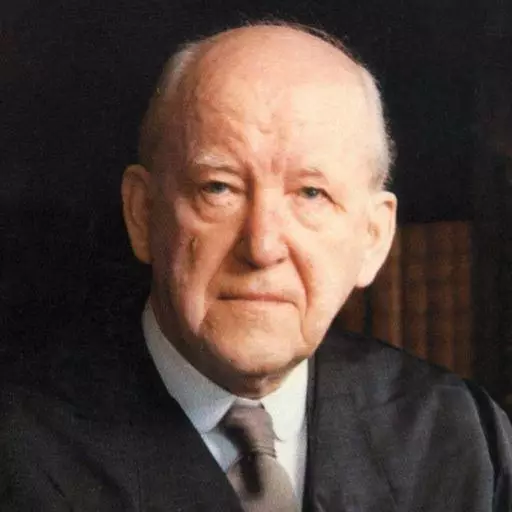
What has God done for the Christian? In this sermon on Ephesians 2:4–7 titled “In Christ Jesus,” Dr. Martyn Lloyd-Jones focuses on Paul’s answer to this question. Paul is concerned that believers are clear about what God has done for them. True Christianity is what God has done to and for the believer. People can decide to be religious, to start or stop doing things, and believe that God forgives them, but that is not essentially Christianity. Some schools of thought have taught that the doctrine of union with Christ is something the Christian strives to attain. But apart from this union, a person is not a Christian. One must examine themselves and ask: is my way of thinking of myself as a Christian in terms of what I am striving to do or make of myself? The difference between the unbeliever and believer is that the believer has a new disposition bending or redirecting their faculties accordingly, affecting the whole person — mind, heart, and will. Birth is sudden and so it is with the new birth. One cannot understand or explain it fully; all one knows is that it has happened. It is a creative act of God that the apostles, and others, referred to as the “new creation.” Apart from union with Christ, this new regeneration cannot make a Christian.
Dr. Martyn Lloyd-Jones: I would like to direct attention once more to the words which are to be found in Paul's Epistle to the Ephesians in the second chapter, verses 4, 5, 6, and 7. Verses 4 to 7 in the second chapter of Paul's Epistle to the Ephesians.
"But God, who is rich in mercy, for his great love wherewith he loved us, even when we were dead in sins, hath quickened us together with Christ (by grace ye are saved), and hath raised us up together, and made us sit together in heavenly places in Christ Jesus: That in the ages to come he might show forth the exceeding riches of his grace in his kindness toward us through Christ Jesus."
Now, we've already looked at this majestic and most moving statement. And so far, we've been looking at it more or less in general. We've been concentrating on the way in which the apostle introduces it, and especially upon that word 'but', where we have the transition point from the hopelessness and the despair of men in sin to the introduction of the gospel.
It is the only hope, apart from it, there is none whatsoever. But as we see ourselves in an entirely lost and powerless condition, suddenly there comes this message to us, unexpectedly, surprisingly, from a different realm, causing us to lift up our faces. And furthermore, we have seen clearly that its great emphasis is that it is God who has done this.
It is when we were dead and could do nothing that God did the thing which He has done. It's the power of God. And we emphasized, particularly last Sunday morning, what it was in God that led Him to do this. It's here we see the contrast between God and ourselves most clearly: He is rich in mercy. He has great love toward us, and He has grace which is exceeding rich, and He is kindly and benignly disposed toward us.
Well, very well, there I say we have looked at it so far. But the apostle, you notice, is not content merely with introducing it, and merely to paint these striking and wonderful contrasts. He also is anxious that we should be quite clear in our minds as to what God has done for us. And that is the thing to which I want to call attention particularly this morning.
It's the most wonderful thing in the world that when we see ourselves as we are in sin, we meet this blessed 'but'. Yes, but we mustn't just stand amazed and astonished. We must learn and realize exactly what God has done for us. And here the apostle puts it to us in detail. And I suppose therefore, there are senses in which we can say quite rightly and truly that we have here one of the profoundest statements with respect to the condition and the state of the Christian, which can be found anywhere in Scripture.
What has happened in other words is this, that when we were dead in sins, God has quickened us together with Christ, and hath raised us up together, and has made us sit together in heavenly places in Christ Jesus. Now there are obviously a number of preliminary remarks that one must make about a statement like this. The first that I feel constrained to make is this one: That is true Christianity. That is the very essence of Christianity. And nothing less than it.
What is described in those words puts to us what is the very nerve of this whole matter. It is what God has done to us and for us, and not primarily anything that we have done. Christianity in other words, doesn't just mean that you and I have taken a decision. Of course, it includes that. But that isn't the essence of Christianity. People can decide to be religious. That's not Christianity. People can decide to stop doing certain things and to start doing other things. That's not Christianity. People can believe that God forgives them their sins. That's not Christianity in and of itself.
The essence of Christianity is the thing that we have here. And this is, I say, the real thing, and nothing less than this is the real thing. And I would emphasize also that this is true of every Christian. Now, we shall see here that we come face to face with this wonderful teaching and doctrine about the union of the Christian with the Lord Jesus Christ. And there are certain aspects and certain schools of Christian thought, which it seems to me have done very great harm at this point by giving the impression that this is something that a Christian attains unto.
That if you really have given yourself to the cultivation of the Christian life, well, you may hope ultimately to attain unto this union with Christ. So, therefore, they obviously think that there are many Christians who are not yet in that position, and who need to be exhorted and urged and stimulated to strive until they do get to that condition. Now that, I say, is entirely wrong; it's entirely false. You cannot be a Christian at all apart from this. This is what makes us Christians. And apart from this, we are not in the Christian position at all.
Therefore, I say that it's important that we should understand at once that we are really dealing here with something that is quite basic and fundamental and primary. At the same time, of course, the doctrine is such a glorious one and such a great one that it does include the whole of the Christian life. The thing I'm emphasizing therefore is that this Christian life is a whole. And that you, as it were, have the whole at once and then proceed to appropriate the whole and increasingly to understand it.
Very well, let's look at it once more therefore. This, I say, is Christianity: that when we were dead in sins, God hath quickened us together with Christ, and hath raised us up together, and hath made us sit together in heavenly places in Christ Jesus. Now, let's see what happens when we examine ourselves in the light of that.
As we look at ourselves at this moment and say, "Now, do I always think of myself as a Christian in those terms?" I wonder what the result is. Is that my way of thinking of myself as a Christian, or do I still tend to think of myself as a Christian in terms of what I'm attempting to do, what I'm striving to do, and what I'm trying to make myself or to make of myself? Now, this is obviously quite basic, because the apostle's whole emphasis here is that the primary thing, the first thing, is this which God does to us, not primarily what you and I do ourselves.
Very well then, let's go on and look at it like this. There are two ways of looking at this great statement, it seems to me. There are some people who take a purely objective view of it. They think of it purely in terms of our position or our standing in the presence of God. What I mean is this: that they think of it as being something which is already true of us in a sense in Christ, but is not true of us in practice. There are those in other words who regard this as just a statement of the fact that we are going to be resurrected.
That beyond death we shall be resurrected and we shall share the life of glory which is awaiting all who are in Christ Jesus. They say the truth is that the Lord Jesus Christ has already been raised from the dead, He was quickened when He was dead in the grave, He was raised, He appeared, He ascended into heaven, He is in the glory in the heavenly places. Now they say that has happened to Him. And if we believe in Him, it will happen to us. They say by faith it's true of us now.
But it's only by faith. It's not in us as it were, it's entirely in Him, but it will be made real in us in the future. Now, that is what I call the purely objective view of this statement. And of course, it's a statement which is perfectly true, except that it doesn't go far enough. All that is true of us. There is a time coming when all of us who are Christians shall be resurrected unless our Lord returns before that, but even then our bodies will be changed and will be glorified.
But apart from that, I say, we shall be resurrected, we shall live, and we shall reign with Him and enter into and share that glory with Him. That is perfectly true. But it seems to me that to interpret this statement solely in that way is very seriously to misinterpret it. And I think I can prove that. There are two arguments which seem to me to make that quite inadequate as an interpretation.
The first is that the whole context here is experimental. The apostle is not so much concerned to remind these Ephesians of something that's going to happen to them. His great concern here is to remind them of what has already happened to them, their present position. You remember, that is why it's so important we should always carry the context with us. What the apostle is concerned about in this whole statement is that we may know the exceeding greatness of His power to usward who believe, according to the working of His mighty power which He wrought in Christ, when He raised Him from the dead.
He is praying, in other words, that these Ephesians may have the eyes of their understanding so enlightened, that they may know what God is doing for them now, at that very time, not something that He's going to do in the future. It is important that we should be clear about death, that we should lose the fear of death, that we should be so certain of the resurrection and our glorification that we can smile in the face of death. That's all right, but that isn't what the apostle is teaching here.
He is concerned that they may appreciate now, in the midst of all their difficulties, what is literally true of them. But there is still stronger proof, it seems to me, in this very fifth verse. The apostle says, "Even when we were dead in sins, hath quickened us together with Christ," and then in brackets, "by grace ye are saved." In other words, He says what I'm talking about is your salvation. And remember, "by grace ye are saved" means, "by grace you have been saved." That's the tense. "You have been saved."
So, the apostle says, "I can put it all in other words if you like, I'm talking about your salvation and you have been saved." Well, now clearly that is something which is experimental. This is something subjective, not something purely objective. The tragedy is that people so often put these things up as opposites. Whereas in reality, the Scripture shows always that the two things must go together. There is an objective side to my salvation, but thank God there is a subjective side also.
It is wrong to teach, as this modern movement tends to teach, that it's all objective, that it's all in Christ and that there's nothing in me at all. That seems to me to be a grievous error, because the Scripture, fortunately for us, always emphasizes the experimental, the experiential, the subjective, what I enjoy in the here and now. My salvation is not altogether and exclusively in Christ, because I am in Christ, it's in me.
And here, I say that is the thing that the apostle is so anxious for us to understand. In other words, we say that this must be interpreted spiritually. It must be interpreted subjectively. It must be understood experimentally. What God has done to us spiritually, says the apostle, is comparable to that which He has done to the Lord Jesus Christ in a physical sense, when He raised Him from the dead and took Him unto Himself to be seated in the heavenly places.
In other words, we must go back to the end of the first chapter. The power which is working toward us who believe is the same power which God wrought in Christ, when He raised Him from the dead and set Him at His own right hand in the heavenly places, far above all principality and power and might and dominion and every name that is named, not only in this world, but also in that which is to come, and hath put all things under His feet, and gave Him to be the head over all things to the church, which is His body, the fullness of Him that filleth all in all. Now, says Paul, "I want you to know that that selfsame power that did that is working in you spiritually."
Very well then, I say this enables us to put it like this: that all this has happened to us if we are Christians. By this selfsame power of God, all the tenses which the apostle uses here in these very words that we are studying are all in the past. He doesn't say that God is going to raise us, is going to quicken us, is going to put us to be seated in the heavenly places. He says, He has done so. "When we were dead, He has quickened us."
It's the aorist. It's the past. It's completed. It's already been done. So that we must say of ourselves as Christian people that we have been quickened. We have been raised. We are seated in the heavenly places. Or if you like, we can put it best perhaps like this, and surely this is the thing that the apostle had in his mind.
The position of the Christian is the exact opposite of the man who's not a Christian. The man who's not a Christian is a man who is dead in trespasses and sins. He is being led about according to the course of this world, according to the prince of the power of the air, the spirit that now worketh in the children of disobedience. His conversation is in the lusts of the flesh, fulfilling the desires of the flesh and of the mind. He is under the wrath of God by nature.
That's the non-Christian. What is the Christian? He is the exact opposite of that: quickened, alive, raised, seated in the heavenlies, entirely different, the complete contrast. So you see, the 'but' still goes on bringing out this aspect of the contrast. And obviously, we cannot understand our position as Christians truly unless we realize, I say, that it is a complete contrast to what we once were.
Very well, you see how important it is in interpreting the Scripture, to take all these things together. We must be clear about our state in sin, because if we are not, we'll never be clear about our state in grace and our state in salvation. Well now then, let us go on to put it like this. If that is what is the truth about us as Christians now, there are two main matters that must occupy our attention.
The first is this: How has all this happened to us? How has this come to be true of me as a Christian? And the apostle answers the question. It is together with Christ. Do you notice His constantly repeated emphasis? "When we were dead in sins hath quickened us together with Christ, and hath raised us up together, and made us sit together in heavenly places in Christ Jesus."
Now, here we are undoubtedly face to face with one of the greatest and the most marvelous of all the Christian doctrines. One of the most glorious beyond any question at all. It is the whole teaching of the Scripture with regard to our union with Christ. Now, it's a teaching which you find in many places. We read together at the beginning that fifth chapter of the Epistle to the Romans, because I suppose it is in many ways the most extended statement of the doctrine which is found anywhere.
But you've got it in exactly the same way in the sixth chapter of the Epistle to the Romans. It's the great doctrine of 1 Corinthians 15, the great chapter which is read so often at funeral services. But you've got it equally clearly in 2 Corinthians chapter 5. And in the same way, Paul brings it in those beautiful words of his at the end of the second chapter of the Epistle to the Galatians: "I have been crucified with Christ. Nevertheless I live; yet not I, but Christ liveth in me: and the life which I now live in the flesh I live by the faith of the Son of God, who loved me, and gave Himself for me."
Now, this, I say, is the most wonderful and the most amazing thing of all. And to me, it is always a matter of great surprise that this blessed doctrine should receive so little attention. For some reason or other, Christian people seem to be afraid of it. And I have no doubt that it is for the reason I've already adduced, that Catholic teaching, whether Roman or Anglo or any other type, always has tended to give the impression that this is some final achievement of the mystic, the ultimate reach of the greatest saints.
But that it's got nothing to do with the rest of us ordinary Christians. But as I was saying a moment ago, according to this teaching, you are not Christians at all unless you are joined to Christ. This doctrine of our union with Christ shouldn't come at the end of Christian doctrine, it should come at the beginning, where the apostle himself puts it. Well now then, therefore let us look at it. What is meant by our being joined to Christ?
Well, it's used in two senses, obviously. The first is in what may be called a federal sense, or if you like in a covenant sense. Now we've got to get hold of this. That's the whole teaching of that fifth chapter of Romans. Adam was made by God the head and the representative of the human race. He is the federal head, He is the federal representative, He is the covenant head. God made a covenant with Adam, made an agreement with him, made certain statements to him as to what he would do, et cetera.
Now, that is the first sense in which this doctrine of union is always taught. And what is said therefore about the Lord Jesus Christ is this, that He is our federal head, He is our representative. Adam, you see, as our representative, rebelled against God, he sinned, and he was punished, and certain consequences followed. Yes, but because Adam was our representative and our head, what happened to Adam also therefore happens to us and to all his posterity, because he is our representative.
Now, that is one aspect of the matter and a very important one. Of course, we know something about this in ordinary life and living, don't we? The ambassador of this country in a foreign court represents the whole country. And he takes actions in which we are all involved, whether we want to be or not. As citizens of this country, we all suffer the consequences of actions that were taken before we were ever born. That may be happening a great deal in the history of these present days through which we are passing.
You can't contract out of your nation. You are federally involved in the activities of your nation. And what the leader or the official representative of a nation does is binding upon all the citizens of that country. Now, that was true of Adam. It is also true of the Lord Jesus Christ. Adam was the first man, Jesus Christ is the second man. You have the first Adam, you have the last Adam.
Now, Jesus Christ, according to this teaching, is the representative of this new humanity. And therefore, what He did and what He suffered is something that applies to the whole of this new race that has come into being in Him. So that the union of the believer with Christ must be thought of in that federal sense. But it isn't only that. There is another aspect to the union which we may call mystical, or if you like, vital.
And this is something that was taught by our Lord Himself in the famous words, you remember, in the 15th chapter of the Gospel according to St. John, where He says, "I am the vine, you are the branches." And the union between the branches and the vine is not a mechanical one, it's a vital one. It's an organic one. They are bound together, the same sap, the same life is in the tree as in the vine, as in the branches. You can't separate them.
But that's not the only illustration which is given. We have already seen at the end of the first chapter of this Epistle to the Ephesians that Paul says that the union between a Christian and the Lord Jesus Christ is comparable to the union of the various parts of the body with the whole body and especially with the head. Now, my finger is a vital part of my body. It isn't simply tied on. There is that living, organic, vital union. The blood that flows through my head flows through my fingers.
It's this kind of internal, essential unity, and not merely a federal, legal, or covenant union. Indeed, there is another comparison which is used in this Epistle to the Ephesians in the fifth chapter, because we are told there that the union between the church and Christ, and therefore between every member of the church and Christ, is comparable to the union between a husband and a wife. You read the fifth chapter of this Epistle to the Ephesians towards the end, and that's exactly what you'll find: "These two shall be made one flesh."
Husband and wife, that mystical union, that's the union between Christ and the church. Well now then, all these blessings that we enjoy become ours because we are joined to Christ in this double manner. In this forensic, in this federal, covenant manner, but also in this vital and in this living manner. And therefore, we can put it like this. That was what has happened to Christ has happened to us. This is the marvel and the mystery of our salvation, and it's the most glorious thing we can ever contemplate.
The Son of God, the second person in the eternal Godhead, came down from heaven to earth. He took unto Him human nature. He joined human nature unto Himself. He shared human nature. And as the result of His work, we human beings share His and are in Him and are partakers of all the benefits that come from Him. Now, I reminded you at the beginning and I must repeat it, that is Christianity and nothing less.
And if we don't realize this, I say, I wonder what our Christianity is. This isn't something you arrive at. This is something with which you begin. You get no benefit from Christ except in terms of your union with Him. "Of His fullness have all we received," says John, "and grace for grace." Now, the apostle obviously at this point is concerned primarily to emphasize the positive aspect of all this, and not the negative. He will deal with the negative a little bit later in this chapter.
But of necessity, the negative also has to be borne in mind. But what the apostle is primarily concerned to emphasize is this, that whereas we were dead, we are now alive. Well, the question arises at once, "How can this happen?" Something must happen before we who are dead and under the wrath of God could ever be made alive. I can derive no benefit whatsoever until something has been done to satisfy the wrath of God.
For I'm not only dead and a creature of lusts and controlled by the god of this world, I am under the wrath of God. We were all by nature the children of wrath, even as others. And thank God that something has happened. Christ, I say again, has taken upon Him our nature. He has taken upon Him our sins. He has gone to the place of punishment. The wrath of God has been poured out upon Him. That's the whole meaning of His death upon the cross.
It is sin being punished. It is God's wrath manifesting itself. And if we don't see that in the cross of Calvary, we are looking at that cross without New Testament teaching. There is that terrible aspect to the cross. And we must never forget it. We must never forget the cry of dereliction, "My God, my God, why hast Thou forsaken me?" He was experiencing the wrath of God against sins, nothing less. That's what happened there.
But the apostle here is much more concerned, I say, to emphasize the positive aspect. Christ not only died and was buried, He rose again, God raised Him from the dead, and set Him at His own right hand far above all principality and power and might and dominion and every name that can be named, and so on. Very well, all that you see involved a quickening, a raising, and an exaltation.
And the same thing, says the apostle, is true of us, because we are in Christ. "Hath quickened us together with Him." This has happened to everybody who is a Christian. It's God's action. Surely this doesn't need any demonstration. The man who's dead in sins and under the wrath of God, what can he do? He can do nothing. God does it to him. He quickens him, as He quickened the dead body of His Son in the grave. He quickens us spiritually.
What does to quicken mean? Well, it means to make alive. It means to impart life. Very well then, the first thing that is true of the Christian is this, that he has come to the end of his death. "We were dead in trespasses and sins." We were born dead spiritually. There is no divine spark in everybody born into this world. Everybody born into this world because they're children of Adam, are born dead, born dead spiritually.
And this whole idea of a divine spark remaining in man is a blank contradiction, not only of this Scripture, but of the whole of the Scripture. The position of everybody born into this world is that they are dead, and the comparison is the dead body of the Lord Jesus Christ buried in a grave and a stone rolled over the mouth. So you see this is the first positive truth.
"I have come to an end of my death." "I am no longer dead in trespasses and sins. I am no longer dead spiritually." Why? Well, you see the answer is because I have died with Christ. I have died with Christ to the law of God and to the wrath of God. Now, my friends, a Christian is a man who must assert that.
The beginning of Christianity is to say this: "There is therefore now no condemnation to them who are in Christ Jesus." The Christian is not the man who's hoping to be forgiven. The Christian is not a man who hopes that ultimately he'll be able to satisfy the demands of the law and to stand before God. If he's a Christian who understands Christianity, he says, "I'm already there." "I have ceased to be dead. I am alive. I have been quickened. I have been made alive."
And as I say, the first important aspect of that statement is this negative one which says that I am no longer dead. "I have finished dying. I am dead to sin. I am dead to the law. I am dead to the wrath of God. There is therefore now no condemnation." Can you say that? It is the statement every Christian should be able to make. And if you haven't got that assurance, it's simply because you don't understand the Scriptures.
The Scriptures make this definite asseveration: I am not a Christian. I cannot be a Christian at all except that I am in Christ. Very well then, if I am in Christ, what is true of Him is true of me. He has died unto sin once. And I am died unto sin once in Christ. When the Lord Jesus Christ died on that cross on Calvary's hill, I was dying with Him.
As definitely and as certainly as I am responsible for the actions of Great Britain, perhaps in China in the last century, and I'm ashamed now that they introduced the opium trade there, though I didn't do it, it was done before I was born, 100 years perhaps. I am responsible for it because I'm a Britisher, and I feel my responsibility, and I am conscious of shame. Very well, in exactly the same way, when Christ died on that cross and endured the wrath of God against sin, I was participating in it. I was in Him.
I was dying with Him. I am dead to the law. I am dead to the wrath of God. I must be able to say with Augustus Toplady, "The terrors of law and of God, with me can have nothing to do. My Savior's obedience and blood, hide all my transgressions from view." Quickening. He has quickened us. He's made us alive. And if you're alive, you're no longer dead. It must be one or the other. You can't hope to be alive. You're either alive or else you're dead. It's one or the other. Are you dead spiritually, or are you alive spiritually?
But look at it more positively. It means that He has put a new spirit of life into me. "The law of the spirit of life in Christ Jesus hath made me delivered me from the law of sin and death." That's it. The law of the spirit of life in Christ is in the Christian. This, you see, is the opposite of death and deadness. Before this new spirit of life in Christ Jesus came into us, we were dead in trespasses and sins and subject to a very different spirit, the prince of the power of the air, the spirit that now worketh in the children of disobedience.
But that's no longer true. There is a new spirit of life. What is quickening? Quickening is regeneration and nothing else. When the apostle says here, "You are quickened," He means you, He hath regenerated. He's given you new life. You have been born again. You have been created anew. You have become partakers of the divine nature. What is this? What is regeneration? Well, I can't think of a better definition than this.
Regeneration is an act of God by which a principle of new life is implanted in men and the governing disposition of the soul is made holy. It is also the first holy exercise of this disposition. That's regeneration. It means this, that God by His mighty action puts a new disposition into my soul. Notice, I say, disposition, not faculties. What man in sin needs is not new faculties. What he needs is a new disposition.
What's the difference, you say, between faculties and disposition? Well, it's something like this. The disposition is the thing that determines the bent and the use of the faculties. There is a sense in which we all have the same faculties, the same abilities. Some more, some less, but they are essentially the same. A disposition is that which governs the bent, which makes one man a musician and another a poet and another something else. That's what I mean by a disposition.
So that you see the difference between this sinner and the Christian, the unbeliever and the believer, is not that the believer, the Christian has certain faculties which the other man hasn't got. No, no. What happens is that this new disposition that He's given directs those faculties in an entirely different way. He hasn't given a new brain. He hasn't given a new intelligence, or anything like that. He's got all these things. These are His servants, His instruments, His members, as Paul calls them in the sixth of Romans.
But what he has now is this. He's got a new bent, a new disposition. He's turned in a different direction. There is a new power working in him, guiding his faculties. So that is the thing that makes a man a Christian. There is this new principle of life in him. There is this new disposition. And it affects the whole man. It affects his mind. It affects his heart. It affects his will. It's something that happens to a man instantaneously, not gradually.
Birth is sudden. Birth is instantaneous. It isn't a gradual process. There was a man at one moment dead, the next moment he's alive. He's been quickened. This disposition, this principle of life has come into him. And obviously, it's something that happens in our subconscious. Our Lord makes that quite plain, doesn't He, to Nicodemus, in that famous statement: "The wind bloweth where it listeth. Thou hearest the sound thereof, but canst not tell whence it cometh, nor whither it goeth. So is everyone that is born of the Spirit."
It's secret. It's elusive. One doesn't understand it. One cannot explain it fully. All one knows is that it's happened. "Whereas I was blind, now I see." I don't understand. I can't explain it physiologically, pathologically, or in any other sense. All I know is, I was blind. I couldn't see. I am now able to see. I was dead. I am alive. It's secret. It's mysterious. It's miraculous. It's marvelous. It's incomprehensible. But I know the effects. I appreciate the results. I'm aware of the fact that it's taken place.
What is it then? Well, it is a creative act of God. So that oftentimes you will find this apostle and others referring to it as a new creation. "If any man be in Christ, he is a new creature, a new creation. Old things are passed away. But behold, all things are become new." Yes, he has the same eyes. He looks at the same things that he looked at before, but he doesn't see them the same.
The poor drunkard, he had eyes and he could look at a public house, and he saw certain things. He still has eyes. He still sees the same public house, and yet it isn't the same. It's entirely different. He's looking at the same thing, but he sees something absolutely different. Why? It isn't the public house that's changed. He's changed. A new man, a new disposition, a new governing principle, new life.
Are you alive, my friend? Has God put this principle of life into you? Just as you are at this moment? Do you know that this thing has happened to you, that there is this essential difference between you and the men of the world? I shall have to go into this in detail next Sunday. Quickened, raised, seated in the heavenlies. But this is the beginning of it.
Like that little child that's just been born. It can't reason. It can't think. It can't give an account of itself. It's likes and dislikes, but it's manifesting life. It's alive. And as much alive as it'll ever be. Its understanding and so on will increase, but it's alive, and it's proving it. Quickened. We were dead, lifeless. Couldn't move ourselves spiritually. Had no appetite spiritually, no apprehension and understanding spiritually.
But if we are Christians, that's no longer true. We've been quickened together with Christ. The life principle has come in. We have been regenerated. There is no Christianity apart from that. Merely to believe you're forgiven isn't enough. This is Christianity. Because I am joined to Christ, something of His life is in me. This vital, indissoluble union, this intimate, mystical connection. The life of the head comes through the members.
"You are the body of Christ and members in particular." Are you aware of Him? Do you know that He's in you? Can you say, "I live, yet not I"? Are you aware that Christ is now in you, and you in Christ? Have you life? Have you been quickened? It's the beginning of Christianity. There is no Christianity apart from this. It isn't that you and I primarily striving. Of course, we have to strive. We study, we fast, we sweat, we pray, we do all these things. Yes, but that's not the thing that satisfies me.
It is this knowledge of life. "I've put it before because it seems to me to suggest the right thing, though words was was thinking of something different. For I have felt a presence that disturbs me with the joys of elevated thought." Do you know that presence? Are you aware of a principle that's working in you as it were in spite of yourself, influencing you, molding you, guiding you, convicting you, leading you on? Are you aware of being possessed, if I may so put it at the risk of being misunderstood? The Christian is a possessed man.
This principle of life has come in. This new disposition that possesses him. And he's aware of a working within him. Quickened together with Christ. Oh, what a tremendous thing it is to be a Christian. What a glorious thing, what a mighty thing. This is objective, but thank God, it's subjective. It isn't something altogether in Him and I'm left where I was, not at all. God has begun a good work in me, and I know it.
He has put this new life in me. I am born again therefore, because of my union with Christ. May God by His Holy Spirit enlighten the eyes of our understanding, that we may begin to comprehend this mighty working of God's power in us. Amen.
Featured Offer

Find peace and comfort this season with your complimentary guide that includes access to 6 free bonus sermons on overcoming spiritual depression from Dr. Martyn Lloyd-Jones, one of the church’s most beloved Bible teachers. Topics include: true Christians can and do struggle with depression, recovering the joy of your salvation, dealing with crippling guilt over past sins, dealing with yesterday’s haunting regrets, encouragement to keep moving forward, and understanding God’s purpose for suffering.
Past Episodes
This ministry does not have any series.
Featured Offer
Find peace and comfort this season with your complimentary guide that includes access to 6 free bonus sermons on overcoming spiritual depression from Dr. Martyn Lloyd-Jones, one of the church’s most beloved Bible teachers. Topics include: true Christians can and do struggle with depression, recovering the joy of your salvation, dealing with crippling guilt over past sins, dealing with yesterday’s haunting regrets, encouragement to keep moving forward, and understanding God’s purpose for suffering.
About From the MLJ Archive
From the MLJ Archive is the Oneplace.com hosted ministry of the MLJ Trust. Our mission is to promulgate the audio ministry of Dr. Martyn Lloyd-Jones.
About Dr. Martyn Lloyd-Jones
Contact From the MLJ Archive with Dr. Martyn Lloyd-Jones
info@mljtrust.org
http://www.mljtrust.org/
PO Box 953
Middleburg, VA 20118