
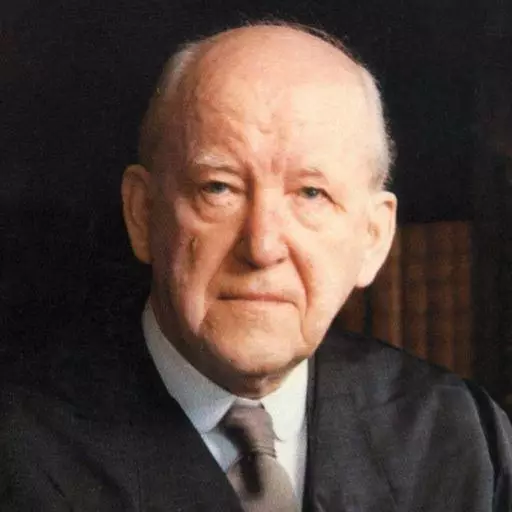
Faith and Obedience


Romans 10:16-17 — In Romans 10:16–17, Paul explains that for a person to come to faith, they must hear the good news. But what comes after receiving faith? In this sermon on Romans 10:16–17 titled “Faith and Obedience,” Dr. Lloyd-Jones answers this question affirmatively by pointing to the early church in Paul’s time. After faith, a change was expected in the believers. They could no longer participate in idol worship or immoral rituals. Dr. Lloyd-Jones says that they must submit themselves to the gospel with obedience. A good test to see whether or not a person really has faith is to look at their actions. Are they changed after believing or do they give, as Dr. Lloyd-Jones calls it, “intellectual assent”? These are people who merely acknowledge the gospel as the truth but do nothing to back it up. They never left behind worldly habits and practices. But Dr. Lloyd-Jones points out that as James said, faith without works is dead. Obedience shows faith and faith encourages obedience. In closing this sermon on obedience, he extends the message of salvation, reminding believers and unbelievers alike of the joy found within.
Dr. Martyn Lloyd-Jones: I would like to call your attention this evening to the words found in Paul's Epistle to the Romans in chapter 10, verses 16 and 17. "But they have not all obeyed the gospel. For Isaiah saith, Lord, who hath believed our report? So then faith cometh by hearing, and hearing by the word of God." Now, most of you remember that we are looking at these two verses which, of course, have got to be taken in connection with verses 14 and 15 also. These four verses constitute a little subsection on their own in this 10th chapter of this Epistle to the Romans.
There the Apostle, in verses 14 and 15, was dealing with the proclamation of the gospel to all, the general invitation of the gospel. How then shall they call on him in whom they have not believed? How shall they believe in him of whom they have not heard? And how shall they hear without a preacher? And how shall they preach except they be sent? As it is written, "How beautiful are the feet of them that preach the gospel of peace and bring glad tidings of good things." That is God's way of bringing men to salvation. He has ordained that it is through preaching, and therefore he has ordained preachers, and he sends preachers.
A preacher is a man who is sent by God to make this good news concerning the Lord Jesus Christ and his salvation known to all. Now, that is what he deals with in those two verses. But immediately, a problem arises. And the problem is that it is clear and obvious that though the gospel is thus preached to all, all do not believe. Some believe, some do not believe. They have not all obeyed the gospel. The Apostle is not a bit surprised at this. The Jews were using this as an argument. They said, "Very few Jews are believing this message of yours. How can it be the truth of God?"
They said, "Surely if it were God's message that you're preaching, we of all people would be the first to believe it." Paul answers by saying, "No, I'm not a bit surprised. There's nothing new in this. That's been the trouble with our race throughout the centuries. Even Isaiah had to complain in his day and generation, 'Lord, who hath believed our report?'" That's been the trouble with the nation. And indeed, Isaiah was there not only complaining of what was true in his own age, he was given this foreview of what would happen in the gospel age, and he was given to see that when the Messiah which the Jews were expecting so much actually came, it would be they of all people who would reject him and refuse him and crucify him.
Now then, that's the point more or less at which we have arrived. The Apostle is not a bit surprised at this. And then he goes on to say, "You see," he says, "there is hearing and hearing." All people, as it were, hear the message, but they don't truly hear. The only hearing that is of any value is the hearing of faith. "Who hath believed our report? So then faith cometh by hearing, and hearing by the word of God." Faith is something that comes out of true hearing. And that true hearing is produced by the word of Christ, the message concerning Christ applied by the Holy Spirit in power.
Very well, that's the point at which we have arrived. That merely to hear the message doesn't of necessity mean anything at all. It is possible for us to listen to the preaching of the gospel all our lives and still remain unsaved, still be lost and go to hell. You've heard it, but in a sense, you haven't heard it. You haven't heard it in this vital sense, in this sense that leads to faith. You haven't really heard the message of Christ. Very well, we left it at that point last Friday. So I suggested that the great question which we should all be considering was this: have I truly heard the gospel?
I've listened to it. I've heard it with my outer ear, as it were. Have I heard it with the inner ear? Has it really come to me? Has it led to faith? Or if you like the question in a different form, what are the marks or the signs of true hearing, the hearing of faith? Well, the Apostle answers the question himself here. He's raised it, and he answers it. And he says that there are two main tests which we must always apply to ourselves over this matter of hearing the gospel. So many people assume that because they've been brought up to go to a place of worship and listen to preaching that they're Christians.
That because they're familiar with its statements, they're therefore Christians. But clearly, they're not. That's the whole point he's making. How can we tell whether our hearing has been a living hearing, a true hearing that has led to faith? Well, now then, the first test, he says, is the test of obedience. He puts that, you see, in this form: "But they have not all obeyed the gospel." You see, he doesn't say they haven't all heard the gospel. They all have heard. That's the point he's making, and he's going on to repeat that. He is going to say in verse 18, "Their sound went into all the earth," they have all heard, "and their words unto the ends of the world."
But the question is, he says, have they obeyed the gospel? Now then, this is a most important statement. I mentioned in passing last Friday night that the actual word that was used by the Apostle and which is here translated as "obeyed" is a very interesting one. It is essentially the same root word as you have in the word "report" at the end of verse 16 and the word that is translated twice by "hearing" in verse 17. It is the same essential word, but it's a compound word. Something has been added to it. The word that was used by the Apostle means this: to hear under. He's added the word "under" to hearing.
It isn't just hearing; it's hearing under. Hearing under what? Well, it is hearing under authority. It is hearing under power. It is hearing with a sense, if you like, of compulsion. It is a hearing under such authority and power that leads you to submission and to yielding to what you hear. Now that's, I think you'll agree, a most interesting thing. That is the actual meaning of this word translated as "obey." What is it that leads a man to obey? Well, it is that he's hearing under the authority. It isn't mere hearing. There's something more. There is something in this hearing that humbles a man and subdues him and renders him ready to yield and to submit and thereby, of course, to give obedience.
Now, that is the word that the Apostle uses. And you notice that he uses it as the way in which to differentiate between mechanical hearing and living hearing, or if you like, between hearing words and hearing in the spirit. This is the word he uses as our first test: obedience. Now, in doing that here, he's not doing anything at all unusual. This is quite the customary thing with the Apostle himself. We've already found him doing it in this very Epistle. For instance, in the very first chapter in verse 5, he says—he's talking about himself as a preacher of the gospel—he says, "By whom we have received grace and apostleship for obedience to the faith among all nations for his name."
And when we were dealing with that, we elaborated that point, that there is always this element of obedience in true faith. You'll find the Apostle is so concerned about it that he comes back to it in the last chapter, chapter 16, twice over. In verse 19, he says this: "For your obedience is come abroad unto all men. I am glad therefore on your behalf." He's glad that they're obedient. They're not merely people who listen to the gospel. The thing that makes him glad about them and proud of them is their obedience. And again, he comes back to it in verse 26. He's again talking about the gospel, the grace of our Lord Jesus Christ be with you all.
"Now to him that is of power to establish you according to my gospel and the preaching of Jesus Christ, according to the revelation of the mystery which was kept secret since the world began, but now is made manifest and by the scriptures of the prophets, according to the commandment of the everlasting God, made known to all nations for the obedience of faith." Same thing: the obedience of faith. This is what it's for. This is the intent with which it is being sent forth: the obedience of faith. And that we may realize that this is not anything peculiar to the Apostle Paul, or as we saw in the reading at the beginning and as I shall explain in a moment, the teaching of the Apostle James, you get the Apostle Peter saying exactly the same thing at the very beginning of his first Epistle.
"Peter, an apostle of Jesus Christ, to the strangers scattered throughout Pontus, Galatia, Cappadocia, Asia, and Bithynia, elect according to the foreknowledge of God the Father, through sanctification of the Spirit, unto obedience and sprinkling of the blood of Jesus Christ." The Spirit, he says, has set you apart. He separated you from the world unto this obedience which leads to the sprinkling of the blood of Jesus Christ. Very well. Now then, here the Apostle is obviously laying down for us the first great test which we must apply to ourselves and to all our listening to and hearing of the gospel. This is the way, if you like to put it in more modern terms, to tell the difference between faith and what we may call "believism" or if you like, fideism, or a mere giving of an intellectual assent to the truth.
I believe that this is one of the most urgent problems confronting us today. Why is there so much confusion in the Christian church? Why is there so much confusion as to what makes a man a Christian? Why is there so much confusion as to what the Christian message is? Why are so many people unhappy about themselves and not knowing exactly where they stand? Now, I believe it's very largely due to this very thing, that we have not been careful to define, as the scriptures do, what we really mean by faith. There are so many people who give an intellectual assent to the truth, but that isn't faith.
We've got to draw the line between merely accepting propositions, merely giving an agreement with our minds to certain things we hear and which are said, and a real and a true faith. That's the distinction the Apostles draw. And as I want to show you, it is the same distinction precisely which is drawn by James in that second chapter part of which we read at the beginning. Very well. The way to test the difference between these two things is this: that in faith, there is always this element of obedience. You can agree to the truth, but if you don't obey it, it's not faith. And that's a terrible reality. It's a terrible possibility. There are people who can accept the Christian doctrine intellectually, but it's never made any difference to them.
I've known many such myself. It's a terrible danger, and this is one of the most subtle and delicate tests. Very well then, what are the tests of this obedience? Faith always leads to action. What sort of action? Well, we've got many illustrations of this in the scriptures. I think I quoted last Friday night to establish that other point about the two true types of hearing the case of Lydia in Philippi, as it's put before us in the 16th chapter of the Book of the Acts of the Apostles. A certain woman named Lydia, a seller of purple of the city of Thyatira, which worshipped God, heard us whose heart the Lord opened. Now that's the vital thing. That's Acts 16:14. That's the thing we were emphasizing last Friday night.
That's what produces true hearing: this word of Christ applied by the Spirit. The heart is opened. The Spirit opens the heart. Nobody can have faith unless the heart is opened by the Lord. It's impossible. The natural man receiveth not the things of the Spirit of God, for they are foolishness unto him. Neither can he know them because they are spiritually discerned. Right, the Lord opened her heart through the Spirit and by the Word. But the thing I want to emphasize tonight is what that led to. And this is the proof of its being living faith. The Lord whose heart the Lord opened, that she attended unto the things which were spoken of Paul.
In other words, there was a subtle and immediate change in her type of hearing: this attention. Now, that's a part of the action. That's a part of obedience. Until you are taken hold of and really give your consent to the listening, it's not true listening, it's not faith. But the moment this action on your part comes in, even in your hearing, it's already a part of the obedience and a very vital part of the obedience. Very well, but there are other things that are equally essential. This obedience includes, obviously, also repentance. And repentance means conviction of sin, a recognition and an admission that we are sinners, that we have sinned against God, that our natures are sinful. That's a part of repentance.
A man ceases to defend himself. As long as you're defending yourself, you haven't repented and you haven't heard in this living faith sense. But when a man hears in this true sense, he's convicted. He sees it. He recognizes it. He admits it. He acknowledges it. He confesses it. And he stops defending himself in every way and manner. Not only that, he renounces sin. He now sees what it is, and he hates it and he wants to leave it. And he is anxious to do so. Moreover, he turns to God. His greatest desire now is to be right with God. Now, you can listen to the gospel and hear the same gospel as another man and feel none of these things at all.
There's no obedience involved. But the moment it becomes this living hearing, you go through these various steps and stages and you're now anxious to know God, so you turn to him and you want to please him. But then, you see, a very vital point comes in just at that very stage. In your old days and before this living thing had happened to you, your immediate reaction would be to begin to decide to do good works and to say, "I'm going to turn over a new leaf. I'm going to do this, that, and the other." Now, the moment it's true repentance, all that stops. You renounce your own works. You admit that there's no good thing in you, that all your righteousnesses are as filthy rags, and that obviously there is no point in your deciding to live a better life or by a great effort of the will to serve God because it's still going to be polluted and therefore useless.
So you don't do that. You renounce your good works, your self-reliance, and every attempt at self-justification. This is a part of the obedience of faith. You accept the pronouncement of the scriptures that no man can ever justify himself before God, that by the deeds of the law shall no flesh be justified in his sight. You accept it. You accept it completely, and you prove it in action by not attempting to do anything to save yourself. Then you accept the teaching concerning the Lord Jesus Christ and his way of salvation actually as it is. You say in some shape or form, "Just as I am without one plea, but that thy blood was shed for me and that thou bidst me come to thee. O Lamb of God, I come."
You admit it and confess it. You say, "Not the labors of my hands can fulfill thy law's demands. Could my zeal no respite know, could my tears forever flow, all for sin could not atone. Thou must save, and thou alone." So you see, a very vital part of the obedience of faith is this admission that you can do nothing. You just lie prostrate on the ground and admit that you're completely helpless and completely hopeless. And you accept, you believe this message concerning the Lord Jesus Christ as your sin-bearer, as the one sent by God to reconcile you unto God, and that your salvation is in him and in him alone. That you've nothing to boast of, that it is all in him and all of him.
If any man glorieth, let him glory in the Lord. And you're ready to do so. And not only that, you are ready to confess him. You are ready to acknowledge and confess that he is thus your Savior and that he is your Lord. That he has bought you with a price, that you're not your own, that you have no right to yourself. You confess him in the glory of his person as taught in the scriptures. You've no doubt about this. You've no hesitation. A part of the obedience of faith is to say that Jesus is Lord and that he alone is. That Caesar is not Lord, nor anybody else, but that this Jesus of Nazareth is the Son of God. The thing that the Apostle has already expounded in verses 9 and 10 of this very chapter that we're looking at together.
So you make this confession that you rely upon him and upon him alone. That there is no way to God except through Jesus Christ and that you don't desire any other way. And so you submit to him and you submit to his yoke. He has said, "Come unto me, all ye that labor and are heavy laden, and I will give you rest. Take my yoke upon you and learn of me for I am meek and lowly of heart, for my yoke is easy and my burden is light." You take the yoke upon you. In other words, you commit yourself to him. This is all a part of the obedience of faith. And you see, unless we do these things, we haven't heard.
It's not our external hearing; it's of no value. Faith, true listening, always leads to this. These are the marks and the characteristics of this obedience. And of course, it goes further. It means that we become a part of his people. You remember that most interesting thing that the Apostle says in writing to the Thessalonians, his first letter to the Thessalonians. He makes this point in a most interesting way. He says, "Our gospel came not unto you in word only, but also in power and in the Holy Ghost and in much assurance. And ye know what manner of men we were among you for your sake."
And listen, "And ye became followers of us and of the Lord, having received the word in much affliction with joy of the Holy Ghost." They became followers of the Apostle and of the Lord. In other words, they aligned themselves with the Apostles and with the church. You can't be a Christian in isolation. You want to be with all other Christians. Not only that, he reminds them that they turned to God from idols. They gave up their idols. They renounced the world. They forsook idolatry and they turned their backs upon it and they went into the church and aligned themselves with the church. They became baptized.
And in the early church, that was not an easy thing to submit to. It might cost you your life. It would almost certainly cost you ostracism from your family. But they did it. In much affliction with joy of the Holy Ghost, they joined the church, became baptized, and were exposed to all the opprobrium that was cast upon the members of this teaching which was regarded as nothing but a new sect. And not only that, they went on with it. It wasn't merely a sudden decision which they forgot the next morning. They didn't merely rush to some decision and then disappear in a month or two.
The Apostle thanks God for those Thessalonians. He thanks God especially for their faith, their work of faith, their labor of love, their patience of hope. They went on in spite of persecution and all that was against them. They persisted. They went on with it as Christian people in the Christian church. Now then, there I've tried to give you some indication of what is included in this term "obedience." You see, our Lord himself in a famous parable has really said all this very perfectly. It's his parable of the man with the two sons.
You remember our Lord tells us that parable. A certain man had two sons, and one day he went to the first and said, "Son, go work today in my vineyard." He answered and said, "I will not." But afterward, he repented and went. He came to the second and said likewise, and he answered and said, "I go, sir," and went not. Whether of them twain did the will of his father? They say unto him, "The first." Jesus saith unto them, "Verily I say unto you that the publicans and the harlots go into the kingdom of God before you. For John came unto you in the way of righteousness, and ye believed him not. But the publicans and the harlots believed him. And ye, when ye had seen it, repented not afterward that ye might believe him."
Now you notice our Lord's point is that an essential part of repentance is actually doing it. This boy, his father tells him go work today in my vineyard, he says, "I will not." But afterward, he repented. Yes, but it doesn't stop there. Afterward, he repented and went. And if he'd merely changed his mind and said to himself, "Well, I shouldn't have said that to my father. I shouldn't have said 'I will not' to my father. He has a right to ask me and to command me. I was very wrong indeed to say 'I will not.'" Now, if he'd just thought that and even said that, but still went on sitting on the ground or going to the seaside or something, he would never have repented.
He repented and went. It was his action of going to the vineyard, doing the thing that the father had told him to do, that really gives us proof of his repentance. That's the thing that is emphasized by our Lord. You see, the other one says, "I will go," and then he didn't go. But the fact that he says "I will go" is of no value because he didn't go. It is a vital part of repentance that we should act upon what we say or what we feel. Now then, that's the thing that the Apostle is emphasizing. The difference between these two hearings is first of all to be measured by this test of obedience.
Now then, there are two comments surely that are called for at this point. I can't leave it like that or I'll be misunderstood. This point has been very often misunderstood. What's the danger? Well, the first one is this. Have I now been preaching justification by works or haven't I? What does justification by faith only mean? Someone may say to me, "But if you are telling us that we've got to do all those things in addition to believing, well, then you're surely teaching justification by works. It is what we do that saves us, not our believing, not our faith." Well, there you are. There's the great old question, isn't it?
And it's very important we should be clear about this. Now, this is the point that has often been put, of course, in terms of trying to show a contrast between the teaching of the Apostle Paul and the Apostle James. That's why I read that second chapter at the beginning. The answer is, of course, there is no contradiction whatsoever between them. I say that not merely because I believe the whole of the New Testament is inspired by the Holy Spirit and that James, therefore, is as authorized and as divinely inspired and infallible as is Paul. That's not my only reason. Actually, I can show you that they're not saying anything different.
Scripture doesn't contradict Scripture, and there is no question of that arising at this point. Very well then, how do we approach it? Well, let's approach it like this. We must be careful to preach justification by faith only. That's the cardinal doctrine. That's the whole point of this Epistle to the Romans. That was the grand rediscovery that came to Martin Luther, the thing that was revealed to him by the Spirit of God. Justification by faith only. Not by works of men, not by church, not by priesthood, not by anything. Faith only. That's cardinal. That's central. We hold on to that.
Well, very well then, but what about James? What about these extraordinary statements of James? Well, there's obviously only one explanation at this point. It is the way in which James uses the word "faith." James means by faith what I've been calling "believism." James, you see, had to deal with people who kept on saying, "Oh, I believe in the Lord," but then they were living a life that was the exact opposite. And James says, "It's no use your saying 'I believe' unless you really do believe. Saying that you believe doesn't mean faith." Real faith, says James, is something deeper than that.
"As the body without the spirit is dead, so faith without works is dead also." Now then, by saying that, James says exactly the same thing as the Apostle Paul. They've all heard. Yes, but have they all obeyed? There is no faith, says Paul, unless they've obeyed. Paul is saying exactly the same thing as James. Faith without works is dead. If there is no obedience, there is no faith. That's what James says. That's what Paul says. It's simply the way in which James puts it, but there he clears up the whole thing in that last verse. He's saying that—and this is the sum of the whole subject—true faith always leads to works.
True faith always reveals and manifests itself through works. And there would be no way of telling whether we've got the right hearing or the wrong hearing if we hadn't got this test of faith. These things can never be separated. True faith is always active. It is always operative. It always leads to something. It's never merely intellectual. Why, I've quoted it so often before, the whole thing is really in this Epistle to the Romans in chapter 6 and verse 17. "God be thanked that ye were the servants of sin, but ye have obeyed from the heart that form of sound words or doctrine that was delivered to you."
There it is, you see, "obeyed" again. You have obeyed. There's your will. "From the heart," there's your affections and emotions. "The form of sound doctrine that was delivered to you," to your mind. If the whole man is not engaged, it's not faith. It may be intellectual assent or it may be a mechanical conformity to some law, but that's not faith. Faith takes up the whole man. They have not all obeyed the gospel. All right. There then, there is no contradiction between James and Paul. And this is a vital part of the preaching of justification by faith only.
You're not justified by saying "I believe." You're not justified by saying "Lord, Lord." Our Lord himself says that people will come and say that to him at the end, and he'll say, "I never knew you. Depart from me, ye that work iniquity." So you see, these are very profound matters which we must always be careful to apply to ourselves. Now, let me put it another way to you to reinforce the whole thing. The gospel is a call to obedience. The Apostle Paul preaching in Athens says, "God now commandeth all men everywhere to repent." It's a command, and it calls for obedience and for response.
Or I'll put it like this to you. You see the great danger that people fall into is this: they forget that a very essential part of the biblical teaching in connection with election and predestination is to assert at the same time the responsibility of man. If you preach the doctrine of election or predestination in such a way as to make man an automaton or a machine, you are doing violence to the scripture. The Apostle Paul who preaches election and predestination so powerfully in Romans 9 is equally careful to assert man's responsibility. Now, we saw that at the end of chapter 9.
"What shall we say then?" he says at verse 30. "That the Gentiles, which followed not after righteousness, have attained to righteousness, even the righteousness which is of faith. But Israel, which followed after the law of righteousness, hath not attained to the law of righteousness. Wherefore? Because they sought it not by faith, but as it were by the works of the law. They stumbled at that stumbling stone." And he holds them responsible for that. And this chapter in which he expands that statement is going on to do the same thing. He is holding the Jews responsible for their rejection of the gospel. They're without excuse, he says.
They ought to have known. We shall see that still more when we come to the remaining verses of this chapter. But you see, he's really laid it all down in principle in chapter 1. Let me read this to you. He says, beginning at verse 18, "For the wrath of God is revealed from heaven against all ungodliness and unrighteousness of men, who hold down the truth in unrighteousness; because that which may be known of God is manifest in them, for God hath showed it unto them. For the invisible things of him from the creation of the world are clearly seen, being understood by the things that are made, even his eternal power and Godhead, so that they are without excuse."
Mankind should believe in God. And creation robs us of any excuse without going any further. So man is responsible. "But I thought you said that no man can save himself?" You're quite right. "I thought you said," says somebody, "that man is saved as the result of God's election of grace?" Perfectly right. But that does not mean that you and I are not responsible. You must take these two things always together. No man can save himself. No man can take pride in his salvation and say, "I am saved because I believed." That's wrong. Faith is the gift of God.
All who are saved are saved because God has foreknown them and has chosen them and has called them and predestinated them and so on. Yes. But the man who hears the gospel and who doesn't believe it is responsible for his unbelief. And the Apostle is nailing that upon these Jews. They should have obeyed the gospel. Now, the modern man claims he's got free will. Very well, he's condemning himself out of his own mouth. If he's got free will, why doesn't he believe the gospel? That'll be his condemnation at the day of judgment and when God displays his eternal righteousness.
All I'm concerned to say is this: that this element of obedience is always a vital part of the preaching of the gospel. Man is held responsible, but at the same time, he is totally incapable of saving himself or doing anything which is righteous in the sight of God. His salvation is entirely and altogether in the Lord Jesus Christ. But you say, "I don't understand all this." I'm not asking you to understand, my friend. This is what we call an antinomy. And an antinomy means this: that there are things taught us in the scripture which we with our finite and fallen minds cannot reconcile.
There is a reconciliation, and we'll see it in eternity. What we do in time is submit ourselves as little children to the scriptures. And if you say to me on one hand or the other, "I don't understand and therefore I don't believe," I tell you you're guilty of disobedience. The election of God is taught in the scripture. It's here in Romans 9, and you and I have got to believe it. Yes, but the responsibility of man is taught equally plainly. You've got to believe that also. Don't reject one or the other. You've got to hold the two together.
I put it like this, you remember, in doing chapter 9: no man is responsible for his salvation, but all men who are not saved are responsible for their damnation. Here is a way of salvation preached to them and to all. If they don't believe it, they are responsible for their damnation. There it is. Responsible for our damnation, not responsible for our salvation. Our salvation is the free gift of God in Jesus Christ our Lord. There's the first comment. Let me hurry to the second. This question of obedience. "Ah," says somebody, and very rightly, "I've known people who've suddenly taken up belief in a cult. They've been unhappy or something like that in their lives, and they're taken to a meeting and they hear a teaching, and they accept it and they become devotees of it."
"And they change their lives. They do quite a lot of things. They can be extremely zealous. What about them? Where's your test? You are saying that the test of true belief and faith is obedience. And here there are people who—I know them—their whole lives have been changed. They've stopped doing what they used to do. They're doing other things and they're very active and very earnest and very zealous. And yet I'm not quite happy about them as Christians because when we come to talk about the way of salvation, they don't seem to know much about it. What about them?"
Well, I think it's a good question that, and I think the answer to it is this: there is all the difference in the world between being the practitioner of an imposed system of life and an obedience that is the inevitable result of the comprehension of the truth. Let me try to expound that. Take these cults, or even take religion, the Jews' religion and a kind of what's called Christianity but isn't Christianity at all. In other words, you can become religious. You can become a church member, and you can be a very active church member, but you still may not be a Christian.
"But you say, look what I'm doing. Isn't that obedience? Doesn't that prove it?" Well, here's the answer. You must test the belief of this person. I'm not saying that obedience alone proves a man's a Christian. It is an obedience of faith. And you see the things that I enumerated: there is involved a belief in the person of the Lord, in his atoning sacrificial death, in his resurrection, his ascension, his heavenly session, and so on. The belief is all involved, and yet there is this other most interesting test. This wrong type of obedience, if I may so term it, always strikes me as being what I would call the boy scout type of obedience.
You know, you join a thing and you ask, "What are the rules?" "Well, the rules of this society are these." "Ah, well, I'm going to keep those." And so you become a good scout. You do your good deeds and you tick them off day by day. You're keeping the system. Now, that's not the obedience the Apostle's talking about. The obedience he's talking about is this: when the Holy Spirit has brought the word of God to you, when the Holy Spirit has really brought the word of God to your mind and heart and conscience and will, and you're humbled by it and subdued by it, and you really see the truth, out of the very depth of your being comes this desire to please him.
You see the difference? It's the difference between taking something up and trying to practice it and something that comes inevitably right out of your heart from the very depth of your being as your response to the grace of God in Jesus Christ our Lord. Now, this is, I think, most important, for we're living in days of great activism, and there are many people who think that because they're doing things exactly again like those people of whom our Lord speaks at the end of the Sermon on the Mount, they not only said, "Lord, Lord," but they went on to say, "Have we not preached in thy name and cast out devils in thy name and this, that, and the other?"
They said, they did, but it was no good. It wasn't this obedience that comes out of the heart. Go back again to Romans 6:17. "You have obeyed from the heart." If there isn't this kind of divine inevitability about our obedience, it's not the obedience of faith. It isn't a man deciding to live a certain type of life. It's a man who says, "I can do no other. I must." We've had it in the hymns we've been singing tonight: "My gracious Lord, I own thy right to every service I can pay, and count it my supreme delight to hear thy dictates and obey."
That's obedience in this sense. You see, it's inevitable. It comes out of faith. It can't help itself. It isn't something that one puts on; it's something that comes from within outwards. I think I once compared the difference to the difference between a Christmas tree onto which you hang bits of artificial fruit and flowers and a living tree out in the orchard. That's the difference. The first, they may look very much alike. People are very clever, and they can make things that look like trees and look like fruits and flower, but you see it isn't. It's artificial. But the other is life-giving, and it comes up from the sap from the life and manifests itself.
That's the difference. And this is this living obedience about which the Apostle is speaking. Well, I'm sorry to see that my time, my dear friends, has already gone, and we've got to leave it at that for this evening. I'll simply tell you that the second test, of course, is the test of joy, the test of joy. The first test is obedience; the second test is the test of joy. But I'm not going to dismiss joy in a sentence or two. Joy is the most wonderful thing in the world, spiritual joy, Christian joy. So I'm afraid we have to leave it at that until next time.
But there may be somebody here who won't be here next time. So remember that, my friend, that you test your hearing of the gospel not only by your obedience, but joy. Are the feet of the messenger coming over the mountain the most wonderful thing you've ever seen? Is this the greatest good news you've ever heard? Very well, let us examine ourselves in the light of these things.
O Lord, our God, we again come before thee and praise thy name. Lord, we thank thee more than ever for thy word, for we see what frail creatures we are, and we see what a powerful enemy and adversary we have, who is ever ready to counterfeit everything and can transform himself into an angel of light and delude us and mislead us. Lord, we thank thee for thy word by which we can test everything. Thou hast granted it unto us and the Spirit upon it, and we bless and praise thy name for the measure of understanding thou art granting unto us as thy people.
O Lord, grant that we all may know that we have heard with the hearing of faith and that we are truly thy people. Lord, grant that we may find that evidence of that heart obedience and that joy in the Holy Ghost which thou alone canst give and which none, not even Satan nor hell, can ever counterfeit. Lord, hear us and continue with us and bless us as we go upon our several ways. And now may the grace of the Lord Jesus Christ and the love of God and the fellowship and the communion of the Holy Spirit abide and continue with us now this night, throughout the remainder of this our short, uncertain earthly life and pilgrimage, and evermore. Amen.
Featured Offer

Find peace and comfort this season with your complimentary guide that includes access to 6 free bonus sermons on overcoming spiritual depression from Dr. Martyn Lloyd-Jones, one of the church’s most beloved Bible teachers. Topics include: true Christians can and do struggle with depression, recovering the joy of your salvation, dealing with crippling guilt over past sins, dealing with yesterday’s haunting regrets, encouragement to keep moving forward, and understanding God’s purpose for suffering.
Past Episodes
This ministry does not have any series.
Featured Offer
Find peace and comfort this season with your complimentary guide that includes access to 6 free bonus sermons on overcoming spiritual depression from Dr. Martyn Lloyd-Jones, one of the church’s most beloved Bible teachers. Topics include: true Christians can and do struggle with depression, recovering the joy of your salvation, dealing with crippling guilt over past sins, dealing with yesterday’s haunting regrets, encouragement to keep moving forward, and understanding God’s purpose for suffering.
About From the MLJ Archive
From the MLJ Archive is the Oneplace.com hosted ministry of the MLJ Trust. Our mission is to promulgate the audio ministry of Dr. Martyn Lloyd-Jones.
About Dr. Martyn Lloyd-Jones
Contact From the MLJ Archive with Dr. Martyn Lloyd-Jones
info@mljtrust.org
http://www.mljtrust.org/
PO Box 953
Middleburg, VA 20118