
Doctrine and Practice


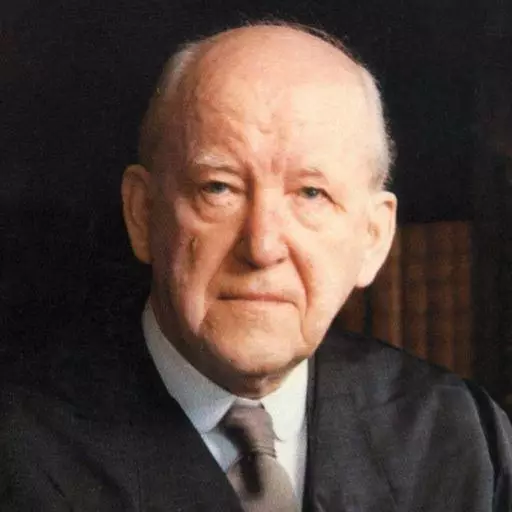
Romans 10:1-21 — Doctrine and practice must not be separated. This seemingly simple truth has a great impact on how Christians live and seek to obey Christ. In this sermon on Romans 10:1–21 titled “Doctrine and Practice,” Dr. Martyn Lloyd-Jones expounds on the apostle Paul’s doctrine of the Christian life in all its glory and weightiness. Out of the great truths of justification by faith, predestination, and perseverance comes a view of the life that is grounded in the person and work of Christ. Christians must seek to trust God and His providence. They must be faithful to the command to evangelize and seek to love their neighbors as themselves. They must also be aware of the danger to intellectualize Christianity at the expense of practice. Some say things such as, “If God is sovereign, why pray?” or “If God elects, why evangelize?” However, Dr. Lloyd-Jones warns not to try to use vain logic to understand God, but rather read Scripture faithfully and submit to all of God’s teaching. How then does doctrine relate to practice? The answer is that doctrine informs how God desires His people to live as new creatures in Christ Jesus.
Dr. Martyn Lloyd-Jones: We come this evening in our consideration of the epistle to the Romans to the tenth chapter, which begins as you noticed in the reading with the words: "Brethren, my heart's desire and prayer to God for Israel is that they might be saved. For I bear them record that they have a zeal of God, but not according to knowledge." Now here we come to a new subsection in this big section, which includes chapters nine, 10, and 11 of this great epistle. No epistle perhaps demands a more careful and close attention from the standpoint of arrangement and order than this epistle to the Romans.
And we saw back at the beginning of last October that in these three chapters—nine, 10, and 11—the great Apostle, having as it were really completed his exposition of the Christian faith, takes up this whole matter of the position of the Jew. Now there were two main reasons for that, we saw. One was, of course, the actual fact: the very position that the Jews as a nation were outside the Christian church. A small remnant had come in, but in the main, they were outside. Whereas the Gentiles of all people were the ones who seemed to be crowding into the Christian church into the kingdom of God.
And the second reason why was, of course, that the fact that the Jews were outside in that way seemed to be to some people to raise a query as to whether the promises of God, which the Apostle had been elaborating at the end of chapter eight, were after all as certain and as sure as the Apostle had been making out. Very well. Well, now then, the Apostle has taken up this matter. And he deals with it in chapters nine, 10, and 11. We've already done chapter nine.
Now there in chapter nine, we saw that his main purpose and his main teaching and principle was this: that salvation is something that is entirely dependent upon the purpose of God. That away back before time, God had this great purpose of saving some. God decided before the very creation of the world and of man that some of those who would fall, and all are fallen as he explained to us, God conceived the purpose of saving some. And according to the argument of chapter nine, He saves some by means of the process of election.
The statement is found in verse 11: "That the purpose of God according to election might stand, not of works, but of Him that calleth." That is the great theme, as we've been seeing in detail in chapter nine: that salvation is entirely the result of God's sovereign choice. His great purpose is carried out by means of His own election, selection, choice.
But we saw equally clearly that those who are lost are lost because they deliberately refuse and reject the gospel. Now we've seen those two things in chapter nine. The two things are there quite clearly. If a man is saved, it is because God has saved him. If a man is lost, it is because he has rejected the gospel.
Now those are the two big things that the Apostle has set before us. Now in chapter nine, the Apostle gave most of his time to the first thing: that salvation is entirely of God, that He will have mercy on whom He will have mercy, that He chooses whom He will choose, and there is no more to be said. It is entirely and altogether of God. No man can ever boast to the fact that he has saved himself. Not even his faith saves him. It is God who saves. It is all the purpose of God according to election.
And the Apostle has given the bulk of chapter nine to an exposition and a defense of that great and high doctrine. But you remember we noticed that towards the end of the chapter, he brings in this other element. He does so really from verse 30 and onwards: "What shall we say then? That the Gentiles which followed not after righteousness have attained to righteousness, even the righteousness which is of faith. But Israel which followed after the law of righteousness hath not attained to the law of righteousness. Wherefore? Because they sought it not by faith, but as it were by the works of the law, for they stumbled at that stumblingstone. As it is written: behold, I lay in Sion a stumblingstone and rock of offense, and whosoever believeth on Him shall not be ashamed."
Now then, that's the position with regard to chapter nine. The main emphasis is upon the sovereign election of God. But then he says there is this other side. While you attribute a man's salvation only and entirely and exclusively to God, you attribute the fact that a man is lost and damned to his own refusal and rejection of the gospel and his rebellion against God's way.
Now then, in chapter 10, the Apostle takes up that second point. And he does so, of course, in order to keep the balance of Scripture. He does so also in order that he may elaborate this and explain it more fully. And after he's finished that, which he does at the end of chapter 10, he then goes back at the beginning of chapter 11 to this main theme, which is God's great purpose for Jew and Gentiles, God's great plan of salvation leading up to the final end and consummation, which he closes, you remember, with that great apostrophe in which he bursts out saying, "Oh the depth of the riches both of the wisdom and the knowledge of God," etc.
Now there is the setting of this tenth chapter which we are now beginning to consider. In a way, you can say if you like that looking at chapters nine, 10, and 11 as a whole, that chapter 10 is almost a kind of parenthesis. It is if you like an extended commentary on what the Apostle has been saying in verses 32 and 33 at the end of chapter nine. Very well. Now then, there is the setting and it is most important.
You notice he starts the three chapters with the same sort of formula. Chapter nine: "I say the truth in Christ, I lie not, my conscience also bearing me witness in the Holy Ghost, that I have a great heaviness and continual sorrow in my heart. For I could wish that myself were accursed from Christ for my brethren, my kinsmen according to the flesh." Then here in chapter 10: "Brethren, my heart's desire and prayer to God for Israel is that they might be saved." Same sort of formula. And he comes back and does the same thing again at the beginning of chapter 11, puts it in a personal form: God's people, and so on.
Now then, if that is the setting of our chapter, let us also at this point have a kind of general analysis of the contents of the whole chapter so that as we come to look at it bit by bit, we shall be taking each portion in the light of the whole argument. I suggest therefore that you can subdivide it in some such way as this.
First of all, verses one and two, in which the Apostle again makes these loving references to his own fellow countrymen the Jews and expresses his heartfelt desire concerning. That's verses one and two. Verses three and four, that's the next division. He again reminds us as to why it is that the Jews are outside, and it is because of their failure, their complete failure to understand the way of salvation and how to be right and righteous before God. It was all that fatal misunderstanding and misreading of the law.
The next section is from verse five to verse 10 where he gives us a comparison and a contrast between the law and the gospel as a way of righteousness. It's most illuminating. He compares and contrasts the two ways: the way the Jew was following, the way of the law, and the Christian way, the way of the gospel. Then in verses 11 to 13, he points out that the gospel way being what it is, is obviously a way that is open to all: Gentile as well as Jew. If it had been according to the law, the Gentile would be outside, he hadn't been given the law. But as it isn't by means of the law but is another way, well then it's as open to the Gentile as it is to the Jew. And he makes that point in verses 11 to 13.
Then in verses 14 to 17, he takes that further and says in view of this, that it is for the Gentile as well as the Jew, the gospel is to be preached therefore to the Jew and the Gentile alike, and it is to be offered to the Gentile as much as it is to the Jew. It is to be offered to all. That's the theme of verses 14 to 17. And so we come to the last section, which is verses 18 to 21, where he points out that in spite of the fact that the gospel is thus offered to all, all do not believe it, all do not obey it, all do not accept it. And yet he says we shouldn't be surprised at this because all this has been prophesied long ago in the scriptures.
You see his method. It's very similar to the method he's adopted in chapter 10. He makes his assertions and he always supports them with scriptural quotations. He establishes every point by some quotation from the Old Testament scriptures. He does that not only to prove that he is right but to bring out still more clearly the tragic blindness of the Jews who boasted of their knowledge of the scriptures and yet patently had been blind to the very teaching of the scriptures.
Very well. There then is our analysis of the chapter. And you notice that by the end of chapter 10, he brings us back to exactly the same point at which he had ended chapter nine. There at the end of chapter nine, he puts before us this extraordinary fact: that the Jews have not believed, the Gentiles have. At the end of chapter 10, he says it all once more. In other words, with this master mind of his which again I would remind you always makes me think of a Beethoven symphony.
Because you see his method is this: at the end of chapter nine, he put a theme before us. Now he takes that theme and he works it out quite fully and he ends by just repeating the theme again so that he can go on and take up the main argument at the beginning of chapter 11. It's very interesting and wonderful and fascinating to watch the working of a great mind such as that of the Apostle Paul.
Well, now then, there is our analysis of the chapter. And you see what it really comes to is this. The big point he makes in this chapter 10 is the doctrine of justification by faith only. It is an extended treatment of the doctrine of justification by faith only. But now somebody may very well ask a question at this point and say, but why does he do that again? Surely he dealt with the doctrine of justification by faith only in a very perfect and exhaustive manner in chapters one to four. That is the one theme of chapters one to four. He takes it up in chapter one in verse 17 and he elaborates it and he argues it out and he demonstrates it. Why does he come back to it? Well, it's a perfectly fair question.
And it seems to me that the answer is this. In those chapters, he puts this great doctrine of justification by faith only before us in what we may call a theological manner. He handles it as doctrine. He's enunciating great theological principles and he puts it in a general and in a doctrinal manner. Here, though it's exactly the same doctrine, he puts it in a more pastoral manner, in a more practical manner, in a manner as it were that brings it nearer to us.
And of course, this is something that he's very fond of doing. It's much more direct in chapter 10 than it is in chapters one to four. I'm sure that was one of his reasons. But I think further there was this. He brings it in again and he troubles to state it plainly and clearly and simply and as directly as he can because of his great concern about the Jew, because of his great pastoral heart.
You see, a pastor is like, or a good teacher is like, a parent. And one of the first things that a parent has to learn is this: that you will have to go on repeating things. It isn't enough to say a thing once to a child. If you love your child and you're anxious for it to know what's right and what's wrong, you'll have to go on saying it and saying it and saying it. Particularly if you can see that the child doesn't quite grasp the point. And you've got to be very patient and you've got to go on repeating and repeating and repeating. I believe that that was one of the reasons why the Apostle wrote this further extended passage on the doctrine of justification by faith only.
And anybody who approaches this chapter therefore feeling that it's rather unnecessary, well you're just admitting that you know nothing about pastoral work. You're just a theorist. You're an intellectualist. You say, "Oh, I know all about justification. I've mastered chapters one to four. I don't need this." You wait, my friend. I think I'll show you before we've gone much further that you need it very badly.
Then my third and last reason for saying why the Apostle comes back to it is this: that this matter of justification by faith only is such a crucial one. You see, it's the hinge on which everything turns. This is the doctrine which led to the Protestant Reformation. This is the essence of Protestant preaching. The whole of man's salvation depends upon his understanding of this particular doctrine. So it needs continual emphasis. We are all liable to be slipping back onto works in various ways. We'll even turn our own believing and faith into works, as we've seen. Very well, we can never hear the doctrine of justification by faith only too frequently.
So it's good that the Apostle should have given it to us once more. Now then, all right. There is our general review, general sort of conspectus of the teaching of chapter 10 of Paul's epistle to the Romans. Now then, we're in a position to start in the detailed analysis. And we've got to start, of course, with verses one and two.
And here there are certain great and vital lessons for us immediately standing out on the very surface. What are they? Well, the first lesson we've got to learn once more is the lesson given us by the Apostle's attitude toward the Jews. What a saint the Apostle Paul was. What a man of God. What a Christian. How Christlike, how like his Lord and Master. Look at him, watch him, look at any such great example, but this man seems to be preeminent. What do I mean? Well, I mean this. Here is a man who was reviled by his fellow countrymen, who was persecuted by them, they had tried to kill him many times, they hated him, they detested him, they abominated him. There was nothing that they didn't say about him.
And yet he bears them no malice whatsoever, none at all. "Brethren, my heart's desire and prayer to God for Israel is that they might be saved. For I bear them record that they have a zeal of God but not according to knowledge." He doesn't bear any resentment. He's got no tinge of malice with respect them. Indeed, I mustn't leave it like that negatively. I must put that in the positive form. He's got a great concern for them. He has a great longing in his heart for them. Now he said that before too, hasn't he? He said that at the beginning of chapter nine. He said, "I could wish that myself were accursed from Christ for my brethren, my kinsmen according to the flesh."
But you see he says it again. When a man feels a thing deeply, he repeats it. And here he gives us a glimpse into this great heart of love that he had. Remember he wasn't always like that. This man had been a very narrow Pharisee at one time, a very narrow nationalist. He's no longer that. He's got a great heart of love. And he shows us that still further in this interesting way. Though they've treated him as they had and though their attitude toward him was abominable, he goes out of his way to find anything he can about them that he can praise. He says, "I bear them record. I've got to give it to them. I've got to say it. Yes, I say it gladly: they have a zeal of God." He pays tribute to them. In other words, he looks for anything he can find in them in order to praise it.
What an extraordinary man this is. So you see that to put it in another way, we put it like this: the Apostle doesn't attack the Jew for not believing. He doesn't go for them in order to demolish their position and to establish his own case. If ever a man had provocation to do that, it was the Apostle. The position of the Jews was altogether wrong. They'd misunderstood their scriptures as I say, they were blind. All that is perfectly true. And the natural man of course in such a position would just go for them and attack them and demolish them and ridicule them and show how utterly hopeless they were. The Apostle doesn't do that. He's grieved. He's troubled by their blindness and their wrongness. And his greatest desire is to show them a better way.
Very well then, my friends, you and I must learn lessons from this man. We all of us know somebody or another who's in the position of the Jews. It may be somebody who's even related to us, very near and dear to us. They not only don't believe the gospel, they ridicule it. They blaspheme it. I wonder how we are handling them. I wonder what we are doing about the situation. Now, conjure up in your minds the whole position of the Apostle with respect to the Jews and notice the way he speaks about them, the way in which he handles the situation.
Let's try to extract a principle from what he says here. And the principle that I find is this, and I know of nothing that is more important in our day-to-day relationships with people who are not Christians than just this very thing. We must learn to be objective with respect to others who are unbelievers. You mustn't become emotionally involved. Now what do I mean by that? Because the Apostle is displaying great emotion here, I know. We are to feel emotion, but we're not to become involved emotionally. Because if you do, you will soon be utterly useless with regard to helping these people. You'll be irritated, you'll be annoyed, and the moment you're irritated and annoyed, you can't help them at all. You'll feel that because they're related to you that they ought to listen to you, but they won't listen to you. And that means you're sensitive and on edge, and you'll be quite useless in your testimony.
We've got to learn to differentiate between the persons themselves and the god of this world who is blinding their minds. They can't help it. They're blinded by the god of this world. "If our gospel be hid, it is hid to them that are lost, in whom the god of this world hath blinded the minds of them that believe not, lest they believe the glorious gospel of Christ." Now the Apostle, you see, was able to do that. He saw that they were the victims of the devil, so he does his utmost to get the truth in in spite of the devil. He's not emotionally involved.
It's a most important thing, this. I mustn't stay with it, but I could very easily. Any man who's ever practiced any medicine knows the importance of what I'm saying. And if you're handling any person psychologically or spiritually, this is one of the first rules. You're to be sympathetic, you're to be understanding, you're to be patient, you're to be loving. But if you become emotionally involved, you're already finished. I mean by that, you see, that if you're emotionally involved, you'll be reacting in a way that you shouldn't react. You've got to keep yourself in control.
He that is wise winneth souls. The soul-winner is a wise man. He's got to be objective, he's got to be patient, he's got to be understanding, he's got to have the power to explain things and to go on repeating it and repeating it and repeating it. And as we all must already have found, all this is particularly important when we are dealing with those who are nearest and dearest to us. It is always easier to deal with a stranger than somebody who's near and dear to you. Why? Well because, you see, you're emotionally involved with your relative, you're not with the stranger. That's the very point. That's the very cause of trouble.
So, though people may be related to you who are not Christian, you've got to say to yourself, "The fact that they're related to me has nothing to do with it at all. They mustn't believe because they are your relatives. They mustn't believe in order to please you because you're related. The whole thing is wrong. No, no, natural relationships do not determine this matter at all." Very well, don't you let them come in. View them as souls. Realize why they are where they are. And then you'll be able to help them. So the Apostle, you see, he doesn't react violently or with a desire to retaliate as they revile him and attack him and persecute him. He says, "Oh, they're blind. What a tragedy. My heart's breaking for them," he says. "There's nothing I wouldn't do for them if only I could help them." He sees the tragedy of it all. And so he's able to praise their zeal, put the thing before them again though he's done it before, and he'll go on and on and on doing it anything as long as he can bring them to a knowledge of salvation.
God grant that we may have a double portion of the same spirit every one of us. Let's be careful, my friends, lest sometimes we may drive people further away through our very concern for them. We need great wisdom and especially when it is somebody who belongs to our race or nation or family or something that's very near and dear to us. There it is, on the very surface of this 10th chapter of the epistle to the Romans.
But now I come to a second great lesson which again is a vitally important one. I wonder whether you've seen it. I wonder how many of you have really felt surprised that he starts chapter 10 in the way in which he does. I mean by that in view of the fact that it comes after chapter nine. The great doctrine of chapter nine, as I reminded you at the beginning, is the doctrine of God's sovereign, free, absolute predestination, unconditional election. How many of you or how many of us would have followed that with the first verse of chapter 10: "Brethren, my heart's desire and prayer to God for Israel is that they might be saved"?
What do I mean? Well, I'm going to put before you the whole question, the whole difficult and involved question of doctrine and practice, the relationship between doctrine and practice. Oh, how many have gone wrong at this point. How? Well, they go wrong like this. They say, if a man's salvation as you've been pointing out (what is the argument of chapter nine?)—if a man's salvation depends solely, utterly, entirely, altogether upon God's purpose of election, there is therefore no point in desiring the salvation of anybody because we may be desiring the salvation of somebody who's not been elected by God. And that's a very wrong thing to do. That's one thing people say, isn't it?
Then here's another which they say. If a man's salvation is determined only by the eternal purpose and foreknowledge and counsel of God, there is no point at all in praying for the lost. I may be praying to God to save somebody whom He has not decided to save. Therefore, I don't pray for the salvation of anybody. How many have said that? I wonder how many in this congregation have said that. Then there's another step. If it is right to say that a man's salvation has been determined by God before the very foundation of time and the creation of the world, and it is something solely and entirely in His purpose and nothing can frustrate it, there is therefore no point in preaching the gospel to the lost or offering salvation to all. There is no need for evangelism. The church must spend her whole time in building up the believer and helping people to fight temptation and sin in the world, and you must never be evangelistic. Many have worked it out like that. I wonder whether there are any such here in this congregation.
That's how people do it, isn't it? What is to be will be. As it's all something in the mind of God, we do nothing. Now, this tenth chapter of the epistle to the Romans is the lie direct to all that. There is nothing that is more wrong than just that. Thank God for the tenth chapter of the epistle to the Romans which condemns all such arguing and reasoning, root and branch. It is all wrong. But oh, how common it has been. And there are those of us who are criticized for offering salvation to all. There are those of us who are criticized for praying for the salvation of men and women and feeling a great desire for it.
Now let me show you how the Apostle answers all that. Let me show you how terribly wrong all that is. Let me show you what a perversion and an abuse of glorious doctrine these deductions are. Let me put it to you like this. This seems to me to be the teaching. One, it is the danger of following our little logic and reason and what seems to us to be so clear and to follow of necessity. That's what we do and that's the cause of most of our troubles. If God elects, then it doesn't matter what I do, if I do nothing. God will save whom He's decided to save. Therefore, I sit down, I do nothing. I don't desire anybody's salvation, I don't pray for anybody's salvation, I don't preach the gospel. What is to be will be. That's what little logic tells us. That's what our little minds and reason seem to indicate to us to be quite inevitable and unanswerable.
Well, the first part of the answer is this: that we are dealing here with the mystery of the mind of God. And the mystery is something that you and I can't understand. And the fact that we think we can proves how wrong we are and how foolish we are. God's ways cannot finally be understood. We want everything neat and tidy so that we can encompass it. And we say if this, therefore that. You mustn't do that with the scripture. The two things are here. If a man is saved, it's because God saves him. If he's lost, it's because he hasn't believed. And Paul teaches both. And you mustn't try to get rid of either.
Very well. But wait a minute, that's only the first step. I say that we must always be careful of following our own little logical processes. But I put that positively by saying this: we must always be governed by the scripture and its teaching. We mustn't be governed by feeling. We mustn't be governed by logic. We must be governed by the scriptures. I mean by that that if you can't see why you should pray because of God's election, the answer is that the scripture tells you to do so. Always follow the scripture. Don't be governed by your feelings. Don't be governed by your reason nor your logic.
So I put it in the third place. The scripture alone should be enough for us. And this one scripture is enough if you didn't have another. Is there somebody listening to me who's been feeling because of the argument of chapter nine, "Well, I can't pray for that relative of mine who's not a Christian"? Here's your answer: Paul prayed for these Jews that were rejecting Christ and the gospel. You needn't have anything more. That's quite enough for you. You do what he did. You won't be far wrong. This is scripture. And there are other scriptures to support it abundantly.
The Apostle had this deep desire and longing for the salvation of these others. You know, Christianity doesn't make us unnatural, my friends. If you are not deeply concerned about the lost state of anybody who's dear to you, you're a monster. You're not a man or a woman, you're a monster. You've become lopsided in your thinking. You've become unnatural. Of course he was concerned, and we are meant to be concerned. Not only was he concerned, he prayed for them. "My heart's desire and prayer to God for Israel is..." Paul didn't say, "I don't know whether they're saved or not, therefore..." Not at all. He prayed for them. And he prayed for them with great fervency.
And I say once more that if you had nothing but that, that's more than enough. You don't go far wrong when you follow the Apostle Paul. And there are similar injunctions elsewhere. But there is an explanation also. What is the explanation? Well, it's this. You say to yourself, "Well, now I don't know whether that person's elect or not. How can I pray therefore for his salvation?" That's the very reason why you should pray for it: because you don't know. It's because we don't know who is elect and who isn't elect that we should desire the salvation of all, we should pray for the salvation of all, and I should offer and preach the gospel to all and press them to accept it. I don't know. It's because I don't know, I can offer it to all.
You see the fallacy in that simple bit of logic, that chopped logic that I was referring to. God could quite easily save the elect without us at all. God could save the elect if He chosen to do so without preaching, without our prayers, without anything at all. With God nothing is impossible. But you see, God has ordained that He will do His work of saving through us and by means of us. He could have done it without us, but He's decided to do it with us. And God's way of saving people, as this chapter points out to us so wonderfully, is through preaching and so on. "How beautiful are the feet of them that announce the gospel of peace and..." so on "and bring glad tidings." He's ordained that it should happen through a man preaching and another hearing, and so on, and others helping and arguing and praying and so on.
So you see, if you don't do these things, you're not adopting God's method and manner. I've often had people come to talk to me about this. They say, "You know, if God ordains everything, what's the point of prayer?" The answer to that is that it's the same God who ordains everything who has taught us to pray. He uses means. Therefore, don't try to understand. Don't you try to reconcile prayer with the sovereignty of God. What you and I have got to do is this: the Bible teaches me the sovereignty of God. It teaches me the duty of prayer equally definitely. I hold to the doctrine, I pray. I'm not concerned about reconciling. I can't, nobody else can. I imagine that in the glory we shall be given the explanation. But you be careful that your neat little logic doesn't paralyze your prayer.
I have known sections of the Christian church, I know them at the present time, where they have no prayer meetings at all. Now they're great doctrinal people. They're great followers of the reformed faith. They hold a high, so-called Calvinistic doctrine. They don't have prayer meetings. Why not? Because they followed their own little logic instead of following the scriptures. And it's a terrible thing to do. Very well then, I say, there is the answer: that God ordains the means as well as the ends. And we are to observe both. They're both put before us in the scripture.
But let me support all this by pointing you to the lessons of history. And the history is very eloquent on this subject. The greatest evangelists this world has ever known have been men who have believed in the sovereign free election of God. Now let's not forget that. Two of the greatest evangelists that England has ever produced have been George Whitefield and Charles Haddon Spurgeon. They both preached and believed unconditional election. They said that no man is saved except that God has chosen him and set him apart for Himself. The doctrine of Romans nine. Yet they were two men who were indefatigable as evangelists, urging men and women to believe on the Lord Jesus Christ.
Let's not forget that. The same thing can be said of others in other countries: Howell Harris, Daniel Rowlands, Jonathan Edwards in America, Samuel Davies the writer of those hymns, David Brainerd—all these men held this high doctrine of election. But they were indefatigable in their evangelism and in their praying.
But here's another interesting fact. Did you know that the founders of the missionary enterprise, the modern missionary movement and enterprise—did you know that the founders of this movement were all men who held to this high doctrine of Romans nine? William Carey, the first of them all, believed that if a man was saved, it was because it was the purpose of God according to election that he should be saved. And yet there's the father in so many senses of the modern missionary movement.
But it wasn't only true of Carey. It was true of the founders of the London Missionary Society and the Church Missionary Society quite as much as the Baptist Missionary Society. A very interesting fact. I remember very well some 30-odd years or more ago staying with a minister for whom I was preaching and he said, "Have you ever read that?" And he pulled out of a book a printed sermon which had been preached by Dr. R.W. Dale of Carrs Lane, Birmingham, who died in the early 90s of the last century. Dr. Dale was a minister, a congregational minister in Carrs Lane. He was what is called a typical Arminian. He did not believe in the doctrine of election and of predestination.
But Dr. Dale was asked to preach the centenary sermon of the founding and the beginning of the modern missionary movement. And he was man enough and honest enough to say in that sermon that he had to grant and to admit that the fathers and the founders of the modern missionary movement were all believers in the sovereign election of God. He had to admit it as a sheer fact of history. He couldn't understand it, he said, but he said whether I understand it or not, I have got to admit the fact and to report it to you. Exactly. Let us not forget it, I say.
So that I would put the matter before you in a final conclusion in this form. If you find that your knowledge of doctrine paralyzes you, well then you can take it from me that you're misunderstanding the doctrine that you think you know. If your doctrine leads you to do nothing, if it doesn't create within you a burning desire and longing for the salvation of the lost, if it doesn't lead you to pray for that and to pray for revival that the lost may be saved, if it doesn't lead you to do anything at all about them, you're entirely unlike the Apostle Paul and you've misunderstood his doctrine somewhere.
The doctrine of God's purpose according to election is not fatalism. It is not a doctrine that says what is to be will be, therefore I do nothing. That's the very antithesis. This is certainty, not necessity. It isn't fatalism. God forbid that anybody should misunderstand the teaching of Romans nine in a fatalistic sense and say, "Very well, I need do nothing. Whom God is going to save He will save." Not at all. If you really believe in the sovereign election of God, you'll say, "My heart's desire and prayer to God for that person is that he may be saved." And you'll pray without ceasing for it and do everything you can to bring it about. If you don't, you're a fatalist. You've misunderstood the doctrine. You're following your little mind and reason and logic and you're reducing men to machines.
No, no, my friends. We are to long for the salvation of others. We are to pray for the salvation of others. We are to preach for the salvation of others. And we've got to realize as this chapter will tell us that though it is God and God alone who always saves, that man nevertheless has to believe.
This is how he puts it: "With the heart man believeth unto righteousness, and with the mouth confession is made unto salvation. Whosoever shall call upon the name of the Lord shall be saved. How then shall they call on him in whom they have not believed? And how shall they believe in him of whom they have not heard? And how shall they hear without a preacher?" All that is scripture, quite as much as chapter nine. It doesn't reduce men to automata. It doesn't turn them into machines. We know what it is that makes a man believe, but God's method is important: it comes as a result of preaching and praying and so on.
Be careful, I say, lest your little understanding obtrudes itself at the center and leads to this fatal paralysis. So that I end by putting a question. Do you believe the doctrine enunciated in chapter nine of the epistle to the Romans? The best way of testing whether you do or not is this: do you long for the salvation of others? Are you praying for the salvation of others? These two things always belong together. "That the purpose of God according to election might stand, not of works, but of him that calleth." "Brethren, my heart's desire and prayer to God for Israel is that they might be saved."
Thank God for chapter 10 of the epistle to the Romans. If he'd only written the first two verses, we should thank God forever and forever for it. God save us from becoming barren logicians. God save us from becoming barren, useless intellectualists. I'm not interested in the amount of doctrine you know if it means you do nothing. If you just sit down with your great knowledge, you're unlike the Apostle Paul. The real understanding of doctrine leads to a heart's longing and desire and prayer for the salvation of the lost. Very well, there's just a beginning, just a foretaste of some of the great and the wonderful things that the Apostle has to tell us in this tenth chapter that at first sight appears to be nothing but a parenthesis. Thank God for it. He brings the great truth down to the level of the ordinary practical application. God forbid that we should be puffed up with a head knowledge and empty in our hearts and consequently useless with respect to our fellow men and women who are dead in trespasses and sin and going to perdition. Amen.
O Lord our God, we come into Thy holy presence aware of our smallness, of our folly, of our foolish pride of knowledge in particular, of our uselessness. God, have mercy upon us. We do indeed thank Thee more than ever for Thy blessed word. We thank Thee for its fullness, its completeness, its roundness. O forgive us that we've ever in our folly and smallness imagined that we've comprehended it and that we can pack it into our little understanding. God, have mercy upon us.
And enable us to see that we need large hearts. O shed Thy love abroad in our hearts. Knowledge puffeth up, charity edifieth. Lord, we long for this edification, for this being built up in the faith with knowledge and understanding but with hearts of love and a longing for the salvation of the lost. O God help us to see that we are meant to experience the power of the truth, that it is to move us and not merely to lie barren and useless in our minds and intellects. O keep us, we pray Thee, to the simplicity that is in Christ Jesus. Make of us men and women like this Apostle Paul. O God, reveal Thyself and Thy truth to us, and so fill us with Thy spirit that we shall indeed be as he was. Shed Thy love abroad in our hearts, O Lord, and fill them until they shall be overflowing, until we shall be melted with a sense of compassion for the lost and all who have gone astray and who are hurling themselves to perdition.
O God, may we have something of that heart of love that was in Thy dear Son who, looking out upon the multitudes, saw them as sheep without a shepherd and had compassion upon them. O Lord, apply Thy word to us in the power of Thy spirit. Hear us in this our prayer, and pardon and forgive us all. We ask it pleading nothing save His glorious name and the merit of Him who loved us and gave Himself for us. We see that we have no plea still but the fact that He died for us and that Thou hast ever looked upon us and called us by Thy grace. Lord, have mercy upon us. We ask it for His name's sake.
And now may the grace of our Lord and Savior Jesus Christ and the love of God and the fellowship and the communion of the Holy Spirit abide and continue with us now this night, throughout the remainder of this our short, uncertain earthly life and pilgrimage and evermore. Amen.
Featured Offer

Find peace and comfort this season with your complimentary guide that includes access to 6 free bonus sermons on overcoming spiritual depression from Dr. Martyn Lloyd-Jones, one of the church’s most beloved Bible teachers. Topics include: true Christians can and do struggle with depression, recovering the joy of your salvation, dealing with crippling guilt over past sins, dealing with yesterday’s haunting regrets, encouragement to keep moving forward, and understanding God’s purpose for suffering.
Past Episodes
This ministry does not have any series.
Featured Offer
Find peace and comfort this season with your complimentary guide that includes access to 6 free bonus sermons on overcoming spiritual depression from Dr. Martyn Lloyd-Jones, one of the church’s most beloved Bible teachers. Topics include: true Christians can and do struggle with depression, recovering the joy of your salvation, dealing with crippling guilt over past sins, dealing with yesterday’s haunting regrets, encouragement to keep moving forward, and understanding God’s purpose for suffering.
About From the MLJ Archive
From the MLJ Archive is the Oneplace.com hosted ministry of the MLJ Trust. Our mission is to promulgate the audio ministry of Dr. Martyn Lloyd-Jones.
About Dr. Martyn Lloyd-Jones
Contact From the MLJ Archive with Dr. Martyn Lloyd-Jones
info@mljtrust.org
http://www.mljtrust.org/
PO Box 953
Middleburg, VA 20118